
Red-winged Grasshopper
Arphia pseudonietana
This record describes Arphia pseudonietana (species). Recorded family: Acrididae. Recorded order: Orthoptera.
Identification and Appearance
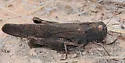
| Feature | Description |
|---|---|
| Additional details | Have characters of Arphia , plus: Adults most abundant late in season. Hind wings are usually rich orange-red to blood red (rarely lighter orange or yellow) and always with wide black borders. |
| Body | Body coloration is dark, usually grayish to black, sometimes speckled darker (especially in females), sometimes with white to tan patches on head, pronotum, and/or legs. |
| Abdomen | Abdomen and ventral surface very dark, and usually black in males. The hind tibiae are usually nearly black, but occasionally tinted brown or blue. A. xanthoptera is similar and closely related (and may hybridize with A. pseudonietana , but it typically has yellow to orange wings (red is very rare) with the same wide border, and has the crest of the pronotum distinctly arched (low and nearly straight in A. pseudonietana ). The distribution is eastern, not reaching the Rockies, and mostly south of New England and the Great Lakes. A. pseudonietana is western and Midwestern, mostly found west of the Tallgrass Prairie regions or north of the Ohio Valley. A. saussureana is very similar, but the body is usually lighter in color, with the abdomen and ventral side not black (rather brown or yellowish). Hind tibiae are usually bluish, sometimes yellowish, greenish, or brownish. Found in California and Oregon. Treated by most authors as a synonym or variety of A. pseudonietana , but more recently D. Otte has treated it as a distinct species. A striking and often noticed species, because it is common, and flies with a loud harsh buzz and has brilliantly colored wings. |
Classification
- Kingdom
- Animalia
- Phylum
- Arthropoda
- Class
- Insecta
- Order
- Orthoptera (Grasshoppers, Crickets, Katydids)
- Suborder
- Caelifera
- Family
- Acrididae (Short-horned Grasshoppers)
- Subfamily
- Oedipodinae
- Tribe
- Arphiini
- Genus
- Arphia
Imported taxonomy record. Source availability varies; see the source references and editorial policy below.
Habitat and Range
Habitat
Most any open sunny area where there is bare ground and grass.
Geographic Range
Southern British Columbia to southeastern Ontario, and south to central Mexico. Mostly absent from the Mississippi and Ohio River Valleys, and from California west of the Sierra Nevada.
Seasonal Activity
Overwinters as eggs that hatch in spring, with adults from late June or July (or more often August) until freezing weather.
Diet and Behavior
Diet: Probably mostly grasses.
Additional species information
Species notes from the sources
Etymology: From Greek pseudos (ψευδος)- "false" + nietanus , the name of a Mexican species that Thomas said his species closely resembled.
About Grasshoppers, Crickets, Katydids: the wider group
Order-level background for Orthoptera, the group containing Arphia pseudonietana. Species-specific details appear above.
Group overview
Orthoptera includes ~28,000 described species of grasshoppers, crickets, and katydids. Desert locusts can form swarms covering 460 square miles containing up to 80 million individuals per square kilometer.
Ecological role of the group
Grasshoppers and crickets are a primary food source for birds, reptiles, and small mammals. Cricket farming is a growing industry - crickets require 12× less feed than cattle to produce the same amount of protein, using 2,000× less water.
Economic and practical significance of the group
A single large locust swarm can consume the same amount of food in one day as 35,000 people. The 2019-2021 East Africa locust crisis affected food security for 42 million people across multiple countries. Global crop losses from locusts can reach billions annually.
Recorded sources for this group: FAO, UN World Food Programme, research publications. Imported estimates may describe particular regions or reporting periods.
Photos of Red-winged Grasshopper (5)
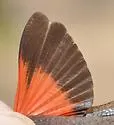
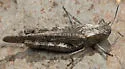
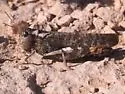
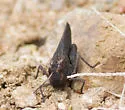
Photo credits: Contributed by Lynette Elliott; Additional contributions by Chuck Entz , David Ferguson , pomarinejaeger
Frequently Asked Questions About Red-winged Grasshopper
What is Red-winged Grasshopper?
Red-winged Grasshopper (Arphia pseudonietana) is a species in the family Acrididae, within the order Orthoptera.
How do you identify Red-winged Grasshopper?
| Feature | Description |
|---|---|
| Additional details | Have characters of Arphia , plus: Adults most abundant late in season. Hind wings are usually rich orange-red to blood red (rarely lighter orange or yellow) and always with wide black borders. |
| Body | Body coloration is dark, usually grayish to black, sometimes speckled darker (especially in females), sometimes with white to tan patches on head, pronotum, and/or legs. |
| Abdomen | Abdomen and ventral surface very dark, and usually black in males. The hind tibiae are usually nearly black, but occasionally tinted brown or blue. A. xanthoptera is similar and closely related (and may hybridize with A. pseudonietana , but it typically has yellow to orange wings (red is very rare) with the same wide border, and has the crest of the pronotum distinctly arched (low and nearly straight in A. pseudonietana ). The distribution is eastern, not reaching the Rockies, and mostly south of New England and the Great Lakes. A. pseudonietana is western and Midwestern, mostly found west of the Tallgrass Prairie regions or north of the Ohio Valley. A. saussureana is very similar, but the body is usually lighter in color, with the abdomen and ventral side not black (rather brown or yellowish). Hind tibiae are usually bluish, sometimes yellowish, greenish, or brownish. Found in California and Oregon. Treated by most authors as a synonym or variety of A. pseudonietana , but more recently D. Otte has treated it as a distinct species. |
Where is Red-winged Grasshopper found?
| Feature | Details |
|---|---|
| Habitat | Most any open sunny area where there is bare ground and grass. |
| Range | Southern British Columbia to southeastern Ontario, and south to central Mexico. Mostly absent from the Mississippi and Ohio River Valleys, and from California west of the Sierra Nevada. |
What does Red-winged Grasshopper eat?
The diet of the Red-winged Grasshopper includes Probably mostly grasses..
When is Red-winged Grasshopper active?
Red-winged Grasshopper: seasonal activity - Overwinters as eggs that hatch in spring, with adults from late June or July (or more often August) until freezing weather..