
Plains Lubber Grasshopper
Brachystola magna
This record describes Brachystola magna (species). Recorded family: Romaleidae. Recorded order: Orthoptera.
Identification and Appearance
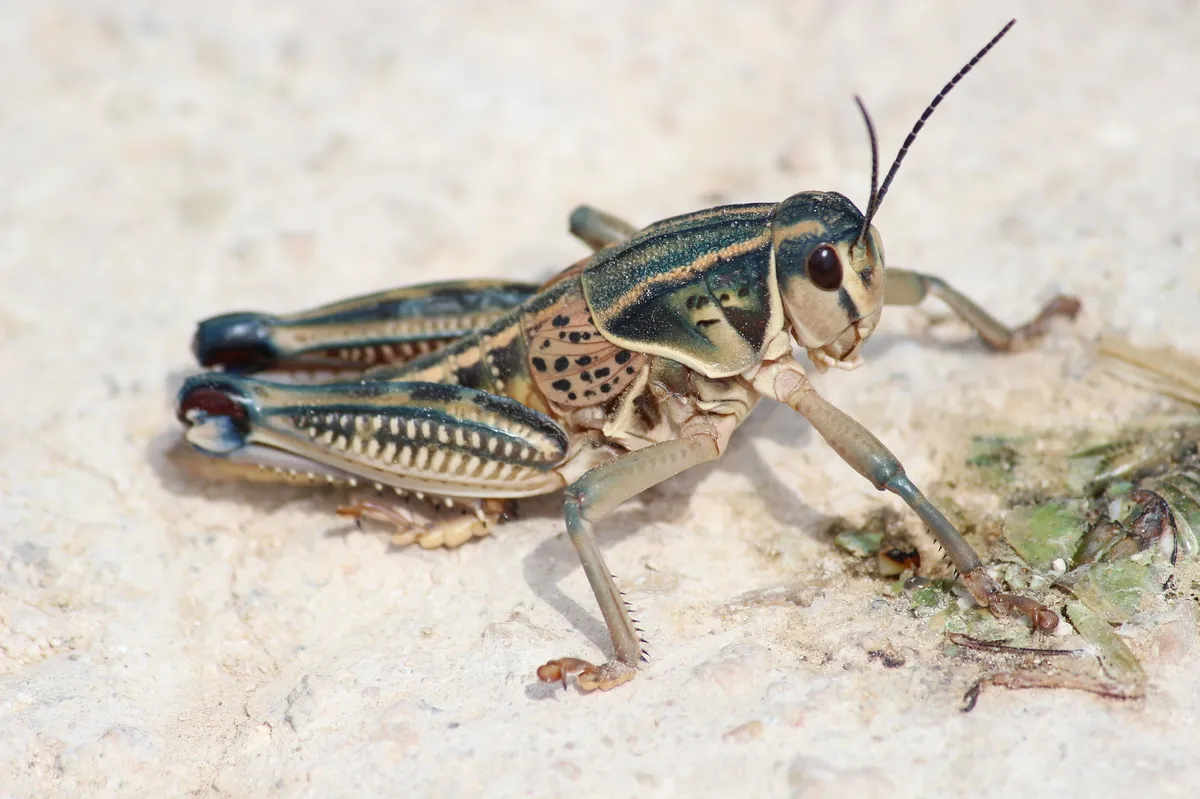
Large, colorful grasshopper. Flightless. On the central and southern Great Plains, individuals reach their largest size, and are more often (especially females) predominantly green. In the Southwest they tend to be smaller, more varied in coloration, but most often predominantly brown. Pest Status : Usually not considered to be a serious pest of grasslands; medically harmless. Often appears locally in huge numbers for a season or two in areas where few were seen for many years, only to disappear again the following year. Considered an occasional pest of cotton, this grasshopper increased to damaging numbers in 1954, 1959, 1977, and 1979, during a period of 30 years (1951-1980) in Texas. - Wyoming Agricultural Experiment Station, 1999 Important in the history of genetics , this species has large chromosomes, easily observed in the early days of cell biology.
Wikipedia reference for Brachystola magna: http://en.wikipedia.org/wiki/Brachystola_magna.
Classification
- Kingdom
- Animalia
- Phylum
- Arthropoda
- Class
- Insecta
- Order
- Orthoptera (Grasshoppers, Crickets, Katydids)
- Suborder
- Caelifera
- Family
- Romaleidae (Lubber Grasshoppers)
- Genus
- Brachystola (Grassland Lubbers)
Imported taxonomy record. Source availability varies; see the source references and editorial policy below.
Habitat and Range
Habitat
Mostly grasslands and scrublands Usually found in weedy vegetation along roadways, vacant lots and field margins in areas with rocky or gravely soil
Geographic Range
Ranges widely on the western plains of the US and Mexico: AZ-TX-MN-MT / northern Mex. - Map - Wyo Ag Station, 1999 2012 Texas Outbreak : Edwards, Menard, McCulloch, Runnels, Schleicher and Tom Green counties (as of May 9)
Seasonal Activity
Early summer into fall (November), depending on latitude and timing of rainfall.
Diet and Behavior
Diet: The main food plants of this species are forbs (i.e., sunflowers, blanket flower, ragweed, cotton, lettuce, feverfew), although they will also consume live or dead insects. Diverse preferences, favoring many types of broad-leaved forbs. Especially fond of Sunflowers ( Helianthus ), Ragweeds ( Ambrosia ), and other broad-leaved Composites. Scavenges carrion and occasionally captures and eats other smaller animals. It prefers to feed on coarse forbs and dead insects. It is never abundant enough (in Wyo) to cause damage to crops or rangeland and its consumption of weedy plants may be considered beneficial. - Univ. Wyoming
Life History
Reported by some to have a two-year life cycle, with eggs requiring two overwintering periods before hatching. Probably really only one year required, at least in southern half of range, though eggs may be capable of surviving several or many years before hatching (a survival adaptation in dry unpredictable climates).
Additional species information
Species notes from the sources
Etymology: magna - The plains lubber grasshopper is one of the largest acridids in North America.
About Grasshoppers, Crickets, Katydids: the wider group
Order-level background for Orthoptera, the group containing Brachystola magna. Species-specific details appear above.
Group overview
Orthoptera includes ~28,000 described species of grasshoppers, crickets, and katydids. Desert locusts can form swarms covering 460 square miles containing up to 80 million individuals per square kilometer.
Ecological role of the group
Grasshoppers and crickets are a primary food source for birds, reptiles, and small mammals. Cricket farming is a growing industry - crickets require 12× less feed than cattle to produce the same amount of protein, using 2,000× less water.
Economic and practical significance of the group
A single large locust swarm can consume the same amount of food in one day as 35,000 people. The 2019-2021 East Africa locust crisis affected food security for 42 million people across multiple countries. Global crop losses from locusts can reach billions annually.
Recorded sources for this group: FAO, UN World Food Programme, research publications. Imported estimates may describe particular regions or reporting periods.
Photos of Plains Lubber Grasshopper (3)
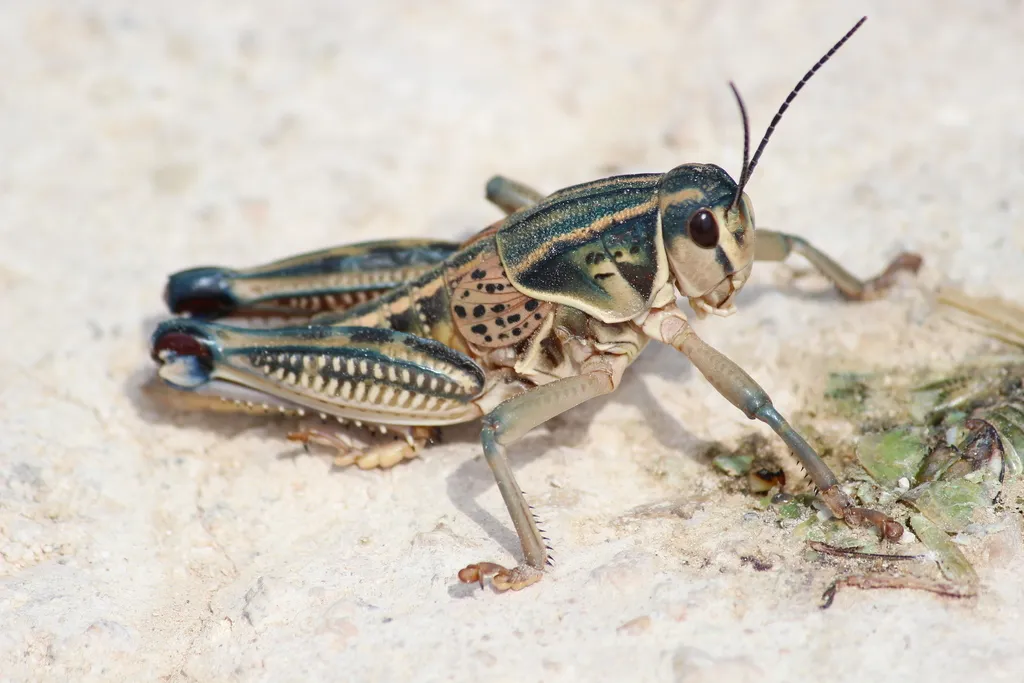
Photo credits: Contributed by Cotinis; Additional contributions by Mike Quinn , David Ferguson
Frequently Asked Questions About Plains Lubber Grasshopper
What is Plains Lubber Grasshopper?
Plains Lubber Grasshopper (Brachystola magna) is a species in the family Romaleidae, within the order Orthoptera.
How big is Plains Lubber Grasshopper?
Adult body length: 43-55 mm
How do you identify Plains Lubber Grasshopper?
Large, colorful grasshopper. Flightless. On the central and southern Great Plains, individuals reach their largest size, and are more often (especially females) predominantly green. In the Southwest they tend to be smaller, more varied in coloration, but most often predominantly brown.
Where is Plains Lubber Grasshopper found?
| Feature | Details |
|---|---|
| Habitat | Mostly grasslands and scrublands Usually found in weedy vegetation along roadways, vacant lots and field margins in areas with rocky or gravely soil |
| Range | Ranges widely on the western plains of the US and Mexico: AZ-TX-MN-MT / northern Mex. - Map - Wyo Ag Station, 1999 2012 Texas Outbreak : Edwards, Menard, McCulloch, Runnels, Schleicher and Tom Green counties (as of May 9) |
What does Plains Lubber Grasshopper eat?
The diet of the Plains Lubber Grasshopper includes The main food plants of this species are forbs (i.e., sunflowers, blanket flower, ragweed, cotton, lettuce, feverfew), although they will also consume live or dead insects. Diverse preferences, favoring many types of broad-leaved forbs. Especially fond of Sunflowers ( Helianthus ), Ragweeds ( Ambrosia ), and other broad-leaved Composites. Scavenges carrion and occasionally captures and eats other smaller animals. It prefers to feed on coarse forbs and dead insects. It is never abundant enough (in Wyo) to cause damage to crops or rangeland and its consumption of weedy plants may be considered beneficial. - Univ. Wyoming.
When is Plains Lubber Grasshopper active?
Plains Lubber Grasshopper: seasonal activity - Early summer into fall (November), depending on latitude and timing of rainfall..
What is the life cycle of a Plains Lubber Grasshopper?
Reported by some to have a two-year life cycle, with eggs requiring two overwintering periods before hatching. Probably really only one year required, at least in southern half of range, though eggs may be capable of surviving several or many years before hatching (a survival adaptation in dry unpredictable climates).