
Grasshoppers, Crickets, Katydids
Order Orthoptera
The Grasshoppers, Crickets, Katydids (Order Orthoptera) includes 1,030 species across 22 families and 248 genera in our directory.
About Grasshoppers, Crickets, Katydids
Orthoptera includes ~28,000 described species of grasshoppers, crickets, and katydids. Desert locusts can form swarms covering 460 square miles containing up to 80 million individuals per square kilometer.
Economic Impact
A single large locust swarm can consume the same amount of food in one day as 35,000 people. The 2019-2021 East Africa locust crisis affected food security for 42 million people across multiple countries. Global crop losses from locusts can reach billions annually.
Ecological Role
Grasshoppers and crickets are a primary food source for birds, reptiles, and small mammals. Cricket farming is a growing industry - crickets require 12× less feed than cattle to produce the same amount of protein, using 2,000× less water.
Families in Orthoptera (22)
Species in Orthoptera (1,030)
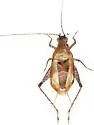
Ruby Road Trig
Anaxipha hyalicetra
Identification: The only Anaxipha in Arizona. The male tegmina are broader than in any other species of the genus.
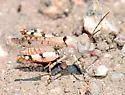
Rufous Grasshopper
Heliaula rufa
Identification: Head large, wider and higher than pronotum, rounded. Top of pronotum rounded with no distinct raised ridges and often a faint pair of bumps at front edge. Distinctive pattern of pale grayish, brownish, pinkish, etc. with dark speckl
Rusty Bird Grasshopper
Schistocerca rubiginosa
This is a member of the "Alutacea" Group, which includes several very closely related populations that are treated by some authors all as subspecies of S. alutacea , while most authors treat most as distinct species. S. rubiginosa is very similar and
Sacramento Short-wing Grasshopper
Melanoplus calidus
Identification: Smallish, with short wings (most often just touching over back, and slightly longer than pronotum). Usually dull olive greenish in color (sometimes bluish, golden tinged or especially in females dull brownish) with dark markings not
Sage Tree Cricket
Oecanthus salvii
Identification: Most notable character are deep black setae on the hind femora. Named for Lodovico Salvi, who included drawings of a male and female tree cricket, and oviposit markings in a stem, in a 1750 article. The first tree cricket in Europe wa
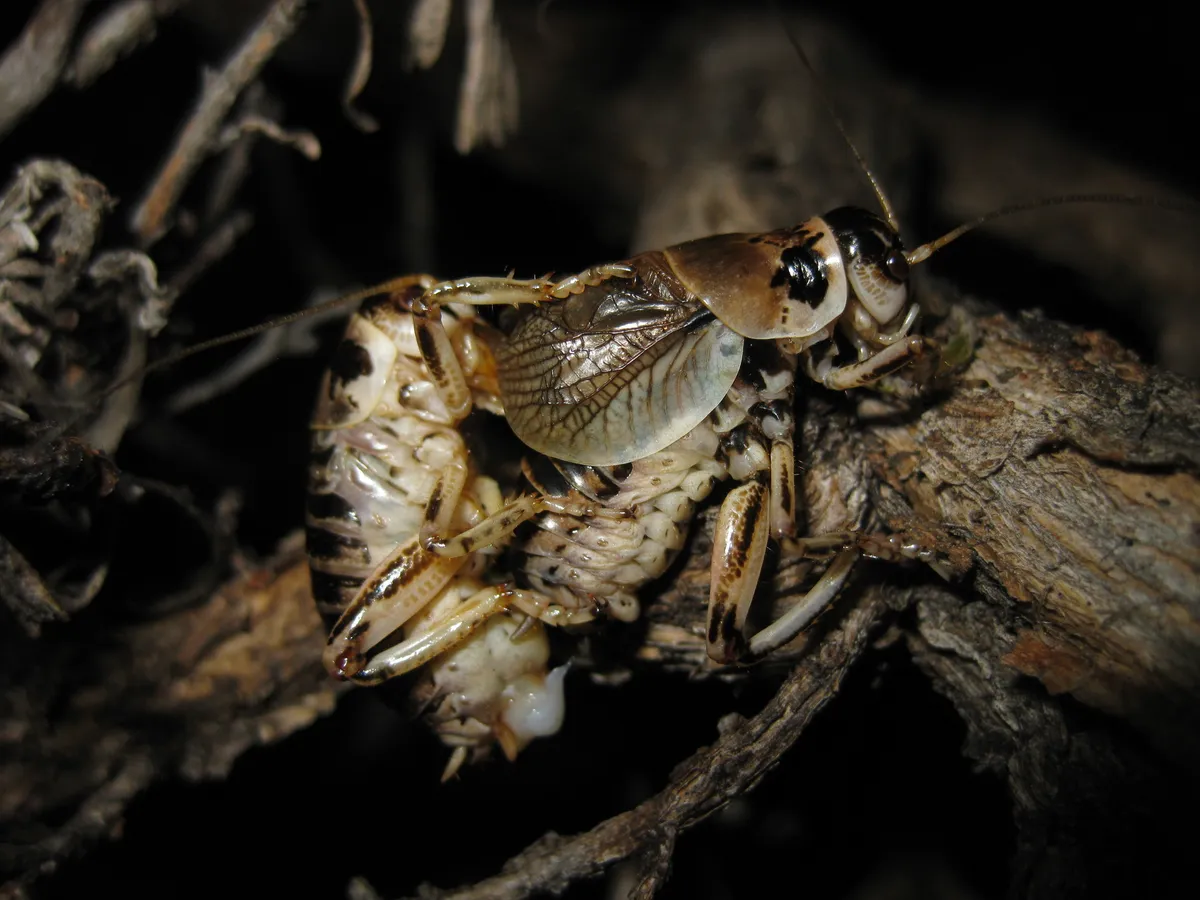
Sagebrush Grig
Cyphoderris strepitans
Often seen sitting on tree trunks, old logs, or fence posts. Seems most common at the high points of gravelly hills and rises.
Samalayuca Dune Grasshopper
Cibolacris samalayucae
Identification: Very similar to Cibolacris parviceps in morphology and behavior. Averages slightly more slender in build with the pronotum more roughened. Coloring of C. samalayucae is more evenly speckled with tiny dark spots, and larger dark spot
San Clemente Grasshopper
Conozoa clementina
Identification: Very similar to Conozoa clementina , except found on San Clemente Island. Pronotum a little more rough in surface texture, pronotal carina perhaps averaging a bit higher in profile. Also similar to C. carinata , but from a different
San Francisco Short-wing Grasshopper
Melanoplus franciscanus
These grasshoppers tend to look a little different in each mountain range they occupy, and it is possible that at least some of these populations are distinct enough to deserve species ranking. However, for the time being they are all grouped togeth
San Gabriel Wrangler Grasshopper
Circotettix splendidus
Identification: Overall grayish or brownish (usually rather light), with darker speckling that may group into irregular broken dark cross bands on the tegmina (front wings). Hind wing with an undulate outer margin and produced apex; yellow at base,
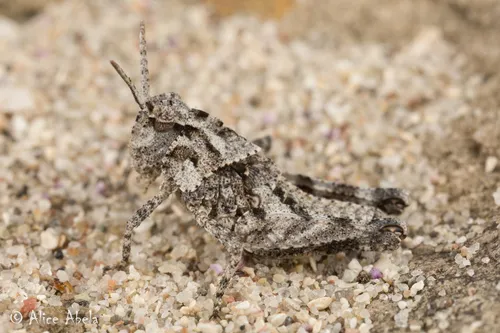
San Nicolas Grasshopper
Conozoa nicola
Identification: Apparently the only Conozoa on San Nicolas Island, with characteristics as for the genus. Lateral lobes of pronotum with hind angle rounded or only with a slight indication of a tooth. Pronotal carina well developed, cut once and oft
San Rafael Sand-treader Cricket
Utabaenetes tanneri
Identification: This is likely the only species of Sand-treader found within its area of distribution, However, other known Sand-treader Crickets that might be found in the same region are pale in color with differing spine arrangement on the legs.
Sand Field Cricket
Gryllus firmus
Identification: Where found with G. pennsylvanicus north from Virginia, distinguished by longer ovipositor, often more brownish or reddish coloring on wings legs, and ventrally on body and head. Usually the cerci are brownish with a white ring at ba
Sandbar Grasshopper
Melanoplus fluviatilis
Often treated as a subspecies of M. foedus , but behaves as if a different species with different habitat preferences. The two are easily distinguished where they occur in the same areas. It is possible that there is some hybridization between them
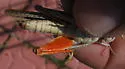
Sandhills Band-wing Grasshopper
Xanthippus montanus
Identification: This applies to the insect from the Great Plains and Colorado Plateaus that is called X. montanus in most literature (see discussion above). From X. corallipes it differs primarily in narrower top of pronotum with margins sharply defi
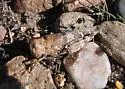
Saussure's Blue-winged Grasshopper
Leprus intermedius
Identification: Stocky grasshopper with varied coloring in shades of browns and grays (sometimes nearly black). The tegmina are crossed by well defined dark bands, and there are usually two pale lines along their top angles when folded. The wings a
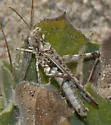
Saussure's Desert Grasshopper
Derotmema saussureanum
Identification: Small (mostly between about 14 and 30 mm, or roughly an inch long). Head large, pronotum narrower than head, roughened by tubercles on top, and with hind margin distinctly angled. Wings pale yellow, greenish, or blue with a curved d
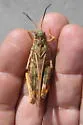
Saussure's Grasshopper
Pardalophora saussurei
Biologically P. saussurei is a southern subspecies of P. haldemanii , but it is treated as a separate species in publications, and the two have never officially been combined under one species as yet. Attracted to lights at night. There is an attract
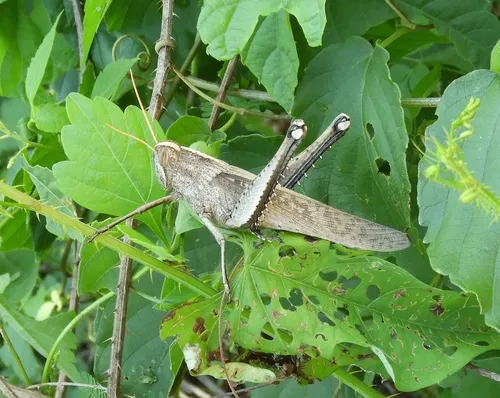
Schistocerca camerata
Schistocerca camerata
Identification: Nearly inseparable from S. damnifica . Texas specimens differing in top of pronotum averaging more nearly level (less arching) in side profile. Wings proportionately longer with tegmina usually more distinctly mottled with irregular
Scudder's Short-wing Grasshopper
Melanoplus scudderi
Identification: Wings short, shorter than pronotum or slightly longer. Coloration brown to reddish brown. Hind femorae do not have bands on their outer faces, as in many Melanoplus , but may have two dark spots on top. Tibiae reddish. The oval forewi
Seashore Meadow Katydid
Conocephalus aigialus
Identification: Presumably requires examination of male cerci--see Internet references.
Seaside Grasshopper
Trimerotropis maritima
Identification: In most areas, a medium-sized speckled grasshopper looking much like the sand it is living on, with reddish hind tibiae and yellow wings crossed by a broad black band is likely to be this species. This species will often crepitate in
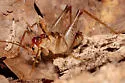
Secluded Camel Cricket
Ceuthophilus seclusus
Identification: Males with distinctively flanged 9th tergite and sculptured pronotum. However, the pronotum is unsculptured on males occurring on the distributional periphery.
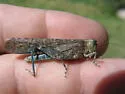
Shasta Grasshopper
Circotettix shastanus
A very loud, conspicuous, and striking grasshopper when in flight, and a likely to be a memorable feature of any summer / autumn visit to the Sierra Nevada. Even when people don't see or notice the actual insects, the sound is often a part of the ex
Shield-tailed Grasshopper
Melanoplus clypeatus
Identification: Very similar to Melanoplus yarrowii , except eastern, occuring across southern Georgia and northern Florida. Could perhaps be confused with M. punctulatus in structure, but much plainer in coloration. Somewhat similar to M. nigrescen
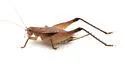
Short-winged Bush Cricket
Hapithus brevipennis
Identification: Forewings cover less than 2/3 of abdomen.
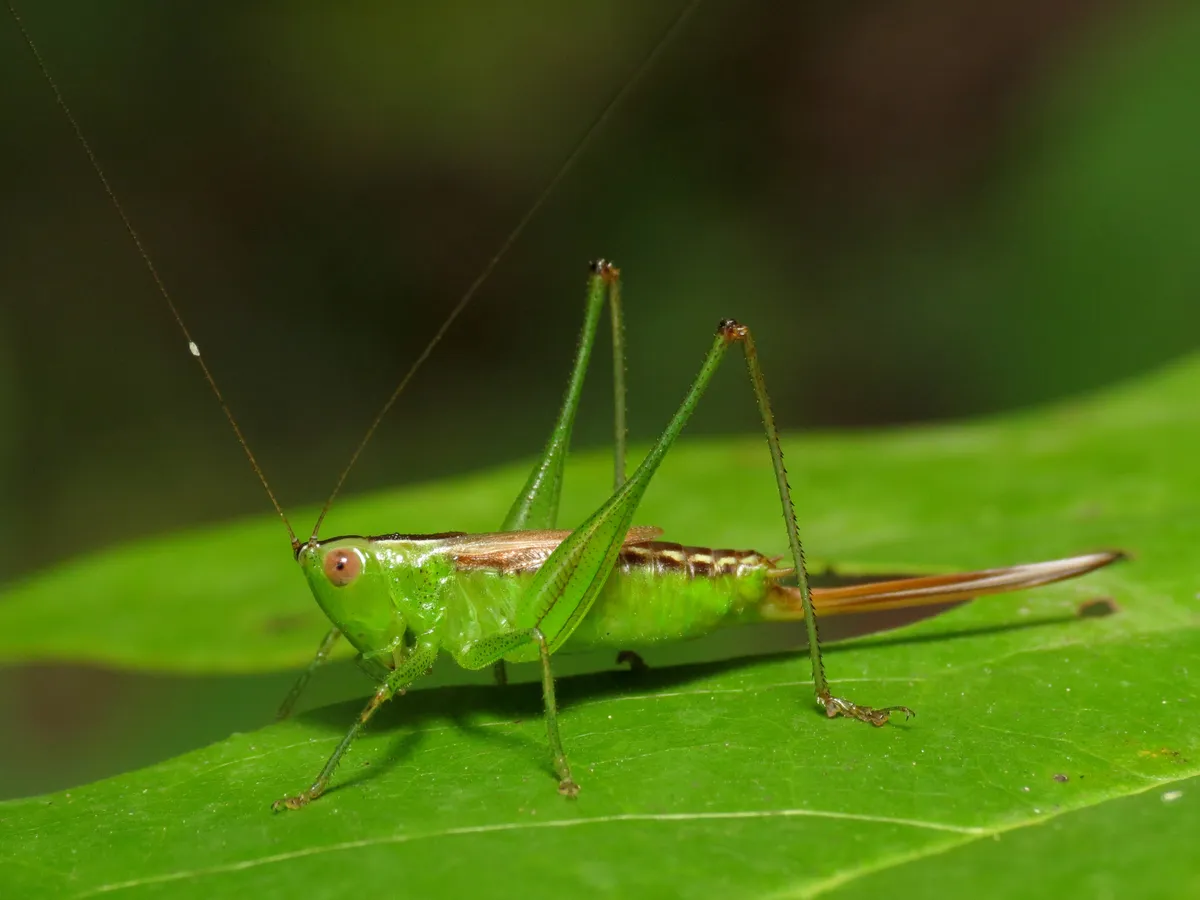
Short-winged Meadow Katydid
Conocephalus brevipennis
Identification: Typically has short wings, a few mm shorter than body. Males can be recognized by structure of cerci--see SINA page on genus, and the thumbnail below: Female ovipositor is shorter than body, upper margin is nearly straight.
Short-winged Pygmy Grasshopper
Paratettix brevipennis
Identification: Hind femur is very robust (between 2 and 2.5 as long as wide). Fastigium wider than width of eye as seen from above. Middle femur not lobed (may be somewhat irrigular).
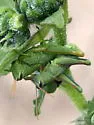
Showy Grasshopper
Hesperotettix speciosus
Identification: Bright green (rarely brown or purple), with eyes spotted white, veins of tegmina white, and body finely mottle in white. Pronotum with a fine network of irregular low narrow ridges (usually these are the white parts). Usually with a
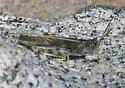
Sierra Grasshopper
Xanthippus sierra
Identification: Usually appearing dark brownish or sometimes grayish in color, lighter on sides and below than above. Tegmina dark brown, or sometimes lighter with irregular dark spots (especially southward), with two pale yellowish stripes along to
Sierra Pygmy Grasshopper
Tetrix sierrana
Identification: Basically like Tetrix ornata . Pronotum angled in front, median ridge thin and fairly high. Found in Sierra Nevada in California. Apparently only few specimens have ever been found.
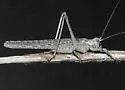
Slender Longwing
Capnobotes attenuatus
Identification: Similar to C. occidentalis but more slender. Male song is similar, but sounds somewhat different, being more regular and softer.
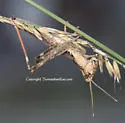
Slender Range Grasshopper
Acantherus piperatus
Identification: A relatively slender species resembling other "toothpick" grasshoppers in shape, with subdued often finely mottled gray or brown coloring that blends with surroundings, often quite dark and occasionally nearly black. Often with top ha
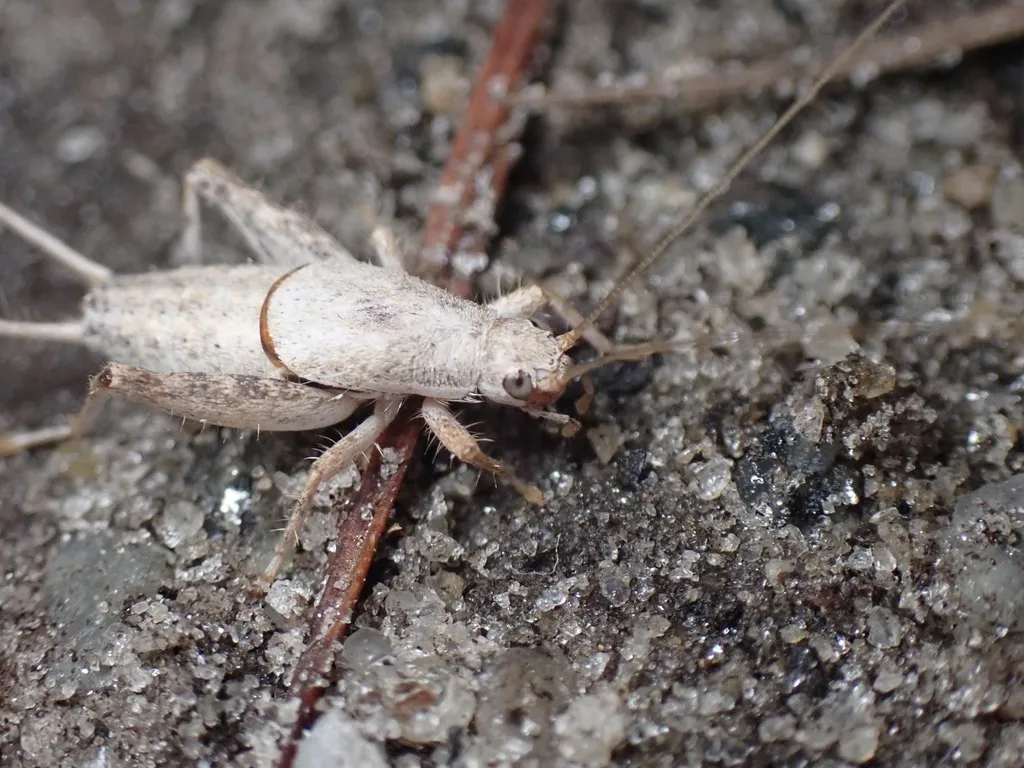
Slosson's scaly cricket
Cycloptilum slossoni
Identification: Gray color, black wing edge, fairly stout body, not extremely long cerci
Slow Mountain Grasshopper
Bradynotes obesa
Identification: Fat with short legs and red dots between eyes.
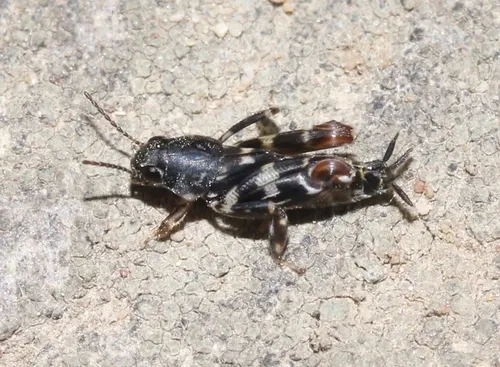
Smaller Sand Cricket
Ellipes minuta
Identification: Antennae with 10 segments in both sexes (compare with E. gurneyi , monticolus , and californicus ). Pronotum basically blackish, with laterocaudal corners pale and with a few small pale spots.
Smith's Short-wing Grasshopper
Melanoplus mancus
Identification: Male cerci A member of the Mancus Group , which also includes celatus, islandicus, divergens, & serrulatus . Differs in distribution and details of male furculae and cercae.
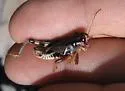
Snow's Short-wing Grasshopper
Melanoplus snowi
Identification: Closely related to M. femurnigrum . Wings reduced, very short, with tegmina ovoid and widest toward tip, usually not touching. Hind tibiae blue, or at least bluish. Hind femur with much of outer face black, and contrastingly yellow
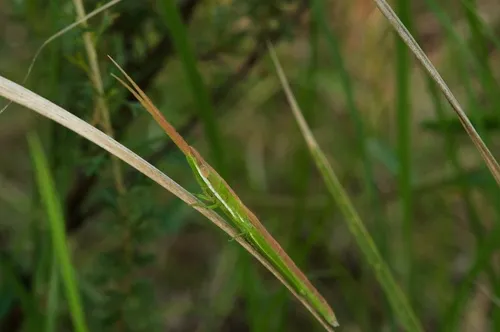
Snow's toothpick grasshopper
Prorocorypha snowi
Identification: Very similar to Paropomala wyomingensis , color pattern about the same, but somewhat more slender and averaging longer; head is more than 1.5 times as long as pronotum; male subgenital plate is roughly half as long as abdomen; wings u
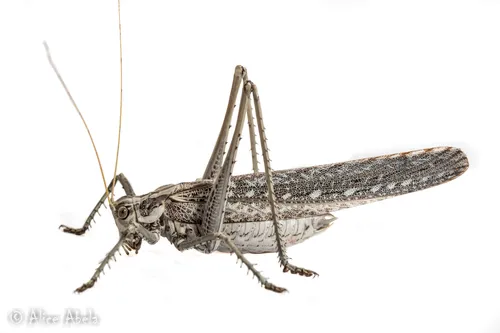
Sooty Longwing
Capnobotes fuliginosus
Identification: Large Kaydid with long wings. Tegmina narrow, marked with rows of pale rounded spots. Hind wings dark sooty gray to nearly black (sometimes coloring is broken, but wing is still mostly dark). Very similar to C. occidentalis and over
Southeastern Bush Katydid
Scudderia cuneata
Some individuals posted to BugGuide and identified as Scudderia furcata may actually belong to this species. The differences between the two are small, and they can be very difficult to tell apart, unless male genitalia are seen. Nymphs tend to be l
Southern Coast Bush Grasshopper
Aeoloplides fuscipes
Identification: Has short ovate tegmina. Lower side of hind femur not grooved and without basal wedge/flange. Male cerci slightly bent at tip. Distinction from A. fratercula seems weak. Both seem out of place among other Aeoloplides .
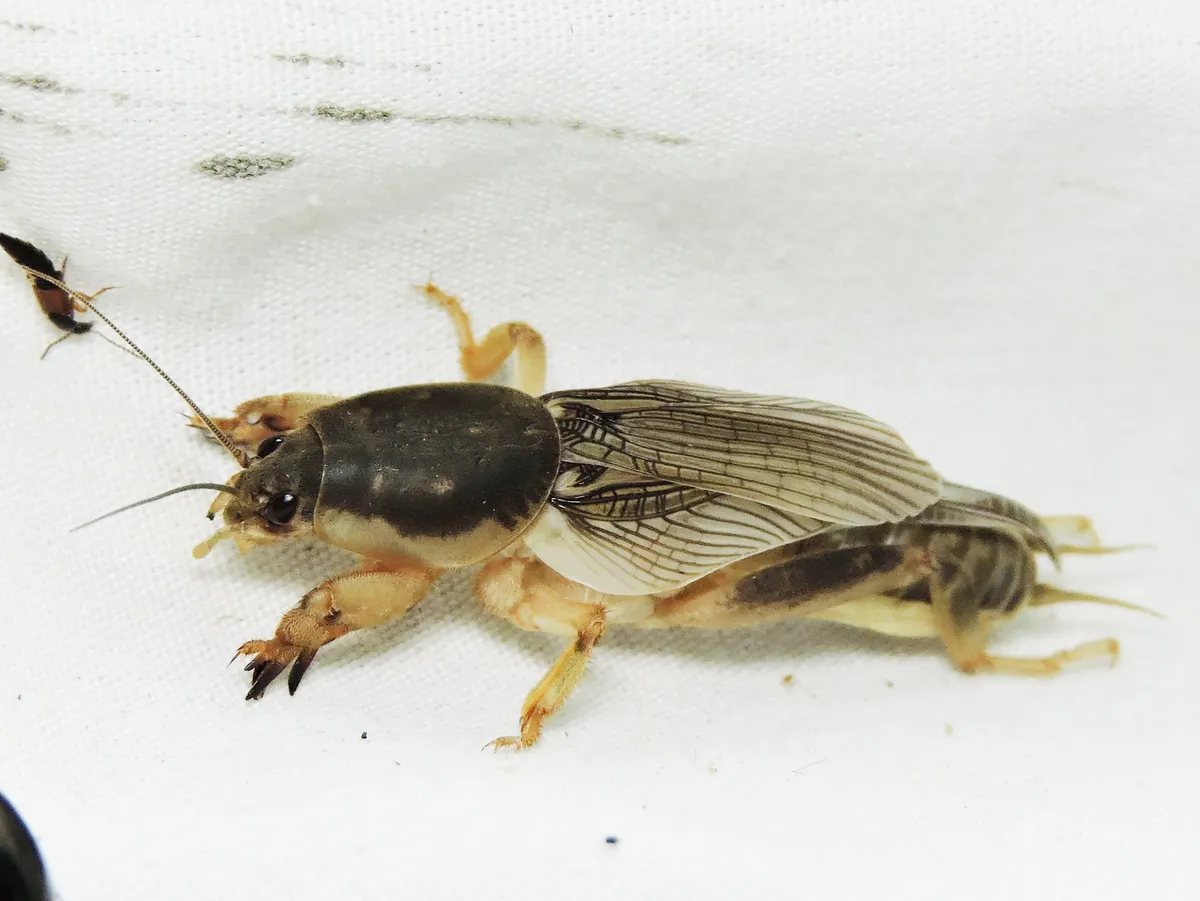
Southern Mole Cricket
Neoscapteriscus borellii
Identification: Brown to pinkish, pronotum dark with four pale spots
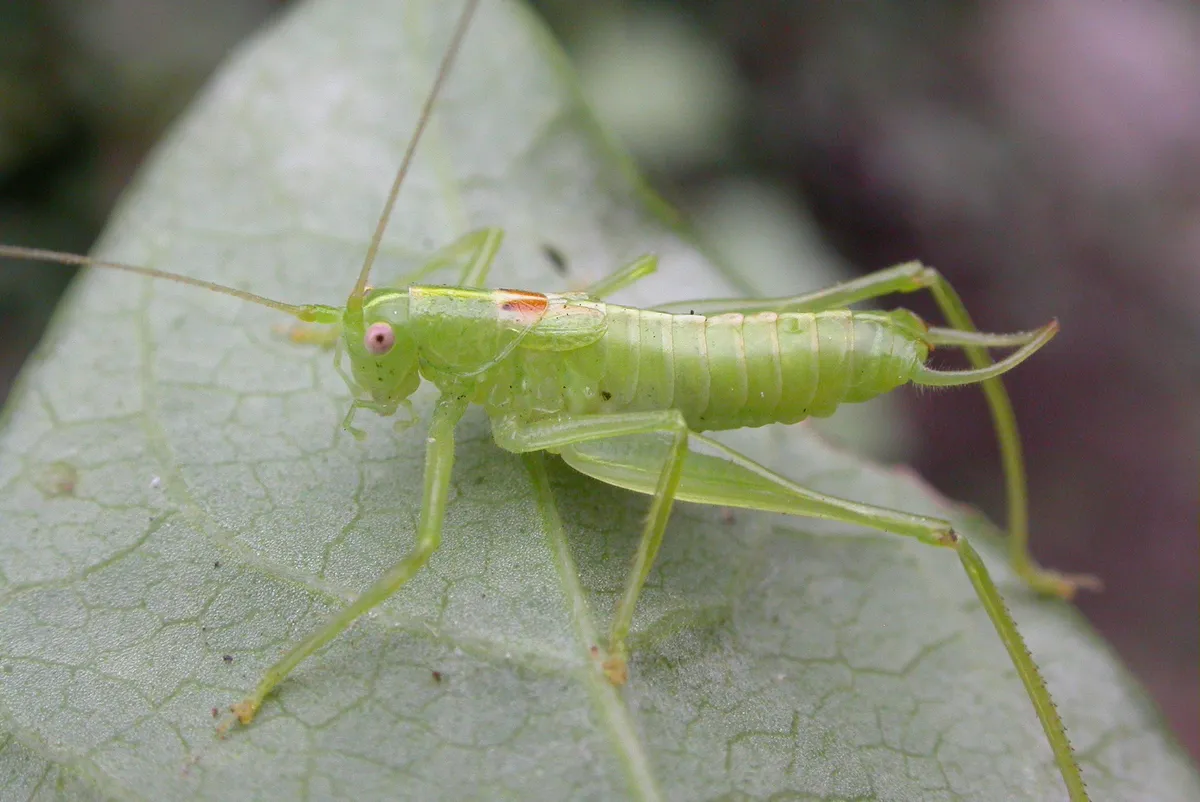
Southern Oak Bush-Cricket
Meconema meridionale
Identification: Like Meconema thalassinum , but with tiny wings as an adult. This species has apparently not been noticed before 2017 in North America, individuals photographed and perhaps collected before this having been mistaken for nymphs of Meco
Southern Protean Shieldback
Atlanticus pachymerus
Identification: Some anatomic details of female Atlanticus pachymerus : pronotum subgenital plate Badly confused in literature with A. testaceus , but more southern in distribution; differing in males having
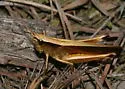
Southern Sedge Grasshopper
Stethophyma celata
Identification: Spines on hind tibia yellow, tipped with black; side of forewings without white streak; lateral carinae cut by one sulcus
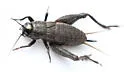
Southern Wood Cricket
Gryllus fultoni
Identification: Head narrower than pronotum; cerci usually yellow in life; hind wings always short; tegmina brown and black Very similar to Gryllus vernalis , and differing somewhat in habitat preference, song, etc.
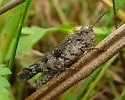
Southwestern Dusky Grasshopper
Nebulatettix subgracilis
Identification: Can be difficult to separate from other Encoptolophus (see discussion under genus for separation from other genera). E. pallidus & robustus replace it westward, and are unlikely to be found with it. E. pallidus is in the Mojave Desert
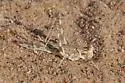
Spanistic Desert Grasshopper
Spaniacris deserticola
Identification: Adults with slender body, camouflage patterned with stripes of mostly browns and grays; long slender limbs; head with top held significantly higher than top of thorax, with eyes large and somewhat bulging; pronotum short, saddle-shape
Spatulate Longwing
Capnobotes spatulatus
Identification: Very similar to C. occidentalis . C. attenuatus is more slender.
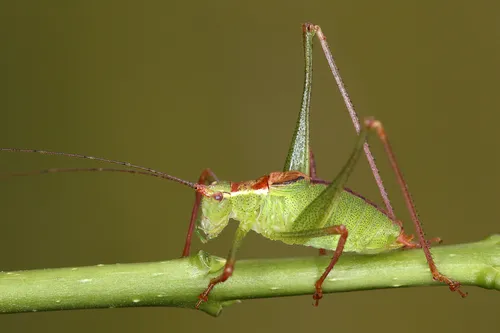
Speckled Bush-Cricket
Leptophyes punctatissima
Recorded on Nantucket, MA, by Morse, and Vickery and Kevan . There are several records on BugGuide and iNaturalist: a BugGuide image from Ontario, a BugGuide image from NY, an iNaturalist photo also from NY, and two iNaturalist photos and from RI. As
Sphagnum Ground Cricket
Neonemobius palustris
Often extremely common in the preferred habitat, but completely absent in adjacent forests/meadows. Can be collected by pressing down on the Sphagnum moss to flood the crickets out from their hiding places.
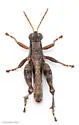
Spinecercus Short-wing Grasshopper
Melanoplus indicifer
Identification: Tip of male abdomen Deyrup (1996) found the species on only 3 vacant lots and speculated that it might soon become extinct - but it still occurs in at least two protected areas as of 2022.
Spoon-tailed Short-wing Katydid
Obolopteryx catinata
Type locality: Brownsville, Cameron County, Texas Texas considers this to be a "Species of Greatest Conservation Need" (SGCN)
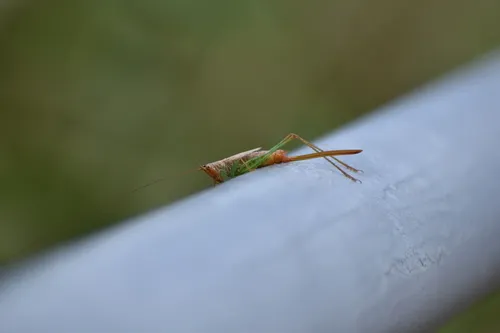
Spot-legged Meadow Katydid
Conocephalus stictomerus
Identification: Distinctive color pattern, usually green with back (including wings) light brownish; with head most often buffy to orangey with darker red mid-stripe; end of abdomen yellow to orange; hind femur usually with red-brown spots on outer f
Spotted Bird Grasshopper
Schistocerca lineata
In Wyoming, Colorado and New Mexico the " typical " form blends with the green western form that was formerly most often known as S. venusta ; with green " venusta " occurring mostly in and west of the Rockies, and typical brownish " lineata " eastwa
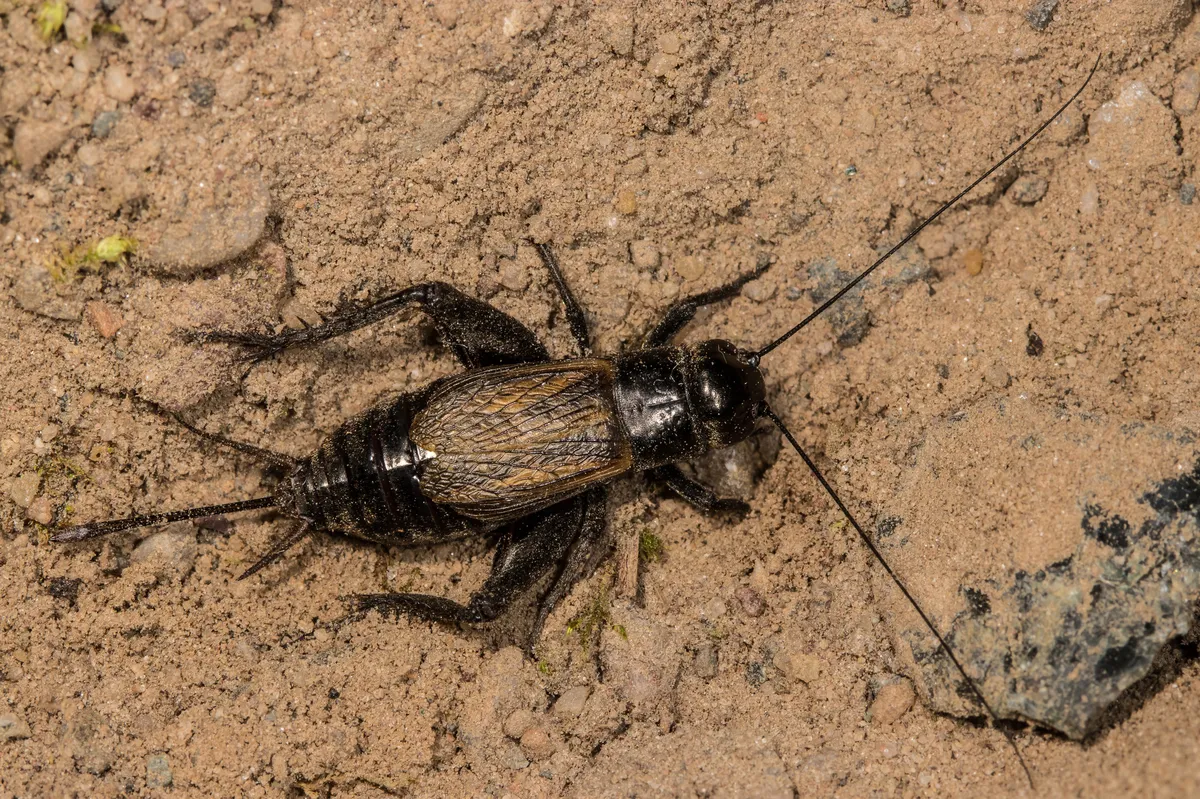
Spring Field Cricket
Gryllus veletis
A black spring cricket of cold winter regions. Very like G. pennsylvanicus. G. firmus , and at least a few southwestern species (some still unnamed), and virtually impossible to tell from them except by where found, what time of year, and sometimes
Sprinkled Grasshopper
Chloealtis conspersa
Identification: This is a species with the face distinctly slanting and the head somewhat pointed. The top of the head has raised edges and a distinct raised mid-line on the fastigium, and the "lateral faveolae" to its front edge are not visible fro
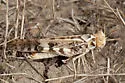
Spurcate Grasshopper
Dissosteira spurcata
Identification: A large relatively slender Grasshopper, very like Dissosteira carolina , except with coloring of wings reversed, being slightly yellowish pale translucent with a dark border (which may be faint). Body and tegmina usually pale yellowis
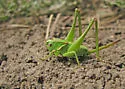
Steiroxys pallidipennis
Steiroxys pallidipalpus
Identification: Usually rather evenly colored; green, yellowish brown, or reddish brown; sometimes with a stripe down the mid-dorsum, and with pale yellowish along upper-lateral and rear lateral margins of pronotum. Pronotum with sides nearly parall
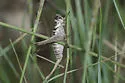
Stevenson's Shieldback
Pediodectes stevensonii
Type locality: Colorado, southern "elevated grassy terraces near mountains"
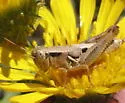
Striking Short-wing Grasshopper
Melanoplus aspasmus
Identification: The most common short-winged species of Melanoplus along the Coast Ranges in much of California, so most likely to be encountered, but best distinguished by looking at end of male abdomen. With tegmina (front wings) oval and separate
Striped Ground Cricket
Allonemobius fasciatus
Identification: Morphology and song are identical to A. socius; the only way to distinguish the two is by allozyme assay or (in most cases) by range.
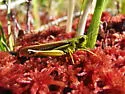
Striped Sedge Grasshopper
Stethophyma lineata
Identification: Spines on hind tibiae completely black; side of forewings with white streak; lateral carinae cut by three sulci
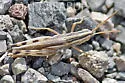
Striped Slant-face Grasshopper
Amphitornus coloradus
Identification: The rich blue hind tibiae separate it from similar species in the genera Eritettix & Opeia . Also, the pale stripe that is often seen down the middle of the back only rarely occurs in those species. In Opeia the top of the sides of
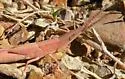
Sumichrast Toothpick Grasshopper
Achurum sumichrasti
Identification: Distinguished from other U.S. Achurum species by its long wings (extending beyond end of abdomen)
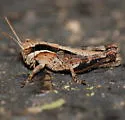
Sylvan Short-wing Grasshopper
Melanoplus celatus
A member of the Mancus Group , which also includes islandicus, divergens, mancus, & serrulatus . Divers in distribution and details of male furculae and cercae.
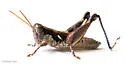
Tequestae Scrub Grasshopper
Melanoplus tequestae
Identification: Male cercus Sympatric with M. forcipatus on the Lake Wales Ridge
Texas Anglewing
Microcentrum minus
Identification: Smaller than rhombifolium and with distinct cerci and subgenital plate in the male. Type locality: Hidalgo Co., TX
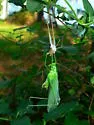
Texas Bush Katydid
Scudderia texensis
Identification: Male supra-anal plate with a small tooth in the middle
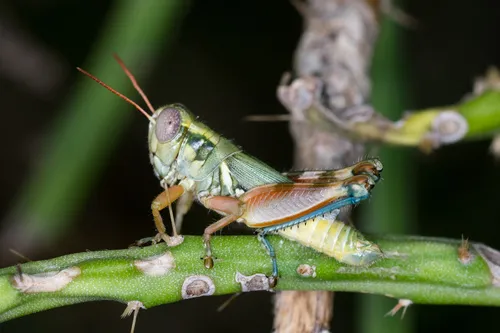
Texas Cholla Grasshopper
Chloroplus cactocaetes
Identification: Usually olivaceous green with dark markings of darker and richer green. Head large (wider and higher than pronotum) with large brown eyes. Antennae slender, shorter than lenghth of head and pronotum together; reddish with yellowish
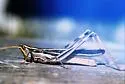
Texas Mermiria
Mermiria texana
Identification: dorsum of head and thorax has two pale ivory or cream-colored bands, converging at midsection of forewings; forewing (tegmen) has 2 white streaks near costa [a short streak over base of hind leg, and a longer one over abdomen] and a l
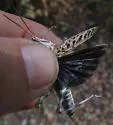
Texas Point-head Grasshopper
Acrolophitus maculipennis
Identification: Very similar to other species of Acrolophitus . Overlaps range with A. hirtipes , which is larger, has a prominent crest on pronotum, and is usually more green than blackish. Also, all other Acrolophitus species have yellow hind win
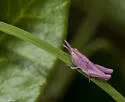
Texas Short-winged Slant-face Grasshopper
Eritettix abortivus
Identification: Similar to Eritettix simplex , except smaller in body size, with shorter wings. The color form with solid dark bands along sides of thorax usually has these bands much wider than in that species. Similar to Eritettix simplex , except
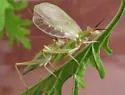
Texas Tree Cricket
Oecanthus texensis
This document is offered as a learning tool for determining ID via male's song pulses per second. These are most accurate if a thermometer is placed as close as possible to the perch area of the singing male. O. texensis O. californicus
Texas Trilling Cricket
Gryllus texensis
Identification: Song - UF Extension Gryllus integer, texensis , and rubens are all very similar in appearance, song, and habits, and overlap distribution, so it is difficult to identify them in areas of overlap. It seems possible (perhaps probable)
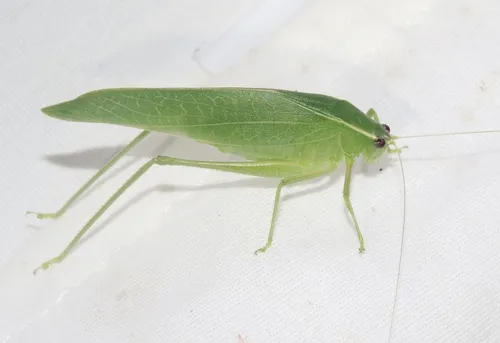
Texas turp
Turpiliodes mexicanum
Identification: Hebard (1932): "[The genus Turpiliodes] is distinguished from Turpilia by the strongly sulcate dorsal surfaces of the cephalic and median tibiae. The material here recorded shows the following additional differences; fastigium slender
Thin-footed Thread-leg Katydid
Arethaea gracilipes
Identification: Characters shown on Arethaea gracilipes page
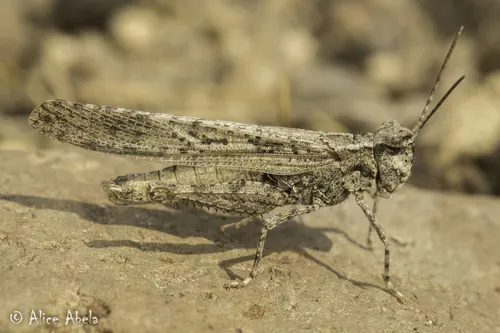
Thomas' Slender Grasshopper
Trimerotropis gracilis
Confused badly in the literature with a similar, but different species (see Trimerotropis "unnamed species A"). T. gracilis is distinguished from the other by having hind wings distinctly yellow with a prominent dark cross band. The wings are usuall
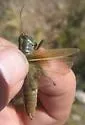
Thomas's Two-striped Grasshopper
Melanoplus thomasi
Identification: Moderately large for the genus, green, often bright bluish green, with two pale stripes along sides of top, and with bright red hind tibiae. M. bivittatus from the northeast and from near the West Coast may look similar, but are never
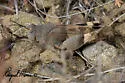
Three-banded Grasshopper
Hadrotettix trifasciatus
Identification: Inner face of hind femur has some blue
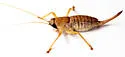
Tinkham's Shieldback
Pediodectes tinkhami
Identification: Usually light gray or brown with a pattern of slightly darker shading; abdominal segments thinly edged darker (often black). With lateral lobes of pronotum darker gray or brown bordered with pale with a dark rear edge. With a pale (
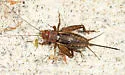
Tinkling Ground Cricket
Allonemobius tinnulus
Identification: Reddish head; song of male slightly slower than that of A. allardi
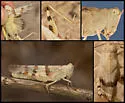
Titus' Grasshopper
Trimerotropis titusi
Identification: Pale coloring; reduced dark cross band of hind wings; yellow hind tibiae; pronotum with tooth at lower hind angle of sides. Closely related to T. californica and T. pacifica . Distinction as a species separate from T. pacifica is dub
Toltec Pygmy Grasshopper
Paratettix toltecus
Identification: Fastigium as seen from above wider than width of one eye. Hind femur between 2.5 and 3 times as long as wide. Middle femur not lobed above and below (may be irregularly margined). Much like P. rugosus , but middle femur shorter; pr
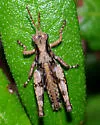
Toothcercus Shortwing Grasshopper
Melanoplus forcipatus
Identification: Male cercus distinctive Sympatric with M. tequestae on the Lake Wales Ridge
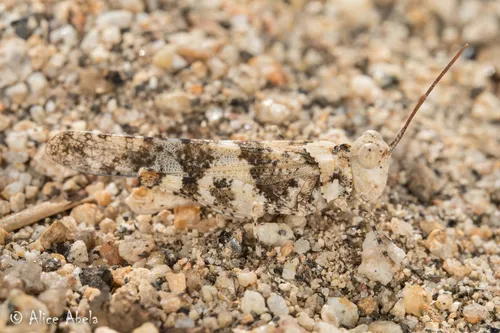
Topanga Grasshopper
Trimerotropis topanga
Identification: Most like T. bifasciata , except with color pattern more varied; slightly more slender with head averaging smaller; with top of abdomen usually dark and often distinctly blue; often, but not always with a small projection or a tooth a
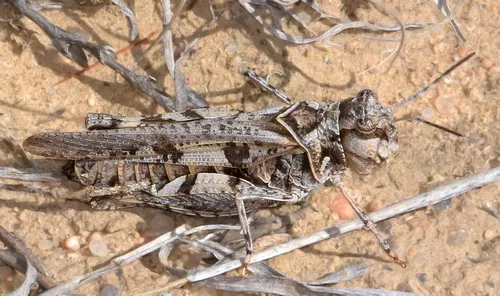
Trachyrhachys aspera
Trachyrhachys aspera
Identification: Very similar to Trachyrhachys kiowa , but less common, a bit stockier, with the inner face of the hind femur always black with a single light cross band near the "knee", and with wing yellow at the base and dark on approximately the e
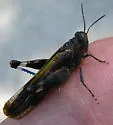
Trailside Grasshopper
Lactista gibbosus
Identification: Similar to Arphia , but averages smaller and narrower of build, with wings always yellow (often orange or red in sympatric Arphia ), hind tibiae blue (sometimes not in Arphia , and forewings are usually more noticeably cross-banded th
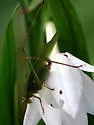
Treetop Bush Katydid
Scudderia fasciata
Identification: • Male supra-anal plate large, inflated. Lobes form a deep U, or fork. (This is almost identical to S. furcata, but that species does not have dark striping on the tegmina): • More identification tips for separating fasciata and furca
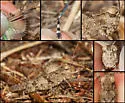
Trimerotropis occidentiloides
Trimerotropis occidentiloides
Identification: Similar to T. fontana , but pronotum with median crest of prozona more elevated (noticeable in profile). Dark cross bands on the tegmina are usually quite slender, and often broken into spots, and they usually don't cross the top (wh
Trimerotropis pacifica
Trimerotropis pacifica
Identification: Body shades of gray or light brown with contrasting darker cross bands on tegmina; hind wings yellow with strong dark cross band; hind tibiae yellow; sides of pronotum with tooth at lower margin of hind angle. T. titusi is basically i
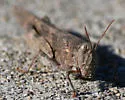
Trimerotropis pallidipennis-B
Trimerotropis pallidipennis-b
Identification: Differs (at least on average) from "regular" Trimerotropis pallidipennis in having proportionately shorter wings, wider hind wings, wider dark band across hind wing, and proportionately slightly larger head. The over-all size average
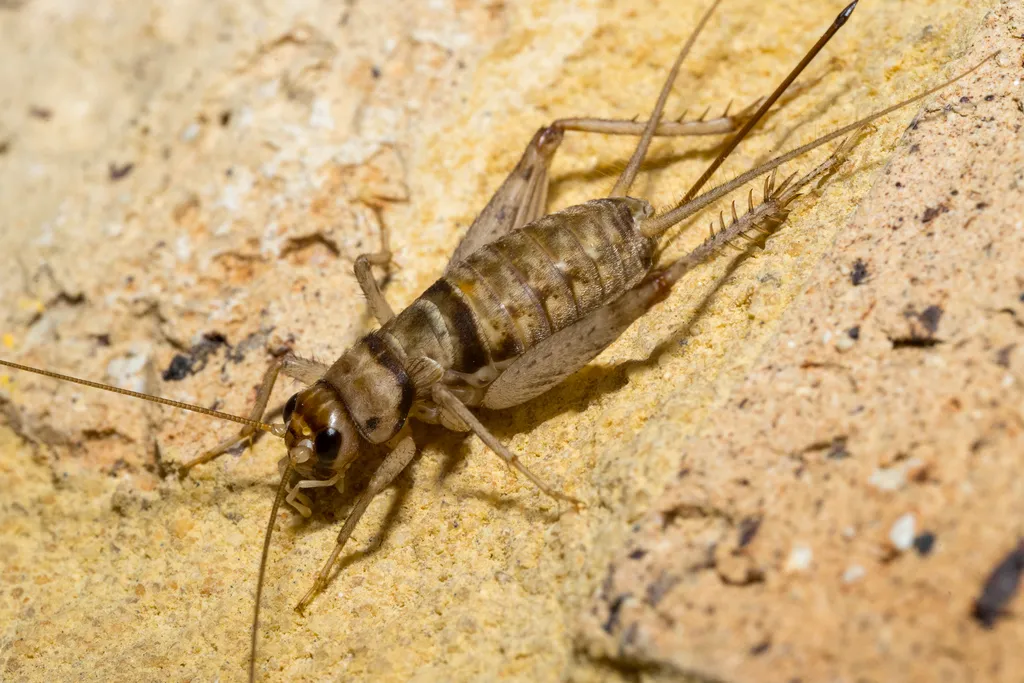
Tropical House Cricket
Gryllodes sigillatus
Probably introduced from Asia. Raised and sold for pet food.
Tunica Spur-throat Grasshopper
Melanoplus tunicae
Identification: The name M. tunicae was applied to insects found at the southeast extreme of the distribution of M. ponderosus from Tennessee to the Gulf Coast in Mississippi and eastern Louisiana (west as far as Lafayette). The distinctions from M.
Undulant-Winged Grasshopper
Circotettix undulatus
Identification: Found west from the Rocky Mountains. Hind wings usually greenish to blue (yellowest in the north, bluest in the south), and hind tibiae usually blue (sometimes greenish, or grayish). Dark wing band usually faint to absent (when pres
Variegated Shield-back
Idiostatus variegatus
Identification: Distinctive cream or yellowish and darker brown pattern. Female ovipositor much shorter than hind femur, dark in color.
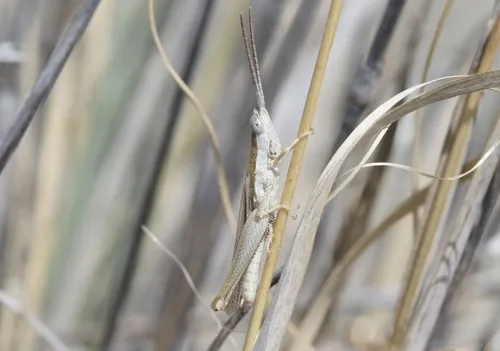
Virgata Toothpick Grasshopper
Paropomala virgata
Identification: Light green, gray, brown or combinations of these. With dark band narrower than eye extending back from upper part of eye across upper sides of pronotum and onto folded wings. Very slender with short front and middle legs, and with
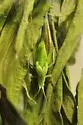
Walker's Tree Cricket
Oecanthus walkeri
Identification: Overall color of both sexes light green, often with small amount of yellow on head/face. Eye color yellow. Palpi pale brown or gray. Prominent areas of bright white color on borders of pronotal area. Ventral abdomen pale creamy white.
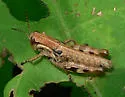
Walsh's Short-wing Grasshopper
Melanoplus walshii
Identification: Hind tibiae red; hind femur distinctly cross-banded with dark on outer side. Tegmina short, but roughly same length as pronotum, overlapping above, usually (when folded) with pale stripes along top edge that continue forward along sid