
Robust Toad Lubber
Phrynotettix robustus
This record describes Phrynotettix robustus (species). Recorded family: Romaleidae. Recorded order: Orthoptera.
Identification and Appearance
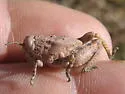
Stocky broad-bodied grasshoppers, very pebble-like, with very short wings (much shorter in females) behind the large shield-like pronotum. Color is usually pale whitish, tan, or grayish, often with scattered darker spots or mottling. Phrynotettix tshivavensis is the only other species in this genus within the United States, and the only species likely to be confused with this one. It is usually darker in color (preferring to live in an environment of darker igneous rocks), with the inner face of the hind femur mostly black (mostly pale in this species). It also averages smaller in size and ranges further west (overlapping ranges in Chihuahua and New Mexico). It favors desert grassland environments over desert, and tends to occur at higher elevations and ranges further north than this species. Apparently P. tshivavensis overwinters as eggs, and usually matures in June or July, being most common as adults in summer. Nymphs of some Band-winged Grasshoppers (such as Leprus and Xanthippus ) can look very similar, but have the pronotum less well-developed, and have only one stationary spine at the tip of the hind tibia (the one on the outer side is missing; don't count the longer movable spurs). In Lubber Grasshoppers there is a complete last pair of spines, with one on both the inner and outer side. Older nymphs of Band-winged Grasshoppers will show larger triangular wing pads typical of long-winged species of Grasshoppers. (they are not so obvious in Phrynotettix ) Adults are usually found paired. They are very difficult to see unless one is looking closely for them, as they tend to be well camouflaged, and slow to move. They hop rather clumsily and short distances.
Classification
- Kingdom
- Animalia
- Phylum
- Arthropoda
- Class
- Insecta
- Order
- Orthoptera (Grasshoppers, Crickets, Katydids)
- Suborder
- Caelifera
- Family
- Romaleidae (Lubber Grasshoppers)
- Genus
- Phrynotettix (Toad Lubbers)
Imported taxonomy record. Source availability varies; see the source references and editorial policy below.
Habitat and Range
Habitat
Usually light colored gravel pavement in Chihuahuan Desert
Geographic Range
Trans-Pecos Texas and southeast to central New Mexico
Seasonal Activity
Adults most abundant in late winter and spring, particularly in March and April, some living until autumn.
Diet and Behavior
Diet: unknown. Nymphs in captivity seem to refuse most plants, and seem to refuse grasses, so natural food plants are probably dicots, mostly likely small shrubby or herbaceous species.
Life History
Nymphs are abundant in late summer, autumn, and winter, and apparently mature in February, March, or April, depending upon location and weather.
Additional species information
Species notes from the sources
Etymology: The name "Toad" is well earned, as these grasshoppers are very toad-like. The name "Lubber" comes from the species' placement within the Romaleinae.
About Grasshoppers, Crickets, Katydids: the wider group
Order-level background for Orthoptera, the group containing Phrynotettix robustus. Species-specific details appear above.
Group overview
Orthoptera includes ~28,000 described species of grasshoppers, crickets, and katydids. Desert locusts can form swarms covering 460 square miles containing up to 80 million individuals per square kilometer.
Ecological role of the group
Grasshoppers and crickets are a primary food source for birds, reptiles, and small mammals. Cricket farming is a growing industry - crickets require 12× less feed than cattle to produce the same amount of protein, using 2,000× less water.
Economic and practical significance of the group
A single large locust swarm can consume the same amount of food in one day as 35,000 people. The 2019-2021 East Africa locust crisis affected food security for 42 million people across multiple countries. Global crop losses from locusts can reach billions annually.
Recorded sources for this group: FAO, UN World Food Programme, research publications. Imported estimates may describe particular regions or reporting periods.
Photos of Robust Toad Lubber (5)
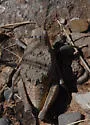
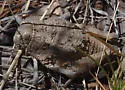
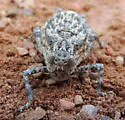
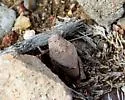
Photo credits: Contributed by Jeff Hollenbeck; Additional contributions by David Ferguson
Frequently Asked Questions About Robust Toad Lubber
What is Robust Toad Lubber?
Robust Toad Lubber (Phrynotettix robustus) is a species in the family Romaleidae, within the order Orthoptera.
How big is Robust Toad Lubber?
roughly one to two inches (25 to 50 mm), with males much smaller than females.
How do you identify Robust Toad Lubber?
Stocky broad-bodied grasshoppers, very pebble-like, with very short wings (much shorter in females) behind the large shield-like pronotum. Color is usually pale whitish, tan, or grayish, often with scattered darker spots or mottling. Phrynotettix tshivavensis is the only other species in this genus within the United States, and the only species likely to be confused with this one. It is usually darker in color (preferring to live in an environment of darker igneous rocks), with the inner face of the hind femur mostly black (mostly pale in this species). It also averages smaller in size and ranges further west (overlapping ranges in Chihuahua and New Mexico). It favors desert grassland environments over desert, and tends to occur at higher elevations and ranges further north than this species. Apparently P. tshivavensis overwinters as eggs, and usually matures in June or July, being most common as adults in summer. Nymphs of some Band-winged Grasshoppers (such as Leprus and Xanthippus ) can look very similar, but have the pronotum less well-developed, and have only one stationary spine at the tip of the hind tibia (the one on the outer side is missing; don't count the longer movable spurs). In Lubber Grasshoppers there is a complete last pair of spines, with one on both the inner and outer side. Older nymphs of Band-winged Grasshoppers will show larger triangular wing pads typical of long-winged species of Grasshoppers. (they are not so obvious in Phrynotettix )
Where is Robust Toad Lubber found?
| Feature | Details |
|---|---|
| Habitat | Usually light colored gravel pavement in Chihuahuan Desert |
| Range | Trans-Pecos Texas and southeast to central New Mexico |
What does Robust Toad Lubber eat?
The diet of the Robust Toad Lubber includes unknown. Nymphs in captivity seem to refuse most plants, and seem to refuse grasses, so natural food plants are probably dicots, mostly likely small shrubby or herbaceous species..
When is Robust Toad Lubber active?
Robust Toad Lubber: seasonal activity - Adults most abundant in late winter and spring, particularly in March and April, some living until autumn..
What is the life cycle of a Robust Toad Lubber?
Nymphs are abundant in late summer, autumn, and winter, and apparently mature in February, March, or April, depending upon location and weather.