
Family Katydids (Tettigoniidae)
Tettigoniidae is a family in the order Orthoptera. Browse 212 named species recorded in this family, or open an individual profile for its available identification and natural-history information.
Guides
Species in Tettigoniidae (212)
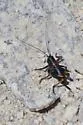
Alpine Shieldback
Acrodectes philopagus
Identification: The unusual black and tan coloration readily serves to distinguish this species The genus Acrodectes is monotypic (i.e. contains a single species). The original description of both the genus and species, written be Hebard & Morgan in
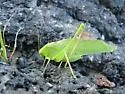
Big Bend Oblong-winged Katydid
Amblycorypha insolita
Identification: Dark diagonal band across stridulatory area is diagnostic for this species (in males)
Rattler Round-winged Katydid
Amblycorypha rotundifolia
Identification: Song is a "high-pitched swishy rattle" ( Songs of Insects )
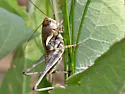
Long-legged Anabrus
Anabrus longipes
Identification: Simiar to Mormon Cricket, but more restricted area of distribution; legs longer and more slender; in adults lower edge of wings is white and usually shows behind pronotum (may be pale, but rarely if ever white in Mormon Cricket).
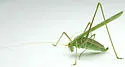
Thin-footed Thread-leg Katydid
Arethaea gracilipes
Identification: Characters shown on Arethaea gracilipes page
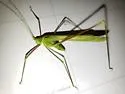
Eastern Thread-leg Katydid
Arethaea phalangium
Only member of the genus that far to the east. An individual in the literature was recorded to have the fore legs considerably reduced, which may suggest limb regeneration.
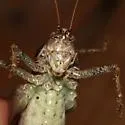
Robust Shieldback
Atlanticus gibbosus
Identification: Largest of our Atlanticus spp. Shape of the male cerci is distinctive
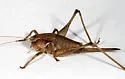
Southern Protean Shieldback
Atlanticus pachymerus
Identification: Some anatomic details of female Atlanticus pachymerus : pronotum subgenital plate Badly confused in literature with A. testaceus , but more southern in distribution; differing in males having
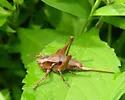
Protean Shieldback
Atlanticus testaceus
Identification: Forewings (tegmina) of male are about half (or greater) than length of the pronotum.
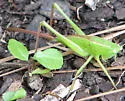
Cattail Conehead
Bucrates malivolans
Identification: body either brown or green, with short or long wings; cone round-tipped without prominent gap between it and face; wings cover most or all of abdomen; ovipositor very long, at least 1.5 times as long as hind femur ( see drawing at OSF
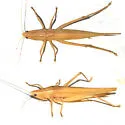
Weissman's Conehead
Bucrates weissmani
Identification: Similar to Neoconocephalus , but with only a slight notch under the base of the cone on the front of the head.
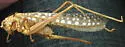
Arizona Longwing
Capnobotes arizonensis
Identification: Large, green to brown or gray, with large fairly even-spaced rounded pale spots on tegmina. Hinds wings not dark. Prosternal spine, and ventral hind femoral spines absent (present in other Capnobotes species). C. fuliginosa has dark
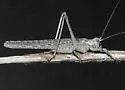
Slender Longwing
Capnobotes attenuatus
Identification: Similar to C. occidentalis but more slender. Male song is similar, but sounds somewhat different, being more regular and softer.
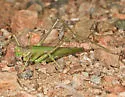
Bruner Longwing
Capnobotes bruneri
Identification: Compared to C. occidentalis (which occurs in the same area), pronotum is more even in shape, wings shorter with tegmina wide toward base and distinctly narrowing toward tip (longer and more even in width in in C. occidentalis ). Colo
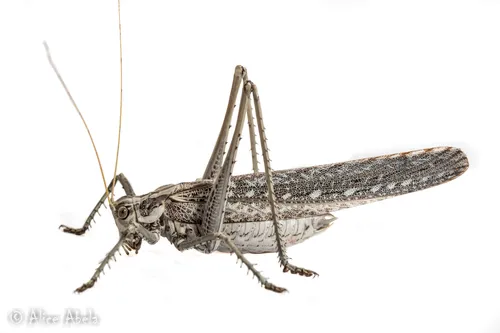
Sooty Longwing
Capnobotes fuliginosus
Identification: Large Kaydid with long wings. Tegmina narrow, marked with rows of pale rounded spots. Hind wings dark sooty gray to nearly black (sometimes coloring is broken, but wing is still mostly dark). Very similar to C. occidentalis and over
Grant Longwing
Capnobotes granti
Identification: Similar to C. bruneri , but found further north, and tegmina somewhat more slender. Found in same area as C. attenuatus , but that species has much longer and more slender wings, with tegmina more even in width (not strongly tapering
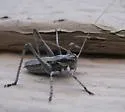
Western Longwing
Capnobotes occidentalis
Identification: Very similar to Capnobotes fuliginosus , and overlapping distribution widely, but this species ranges further north and not so far southward. In comparison, C. occidentalis is somewhat smaller and more varied in body coloring (gray,
Spatulate Longwing
Capnobotes spatulatus
Identification: Very similar to C. occidentalis . C. attenuatus is more slender.
One-tooth Longwing
Capnobotes unodontus
Identification: As other California species, can come in different colors (green, brownish, gray). Very similar to and perhaps not distinct from C. spatulatus . Tip of male cercus bilobed, but only subapical lobe is toothed (both lobes toothed in C.
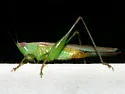
Seashore Meadow Katydid
Conocephalus aigialus
Identification: Presumably requires examination of male cerci--see Internet references.
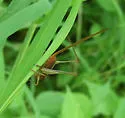
Long-tailed Meadow Katydid
Conocephalus attenuatus
Identification: Typically either all red or red with green limbs.
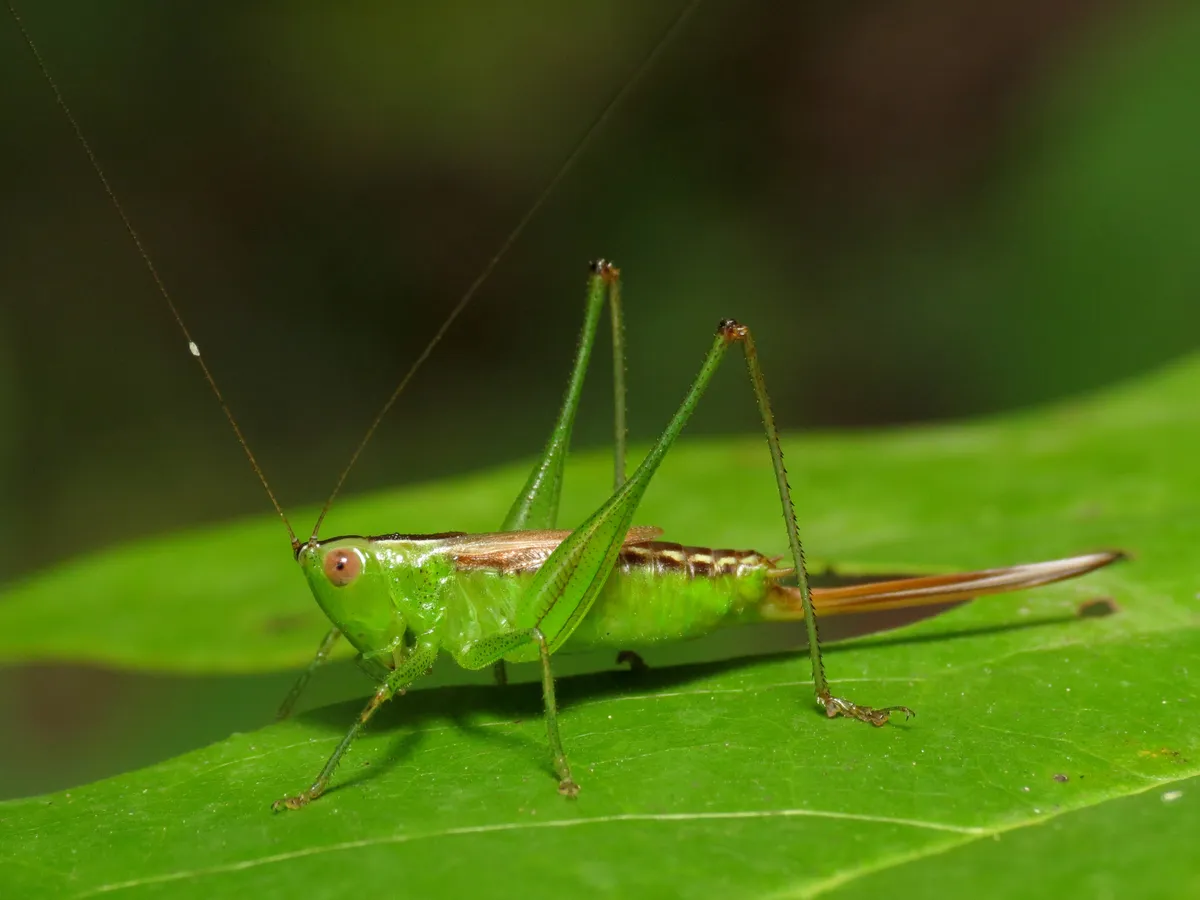
Short-winged Meadow Katydid
Conocephalus brevipennis
Identification: Typically has short wings, a few mm shorter than body. Males can be recognized by structure of cerci--see SINA page on genus, and the thumbnail below: Female ovipositor is shorter than body, upper margin is nearly straight.
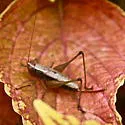
Woodland Meadow Katydid
Conocephalus nemoralis
Identification: Robust in form, female with thick curved ovipositor for genus. Dark color - sides usually black. Male with veins in tegmina heavy and usually pale in color. Song is a series of brief, quiet buzzes or trills, often given at uneven in
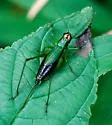
Black-sided Meadow Katydid
Conocephalus nigropleurum
Identification: side of abdomen black; pronotum bright green; ovipositor straight and about as long as abdomen; ventral surface of hind femur with one or more spines
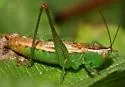
Brownsville Meadow Katydid
Conocephalus resacensis
Type locality: Texas, nr. Brownsville, Piper Plantation Texas Parks & Wildlife considers this to be a "Species of Greatest Conservation Need" (SGCN)
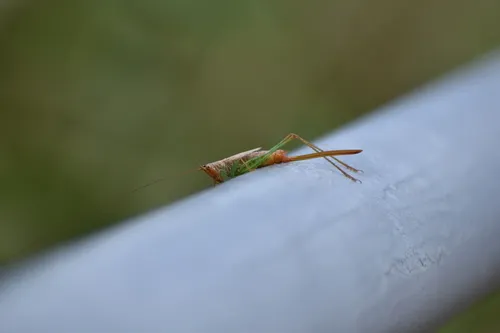
Spot-legged Meadow Katydid
Conocephalus stictomerus
Identification: Distinctive color pattern, usually green with back (including wings) light brownish; with head most often buffy to orangey with darker red mid-stripe; end of abdomen yellow to orange; hind femur usually with red-brown spots on outer f
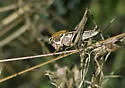
Ball's Little Shieldback
Decticita balli
Identification: Distinguished from other species in genus by distribution and presence of strong lateral carinae on pronotum.
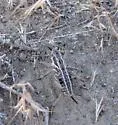
Variegated Shield-back
Idiostatus variegatus
Identification: Distinctive cream or yellowish and darker brown pattern. Female ovipositor much shorter than hind femur, dark in color.
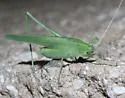
Apache Bush Katydid
Insara apache
Identification: More robust than other Insara spp; colored plain green as opposed to other species which are patterned
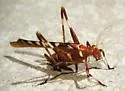
Creosote Bush Katydid
Insara covilleae
Identification: Pronotum is "saddle-shaped" . Green or dark green with prominent white spots on tegmina (forewings). Rarely brown.
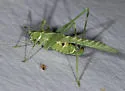
Elegant Bush Katydid
Insara elegans
Identification: Tegmina either marked with a herringbone pattern or plain-colored. The latter form was designated by Rehn & Hebard as " Insara elegans consuetipes ". The nocturnal adults are generally attracted to light.
Gemmate Bush Katydid
Insara gemmicula
Identification: Smaller than other Insara spp; distinctive pattern of cinnamon, cream, black, and white.
Florida True Katydid
Lea floridensis
This species occurs in two color phases--pinkish-brown and green. The pinkish-brown phase is more prevalent in females (30%) than in males (10%). Unlike Paracyrtophyllus robustus , the only other U.S. species of true katydid known to have a pinkish f
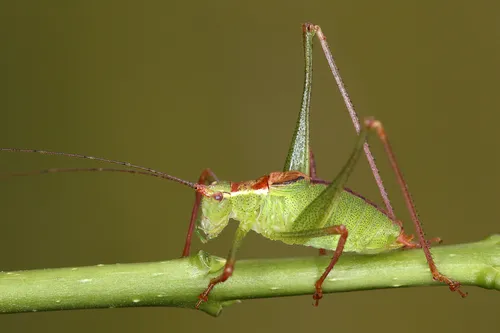
Speckled Bush-Cricket
Leptophyes punctatissima
Recorded on Nantucket, MA, by Morse, and Vickery and Kevan . There are several records on BugGuide and iNaturalist: a BugGuide image from Ontario, a BugGuide image from NY, an iNaturalist photo also from NY, and two iNaturalist photos and from RI. As
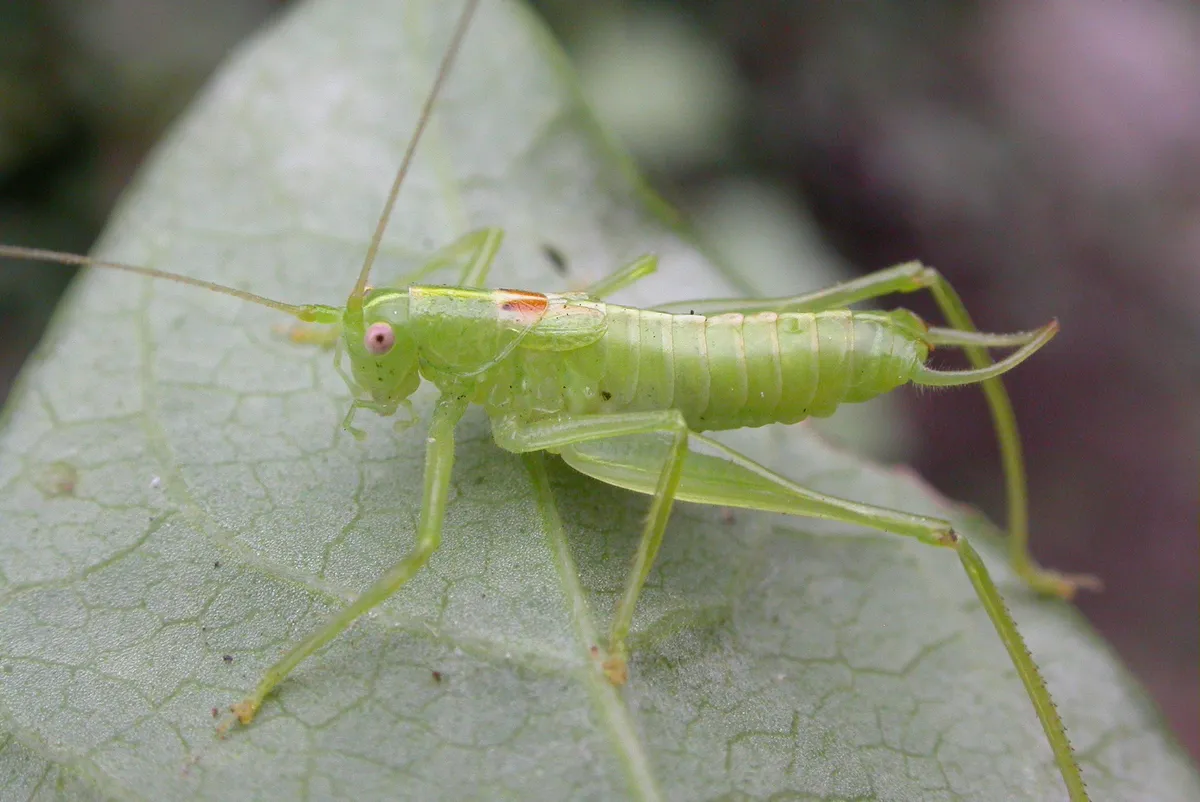
Southern Oak Bush-Cricket
Meconema meridionale
Identification: Like Meconema thalassinum , but with tiny wings as an adult. This species has apparently not been noticed before 2017 in North America, individuals photographed and perhaps collected before this having been mistaken for nymphs of Meco
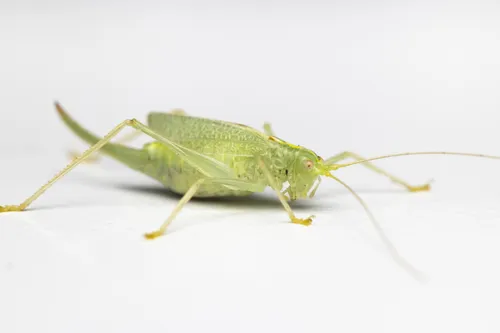
Drumming Katydid
Meconema thalassinum
Identification: A tiny, sea-green katydid with a tympanum fully exposed on each foretibia. Forewings longer than hindwings. No stridulatory area apparent at base of male forewings. Male cerci long, slender, tubular, curving upwards . This species cal
Roesel’s Katydid
Metrioptera roeselii
Identification: Song is a "high-pitched quavering buzz" ( species account with sound recordings .) An introduced species from Europe first found in Montreal in 1953 . Both long and short-winged forms exist. The long-winged forms can fly some distance
California Angle-winged Katydid
Microcentrum californicum
Identification: Appearance similar to Greater Angle-winged Katydid, Microcentrum rhombifolium , but songs are different. Compare audio files at these Web pages: California Angle-wing: http://entnemdept.ufl.edu/walker/buzz/033a.htm Greater Angle-wing:
Texas Anglewing
Microcentrum minus
Identification: Smaller than rhombifolium and with distinct cerci and subgenital plate in the male. Type locality: Hidalgo Co., TX
Modest Katydid
Montezumina modesta
Identification: Very similar to the genus Amblycorypha . Head is smaller. Eye (in live specimens) has a bold dark diagonal stripe through it. Thorax and front of tegmina usually edged strongly with yellow on top.
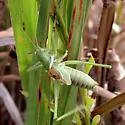
Lesser Arid-land Katydid
Neobarrettia victoriae
Identification: Front edge of pronotum green; femoral teeth bicolored; center of hindwings jet black (SINA) Type locality: Ciudad Victoria, Tamaulipas, Mexico
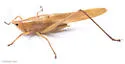
Caudell's Conehead
Neoconocephalus caudellianus
Author of species: Davis, William Thompson (1862-1945). See Gordh and Headrick, p. 262 , original reference is American Entomologists .
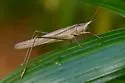
Black-nosed Conehead
Neoconocephalus melanorhinus
Identification: Female ovipositor almost as long as hind femur, but not reaching end of folded wings (which are very long). Cone on head a little longer than broad, tapering toward broad rounded tip, almost entirely black on under side.
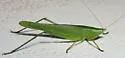
Marsh Conehead
Neoconocephalus palustris
Identification: Quoting account at Singing Insects of North America : As in other members of this genus, there are green and brown forms. See iNaturalist for an example of a brown form.
Round-tipped Conehead
Neoconocephalus retusus
Identification: Song: A rather weak, beady, continuous buzz heard from within tangles of vegetation, during afternoons as well as at night. Paraphrasing SINA :
Robust Conehead
Neoconocephalus robustus
The song is a continuous whirring buzz that is extremely loud. Up close it is ear splitting, and it can sometimes be heard on a still night from as much as a mile away.
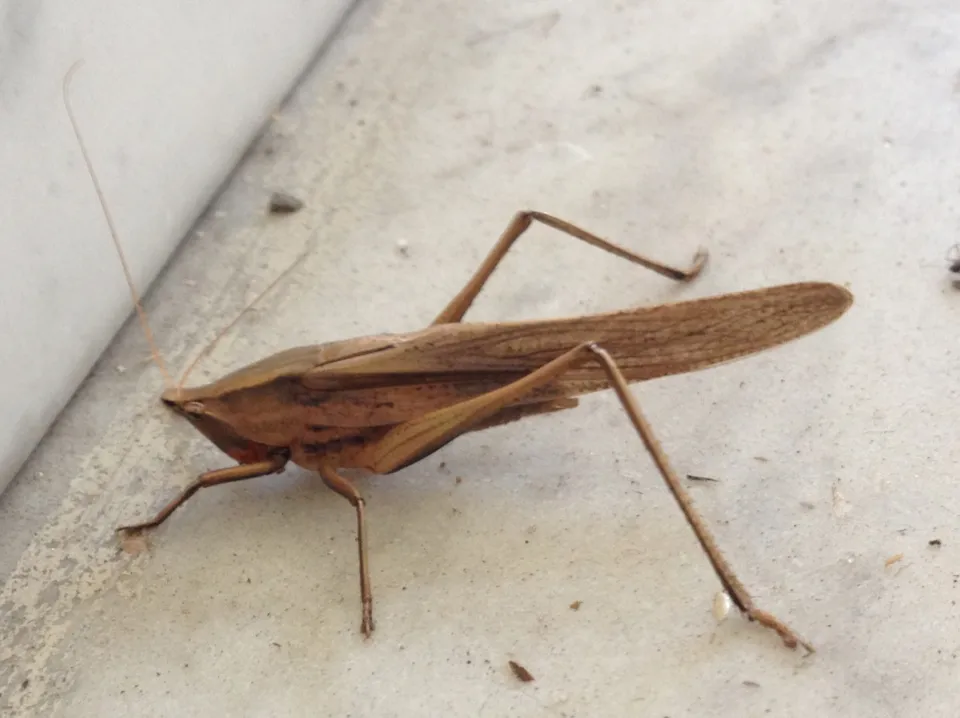
Broad-tipped Conehead
Neoconocephalus triops
Identification: Song is a buzz interrupted at one second intervals, then switches to a continuous buzz. Males call from low bushes or from high intrees. Active earlier in the season than others in the genus. Large conehead, green or brown. Cone wider
Spoon-tailed Short-wing Katydid
Obolopteryx catinata
Type locality: Brownsville, Cameron County, Texas Texas considers this to be a "Species of Greatest Conservation Need" (SGCN)
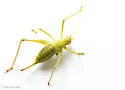
Gladiator Short-winged Katydid
Obolopteryx gladiator
Identification: Females possess an extremely long ovipositor which, in lateral view, is very distinctively narrow, much more so than in any other species (Cohn, Swanson, & Fontana 2014) Texas considers this a SGCN
Mountain-dwelling short-winged katydid
Obolopteryx oreoeca
Identification: Male cercus has a spoon-shaped thumb, nearly identical to D. catinata . More or less restricted to two populations in Texas (see below). The population in the Chisos Mountains has thick conspicuous white lateral stripes, but this char
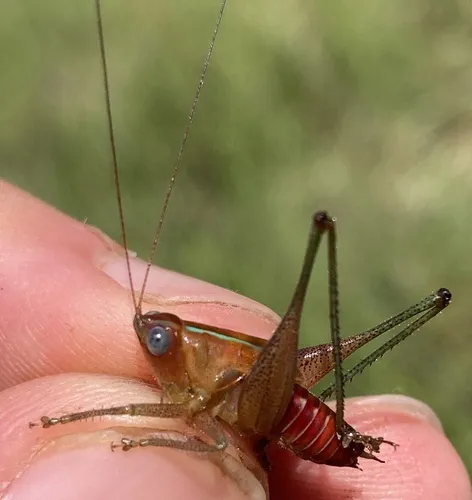
Apalachicola meadow katydid
Odontoxiphidium apalachicolae
Identification: Similar to O. apterum in overall appearance. Most easily distinguished in the field by its distinctive color pattern (generally red, with two turquoise stripes running down pronotum), shape of female ovipositor, and distinctive male s
Wingless Meadow Katydid
Odontoxiphidium apterum
Identification: Male forewings shorter than pronotum (female forewings concealed by pronotum): Male cercus with 2 teeth as opposed to 1 in Conocephalus and Orchelimum: This little species does in fact have wings (albeit extremely short ones), contrar
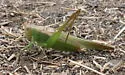
Agile Meadow Katydid
Orchelimum agile
Identification: A slender Orchelimum , rather resembles Conocephalus . Coloration is a rather washed out green, with a mostly creamy white face bordered with brown maculation. Eyes white or light pink. Wings typically (?) longer than abdomen in most
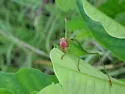
Red-headed Meadow Katydid
Orchelimum erythrocephalum
Identification: Coloration typically green with reddish highlights, including a (usually) bright red head in both sexes. Eyes light blue. Red head is (apparently?) distinctive in this genus, however some specimens do not show a bright red head. In th
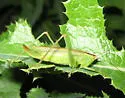
Gladiator Meadow Katydid
Orchelimum gladiator
Identification: Posterior lateral sinus of the pronotum is poorly developed. Song is a "series of ticks followed by a long shuffling trill" (' Songs of Insects )
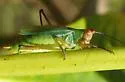
Black-legged Meadow Katydid
Orchelimum nigripes
Identification: Dark legs distinctive. Face white with mottling. Very similar to Handsome Meadow Katydid , Orchelimum pulchellum , mostly found in the southeast. Singing Insects of North America Range maps ( Black-legged , Handsome ), but that specie
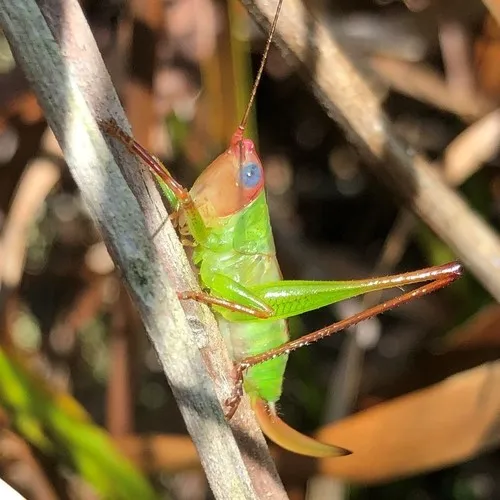
Handsome Meadow Katydid
Orchelimum pulchellum
Identification: Note white face with brownish to reddish mottling on edges, brown legs, diffuse turquoise stripe on upper sides back along wings. Eyes usually blue --fairly distinctive. Compare cerci of male if possible with illustrations in Singing
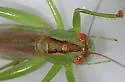
Long-spurred Meadow Katydid
Orchelimum silvaticum
Identification: This species has the longest "tooth" on the inner surface of the male cerci, this feature prompting the common name
Arizona Meadow Katydid
Orchelimum unispina
Identification: Very similar to Conocephalus in general appearance - more slender than other Orchelimum spp., and with a straight ovipositor (unlike the upcurved ovipositor of most Orchelimum). Shape of male cercus and calling song are distinctive.
Chisos Katydid
Paracyrtophyllus excelsus
Texas Parks & Wildlife considers this to be a "Species of Greatest Conservation Need" (SGCN)
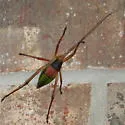
Red Katydid
Paracyrtophyllus robustus
Identification: True katydids have leaf-like wings that form cups enclosing the abdomen. Wings only allow for feeble flight. (The cupped wings probably serve to amplify their songs.) Antennae longer and stiffer than in other katydids Green form (nymp
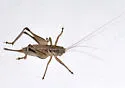
Bruner Shieldback
Pediodectes bruneri
Identification: Very similar to P. tinkhami , but with rear of sides of face (in adults) pale, and white band across face expanded to a broader triangle. Rear of pronotum usually more prominently black. Occurs further to the east.
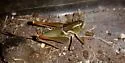
Haldeman's Shieldback
Pediodectes haldemanii
Identification: Fairly large Shieldback, and very stocky. Looks rather even and "smooth" in coloring, and is usually green (sometimes brownish). Top of pronotum usually dark toward the rear, especially at the "corners". Pronotum bordered pale with
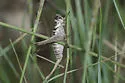
Stevenson's Shieldback
Pediodectes stevensonii
Type locality: Colorado, southern "elevated grassy terraces near mountains"
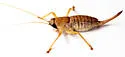
Tinkham's Shieldback
Pediodectes tinkhami
Identification: Usually light gray or brown with a pattern of slightly darker shading; abdominal segments thinly edged darker (often black). With lateral lobes of pronotum darker gray or brown bordered with pale with a dark rear edge. With a pale (
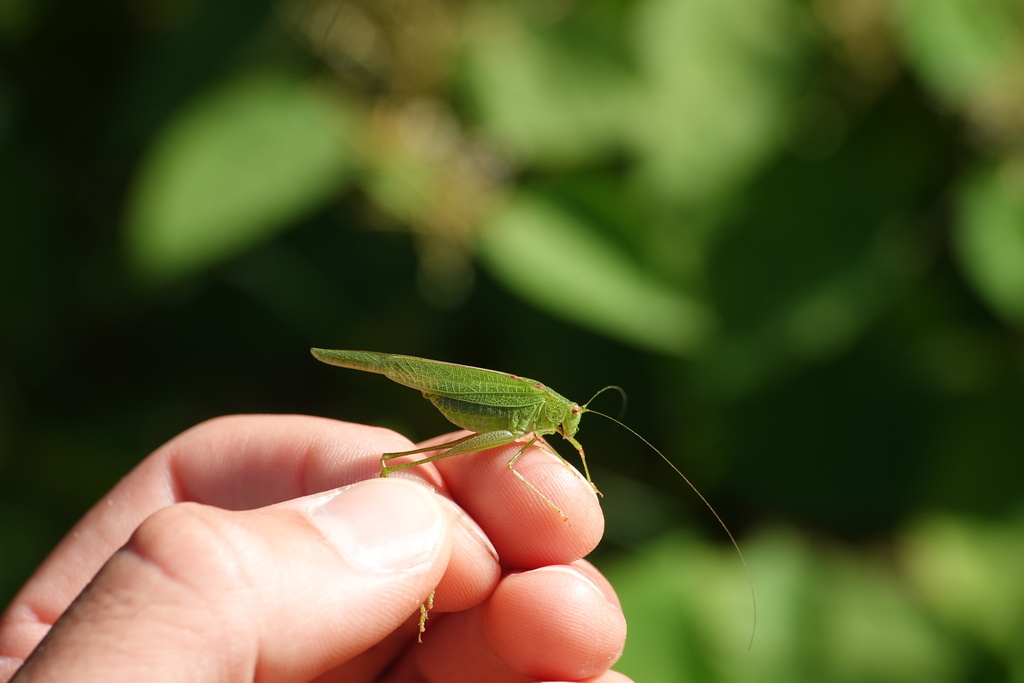
Mediterranean Katydid
Phaneroptera nana
(c) Aurélien Coste, some rights reserved (CC BY)Identification: Nymphs of this species are very similar to nymphs of Scudderia spp. , but have more and narrower black rings around the antennae than any Scudderia nymphs in the same area. Introduced from Europe perhaps since the 1930s.
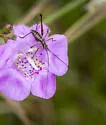
Phaneroptera nr-nana
Phaneroptera nr-nana
Identification: Individuals of this FL population of Phaneroptera are more slender than P. nana, with proportionately longer legs; males also differ in appearance of the external genitalia. P.nana P. 'nr-nana' The earliest known U.S. record of this s
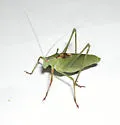
Chaparral Katydid
Platylyra californica
"A common but seldom seen southern California katydid. It inhabits native chaparral vegetation throughout the state but is secretive and does not readily fly to lights. Similar to Scudderia but smaller, not as slender and with shorter wings" - Jeffre

Hook-faced Conehead
Pyrgocorypha uncinata
Identification: wings extend beyond abdomen; cone has prominent gap separating cone from face, and ends in sharp down-turned point; brown females and green females occur in approximately equal numbers; males are always brown Song is a high-pitched ri
Southeastern Bush Katydid
Scudderia cuneata
Some individuals posted to BugGuide and identified as Scudderia furcata may actually belong to this species. The differences between the two are small, and they can be very difficult to tell apart, unless male genitalia are seen. Nymphs tend to be l
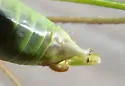
Curve-tailed Bush Katydid
Scudderia curvicauda
Identification: Outer lobes of male supra-anal plate form a shallow V, and turn away from each other; from above, it resembles a whale's fluke
Treetop Bush Katydid
Scudderia fasciata
Identification: • Male supra-anal plate large, inflated. Lobes form a deep U, or fork. (This is almost identical to S. furcata, but that species does not have dark striping on the tegmina): • More identification tips for separating fasciata and furca
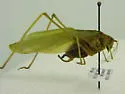
Broad-winged Bush Katydid
Scudderia pistillata
Identification: This is the only species in this genus with an outer wing length only three times its width Lobes of male supra-anal plate form a wide, rounded V, and taper strongly toward the tips. Resembles a whale's fluke:
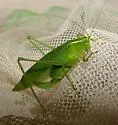
Northern Bush Katydid
Scudderia septentrionalis
Identification: Male supra-anal plate truncated: Often referred to as rare in much of the early literature, but can be locally common. considered by VA to be a Species of Greatest Conservation Need (SGCN)
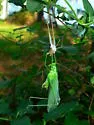
Texas Bush Katydid
Scudderia texensis
Identification: Male supra-anal plate with a small tooth in the middle
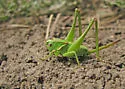
Steiroxys pallidipennis
Steiroxys pallidipalpus
Identification: Usually rather evenly colored; green, yellowish brown, or reddish brown; sometimes with a stripe down the mid-dorsum, and with pale yellowish along upper-lateral and rear lateral margins of pronotum. Pronotum with sides nearly parall
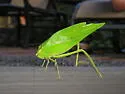
Giant Katydid
Stilpnochlora couloniana
Identification: Largest katydid in U.S, over 65 mm long. Top margin of tegmen with two sites of significantly increased curvature. Will feed on bramble and oak in captivity.
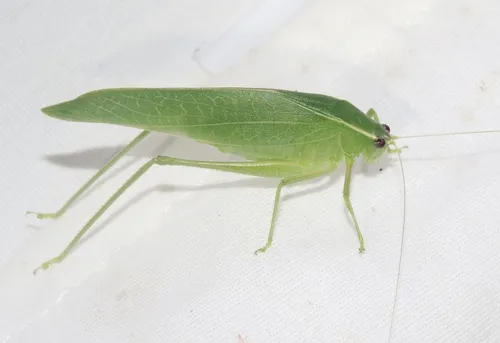
Texas turp
Turpiliodes mexicanum
Identification: Hebard (1932): "[The genus Turpiliodes] is distinguished from Turpilia by the strongly sulcate dorsal surfaces of the cephalic and median tibiae. The material here recorded shows the following additional differences; fastigium slender
Morse's Shieldback
Aglaothorax morsei
Ovate Shieldback
Aglaothorax ovata
Clicker Round-winged Katydid
Amblycorypha alexanderi
Sandhill Virtuoso Katydid
Amblycorypha arenicola
Bartram's Round-winged Katydid
Amblycorypha bartrami
Cajun Virtuoso Katydid
Amblycorypha cajuni
Carinate Katydid
Amblycorypha carinata
Florida Oblong-winged Katydid
Amblycorypha floridana
Texas Oblong-winged Katydid
Amblycorypha huasteca
Common Virtuoso Katydid
Amblycorypha longinicta
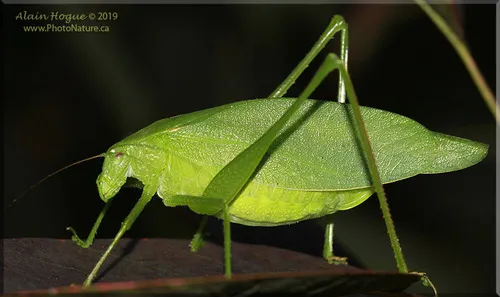
Oblong-winged Katydid
Amblycorypha oblongifolia
Western Round-winged Katydid
Amblycorypha parvipennis
Rio Grande virtuoso katydid
Amblycorypha rivograndis
Uhler's Virtuoso Katydid
Amblycorypha uhleri
Big-tooth Anabrus
Anabrus cerciata
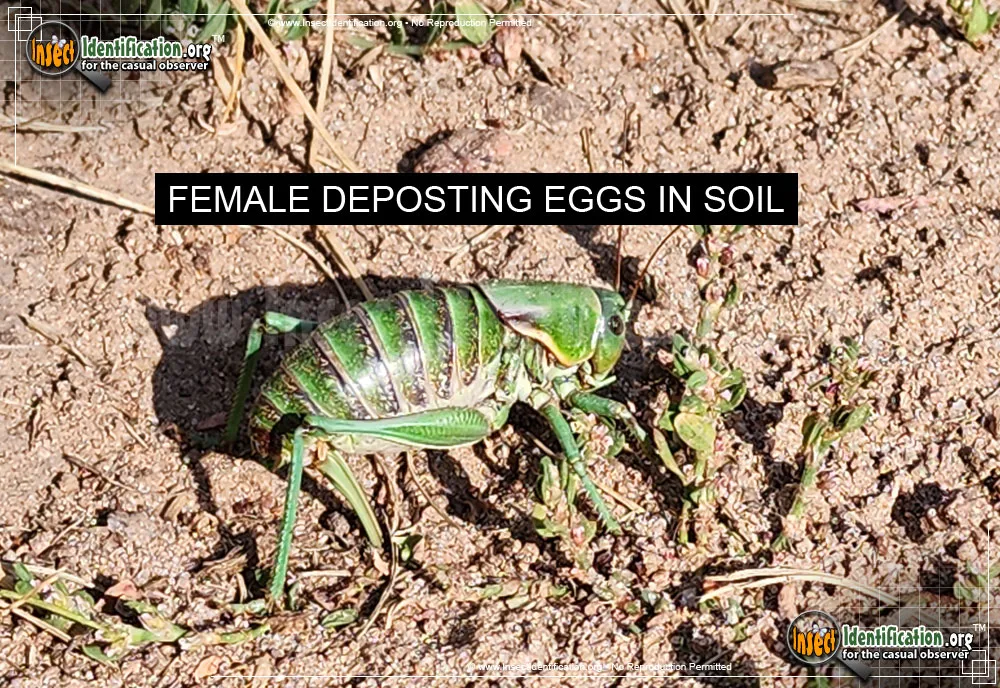
Mormon Cricket
Anabrus simplex
Notable Apote
Apote notabilis
Robust Apote
Apote robusta
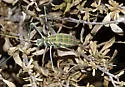
Big Bend Thread-leg Katydid
Arethaea arachnopyga
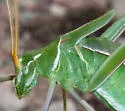
California Thread-leg Katydid
Arethaea brevicauda
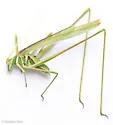
Carita Thread-leg Katydid
Arethaea carita
Prairie Thread-leg Katydid
Arethaea constricta