
Mexican Oak-leaf Grasshopper
Tomonotus mexicanus
This record describes Tomonotus mexicanus (species). Recorded family: Acrididae. Recorded order: Orthoptera.
Identification and Appearance
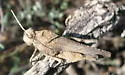
Very similar to T. ferruginosus except with fastigium proportionately wider and shorter, body proportionately slightly more slender, wings of a darker more reddish orange to red or pink. The pronotum is more roughened, with the top less even in shape, and with the median crest averaging perhaps a bit higher. The body pattern averages darker, with markings more contrasting, and leaning more toward blackish or grayish than the warmer earth tones common in T. ferruginosus . These insects seem to be more alert and agile, and even females fly higher, further, and more rapidly to escape. They often will fly up (and over) slopes or into trees and brush, where they are very difficult to follow. They seem much more difficult to capture than are individuals of T. ferruginosus , which are usually rather easy. In that species, females especially are reluctant to fly, and tend to fly low and very short distances. Specimens placed under this name on BugGuide are done so only tentatively. The known distribution of T. mexicanus is far to the south of the United States in Mexico, but certain specimens found in southeastern Arizona, mostly in summer, seem to fit within T. mexicanus better than they match T. ferruginosus . It may turn out that they are just a form of that more abundant northern species; they may indeed be T. mexicanus ; or, perhaps they are yet a third undescribed species. They need further morphological, genetic, and ecological study before anything definite can be decided about them. For now they are separated under the name that seems to fit best, in order to keep them from been ignored and hidden among the entries for the more typical T. ferruginosus .
Classification
- Kingdom
- Animalia
- Phylum
- Arthropoda
- Class
- Insecta
- Order
- Orthoptera (Grasshoppers, Crickets, Katydids)
- Suborder
- Caelifera
- Family
- Acrididae (Short-horned Grasshoppers)
- Subfamily
- Oedipodinae
- Tribe
- Arphiini
- Genus
- Tomonotus
Imported taxonomy record. Source availability varies; see the source references and editorial policy below.
Habitat and Range
Habitat
Seems to favor similar, though perhaps slightly hotter and drier habitat to those of T. ferruginosus , with adults usually found under or near trees or tall scrub in arroyos or canyon bottoms, where they are usually associated with leaf litter.
Geographic Range
Known so far, apparently, from mountains in Santa Cruz, Pima, and western Cochise Counties.
Diet and Behavior
Life History
Uncertain, but adults seem most abundant in July and August, with some living into autumn. This implies overwintering as eggs, but needs verification. T. ferruginosus overwinters as nymphs and matures in late winter / early spring, being most abundant as adults in April and May.
About Grasshoppers, Crickets, Katydids: the wider group
Order-level background for Orthoptera, the group containing Tomonotus mexicanus. Species-specific details appear above.
Group overview
Orthoptera includes ~28,000 described species of grasshoppers, crickets, and katydids. Desert locusts can form swarms covering 460 square miles containing up to 80 million individuals per square kilometer.
Ecological role of the group
Grasshoppers and crickets are a primary food source for birds, reptiles, and small mammals. Cricket farming is a growing industry - crickets require 12× less feed than cattle to produce the same amount of protein, using 2,000× less water.
Economic and practical significance of the group
A single large locust swarm can consume the same amount of food in one day as 35,000 people. The 2019-2021 East Africa locust crisis affected food security for 42 million people across multiple countries. Global crop losses from locusts can reach billions annually.
Recorded sources for this group: FAO, UN World Food Programme, research publications. Imported estimates may describe particular regions or reporting periods.
Photos of Mexican Oak-leaf Grasshopper (5)
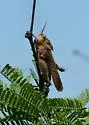
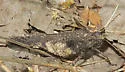
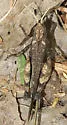
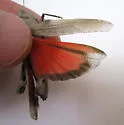
Photo credits: Contributed by David J. Ferguson
Frequently Asked Questions About Mexican Oak-leaf Grasshopper
What is Mexican Oak-leaf Grasshopper?
Mexican Oak-leaf Grasshopper (Tomonotus mexicanus) is a species in the family Acrididae, within the order Orthoptera.
How do you identify Mexican Oak-leaf Grasshopper?
Very similar to T. ferruginosus except with fastigium proportionately wider and shorter, body proportionately slightly more slender, wings of a darker more reddish orange to red or pink. The pronotum is more roughened, with the top less even in shape, and with the median crest averaging perhaps a bit higher. The body pattern averages darker, with markings more contrasting, and leaning more toward blackish or grayish than the warmer earth tones common in T. ferruginosus . These insects seem to be more alert and agile, and even females fly higher, further, and more rapidly to escape. They often will fly up (and over) slopes or into trees and brush, where they are very difficult to follow. They seem much more difficult to capture than are individuals of T. ferruginosus , which are usually rather easy. In that species, females especially are reluctant to fly, and tend to fly low and very short distances.
Where is Mexican Oak-leaf Grasshopper found?
| Feature | Details |
|---|---|
| Habitat | Seems to favor similar, though perhaps slightly hotter and drier habitat to those of T. ferruginosus , with adults usually found under or near trees or tall scrub in arroyos or canyon bottoms, where they are usually associated with leaf litter. |
| Range | Known so far, apparently, from mountains in Santa Cruz, Pima, and western Cochise Counties. |
What is the life cycle of a Mexican Oak-leaf Grasshopper?
Uncertain, but adults seem most abundant in July and August, with some living into autumn. This implies overwintering as eggs, but needs verification. T. ferruginosus overwinters as nymphs and matures in late winter / early spring, being most abundant as adults in April and May.