
Pine Tree Cricket
Oecanthus pini
This record describes Oecanthus pini (species). Recorded family: Oecanthidae. Recorded order: Orthoptera.
Identification and Appearance
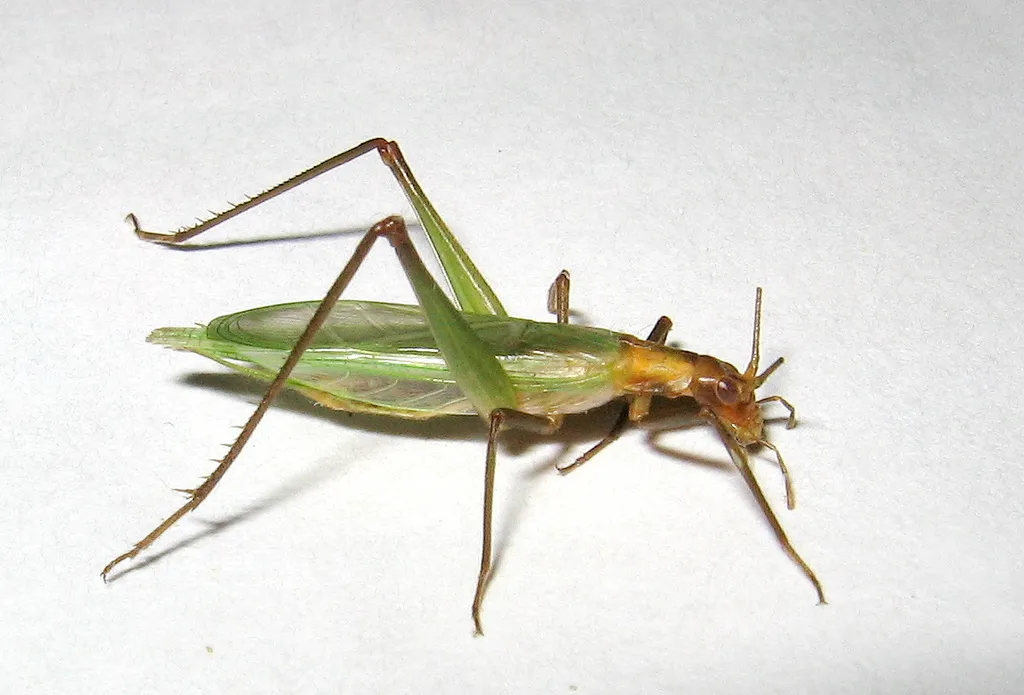
Reddish brown head, pronotum, antennae and distal limbs. Eyes are pink. Antennal markings similar to O. nigricornis. A great source for 'everything you ever wanted to know about tree crickets' is an article written in May 1915 by Bentley B. Fulton in a Technical Bulletin for the New York Agricultural Experiment Station. The Tree Crickets of New York: Life History and Bionomics
Wikipedia reference for Oecanthus pini: http://en.wikipedia.org/wiki/Oecanthus_pini.
Classification
- Kingdom
- Animalia
- Phylum
- Arthropoda
- Class
- Insecta
- Order
- Orthoptera (Grasshoppers, Crickets, Katydids)
- Suborder
- Ensifera
- Family
- Oecanthidae (Tree and Bush Crickets)
- Subfamily
- Oecanthinae
- Genus
- Oecanthus (Common Tree Crickets)
Imported taxonomy record. Source availability varies; see the source references and editorial policy below.
Habitat and Range
Habitat
Generally found on conifers, particularly White Pine. However, also have been known to inhabit: Cedar, Juniper, Blue Spruce, Black Spruce and Japanese Yew. One female in southern Wisconsin was found on a flowering Goldenrod -- 10 -12 feet from an isolated Juniper. Tall Red Pines were located 50 feet away. One male in eastern Tennessee was attracted to a black light under an Eastern Hemlock (although a White Pine was 10 feet away.) Tree crickets found on or near black barked conifers are often very darkly marked. Two examples: Lyons, Colorado (near Ponderosa Pines -Younger trees have blackish-brown bark) Quebec, Canada (near Pinus nigra)
Geographic Range
As of 1/2009, the SINA range map shows occurence to include the area from Missouri south to Texas then east to Florida then north to Maine then west to Michigan. Additionally, BugGuide has photos posted from Wisconsin and Ontario.
Diet and Behavior
Diet: Host tree fibers and soft bodied insects.
Life History
Undergo a paurometabolous development (Gradual Metamorphosis). Nymphs resemble small adults and gradually develop external wing buds. They live in the same habitat as adults, typically taking the same food.
Additional species information
Species notes from the sources
Etymology: At Words by William Whitaker , "pini" translates from latin to "pine".
About Grasshoppers, Crickets, Katydids: the wider group
Order-level background for Orthoptera, the group containing Oecanthus pini. Species-specific details appear above.
Group overview
Orthoptera includes ~28,000 described species of grasshoppers, crickets, and katydids. Desert locusts can form swarms covering 460 square miles containing up to 80 million individuals per square kilometer.
Ecological role of the group
Grasshoppers and crickets are a primary food source for birds, reptiles, and small mammals. Cricket farming is a growing industry - crickets require 12× less feed than cattle to produce the same amount of protein, using 2,000× less water.
Economic and practical significance of the group
A single large locust swarm can consume the same amount of food in one day as 35,000 people. The 2019-2021 East Africa locust crisis affected food security for 42 million people across multiple countries. Global crop losses from locusts can reach billions annually.
Recorded sources for this group: FAO, UN World Food Programme, research publications. Imported estimates may describe particular regions or reporting periods.
Photos of Pine Tree Cricket (3)
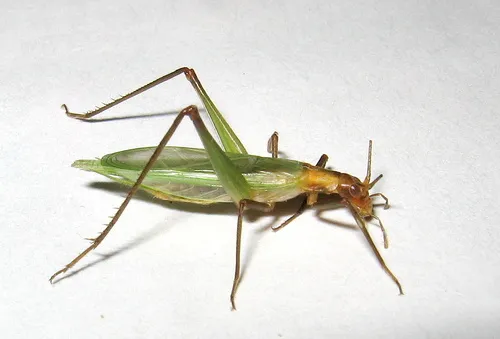
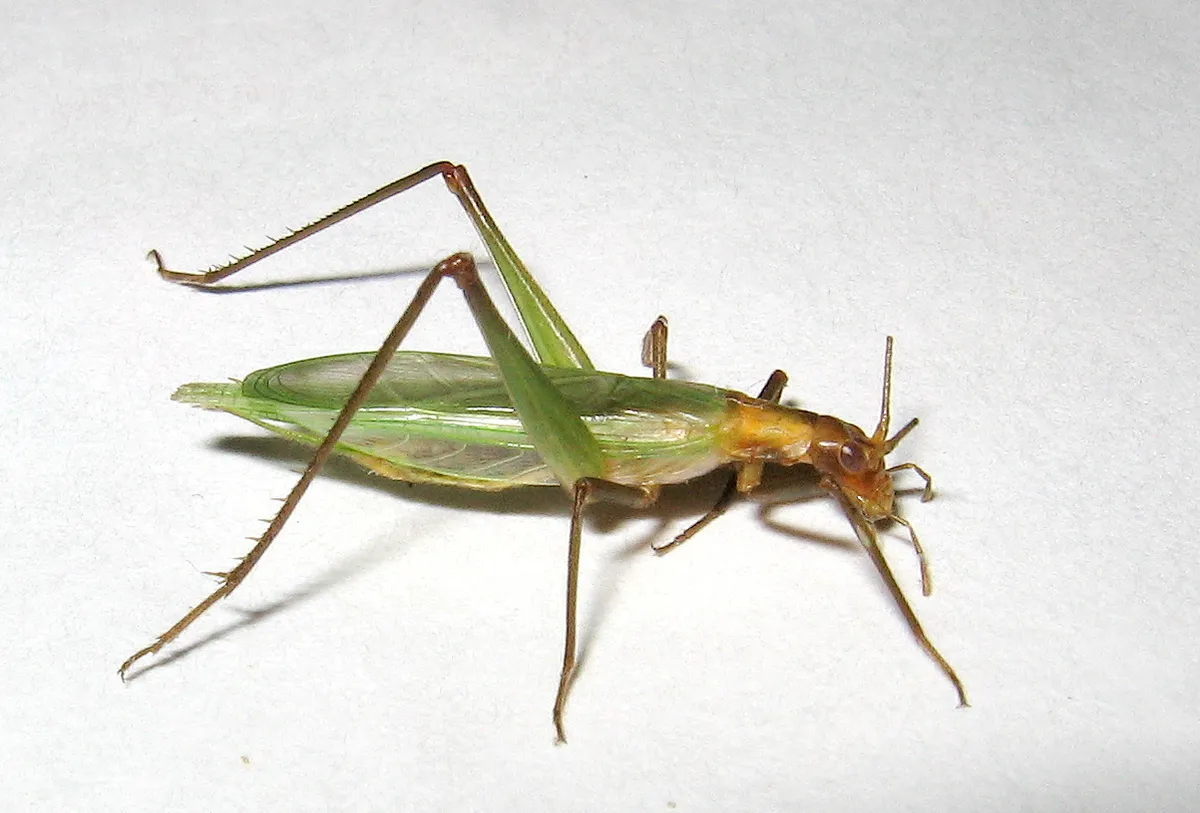
Photo credits: Contributed by Tony DiTerlizzi; Additional contributions by Robin McLeod , David Ferguson , Wisconsin Oecanthinancy , metrioptera
Frequently Asked Questions About Pine Tree Cricket
What is Pine Tree Cricket?
Pine Tree Cricket (Oecanthus pini) is a species in the family Oecanthidae, within the order Orthoptera.
How do you identify Pine Tree Cricket?
Reddish brown head, pronotum, antennae and distal limbs. Eyes are pink. Antennal markings similar to O. nigricornis.
Where is Pine Tree Cricket found?
| Feature | Details |
|---|---|
| Habitat | Generally found on conifers, particularly White Pine. However, also have been known to inhabit: Cedar, Juniper, Blue Spruce, Black Spruce and Japanese Yew. One female in southern Wisconsin was found on a flowering Goldenrod -- 10 -12 feet from an isolated Juniper. Tall Red Pines were located 50 feet away. One male in eastern Tennessee was attracted to a black light under an Eastern Hemlock (although a White Pine was 10 feet away.) Tree crickets found on or near black barked conifers are often very darkly marked. Two examples: Lyons, Colorado (near Ponderosa Pines -Younger trees have blackish-brown bark) Quebec, Canada (near Pinus nigra) |
| Range | As of 1/2009, the SINA range map shows occurence to include the area from Missouri south to Texas then east to Florida then north to Maine then west to Michigan. Additionally, BugGuide has photos posted from Wisconsin and Ontario. |
What does Pine Tree Cricket eat?
The diet of the Pine Tree Cricket includes Host tree fibers and soft bodied insects..
What is the life cycle of a Pine Tree Cricket?
Undergo a paurometabolous development (Gradual Metamorphosis). Nymphs resemble small adults and gradually develop external wing buds. They live in the same habitat as adults, typically taking the same food.