
Mexican Blue-wing Grasshopper
Machaerocera mexicana
This record describes Machaerocera mexicana (species). Recorded family: Acrididae. Recorded order: Orthoptera.
Identification and Appearance
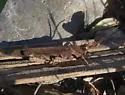
The projecting forehead, and the blue wings make adults of this slender species unmistakable. Males are active, agile, and difficult to approach, creating blue flashes as they fly between clumps of grass or out onto the sand and gravel bars. The females are seemingly more sluggish, and less inclined to fly, but are masters at diving or jumping out of sight, and will fly as well. No flight crepitation was heard from any, but some sounds were heard that may have been this species stridulating in the grass.
Classification
- Kingdom
- Animalia
- Phylum
- Arthropoda
- Class
- Insecta
- Order
- Orthoptera (Grasshoppers, Crickets, Katydids)
- Suborder
- Caelifera
- Family
- Acrididae (Short-horned Grasshoppers)
- Subfamily
- Oedipodinae
- Tribe
- Chortophagini
- Genus
- Machaerocera
Imported taxonomy record. Source availability varies; see the source references and editorial policy below.
Habitat and Range
Habitat
described as "rather lush mountain forests" by Daniel Otte, where it "perches on shrubs and low trees along forest margins." In Arizona it is along riparian habitat near the edge of water where grass growth is rank and where there is flood debris consisting of fallen trees and piled branches, logs, mud, and sod. The females favor the debris piles or often perch low on tree trunks, while the males favor the tall grass where they perch on the blades fairly high up in the plants.
Geographic Range
se AZ / Mex. to C. Amer. (Behrstock and Sullivan 2011)
Additional species information
Species notes from the sources
Etymology: Arizona specimens seem to fall close to the original description of M. magna , and are large in size for the species (particularly the females). This makes sense, since Durango and Sinaloa are both closer to Arizona than areas other names were described from. This is one of the few Oedipodine species in which the intercallary vein of both males and females is absent (females) or ill-defined and broken to the point of being basically absent (males). This has created hesitation among authors as to which subfamily of Grasshoppers it belongs. It has often been put into the catch-all (and unnatural) subfamily Acridinae. Overall morphology, not backed up by molecular evidence, place it in with the Oedipodinae, probably close to Chortophaga .
About Grasshoppers, Crickets, Katydids: the wider group
Order-level background for Orthoptera, the group containing Machaerocera mexicana. Species-specific details appear above.
Group overview
Orthoptera includes ~28,000 described species of grasshoppers, crickets, and katydids. Desert locusts can form swarms covering 460 square miles containing up to 80 million individuals per square kilometer.
Ecological role of the group
Grasshoppers and crickets are a primary food source for birds, reptiles, and small mammals. Cricket farming is a growing industry - crickets require 12× less feed than cattle to produce the same amount of protein, using 2,000× less water.
Economic and practical significance of the group
A single large locust swarm can consume the same amount of food in one day as 35,000 people. The 2019-2021 East Africa locust crisis affected food security for 42 million people across multiple countries. Global crop losses from locusts can reach billions annually.
Recorded sources for this group: FAO, UN World Food Programme, research publications. Imported estimates may describe particular regions or reporting periods.
Photos of Mexican Blue-wing Grasshopper (5)
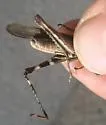
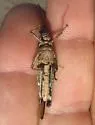
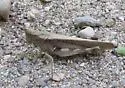
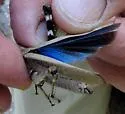
Photo credits: Contributed by Ted Kropiewnicki; Additional contributions by Mike Quinn , David Ferguson
Frequently Asked Questions About Mexican Blue-wing Grasshopper
What is Mexican Blue-wing Grasshopper?
Mexican Blue-wing Grasshopper (Machaerocera mexicana) is a species in the family Acrididae, within the order Orthoptera.
How big is Mexican Blue-wing Grasshopper?
males 22-35 mm females 32-52 mm
How do you identify Mexican Blue-wing Grasshopper?
The projecting forehead, and the blue wings make adults of this slender species unmistakable.
Where is Mexican Blue-wing Grasshopper found?
| Feature | Details |
|---|---|
| Habitat | described as rather lush mountain forests by Daniel Otte, where it perches on shrubs and low trees along forest margins. In Arizona it is along riparian habitat near the edge of water where grass growth is rank and where there is flood debris consisting of fallen trees and piled branches, logs, mud, and sod. The females favor the debris piles or often perch low on tree trunks, while the males favor the tall grass where they perch on the blades fairly high up in the plants. |
| Range | se AZ / Mex. to C. Amer. (Behrstock and Sullivan 2011) |