
Migratory Grasshopper
Melanoplus sanguinipes
This record describes Melanoplus sanguinipes (species). Recorded family: Acrididae. Recorded order: Orthoptera.
Identification and Appearance
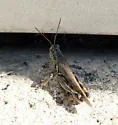
Very similar to several other species, and females in particular can be very difficult to distinguish. This species is best determinded by looking at males, in which the abdomen is only moderately swollen toward the tip. The subgenital plate is somewhat projecting and notched at the tip. The furculae are well developed, slender, pointed. The cerci are wide, slightly upturned apically, sligtly tapering, and rounded at tip. The males and often the females have a lot tubercle on the metasternum. The Hind femur varies in pattern, but usually there are indications of diagonal cross banding on the outer face overlaid on a herringbone pattern. The hind tibiae vary greatly in color, but most often are blue or red. They may also be brown, yellow, orange, pink, purple, or gray. Nymphs are very much like those of M. femurrubrum , except that the dark bar below the eye is more often missing, and the dark stripe on the outer face of the hind femur is usually crossed completely by a diagonal light band and a light patch near the base. It should be noted that for this species, some of the photos posted are best guesses. Most are almost certainly correctly identified, but there remains a chance that some really belong to other look-alike species. Males, where the end of the abdomen shows will definitely all be correct, but females are much more difficult. Tip of male abdomen
Classification
- Kingdom
- Animalia
- Phylum
- Arthropoda
- Class
- Insecta
- Order
- Orthoptera (Grasshoppers, Crickets, Katydids)
- Suborder
- Caelifera
- Family
- Acrididae (Short-horned Grasshoppers)
- Subfamily
- Melanoplinae
- Tribe
- Melanoplini
- Genus
- Melanoplus
Imported taxonomy record. Source availability varies; see the source references and editorial policy below.
Habitat and Range
Habitat
A wide range of open sunny areas with hebaceous plant cover.
Geographic Range
Most of North America north of tropics and south of arctic - Map
Diet and Behavior
Diet: Will feed on many species of plants, mostly favoring leafy herbaceous dicots. Can be a pest in gardens and crops.
Life History
Overwinters as eggs laid in soil. Eggs hatch in spring or after rains in summer, with adults from spring or summer until frost. In some southern regions it seems there can be two broods. In the arid Southwest hatching is sometimes delayed until late in summer after rains come. Copulation can last for 5 hours. Its believed this is for transfer of nutrients since sperm transfer takes only 10 minutes.
Additional species information
Species notes from the sources
Etymology: The wide range, abundance, and economic importance of this species are reflected in the numerous synonyms that the name Melanoplus sanguinipes bears.
About Grasshoppers, Crickets, Katydids: the wider group
Order-level background for Orthoptera, the group containing Melanoplus sanguinipes. Species-specific details appear above.
Group overview
Orthoptera includes ~28,000 described species of grasshoppers, crickets, and katydids. Desert locusts can form swarms covering 460 square miles containing up to 80 million individuals per square kilometer.
Ecological role of the group
Grasshoppers and crickets are a primary food source for birds, reptiles, and small mammals. Cricket farming is a growing industry - crickets require 12× less feed than cattle to produce the same amount of protein, using 2,000× less water.
Economic and practical significance of the group
A single large locust swarm can consume the same amount of food in one day as 35,000 people. The 2019-2021 East Africa locust crisis affected food security for 42 million people across multiple countries. Global crop losses from locusts can reach billions annually.
Recorded sources for this group: FAO, UN World Food Programme, research publications. Imported estimates may describe particular regions or reporting periods.
Photos of Migratory Grasshopper (5)

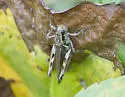
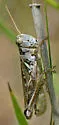
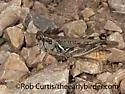
Photo credits: Contributed by Hannah Nendick-Mason; Additional contributions by cotinis , Mike Quinn , David Ferguson , Marci Hess , Tyler Hedlund
Frequently Asked Questions About Migratory Grasshopper
What is Migratory Grasshopper?
Migratory Grasshopper (Melanoplus sanguinipes) is a species in the family Acrididae, within the order Orthoptera.
How do you identify Migratory Grasshopper?
Very similar to several other species, and females in particular can be very difficult to distinguish. This species is best determinded by looking at males, in which the abdomen is only moderately swollen toward the tip. The subgenital plate is somewhat projecting and notched at the tip. The furculae are well developed, slender, pointed. The cerci are wide, slightly upturned apically, sligtly tapering, and rounded at tip. The males and often the females have a lot tubercle on the metasternum. The Hind femur varies in pattern, but usually there are indications of diagonal cross banding on the outer face overlaid on a herringbone pattern. The hind tibiae vary greatly in color, but most often are blue or red. They may also be brown, yellow, orange, pink, purple, or gray. Nymphs are very much like those of M. femurrubrum , except that the dark bar below the eye is more often missing, and the dark stripe on the outer face of the hind femur is usually crossed completely by a diagonal light band and a light patch near the base. It should be noted that for this species, some of the photos posted are best guesses. Most are almost certainly correctly identified, but there remains a chance that some really belong to other look-alike species. Males, where the end of the abdomen shows will definitely all be correct, but females are much more difficult. Tip of male abdomen
Where is Migratory Grasshopper found?
| Feature | Details |
|---|---|
| Habitat | A wide range of open sunny areas with hebaceous plant cover. |
| Range | Most of North America north of tropics and south of arctic - Map |
What does Migratory Grasshopper eat?
The diet of the Migratory Grasshopper includes Will feed on many species of plants, mostly favoring leafy herbaceous dicots. Can be a pest in gardens and crops..
What is the life cycle of a Migratory Grasshopper?
Overwinters as eggs laid in soil. Eggs hatch in spring or after rains in summer, with adults from spring or summer until frost. In some southern regions it seems there can be two broods. In the arid Southwest hatching is sometimes delayed until late in summer after rains come. Copulation can last for 5 hours. Its believed this is for transfer of nutrients since sperm transfer takes only 10 minutes.