
Family Short-horned Grasshoppers (Acrididae)
Acrididae is a family in the order Orthoptera. Browse 502 named species recorded in this family, or open an individual profile for its available identification and natural-history information.
Species in Acrididae (502)
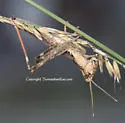
Slender Range Grasshopper
Acantherus piperatus
Identification: A relatively slender species resembling other "toothpick" grasshoppers in shape, with subdued often finely mottled gray or brown coloring that blends with surroundings, often quite dark and occasionally nearly black. Often with top ha
Sumichrast Toothpick Grasshopper
Achurum sumichrasti
Identification: Distinguished from other U.S. Achurum species by its long wings (extending beyond end of abdomen)
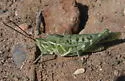
Green Fool Grasshopper
Acrolophitus hirtipes
Identification: Green, rarely brown, often with cream to pinking mottling. Head pointed. Antennae sword-shaped and reddish to nearly black. Pronotum with a prominent smooth rounded crest. Wings greenish yellow toward the base, and with a broad bl
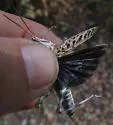
Texas Point-head Grasshopper
Acrolophitus maculipennis
Identification: Very similar to other species of Acrolophitus . Overlaps range with A. hirtipes , which is larger, has a prominent crest on pronotum, and is usually more green than blackish. Also, all other Acrolophitus species have yellow hind win
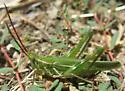
Nevada Point-Head Grasshopper
Acrolophitus nevadensis
Identification: Similar to A. hirtipes , except with no crest on pronotum, smaller in size, and occuring further west (not known to overlap in distribution). A. pulchellus is very similar, except with more extensive pale markings, and found further n
Idaho Point-headed Grasshopper
Acrolophitus pulchellus
Identification: Not likely to be confused with any other species. Pointed head; long brownish orange antennae; body green, mottled and striped with white to pinkish; hind wings yellow at base with blackish cross band. Similar to Acrolophitus hirtip
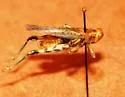
California Saltbush Grasshopper
Aeoloplides californicus
Identification: Tegmina overlap over back when folded, longer than pronotum (usually much longer). Similar to A. tenuipennis , differing in structure of hind femur, which is not distinctly grooved along lower edge, and without a wedge-shaped flange
Northern Coast Bush Grasshopper
Aeoloplides fratercula
Identification: Has short ovate tegmina. Lower side of hind femur not grooved and without basal wedge/flange. Male cerci straight at tip. Distinction from A. fuscipes seems weak. Both seem out of place among other Aeoloplides .
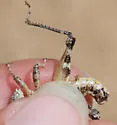
Southern Coast Bush Grasshopper
Aeoloplides fuscipes
Identification: Has short ovate tegmina. Lower side of hind femur not grooved and without basal wedge/flange. Male cerci slightly bent at tip. Distinction from A. fratercula seems weak. Both seem out of place among other Aeoloplides .
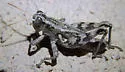
Little Saltbush Grasshopper
Aeoloplides minor
Identification: Probably only a northern variant of A. tenuipennis with which it seems to intergrade. Differs in shorter wings (usually not reaching tip of abdomen, smaller average size, and more northern distribution. Differs from sympatric A. chen
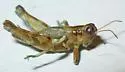
Rio Grande Saltbush Grasshopper
Aeoloplides rotundipennis
Identification: Green to brown; two dark stripes along middle of pronotum; tegmina short and oval, little or not longer than pronotum; found on shubby Chenopods in desert in Rio Grande Valley in New Mexico.
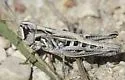
Club-horned Grasshopper
Aeropedellus clavatus
Identification: Males are easy to recognize because of the clubbed antennae. The antennae aren't as strongly clubbed on the females. Similar to Chorthippus , but the pattern on the hind legs, slightly bulkier build, and the lack of much yellow below
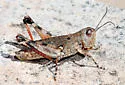
Ageneotettix salutator
Ageneotettix salutator
Identification: Very similar to A. deorum , except antennae not white, fastigium more slender, middle dark marking on top of hind femur usually not triangular.
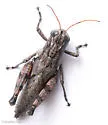
Agroecotettix aristus
Agroecotettix aristus
Identification: Compare characters of male aedeagus in
Modest Grasshopper
Agroecotettix modestus
Identification: Brownish or grayish, mottled darker, with parallel dark lines on top of the pronotum; red on hind tibiae and inner face of hind femora; short oval widely separated tegmina. Regarding the two subspecies in Texas, the following is taken

Agroecotettix texmex
Agroecotettix texmex
Identification: Compare aedeagus figures in . Only known species in south Texas.
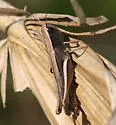
Brown Winter Grasshopper
Amblytropidia mysteca
Identification: Robust, yellowish-brown, often with broad golden stripe running lengthwise above. Hind tibiae brownish-yellow. Eye is large. Face is slanted, top of head is rounded. Antennae are short. When disturbed, flies briefly, then dives and bu
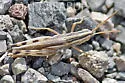
Striped Slant-face Grasshopper
Amphitornus coloradus
Identification: The rich blue hind tibiae separate it from similar species in the genera Eritettix & Opeia . Also, the pale stripe that is often seen down the middle of the back only rarely occurs in those species. In Opeia the top of the sides of
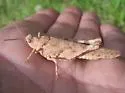
Hebard's Blue-winged Desert Grasshopper
Anconia hebardi
Identification: Slender active species of desert with relatively plain gray to brown coloring, with usually some inconspicuous small dark markings but no obvious dark bands across tegmina. Hind wings clear with distinct blue color toward base and no
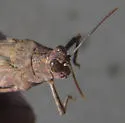
Alkali Grasshopper
Anconia integra
Identification: Dull grayish, brownish, or green, often with small darker spotting and often with a pale "X" on the back of the pronotum. Slender in form with pronotum noticeably wide at the back, narrow in front, with hind angle above rounded, with
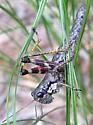
Appalachia arcana
Appalachia arcana
Identification: A flightless grasshopper endemic to northern Lower Michigan. It is commonly found on sweetfern ( Comptonia peregrina ) in jack pine barrens.
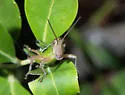
Linear-winged Grasshopper
Aptenopedes sphenarioides
Identification: Green or purplish brown. Slant-faced, eyes large. Wings reduced to pads, even in adult, so flightless. See under Remarks on the genus page
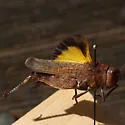
California Sulphur-winged Grasshopper
Arphia behrensi
Identification: Adults in spring and early summer, some may live longer. Hind wings yellow with dark border. Fastigium relatively broad, except very narrow toward front where it meets frontal costa. Hind tibiae blue (at least partly). Nearly ident
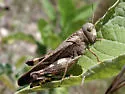
Pecos Arphia
Arphia pecos
Identification: Similar to Arphia simplex , but the "forhead" is less projected in front of the eyes and more rounded, with side ridges at the front of the fastigium not prominent. Wings more often darker in color (orange to red). It is usually fou
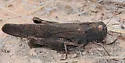
Red-winged Grasshopper
Arphia pseudonietana
Identification: Have characters of Arphia , plus: Adults most abundant late in season. Hind wings are usually rich orange-red to blood red (rarely lighter orange or yellow) and always with wide black borders. Body coloration is dark, usually grayish
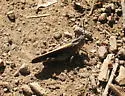
California Orange-winged Grasshopper
Arphia ramona
Identification: Adults primarily in late winter / spring. Wings usually orange (verging to red, or rarely yellow). Produces a harsh buzz in flight. A. behrensi is similar, but averages smaller, a bit more slender, with fastigium a bit more slender,
California Red-winged Grasshopper
Arphia saussureana
Identification: Like A. pseudonietana , except abdomen and ventral thorax typically paler brownish or yellowish with limited darker coloration (typically banded or solid dark brown to black in A. pseudonietana ); hind femur normally with two complete
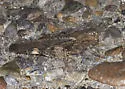
Plains Yellow-winged Grasshopper
Arphia simplex
Identification: One of our largest species of Arphia ; adults mostly in spring; hind wings most often yellow to orange with narrow band that has a long spur well-separated from the costal margin. One or two main veins on sides of folded tegmina are
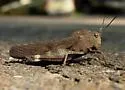
Autumn Yellow-winged Grasshopper
Arphia xanthoptera
Identification: One of largest of its genus, typically dark, usually has yellow hindwings. Un-cut crested pronotum is distinctive as is size (in east), and hind tibiae are usually very dark. Of late season occurrence. A. sulphurea and A. conspersa a
Big-headed Grasshopper
Aulocara elliotti
Identification: A fairly variable species. Typically with a pale "X" on the pronotum, though it may be partial or faded. Hind femur with two black bands, visible from above. Hind tibia blue. Wings extend beyond the tip of the abdomen. Does indeed see
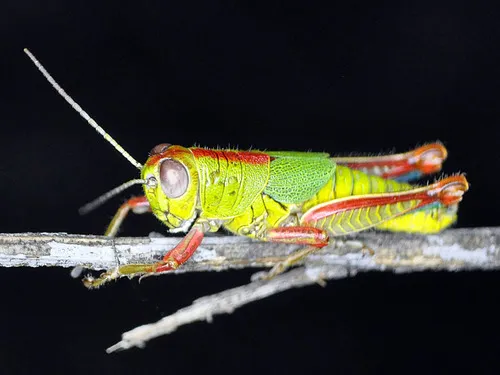
Atascosa Gem Grasshopper
Aztecacris gloriosa
Identification: Rather similar in appearance to Hesperotettix and Poecilotettix , but somewhat stockier in build; male with upper margin of subgenital plate not elevated near base, but nearly flat; with short oval tegmina ( Hesperotettix & Poecilotet
Humphrey's Grasshopper
Barytettix humphreysii
Identification: Color varies from light brown through grays to bluish (or combinations of these), with paler tan to whitish or yellowish markings, and sometimes with reddish tinges on hind femora and abdomen. Hind tibiae vary from yellow (most commo
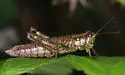
Wingless Mountain Grasshopper
Booneacris glacialis
Identification: Totally wingless spurthoat Grasshopper; usually greenish; with face nearly vertical. Found in northeast. Very closely akin, and similar to Dendrotettix, Appalachia, and perhaps Melanoplus viridipes , but those all have at least short
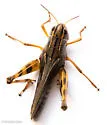
Prairie Boopie
Boopedon gracile
Identification: The males of this species have bluish hind wings and readily fly short distances when disturbed
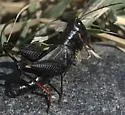
Ebony Grasshopper
Boopedon nubilum
Highly varied in color, but males are usually black with little pattern and females brown with a distinct pattern, though other hues such as grays and greens are not uncommon among females. Black females that look like the males are rare, and typica
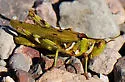
Creosote Bush Grasshopper
Bootettix argentatus
Identification: Distinctive: most similar to the unrelated Creosote Bush katydid ( Insara covilleae ), which is distinguished by the long antennae and pattern specifics. Male song is a short 1-2 second long, locust-like reel given after dusk.
Slow Mountain Grasshopper
Bradynotes obesa
Identification: Fat with short legs and red dots between eyes.
Yukon Slant-faced Grasshopper
Bruneria yukonensis
Separated from other Bruneria species by more than 1000 km.
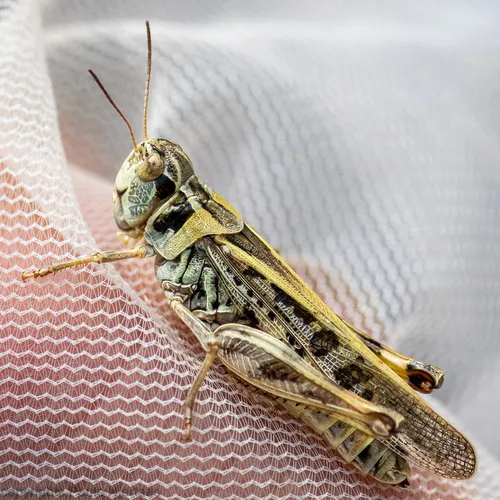
Clear-winged Grasshopper
Camnula pellucida
Identification: Size relatively small with adults mostly between 3/4 and 1 1/4 inch long (face to folded wing tips). Surface of body appearing rather smooth. Variable in coloration, but usually grayish, yellowish, or brownish with dark pantherine s
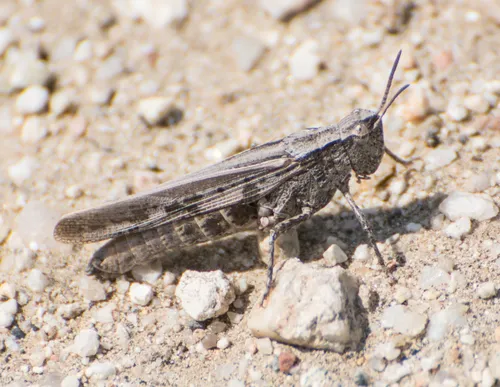
California Clouded Grasshopper
Chimarocephala californica
Identification: Similar in general appearance to Encoptolophus pallidus , but structurally somewhat more like Encoptolophus subgracilis , with a narrower fastigium and straighter lateral pronotal carinae than both. Occurs futher west than both, and
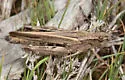
Chimarocephala elongata
Chimarocephala elongata
Rather similar in appearance to Stethophyma , but smaller, femur proportionately wider, and found in a different region. Could easily be confused as a Slant-face Grasshopper, but none others in the same region look quite the same (and presence of to
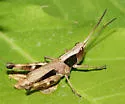
Sprinkled Grasshopper
Chloealtis conspersa
Identification: This is a species with the face distinctly slanting and the head somewhat pointed. The top of the head has raised edges and a distinct raised mid-line on the fastigium, and the "lateral faveolae" to its front edge are not visible fro
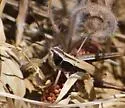
Diana Black-side Grasshopper
Chloealtis dianae
Identification: Coloration similar to, but more distinct than in C. gracilis.
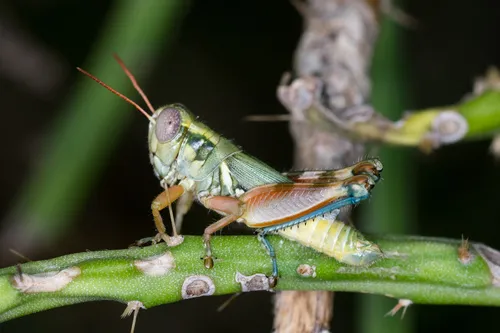
Texas Cholla Grasshopper
Chloroplus cactocaetes
Identification: Usually olivaceous green with dark markings of darker and richer green. Head large (wider and higher than pronotum) with large brown eyes. Antennae slender, shorter than lenghth of head and pronotum together; reddish with yellowish
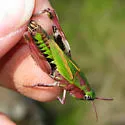
Mendocino Green-striped Grasshopper
Chortophaga mendocino
Much like other Chortophaga , especially like C. australior in build, and like C. viridifasciata in coloring. Wings of females often shorter than abdomen and sometimes not reaching tips of hind femora. Very similar to Chimarocephala pacifica , which
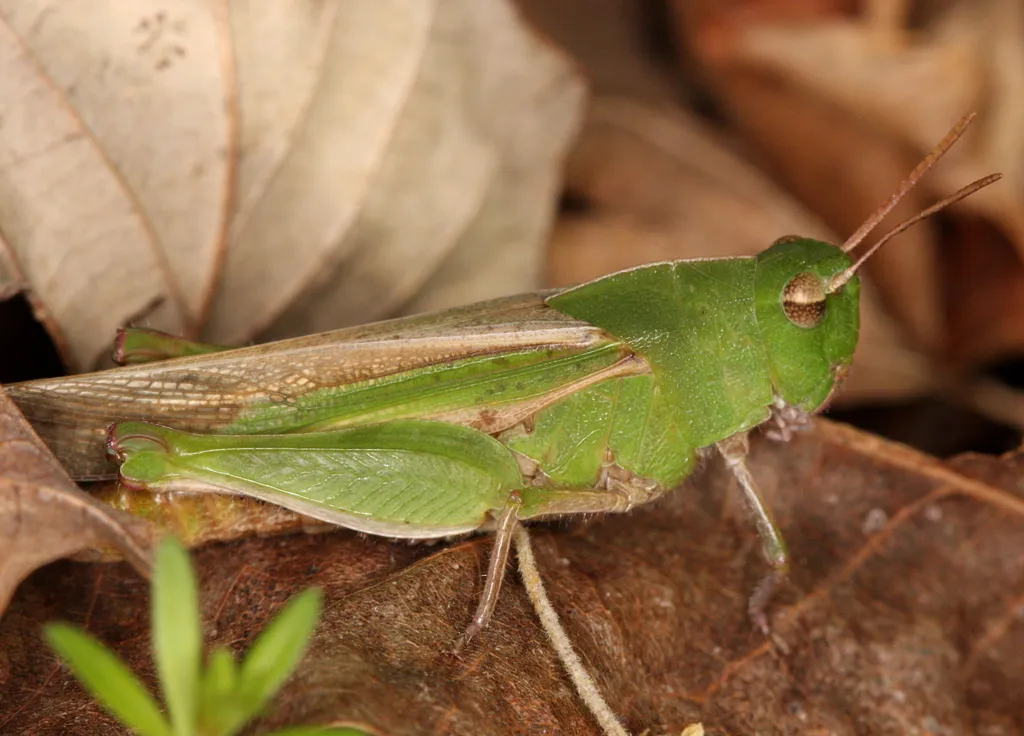
Green-striped Grasshopper
Chortophaga viridifasciata
Identification: Green and brown phases. Females usually green, males usually brown. Wings faint yellow when spread, smoky brown to nearly black towards tip. Strong pronotal ridge. Green (or brown) stripe near the border of front wings. Southern and
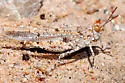
Samalayuca Dune Grasshopper
Cibolacris samalayucae
Identification: Very similar to Cibolacris parviceps in morphology and behavior. Averages slightly more slender in build with the pronotum more roughened. Coloring of C. samalayucae is more evenly speckled with tiny dark spots, and larger dark spot
Carlinian Snapper
Circotettix carlinianus
Identification: Easily recognized by it's very loud and harsh interrupted buzzing crepitation while in flight, and by the black coloring on the otherwise clear wings. No other species within it's range is similar enough to confuse with it if wings a
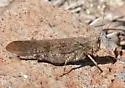
Coconino Wrangler Grasshopper
Circotettix coconino
Identification: Not reliably separable from C. rabula , but has blue hind tibiae (usually brownish to yellow in C. rabula , but intermediate colors occur across northern Arizona and northwestern New Mexico). On average the wings are shorter in C. co
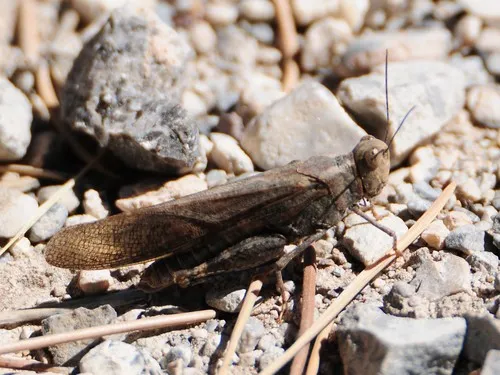
Rattling Grasshopper
Circotettix crotalum
Identification: Mostly this is a rather plain looking deep brown to blackish insect, but on light colored rocks it may be lighter in color with more prominent mottling. Confusion with other Circotettix species is not an issue though, as this is the o
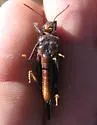
Dancing Grasshopper
Circotettix maculatus
Identification: Usually the body is more strongly marked with dark spots or irregular cross bands than in related species that are found with it. The wings are partly black without yellow, green or blue coloring. Smaller in size than other Circotet
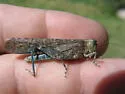
Shasta Grasshopper
Circotettix shastanus
A very loud, conspicuous, and striking grasshopper when in flight, and a likely to be a memorable feature of any summer / autumn visit to the Sierra Nevada. Even when people don't see or notice the actual insects, the sound is often a part of the ex
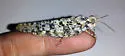
San Gabriel Wrangler Grasshopper
Circotettix splendidus
Identification: Overall grayish or brownish (usually rather light), with darker speckling that may group into irregular broken dark cross bands on the tegmina (front wings). Hind wing with an undulate outer margin and produced apex; yellow at base,
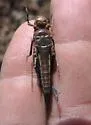
Undulant-Winged Grasshopper
Circotettix undulatus
Identification: Found west from the Rocky Mountains. Hind wings usually greenish to blue (yellowest in the north, bluest in the south), and hind tibiae usually blue (sometimes greenish, or grayish). Dark wing band usually faint to absent (when pres
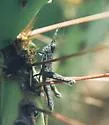
Gray Creosotebush Grasshopper
Clematodes larreae
Identification: Mottled gray or brown; pronotum rugose; tegmina very short. The only spur-throated and slant-faced grasshopper in New Mexico. Rarely collected, possibly because of its excellent camouflage.
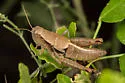
Conalcaea cantralli
Conalcaea cantralli
Identification: Distinction as a species from Conalcaea huachucana is dubious, and based on minor differences in male genitalia. Conalcaea cantralli displaces Conalcaea huachucana geographically. Conalcaea huachucana subspecies coyoterae is roughly i
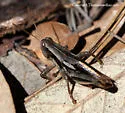
Huachuca Grasshopper
Conalcaea huachucana
Very similar to Barytettix , but the half and half color pattern of the tiny wings is distinctive in Conalcaea . Nymphs of the two genera are more difficult to distinguish, and habitat is often the best guide. Distinction from other short-winged spe
San Clemente Grasshopper
Conozoa clementina
Identification: Very similar to Conozoa clementina , except found on San Clemente Island. Pronotum a little more rough in surface texture, pronotal carina perhaps averaging a bit higher in profile. Also similar to C. carinata , but from a different
Central Valley Grasshopper
Conozoa hyalina
Identification: Similar to C. texana and rebellis , but somewhat larger and plainer in pattern than usual for those species. Hind wings of C. hyalina are usually nearly clear, faintly yellow, with dark cross band absent, faint, or cloudy, not bold c
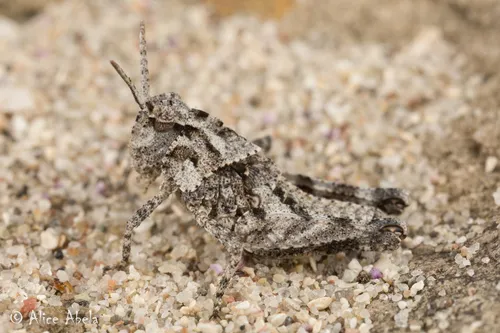
San Nicolas Grasshopper
Conozoa nicola
Identification: Apparently the only Conozoa on San Nicolas Island, with characteristics as for the genus. Lateral lobes of pronotum with hind angle rounded or only with a slight indication of a tooth. Pronotal carina well developed, cut once and oft
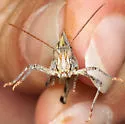
White-lined Grasshopper
Conozoa rebellis
Identification: Not distinguishable from Conozoa texana except by coloration and location. C. rebellis differing in usually being more strikingly marked with linear dark and white patterning that tends to run along the axis of the body. Hind tibiae
Groove-headed Grasshopper
Conozoa sulcifrons
Differs from C. carinata in usually having red or orange (often yellow in northern specimens) hind tibiae; and, median carina of pronotum lower and less even in profile.
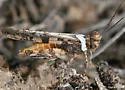
Cristate Grasshopper
Conozoa texana
Identification: Typical of Conozoa (see Info section under genus heading). Variable, but slender; with lateral lobes of pronotum projecting somewhat downward at lower rear corner and usually somewhat angled or toothed there; median crest of pronotum
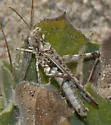
Saussure's Desert Grasshopper
Derotmema saussureanum
Identification: Small (mostly between about 14 and 30 mm, or roughly an inch long). Head large, pronotum narrower than head, roughened by tubercles on top, and with hind margin distinctly angled. Wings pale yellow, greenish, or blue with a curved d
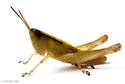
Elegant Grasshopper
Dichromorpha elegans
Identification: One sulcus crossing pronotum, as opposed to D. viridis which has two.
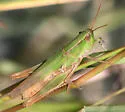
Dichromorpha prominula
Dichromorpha prominula
Identification: Lateral pronotal carinae usually cut by one sulcus, occasionally by two. Lateral carinae spaced more closely than in D. viridis . Forewings extending beyond end of abdomen, and usually reaching ends of hind femora. Males with dark pos
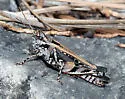
Mexican Dichroplus
Dichroplus notatus
Identification: Wings fully developed and reach to near or past hind femora when folded. Similar to Melanoplus and Aidemona , but with distinctive color pattern. Usually with tops of folded tegmina and pronotum paler than dark sides and with dark m
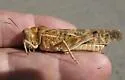
High Plains Grasshopper
Dissosteira longipennis
Identification: A large relatively slender Grasshopper, very like Dissosteira carolina , except with base of wings transparent bluish in color, and outer margin not yellowish, but rather clear to translucent white. Body and tegmina usually with more
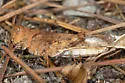
California Rose-Winged Grasshopper
Dissosteira pictipennis
Identification: Relatively high pronotal crest cut only once (sometimes with a second shallow notch toward front). Wings rose-pink to red in color with a curved dark band across middle. Often produces an interrupted buzzing sound in flight. Somethi
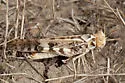
Spurcate Grasshopper
Dissosteira spurcata
Identification: A large relatively slender Grasshopper, very like Dissosteira carolina , except with coloring of wings reversed, being slightly yellowish pale translucent with a dark border (which may be faint). Body and tegmina usually pale yellowis
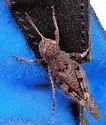
Clouded Grasshopper
Encoptolophus sordidus
Identification: Wing A species that tends to be common into Autumn, and to sometimes live even into early winter.
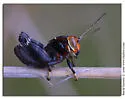
Little Eastern Grasshopper
Eotettix pusillus
Identification: Adults are metallic green and black, but nymphs have a strikingly different pattern of black and red.
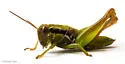
Handsome Florida Grasshopper
Eotettix signatus
Identification: The other two Eotettix species have round to oval forewings that are shorter than the pronotum
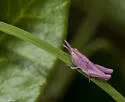
Texas Short-winged Slant-face Grasshopper
Eritettix abortivus
Identification: Similar to Eritettix simplex , except smaller in body size, with shorter wings. The color form with solid dark bands along sides of thorax usually has these bands much wider than in that species. Similar to Eritettix simplex , except
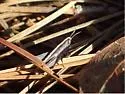
Obscure Grasshopper
Eritettix obscurus
Identification: Wings shorter than abdomen. Found in Florida.
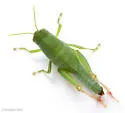
Floridacris etami
Floridacris etami
Identification: Adult males and females rather robust; distinguished from Aptenopedes and Floritettix by the presence of extremely narrow, slender tegmina (barely noticeable) which reach to (female) or across (male) the tympanum. Head more blunt than
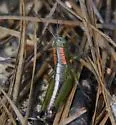
Wingless Florida Grasshopper
Floritettix aptera
Identification: Otte (2014) split this 'species' into two genera and numerous species. See under Remarks on the Aptenopedes genus page
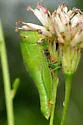
Floritettix nigropicta
Floritettix nigropicta
Identification: Adult males: body grey with black markings and no pale median stripe; green legs and blue hind tibiae. Females difficult to distinguish from those of other Floritettix spp. except by association with males.
Morse's Wingless Grasshopper
Gymnoscirtetes morsei
Identification: Similar to M. pusillus , but found more northwestard in northern Florida and adjacent Alabama. Differs in slightly larger average size. Male subgenital plant with the upper margin more elevated at the front, and with higher narrow l
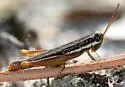
Little Wingless Grasshopper
Gymnoscirtetes pusillus
Identification: Greenish yellow to tan in color, and bears a black and white lateral stripe running from each eye to about the midpoint of the abdomen or beyond. The adult is wingless. In males, the furcula is barely visible. The cerci taper graduall
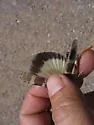
Hadrotettix magnificus
Hadrotettix magnificus
Identification: Inner face of hind femur has some red
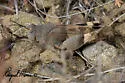
Three-banded Grasshopper
Hadrotettix trifasciatus
Identification: Inner face of hind femur has some blue
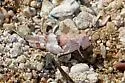
Arroyo Grasshopper
Heliastus benjamini
Identification: Smallish (mostly under 1.25 inches, i.e., 32 mm, long). Usually grayish or reddish brown (matching substrate), with contrasting dark cross bands. Hind wings basally red to rose-red with faint cloudy dark cross band. Hind femur intern
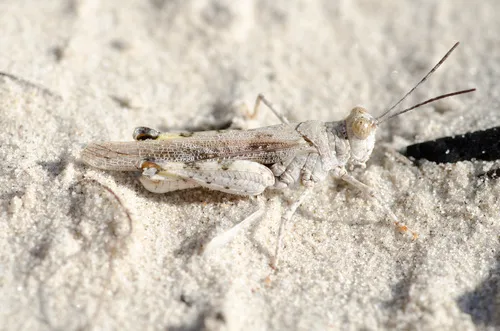
Rose-wing Beach Grasshopper
Heliastus subroseus
Identification: Distinctive and easy to recognize. Very similar to Trimerotropis maritima when wings are folded, but somewhat smaller in size. However, pink wings with little indication of a dark cross band vs. yellow with a bold dark cross band ma
Rufous Grasshopper
Heliaula rufa
Identification: Head large, wider and higher than pronotum, rounded. Top of pronotum rounded with no distinct raised ridges and often a faint pair of bumps at front edge. Distinctive pattern of pale grayish, brownish, pinkish, etc. with dark speckl
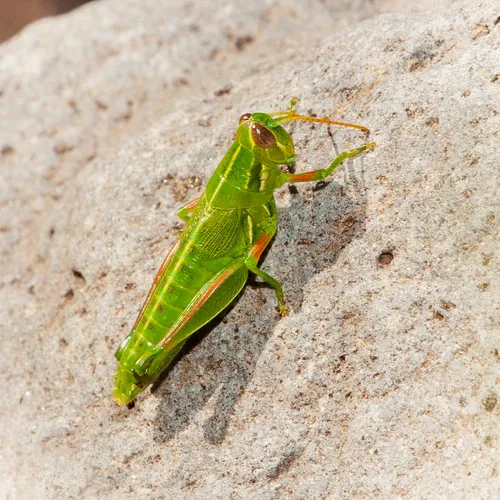
Hesperotettix curtipennis
Hesperotettix curtipennis
Identification: Very similar to Hesperotettix viridis , especially the subspecies pratensis , but with very short wings that are usually separated along the middle when folded. This may only be a subspecies of H. viridis , but H. viridis ssp. viridi
Florida Purple-striped Grasshopper
Hesperotettix floridensis
Identification: Very like Hesperotettix speciosus and perhaps only a subspecies. Differs in shorter wings with wide rounded tegmina shorter than pronotum.
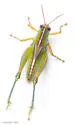
Osceola grasshopper
Hesperotettix osceola
Identification: Green with white stripes and black & reddish markings. Hind tibiae blue. Wings shorter than pronotum. Very similar to H. viridis subspecies pratensis & brevipennis which occur further north and have longer wings.
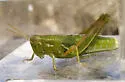
Hesperotettix pacificus
Hesperotettix pacificus
Identification: Much like Hesperotettix viridis except wings short (usually no longer than pronotum), with tegmina broad and rounded, and usually not touching over back. When short-winged, H. viridis have tegmina narrower in proportion and usually n
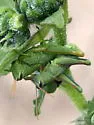
Showy Grasshopper
Hesperotettix speciosus
Identification: Bright green (rarely brown or purple), with eyes spotted white, veins of tegmina white, and body finely mottle in white. Pronotum with a fine network of irregular low narrow ridges (usually these are the white parts). Usually with a
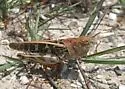
Wrinkled Grasshopper
Hippiscus ocelote
Identification: Heavy bodied, with large rounded head, nearly smooth on top between eyes. Pronotum rough on top, often with low irregular raised parallel ridges toward the rear; with median ridge cut once at middle . Usually gray and brown with a l
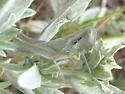
Mugwort Grasshopper
Hypochlora alba
Identification: The white-striped pale gray-green color (occasionally tan or pale brown) of this grasshopper, along with the short wings and small size, make it unmistakable. While very common, it is rarely noticed.
Karokia memorialis
Karokia memorialis
Specimens were reported as Booneacris blanci , before described as a distinct species. The closeness of localities for this and the other species make one wonder if they are truly distinct. Little known, rarely collected, and in need of more study.
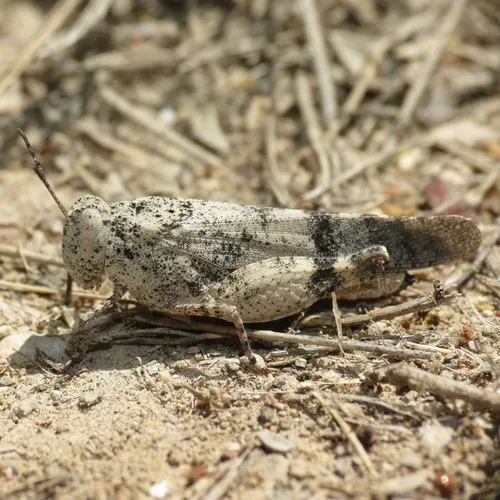
Aztec Grasshopper
Lactista aztecus
Identification: Small size (females usually not or little over 1 inch long, males smaller). Pronotum is much narrower at front than back and has low median ridge cut only once. Hind wings yellow with dark cross band; hind tibiae usually bluish. Ou
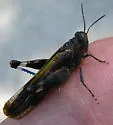
Trailside Grasshopper
Lactista gibbosus
Identification: Similar to Arphia , but averages smaller and narrower of build, with wings always yellow (often orange or red in sympatric Arphia ), hind tibiae blue (sometimes not in Arphia , and forewings are usually more noticeably cross-banded th
Saussure's Blue-winged Grasshopper
Leprus intermedius
Identification: Stocky grasshopper with varied coloring in shades of browns and grays (sometimes nearly black). The tegmina are crossed by well defined dark bands, and there are usually two pale lines along their top angles when folded. The wings a
Wheeler's Blue-winged Grasshopper
Leprus wheeleri
Identification: Large robust grasshopper with large head, Tegmina with well defined wide cross bands and usually two pale lines running along top edges when folded. Wings yellow to light blue (usually greenish) with a curved dark band (no spur) alon
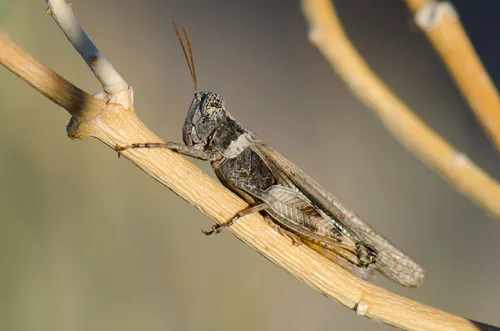
Desert Clicker Grasshopper
Ligurotettix coquilletti
Identification: Small, uniformly grayish/brownish with long wings. Abdomen typically yellow. Males stridulate during the day and night. Author of this species (and genus) is Jerome McNeill, about whom little information is readily available. Interest
Mexican Blue-wing Grasshopper
Machaerocera mexicana
Identification: The projecting forehead, and the blue wings make adults of this slender species unmistakable. Males are active, agile, and difficult to approach, creating blue flashes as they fly between clumps of grass or out onto the sand and grave
Alabama Spur-throat Grasshopper
Melanoplus alabamae
Identification: Very like M. querneus & M. nigrescens from further east. Wings are usually longer, and male cerci are more expanded apically. It is also a bit probematic to know where M. walshii (to the north) stops and M. alabamae begins. The main