
Grasshoppers, Crickets, Katydids
Order Orthoptera
The Grasshoppers, Crickets, Katydids (Order Orthoptera) includes 1,030 species across 22 families and 248 genera in our directory.
About Grasshoppers, Crickets, Katydids
Orthoptera includes ~28,000 described species of grasshoppers, crickets, and katydids. Desert locusts can form swarms covering 460 square miles containing up to 80 million individuals per square kilometer.
Economic Impact
A single large locust swarm can consume the same amount of food in one day as 35,000 people. The 2019-2021 East Africa locust crisis affected food security for 42 million people across multiple countries. Global crop losses from locusts can reach billions annually.
Ecological Role
Grasshoppers and crickets are a primary food source for birds, reptiles, and small mammals. Cricket farming is a growing industry - crickets require 12× less feed than cattle to produce the same amount of protein, using 2,000× less water.
Families in Orthoptera (22)
Species in Orthoptera (1,030)
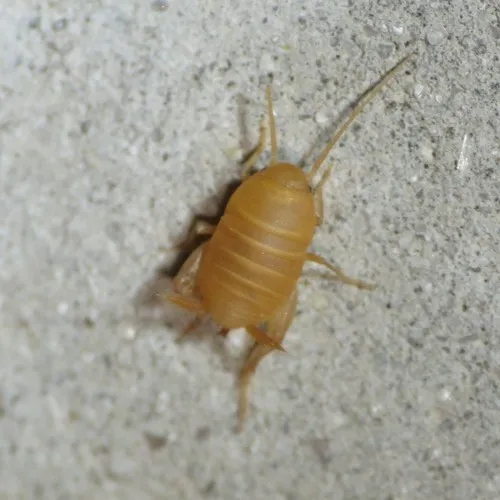
Desert Ant Cricket
Myrmecophilus manni
Identification: David Ferguson: "Apparently (???) the only way to tell them apart is that M. oregonensis runs darker as adults, and averages larger. Supposedly, M. oregonensis is from the Sierra westward to the coast and M. manni is east on the dry s
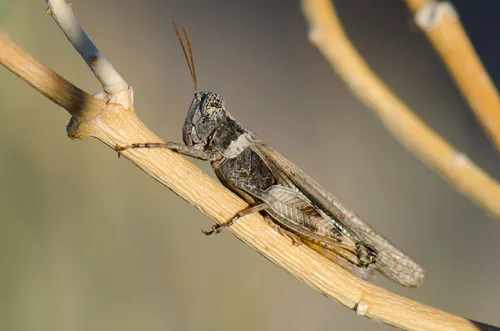
Desert Clicker Grasshopper
Ligurotettix coquilletti
Identification: Small, uniformly grayish/brownish with long wings. Abdomen typically yellow. Males stridulate during the day and night. Author of this species (and genus) is Jerome McNeill, about whom little information is readily available. Interest
Desert Monkey Grasshopper
Psychomastax deserticola
A subspecies ( indegena ) was described by Rehn & Grant in 1959 from Belted Peak, Nye County, Nevada. It apparently differs in being about twice as large as the typical subspecies.
Devastating Grasshopper
Melanoplus devastator
Identification: A fully winged species, roughly between 2 and 3 cm long. Basically identical to Melanoplus sanguinipes (but usually a bit more contrasting in coloring) and replacing it near the Pacific Coast. Differs from other species found with i
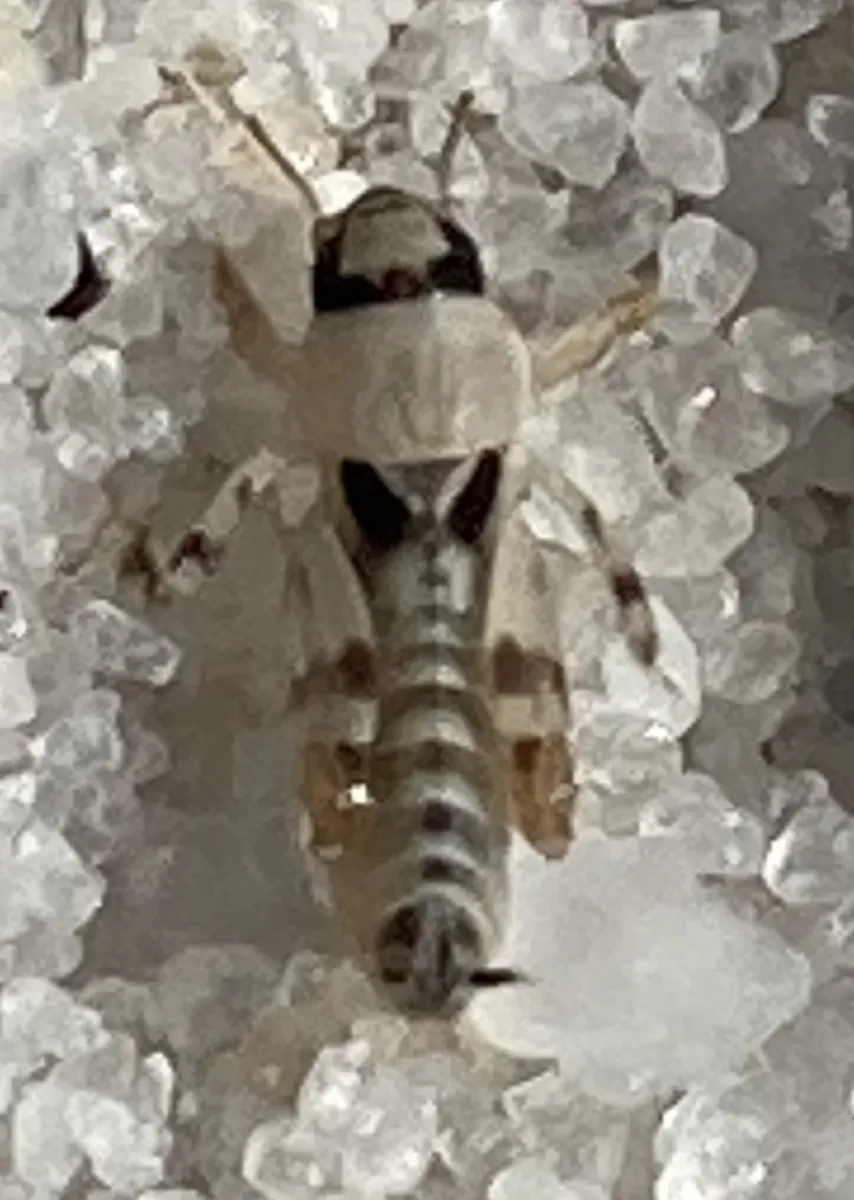
Deyrup's Pygmy Mole Cricket
Ellipes deyrupi
Identification: Distinctive color pattern. Wings abbreviated.
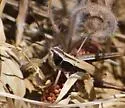
Diana Black-side Grasshopper
Chloealtis dianae
Identification: Coloration similar to, but more distinct than in C. gracilis.
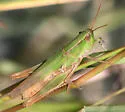
Dichromorpha prominula
Dichromorpha prominula
Identification: Lateral pronotal carinae usually cut by one sulcus, occasionally by two. Lateral carinae spaced more closely than in D. viridis . Forewings extending beyond end of abdomen, and usually reaching ends of hind femora. Males with dark pos
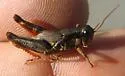
Dodge's Short-wing Grasshopper, and others
Melanoplus dodgei-species-group
Identification: Found at high elevation; broad-bodied insects; wings short (usually not or only slightly longer than pronotum), overlapping at top; sometimes with pale stripe along sides of top of pronotum and wings (stripes most prominent in norther
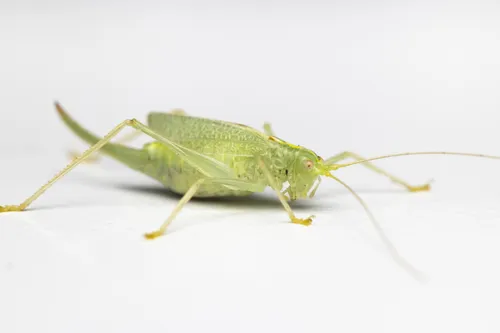
Drumming Katydid
Meconema thalassinum
Identification: A tiny, sea-green katydid with a tympanum fully exposed on each foretibia. Forewings longer than hindwings. No stridulatory area apparent at base of male forewings. Male cerci long, slender, tubular, curving upwards . This species cal
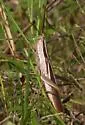
Eastern Mermiria
Mermiria intertexta
Identification: body long, narrow; face strongly slanted; antennae sword-shaped; dark middorsal line from front of head to rear of pronotum (a distinguishing characteristic); lacks distinct lateral ridges on dorsal surface of pronotum; dark brown or
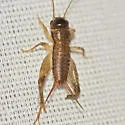
Eastern Striped Cricket
Miogryllus saussurei
Identification: Stripes on head; no white stripe between eyes; white to pale yellowish palpi; legs pale at base, and often entirely pale; small size. Velarifictorus micado is very similar, but face has pale nearly straight horizontal stripe between e
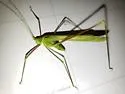
Eastern Thread-leg Katydid
Arethaea phalangium
Only member of the genus that far to the east. An individual in the literature was recorded to have the fore legs considerably reduced, which may suggest limb regeneration.
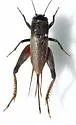
Eastern Trilling Cricket
Gryllus rubens
Very like Gryllus texensis and integer , which are found mostly further west; however, those species sing with a less continuous trilling, making the western "species" sound as if they are missing on one cylinder, or stuttering slowly - just a bit. G
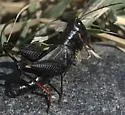
Ebony Grasshopper
Boopedon nubilum
Highly varied in color, but males are usually black with little pattern and females brown with a distinct pattern, though other hues such as grays and greens are not uncommon among females. Black females that look like the males are rare, and typica
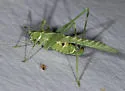
Elegant Bush Katydid
Insara elegans
Identification: Tegmina either marked with a herringbone pattern or plain-colored. The latter form was designated by Rehn & Hebard as " Insara elegans consuetipes ". The nocturnal adults are generally attracted to light.
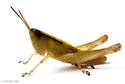
Elegant Grasshopper
Dichromorpha elegans
Identification: One sulcus crossing pronotum, as opposed to D. viridis which has two.
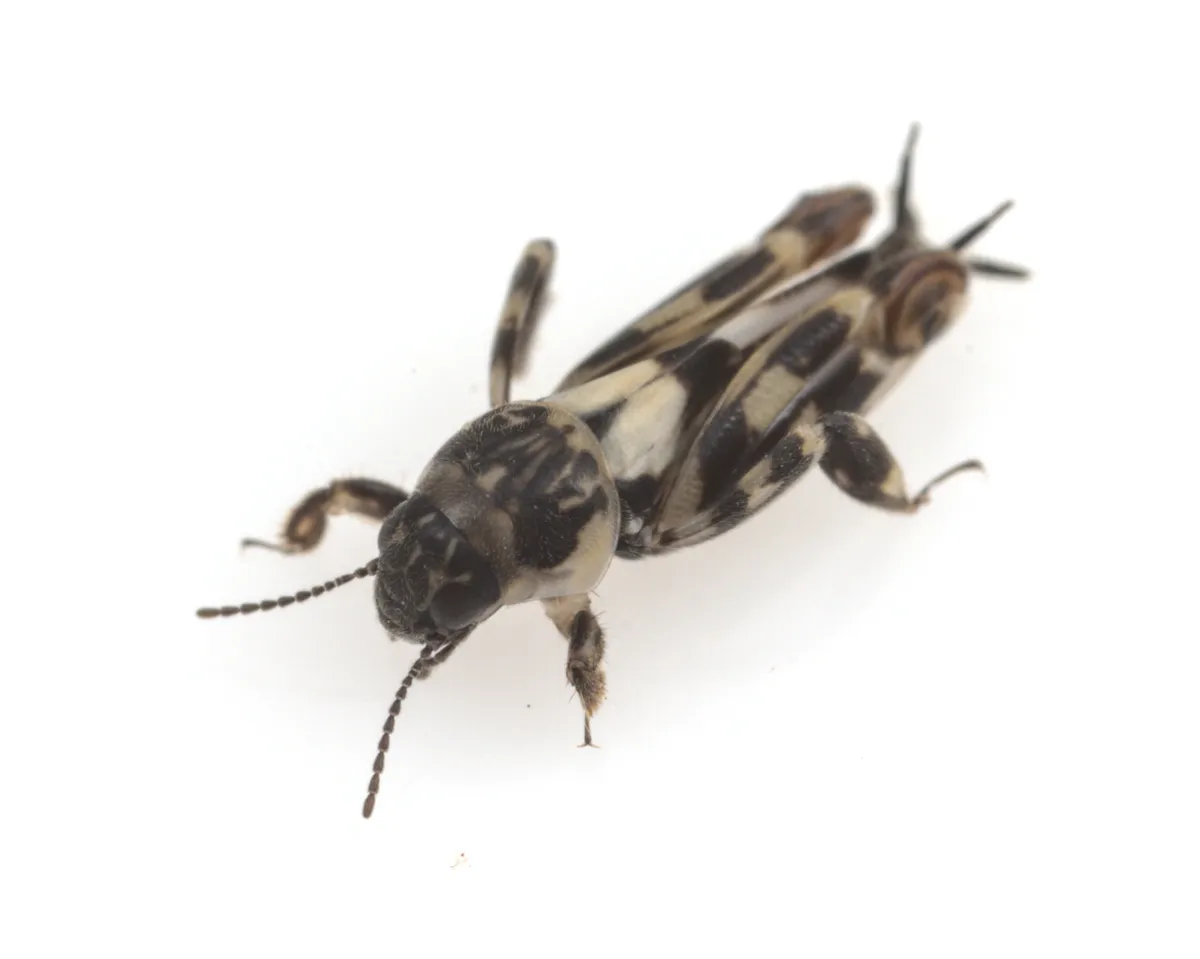
Ellipes californicus
Ellipes californicus
Identification: Antennae of male with 11 and female with 12 segments (as in E. gurneyi and E. monticolus ). Extensive yellow coloration; pronotum with broad yellow border, central disk with characteristic black markings. Hind wings not reaching end o
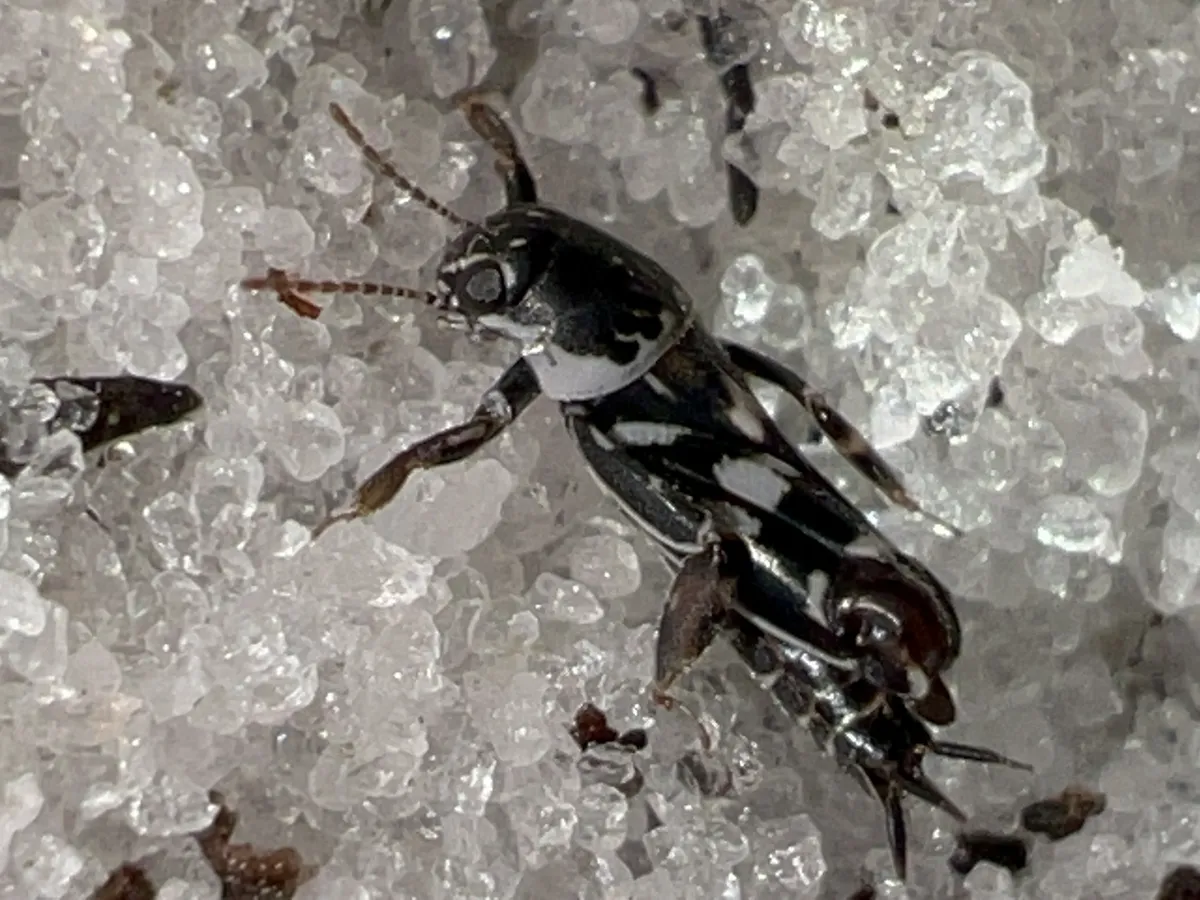
Ellipes gurneyi
Ellipes gurneyi
Identification: Antennae of male with 11 and female with 12 segments (as in E. californicus and E. monticolus ). Pronotum with narrow pale border at lateral and caudal sides, central disk mostly black with a few pale spurs. Caudal margin of female su
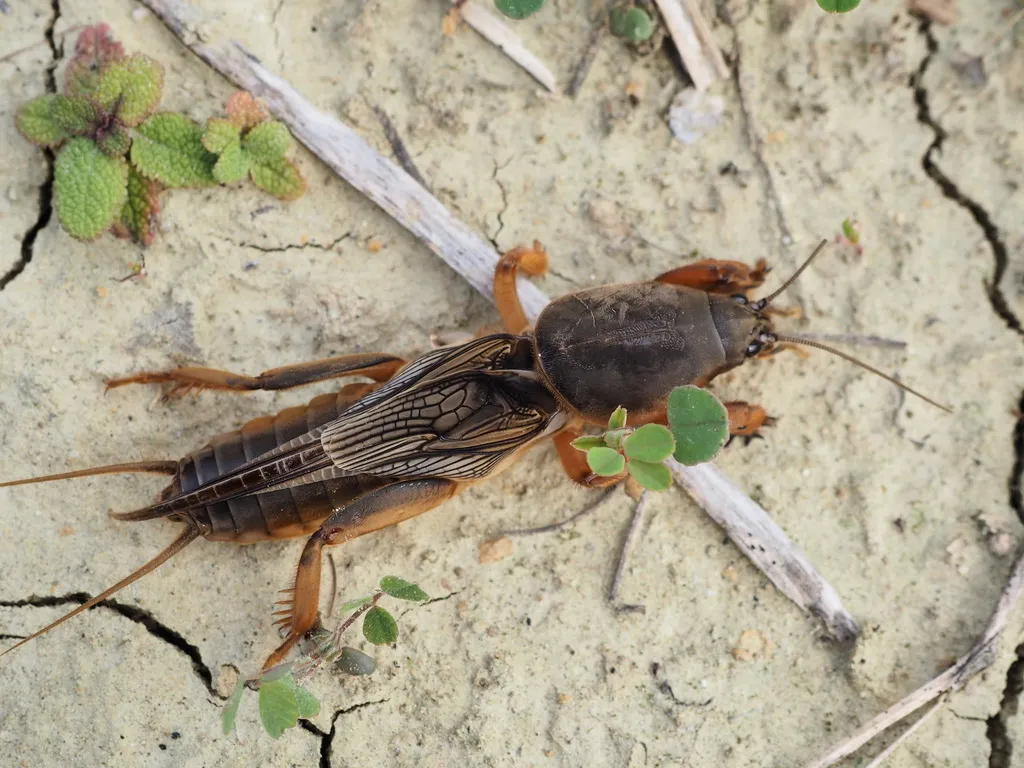
European Mole Cricket
Gryllotalpa gryllotalpa
Identification: Brown, covered with velvety hair. Front legs modified for digging. Females lack the external ovipositor of other crickets. Introduced from Europe. It reached pest proportions in the 1910s
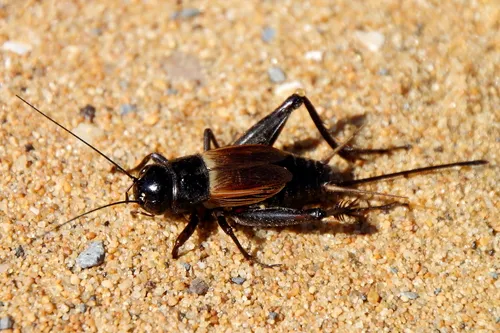
Fall Field Cricket
Gryllus pennsylvanicus
Identification: The classic black, often large-headed black "Field Cricket" of the late summer and autumn. With a musical chirping song. Identification of Gryllus is difficult, and location, date, and song are the easiest ways to identify them. See
Florida Purple-striped Grasshopper
Hesperotettix floridensis
Identification: Very like Hesperotettix speciosus and perhaps only a subspecies. Differs in shorter wings with wide rounded tegmina shorter than pronotum.
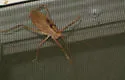
Florida True Katydid
Lea floridensis
This species occurs in two color phases--pinkish-brown and green. The pinkish-brown phase is more prevalent in females (30%) than in males (10%). Unlike Paracyrtophyllus robustus , the only other U.S. species of true katydid known to have a pinkish f
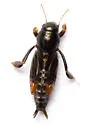
Florida panhandle Pygmy Mole Cricket
Neotridactylus insularis
Identification: Similar to N. archboldi , but overall more dark brown and more matte texture, and found in disjunct range.
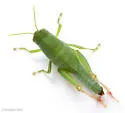
Floridacris etami
Floridacris etami
Identification: Adult males and females rather robust; distinguished from Aptenopedes and Floritettix by the presence of extremely narrow, slender tegmina (barely noticeable) which reach to (female) or across (male) the tympanum. Head more blunt than
Floritettix nigropicta
Floritettix nigropicta
Identification: Adult males: body grey with black markings and no pale median stripe; green legs and blue hind tibiae. Females difficult to distinguish from those of other Floritettix spp. except by association with males.
Fontana Grasshopper
Trimerotropis fontana
Makes an interrupted buzzing ("pulse-buzz") sound when flying; not particularly loud or harsh. Will often fly through branches of trees and shrubs to escape. The distinction of this "species" from " Trimerotropis cincta " seems artificial. The only
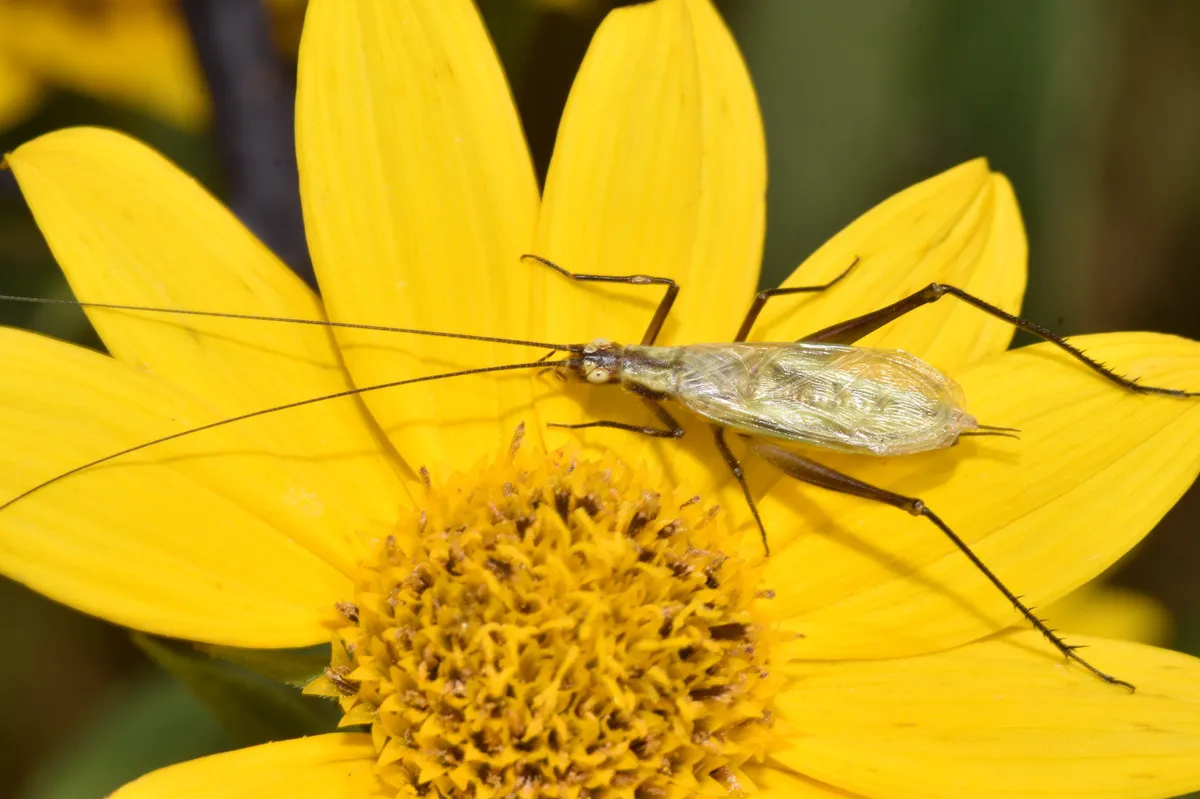
Forbes' Tree Cricket
Oecanthus forbesi
Identification: This species usually has a yellowish head. The antennal markings are very similar to Black-horned Tree Cricket. A vertical black strip on the medial portion of the scape (1st segment) and a shorter horizontal teardrop shape on the u
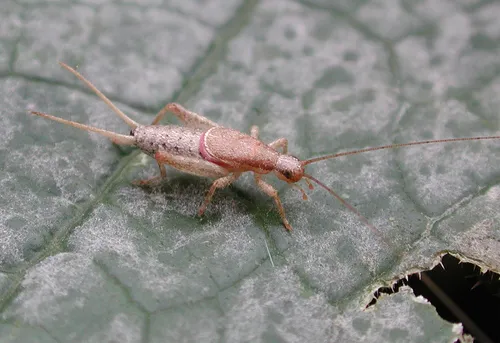
Forest Scaly Cricket
Cycloptilum trigonipalpum
Identification: Long body form, very long cerci, long pointed ovipositor, narrow clypeus, wide scapes. Terminal palp shape is distinctive
Four-spotted Grasshopper
Phlibostroma quadrimaculatum
Can become economically important in high densities
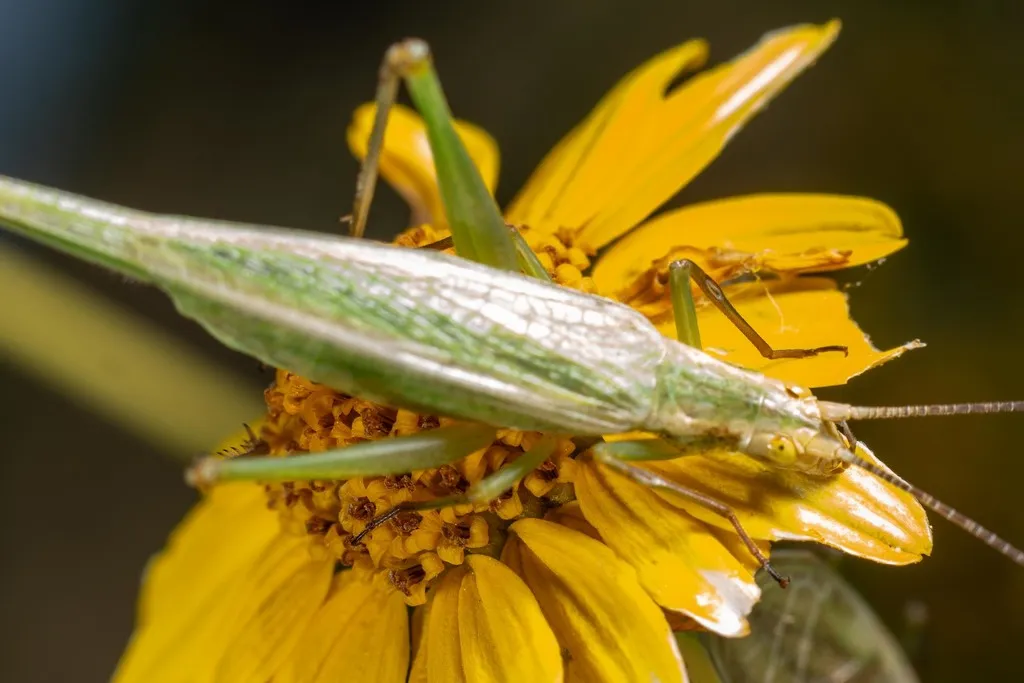
Four-spotted Tree Cricket
Oecanthus quadripunctatus
Identification: The outer marks on first and second antennal segments usually less heavily pigmented than inner marks; outer mark on first segment is usually round. (Compared to Black-horned TC which has equally pigmented inside and outside marks --
Gemmate Bush Katydid
Insara gemmicula
Identification: Smaller than other Insara spp; distinctive pattern of cinnamon, cream, black, and white.
Geyser Grasshopper
Trimerotropis diversellus
Identification: Not likely to be confused with any other species that occur with it. Small, slender, shades of white, gray, & light brown with dark cross bands on tegmina. Hind tibiae yellow occasionally to brownish. Hind wing yellow with dark band
Giant Katydid
Stilpnochlora couloniana
Identification: Largest katydid in U.S, over 65 mm long. Top margin of tegmen with two sites of significantly increased curvature. Will feed on bramble and oak in captivity.
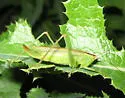
Gladiator Meadow Katydid
Orchelimum gladiator
Identification: Posterior lateral sinus of the pronotum is poorly developed. Song is a "series of ticks followed by a long shuffling trill" (' Songs of Insects )
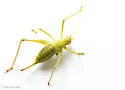
Gladiator Short-winged Katydid
Obolopteryx gladiator
Identification: Females possess an extremely long ovipositor which, in lateral view, is very distinctively narrow, much more so than in any other species (Cohn, Swanson, & Fontana 2014) Texas considers this a SGCN
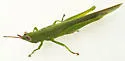
Glassy-winged Toothpick Grasshopper
Stenacris vitreipennis
Identification: Green to brownish green, long, slender, pointed head,sword-shaped antennae. Has spine beneath head in front of forelegs, distinguishing it from somewhat similar slant-faced grasshoppers, subfamily Gomphocerinae .
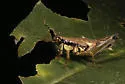
Graceful Grasshopper
Melanoplus gracilis
Identification: Slender form with unique combination of long antennae; very short rounded wings separated over the back; bold dark patterning on abdomen; and green legs, including slender green hind femora. Paroxya may look very similar, but adults h
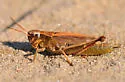
Graceful Sedge Grasshopper
Stethophyma gracilis
Identification: Spines on hind tibiae completely black; side of forewings without white streak; lateral carinae cut by one or two sulci
Grant Longwing
Capnobotes granti
Identification: Similar to C. bruneri , but found further north, and tegmina somewhat more slender. Found in same area as C. attenuatus , but that species has much longer and more slender wings, with tegmina more even in width (not strongly tapering
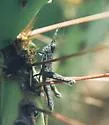
Gray Creosotebush Grasshopper
Clematodes larreae
Identification: Mottled gray or brown; pronotum rugose; tegmina very short. The only spur-throated and slant-faced grasshopper in New Mexico. Rarely collected, possibly because of its excellent camouflage.
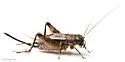
Gray Ground Cricket
Allonemobius griseus
Identification: Color with a grayish suffusion; face below the antennae very dark and shining; pronotum with long bristles; lateral margins of dorsal field of male tegmina narrowly yellow; hind femora fuscous-brown with numerous pale spots
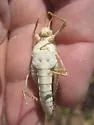
Great Crested Grasshopper
Tropidolophus formosus
Identification: High pronotal crest with serrations and orange hind wings separates this sp. from others (Ball et al., 1942) Nymph Unlike most Oedipodinae, lives primarily on vegetation that it matches closely in color
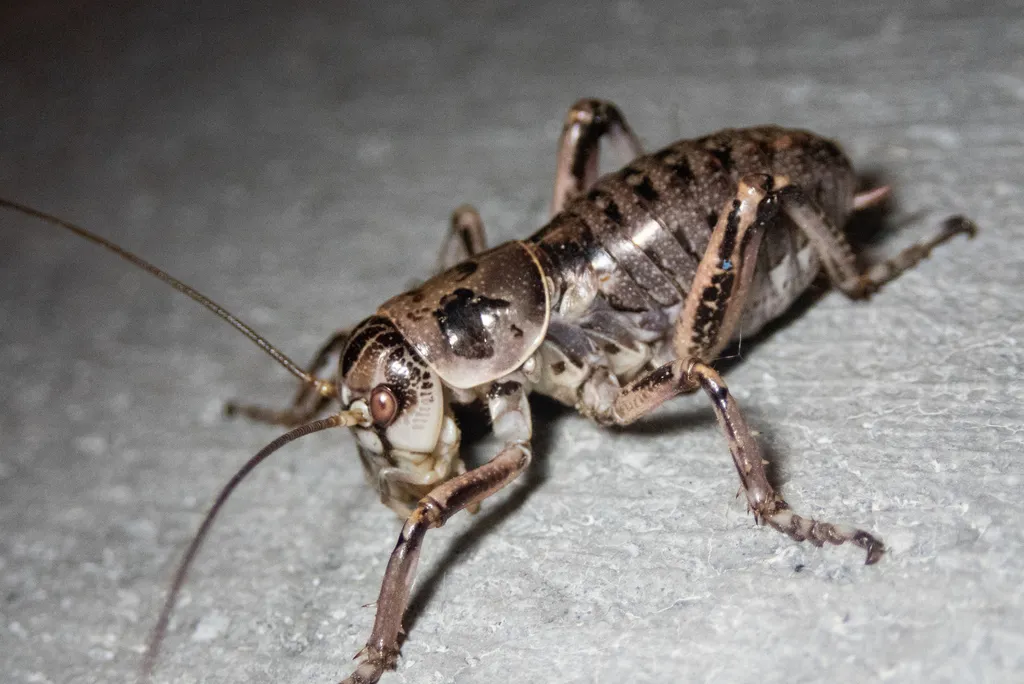
Great Grig
Cyphoderris monstrosa
Identification: male dark gray dorsally, pale whitish ventrally, with short wings humped up and wrinkled like a loosely-folded blanked heaped on the insect's back; male subgenital plate with a ventrally-directed process shaped like the nail-pulling c
Great Plains Camel Cricket
Daihinia brevipes
Identification: Adults with body about an inch long, dark brown in color, with very stout spiny limbs (particularly the males). Male hind femur with pronounced spines on back side. Front and hind tarsi have only three segments.
Green Bird Grasshopper
Schistocerca shoshone
Identification: Nearly solid green in color, usually rather pale and dull; eyes usually blue (when alive); usually lacking yellowish dots on thorax, yellowish spot on side of thorax, and pale mid-dorsal stripe (stripe may be faintly developed on pron
Green Fool Grasshopper
Acrolophitus hirtipes
Identification: Green, rarely brown, often with cream to pinking mottling. Head pointed. Antennae sword-shaped and reddish to nearly black. Pronotum with a prominent smooth rounded crest. Wings greenish yellow toward the base, and with a broad bl
Green-legged Grasshopper
Melanoplus viridipes-species-group
Identification: Adult: solid green forelegs & midlegs; black lateral stripe running full length of pronotum; short wings covering less than half of abdomen (this combination of characteristics is diagnostic). Lower half of side of pronotum white, an
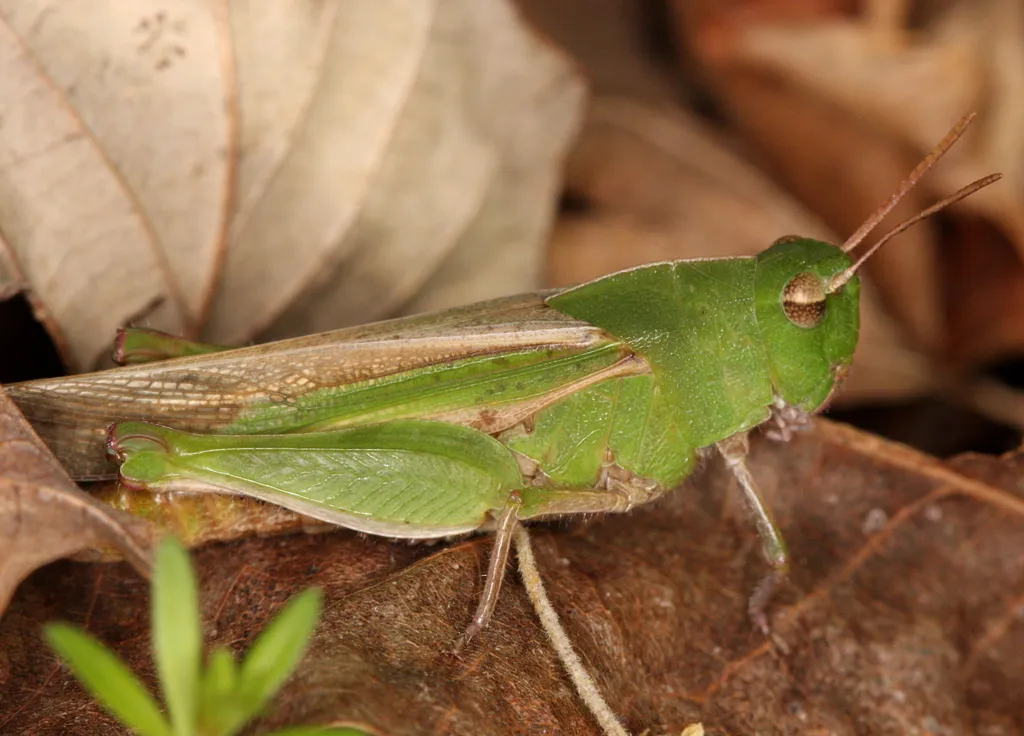
Green-striped Grasshopper
Chortophaga viridifasciata
Identification: Green and brown phases. Females usually green, males usually brown. Wings faint yellow when spread, smoky brown to nearly black towards tip. Strong pronotal ridge. Green (or brown) stripe near the border of front wings. Southern and
Groove-headed Grasshopper
Conozoa sulcifrons
Differs from C. carinata in usually having red or orange (often yellow in northern specimens) hind tibiae; and, median carina of pronotum lower and less even in profile.
Gulf Dune Grasshopper
Trimerotropis schaefferi
Identification: Very much like Trimerotropis salina which occurs further north, and reliably distinguished probably only by it's occurrence near the Gulf Coast in Texas, though the dark band of the hind wing is rarely so broad in T. salina . From T.
Gypsum Grasshopper
Trimerotropis undescribed-species-b
Identification: Small for the genus. Eyes prominent. Antennae noticeably long, especially in males, ringed pale and brown. Coloration variable, but usually white to pale gray or pale brownish with darker brown mottling. Tegmina with irregular and us
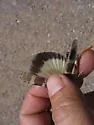
Hadrotettix magnificus
Hadrotettix magnificus
Identification: Inner face of hind femur has some red
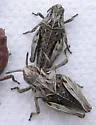
Haldeman's Grasshopper
Pardalophora haldemanii
Identification: Very similar to Xanthippus corallipes , but somewhat "smoother" looking; pronotum with median carina fairly evenly elevated and usually only cut once; hind femur slender (not widened strongly along lower margin); hind tibia and inner
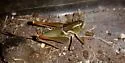
Haldeman's Shieldback
Pediodectes haldemanii
Identification: Fairly large Shieldback, and very stocky. Looks rather even and "smooth" in coloring, and is usually green (sometimes brownish). Top of pronotum usually dark toward the rear, especially at the "corners". Pronotum bordered pale with
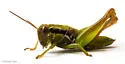
Handsome Florida Grasshopper
Eotettix signatus
Identification: The other two Eotettix species have round to oval forewings that are shorter than the pronotum
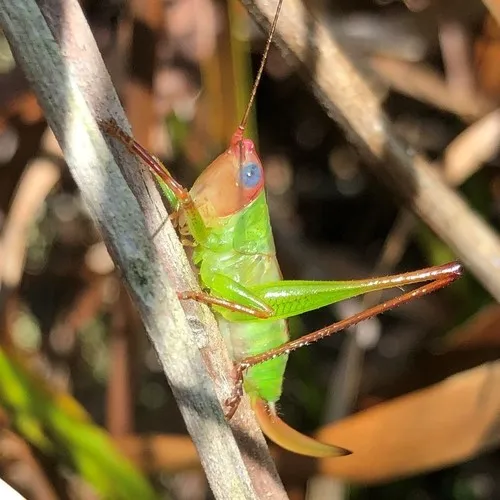
Handsome Meadow Katydid
Orchelimum pulchellum
Identification: Note white face with brownish to reddish mottling on edges, brown legs, diffuse turquoise stripe on upper sides back along wings. Eyes usually blue --fairly distinctive. Compare cerci of male if possible with illustrations in Singing
Hebard's Blue-winged Desert Grasshopper
Anconia hebardi
Identification: Slender active species of desert with relatively plain gray to brown coloring, with usually some inconspicuous small dark markings but no obvious dark bands across tegmina. Hind wings clear with distinct blue color toward base and no
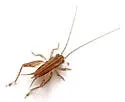
Hebard's Trig
Falcicula hebardi
Identification: No tympanum on foretibia; male stridulatory area poorly developed; length of male less than 4 mm (smaller than any Anaxipha). "The immature individuals are considerably darker and more wine-colored than the adults, and are longitudina
Helfer's Dune Grasshopper
Trimerotropis helferi
Identification: Rather wide-bodied and short-winged for a Trimerotropis , distinctly hairy (mostly sides and below). Coloring usually light grayish, covered with dark speckling and small spots, and with dark diagonal cross bands on hind femora. As
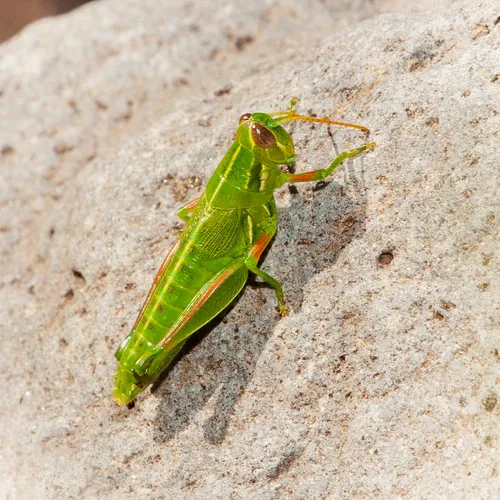
Hesperotettix curtipennis
Hesperotettix curtipennis
Identification: Very similar to Hesperotettix viridis , especially the subspecies pratensis , but with very short wings that are usually separated along the middle when folded. This may only be a subspecies of H. viridis , but H. viridis ssp. viridi
Hesperotettix pacificus
Hesperotettix pacificus
Identification: Much like Hesperotettix viridis except wings short (usually no longer than pronotum), with tegmina broad and rounded, and usually not touching over back. When short-winged, H. viridis have tegmina narrower in proportion and usually n
High Plains Grasshopper
Dissosteira longipennis
Identification: A large relatively slender Grasshopper, very like Dissosteira carolina , except with base of wings transparent bluish in color, and outer margin not yellowish, but rather clear to translucent white. Body and tegmina usually with more
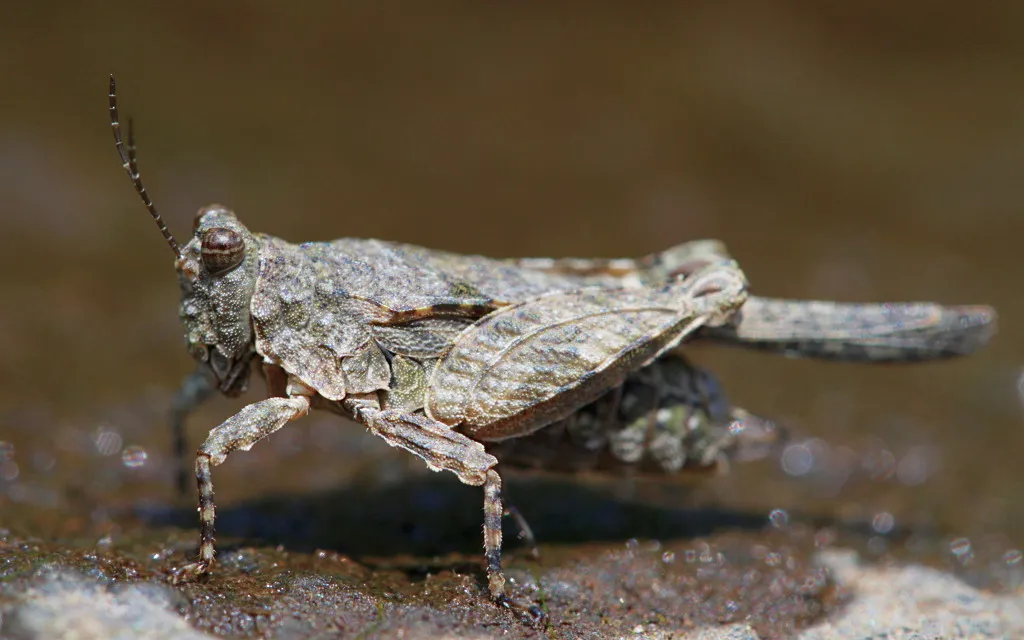
Hooded Grouse Locust
Paratettix cucullatus
Identification: See comments under photos, especially this one . Note these marks (David Ferguson): Description from Hancock, 1902, which could use editing and summarizing:
Hook-faced Conehead
Pyrgocorypha uncinata
Identification: wings extend beyond abdomen; cone has prominent gap separating cone from face, and ends in sharp down-turned point; brown females and green females occur in approximately equal numbers; males are always brown Song is a high-pitched ri
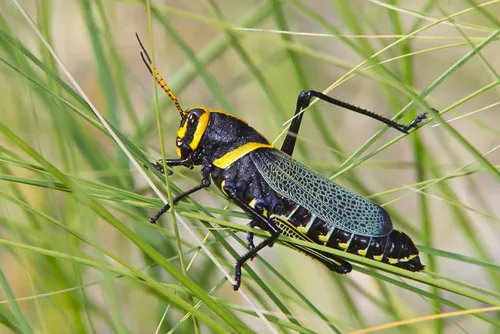
Horse Lubber
Romalea eques
Identification: Large and shiny, mostly black. Tegmina (front wings) with yellow veins and with variable contrasting yellow to orange stripes on body, legs and head. Face sometimes mostly yellow or orange. Antennae yellow to red-orange with black rin
Huachuca Grasshopper
Conalcaea huachucana
Very similar to Barytettix , but the half and half color pattern of the tiny wings is distinctive in Conalcaea . Nymphs of the two genera are more difficult to distinguish, and habitat is often the best guide. Distinction from other short-winged spe
Huachuca Monkey Grasshopper
Eumorsea balli
Type Locality: Ramsey Canyon above the box, Huachuca Mts., Cochise County, Arizona. Elevation 6000 feet. Collected July 20, 1933 by E. D. Ball from Mexican Pinyon - Pinus cembroides (Hebard 1935)
Humphrey's Grasshopper
Barytettix humphreysii
Identification: Color varies from light brown through grays to bluish (or combinations of these), with paler tan to whitish or yellowish markings, and sometimes with reddish tinges on hind femora and abdomen. Hind tibiae vary from yellow (most commo
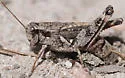
Huron Short-wing Grasshopper
Melanoplus huroni
Identification: Can easily be confused with M. fasciatus (especially females), but this species is usually less contrastingly marked, more speckled, and averages wider in body proportions. M. fasciatus usually has longer and broader wings, but not al
Idaho Point-headed Grasshopper
Acrolophitus pulchellus
Identification: Not likely to be confused with any other species. Pointed head; long brownish orange antennae; body green, mottled and striped with white to pinkish; hind wings yellow at base with blackish cross band. Similar to Acrolophitus hirtip
Inconspicuous Grasshopper
Trimerotropis inconspicua
Identification: Small size and contrasting pattern make this fairly easy to recognize. The hind wings are pale yellow with a narrow curved dark band, and the hind tibiae vary from yellow (most common east) to blue (most common west). Flight crepita
Indies bush cricket
Antillicharis oriobates
Identification: A. oriobates is easily distinguished from the North American species of Orocharis by the large ocelli with little space between
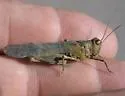
Inyo Blue-wing Grasshopper
Trimerotropis leucophaea
Identification: Like T. sparsa in most features, and perhaps only a regional variant of that species. Specimens were usually refered to that species or to T. cyaneipennis before the name " leucophaea " was published. The only differences that appea
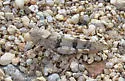
Inyo Grasshopper
Trimerotropis inyo
Perhaps, based upon appearance, morphology, and behavior, most closely akin to T. occidentalis . Moderately abundant, and associated often with Circotettix undulatus , C. maculatus , and Trimerotropis albescens .
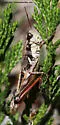
Island Short-wing Grasshopper
Melanoplus islandicus
A member of the Mancus Group , which also includes celatus, mancus, divergens, & serrulatus . Differs in distribution and details of male furculae and cercae.
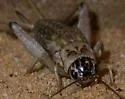
Jamaican Field Cricket
Gryllus assimilis
Identification: Brown, tan, or a bit yellowish with a distinctive black or nearly black pattern. Some are lighter than others, and generally the blackish coloring dominates the lighter background coloring. G. personatus is very similar, but occurs i
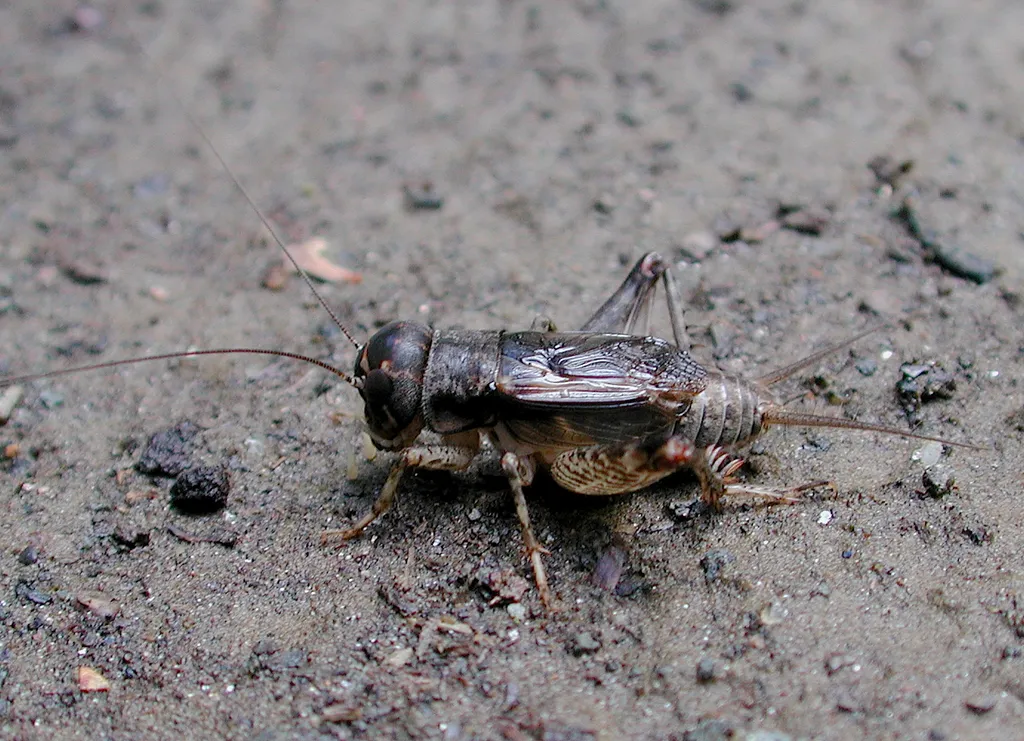
Japanese Burrowing Cricket
Velarifictorus micado
Identification: Pale transverse band between the eyes Calls from mouth of its burrow.
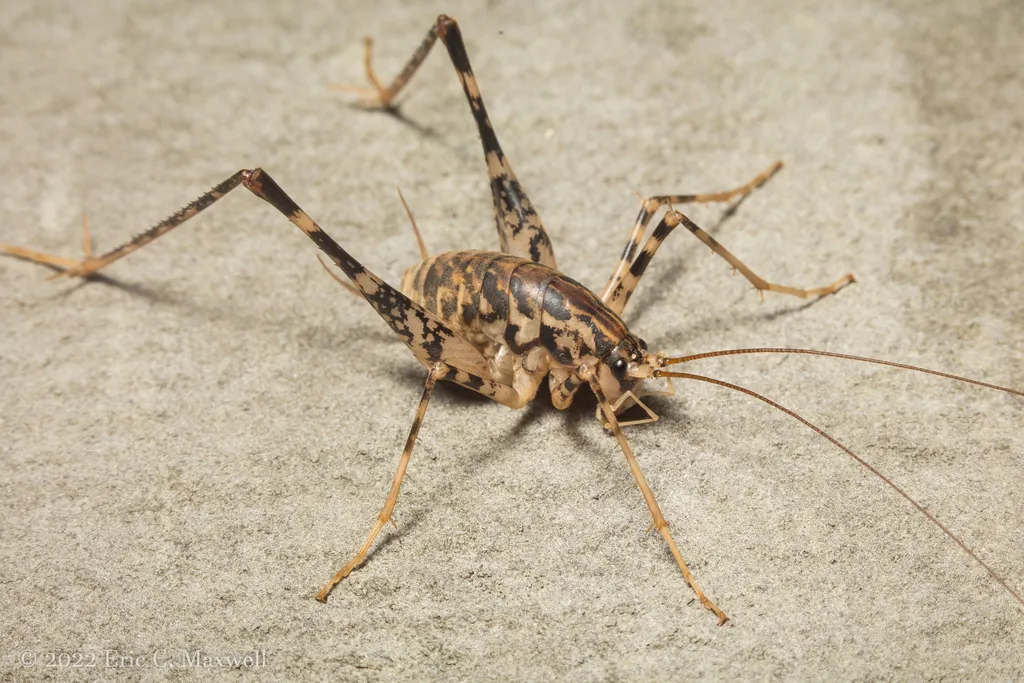
Japanese Camel Cricket
Diestrammena japanica
Identification: Very similar to D. asynamora , but differing in certain details of leg armature and genitalia. However, D. japanica is easily distinguished by the more contrasting and broken color pattern, which has dark areas of different shapes in
Juniper Grasshopper
Melanoplus splendidus
Identification: Closely resembles Melanoplus punctulatus , and may just be regional variant of that species. However, M. splendidus is slightly larger in size, males have smaller cerci, and is found further west. It is also structurally similar to
Karokia memorialis
Karokia memorialis
Specimens were reported as Booneacris blanci , before described as a distinct species. The closeness of localities for this and the other species make one wonder if they are truly distinct. Little known, rarely collected, and in need of more study.
Keeler's Spur-throat Grasshopper
Melanoplus keeleri
Identification: Male cerci are distinctive, "bifurcate with the dorsal arm larger than the ventral" More at the references below.
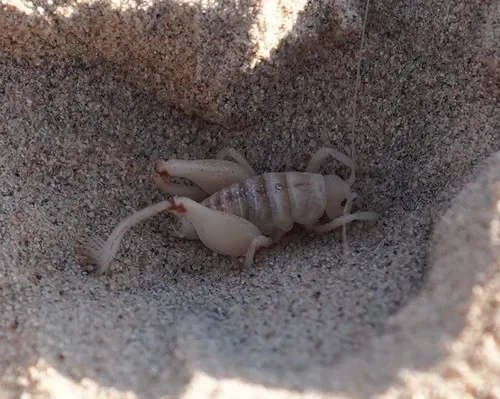
Kelso Dunes Giant Sand-treader Cricket
Macrobaenetes kelsoensis
When Tinkham described this species, an unnamed species of Ammobaenetes was mentioned as occurring here too. Apparently this species was never named; or, perhaps it is Ammobaenetes lariversi , which was described from further north. It would be sim
Kiowa Grasshopper
Trachyrhachys kiowa
Identification: Smallish (largest in the Southwest), slender, with prominent broken ridges on top of smallish saddle-shaped pronotum, and with relatively large and prominent head (top of head is held above top of pronotum). Lateral lobes of pronotum
Koebele's Grasshopper
Trimerotropis koebelei
Identification: Not reliably distinguishable from T. cincta , except by location ( T. cincta is in the Rocky Mountain region). However, overall "look" averages somewhat different. Distinguished from T. fontana by often somewhat more contrasting patt
Lake Huron Locust
Trimerotropis huroniana
Identification: Very similar to Trimerotropis maritima , but occurs further north, and has yellowish, never red hind tibiae (often red in T. maritima). The wings are not as strongly pigmented, with the dark band usually narrower in T. huroniana . Ve
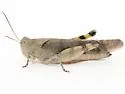
Ledge Grasshopper
Spharagemon saxatile
Identification: Basically identical to Spharagemon equale , but with inner hind femur usually yellow (usually orange in S. equale ) with three black cross bars more strongly developed. Northern insects that have been called subspecies saxatile have t
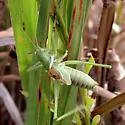
Lesser Arid-land Katydid
Neobarrettia victoriae
Identification: Front edge of pronotum green; femoral teeth bicolored; center of hindwings jet black (SINA) Type locality: Ciudad Victoria, Tamaulipas, Mexico
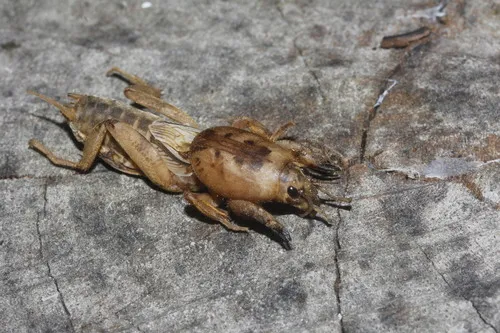
Lesser Short-winged Mole Cricket
Neoscapteriscus abbreviatus
Identification: Adults with very reduced wings. Accidentally introduced from South America Florida University
Lichen Grasshopper
Trimerotropis saxatilis
The coloration is highly variable from individual to individual, but tends to match the rocks upon which the insects live. Green pigmented specimens are quite striking. Such green specimens apparently do not occur west of extreme eastern Oklahoma a
Limestone Grasshopper
Trimerotropis undescribed-species-c
The similarity to the other unnamed species found on gypsum in the same region as these (and often in adjoining habitats) is striking, but these larger insects are clearly different from those. The potential relationship to T. latifasciata should be
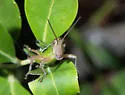
Linear-winged Grasshopper
Aptenopedes sphenarioides
Identification: Green or purplish brown. Slant-faced, eyes large. Wings reduced to pads, even in adult, so flightless. See under Remarks on the genus page
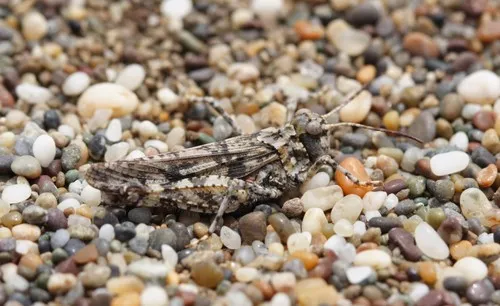
Little Buzzer Grasshopper
Microtes occidentalis
Identification: Small, stocky (especially females), wings moderately short (but exceeding tip of hind femora significantly); hairy, especially sides and below; pale, speckled to match sand, with two or three dark spots or bars in sides of folded wing
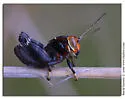
Little Eastern Grasshopper
Eotettix pusillus
Identification: Adults are metallic green and black, but nymphs have a strikingly different pattern of black and red.
Little Saltbush Grasshopper
Aeoloplides minor
Identification: Probably only a northern variant of A. tenuipennis with which it seems to intergrade. Differs in shorter wings (usually not reaching tip of abdomen, smaller average size, and more northern distribution. Differs from sympatric A. chen
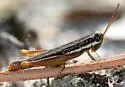
Little Wingless Grasshopper
Gymnoscirtetes pusillus
Identification: Greenish yellow to tan in color, and bears a black and white lateral stripe running from each eye to about the midpoint of the abdomen or beyond. The adult is wingless. In males, the furcula is barely visible. The cerci taper graduall
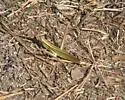
Lively Mermiria
Mermiria picta
Identification: body long, narrow, greenish or brownish; face strongly slanted; antennae sword-shaped; dark middorsal line from front of head to rear of pronotum; distinct lateral ridges on dorsal surface of pronotum (a diagnostic characteristic); da
Lobecercus Short-wing Grasshopper
Melanoplus divergens
A member of the Mancus Group , which also includes M. celatus, islandicus, mancus, & serrulatus . M. mancus differs from these in the distinctive shape of the male cercus.
Lompoc Grasshopper
Trimerotropis occulens
Identification: Small size; pale color; narrow usually clearly defined dark bands (sometimes faint) usually do not cross top of folded tegmina; wings wide, disk yellow, usually tinged greenish, with dark cross band usually faint to cloudy and situate
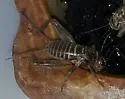
Long Cercus Field Cricket
Gryllus longicercus
Identification: Longest known cerci in the genus, sometimes exceeding the body length of pinned specimens
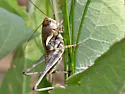
Long-legged Anabrus
Anabrus longipes
Identification: Simiar to Mormon Cricket, but more restricted area of distribution; legs longer and more slender; in adults lower edge of wings is white and usually shows behind pronotum (may be pale, but rarely if ever white in Mormon Cricket).