
Juniper Grasshopper
Melanoplus splendidus
This record describes Melanoplus splendidus (species). Recorded family: Acrididae. Recorded order: Orthoptera.
Identification and Appearance
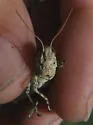
Closely resembles Melanoplus punctulatus , and may just be regional variant of that species. However, M. splendidus is slightly larger in size, males have smaller cerci, and is found further west. It is also structurally similar to M. differentialis, M. bivittatus, M. eumera, and M. ponderosus , all of which might be found with it in at least some areas, but M. splendidus differs from all of these in its dull mottled color pattern. Adults are mottled grays and browns and well camouflaged on Juniper trunks and stems. Green adults are rarely seen, but may only be young ones that haven't turned to gray/brown yet. Not often seen, nor collected because of its secretive habits. However, it is moderately common and easy to observe once its habits are learned. Rarely wanders more than a few feet from Junipers. Will dive for cover within woody plants (usually Junipers) if surprised out in the open. Possibly uses other trees for food and habitat (Pinon Pine and Oak are suspected), but this is uncertain, and any association with these may be incidental and because they are adjacent to Junipers.
Classification
- Kingdom
- Animalia
- Phylum
- Arthropoda
- Class
- Insecta
- Order
- Orthoptera (Grasshoppers, Crickets, Katydids)
- Suborder
- Caelifera
- Family
- Acrididae (Short-horned Grasshoppers)
- Subfamily
- Melanoplinae
- Tribe
- Melanoplini
- Genus
- Melanoplus
Imported taxonomy record. Source availability varies; see the source references and editorial policy below.
Habitat and Range
Habitat
Woodlands including Juniperus species. Usually found on the trees themselves.
Geographic Range
mostly in mountain, mesa, and canyon country in n. Arizona, New Mexico, extreme w. Oklahoma Panhandle, and se. Colorado
Seasonal Activity
Adults generally appear relatively early, often in June, are usually most common in July and early August, and are mostly gone by September; however, some may survive until first freezes in autumn.
Diet and Behavior
Diet: Strongly associated with Juniperus , but has also been observed eating assorted herbaceous species growing near the base of host trees.
Life History
Eggs overwinter and hatch in spring. Nymphs and adults live and feed on junipers, with nymphs usually rich green in color and well camouflaged in Juniper foliage. Adults usually begin to appear in June.
Additional species information
Species notes from the sources
Etymology: The name is apparently in reference to the relatively large size. It is not particularly splendid in appearance, being a mottled gray to dull brown.
About Grasshoppers, Crickets, Katydids: the wider group
Order-level background for Orthoptera, the group containing Melanoplus splendidus. Species-specific details appear above.
Group overview
Orthoptera includes ~28,000 described species of grasshoppers, crickets, and katydids. Desert locusts can form swarms covering 460 square miles containing up to 80 million individuals per square kilometer.
Ecological role of the group
Grasshoppers and crickets are a primary food source for birds, reptiles, and small mammals. Cricket farming is a growing industry - crickets require 12× less feed than cattle to produce the same amount of protein, using 2,000× less water.
Economic and practical significance of the group
A single large locust swarm can consume the same amount of food in one day as 35,000 people. The 2019-2021 East Africa locust crisis affected food security for 42 million people across multiple countries. Global crop losses from locusts can reach billions annually.
Recorded sources for this group: FAO, UN World Food Programme, research publications. Imported estimates may describe particular regions or reporting periods.
Photos of Juniper Grasshopper (5)
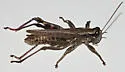
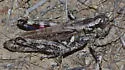
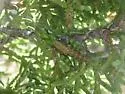
Photo credits: Contributed by David J. Ferguson; Additional contributions by metrioptera
Frequently Asked Questions About Juniper Grasshopper
What is Juniper Grasshopper?
Juniper Grasshopper (Melanoplus splendidus) is a species in the family Acrididae, within the order Orthoptera.
How big is Juniper Grasshopper?
30 - 40 mm, perhaps longer in gravid females
How do you identify Juniper Grasshopper?
Closely resembles Melanoplus punctulatus , and may just be regional variant of that species. However, M. splendidus is slightly larger in size, males have smaller cerci, and is found further west. It is also structurally similar to M. differentialis, M. bivittatus, M. eumera, and M. ponderosus , all of which might be found with it in at least some areas, but M. splendidus differs from all of these in its dull mottled color pattern. Adults are mottled grays and browns and well camouflaged on Juniper trunks and stems. Green adults are rarely seen, but may only be young ones that haven't turned to gray/brown yet.
Where is Juniper Grasshopper found?
| Feature | Details |
|---|---|
| Habitat | Woodlands including Juniperus species. Usually found on the trees themselves. |
| Range | mostly in mountain, mesa, and canyon country in n. Arizona, New Mexico, extreme w. Oklahoma Panhandle, and se. Colorado |
What does Juniper Grasshopper eat?
The diet of the Juniper Grasshopper includes Strongly associated with Juniperus , but has also been observed eating assorted herbaceous species growing near the base of host trees..
When is Juniper Grasshopper active?
Juniper Grasshopper: seasonal activity - Adults generally appear relatively early, often in June, are usually most common in July and early August, and are mostly gone by September; however, some may survive until first freezes in autumn..
What is the life cycle of a Juniper Grasshopper?
Eggs overwinter and hatch in spring. Nymphs and adults live and feed on junipers, with nymphs usually rich green in color and well camouflaged in Juniper foliage. Adults usually begin to appear in June.