
Gypsum Grasshopper
Trimerotropis undescribed-species-b
This record describes Trimerotropis undescribed-species-b (species). Recorded family: Acrididae. Recorded order: Orthoptera.
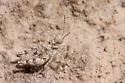
Identification and Appearance
| Feature | Description |
|---|---|
| Additional details | Small for the genus. |
| Eyes | Eyes prominent. |
| Antennae | Antennae noticeably long, especially in males, ringed pale and brown. |
| Coloration | Coloration variable, but usually white to pale gray or pale brownish with darker brown mottling. Tegmina with irregular and usually broken darker cross bands along with speckling and mottling. Hind tibiae orange to red. Inner hind femur yellow with black on basal half and black band across apical half. Outer hind femur pale with darker diagonal cross bands. Wing yellow with black cross band curved but not reaching anal angle and with spur relatively long; apex clear. Related to the red-legged group of Trimerotropis and to Spharagemon campestris . It is a very active little grasshopper, restricted to gypsum habitat, and will fly back to gypsum if chased off. It is often associated with Acrolophitus maculipennis . |
Classification
- Kingdom
- Animalia
- Phylum
- Arthropoda
- Class
- Insecta
- Order
- Orthoptera (Grasshoppers, Crickets, Katydids)
- Suborder
- Caelifera
- Family
- Acrididae (Short-horned Grasshoppers)
- Subfamily
- Oedipodinae
- Tribe
- Trimerotropini
- Genus
- Trimerotropis
Imported taxonomy record. Source availability varies; see the source references and editorial policy below.
Habitat and Range
Habitat
rock gypsum exposures, usually with Coldenia as the dominant vegitation
Geographic Range
Known from Cibola County to Eddy County in New Mexico; Culberson & Hudspeth Counties in Texas; and in Coahuila and Tamaulipas in Mexico.
Seasonal Activity
summer
Diet and Behavior
Diet: unknown
Life History
almost certainly overwinters as egg
About Grasshoppers, Crickets, Katydids: the wider group
Order-level background for Orthoptera, the group containing Trimerotropis undescribed-species-b. Species-specific details appear above.
Group overview
Orthoptera includes ~28,000 described species of grasshoppers, crickets, and katydids. Desert locusts can form swarms covering 460 square miles containing up to 80 million individuals per square kilometer.
Ecological role of the group
Grasshoppers and crickets are a primary food source for birds, reptiles, and small mammals. Cricket farming is a growing industry - crickets require 12× less feed than cattle to produce the same amount of protein, using 2,000× less water.
Economic and practical significance of the group
A single large locust swarm can consume the same amount of food in one day as 35,000 people. The 2019-2021 East Africa locust crisis affected food security for 42 million people across multiple countries. Global crop losses from locusts can reach billions annually.
Recorded sources for this group: FAO, UN World Food Programme, research publications. Imported estimates may describe particular regions or reporting periods.
Photos of Gypsum Grasshopper (5)
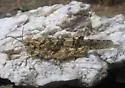
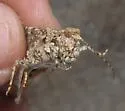
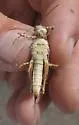
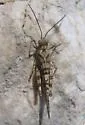
Photo credits: Contributed by David J. Ferguson
Frequently Asked Questions About Gypsum Grasshopper
What is Gypsum Grasshopper?
Gypsum Grasshopper (Trimerotropis undescribed-species-b) is a species in the family Acrididae, within the order Orthoptera.
How big is Gypsum Grasshopper?
about 24-28 mm males about 30-37 mm females
How do you identify Gypsum Grasshopper?
| Feature | Description |
|---|---|
| Additional details | Small for the genus. |
| Eyes | Eyes prominent. |
| Antennae | Antennae noticeably long, especially in males, ringed pale and brown. |
| Coloration | Coloration variable, but usually white to pale gray or pale brownish with darker brown mottling. Tegmina with irregular and usually broken darker cross bands along with speckling and mottling. Hind tibiae orange to red. Inner hind femur yellow with black on basal half and black band across apical half. Outer hind femur pale with darker diagonal cross bands. Wing yellow with black cross band curved but not reaching anal angle and with spur relatively long; apex clear. |
Where is Gypsum Grasshopper found?
| Feature | Details |
|---|---|
| Habitat | rock gypsum exposures, usually with Coldenia as the dominant vegitation |
| Range | Known from Cibola County to Eddy County in New Mexico; Culberson & Hudspeth Counties in Texas; and in Coahuila and Tamaulipas in Mexico. |
What does Gypsum Grasshopper eat?
The diet of the Gypsum Grasshopper includes unknown.
When is Gypsum Grasshopper active?
Gypsum Grasshopper: seasonal activity - summer.
What is the life cycle of a Gypsum Grasshopper?
almost certainly overwinters as egg