
Fall Field Cricket
Gryllus pennsylvanicus
This record describes Gryllus pennsylvanicus (species). Recorded family: Gryllidae. Recorded order: Orthoptera.
Identification and Appearance
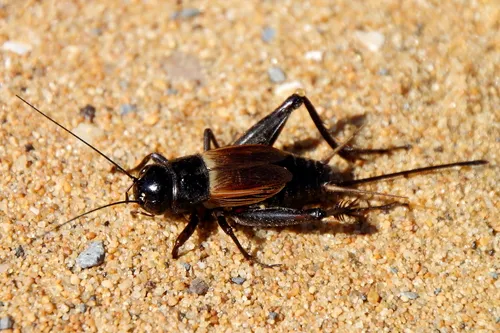
The classic black, often large-headed black Field Cricket of the late summer and autumn. With a musical chirping song. Identification of Gryllus is difficult, and location, date, and song are the easiest ways to identify them. See Singing Insects of North America , where recordings of many species, along with other information can be compared. Very like G. veletis , but sometimes distinguishable (in some regions) by differing proportions. Best distinguished by season of occurence (but in summer some adults of both species can be found together, and are not reliably distinguishable). Also very like G. firmus , which may be better called a subspecies (??) than a distinct species.
Wikipedia reference for Gryllus pennsylvanicus: http://en.wikipedia.org/wiki/Gryllus_pennsylvanicus.
Classification
- Kingdom
- Animalia
- Phylum
- Arthropoda
- Class
- Insecta
- Order
- Orthoptera (Grasshoppers, Crickets, Katydids)
- Suborder
- Ensifera
- Family
- Gryllidae (True Crickets)
- Subfamily
- Gryllinae
- Genus
- Gryllus (Field Crickets)
Imported taxonomy record. Source availability varies; see the source references and editorial policy below.
Habitat and Range
Habitat
Most of North America south of Boreal Canadian forests, becoming rare northward, and southward in tropical and desert regions. In the southwest mostly found in towns, irrigated areas, and in mountains. Replaced toward east coast by G. firmus , especially southward; with the dividing line roughly the Appalachians.
Diet and Behavior
Life History
Overwinters as eggs. Nymphs mature through spring and summer, and adults are most common in late summer and autumn in most regions.
About Grasshoppers, Crickets, Katydids: the wider group
Order-level background for Orthoptera, the group containing Gryllus pennsylvanicus. Species-specific details appear above.
Group overview
Orthoptera includes ~28,000 described species of grasshoppers, crickets, and katydids. Desert locusts can form swarms covering 460 square miles containing up to 80 million individuals per square kilometer.
Ecological role of the group
Grasshoppers and crickets are a primary food source for birds, reptiles, and small mammals. Cricket farming is a growing industry - crickets require 12× less feed than cattle to produce the same amount of protein, using 2,000× less water.
Economic and practical significance of the group
A single large locust swarm can consume the same amount of food in one day as 35,000 people. The 2019-2021 East Africa locust crisis affected food security for 42 million people across multiple countries. Global crop losses from locusts can reach billions annually.
Recorded sources for this group: FAO, UN World Food Programme, research publications. Imported estimates may describe particular regions or reporting periods.
Photos of Fall Field Cricket (3)
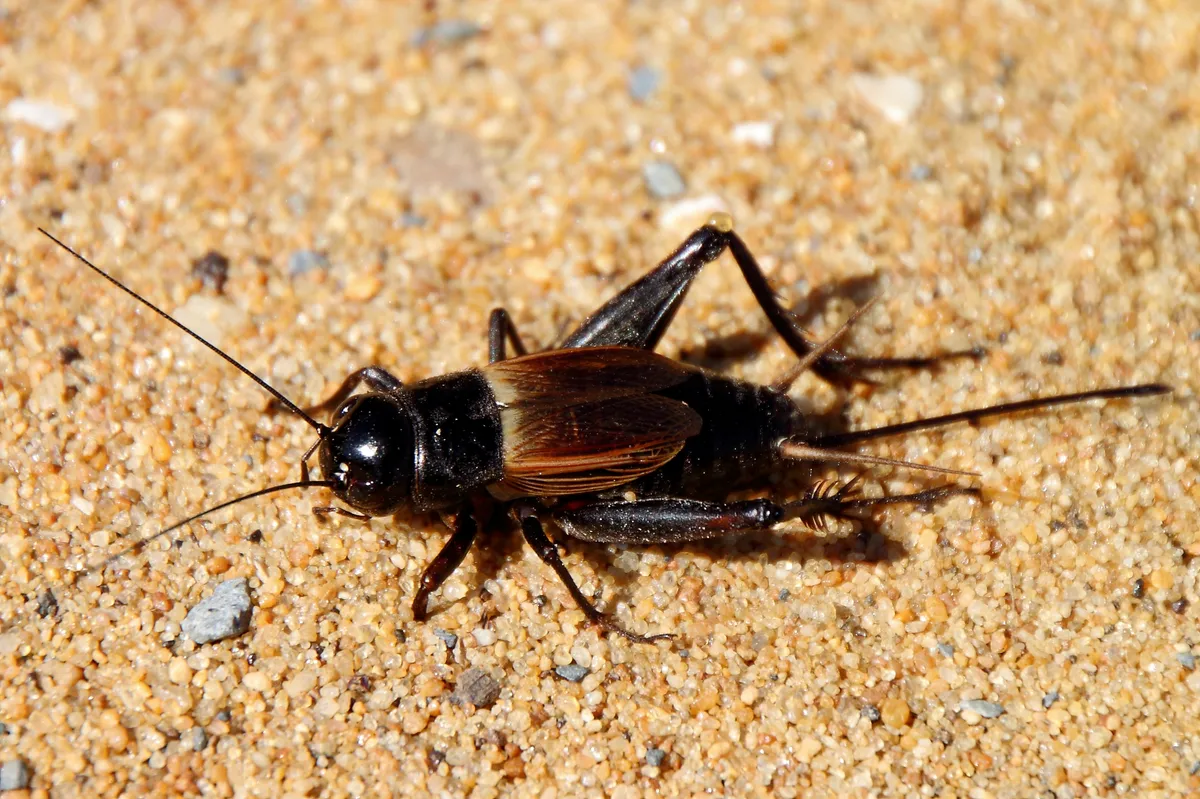
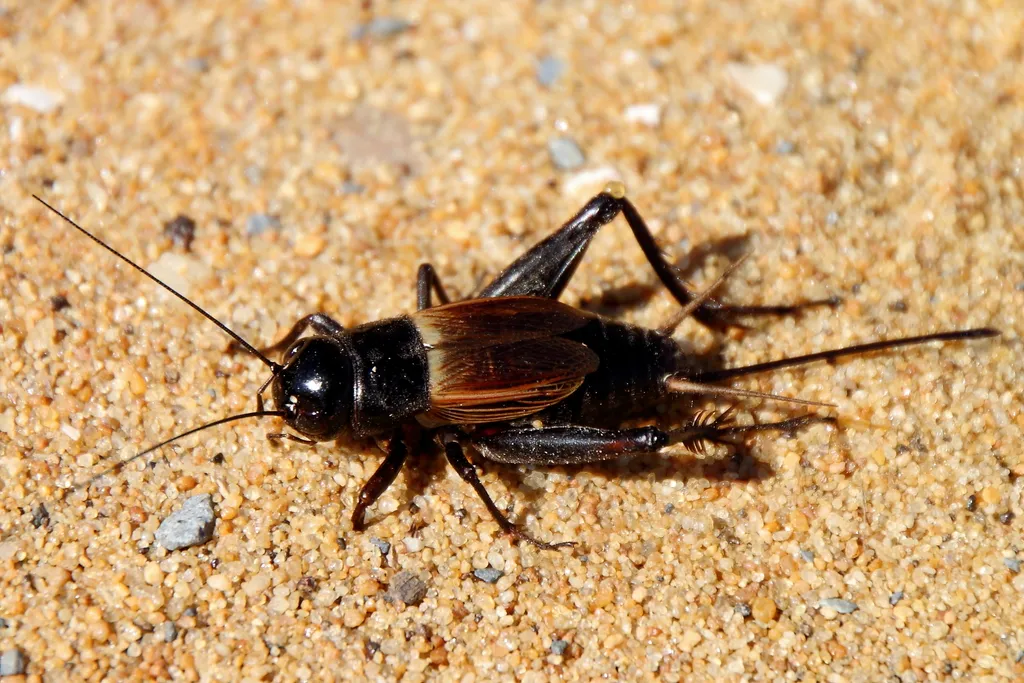
Photo credits: Contributed by Tony DiTerlizzi; Additional contributions by Chuck Entz , David Ferguson , metrioptera
Frequently Asked Questions About Fall Field Cricket
What is Fall Field Cricket?
Fall Field Cricket (Gryllus pennsylvanicus) is a species in the family Gryllidae, within the order Orthoptera.
How do you identify Fall Field Cricket?
The classic black, often large-headed black Field Cricket of the late summer and autumn. With a musical chirping song. Identification of Gryllus is difficult, and location, date, and song are the easiest ways to identify them. See Singing Insects of North America , where recordings of many species, along with other information can be compared.
Where is Fall Field Cricket found?
Habitat: Most of North America south of Boreal Canadian forests, becoming rare northward, and southward in tropical and desert regions. In the southwest mostly found in towns, irrigated areas, and in mountains. Replaced toward east coast by G. firmus , especially southward; with the dividing line roughly the Appalachians.
What is the life cycle of a Fall Field Cricket?
Overwinters as eggs. Nymphs mature through spring and summer, and adults are most common in late summer and autumn in most regions.