
Little Saltbush Grasshopper
Aeoloplides minor
This record describes Aeoloplides minor (species). Recorded family: Acrididae. Recorded order: Orthoptera.
Identification and Appearance
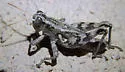
Probably only a northern variant of A. tenuipennis with which it seems to intergrade. Differs in shorter wings (usually not reaching tip of abdomen, smaller average size, and more northern distribution. Differs from sympatric A. chenopodii in having wings usually longer than pronotum (often longer than head + pronotum) and overlapping above when folded (small and oval, separated when folded in A. chenopodii ).
Classification
- Kingdom
- Animalia
- Phylum
- Arthropoda
- Class
- Insecta
- Order
- Orthoptera (Grasshoppers, Crickets, Katydids)
- Suborder
- Caelifera
- Family
- Acrididae (Short-horned Grasshoppers)
- Subfamily
- Melanoplinae
- Tribe
- Melanoplini
- Genus
- Aeoloplides
Imported taxonomy record. Source availability varies; see the source references and editorial policy below.
Habitat and Range
Habitat
On Chenopodiaceae, mostly shrubby species, particularly on Atriplex & Sarcobatus species; mostly in desert flats.
Geographic Range
Mostly in Great Basin and Colorado Plateaus; se. Oregon and s. Idaho to ne. California, s. Nevada, s. Utah, w. Colorado, and perhaps sw. Wyoming. Intergrades with A. tenuipennis southward, and difficult to draw line where one stops and the other starts (this blending occurs primarily in southern Utah and Nevada).
Seasonal Activity
Eggs hatch in spring with adults by June or July. Some often survive until first frosts in autumn.
Diet and Behavior
Diet: various Chenopodiaceae, and may accept Portulacaceae if favored hosts aren't available.
Life History
Overwinters as eggs, with adults from late spring or early summer, most common in summer, and sometimes some surviving until freezing weather (depending perhaps on rains).
About Grasshoppers, Crickets, Katydids: the wider group
Order-level background for Orthoptera, the group containing Aeoloplides minor. Species-specific details appear above.
Group overview
Orthoptera includes ~28,000 described species of grasshoppers, crickets, and katydids. Desert locusts can form swarms covering 460 square miles containing up to 80 million individuals per square kilometer.
Ecological role of the group
Grasshoppers and crickets are a primary food source for birds, reptiles, and small mammals. Cricket farming is a growing industry - crickets require 12× less feed than cattle to produce the same amount of protein, using 2,000× less water.
Economic and practical significance of the group
A single large locust swarm can consume the same amount of food in one day as 35,000 people. The 2019-2021 East Africa locust crisis affected food security for 42 million people across multiple countries. Global crop losses from locusts can reach billions annually.
Recorded sources for this group: FAO, UN World Food Programme, research publications. Imported estimates may describe particular regions or reporting periods.
Frequently Asked Questions About Little Saltbush Grasshopper
What is Little Saltbush Grasshopper?
Little Saltbush Grasshopper (Aeoloplides minor) is a species in the family Acrididae, within the order Orthoptera.
How do you identify Little Saltbush Grasshopper?
Probably only a northern variant of A. tenuipennis with which it seems to intergrade. Differs in shorter wings (usually not reaching tip of abdomen, smaller average size, and more northern distribution. Differs from sympatric A. chenopodii in having wings usually longer than pronotum (often longer than head + pronotum) and overlapping above when folded (small and oval, separated when folded in A. chenopodii ).
Where is Little Saltbush Grasshopper found?
| Feature | Details |
|---|---|
| Habitat | On Chenopodiaceae, mostly shrubby species, particularly on Atriplex & Sarcobatus species; mostly in desert flats. |
| Range | Mostly in Great Basin and Colorado Plateaus; se. Oregon and s. Idaho to ne. California, s. Nevada, s. Utah, w. Colorado, and perhaps sw. Wyoming. Intergrades with A. tenuipennis southward, and difficult to draw line where one stops and the other starts (this blending occurs primarily in southern Utah and Nevada). |
What does Little Saltbush Grasshopper eat?
The diet of the Little Saltbush Grasshopper includes various Chenopodiaceae, and may accept Portulacaceae if favored hosts aren't available..
When is Little Saltbush Grasshopper active?
Little Saltbush Grasshopper: seasonal activity - Eggs hatch in spring with adults by June or July. Some often survive until first frosts in autumn..
What is the life cycle of a Little Saltbush Grasshopper?
Overwinters as eggs, with adults from late spring or early summer, most common in summer, and sometimes some surviving until freezing weather (depending perhaps on rains).