
Lichen Grasshopper
Trimerotropis saxatilis
This record describes Trimerotropis saxatilis (species). Recorded family: Acrididae. Recorded order: Orthoptera.
Identification and Appearance
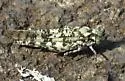
The coloration is highly variable from individual to individual, but tends to match the rocks upon which the insects live. Green pigmented specimens are quite striking. Such green specimens apparently do not occur west of extreme eastern Oklahoma and Kansas. In the past, western specimens from the Great Plains and Rockies have been mostly mistaken for T. pallidipennis or T. fratercula , and in Texas for T. salina . T. saxatilis is described and figured well in Beamer's Grasshoppers of Kansas on p. 81, 114, & 115, but is called T. vinculata . The insects are restricted to their rocky habitats, and will rarely fly away from them even when chased, either flying to another rock outcrop or circling back to the same one. They will just as happily land on a vertical or overhanging rock face as on a horizontal one. They often produce an interrupted buzzing crepitation when flying.
Classification
- Kingdom
- Animalia
- Phylum
- Arthropoda
- Class
- Insecta
- Order
- Orthoptera (Grasshoppers, Crickets, Katydids)
- Suborder
- Caelifera
- Family
- Acrididae (Short-horned Grasshoppers)
- Subfamily
- Oedipodinae
- Tribe
- Trimerotropini
- Genus
- Trimerotropis
Imported taxonomy record. Source availability varies; see the source references and editorial policy below.
Habitat and Range
Habitat
Exposed sunny rock outcroppings and ledges. Type of rock seems largely unimportant, though very dark rocks such as basalt seem to not be inhabited. Habitats are most often limestone, conglomerate, sandstone, or granite, and are often lichen encrusted.
Geographic Range
Western Carolinas and Georgia westward to central Texas, northeastern New Mexico, eastern Colorado, and eastern Wyoming. Perhaps in se. Montana (needs verification). Primarily in south Appalachians, Ozarks, Ouachitas, and isolated rock outcroppings on the Great Plains, west to the east base of the Rockies. Very common on the first "hogbacks" where the Great Plains meet the Rockies in Colorado and between Cheyenne and Laramie in Wyoming. Confusion in the northern Rockies and Great Plains (north of Wyoming and Montana) makes it uncertain where the limits of the distribution for T. saxatilis lie. It reaches north at least into South Dakota.
Diet and Behavior
Life History
Overwinters as eggs, which hatch in spring. Adults late spring or early Summer until frost.
Additional species information
Species notes from the sources
Etymology: There are two species listed as "Lichen Grasshopper". This one is eastern, the other in southern Arizona, and they look quite different.
About Grasshoppers, Crickets, Katydids: the wider group
Order-level background for Orthoptera, the group containing Trimerotropis saxatilis. Species-specific details appear above.
Group overview
Orthoptera includes ~28,000 described species of grasshoppers, crickets, and katydids. Desert locusts can form swarms covering 460 square miles containing up to 80 million individuals per square kilometer.
Ecological role of the group
Grasshoppers and crickets are a primary food source for birds, reptiles, and small mammals. Cricket farming is a growing industry - crickets require 12× less feed than cattle to produce the same amount of protein, using 2,000× less water.
Economic and practical significance of the group
A single large locust swarm can consume the same amount of food in one day as 35,000 people. The 2019-2021 East Africa locust crisis affected food security for 42 million people across multiple countries. Global crop losses from locusts can reach billions annually.
Recorded sources for this group: FAO, UN World Food Programme, research publications. Imported estimates may describe particular regions or reporting periods.
Photos of Lichen Grasshopper (5)
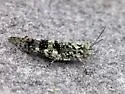
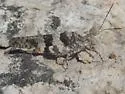
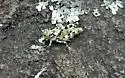
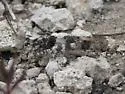
Photo credits: Contributed by Eric R. Eaton; Additional contributions by David Ferguson , metrioptera
Frequently Asked Questions About Lichen Grasshopper
What is Lichen Grasshopper?
Lichen Grasshopper (Trimerotropis saxatilis) is a species in the family Acrididae, within the order Orthoptera.
Where is Lichen Grasshopper found?
| Feature | Details |
|---|---|
| Habitat | Exposed sunny rock outcroppings and ledges. Type of rock seems largely unimportant, though very dark rocks such as basalt seem to not be inhabited. Habitats are most often limestone, conglomerate, sandstone, or granite, and are often lichen encrusted. |
| Range | Western Carolinas and Georgia westward to central Texas, northeastern New Mexico, eastern Colorado, and eastern Wyoming. Perhaps in se. Montana (needs verification). Primarily in south Appalachians, Ozarks, Ouachitas, and isolated rock outcroppings on the Great Plains, west to the east base of the Rockies. Very common on the first hogbacks where the Great Plains meet the Rockies in Colorado and between Cheyenne and Laramie in Wyoming. Confusion in the northern Rockies and Great Plains (north of Wyoming and Montana) makes it uncertain where the limits of the distribution for T. saxatilis lie. It reaches north at least into South Dakota. |
What is the life cycle of a Lichen Grasshopper?
Overwinters as eggs, which hatch in spring. Adults late spring or early Summer until frost.