
Great Grig
Cyphoderris monstrosa
This record describes Cyphoderris monstrosa (species). Recorded family: Prophalangopsidae. Recorded order: Orthoptera.
Identification and Appearance
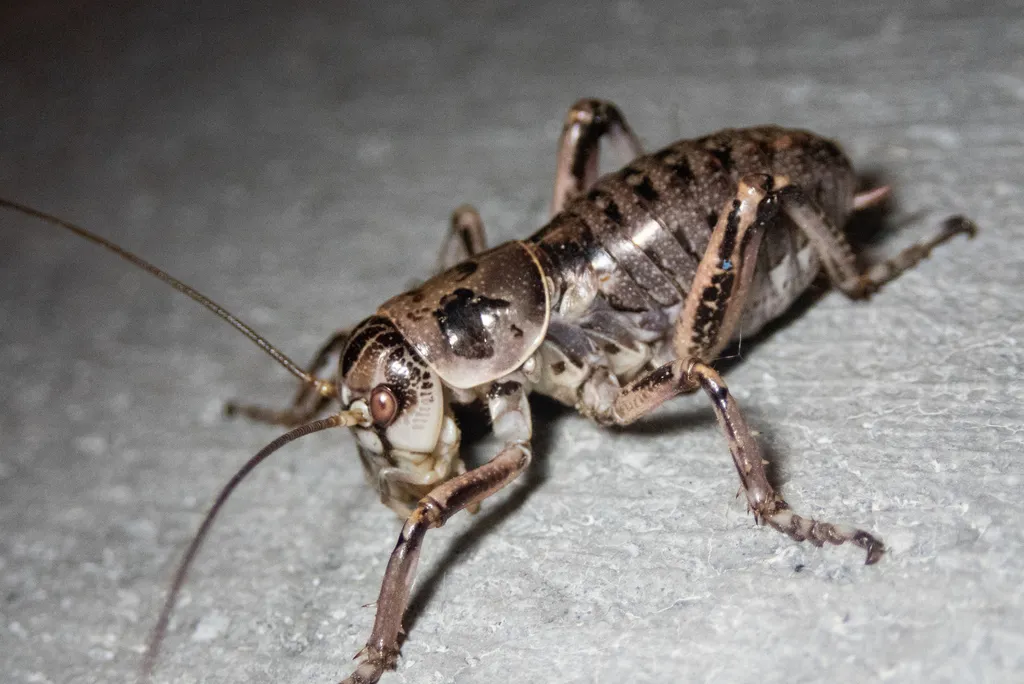
male dark gray dorsally, pale whitish ventrally, with short wings humped up and wrinkled like a loosely-folded blanked heaped on the insect's back; male subgenital plate with a ventrally-directed process shaped like the nail-pulling claw of a hammer female either lacks wings or has them reduced to small stubs males stridulate to attract females or to announce territory; males also have fierce fights over territory and/or females
Wikipedia reference for Cyphoderris monstrosa: http://en.wikipedia.org/wiki/Cyphoderris_monstrosa.
Classification
- Kingdom
- Animalia
- Phylum
- Arthropoda
- Class
- Insecta
- Order
- Orthoptera (Grasshoppers, Crickets, Katydids)
- Suborder
- Ensifera
- Family
- Prophalangopsidae (Hump-winged Crickets)
- Genus
- Cyphoderris
Imported taxonomy record. Source availability varies; see the source references and editorial policy below.
Habitat and Range
Habitat
coniferous forests containing Lodgepole Pine, Englemann Spruce, and Mountain Hemlock; adults hide beneath leaf litter during the day, and become active at night, climbing tree trunks and continuing high into the branches to feed, sing (males), and mate
Geographic Range
southern British Columbia and Alberta, south to northern California and southern Idaho (see distribution map )
Seasonal Activity
adults from June to August
Diet and Behavior
Diet: staminate flowers of coniferous trees, and flower parts & pollen of broadleaved shrubs; sometimes eats fruit and small insects
Life History
overwinters as a late-instar nymph or young adult in burrow in ground; one generation per year
Additional species information
Species notes from the sources
Etymology: MONSTROSA: like a monster; very large and abnormally shaped or hideous (this species is the largest of the 3 in North America)
About Grasshoppers, Crickets, Katydids: the wider group
Order-level background for Orthoptera, the group containing Cyphoderris monstrosa. Species-specific details appear above.
Group overview
Orthoptera includes ~28,000 described species of grasshoppers, crickets, and katydids. Desert locusts can form swarms covering 460 square miles containing up to 80 million individuals per square kilometer.
Ecological role of the group
Grasshoppers and crickets are a primary food source for birds, reptiles, and small mammals. Cricket farming is a growing industry - crickets require 12× less feed than cattle to produce the same amount of protein, using 2,000× less water.
Economic and practical significance of the group
A single large locust swarm can consume the same amount of food in one day as 35,000 people. The 2019-2021 East Africa locust crisis affected food security for 42 million people across multiple countries. Global crop losses from locusts can reach billions annually.
Recorded sources for this group: FAO, UN World Food Programme, research publications. Imported estimates may describe particular regions or reporting periods.
Photos of Great Grig (2)
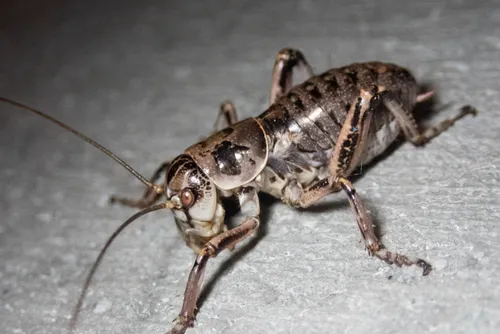
Photo credits: Contributed by Robin McLeod; Additional contributions by metrioptera
Frequently Asked Questions About Great Grig
What is Great Grig?
Great Grig (Cyphoderris monstrosa) is a species in the family Prophalangopsidae, within the order Orthoptera.
How big is Great Grig?
body length 20-30 mm
How do you identify Great Grig?
male dark gray dorsally, pale whitish ventrally, with short wings humped up and wrinkled like a loosely-folded blanked heaped on the insect's back; male subgenital plate with a ventrally-directed process shaped like the nail-pulling claw of a hammer female either lacks wings or has them reduced to small stubs
Where is Great Grig found?
| Feature | Details |
|---|---|
| Habitat | coniferous forests containing Lodgepole Pine, Englemann Spruce, and Mountain Hemlock; adults hide beneath leaf litter during the day, and become active at night, climbing tree trunks and continuing high into the branches to feed, sing (males), and mate |
| Range | southern British Columbia and Alberta, south to northern California and southern Idaho (see distribution map ) |
What does Great Grig eat?
The diet of the Great Grig includes staminate flowers of coniferous trees, and flower parts & pollen of broadleaved shrubs; sometimes eats fruit and small insects.
When is Great Grig active?
Great Grig: seasonal activity - adults from June to August.
What is the life cycle of a Great Grig?
overwinters as a late-instar nymph or young adult in burrow in ground; one generation per year