
Xestia finatimis - Hodges#10972.1
Xestia finatimis
This record describes Xestia finatimis (species). Recorded family: Noctuidae. Recorded order: Lepidoptera.
Identification and Appearance
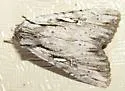
| Feature | Description |
|---|---|
| Additional details | Xestia finatimis looks like a pale gray washed out form of Xestia infimatis . |
| Forewing | Forewing gray or brownish gray, usually with longitudinal brown streak distal to reniform spot; AM line dark gray and deeply zigzagged but inconspicuous due to blending in with dark-gray shading of veins; PM line deeply scalloped but inconspicuous with only small black dot at apex of scallops somewhat prominent; reniform spot rectangular, lower proximal corner stretches slightly toward wing base, filled with dark-gray with pale outline; orbicular spot oblique, elongate, almost bar-like, extending from costa to reniform spot, filled with pale gray, dark central bar in some specimens; claviform spot shows as elongate pale-gray filled loop; prominent black basal dash ends near claviform spot; ST area with series of dark gray-brown streaks that tend to fuse into triangular patch distal to reniform spot, similar smaller patch distal to claviform spot; terminal line black, deeply scalloped. |
| Hindwing | Hindwing pale smoky gray brown, slightly darker on discal spot, median line and outer one-fourth of wing; terminal line dark brown, interrupted at veins; fringe pale gray. Description of genitalia available in MONA Fascicle 27-3 available at link under citations below. Genitalia: |
Classification
- Kingdom
- Animalia
- Phylum
- Arthropoda
- Class
- Insecta
- Order
- Lepidoptera (Butterflies and Moths)
- Superfamily
- Noctuoidea
- Family
- Noctuidae (Owlet Moths)
- Subfamily
- Noctuinae
- Tribe
- Noctuini
- Genus
- Xestia
Imported taxonomy record. Source availability varies; see the source references and editorial policy below.
Habitat and Range
Habitat
dry pine forest
Geographic Range
south British Columbia east to western Alberta, northern Idaho and northwest Montana and southward in coastal states to southern California
Seasonal Activity
adults from late July to mid-September in northern part of range; mid-August to mid-October in California
Diet and Behavior
Diet: The larvae are reported to feed on various hardwoods such as Serviceberry ( Amelanchier spp.) in the Rosaceae and Alders ( Alnus spp.) in the Betulaceae.
About Butterflies and Moths: the wider group
Order-level background for Lepidoptera, the group containing Xestia finatimis. Species-specific details appear above.
Group overview
Lepidoptera includes approximately 180,000 described species of butterflies and moths. Moths outnumber butterflies roughly 10:1. The monarch butterfly's eastern population has declined by more than 80% since the mid-1990s, and the western population by over 95% since the 1980s. The IUCN lists the migratory monarch as Vulnerable.
Ecological role of the group
Butterflies and moths are essential indicators of ecosystem health. As caterpillars, they are a primary food source for birds - a single nest of blue tit chicks requires ~10,000 caterpillars. Adult moths pollinate many night-blooming plants.
Economic and practical significance of the group
Lepidoptera are critical pollinators. In Europe, grassland butterfly species have declined by almost 50% since the early 1990s. In the UK, three-quarters of butterflies are in decline. In the U.S., five butterfly species have gone extinct since 1950, with 29 listed as endangered.
Recorded sources for this group: IUCN Red List, Xerces Society, USFWS, PNAS, WWF. Imported estimates may describe particular regions or reporting periods.
Photos of Xestia finatimis - Hodges#10972.1 (5)
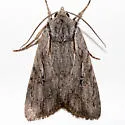
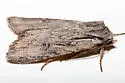
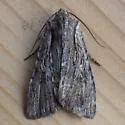
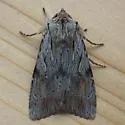
Photo credits: Contributed by Bob Biagi; Additional contributions by Steve Morris
Frequently Asked Questions About Xestia finatimis - Hodges#10972.1
What is Xestia finatimis - Hodges#10972.1?
Xestia finatimis - Hodges#10972.1 (Xestia finatimis) is a species in the family Noctuidae, within the order Lepidoptera.
How big is Xestia finatimis - Hodges#10972.1?
forewing length = 15-19 mm
How do you identify Xestia finatimis - Hodges#10972.1?
| Feature | Description |
|---|---|
| Additional details | Xestia finatimis looks like a pale gray washed out form of Xestia infimatis . |
| Forewing | Forewing gray or brownish gray, usually with longitudinal brown streak distal to reniform spot; AM line dark gray and deeply zigzagged but inconspicuous due to blending in with dark-gray shading of veins; PM line deeply scalloped but inconspicuous with only small black dot at apex of scallops somewhat prominent; reniform spot rectangular, lower proximal corner stretches slightly toward wing base, filled with dark-gray with pale outline; orbicular spot oblique, elongate, almost bar-like, extending from costa to reniform spot, filled with pale gray, dark central bar in some specimens; claviform spot shows as elongate pale-gray filled loop; prominent black basal dash ends near claviform spot; ST area with series of dark gray-brown streaks that tend to fuse into triangular patch distal to reniform spot, similar smaller patch distal to claviform spot; terminal line black, deeply scalloped. |
| Hindwing | Hindwing pale smoky gray brown, slightly darker on discal spot, median line and outer one-fourth of wing; terminal line dark brown, interrupted at veins; fringe pale gray. Description of genitalia available in MONA Fascicle 27-3 available at link under citations below. Genitalia: |
Where is Xestia finatimis - Hodges#10972.1 found?
| Feature | Details |
|---|---|
| Habitat | dry pine forest |
| Range | south British Columbia east to western Alberta, northern Idaho and northwest Montana and southward in coastal states to southern California |
What does Xestia finatimis - Hodges#10972.1 eat?
The diet of the Xestia finatimis - Hodges#10972.1 includes The larvae are reported to feed on various hardwoods such as Serviceberry ( Amelanchier spp.) in the Rosaceae and Alders ( Alnus spp.) in the Betulaceae..
When is Xestia finatimis - Hodges#10972.1 active?
Xestia finatimis - Hodges#10972.1: seasonal activity - adults from late July to mid-September in northern part of range; mid-August to mid-October in California.