
Ultronia Underwing - Hodges#8857
Catocala ultronia
This record describes Catocala ultronia (species). Recorded family: Erebidae. Recorded order: Lepidoptera.
Identification and Appearance
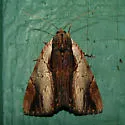
Adult: forewing pattern predominantly longitudinal (running from base to outer margin), rather than transverse (running from costa to inner margin) as in many other Catocala species; typically has dark brown to black strip along inner margin, and similar-colored subapical patch extending from outer margin to PM line or reniform spot; central longitudinal area light gray or brown, but the extent and intensity of shading varies considerably among individuals; pale brown patch usually present along costa at apex; hinding dark orangish-red, rarely pinkish or yellow, with complete black median band and wider black terminal band; small white patch at apex; antennae filiform; sexes similar. Larva: distinct black line across top of head; body gray with dense fringe of hairs along lateroventral margin above legs; prominent dorsal horn on fifth abdominal segment; oblique black line runs anteriorly from dorsal base of eighth abdominal segment.
Classification
- Kingdom
- Animalia
- Phylum
- Arthropoda
- Class
- Insecta
- Order
- Lepidoptera (Butterflies and Moths)
- Superfamily
- Noctuoidea
- Family
- Erebidae
- Subfamily
- Erebinae
- Tribe
- Catocalini
- Genus
- Catocala (Underwings)
Imported taxonomy record. Source availability varies; see the source references and editorial policy below.
Habitat and Range
Geographic Range
Across southern Canada from Nova Scotia to eastern British Columbia, and all of eastern United States, west to Texas and Minnesota.
Seasonal Activity
Adults fly from July through September in the north; as early as late April in the south (Texas).
Diet and Behavior
Diet: Larvae show a preference for members of the Rosaceae family, feeding mostly on apple and various species of cherry ( Prunus spp.), but will also eat leaves of green ash ( Fraxinus pennsylvanica ), American basswood ( Tilia americana ), and bigtooth aspen ( Populus grandidentata ).
Life History
One generation per year; overwinters as an egg; mature larvae descend tree trunk and pupate on or in the soil under leaf litter.
Additional species information
Species notes from the sources
Etymology: Bill Oehlke's site states that specific epithet is the name of a Greek island.
About Butterflies and Moths: the wider group
Order-level background for Lepidoptera, the group containing Catocala ultronia. Species-specific details appear above.
Group overview
Lepidoptera includes approximately 180,000 described species of butterflies and moths. Moths outnumber butterflies roughly 10:1. The monarch butterfly's eastern population has declined by more than 80% since the mid-1990s, and the western population by over 95% since the 1980s. The IUCN lists the migratory monarch as Vulnerable.
Ecological role of the group
Butterflies and moths are essential indicators of ecosystem health. As caterpillars, they are a primary food source for birds - a single nest of blue tit chicks requires ~10,000 caterpillars. Adult moths pollinate many night-blooming plants.
Economic and practical significance of the group
Lepidoptera are critical pollinators. In Europe, grassland butterfly species have declined by almost 50% since the early 1990s. In the UK, three-quarters of butterflies are in decline. In the U.S., five butterfly species have gone extinct since 1950, with 29 listed as endangered.
Recorded sources for this group: IUCN Red List, Xerces Society, USFWS, PNAS, WWF. Imported estimates may describe particular regions or reporting periods.
Photos of Ultronia Underwing - Hodges#8857 (5)
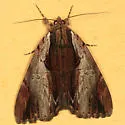
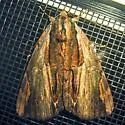
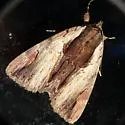
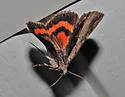
Photo credits: Contributed by Cotinis; Additional contributions by Robin McLeod , Maury Heiman , Ron M. , marcie oconnor , Randy Hardy
Frequently Asked Questions About Ultronia Underwing - Hodges#8857
What is Ultronia Underwing - Hodges#8857?
Ultronia Underwing - Hodges#8857 (Catocala ultronia) is a species in the family Erebidae, within the order Lepidoptera.
How big is Ultronia Underwing - Hodges#8857?
Winspan 46-63 mm
How do you identify Ultronia Underwing - Hodges#8857?
Adult: forewing pattern predominantly longitudinal (running from base to outer margin), rather than transverse (running from costa to inner margin) as in many other Catocala species; typically has dark brown to black strip along inner margin, and similar-colored subapical patch extending from outer margin to PM line or reniform spot; central longitudinal area light gray or brown, but the extent and intensity of shading varies considerably among individuals; pale brown patch usually present along costa at apex; hinding dark orangish-red, rarely pinkish or yellow, with complete black median band and wider black terminal band; small white patch at apex; antennae filiform; sexes similar. Larva: distinct black line across top of head; body gray with dense fringe of hairs along lateroventral margin above legs; prominent dorsal horn on fifth abdominal segment; oblique black line runs anteriorly from dorsal base of eighth abdominal segment.
Where is Ultronia Underwing - Hodges#8857 found?
Range: Across southern Canada from Nova Scotia to eastern British Columbia, and all of eastern United States, west to Texas and Minnesota.
What does Ultronia Underwing - Hodges#8857 eat?
The diet of the Ultronia Underwing - Hodges#8857 includes Larvae show a preference for members of the Rosaceae family, feeding mostly on apple and various species of cherry ( Prunus spp.), but will also eat leaves of green ash ( Fraxinus pennsylvanica ), American basswood ( Tilia americana ), and bigtooth aspen ( Populus grandidentata )..
When is Ultronia Underwing - Hodges#8857 active?
Ultronia Underwing - Hodges#8857: seasonal activity - Adults fly from July through September in the north; as early as late April in the south (Texas)..
What is the life cycle of a Ultronia Underwing - Hodges#8857?
One generation per year; overwinters as an egg; mature larvae descend tree trunk and pupate on or in the soil under leaf litter.