
Butterflies and Moths
Order Lepidoptera
The Butterflies and Moths (Order Lepidoptera) includes 11,813 species across 112 families and 2,787 genera in our directory.
About Butterflies and Moths
Lepidoptera includes approximately 180,000 described species of butterflies and moths. Moths outnumber butterflies roughly 10:1. The monarch butterfly's eastern population has declined by more than 80% since the mid-1990s, and the western population by over 95% since the 1980s. The IUCN lists the migratory monarch as Vulnerable.
Economic Impact
Lepidoptera are critical pollinators. In Europe, grassland butterfly species have declined by almost 50% since the early 1990s. In the UK, three-quarters of butterflies are in decline. In the U.S., five butterfly species have gone extinct since 1950, with 29 listed as endangered.
Ecological Role
Butterflies and moths are essential indicators of ecosystem health. As caterpillars, they are a primary food source for birds - a single nest of blue tit chicks requires ~10,000 caterpillars. Adult moths pollinate many night-blooming plants.
Families in Lepidoptera (112)
Species in Lepidoptera (11,813)
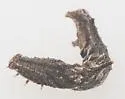
Tornos abjectarius - Hodges#6487
Tornos abjectarius
Identification: Genitalia: ♀ ♂ 8/7/2023 - Ann Hendrickson/(JoAnne Russo) It is my opinion that PHOTOGRAPH identification for this species is only accurate for FEMALES (that are fresh with bright white ground color. Age affects the coloration, the old
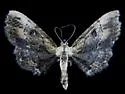
Tornos benjamini - Hodges#6483
Tornos benjamini
Identification: Adult - see Rindge's description in Print References below. Genitalia: ♀ ♂
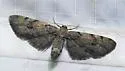
Tornos cinctarius - Hodges#6485
Tornos cinctarius
Identification: Both sexes are non-dimorphic, ground color is dark brown with prominent, dark brown to black AM and PM lines. Genitlaia: ♀ ventral, ostium sclerotized plate extends laterally with a pair of outward pointing projections on the posterio
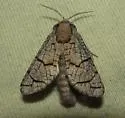
Toronia perplexus - Hodges#2695
Toronia perplexus
Identification: Forewing gray with brown shading along the base and inner margin half. Well defined dark transverse lines that are forked to form a double Y pattern. Short scattered very short, dark marks throughout. Hindwing lacks any marks and is
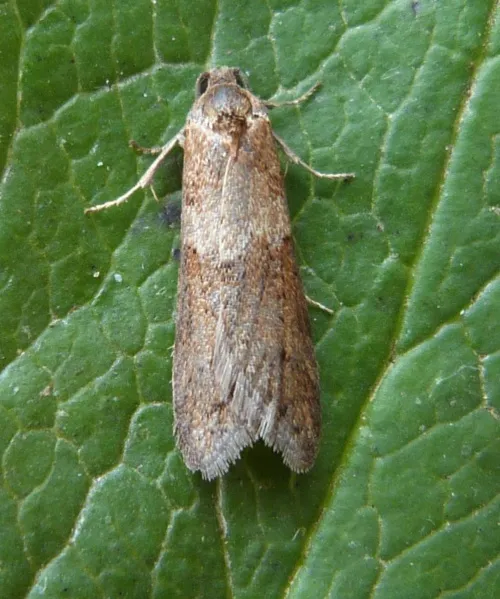
Tortricodes alternella
Tortricodes alternella
Wingspan 19 to 23 mm. This is a highly variable sometimes sooty looking species that has an unusually narrow wing shape for a Tortrix. Woodland and well wooded areas particularly those containing the preferred foodplants. One of the earliest of the T
Tortyra iocyaneus - Hodges#2653.1
Tortyra iocyaneus
Identification: Heppner stated Tortyra iocyaneus is a "larger species than T. slossonia , with a noticeably more blue-green to violet coloration." Heppner original description in PDF.
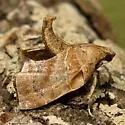
Tosale aucta - Hodges#5558
Tosale aucta
Identification: Determined by Bob Patterson. forewing fold on ♂. ♀ Ed Knudson (Texas Lepidoptera Survey) noted "The female lacks the scoop-like fold on the forewing, and lacks the large black spot on the hindwing" ( 3 )
Tosale similalis - Hodges#5557
Tosale similalis
Identification: Adult - Barnes & Benjamin described the forewings of males as ochreous-brown and females as olivaceous.
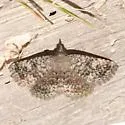
Toxonprucha psegmapteryx - Hodges#8676
Toxonprucha psegmapteryx
Identification: Soft bluish gray, dark in tone; lines blackish, wavy, not contrasted, forming about ten dark specks along the costa; inner and median lines slender, waved; a dot toward base of cell; reniform a large, kidney-shaped pale area; outer li
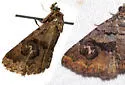
Toxonprucha scitior - Hodges#8673.2
Toxonprucha scitior
Identification: Specimen identified by DNA analysis: Genitalia: ♀ ♂ Toxonprucha scitior (Walker, 1865) is now recognized within the North American fauna, Hill Country of Texas, ZooKeys, 788: 246.
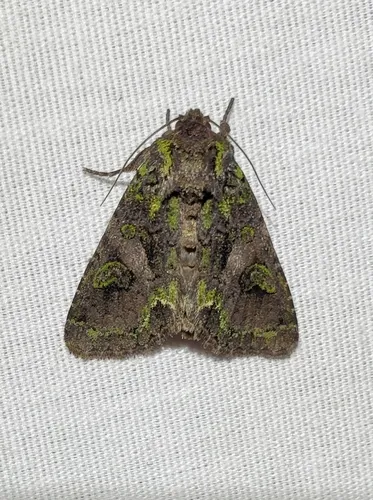
Trachea delicata - Hodges#9626
Trachea delicata
Identification: Grote original description as Hadena delicata is online and linked in the print references.
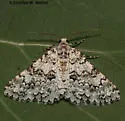
Tracheops bolteri - Hodges#6615
Tracheops bolteri
Identification: Specimens identified by DNA analysis:
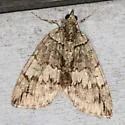
Transfigured Hydriomena - Hodges#7237
Hydriomena transfigurata
Identification: Specimen identified by DNA analysis: Genitalia: ♀ ♂
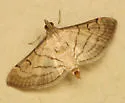
Trapeze Moth - Hodges#5288
Marasmia trapezalis
Identification: FW middle portion of st. line or shade is more widely separated from the pm. line than in cochrusalis . The HW pm. and st. lines of cochrusalis tend to be more narrowly separated with pm. line bending more toward the apex. The HW pm.
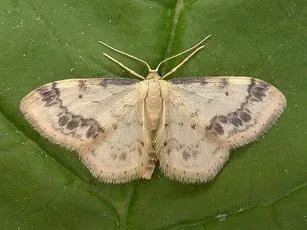
Treble Brown Spot
Idaea trigeminata
Wingspan 23 to 25 mm. Usually unmistakable. The main diagnostic feature is a dark brown outer cross band pinched in two places on an otherwise rather plain whitish forewing. Found around woodland edges and hedgerows. The adults are on the wing from l
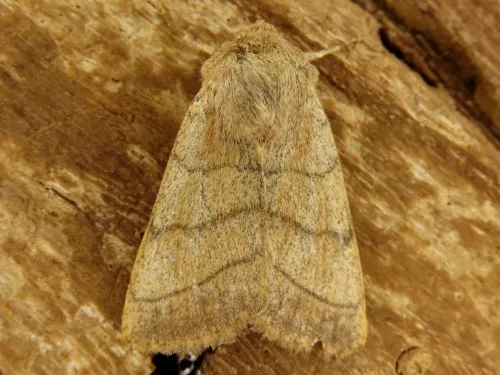
Treble Lines
Charanyca trigrammica
Wingspan 35-40 mm. As the name suggests, the buff wings are crossed by three distinctively shaped lines. A species of woodland fringes, hedgerows and commons. Flies from May to July and is readily attracted to sugar and light. The nocturnal larvae fe
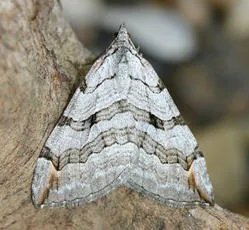
Treble-bar
Aplocera plagiata
Wingspan 27-40 mm. On of our larger Geometrids, it is rather difficult to tell apart from the less common Lesser Treble-bar ( A. efformata ) , which however has a more angled inner cross-line on the forewing. Abdomen shape should be checked - see the
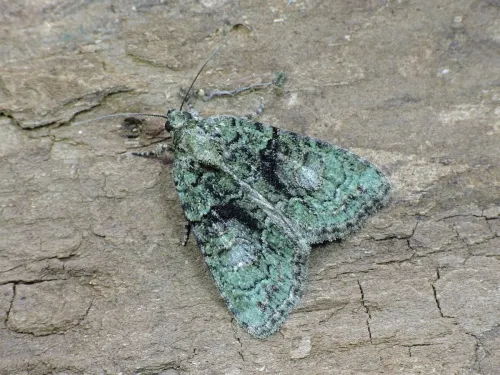
Tree-lichen Beauty
Cryphia algae
Although distinctive in appearance, photographic evidence is requested to support records for this species due to its rarity in Britain at present. A migrant that is most likely to be recorded at light. Most British records are during July and August
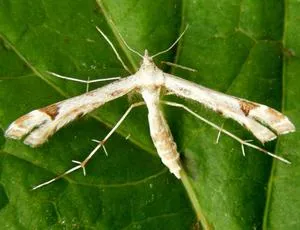
Triangle Plume
Platyptilia gonodactyla
Wingspan 20-30 mm. A pale species with bold markings towards the wing tips (the markings are often chestnut coloured). The adults fly in two generations; one in May and June and a second in the autumn. They are regularly attracted to light. The larva
Triangle-backed Pelochrista - Hodges#3116
Pelochrista dorsisignatana
Identification: Adult: forewing ash-gray to brown with faint whitish lines; dark brown patch on inner margin near base; larger paler brown median patch bordered by costa and PM line; markings reduced or absent in some specimens [description by Charle
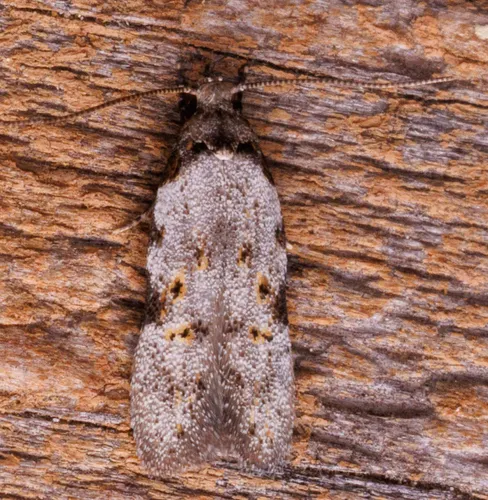
Triangle-marked Twirler Moth
Taygete attributella
Taygete attributella is a moth of the Autostichidae family. It is found in North America, including Illinois, Massachusetts, Minnesota, New Jersey, New York, Pennsylvania and Virginia.
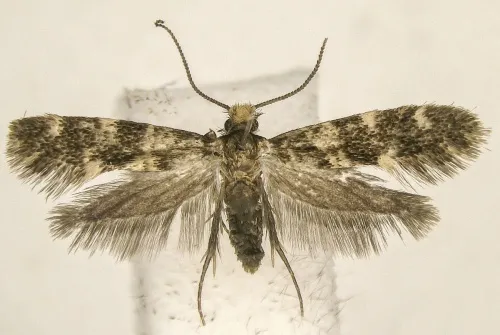
Triaxomasia caprimulgella
Triaxomasia caprimulgella
Determination by genitalia examination (gen. det.) required. Little is known about its lifecycle, though it is most often found around hollow trees. In recent years, it has been attracted to Hornet Moth pheromone lures. Adults appear to be on the win
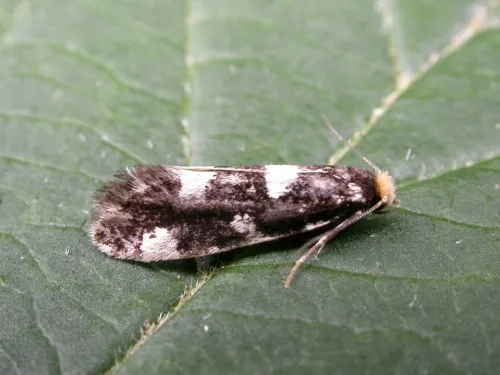
Triaxomera fulvimitrella
Triaxomera fulvimitrella
Wingspan 15 to 22 mm. Quite a well marked and distinctive species. Flies from May to July when it may be found at rest on tree trunks. The larvae feed from September through the winter months in dead wood, or on bracket fungus, especially those growi
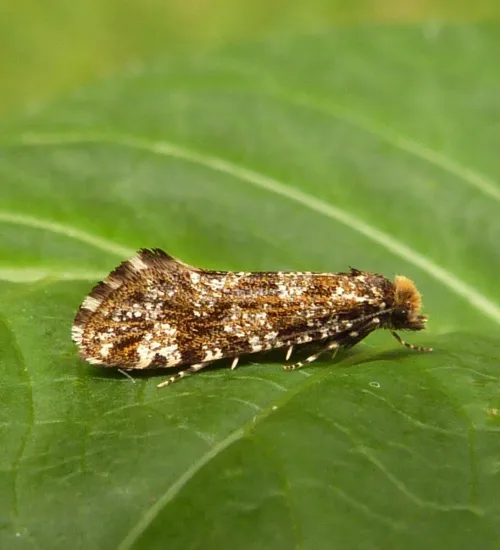
Triaxomera parasitella
Triaxomera parasitella
Wingspan 16 to 21 mm. A rather attractive species with a mottled patterning of browns, white and gold. The head is orange. Flying between May and July, the moths are generally nocturnal and can be attracted to light. The larva feeds on bracket fungi,
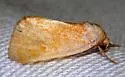
Trichocosmia inornata - Hodges#10219
Trichocosmia inornata
Identification: Adult: forewing uniformly pale yellowish except for faint whitish subterminal line and very slightly darker shading in subterminal/postmedial area; hindwing white; top of head and thorax same color as forewing. Usually the forewing ma
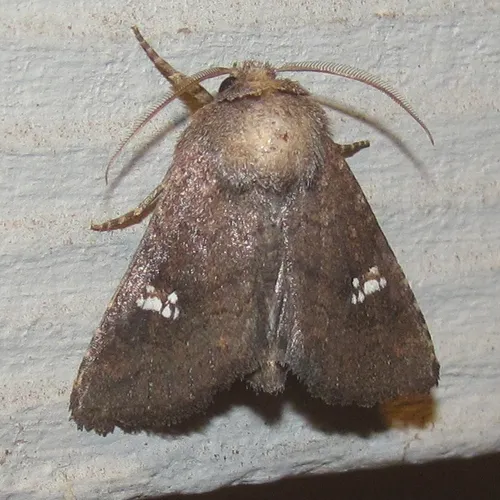
Tricholita baranca - Hodges#10629
Tricholita baranca
Identification: Thorax and forewing relatively uniform dark brown with a slight purple tint; dark color of the FWs typically obscures any underlying pattern; a blackish sinuous PM line with outward points on the veins is sometimes visible, bordered d
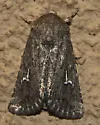
Tricholita chipeta - Hodges#10631
Tricholita chipeta
Identification: The original description of Tricholita chipeta Barnes, is available in the print references below.
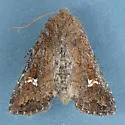
Tricholita fistula - Hodges#10630
Tricholita fistula
Tricholita fistula - Hodges#10630 (Tricholita fistula) is a species in the family Noctuidae, commonly known as owlet moths, belonging to the order Lepidoptera (Butterflies and Moths). It is classified within the subfamily Noctuinae, tribe Eriopygini,
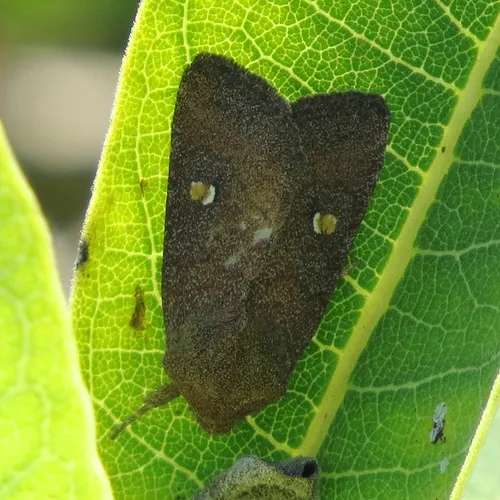
Tricholita notata - Hodges#10628
Tricholita notata
Identification: The revised description by Hampson (1905), as Chabuata notata (Barnes and Benjamin), is available online in the print references below. Listed on Ohio's endangered species list. Wisconsin lists the species as rare.
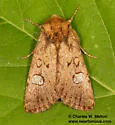
Tricholita palmillo - Hodges#10267
Tricholita palmillo
Identification: See original description in print references below .
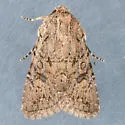
Trichopolia alfkenii - Hodges#10559
Trichopolia alfkenii
Identification: Specimens identified by DNA analysis: Genitalia:
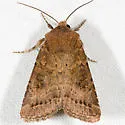
Trichopolia curtica - Hodges#10546
Trichopolia curtica
Identification: Adult - see Lafontaine, Walsh & Ferris below. Larva - see Crumb below.
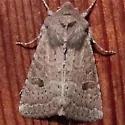
Trichopolia melanopis - Hodges#10566
Trichopolia melanopis
Identification: Adult - pale gray-brown forewing with contrasting reniform and orbicular spots.
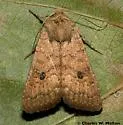
Trichopolia mulina - Hodges#10562
Trichopolia mulina
Identification: The original description as Taeniocampa mulina Schaus, and the Hampson 1905 description as Eriopyga mulina are both available online in the print references below. Notes on larvae by Crumb 1956 ( 4 ) , and Godfrey 1972 ( 5 ) in the pr
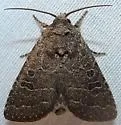
Trichopolia orobia - Hodges#10565
Trichopolia orobia
Identification: The original description as Mamestra orobia Harvey, is available at the link in the print references below.
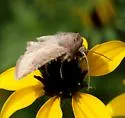
Trichopolia ustulata - Hodges#10557.1
Trichopolia ustulata
Identification: The reniform spot is described as kidney shaped, but can be greatly constricted at the middle appearing like a figure 8.
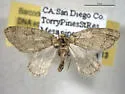
Trichopteryx veritata - Hodges#7636
Trichopteryx veritata
Identification: Specimen determined by DNA analysis (BOLD).
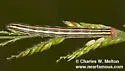
Trichordestra prodeniformis - Hodges#10309
Trichordestra prodeniformis
Identification: Adult: forewing dark gray with silvery shading in subterminal, lower median, and costal areas; orbicular spot oblong, oblique, rimmed in white; paler grayish-brown shading along inner margin; subterminal line silvery white, with promi
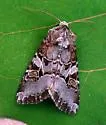
Trichordestra tacoma - Hodges#10303
Trichordestra tacoma
Identification: Adult: forewing brownish-gray with dark gray patches; subterminal area pale purplish-gray; subterminal line whitish, with distinct W-shaped jog near middle; hindwing yellowish-gray with dark veins and broad dark terminal band; fringe
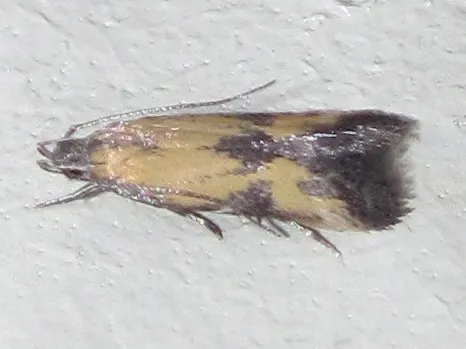
Triclonella bicoloripennis - Hodges#1528
Triclonella bicoloripennis
Triclonella bicoloripennis is a moth in the Cosmopterigidae family. It is found in North America, where it has been recorded from Louisiana, Mississippi, South Carolina and Texas.
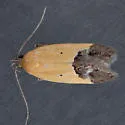
Triclonella pergandeella - Hodges#1524
Triclonella pergandeella
Identification: Busck (1901) description, in full grown larvae the head is yellow with a black spot on top and one over each eye; body is black with sparse, short white hairs and various yellow spots and smaller dots, anterior black; earlier instars
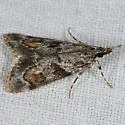
Tricolored Cosipara - Hodges#4705
Cosipara tricoloralis
Identification: Adult: forewing ground color white, covered by dark speckling and overlaid by dark gray, dull orangish, and brownish-gray shading in AM, PM, and subterminal areas respectively [based on appearance of this photo ]; AM and PM lines pale
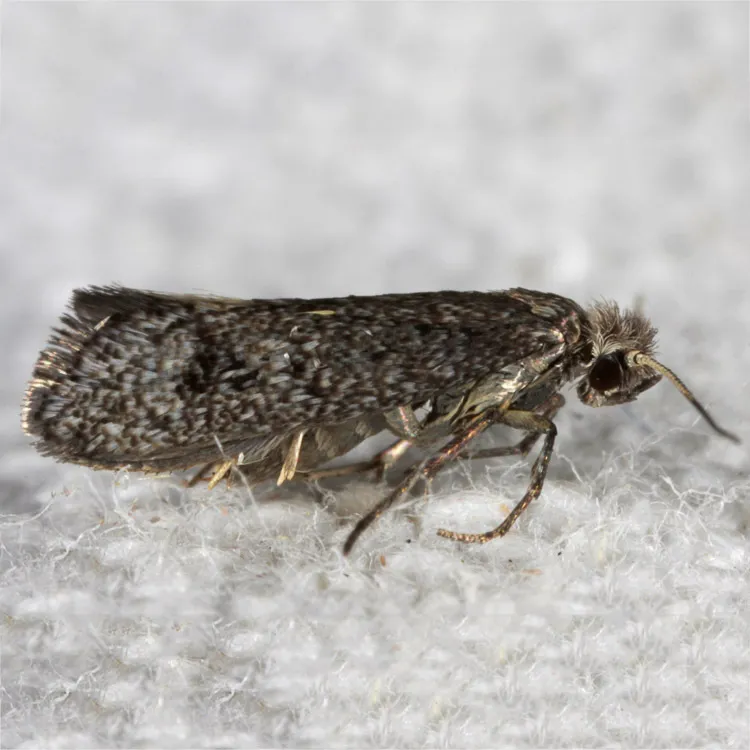
Tridentaforma fuscoleuca - Hodges#0195
Tridentaforma fuscoleuca
Identification: Forewing is shiny with a slight purple sheen. ( 3 ) Specimen identified by DNA analysis (BOLD). ( 4 )
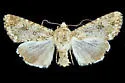
Tridepia nova - Hodges#10253
Tridepia nova
Identification: Specimen determined by DNA analysis (BOLD).
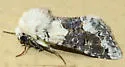
Triocnemis saporis - Hodges#10174
Triocnemis saporis
Identification: Grote (1881) original description. "White: Head and thorax white, with a brownish tuft behind on the thorax. Band of forewings white, bounded by the t. a. line, which makes a sharp sub-median projection and a slight notch on s. c. vei
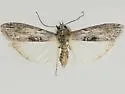
Triozosneura dorsonotata - Hodges#5735
Triozosneura dorsonotata
Near Coptarthria , Anadelosemia , Gabinius , and Ceracanthia based on venation and genital characters in Heinrich's monograph.
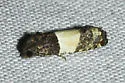
Tripartite Epiblema - Hodges#3184
Epiblema tripartitana
Identification: Revised description is online. - Wright was unable to find characters of the male or female genitalia that would separate E. tripartitana from E. glenni .
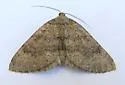
Triphosa bipectinata - Hodges#7288
Triphosa bipectinata
Identification: Barnes & McDunnough (1917) original description is presented below and online at the link in the print references. "Palpi upturned to about level of front; antennae bipectinate; thorax and primaries light shiny gray-brown, the latter
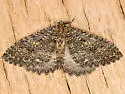
Triphosa californiata - Hodges#7287
Triphosa californiata
Identification: Specimens identified by DNA analysis:
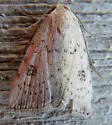
Triplex Cutworm Moth - Hodges#9644
Micrathetis triplex
Identification: Adult: male forewing pale yellowish to light brown with prominent dark gray reniform spot; PM line composed of double row of blackish dots; scattered dark dots and speckling in basal half of wing; female forewing darker brown than mal
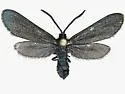
Triprocris cyanea - Hodges#4619
Triprocris cyanea
Identification: Adult - see original description in Print References.
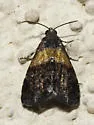
Tripudia balteata - Hodges#9005
Tripudia balteata
Identification: Identified by the broad yellowish band on forewing. ( 4 ) But confusion can arise with duller examples of Tripudia flavofasciata (see below). Type Locality: Arizona, Santa Rita Mountains.
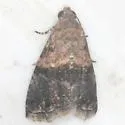
Tripudia calusa - Hodges#9007.1
Tripudia calusa
Identification: forewing blackish-brown mesial band extends from posterior margin to costal margin
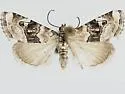
Tripudia chihuahua - Hodges#9004.1
Tripudia chihuahua
Tripudia chihuahua - Hodges#9004.1 (Tripudia chihuahua) is a species in the family Noctuidae, commonly known as owlet moths, belonging to the order Lepidoptera (Butterflies and Moths). It is classified within the subfamily Cobubathinae, superfamily N
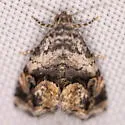
Tripudia damozela - Hodges#9002.2
Tripudia damozela
Listed as Tripuda inquaesita on the California and Arizona checklists. ( 5 )
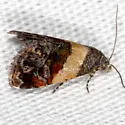
Tripudia flavofasciata - Hodges#9009
Tripudia flavofasciata
Identification: The original description is available online in the print references below. Specimen identified by DNA analysis (BOLD) ( 4 ) See comments on photos.
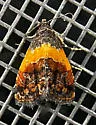
Tripudia flavofasciata-complex - Hodges#9010.95
Tripudia flavofasciata-complex
The Tripudia flavofasciata complex includes T. flavofasciata , versutus , goyanensis and undescribed species as revealed by DNA barcoding. Maculation and location appear to be of limited value in assigning specimens to species. Chris Schmidt and Don
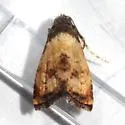
Tripudia goyanensis - Hodges#9010.1
Tripudia goyanensis
Tripudia goyanensis is a member of the Tripudia flavofasciata complex which also includes T. flavofasciata , versutus and undescribed species as revealed by DNA barcoding. Maculation and location appear to be of limited value in assigning specimens t
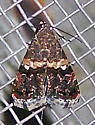
Tripudia luxuriosa - Hodges#9008
Tripudia luxuriosa
Identification: Smith original description is in PDF.
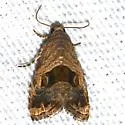
Tripudia quadrifera - Hodges#9003
Tripudia quadrifera
"Tripudia quadrifera was shown to be a species complex by Pogue (2009) with T. quadrifera confined in United States to Texas, T. rectangula occupying most the remainder of the North American range, and two additional species, T. grapholithoides (Mösc
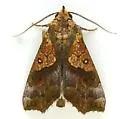
Tropical Anomis Moth - Hodges#8546
Anomis flava
Identification: ♂ Det: Ed Knudson 2018 Dalton State College cautions that A. erosa cannot be positively distinguished from A. flava without dissecting the genitalia.
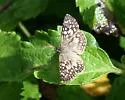
Tropical Checkered-Skipper - Hodges#3968
Burnsius oileus
Identification: Above, "white spot just beyond cell-end white bar present and enlarged" and the forewing dark towards the apex (not checkered all the way to the tip) distinguishes this from Common/White Checkered Skippers where they overlap. Below, c
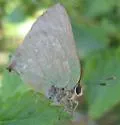
Tropical Greenstreak - Hodges#4309.1
Cyanophrys herodotus
Identification: Has a green frons (forehead) and tails. Clench's Greenstreak has a brown frons; Goodson's is tailless. First U.S. record: Bentsen-RGV State Park, 1972 the most common Greenstreak in s. TX.
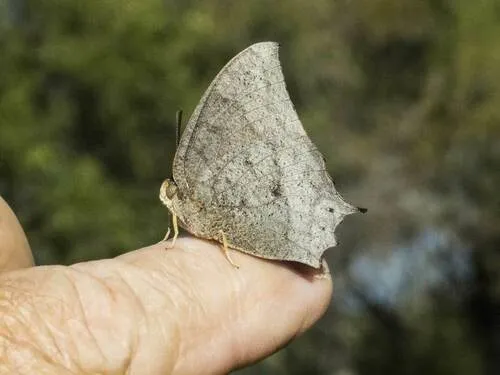
Tropical Leafwing - Hodges#4552
Anaea aidea
Identification: Similar to A. andria , except with distinct tooth on hind wing margin between tail and annal (lower/inner) angle. Males are usually more strongly patterned with dark on upper side than are males of A. andria .
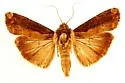
Tropical Narrow-wing - Hodges#9637
Magusa orbifera
Identification: Smaller than Magusa divaricata, which is widespread in North America The widespread Magusa divaricata was once included as a synonym of M. orbifera. References to M. orbifera outside of Florida in North America refer to what is now kn
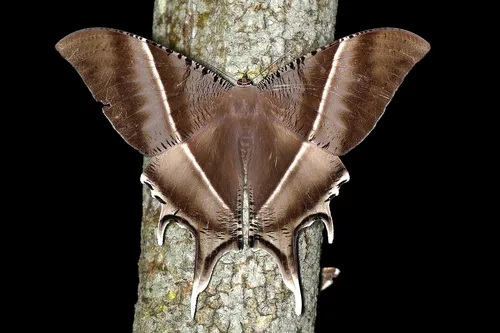
Tropical Swallowtail Moth
Lyssa zampa
Lyssa zampa, which is also known as the tropical swallowtail moth or the Laos brown butterfly, is a species of moth of the family Uraniidae. It can be found from Himalaya to Borneo and the Malay Peninsula.
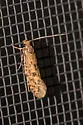
Tropical Tobacco Moth - Hodges#0428
Setomorpha rutella
Four Nearctic BINs in the genus BOLD:ABA5199 [eastern US (IL, MD)] BOLD:AAD2722 [desert SW (CA, AZ, NM)] BOLD:ACE6014 [AZ (Tucson, Huachucas)] BOLD:ABZ7737 [AZ (Huachucas)]
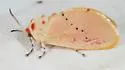
Trosia obsolescens - Hodges#4640
Trosia obsolescens
Identification: Forewing has a row of black dots across the median area. Hindwing is salmon orange.
Trudestra hadeniformis - Hodges#10237
Trudestra hadeniformis
Identification: similar to Anarta trifoli , but tan rather than gray This species may belong to genus Anarta
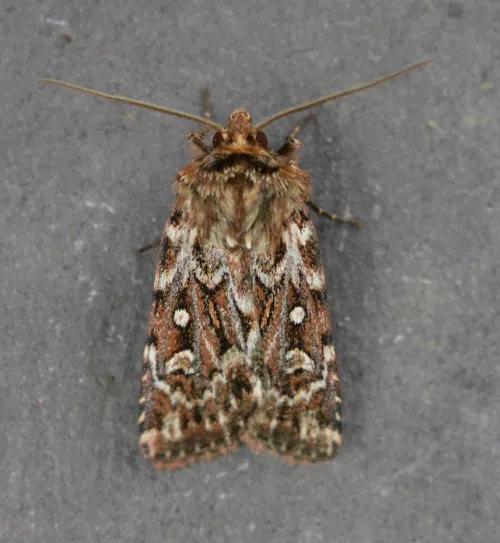
True Lover's Knot
Lycophotia porphyrea
Wingspan 25 to 30 mm. A small but attractive moth, with distinctive chestnut, black and white markings, often with a purplish tinge. It flies between June and August in a single generation, and is attracted to light. The well-camouflaged larvae feed
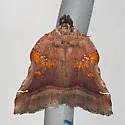
Trumpet Vine Moth - Hodges#5563
Clydonopteron sacculana
Identification: Adult: forewing costa very wavy; forewing brownish-crimson, washed with orange to PM line; some gray shading in subterminal area; white dash inward from costa at top of PM line some specimens have purplish shading to PM line some spec
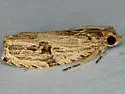
Tsinilla lineana - Hodges#2865
Tsinilla lineana
Tsinilla lineana - Hodges#2865 (Tsinilla lineana) is a species in the family Tortricidae, commonly known as tortricid moths, belonging to the order Lepidoptera (Butterflies and Moths). It is classified within the subfamily Olethreutinae, tribe Olethr
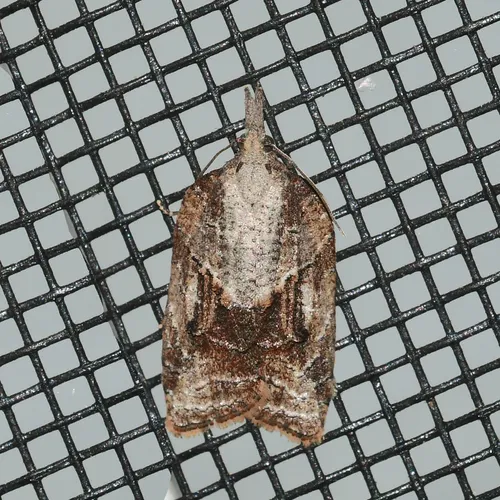
Tufted Apple Bud Moth
Platynota idaeusalis
The tufted apple bud moth (Platynota idaeusalis) is a moth of the Tortricidae family. It is found in eastern North America, from Ontario, south to Florida, west to Oklahoma.
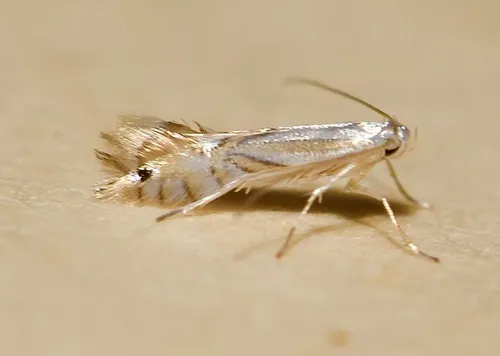
Tulip Tree Leaf Miner
Phyllocnistis liriodendronella
Phyllocnistis liriodendronella is a moth of the Gracillariidae family, known from the United States (New York, New Jersey, Maryland, Pennsylvania, Kentucky). The hostplants for the species include Liriodendron tulipifera, Magnolia glauca, Magnolia gr
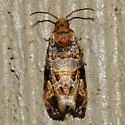
Tulip-tree Leaftier Moth - Hodges#2711
Paralobesia liriodendrana
Identification: Inner half of front wing uniformly lilac or leaden-blue, crossed by well-defined narrow brown lines. Ground color of outer half of front wing rich ochreous-brown.
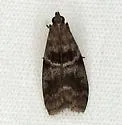
Tupelo Leaffolder - Hodges#5818
Actrix nyssaecolella
Identification: Adult: forewing light gray with dark gray band across PM area and dark gray hourglass-shaped marking in AM area bisected by thick diagonal whitish line; subterminal line whitish, diffuse, edged distally with dark gray; terminal line c
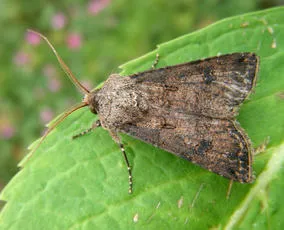
Turnip Moth
Agrotis segetum
Although showing many colour forms, this moth usually shows a neat, pale fringe with a narrow inner dark line on the forewing, and has very white hindwings. Gardens, farmland, parkland, oak woodland and sand-dunes. The species is double-brooded, flyi
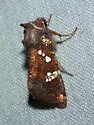
Turtle head borer moth - Hodges#9490
Papaipema nepheleptena
Identification: Dyar original description as Gortyna nepheleptena is online and linked in the print references. Beadle & Leckie reported the species to be uncommon.
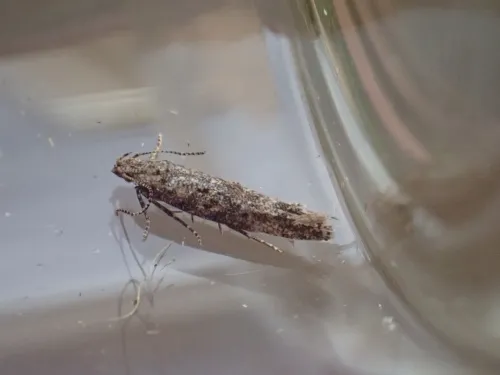
Tuta absoluta
Tuta absoluta
This small moth is generally brown with scattered black and orange patches. Native to South America where it is a pest of tomato cultivation. In the UK it is currently rare but is expanding. Tomato cultivation, particularly in greenhouses.
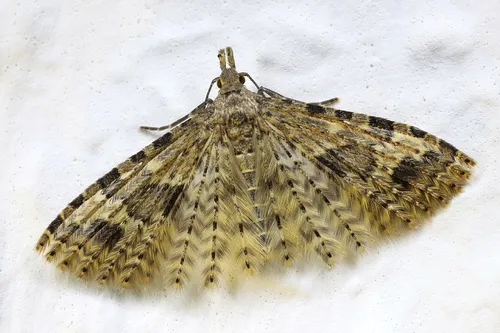
Twenty-plume Moth
Alucita hexadactyla
Wingspan 14-16 mm. The English name of this unusual little moth is something of a misnomer, as each wing is separated into 6 'plumes'. The scientific name is more accurate, meaning 'six-fingered'. It is the only British member of its family. It can b
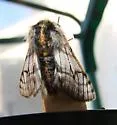
Twilight Moth - Hodges#6653
Lycia rachelae
Identification: Adult: wings reduced or absent in female, which cannot fly; male wings translucent gray with prominent black veins and dull orangish strip along costa; forewing with 3 dark lines crossing wing, middle line heaviest; hindwing with dark
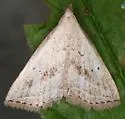
Twin-dotted Macrochilo - Hodges#8357.1
Macrochilo hypocritalis
Identification: In hypocritalis the ST line stops just shy of the apex (actually stopping against the distal edge just below the apex), whereas in absorptalis, it reaches the apex. ( J.D. Roberts ) Specimen identified by DNA analysis (BOLD) from Mark
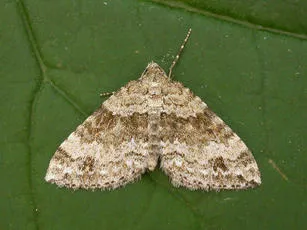
Twin-spot Carpet
Mesotype didymata
Wingspan 24 to 29 mm. This species exhibits some variation, with darker forms occurring in the north, and a reddish brown subspecies hethlandica in the Shetland Isles. Areas where the larval foodplants are plentiful. The moths fly from June through t
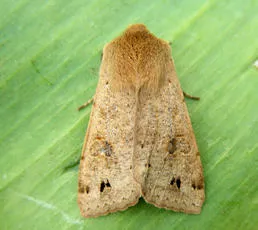
Twin-spotted Quaker
Anorthoa munda
Wingspan 38 to 44 mm. A variable species, with forewings ranging from pale buff to reddish-brown. The blackish twin spots are usually obvious, but in some forms, including ab. immaculata, these are reduced to barely discernible rufous marks, or obsol
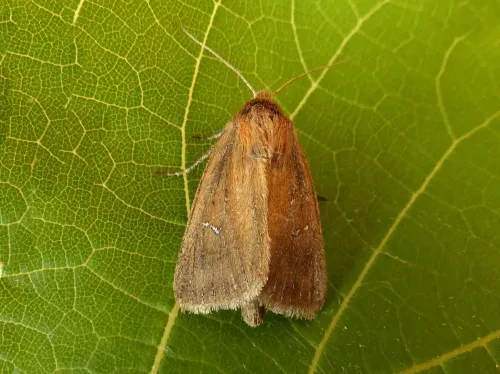
Twin-spotted Wainscot
Lenisa geminipuncta
Wingspan 27 to 32 mm. The forewing is quite broad and blunt. The shade of brown in the ground colour is variable and the kidney mark is often divided into twin spots. This is a species that favours reed beds where the larval foodplant is found i.e. C
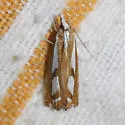
Two-banded Catoptria - Hodges#5408
Catoptria latiradiellus
Identification: Adult: forewing reddish-brown with silvery-white longitudinal stripe crossed by two diagonal medium-brown bands; terminal line a series of black dots; fringe gray; hindwing whitish basally, shading to light brown distally; fringe whit
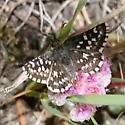
Two-banded Checkered-Skipper - Hodges#3963
Pyrgus ruralis
Identification: Adults: Upperside is light-to-blackish brown with forewings blacker above than forewings of Grizzled Skipper ( P. centaureae ); forewing has squarish white spots; hindwing usually has 2 rows of white spots which are more clearly defin
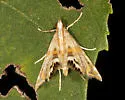
Two-banded Petrophila - Hodges#4774
Petrophila bifascialis
Identification: Adult : The oblong black discal spot on the HW is the most conspicuous field mark when the HWs are visible. When the HWs are not visible, identification can be a little trickier. In Texas and Oklahoma, Petrophila cappsi is very simi
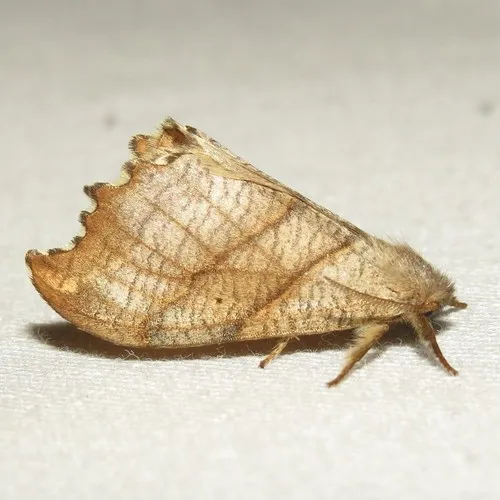
Two-lined Hooktip
Falcaria bilineata
Falcaria bilineata, the two-lined hooktip moth, is a moth in the family Drepanidae. It was described by Packard in 1864. It is found in North America, where it has been recorded from Newfoundland to New Jersey, west to Oregon and north to British Col
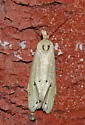
Two-spotted Aethes - Hodges#3754.3
Aethes atomosana
This species was number 3810 in the 1983 Hodges Checklist.
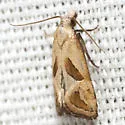
Two-spotted Eugnosta - Hodges#3763
Eugnosta bimaculana
Identification: Adult - forewing light brown with two large dark brown patches in median and subterminal areas; median patch does not reach inner margin creating two separate patches when wings held together at rest. Eugnosta bimaculana was originall
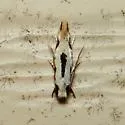
Two-spotted Mea - Hodges#0305
Mea bipunctella
Identification: Adult - see Dietz' original description in Print References.
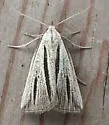
Two-striped Owlet Moth - Hodges#8359
Macrochilo bivittata
Rare throughout its US range and a species of Special Concern in several states; its status in Ontario is unknown but presumably uncommon to rare.
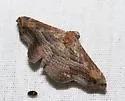
Tyrissa multilinea - Hodges#8650
Tyrissa multilinea
Identification: - Larva determined by J & J Balaban, 2013 Described by William Barnes and James Halliday McDunnough in 1913 from three female specimens collected in Everglade, Fla. and one male collected in San Benito, Cameron County, Texas.
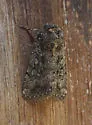
UID
Nudorthodes uid
Identification: Genitalia: Ann Hendrdickson 1/2/2021 The existence of an Unidentified Species is well documented on BOLD by the existence of a separate BIN containing 6 specimens, 5 of which are mine. I have them identified only to NOCTUINAE because
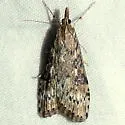
Udea abstrusa - Hodges#5100
Udea abstrusa
Identification: Similar in size and appearance to itysalis and radiosalis . Labial palpus 3.5 to 4 times as long as diameter of eye, exceeding head by 1.25 to 1.5 times length of latter. Antenna of male compressed, of female filiform, pubescent in bo
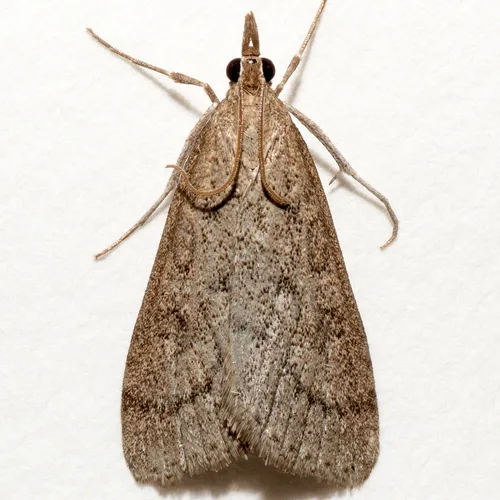
Udea indistinctalis - Hodges#5090
Udea indistinctalis
Udea indistinctalis - Hodges#5090 (Udea indistinctalis) is a species in the family Crambidae, commonly known as crambid snout moths, belonging to the order Lepidoptera (Butterflies and Moths). It is classified within the subfamily Spilomelinae, tribe
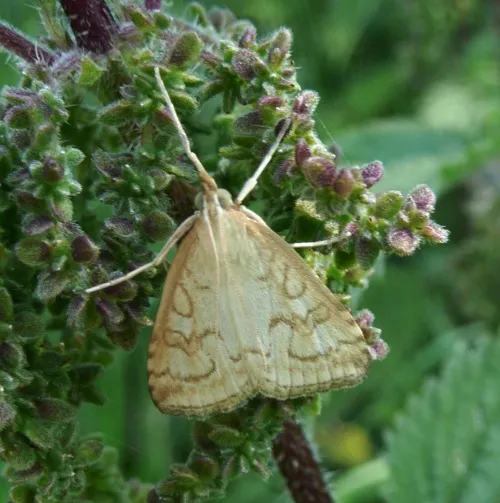
Udea lutealis
Udea lutealis
Wingspan 23-26 mm. This is fairly easily recognised by the pale creamy forewings and darker cross-lines and outlined shapes. Waste ground, gardens and woodland edges. Flying at night between July and August. The caterpillars live in the spring on a w
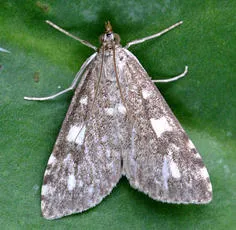
Udea olivalis
Udea olivalis
Wingspan 24-28 mm. Mostly greyish-brown on the upperwing with a distinctively-shaped central white spot and one or two other whitish markings - this is a fairly easily recognised species. The caterpillars feed on a variety of herbaceous plants. It is
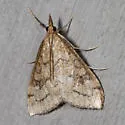
Udea profundalis - Hodges#5080
Udea profundalis
Identification: This species ( profundalis ) is easily distinguished from the Old World U. ferrugalis (Hübner) and from the eastern U. rubigalis (Packard) by the genitalia. U. profundalis averages appreciably larger, and tends to have the reniform mo