
Butterflies and Moths
Order Lepidoptera
The Butterflies and Moths (Order Lepidoptera) includes 11,813 species across 112 families and 2,787 genera in our directory.
About Butterflies and Moths
Lepidoptera includes approximately 180,000 described species of butterflies and moths. Moths outnumber butterflies roughly 10:1. The monarch butterfly's eastern population has declined by more than 80% since the mid-1990s, and the western population by over 95% since the 1980s. The IUCN lists the migratory monarch as Vulnerable.
Economic Impact
Lepidoptera are critical pollinators. In Europe, grassland butterfly species have declined by almost 50% since the early 1990s. In the UK, three-quarters of butterflies are in decline. In the U.S., five butterfly species have gone extinct since 1950, with 29 listed as endangered.
Ecological Role
Butterflies and moths are essential indicators of ecosystem health. As caterpillars, they are a primary food source for birds - a single nest of blue tit chicks requires ~10,000 caterpillars. Adult moths pollinate many night-blooming plants.
Families in Lepidoptera (112)
Species in Lepidoptera (11,813)
Rhyacionia sonia - Hodges#2884
Rhyacionia sonia
The adult is indistinguishable from R. frustrana and R. bushnelli
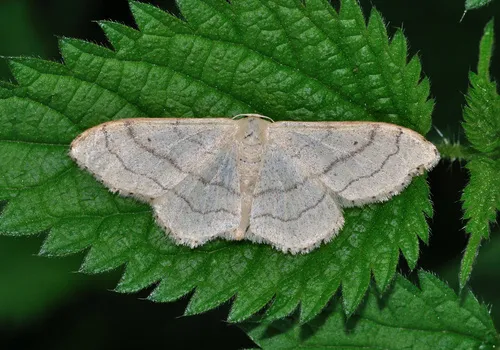
Riband Wave
Idaea aversata
Wingspan 23-30 mm. Two distinct forms occur of this species, roughly equal in numbers. The typical form has a dark band across all four wings, whereas the plain form, known as ab. remutata , only has narrow cross-lines. Wide range of habitats, includ
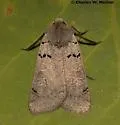
Richia chortalis - Hodges#10881
Richia chortalis
Identification: The first segment of the middle tarsus is greatly swollen so the last four segments look like little aborted appendage dangling on the end. (Don Lafontaine)
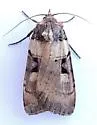
Richia herculeana - Hodges#10879.1
Richia herculeana
Identification: See original description in print references below.
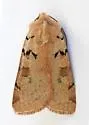
Richia parentalis - Hodges#10882
Richia parentalis
Identification: Grote original description as Agrotis parentalis is available in the print references. ,
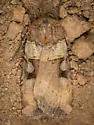
Richia serano - Hodges#10879
Richia serano
Identification: See original description in print references below.
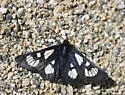
Ridings' Forester - Hodges#9319
Alypia ridingsii
Identification: Adult: forewing black with large curving white patch in PM area (broken by black veins), a white triangular basal patch, and a white spot between these two areas; hindwing black with two white patches; no colored "shoulder pads" on th
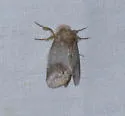
Rifargia benitensis - Hodges#7987
Rifargia benitensis
Holotype ♂, Brownsville, Texas, 8-VIII-1967, A. & M.E. Blanchard, #64647 in USNM.
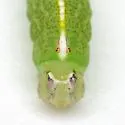
Rifargia subrotata - Hodges#7985
Rifargia subrotata
Identification: Adult: Recognizably smaller than White-blotched Heterocampa; AM and PM lines often show more prominent orange tint; white patch in subapical area lacks prominent black edge on distal side (but may have small black darts). Common
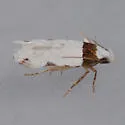
Rifseria fuscotaeniaella - Hodges#1918
Rifseria fuscotaeniaella
Identification: Adult: forewing white with broad brown basal band in some individuals; three dark patches along costa, increasing in size from first to third patch; top of head and anterior thorax white; top of posterior thorax brown; markings are va
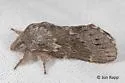
Riley's Lappet Moth - Hodges#7685
Heteropacha rileyana
This species is considered endangered over parts of its range
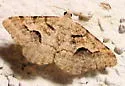
Rindgea ballandrata - Hodges#6416
Rindgea ballandrata
Identification: Rindgea ballandrata usually has a small black bar which rests on top of the antemedial and the postmedial line as they approach the inner margin. This bar is absent in R. cyda . Ferguson stated ballandrata does not always have the thi
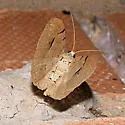
Rindgea flaviterminata - Hodges#6412
Rindgea flaviterminata
Identification: Barnes & McDunnough original description as Macaria flaviterminata . p. 125. Both forewing and hindwing have contrasting brown outer borders beyond the postmedial line.
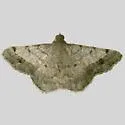
Rindgea nigricomma - Hodges#6407
Rindgea nigricomma
Identification: Adult - forewing is light gray with three brownish transverse lines crossing the wing. The medial (M) and postmedial (PM) line are fairly straight and have a dark spot where they meet the costa. The antemedial (AM) line is slightly co
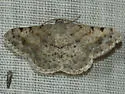
Rindgea parcata - Hodges#6406
Rindgea parcata
Identification: "This featureless, mottled gray, finely dark speckled southwestern species can be distinguished reliably from other members of its immediate complex only be examination of the genitalia." Ferguson (2008)
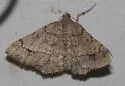
Rindgea stipularia - Hodges#6409
Rindgea stipularia
Identification: Forewing is a mottled brownish color and lacks the black marks along the costa where the transverse lines begin. The very similar Rindgea nigricomma has the bold black marks along the costa and is a more gray color.
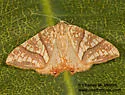
Rindgeria ornata - Hodges#6984
Rindgeria ornata
Identification: See original description in print references below .
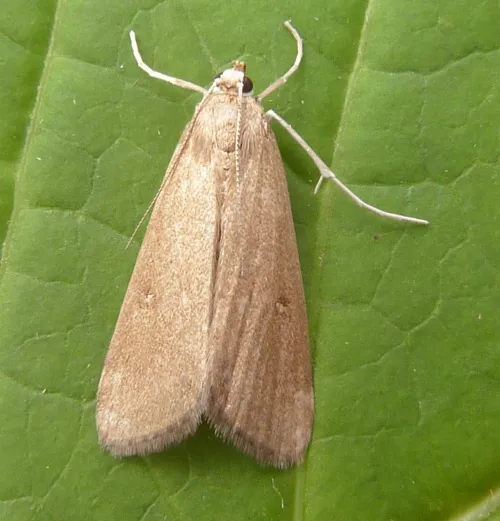
Ringed China-mark
Parapoynx stratiotata
Wingspan 15 to 28 mm. Although there are many variations of ground colour, this species is readily recognised by the dark ring with whitish centre on the forewing. Flies from June to August, being attracted to light. The larva is an aquatic feeder, l
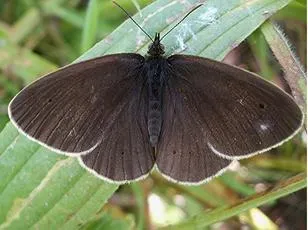
Ringlet
Aphantopus hyperantus
The Ringlet is unmistakable when seen at rest - the rings on the hind wings giving this butterfly its common name. The upper sides are a uniform chocolate brown distinguishing this butterfly from the closely related Meadow Brown. Despite its uniformi
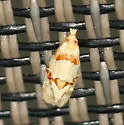
Rings' Aethes Moth - Hodges#3780
Aethes ringsi
Identification: Original description is online in PDF.
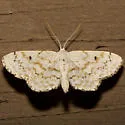
Rippled Wave - Hodges#7123
Idaea obfusaria
Identification: Forewing crossed by 3 yellowish-brown wavy bands on a white background; the outermost band is thinner, darker, more jagged, and contains regularly-spaced small black dots. Each forewing and hindwing has a central large black spot.
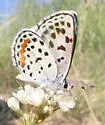
Rita's Blue - Hodges#4369
Euphilotes rita
Identification: Upperside of male bright lilac-blue with dark medium-wide borders; corner of hindwing has a small orange patch and small marginal spots. Upperside of female brown with broad orange marginal band. Underside of both sexes off-white
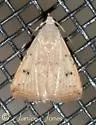
Rivula pusilla - Hodges#8404.1
Rivula pusilla
Rivula pusilla - Hodges#8404.1 (Rivula pusilla) is a species in the family Erebidae, belonging to the order Lepidoptera (Butterflies and Moths). It is classified within the subfamily Rivulinae, superfamily Noctuoidea. This species belongs to the genu
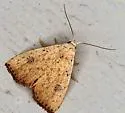
Rivula stepheni - Hodges#8404.2
Rivula stepheni
Identification: Forewing color is ivory with darker tan margins and the reniform spot is represented as two black dots.
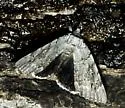
Robinson's Underwing - Hodges#8780
Catocala robinsonii
Identification: Large underwing, forewings very pale, hindwings dark, flies in fall. Two forms, see print references.
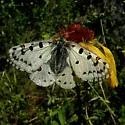
Rocky Mountain Parnassian - Hodges#4155.2
Parnassius smintheus
Identification: Antenna has alternate black and white rings. Upperside of forewing of females and most males with 2 red or yellow spots beyond the cell. In some males these spots are black. Often called by the name Parnassius phoebus , a closely rela
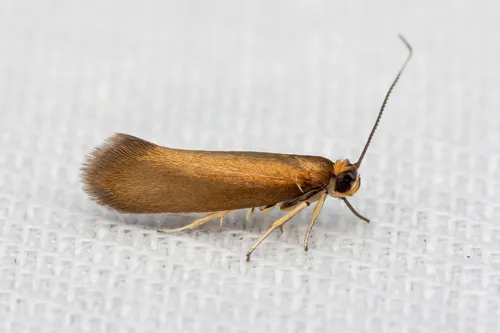
Roeslerstammia erxlebella
Roeslerstammia erxlebella
Wingspan c.13mm. This distinctive metallic-golden micro has when fresh, a purplish-bronze tinge to the area around the base of the forewings. It also sports a noticeably yellow crown and has a white band close to the tip of the antennae. The larva mi
Root Collar Borer - Hodges#5997
Euzophera ostricolorella
Identification: Adult: forewing dull purplish-red except dark purplish-gray median area; AM line whitish, gently S-curved; PM line whitish, jagged; no subterminal line; hindwing whitish to pale gray with brown terminal line and white fringe Larva: bo
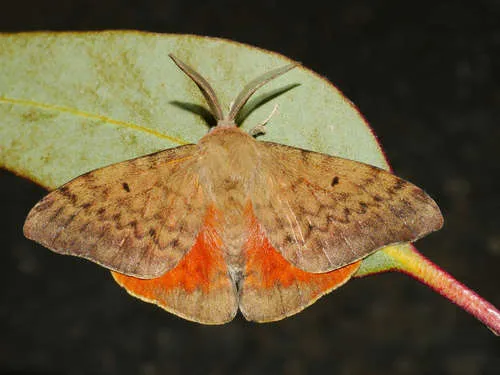
Rose Anthelid
Chenuala heliaspis
The Rose Anthelid (Chenuala heliaspis) is a moth of the family Anthelidae. It is endemic to Australia.
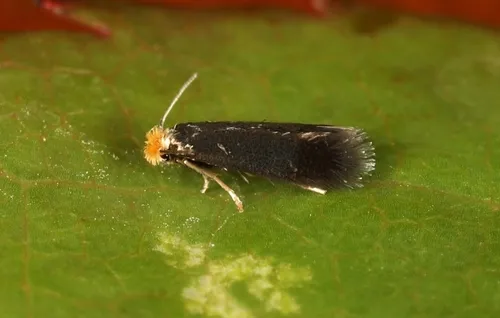
Rose Leaf Miner
Stigmella anomalella
Wingspan 5 to 6 mm. The adult moths have plain bronzy wings, tinged greenish on the inner two-thirds, and slightly reddish towards the tip. The leaves of wild and cultivated roses are mined. The mine is a long, sinuous gallery which often crosses bac
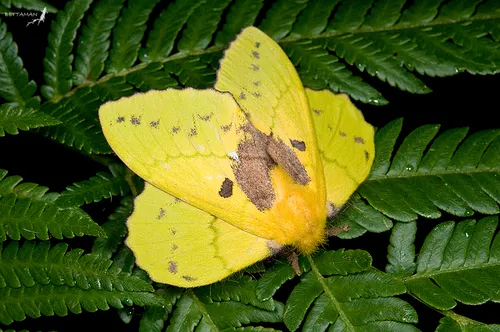
Rose Myrtle Lappet Moth
Trabala vishnou
Trabala vishnou, the rose-myrtle lappet moth, is a moth of the Lasiocampidae family. It is found in south-east Asia, including India, Thailand, Sri Lanka, Myanmar, Java, China, Japan, Hong Kong, and Indonesia. Four subspecies are recognized.
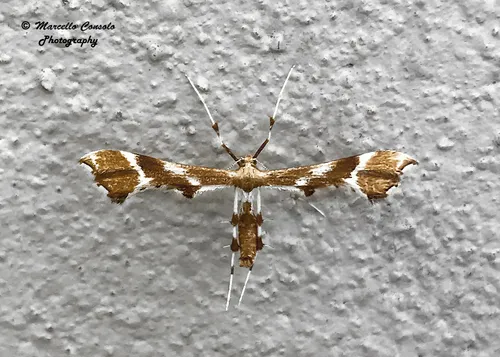
Rose Plume Moth
Cnaemidophorus rhododactyla
Cnaemidophorus rhododactyla, the rose plume moth, is a moth of the family Pterophoroidea. It is found in the Northern Hemisphere, except for Greenland, Southeast Asia, and most of North Africa.
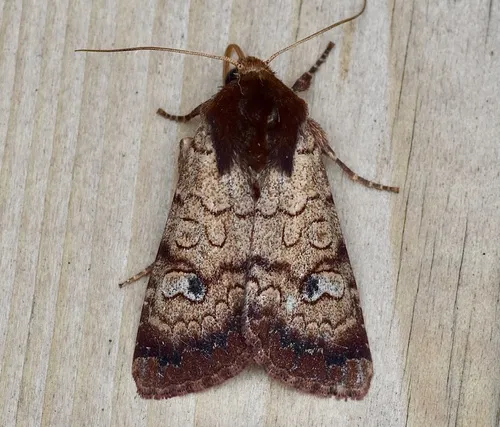
Rosewing - Hodges#10265
Sideridis rosea
Identification: Adult: head and thorax dark brown, hairy; forewing light reddish-brown with scalloped lines and brown-rimmed spots filled with ground color; reniform spot blackish in lower half; dark brown shading on basal side of ST line; terminal a
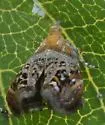
Rosinweed Moth - Hodges#2642
Tebenna silphiella
Identification: Adult: forewing brown in basal third and in terminal area; prominent "swatch" of color in distal third of wing composed of small black, white, and brown bands; subterminal line white, curving basally before reaching costa; remainder o
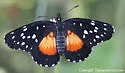
Rosita Patch - Hodges#4504
Chlosyne rosita
Identification: See under subspecies Type locality: “Western Guatemala, Moran, 3700 ft....Palin, 3500 ft....Escuintla, 2000 ft.”
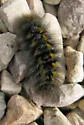
Ross' Tussock Moth - Hodges#8290
Gynaephora rossii
Identification: "Forewings grey with few markings, consisting of a darker antemedian and erratic postmedian line, usually poorly marked. The reniform is usually indicated by a dark dot or bar bordered by pale scales. Hindwings pale orange-buff with a
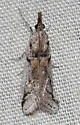
Rostrolaetilia texanella - Hodges#5962
Rostrolaetilia texanella
Identification: The original description is available in PDF. ( 3 )
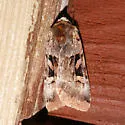
Rosy Dart - Hodges#10947
Xestia oblata
Identification: forewing reddish or rusty orange with dark gray to black median area; AM and PM lines white or pale gray, edged with black; orbicular and reniform spots large, orangish with thin black outline; orbicular spot oblique; inner margin of
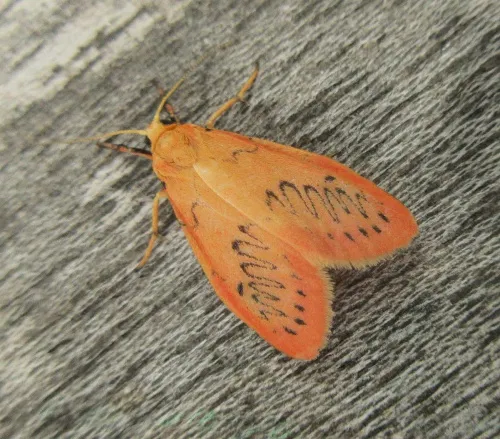
Rosy Footman
Miltochrista miniata
Wingspan 23 to 27 mm. A very attractive moth, with orange or pinkish forewings, crossed by a curious black wavy line. Flying in July and August, the adults are attracted to light. The caterpillars feed on lichens growing on trees, including Dog Liche
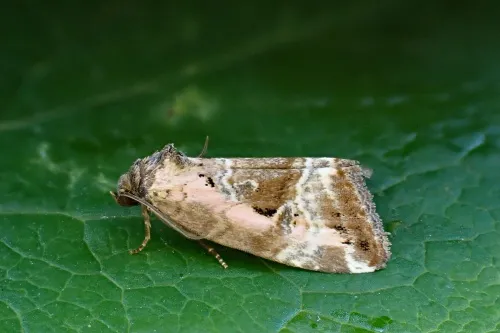
Rosy Marbled
Elaphria venustula
It flies at the end of May and in June, from dusk into the night, when it comes to light. The larval foodplant is not fully known in this country, but is suspected to be Tormentil. A local species, occurring mainly in certain localities in the south-
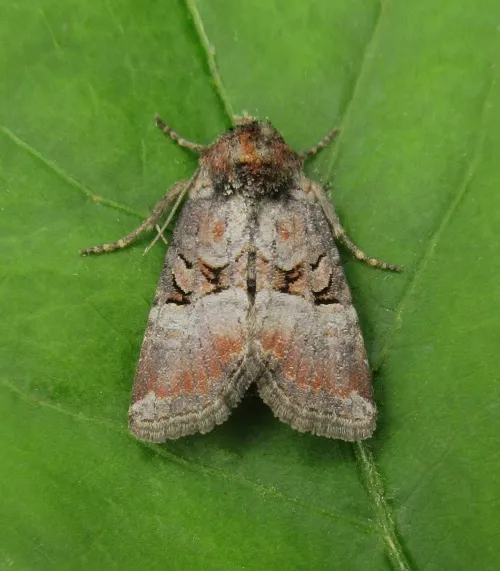
Rosy Minor
Litoligia literosa
Wingspan 25 to 30 mm. Although displaying some variation, this species tends to be less ochreous than similar species, appearing generally greyer, with usually some rosy or purplish tint. Various grassy habitats, especially in coastal localities. The
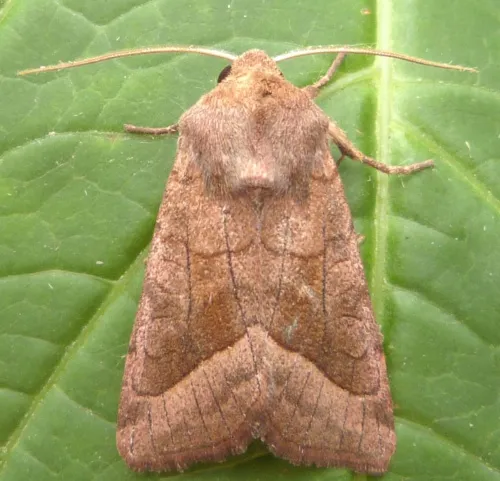
Rosy Rustic
Hydraecia micacea
Wingspan 28 to 45 mm. This species has a wide variation both in colour and size. Frequents waste ground, marshy areas, and other places where the foodplants such as Docks grow. It is on the wing from August to October The larvae live on a range of lo
Rothschildia cinctus - Hodges#7760
Rothschildia cinctus
Cocoons are used as ankle rattles by American Indians during ceremonial dances
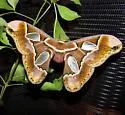
Rothschildia lebeau - Hodges#7761
Rothschildia lebeau
Identification: Very large silk moth found only in South Texas. Transparent triangular spots on the wings. Wings reddish brown to dark brown with olive tinge. Two other species in this genus rarely enter into s. Texas: Jorulla silkmoth ( R. jorulla )
Rotund Idia Moth - Hodges#8326
Idia rotundalis
Identification: Adult : FW shiny sooty black with obscure dusky lines. Pale gray reniform and orbicular spots are small and inconspicuous.
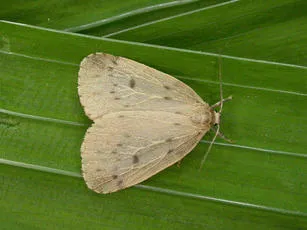
Round-winged Muslin
Thumatha senex
Wingspan 15 to 20 mm. The sparsely scaled wings of this moth give it a thin, papery appearance. The adults fly in July and August, and are attracted by light. The larvae feed on lichens, especially dog lichen, as well as various mosses. Distributed w
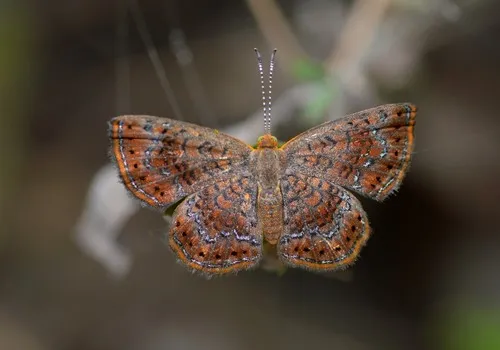
Rounded Metalmark
Calephelis perditalis
Calephelis perditalis, commonly known as the rounded metalmark or lost metalmark, is a butterfly in the family Riodinidae. It is found in Texas in the United States and Mexico, south to Venezuela.
Rubbed Dart - Hodges#10838
Euxoa detersa
Identification: Adult: forewing yellowish to dark brown, dark specimens tinted with gray; lines double, white-edged; orbicular and reniform spots whitish with dark brown outlines, and dots in their centers; hindwing dark brown E. d. detersa typical f
Rubida Looper Moth - Hodges#8909
Autographa rubidus
Identification: The following information is from the ( E.H. Strickland Entomological Museum ). A medium-size (3.5 cm wingspan) moth with dark rusty red-brown forewings with a dark violet tint. The area inside the antemedian line and in the apical an
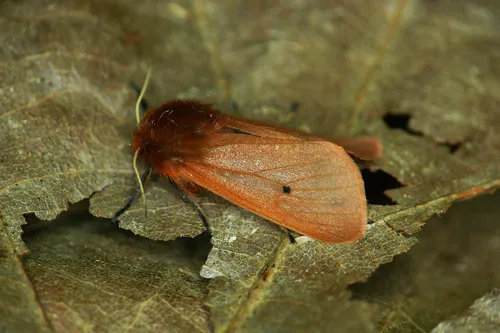
Ruby Tiger
Phragmatobia fuliginosa
Wingspan 30-35 mm. Showing a gradual variation in colour, with the brightest individuals in the south, and much duller specimens in Scotland, attributable to the subspecies borealis . Downland, heathland and sand-dunes and in woodland clearings, farm
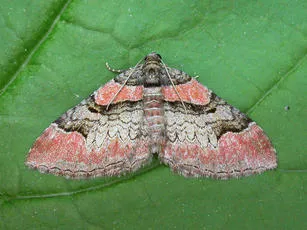
Ruddy Carpet
Catarhoe rubidata
Wingspan 26 to 31 mm. The colourful combinations of pinks and browns make this an easy species to identify. It occupies open woodland, scrubland, downland and sea-cliffs. An uncommon species, found locally in the southern parts of England and Wales.
Ruddy Copper - Hodges#4257
Lycaena rubida
Identification: Perhaps the brightest orange species of Copper. Males are almost solid orange above, with a metallic sheen that may look purplish or red at certain angles. The females have a more "average" brownish pattern above with varying amount
Ruddy Hairstreak - Hodges#4351
Electrostrymon hugon
Identification: Underwings nearly identical to Dusky Blue Groundstreak, but upperwings golden-orange to rusty brown. Pelham lists Electrostrymon sangala as a synonym of E. hugon with a note under hugon , "Identity of this taxon was established by Fay
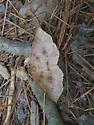
Ruddy Metarranthis - Hodges#6822
Metarranthis duaria
Identification: Adult: forewing angular, pointed, variably reddish to yellowish-gray with black speckling; AM and PM lines diffuse, blackish, and broken where they cross veins; PM line sinuate or bent, resembling a series of half-circles, often borde
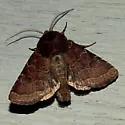
Ruddy Quaker - Hodges#10563
Trichopolia oviduca
Identification: Adult - forewing reddish-brown. AM and PM lines fine, white, edged with black; ST line most conspicuous, yellowish white, nearly straight. Spots black with white outlines; orbicular spot touches AM line; reniform spot oval. Hindwing g
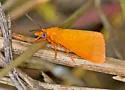
Ruddy Virbia - Hodges#8122
Virbia rubicundaria
Identification: Adult : Head and antennal scales clay with light orange hues. Third segment of labial palpus exceeding front of head by at least half of entire length, all segments a blend of clay and flesh ocher. Forewings are clay with light orange
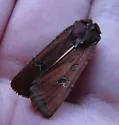
Ruddy-winged Dart - Hodges#10738
Euxoa mimallonis
Identification: Adult: forewing variably bright to dull reddish or orangish with faint AM and PM lines, and dark reniform and orbicular spots sometimes outlined in pale scales; hindwing bright white in male, and dirty white, shading to sooty gray wit
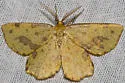
Rufous Geometer Moth - Hodges#6742
Xanthotype rufaria
Identification: The original description is available online in the print references below. The Rindge revised description, including detailed description of genitalia, is available in PDF.
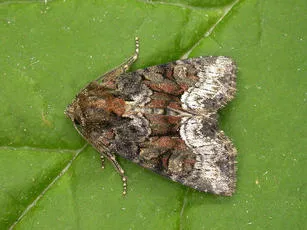
Rufous Minor
Oligia versicolor
Wingspan 22 to 28mm. This is one three moths which look very similar and its identity should only be confirmed by dissection. The wings of this species can have a reddish tinge. Woodland, heathland, other grassy areas. It is found flying in mid June
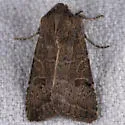
Rufous Quaker - Hodges#10557
Trichopolia rufula
Identification: Adult - forewing rust-colored, reddish-brown, or dull orangish; AM, PM, and subterminal lines distinct; orbicular and reniform spots dark brownish-gray, outlined in pale scales; dark scales along veins from PM line to outer margin giv
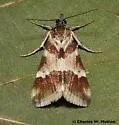
Rufous-banded Crambid - Hodges#4826
Mimoschinia rufofascialis
Identification: Larva - strikingly beautiful. General body color is white, front half wine-red with partial bands of that color posteriorly. Rather like a barberpole, as its commom name suggests. Head is light yellow (adapted from Heinrich, 1921). La
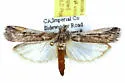
Rumatha bihinda - Hodges#5979
Rumatha bihinda
Identification: Dyar original description as Zophodia bihinda is online in the print references. Heinrich and Heinrich descriptions of the adult, including genitalia, are both in PDF. Specimen determined by DNA analysis (BOLD).
Rumatha glaucatella - Hodges#5978
Rumatha glaucatella
Identification: From MONA Fascicle 15.4 - "...mostly white and rather small (wing length 7.0-9.0 mm)."
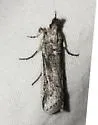
Rumatha jacumba - Hodges#5979.1
Rumatha jacumba
Identification: Description can be found in MONA Fascicle 15-4 at link in citations below.
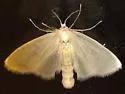
Rupela sejuncta - Hodges#5312
Rupela sejuncta
Identification: Wings of both sexes shining white Genitalia:
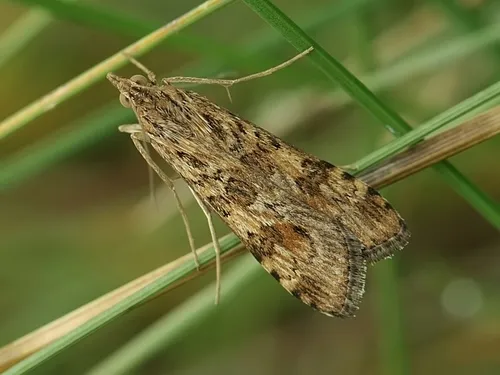
Rush Veneer
Nomophila noctuella
Wingspan 26-32 mm. When at rest, this moth has a very elongated and narrow shape, which makes it easily recognisable. A well-known migrant, it can often be found in large numbers at coastal watch-points but can also be found inland. Tends to occur in
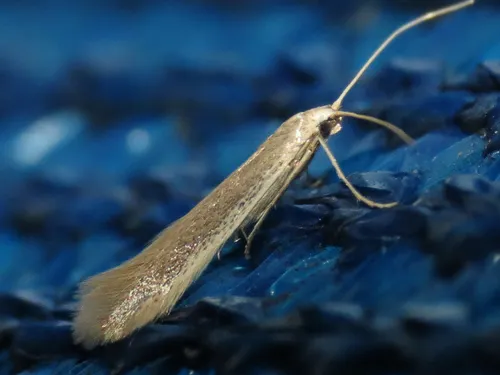
Russian Thistle Casebearer
Coleophora klimeschiella
The Russian thistle casebearer (Coleophora klimeschiella) is a moth of the Coleophoridae family. It is native to Asia Minor and central Asia, but has been introduced to California, Texas and Hawaii.
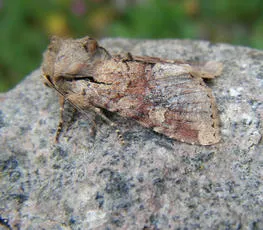
Rustic Shoulder-knot
Apamea sordens
Wingspan 34-42 mm. A variable moth but often a relatively dull brownish colour, sometimes pinker. It it can usually be recognised by the black 'shoulder-knot', a streak at the base of the forewing. Frequenting meadows, fields and other grassy places.
Rusty Shoulder Knot Moth - Hodges#9532
Aseptis binotata
Rusty Shoulder Knot Moth - Hodges#9532 (Aseptis binotata) is a species in the family Noctuidae, commonly known as owlet moths, belonging to the order Lepidoptera (Butterflies and Moths). It is classified within the subfamily Noctuinae, tribe Xylenini
Rusty Virbia - Hodges#8123
Virbia ferruginosa
Identification: Easily confused with Virbia aurantiaca . The subterminal hindwing band of V. aurantiaca is solid, whereas the subterminal area of V. ferruginosa has a series of blotches and spots, not a solid band, according to this revision of the g
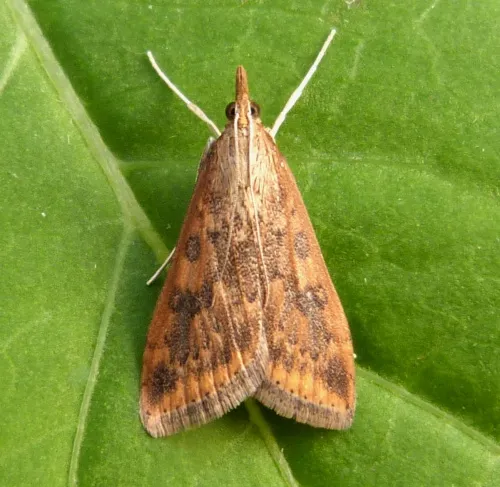
Rusty-dot Pearl
Udea ferrugalis
Wingspan 18 to 22 mm. The rusty orange ground colour and blackish markings on the forewing help to identify this species. Like several of its congeners, it shows distinctively whitish legs. Can occur at almost any time of the year, sometimes in large
Sabourin's Plume Moth - Hodges#6127.3
Paraplatyptilia sabourini
Identification: See the identification key for Platyptiliini . See the species account in Gielis .
Sabulodes aegrotata - Hodges#6995
Sabulodes aegrotata
Identification: Forewing variable in color, ranging from cream or pale yellow to ochraceous, brown or blackish brown (melanic form); maculation absent in some specimens; it is the only Sabulodes known to have a melanic form.
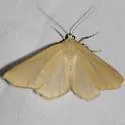
Sabulodes dissimilis - Hodges#6996
Sabulodes dissimilis
Identification: Description can be found in Rindge 1978 at link in citations below.
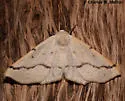
Sabulodes huachuca - Hodges#6998
Sabulodes huachuca
Sabulodes huachuca - Hodges#6998 (Sabulodes huachuca) is a species in the family Geometridae, commonly known as geometrid moths, belonging to the order Lepidoptera (Butterflies and Moths). It is classified within the subfamily Ennominae, tribe Ourapt
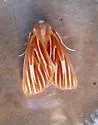
Sabulodes niveostriata - Hodges#7000
Sabulodes niveostriata
Identification: Adult - see Rindge (1978) in Print References.
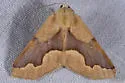
Sabulodes spoliata - Hodges#7003
Sabulodes spoliata
Identification: Grossbeck original description as Phengommataea spoliata . "Head, thorax, abdomen and fore wings of male dark buff, the head somewhat lighter than the rest; hind wings much paler outwardly, shaded with pale buff. Head and body of fema
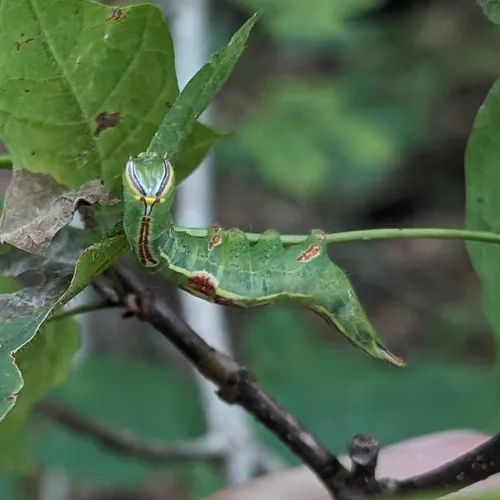
Saddled Prominent - Hodges#7994
Cecrita guttivitta
Identification: See Miller et al. (2021) ( 3 ) Specimen identified by DNA analysis:
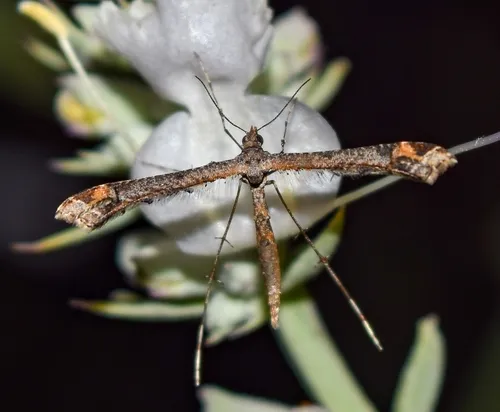
Sage Plume Moth
Anstenoptilia marmarodactyla
Anstenoptilia marmarodactyla is a moth of the family Pterophoridae. It is native to California and Arizona, south through Mexico to Costa Rica. It is an introduced species in Hawaii.
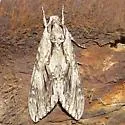
Sage Sphinx - Hodges#7797
Lintneria eremitoides
Identification: Lighter gray compared to other Lintneria spp., wider hindwing bands, thinner black dash on apices of forewings. Overall smaller than other sympatric Lintneria sp. Det. Maury J. Heiman, 2013 Texas Parks & Wildlife considers this to be
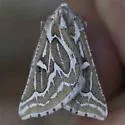
Sagebrush Girdle - Hodges#6926
Plataea trilinearia
Identification: Adult: forewings white, with gray or grayish brown scaling; basal area gray or grayish brown, extending outwardly along inner margin to middle of wing; maculation similar to that of personaria but with posterior, elliptical lobe of me
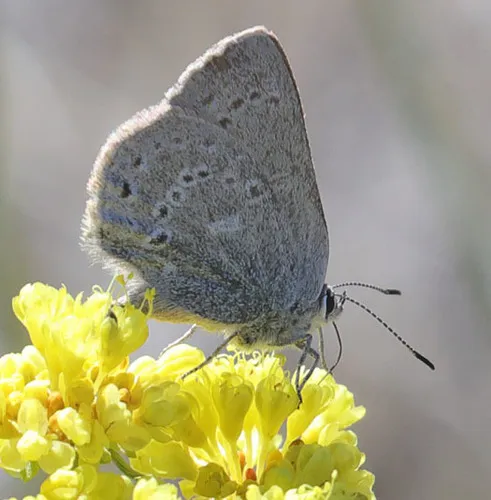
Sagebrush Sooty Hairstreak - Hodges#4277.1
Satyrium semiluna
Identification: Tailless, dorsal drab gray, underwing grayish to brown, with the FW usually having a line of dark dots circled in white, and the HW can have some whitish dots. Distinction from S. fuliginosum as a distinct species is debated, and need
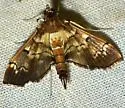
Salbia cassidalis - Hodges#5287.1
Salbia cassidalis
" Salbia cassidalis was first recorded in the US from Alamo, Hidalgo Co., TX, on December 3, 2013 by Charles Bordelon. It was reported in the Lep. Soc. Season Summary for 2013. - Ed Knudson, 8.xii.2016 in email to Kyhl Austin.
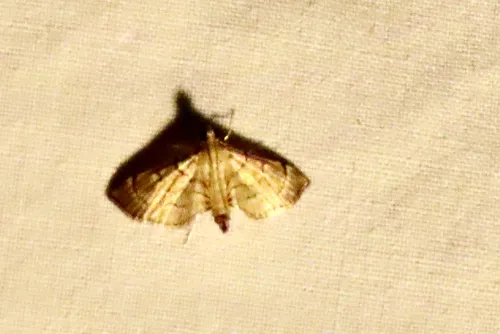
Salbia melanobathrum - Hodges#5287.2
Salbia melanobathrum
Identification: Salbia tytiusalis Salbia mizaralis "Male S. melanobathrum have big, jet-black antennal tufts that you see in the photos, whereas S. tytiusalis males have no tufts. It is the same size as S. tytiusalis , but the hind wing pattern is di
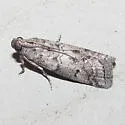
Salebriaria ademptandella - Hodges#5770.1
Salebriaria ademptandella
Identification: Determined by Ed Knudson (Texas Lepidoptera Survey) Genitalia:
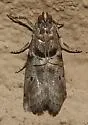
Salebriaria bella - Hodges#5774.2
Salebriaria bella
Identification: A partial account is given by Neunzig.
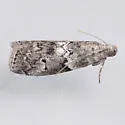
Salebriaria borealis - Hodges#5772.1
Salebriaria borealis
Salebriaria borealis - Hodges#5772.1 (Salebriaria borealis) is a species in the family Pyralidae, commonly known as pyralid moths, belonging to the order Lepidoptera (Butterflies and Moths). It is classified within the subfamily Phycitinae, tribe Phy
Salebriaria floridana - Hodges#5776.1
Salebriaria floridana
Identification: Description can be found in MONA Fascicle 15-5 at link in citations below.
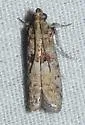
Salebriaria pumilella - Hodges#5776
Salebriaria pumilella
Identification: Heinrich revised description can be viewed online from the print references .
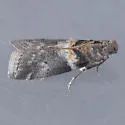
Salebriaria tenebrosella - Hodges#5775
Salebriaria tenebrosella
Salebriaria tenebrosella - Hodges#5775 (Salebriaria tenebrosella) is a species in the family Pyralidae, commonly known as pyralid moths, belonging to the order Lepidoptera (Butterflies and Moths). It is classified within the subfamily Phycitinae, tri
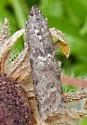
Salebriaria turpidella - Hodges#5771
Salebriaria turpidella
Identification: A full account is given by Neunzig.
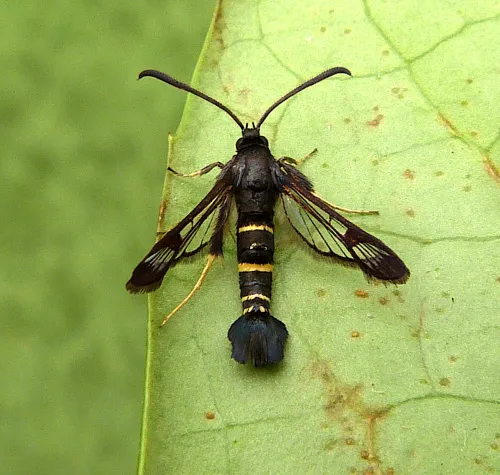
Sallow Clearwing
Synanthedon flaviventris
One of the smallest British clearwings with a wingspan of 17 to 20 mm. Similar in appearance to Currant Clearwing, but Sallow Clearwing has an all black thorax - Currant Clearwing has yellow marks on the thorax. Good photographs and/or the specimen r
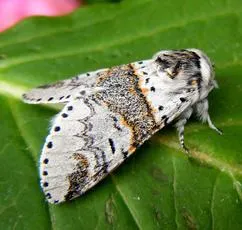
Sallow Kitten
Furcula furcula
Wingspan 27-35 mm. A most attractive moth resembling a kitten with its furry head and front legs. Its rich patterning of black on white is also speckled with oranges. The most widespread and common of the British 'Kittens' being distributed throughou
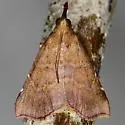
Salobrena recurvata - Hodges#5560
Salobrena recurvata
Identification: The original description as Abaera rubiginea Hampson, is available online in the print references below. Sexually dimorphic. Photo identified by James Hayden , (Florida State Collection of Arthropods, McGuire Center).
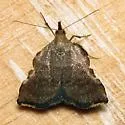
Salobrena sincera - Hodges#5559
Salobrena sincera
Identification: Species page created based on this image determined by Ed Knudson, Texas Lepidoptera Survey, Houston:
Salome Yellow - Hodges#4247
Eurema salome
Identification: Yellow; hind wings angled / "tailed" with "tails" broad, short and triangular; upper side with bold black border along outer edge of all four wings in males and front wings in females; dark spot at outer end of forwing discal cell is
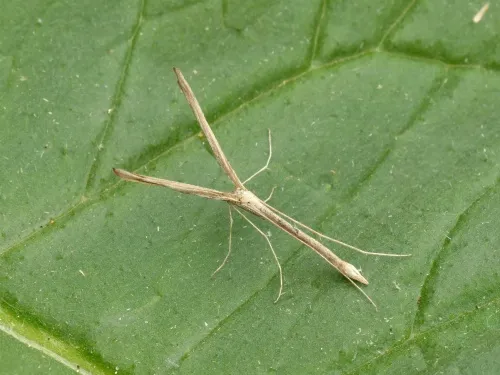
Saltmarsh Plume
Agdistis bennetii
Wingspan 24 to 30 mm. Agdistis bennetii has a very distinctive resting posture, with its narrow wings held forward, and the front part of the body raised on the long forelegs. Unlike the other members of the Pterophoridae, the Agdistinae have forewin
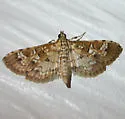
Salvinia Stem-borer - Hodges#5151
Samea multiplicalis
Identification: Young larvae are dirty-white to pale yellow, progressing to yellow-green in mature larvae.
Sand Dune Eucosma - Hodges#3005.2
Eucosma linitipunctana
Identification: Blanchard & Knudson original description in PDF.
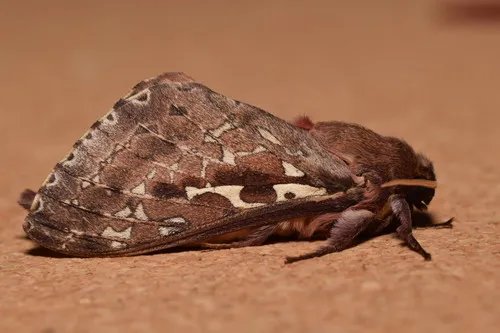
Sand Porina
Wiseana signata
Wiseana signata is a species of moth belonging to the family Hepialidae. It was described by Walker in 1856, and is endemic to New Zealand.