
Ross' Tussock Moth - Hodges#8290
Gynaephora rossii
This record describes Gynaephora rossii (species). Recorded family: Erebidae. Recorded order: Lepidoptera.
Identification and Appearance
| Feature | Description |
|---|---|
| Forewings | Forewings grey with few markings, consisting of a darker antemedian and erratic postmedian line, usually poorly marked. The reniform is usually indicated by a dark dot or bar bordered by pale scales. |
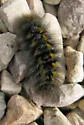
| Hindwings | Hindwings pale orange-buff with a wide black border, and with the buff largely suffused with grey in many specimens ( 5 ) . See the E.H. Strickland Museum species page for an unusually well-marked specimen. The larvae are unusual among the Lymantriinae in having seven dorsal yellow hair tufts, instead of the usual five ( 6 ) . |
Classification
- Kingdom
- Animalia
- Phylum
- Arthropoda
- Class
- Insecta
- Order
- Lepidoptera (Butterflies and Moths)
- Superfamily
- Noctuoidea
- Family
- Erebidae
- Subfamily
- Lymantriinae
- Tribe
- Orgyiini
- Genus
- Gynaephora
Imported taxonomy record. Source availability varies; see the source references and editorial policy below.
Habitat and Range
Habitat
"This is a tundra species that occurs in rocky alpine habitats on top of high mountains" ( 4 ) . Also reported to occur in open alpine bogs ( 5 ) .
Geographic Range
"This species has a Holarctic distribution, occurring in Japan and Siberia in the Old World. The Nearctic populations are found in arctic, subarctic, and alpine tundra from Alaska to Labrador. Isolated alpine populations are found on mountains as far south as the White Mountains of New Hampshire and in Colorado" ( 4 ) .
Seasonal Activity
Adults have been collected from May to August ( 7 ) .
Diet and Behavior
Diet: Reported larval hosts included species of Saxifraga and Salix ; possibly also Potentilla (Handfield, 1999). Willow buds are favored at some arctic sites. Reported to have been collected on Rubus acaulis and was reared in the lab on R. idaeus ( 5 ) . PNW reports Dryas as a larval host as well ( 4 ) .
Life History
"The larvae may take multiple years to complete development (7-11 years in northern Canada ( 6 ) ), and females can produce fertile eggs without mating. The larvae are covered in dense soft grey hairs, and the cocoon is a grey oval with the larval hair incorporated into it" ( 5 ) .
Additional species information
Species notes from the sources
Etymology: Patronym of Admiral Sir John Ross , leader of the Arctic exploration on which Curtis served as an entomologist.
About Butterflies and Moths: the wider group
Order-level background for Lepidoptera, the group containing Gynaephora rossii. Species-specific details appear above.
Group overview
Lepidoptera includes approximately 180,000 described species of butterflies and moths. Moths outnumber butterflies roughly 10:1. The monarch butterfly's eastern population has declined by more than 80% since the mid-1990s, and the western population by over 95% since the 1980s. The IUCN lists the migratory monarch as Vulnerable.
Ecological role of the group
Butterflies and moths are essential indicators of ecosystem health. As caterpillars, they are a primary food source for birds - a single nest of blue tit chicks requires ~10,000 caterpillars. Adult moths pollinate many night-blooming plants.
Economic and practical significance of the group
Lepidoptera are critical pollinators. In Europe, grassland butterfly species have declined by almost 50% since the early 1990s. In the UK, three-quarters of butterflies are in decline. In the U.S., five butterfly species have gone extinct since 1950, with 29 listed as endangered.
Recorded sources for this group: IUCN Red List, Xerces Society, USFWS, PNAS, WWF. Imported estimates may describe particular regions or reporting periods.
Photos of Ross' Tussock Moth - Hodges#8290 (5)
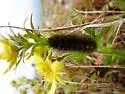
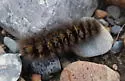
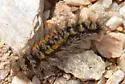
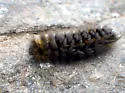
Photo credits: Contributed by Kyhl Austin
Frequently Asked Questions About Ross' Tussock Moth - Hodges#8290
What is Ross' Tussock Moth - Hodges#8290?
Ross' Tussock Moth - Hodges#8290 (Gynaephora rossii) is a species in the family Erebidae, within the order Lepidoptera.
How big is Ross' Tussock Moth - Hodges#8290?
Forewing length: ♂ 15–16 mm.; ♀ 17 mm ( 4 ) .
How do you identify Ross' Tussock Moth - Hodges#8290?
| Feature | Description |
|---|---|
| Forewings | Forewings grey with few markings, consisting of a darker antemedian and erratic postmedian line, usually poorly marked. The reniform is usually indicated by a dark dot or bar bordered by pale scales. |
| Hindwings | Hindwings pale orange-buff with a wide black border, and with the buff largely suffused with grey in many specimens ( 5 ) . See the E.H. Strickland Museum species page for an unusually well-marked specimen. The larvae are unusual among the Lymantriinae in having seven dorsal yellow hair tufts, instead of the usual five ( 6 ) . |
Where is Ross' Tussock Moth - Hodges#8290 found?
| Feature | Details |
|---|---|
| Habitat | This is a tundra species that occurs in rocky alpine habitats on top of high mountains ( 4 ) . Also reported to occur in open alpine bogs ( 5 ) . |
| Range | This species has a Holarctic distribution, occurring in Japan and Siberia in the Old World. The Nearctic populations are found in arctic, subarctic, and alpine tundra from Alaska to Labrador. Isolated alpine populations are found on mountains as far south as the White Mountains of New Hampshire and in Colorado ( 4 ) . |
What does Ross' Tussock Moth - Hodges#8290 eat?
The diet of the Ross' Tussock Moth - Hodges#8290 includes Reported larval hosts included species of Saxifraga and Salix ; possibly also Potentilla (Handfield, 1999). Willow buds are favored at some arctic sites. Reported to have been collected on Rubus acaulis and was reared in the lab on R. idaeus ( 5 ) . PNW reports Dryas as a larval host as well ( 4 ) ..
When is Ross' Tussock Moth - Hodges#8290 active?
Ross' Tussock Moth - Hodges#8290: seasonal activity - Adults have been collected from May to August ( 7 ) ..
What is the life cycle of a Ross' Tussock Moth - Hodges#8290?
The larvae may take multiple years to complete development (7-11 years in northern Canada ( 6 ) ), and females can produce fertile eggs without mating. The larvae are covered in dense soft grey hairs, and the cocoon is a grey oval with the larval hair incorporated into it ( 5 ) .