
Butterflies and Moths
Order Lepidoptera
The Butterflies and Moths (Order Lepidoptera) includes 11,813 species across 112 families and 2,787 genera in our directory.
About Butterflies and Moths
Lepidoptera includes approximately 180,000 described species of butterflies and moths. Moths outnumber butterflies roughly 10:1. The monarch butterfly's eastern population has declined by more than 80% since the mid-1990s, and the western population by over 95% since the 1980s. The IUCN lists the migratory monarch as Vulnerable.
Economic Impact
Lepidoptera are critical pollinators. In Europe, grassland butterfly species have declined by almost 50% since the early 1990s. In the UK, three-quarters of butterflies are in decline. In the U.S., five butterfly species have gone extinct since 1950, with 29 listed as endangered.
Ecological Role
Butterflies and moths are essential indicators of ecosystem health. As caterpillars, they are a primary food source for birds - a single nest of blue tit chicks requires ~10,000 caterpillars. Adult moths pollinate many night-blooming plants.
Families in Lepidoptera (112)
Species in Lepidoptera (11,813)
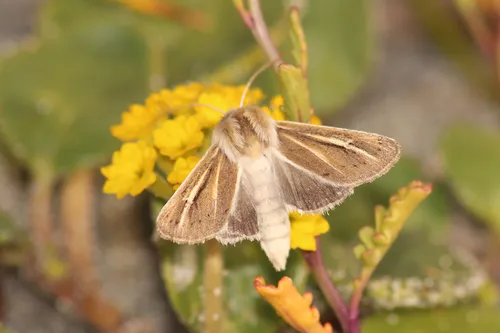
Sand-verbena Moth - Hodges#10690.1
Copablepharon fuscum
Identification: Forewing olive green to darker olive brown with contrasting yellow streaks in the cell, the fold, and as a thin line along the cubital vein; pale streak thru cell to ST area has black shading on both sides; fringe is similar to FW col
Sandhill Skipper - Hodges#4037
Polites sabuleti
Identification: Common and quite variable. Upperside of male is yellow-orange with dark toothed borders and a sinuous stigma on the forewing. Upperside of female has heavier dark markings and almost transparent light spots; no stigma. Underside of th
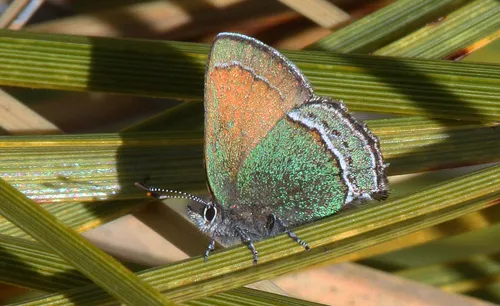
Sandia Hairstreak - Hodges#4321
Callophrys mcfarlandi
Identification: Green below with no tails, rounded wing margins, a bold postedian stripe across all wings - white edged rich brown, wing margins below edged black and white, hind wing with a row of black submarginal spots between white marginal and p
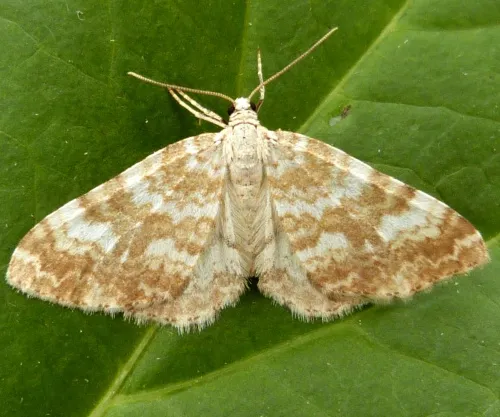
Sandy Carpet
Perizoma flavofasciata
Easily distinguished from its allies by the pale sandy-brown markings on a whitish ground colour. Inhabits woodland, commons, chalky ground and other dry areas. It flies from dusk onwards in June and July. The larvae feed on the seed-pods of various
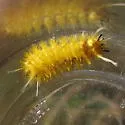
Santa Ana Tussock Moth - Hodges#8216
Lophocampa annulosa
Identification: Adult - tan tussock moth with chainlike light brown markings, a brown PM line with a small white dot, and near the trailing edge of the wings is a small dark brown dot. Many of the caterpillars posted here were originally posted as Lo
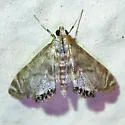
Santa Fe Petrophila - Hodges#4778
Petrophila santafealis
Santa Fe Petrophila is the southeastern representative of the " fulicalis -species group" in the genus Petrophila . ( 3 ) It is extremely similar to Canadian Petrophila . It is also similar to true fulicalis ("Feather-edged" Petrophila) but the rang
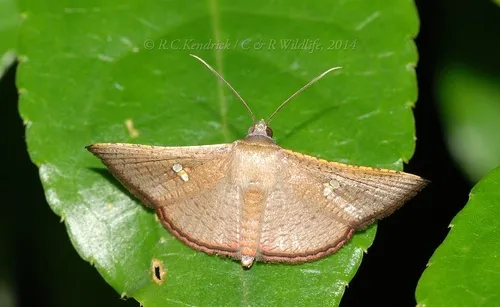
Sapodilla Borer Moth
Banisia myrsusalis
Banisia myrsusalis, the sapodilla borer or sapota midrib folder, is a species of moth of the Thyrididae family. It was described by Francis Walker in 1859 and is found in North America, Brazil, Australia, southern Asia (India, Sri Lanka) and Africa (
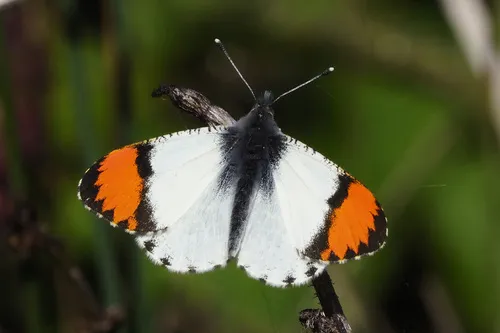
Sara Orangetip - Hodges#4206
Anthocharis sara
Identification: Where found in the same areas as 'Desert Orangetip' ( Anthocharis cethura ), that species has prominent pale (usually white) spots along the margin of the upper front wing, clearly dividing the dark border from the edge of the wing, w
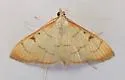
Sarabotys cupreicostalis - Hodges#4936.5
Sarabotys cupreicostalis
Sarabotys cupreicostalis is here reported for the first time in the United States from Arizona by MAS. Five specimens are deposited in the NMNH (National Museum of Natural History, Washington, DC): Babquivari Mts., Pima Co., 1–15 Sept. 1923 (2 specim
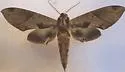
Satellite Sphinx - Hodges#7858
Eumorpha satellitia
Identification: Adult: forewing light brown with blackish rectangular patch midway along inner margin, and dark triangular patches near apex, midway along costa, and at anal angle; hindwing mostly dark with diffuse yellowish shading at base, and smal
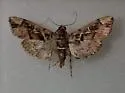
Sathria internitalis - Hodges#5270
Sathria internitalis
Identification: See print references below. Type locality: Haiti
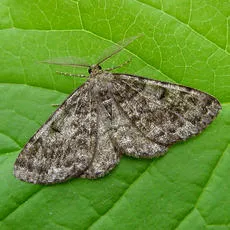
Satin Beauty
Deileptenia ribeata
Wingspan 30 to 40 mm. Distinguished from similar species by the broad rounded forewing, it is a species where expert help with identification is recommended. Occupying deciduous and coniferous woodland. The adults fly in a single generation from June
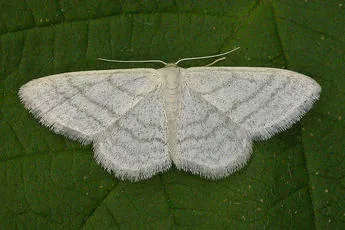
Satin Wave
Idaea subsericeata
Wingspan 22 to 25 mm. A fairly plain-looking whitish moth, which has a glossy sheen to the upper wing surfaces. A good photograph is generally required to support your record. The caterpillar, which hibernates during the winter, feeds on low plants i
Satole ligniperdalis - Hodges#5562
Satole ligniperdalis
Identification: Adult - see original description in Print References. Powell & Opler note pronounced dimorphism, two color forms for each sex, and the male with the costa enlarged at the base and folded over to form a pouch sealed with a tympanum-lik
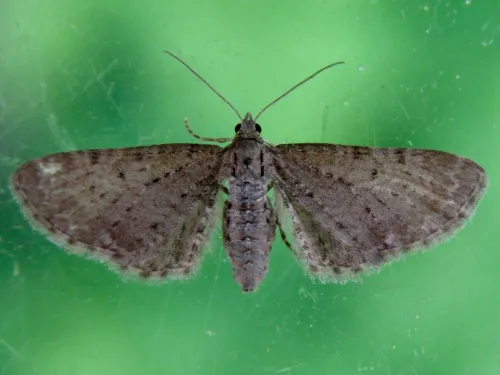
Satyr Pug
Eupithecia satyrata
Wingspan 18 to 24 mm. This moth is represented by three subspecies or forms in the British Isles. The nominate type satyrata occurs generally in the southern half of England and has a relatively plain appearance. In northern England, Scotland and Ire
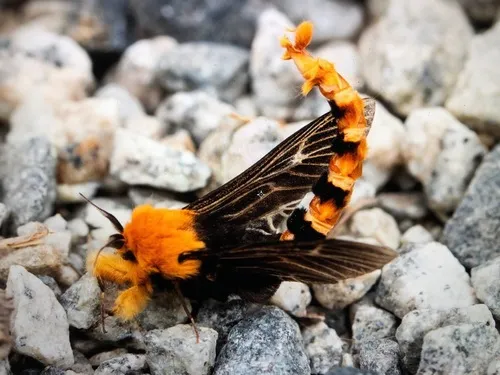
Saunder's Case Moth
Metura elongatus
Saunders' case moth or the large bagworm (Metura elongatus) is a moth of the Psychidae family. It is known from the eastern half of Australia, including Tasmania.
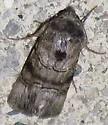
Saunders' Sympistis - Hodges#10099
Sympistis saundersiana
Identification: Adult: forewing median area dark brownish-gray with pale gray or silvery shading inside AM line and in subterminal area; AM and PM lines thin, black, double; diffuse black band runs across median area; reniform, orbicular, and clavifo
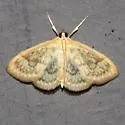
Sawtoothed Crocidophora - Hodges#4944
Crocidophora serratissimalis
Identification: Adult: forewing dull yellow with brown PM line having prominent outward bulge near middle, and conspicuously toothed subterminal line; hindwing paler and with arc-shaped PM line that has no bulge See Forbes Genitalia: ♀ ♂
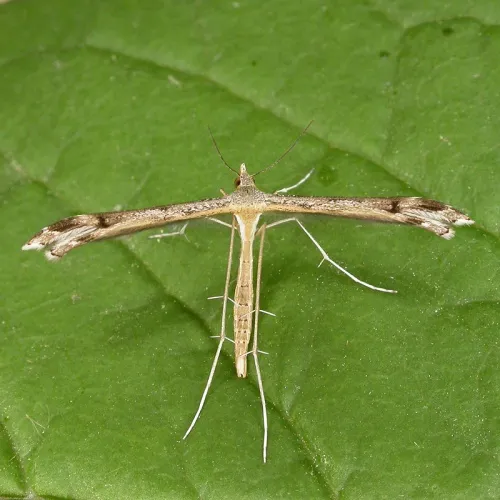
Saxifrage Plume
Stenoptilia millieridactyla
Wingspan 17 to 20 mm. Often has a bronzy colouring along the dorsum (trailing edge) of the hind wing. The adults fly in June and July, with a small second generation in late August and early September in some years. Larvae have been found occasionall
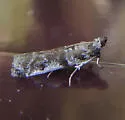
Scale-feeding Snout Moth - Hodges#5949
Laetilia coccidivora
Uses carminic acid acquired from its food as a defense against predators (Eisner et. al., 1994)
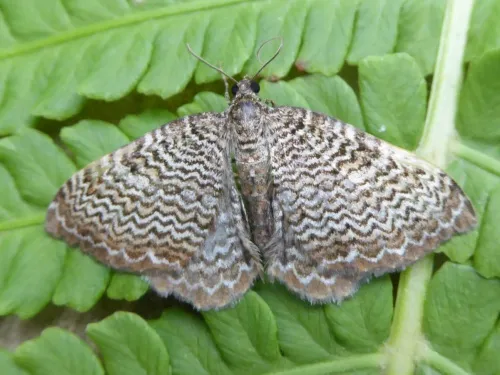
Scallop Shell
Rheumaptera undulata
Wingspan 25 to 30 mm. A highly distinctive moth, unlikely to be confused with any other British species. It prefers open woodland with an undergrowth of bilberry, and marshy areas. Flies in a single generation from June to July. The larvae spin toget
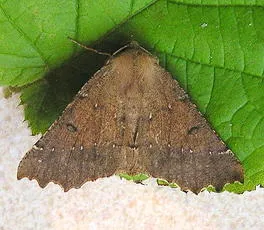
Scalloped Hazel
Odontopera bidentata
Quite a variable species, with individuals ranging from pale brown to almost black, the darker varieties having less obvious markings. It frequents woodland, heaths and suburban habitats. There is just one brood, flying in May and June. Larva feeds o
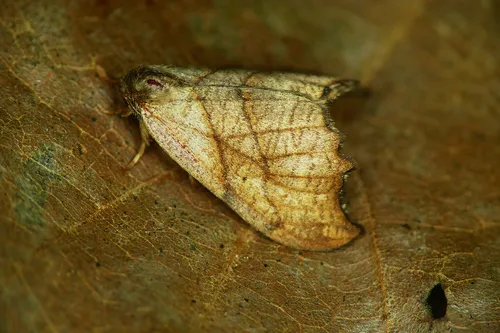
Scalloped Hook-tip
Falcaria lacertinaria
Wingspan 27 to 35 mm. This species has an unusual resting posture, with the wings held in an arch over the back, resembling a dried leaf. It is mainly a woodland species favouring areas where Birch is present. Double-brooded, the adults can be found
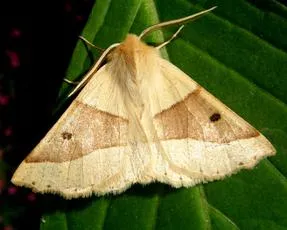
Scalloped Oak
Crocallis elinguaria
Wingspan 32-41 mm. This species shows some variation in the intensity of the markings but is usually easy to identify. Woodland, scrub, hedgerows, parks and gardens. The single generation flies in July and August. The caterpillars show a polyphagous
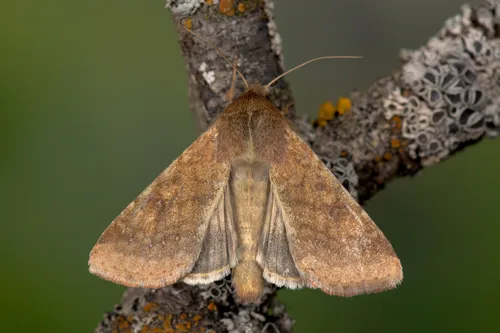
Scarce Bordered Straw
Helicoverpa armigera
Wingspan 30-40 mm. A lightly marked reddish-brown species. Mainly seen on the coast, but occasionally inland Occurring most often in the autumn months. An immigrant species to Britain. Found as a larva from time to time on Tomato plants, Geraniums an
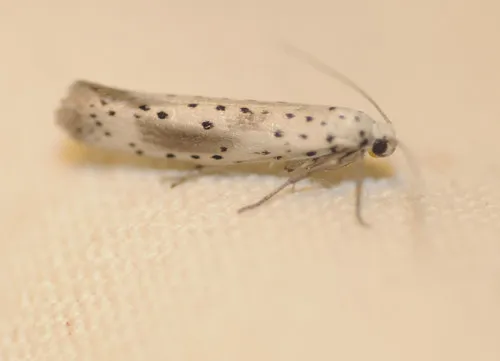
Scarce Ermine
Yponomeuta irrorellus
Yponomeuta irrorella is a moth of the family Yponomeutidae. It is found in most of Europe, except Ireland, Norway, Belgium, the Iberian Peninsula, Estonia and the western and southern part of the Balkan Peninsula.
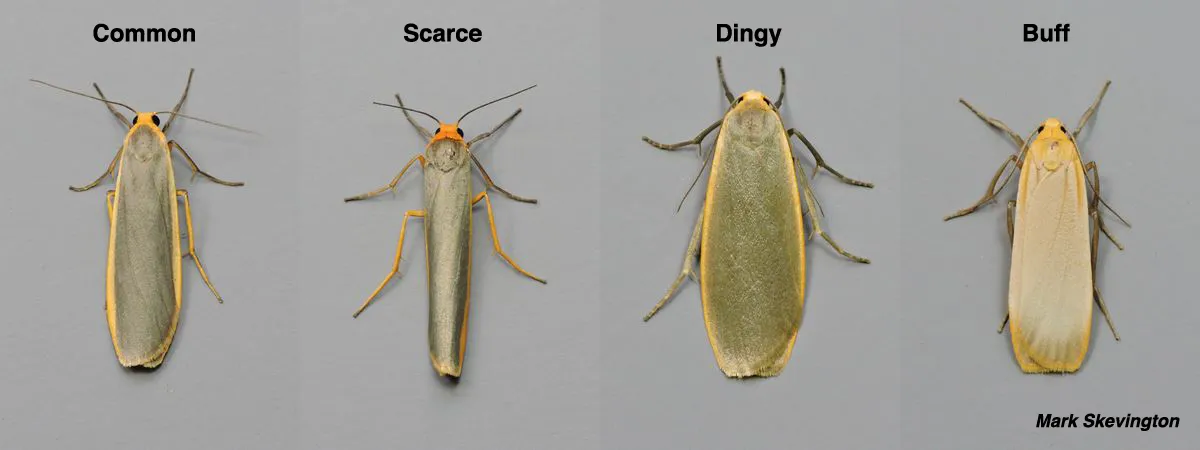
Scarce Footman
Eilema complana
Wingspan 28-35 mm. Similar to the Common Footman ( E. Lurideola ) in appearance but holds its wings furled tightly around the body and presents a much slimmer outline than the flatter appearance of E. lurideola . Common Footman, Dingy Footman, Scarce
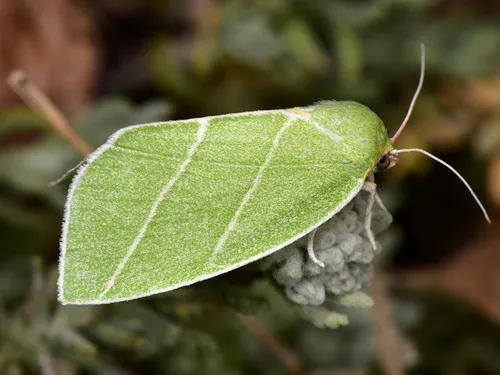
Scarce Silver-lines
Bena bicolorana
Wingspan 40 to 45 mm. Possibly our most immaculate-looking moth when fresh, this is one of the few green species in Britain, and one of the brightest. Flying from June to August, it regularly visits light. The caterpillars feed on the leaves of oak.
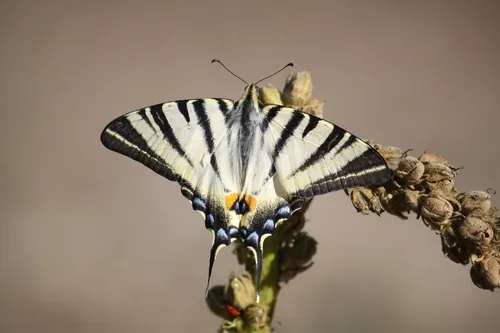
Scarce Swallowtail
Iphiclides podalirius
The scarce swallowtail (Iphiclides podalirius) is a butterfly belonging to the family Papilionidae. It is also called the sail swallowtail or pear-tree swallowtail.
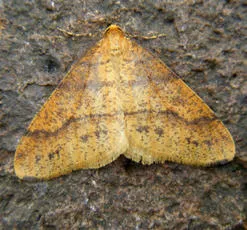
Scarce Umber
Agriopis aurantiaria
Wingspan 27-35 mm. In common with several of its relatives, the female is almost wingless and spends much of its short life climbing up tree-trunks. Inhabiting woodland, suburban habitats and other bushy places. The males fly in October and November
Scardia amurensis - Hodges#0311.1
Scardia amurensis
Identification: "The forewing cream marking are extended along the entire length of the dorsal margin and over the terminal area; the terminal margin has a few rusty-brown spots" . "This species was initially discovered mixed among specimens of the N
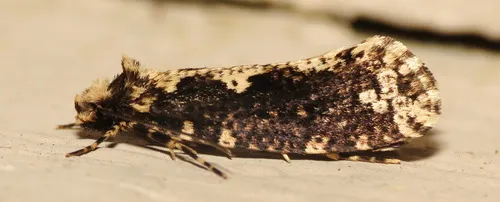
Scardia anatomella - Hodges#0311
Scardia anatomella
Identification: Head: Brownish-yellow, darker at sides. Long haired (scaled). Palpi long, folded; dark brown, underside yellowish. Antenna: Dark brown, over half as long as wing. Thorax: Tufted. Brownish-yellow; darker on sides. Wings: Wings wide and
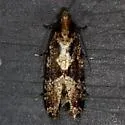
Scardiella approximatella - Hodges#0308
Scardiella approximatella
Identification: Head: Dark yellowish, long haired (scaled). Palpi long, folded; pale yellow, brown and tufted on underside. Antenna: About half as long as wing, slender. Ringed brown and yellow. Thorax: Pale yellow, sides brownish. Wings: Slightly ro
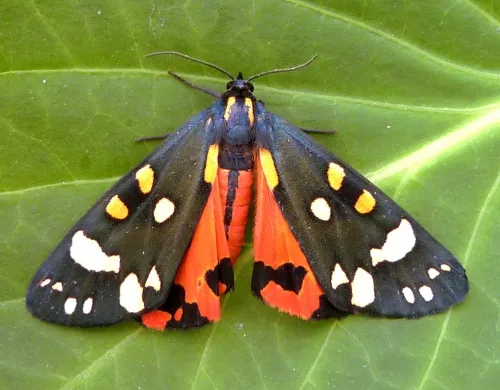
Scarlet Tiger
Callimorpha dominula
Wingspan 45-55 mm. The rather variable adults of this species usually have a metallic green sheen on the blackish areas of the forewing. It is one of the few tiger moths with developed mouthparts, allowing it to feed on nectar. Occupies damp areas su
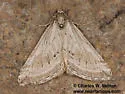
Scelidacantha fuscata - Hodges#7629
Scelidacantha fuscata
Identification: Grossbeck (1906) description in print references.
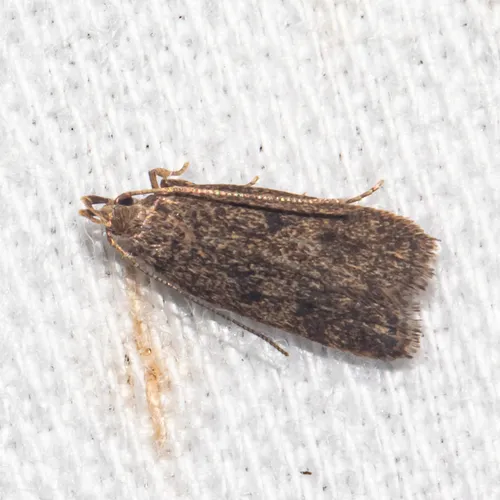
Sceptea aequepulvella - Hodges#1135
Sceptea aequepulvella
Sceptea aequepulvella - Hodges#1135 (Sceptea aequepulvella) is a species in the family Autostichidae, belonging to the order Lepidoptera (Butterflies and Moths). It is classified within the subfamily Symmocinae, superfamily Gelechioidea. This species
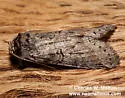
Scevesia angustiora - Hodges#7963
Scevesia angustiora
Identification: Larva - tan with thin black lateral lines, prominent pink spots dorsally, with many smaller raised yellow dots. Adult- see Barnes & McDunnough's original description in Print References below.
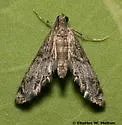
Schaeffer's Petrophila - Hodges#4784
Petrophila schaefferalis
Schaeffer's Petrophila - Hodges#4784 (Petrophila schaefferalis) is a species in the family Crambidae, commonly known as crambid snout moths, belonging to the order Lepidoptera (Butterflies and Moths). It is classified within the subfamily Acentropina
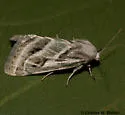
Schinia accessa - Hodges#11150
Schinia accessa
Identification: The original description of Schinia accessa Smith, is available online in the print references.
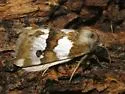
Schinia alencis - Hodges#11198
Schinia alencis
Identification: The reniform spot is separated from the median band in Schinia alencis and is not in S. chryselloides or S. chrysellus Schinia alencis has a wider median band with irregular edges as compared to the smoother edges in S. chrysellus . -
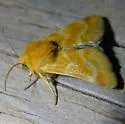
Schinia biforma - Hodges#11125
Schinia biforma
Identification: Smith (1906) original description is in print references.
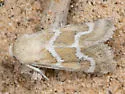
Schinia biundulata - Hodges#11157
Schinia biundulata
Identification: Adult : FW is nearly even in tan color, slightly grayer along the costa and in the terminal area. The basal line is a pale dot at the base of the costa. The AM and PM are smooth, broad, and white. AM is bent, apex lateral, in the cell
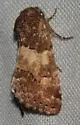
Schinia brunnea - Hodges#11182
Schinia brunnea
Identification: See Barnes & McDunnough original description here on page 104.
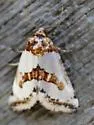
Schinia chryselloides - Hodges#11199.1
Schinia chryselloides
Identification: The black scaling at the apex of the forewing distinguishes this species from Schinia chrysellus which has nearly identical forewing maculation. There are differences in genitalia.
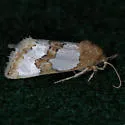
Schinia chrysellus - Hodges#11199
Schinia chrysellus
females can be found at dusk aound the blooming hostplant Amphiachyris dracunculoides
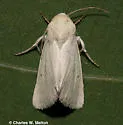
Schinia citrinellus - Hodges#11204
Schinia citrinellus
Identification: Grote & Robinson original description as Heliothis citrinellus is available in the print references. Most diagnostic examples have a pale yellow forewing with a dark discal dot, and a broad black terminal band on the hindwing. The ban
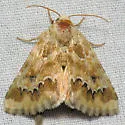
Schinia crenilinea - Hodges#11185
Schinia crenilinea
Identification: Original description is online at link under print peferences. (Smith) - Adult: forewing tan with brown basal and subterminal areas, and diffuse brown medial line; AM line pale, scalloped; reniform spot represented by diffuse blackish
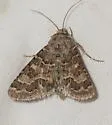
Schinia crotchii - Hodges#11134.1
Schinia crotchii
Identification: Description by Pogue & Harp can be found at link in citations below.
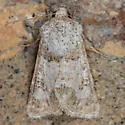
Schinia deserticola - Hodges#11134.2
Schinia deserticola
Identification: Pogue description of the adults, including genitalia, is in the PDF. Specimen determined by DNA analysis (BOLD).
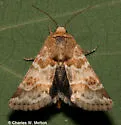
Schinia errans - Hodges#11124
Schinia errans
Identification: Specimens identified by DNA analysis:
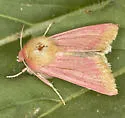
Schinia felicitata - Hodges#11163
Schinia felicitata
Identification: Upper side of forewing pastel pink, with tawny-yellow band along terminal edge; head pink; thorax and abdomen tawny-yellow above; upper side of hindwing dark (smoky grey-black). The pink wings of S. felicitata are thought to provide c
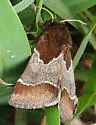
Schinia hanga - Hodges#11136
Schinia hanga
Identification: Strecker (1898) stated "The somewhat crenulated transverse lines and checkered fringe of primaries as well as the curve of the T. A. line [antemedial line] will serve to readily separate this from its three nearest allies." Strecker (
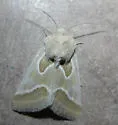
Schinia intrabilis - Hodges#11159
Schinia intrabilis
Identification: The Smith (1893) original description is available in the print references.
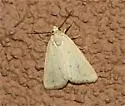
Schinia luxa - Hodges#11203
Schinia luxa
Identification: Adult - forewing pale yellow with several dark dots in specific locations: one serves as the orbicular spot, another serves as the midpoint of the otherwise invisible AM line, and two more are spaced apart along the otherwise invisibl
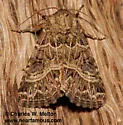
Schinia mexicana - Hodges#11134.3
Schinia mexicana
Identification: The orange hindwing distinguishes this from the other similar species.
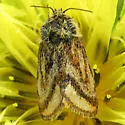
Schinia mitis - Hodges#11169
Schinia mitis
This is a day flying moth, which is only active for a few hours in the morning, when the flowers of its host plant are open. (a)
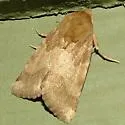
Schinia mortua - Hodges#11131
Schinia mortua
Identification: Determined by Chuck Harp. Schinia mortua appears to be widespread in western North America but uncommon.
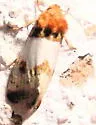
Schinia oculata - Hodges#11197
Schinia oculata
Identification: Smith is available in PDF or view online. Specimen identified by DNA analysis (BOLD).
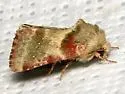
Schinia olivacea - Hodges#11130
Schinia olivacea
Identification: Smith (1906) description is in the print references.
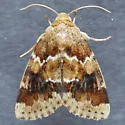
Schinia parmeliana - Hodges#11120
Schinia parmeliana
Identification: Edwards (1882) original description as Lyqranthacia parmeliana and the description by Hampson (1903) as Schinia parmeliana are both available online in the print references. Specimen identified by DNA analysis (BOLD). ( 3 )
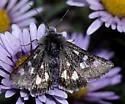
Schinia persimilis - Hodges#11103
Schinia persimilis
Identification: Pacific Northwest Moths has a description.
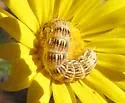
Schinia petulans - Hodges#11113
Schinia petulans
Identification: The original description as Anthoecia petulans Hy. Edwards, and a later description by Hampson (1906) are both available in the print references below.
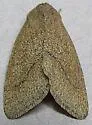
Schinia psamathea - Hodges#11140.1
Schinia psamathea
Identification: The original description is available in PDF. The only transverse line on the forewing is a dark brown postmedial line. Antemedial line seldom present and if so is extremely faint.
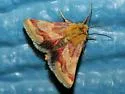
Schinia roseitincta - Hodges#11092
Schinia roseitincta
Identification: Harvey (1874) original description as Lygtanthoecia roseitincta is available online in the print references. Distinctive scarlet and black hindwings. ( 3 ) Adults of this species are active both day and night.
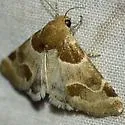
Schinia sexplagiata - Hodges#11151
Schinia sexplagiata
Identification: Adult : FW ground is pale olive-tan. The dark basal area has a light patch near the costa. AM is white and smoothly curved, wider at the costa. PM is white and sinuous, and wider at the costa. Reniform is filled with gray-tan. HW is p
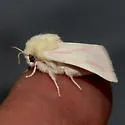
Schinia snowi - Hodges#11206
Schinia snowi
Identification: Grote (1875) original description as Aedophron snowi is available in the print references).
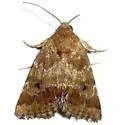
Schinia sordidus - Hodges#11112
Schinia sordidus
Identification: Smith, (1883) original description and the later description by Hampson, (1903) are online in the print references.
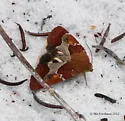
Schinia subspinosae - Hodges#11104.1
Schinia subspinosae
Identification: Hardwick gives a brief description.
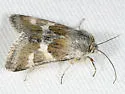
Schinia suetus - Hodges#11088
Schinia suetus
Identification: Adult: forewing yellowish-gray with black speckling and lopsided whitish Y-shaped patch in median area; small triangular pale patch sometimes present in AM area near costa; hindwing black with two large white spots in median area and
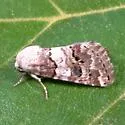
Schinia tertia - Hodges#11179
Schinia tertia
Identification: Adult: forewing gray with broad white medial band but narrower than in S. albafascia ; reniform spot dark gray to blackish; subterminal line white, jagged, irregular; fringe checkered; hindwing white basally; discal spot pale gray, fa
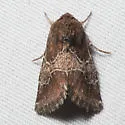
Schinia ultima - Hodges#11127
Schinia ultima
Identification: Strecker (1876) description as Heliothis ultima and a revised description by Hampson (1903) are in the print references.
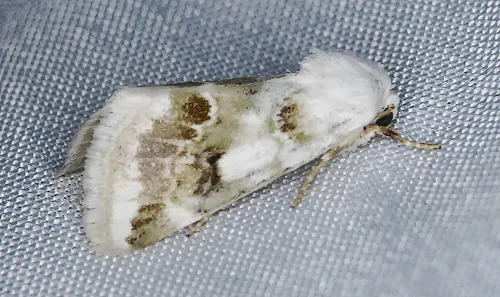
Schinia unimacula - Hodges#11188
Schinia unimacula
Identification: Adult: forwing has straight median band with wide white area between basal and median bands; subterminal band consists of distinct subapical spot, then becomes faint medially and more distinct on inner margin; reniform spot large and
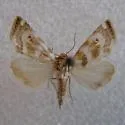
Schinia velaris - Hodges#11153
Schinia velaris
Identification: The Grote (1878) original description as Tamila velaris is available in the print references.
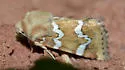
Schinia zuni - Hodges#11176
Schinia zuni
Identification: Forewing olive brown with bold, silvery white transverse lines outlined by black scales. Fringe checkered with dark brown and white. Hindwing yellow with a broad smoky brown marginal band and a well-defined discal lunule . This specie
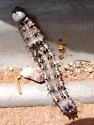
Schizura biedermani - Hodges#8004
Schizura biedermani
Schizura biedermani - Hodges#8004 (Schizura biedermani) is a species in the family Notodontidae, commonly known as prominent moths, belonging to the order Lepidoptera (Butterflies and Moths). It is classified within the subfamily Heterocampinae, supe
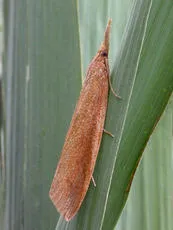
Schoenobius gigantella
Schoenobius gigantella
Wingspan 25 to 46 mm. Sexually dimorphic, the females being generally much larger and plainer in appearance than the males. The moths fly in July and sometimes in August, and can be attracted to light, though the males are quite sedentary. The larvae
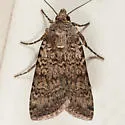
Scholastic Dart - Hodges#10793
Euxoa scholastica
Identification: Adult: forewing brownish-gray with black double scalloped AM and PM lines; reniform and orbicular spots same color as ground color with black perimeter; subterminal line dark, irregular; no dark shading in terminal area; hindwing unif
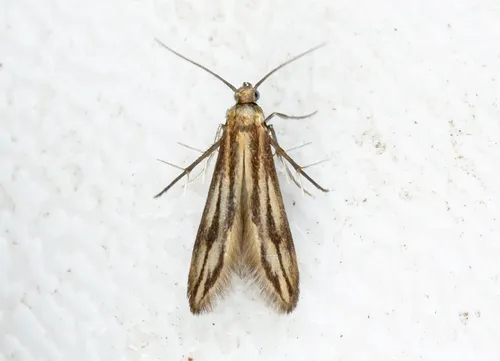
Schreckensteinia festaliella
Schreckensteinia festaliella
Wingspan 10 to 12 mm. The adult moths have an attractive striated appearance and a distinctive resting posture, with the hind legs angled upwards above the wings. Well vegetated areas containing the larval foodplants Bramble or Raspeberry. Can be fou
Schweitzer's Sallow - Hodges#9934.1
Eupsilia schweitzeri
Identification: Cannot be identified from photos alone, see Journal of the Lepidopterists Society, Vol 70, Number 3; published 8/30/16 for full description and keys to adult Eupsilia species.
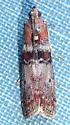
Sciota fraudifera - Hodges#5790.1
Sciota fraudifera
Identification: Externally most similar to S. carneella ; genitalia similar to those of fraudifera
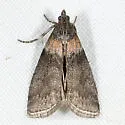
Sciota tarmitalis - Hodges#5800
Sciota tarmitalis
Identification: Heinrich revised description in PDF.
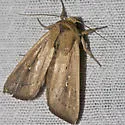
Scirpus Wainscot - Hodges#10455
Leucania scirpicola
Identification: FW flesh-colored to brownish and smooth appearance. A diffuse dark brown streak runs longitudinally from the base of the wing to the small, white discal dot where veins diverge. PM represented by a series of small, black dots. HW is h
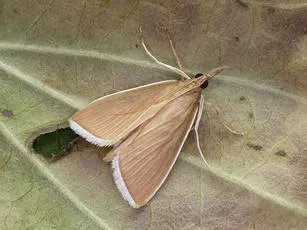
Sclerocona acutellus
Sclerocona acutellus
Wingspan about 28 mm. Quite distinctive, and unlikely to be confused with any other British species. An adventive species, believed to have been introduced with reeds imported from central Europe for thatching cottages, though it is possible that som
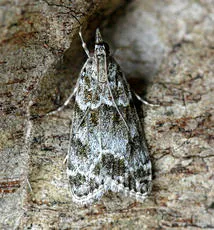
Scoparia ambigualis
Scoparia ambigualis
Wingspan 15-22 mm. One of several very similar moths which can be rather difficult to separate. Scopariinae are a difficult group to identify and sometimes it is necessary to refer to genitalia to be sure. A useful guide can be found at the following
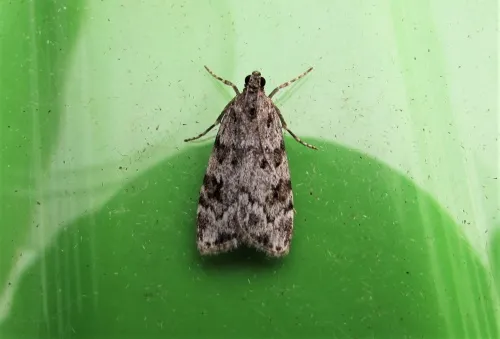
Scoparia basistrigalis
Scoparia basistrigalis
It is rather similar to S. ambigualis in appearance, and is best identified by means of genitalia dissection. A clear set of photographs. showing all critical identification features is required, and/or a voucher specimen may be necessary - check wit
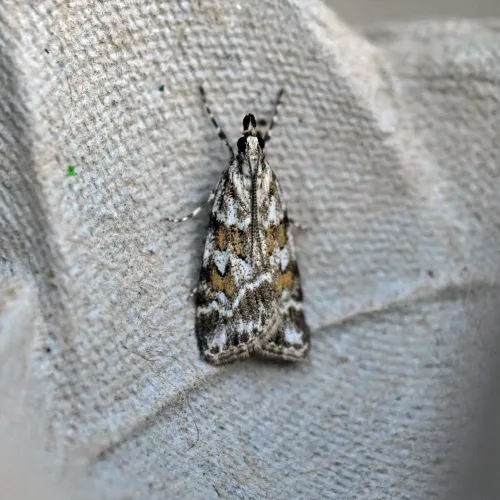
Scoparia pyralella
Scoparia pyralella
Wingspan 17-22 mm. A fairly distinctive Scoparia species, with a short and broad appearance and pale brown markings. Scopariinae are a difficult group to identify and sometimes it is necessary to refer to genitalia to be sure. A useful guide can be f
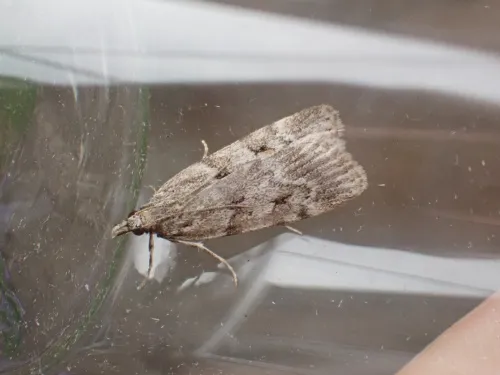
Scoparia subfusca
Scoparia subfusca
Wingspan 21-30 mm. One of the plainer-looking members of the Scopariinae , though rather variable. Scopariinae are a difficult group to identify and sometimes it is necessary to refer to genitalia to be sure. A useful guide can be found at the follow
Scopula benitaria - Hodges#7155
Scopula benitaria
Identification: Specimens identified by DNA analysis:
Scopula compensata - Hodges#7152
Scopula compensata
Identification: This species may or may not have the dark patches beyond the PM line. Specimen identified by DNA at BOLD:
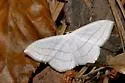
Scopula ordinata - Hodges#7161
Scopula ordinata
Identification: wings pure white with three brownish or greenish-yellow lines: AM line slightly wavy and curved, PM and ST lines straight except for sharp bend near costa; lines continue onto hindwing; small black discal dot on all wings; outer margi
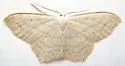
Scopula quinquelinearia - Hodges#7164.1
Scopula quinquelinearia
Identification: Specimen identified by DNA analysis: In some references, this species may be listed as a subspecies of Scopula junctaria .
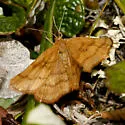
Scopula sentinaria - Hodges#7172
Scopula sentinaria
Identification: Adults are dull red-brown to bright rusty-orange. The basal half of the fore-wings is usually suffused with darker scales. There is only one sub-species in North America. (nominate)
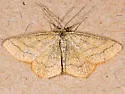
Scopula sideraria - Hodges#7171
Scopula sideraria
Identification: Specimen identified by DNA analysis (BOLD). diurnal
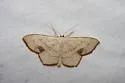
Scopula timandrata - Hodges#7160
Scopula timandrata
Identification: Determined by Bob Patterson. It may turn out that this species is conspecific with S. limboundata . Covell mentions that the two have identical genitalia and suggests that timandrata may be just a form of limboundata . ( 4 ) As of 201
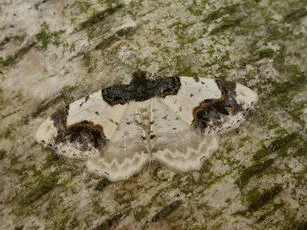
Scorched Carpet
Ligdia adustata
Wingspan 20 to 25 mm. Both the English and Latin names refer to the 'scorched' appearance of this species, though this is more obvious on the underside, which is suffused with reddish-brown. Often in woodland and round its larval foodplant. It is mai
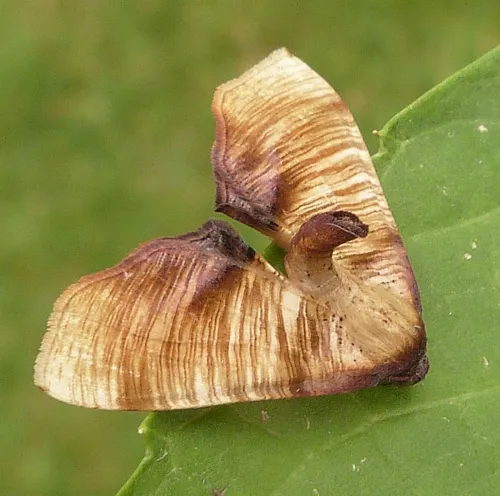
Scorched Wing
Plagodis dolabraria
Wingspan 28-32 mm. The English name of this species is derived from the moth's fanciful resemblance to burnt paper or similar substance. The main flight period is May and June. The adults are attracted to sugar, but only usually the males to light. T
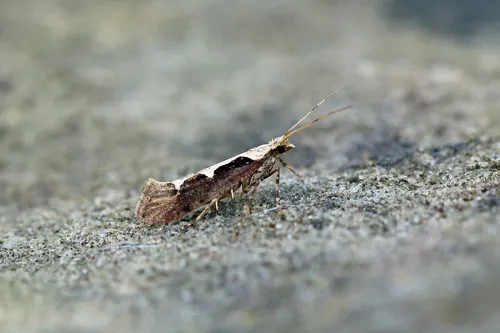
Scotch Smudge
Rhigognostis incarnatella
Rhigognostis incarnatella, the Scotch smudge, is a moth of the family Plutellidae. It was described by Steudel in 1873. It is found in most of Europe.
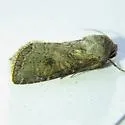
Scotogramma fervida - Hodges#10239
Scotogramma fervida
Identification: Barnes & McDunnough (1912) stated "Is closely related to trifolii and albifusa but can be most readily separated by the general rough and diffuse appearance, the broad bulbous lower half of the reniform which is often prominently fill
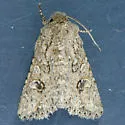
Scotogramma fieldi - Hodges#10250
Scotogramma fieldi
Identification: Specimen determined by DNA analysis (BOLD).
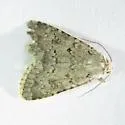
Scotogramma submarina - Hodges#10238
Scotogramma submarina
Identification: See description at Pacific Northwest Moths here