
Rubbed Dart - Hodges#10838
Euxoa detersa
This record describes Euxoa detersa (species). Recorded family: Noctuidae. Recorded order: Lepidoptera.
Identification and Appearance
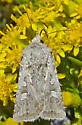
Adult: forewing yellowish to dark brown, dark specimens tinted with gray; lines double, white-edged; orbicular and reniform spots whitish with dark brown outlines, and dots in their centers; hindwing dark brown E. d. detersa typical form has pale strip along costa of forewing, and dark shading between reniform and orbicular spots (see example from Maryland); another form from Canada and the Great Lakes lacks the pale strip and is more uniformly colored (see example at CBIF) Larva: body white to pale gray; pulsations in blood vessel along back can be seen through cuticle; faint chalky-white stripes on back and sides; head dull reddish-brown [description by U. of Illinois] Larvae construct subterranean burrows to feed on underground portions of host plants, and can be very destructive in fields planted in sandy soils. The commonest autumn dart to be found supping nectar from flower in the daytime. (Comment by David Beadle)
Classification
- Kingdom
- Animalia
- Phylum
- Arthropoda
- Class
- Insecta
- Order
- Lepidoptera (Butterflies and Moths)
- Superfamily
- Noctuoidea
- Family
- Noctuidae (Owlet Moths)
- Subfamily
- Noctuinae
- Tribe
- Noctuini
- Genus
- Euxoa
Imported taxonomy record. Source availability varies; see the source references and editorial policy below.
Habitat and Range
Habitat
sandy habitats: beaches, river shores, dunes, sandy agricultural fields, dry grasslands adults visit flowers such as goldenrod during the day, and come to light at night
Geographic Range
Newfoundland westward to Fort Smith in the Northwest Territories and to southwestern Alberta; it occurs southward to South Carolina, northern Missouri, southern Kansas, and northeastern Colorado. The species occurs primarily in the Great Plains from Nebraska to the Canadian Prairie provinces, around the Great Lakes, and along the Atlantic coast from New Jersey to New Brunswick (Lafontaine, 1981).
Seasonal Activity
Flies end of August into October on Block Island , RI, where it occurs exclusively in dune habitats. ( 3 )
Diet and Behavior
Diet: larvae feed on corn, grasses, cranberry, saltwort, sea-rocket, various garden crops and commercial grains
Life History
one generation per year; overwinters as a partially-grown larva
About Butterflies and Moths: the wider group
Order-level background for Lepidoptera, the group containing Euxoa detersa. Species-specific details appear above.
Group overview
Lepidoptera includes approximately 180,000 described species of butterflies and moths. Moths outnumber butterflies roughly 10:1. The monarch butterfly's eastern population has declined by more than 80% since the mid-1990s, and the western population by over 95% since the 1980s. The IUCN lists the migratory monarch as Vulnerable.
Ecological role of the group
Butterflies and moths are essential indicators of ecosystem health. As caterpillars, they are a primary food source for birds - a single nest of blue tit chicks requires ~10,000 caterpillars. Adult moths pollinate many night-blooming plants.
Economic and practical significance of the group
Lepidoptera are critical pollinators. In Europe, grassland butterfly species have declined by almost 50% since the early 1990s. In the UK, three-quarters of butterflies are in decline. In the U.S., five butterfly species have gone extinct since 1950, with 29 listed as endangered.
Recorded sources for this group: IUCN Red List, Xerces Society, USFWS, PNAS, WWF. Imported estimates may describe particular regions or reporting periods.
Photos of Rubbed Dart - Hodges#10838 (5)
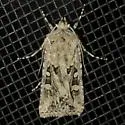
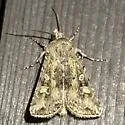
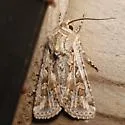
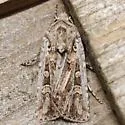
Photo credits: Contributed by Robin McLeod; Additional contributions by Beatriz Moisset , Tony-2 , Blocky
Frequently Asked Questions About Rubbed Dart - Hodges#10838
What is Rubbed Dart - Hodges#10838?
Rubbed Dart - Hodges#10838 (Euxoa detersa) is a species in the family Noctuidae, within the order Lepidoptera.
How big is Rubbed Dart - Hodges#10838?
wingspan 30-35 mm larvae to 34 mm
How do you identify Rubbed Dart - Hodges#10838?
Adult: forewing yellowish to dark brown, dark specimens tinted with gray; lines double, white-edged; orbicular and reniform spots whitish with dark brown outlines, and dots in their centers; hindwing dark brown E. d. detersa typical form has pale strip along costa of forewing, and dark shading between reniform and orbicular spots (see example from Maryland); another form from Canada and the Great Lakes lacks the pale strip and is more uniformly colored (see example at CBIF) Larva: body white to pale gray; pulsations in blood vessel along back can be seen through cuticle; faint chalky-white stripes on back and sides; head dull reddish-brown [description by U. of Illinois]
Where is Rubbed Dart - Hodges#10838 found?
| Feature | Details |
|---|---|
| Habitat | sandy habitats: beaches, river shores, dunes, sandy agricultural fields, dry grasslands adults visit flowers such as goldenrod during the day, and come to light at night |
| Range | Newfoundland westward to Fort Smith in the Northwest Territories and to southwestern Alberta; it occurs southward to South Carolina, northern Missouri, southern Kansas, and northeastern Colorado. The species occurs primarily in the Great Plains from Nebraska to the Canadian Prairie provinces, around the Great Lakes, and along the Atlantic coast from New Jersey to New Brunswick (Lafontaine, 1981). |
What does Rubbed Dart - Hodges#10838 eat?
The diet of the Rubbed Dart - Hodges#10838 includes larvae feed on corn, grasses, cranberry, saltwort, sea-rocket, various garden crops and commercial grains.
When is Rubbed Dart - Hodges#10838 active?
Rubbed Dart - Hodges#10838: seasonal activity - Flies end of August into October on Block Island , RI, where it occurs exclusively in dune habitats. ( 3 ).
What is the life cycle of a Rubbed Dart - Hodges#10838?
one generation per year; overwinters as a partially-grown larva