
Flies
Order Diptera
The Flies (Order Diptera) includes 6,350 species across 141 families and 1,800 genera in our directory.
About Flies
Diptera includes over 150,000 described species of flies, mosquitoes, and midges. Mosquitoes are the deadliest animal on Earth (CDC). Malaria alone causes ~249 million cases and over 608,000 deaths annually, mostly children under 5 (WHO). Vector-borne diseases account for over 17% of all infectious diseases, causing 700,000+ deaths per year.
Economic Impact
In the U.S., vector-borne disease cases tripled between 2004-2016, with over 640,000 cases reported in that period (CDC). Tickborne diseases doubled from 22,000 to 48,000 annual reports. Globally, mosquito-borne diseases cost billions in healthcare and lost productivity.
Ecological Role
Despite their disease impact, flies are critical decomposers and pollinators. Hoverflies alone pollinate hundreds of crop and wildflower species. Flies are also the primary food source for many birds, bats, and fish. Forensic entomology relies heavily on fly species for crime scene analysis.
Families in Diptera (141)
Species in Diptera (6,350)
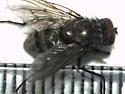
Helina annosa
Helina annosa
Identification: Among Nearctic Helina, identified by fine hairs on the underside of the scutellum that are restricted to the basal half and by fine hairs on the hypopleuron that are restricted to the anteroventral border of the spiracle.
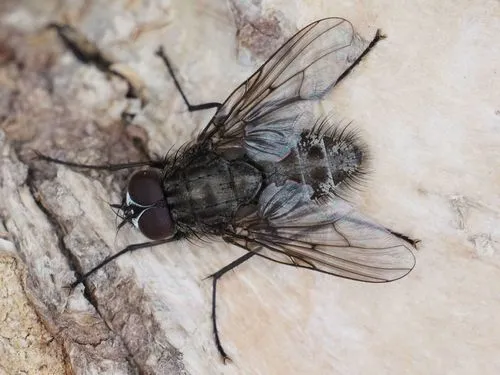
Helina evecta
Helina evecta
This is a common muscid fly with a pale brown or blue abdomen with dark spots. It has infuscated cross-veins on its wings. It requires microscopic examination to be certain of identification. One identifying feature is the presence of long, dark hair
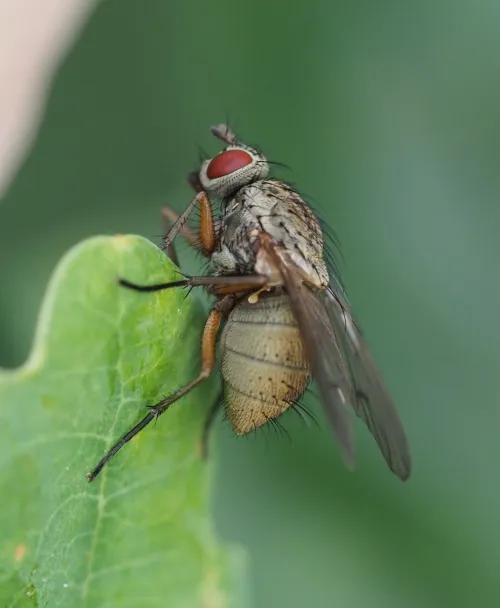
Helina impuncta
Helina impuncta
6.7-8.2mm. Grey/brown with fine stripes on the thorax and no patterning on the abdomen. It has red femora and tibia, with yellow-tinted wings and darkened cross-veins. It breeds on cow dung so most commonly encountered around cow pasture. Males most
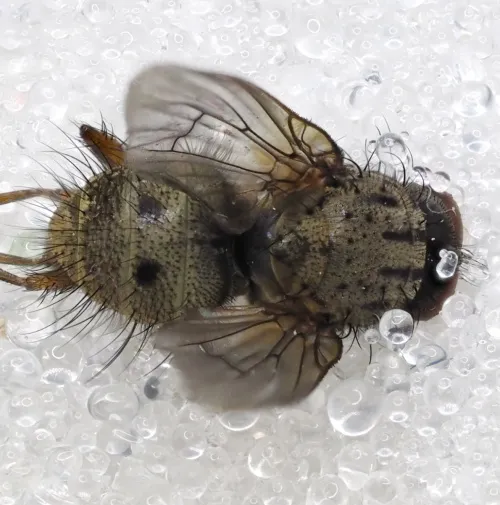
Helina lasiophthalma
Helina lasiophthalma
5.25 to 7.5 mm. Grey head, thorax and abdomen with paired brown spots on the abdominal tergites. Red legs with black tarsi, though the front femur may be darkened. The cross-veins are darkened and it has 2+1 sternopleural bristles. Several other Heli
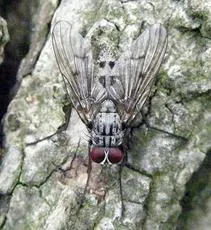
Helina pertusa
Helina pertusa
Size 6 to 8.5 mm. A rather long grey looking fly with black patches on its abdomen and with black tarsi. It is a characteristic species of dead wood habitats and most often seen on the trunks of trees. The larvae are found in rot holes and under bark
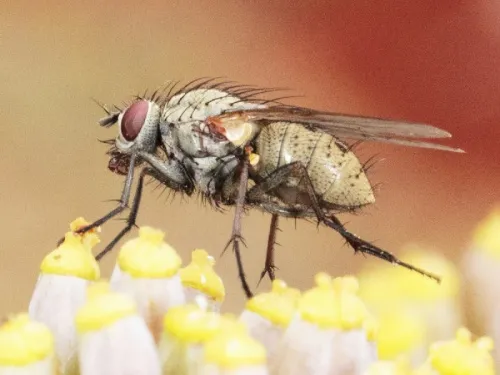
Helina reversio
Helina reversio
Length 5 to 7 mm. Usually beige or greyish in appearance, but very variable. It has dark femora but with reddish apices, reddish tibia and paired spots on the abdomen. Various habitats including hedgerows, flower meadows and woodland. Adults feed on
Helina rufitibia
Helina rufitibia
Identification: Body black and pruinose, with dark markings on thorax and abdomen. Legs black except for tips of femora and most of tibiae. Hind femora with strong, nearly complete anteroventral row of bristles. Hind tibia with 2 anterodorsal and
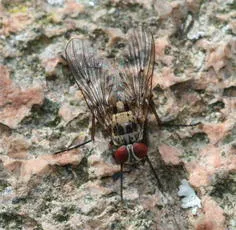
Helina sexmaculata
Helina sexmaculata
Most Helina species are very difficult to identify from a photograph alone, though this species is perhaps the exception to the rule. It is a brown/grey colour with brown spots on both the thorax and on the abdomen. It has a distinctive pair of brown
Helina troene
Helina troene
Identification: Females of troene and procedens may be difficult to separate. Snyder's (1949) key separates them by the number of AD bristles on the hind tibia (one in procedens, two in troene). I have seen specimens with a single AD on one leg and
Helius flavipes
Helius flavipes
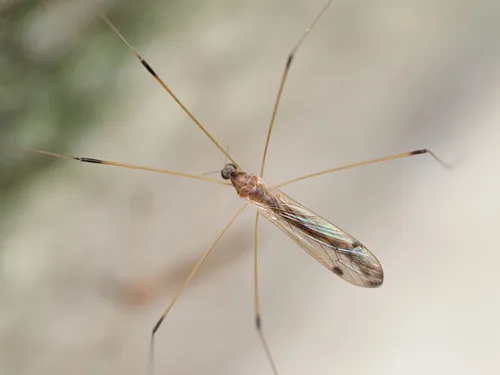
Identification: Head: Head brownish-gray. Palpi and proboscis black. Proboscis a little longer than head. Antenna: Brown at base, rest of segments lighter brown. Thorax: Either yellowish or brownish, usually stripes are indistinct. Wings: Clear with
Helophilus hybridus
Helophilus hybridus
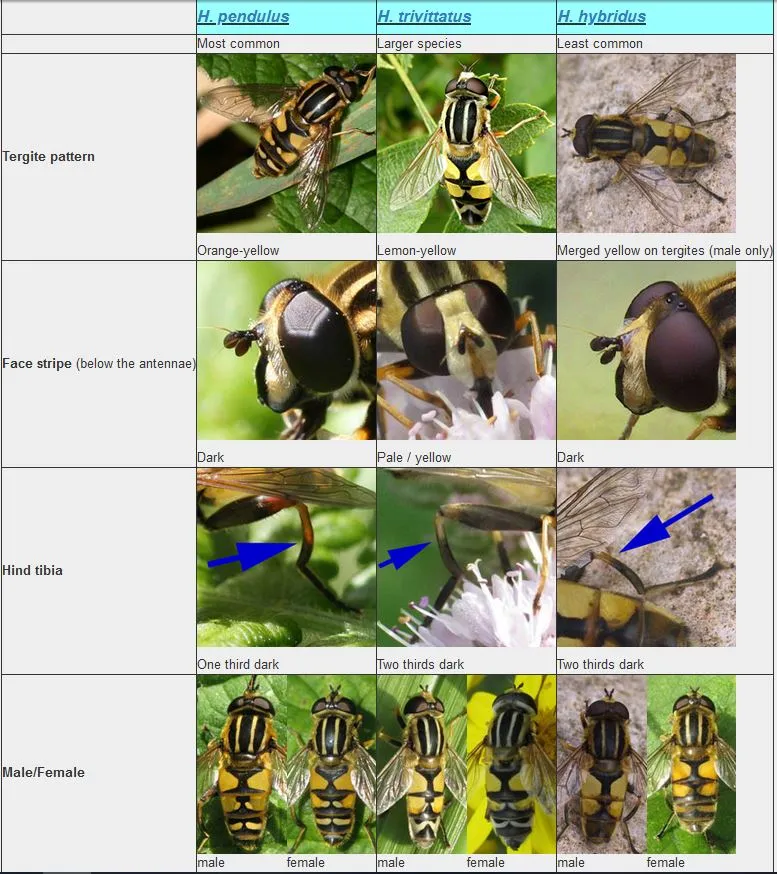
Wing length 8.5 to 11.25 mm. In size and general appearance this species is similar to H. pendulus . The male is usually distinctive in having continuously broad yellow sides to tergites 2 and 3, whereas there is a dividing black bar near the posteri
Helophilus intentus
Helophilus intentus
Identification: Black facial stripe. Hind femora are reddish on the apical fifth and hind tibia are yellow on the basal half and reddish on the apical half. Spots on the third abdominal tergite are pointed, helping to distinguish from H. obscurus .
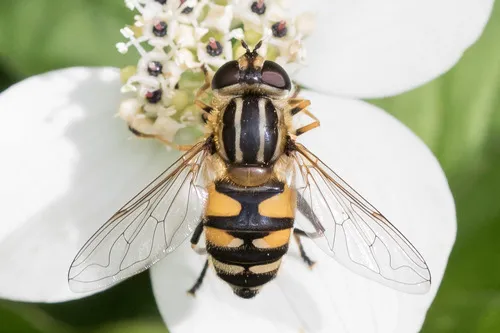
Helophilus neoaffinis
Helophilus neoaffinis
Identification: Black facial stripe. Spots on T2 large; spots on T3 intermediate, occupying anterior 2/3 of tergite, with whitish inner ends. Differs from the very similar H. groenlandicus by the broad inner ends of the spots on T2. Oddly, despite no
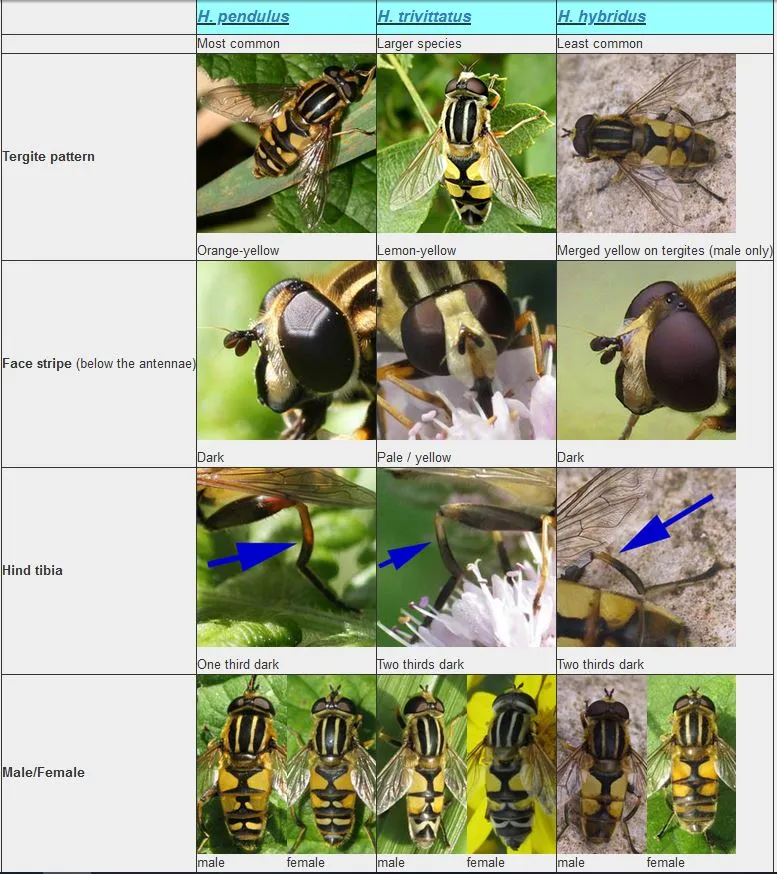
Helophilus trivittatus
Helophilus trivittatus
This species is slightly larger and longer in build than other members of the genus, and the yellow side patches on the abdomen are more pronounced often giving a more lemony appearance. A particularly good identification feature is the fact that the
Hemerodromia superstitiosa
Hemerodromia superstitiosa
Identification: One of two species of Hemerodromia with legs yellow except for last two tarsomeres on mid and hind legs. Female has broad dark stripe on thorax. Male may have thin stripes. A similar species from southern Texas and Mexico is distin
Hemipenthes inops
Hemipenthes inops
Identification: Distinct from congeners by: 1) largely hyaline wing with faint pigmentation; and 2) shape of the CuA1, which forms a cross with a continuous m-cu/m-m such that dm and CuA1 never actually touch (Fig. 12) H. inops & H. lepidota are the
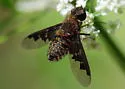
Hemipenthes morioides
Hemipenthes morioides
Identification: Head: Round; dark brown to black. Male and female identical, eyes of female only slightly wider, barely discernable. Antenna: Black, very short. Thorax: Dark brown to black with rust hairs across shoulders; sometimes thorax is bald. T
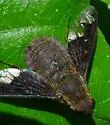
Hemipenthes scylla
Hemipenthes scylla
Identification: Distinguished from H. sinuosa by apical half of discal cell clear (apical quarter in sinuosa ) and apical spot in cell r1 separated from remaining dark area. See comment by Joel Kits:
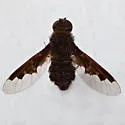
Hemipenthes webberi
Hemipenthes webberi
Identification: Head: Round, black with a few yellowish flecks. Females and males identical, except for space between the eyes at top of head. Antenna: Black, very short. Thorax: Black hair with some yellowish flecks; a few white hairs at side edges
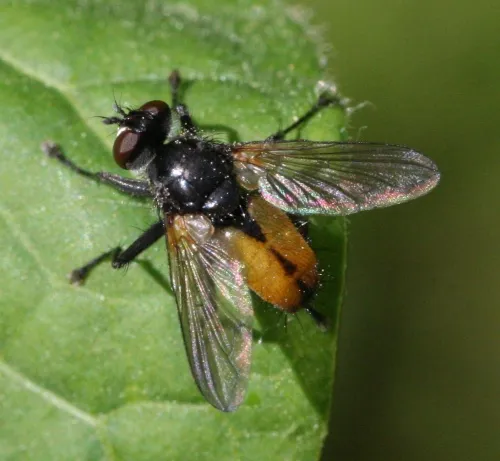
Hemyda vittata
Hemyda vittata
This fly has a black thorax and a pale orange abdomen which has a black central band that is usually broken. The larvae in common with all tachinids are parasitoids of other invertebrates, in this case true bugs of the family pentatomidae. A rather u
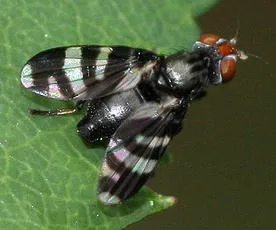
Herina frondescentiae
Herina frondescentiae
This is a very distinctive picture-winged fly. Its wings are patterned with wide dark bands. One of the smallest picture-winged flies, 3-3.5mm. Typically found in wet, rush-dominated habitats and brownfield sites. The larvae are belived to develop in
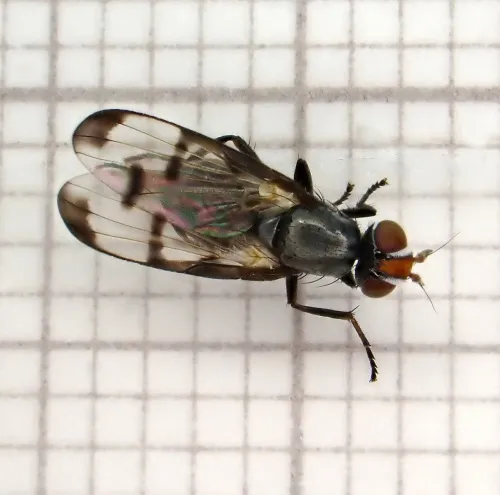
Herina nigrina
Herina nigrina
A relatively large picture-winged fly (to 6 mm) with a unique wing pattern comprised of a dark tip, and darkened outer crossvein and an L-shaped mark that occupies the costal cells but then extends at a right angle to encompass the inner crossvein. T
Hermetia sexmaculata
Hermetia sexmaculata
Identification: The eyes are bare, the integument of the abdomen is wholly black dorsally in the male with at most a pair of small yellow spots in the female, femora and tibiae are mostly black, and the area including the calypters (squamae) is white
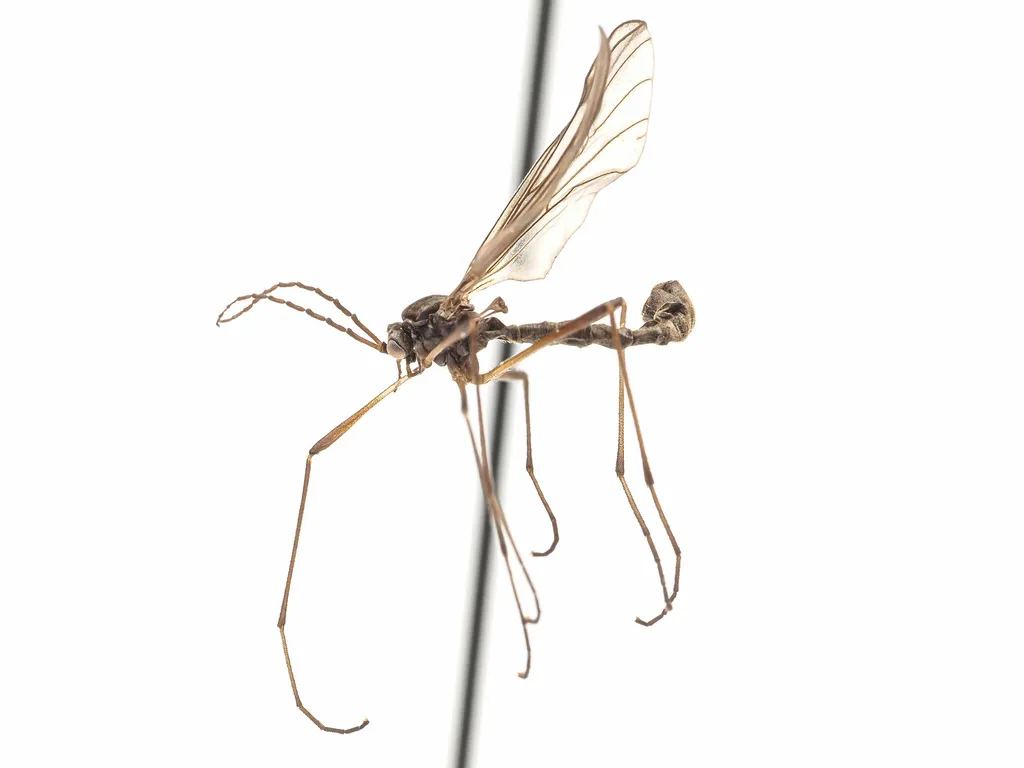
Hesperinus brevifrons
Hesperinus brevifrons
Identification: Differs from all other Bibionidae in having long antennae.
Hessian Fly
Mayetiola destructor
An economically important crop pest. Larvae in stems of wheat ( Triticum spp.) and occasionally in other grasses.
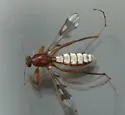
Heteromyia fasciata
Heteromyia fasciata
Identification: Distinguished from the other North American species, H. prattii , by the white pruinosity on top of the abdomen.
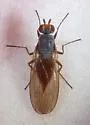
Heteromyza oculata
Heteromyza oculata
Identification: Distinction from some European species of Heteromyza is discussed on diptera.info: http://www.diptera.info/forum/viewthread.php?forum_id=5&thread_id=64196 .
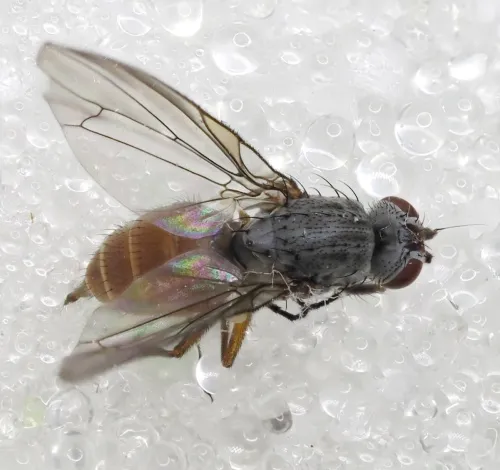
Heteromyza rotundicornis
Heteromyza rotundicornis
5mm. Grey thorax and scutellum with an orange abdomen. Costal spines on the wings. The face is slightly narrower than the frons. Heteromyza commixta is very similar but has a face as wide as the frons. Unless identified by a recognised expert, photog
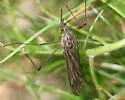
Hexatoma spinosa
Hexatoma spinosa
Identification: Adult: body brownish-gray; wings yellowish-brown with conspicuous dark veins; legs dark yellow to brown, slightly darker at joints; thorax with two longitudinal dark dorsal stripes and two subdorsal stripes that are broken or shorter
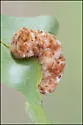
Hickory Aggregate Gall Midge
Caryomyia aggregata
Causes brown, hairy galls on the veins on the undersides of hickory leaflets, "usually clustered in a row along major vein and often in such close aggregation as to partially coalesce."
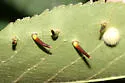
Hickory Awl-shaped Gall Midge
Caryomyia subulata
Larvae develop in awl-shaped galls on the undersides of hickory ( Carya ) leaves. Adult and pupal stages are unknown.
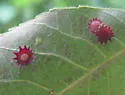
Hickory Starburst Gall Midge
Caryomyia asteris
Larvae develop in star-shaped galls on the undersides of hickory ( Carya ) leaves. Adult and pupal stages are unknown.
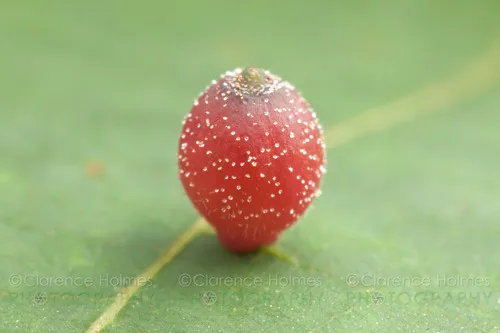
Hickory Sticky Ginger Jar Gall Midge
Caryomyia viscidolium
One of only two Caryomyia galls that occur exclusively on the upper leaf surface of hickories ( Carya ). Pupae break out of the weak cap at the gall's apex. Adults emerge in April.
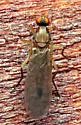
Hilara lutea
Hilara lutea
Identification: A yellow species with a bright yellow third antennal segment.
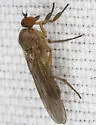
Hilara seriata
Hilara seriata
Males come in two forms, one with greatly enlarged front basitarsi and dense hairs on mid legs, the other with normal front basitarsi and weak hairs on mid legs.
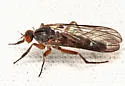
Hilara umbrosa
Hilara umbrosa
Identification: Over 5 mm, thorax gray, legs yellow, all femora with spines underneath distally.
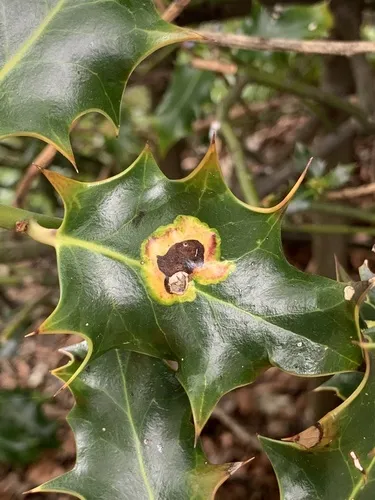
Holly Leaf Miner
Phytomyza ilicis
The larvae of the Agromyzid fly Phytomyza ilicis mine the leaves of Holly. See the National Agromyzidae Recording Scheme webpage for this species for further details of puparium and adult insect. ref.: Warrington, B.P. (2023). Phytomyza ilicis . Acce
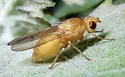
Homoneura littoralis
Homoneura littoralis
Identification: Swollen yellow head, small eyes, anterior fronto-orbital much shorter than posterior, wings clear, two apical spurs on mid tibia.
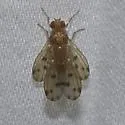
Homoneura philadelphica
Homoneura philadelphica
Identification: The only eastern species with the combination of * Wing with three spots along R4+5 (one at r-m, one intermediate, and one at wing margin) * Two rows of strong acrostichals (possibly with weak setulae outside the main row) * Strong pa
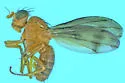
Homoneura sheldoni
Homoneura sheldoni
Identification: Wing darkened along costa from slightly beyond humeral crossvein to apex of wing.
Homoneura shewelli
Homoneura shewelli
Identification: Wing with dark bands along cross veins, weak spots at end of longitudinal veins, and no spots on R4+5 between r-m and apical spot. A strong pair of presutural dorsocentrals.
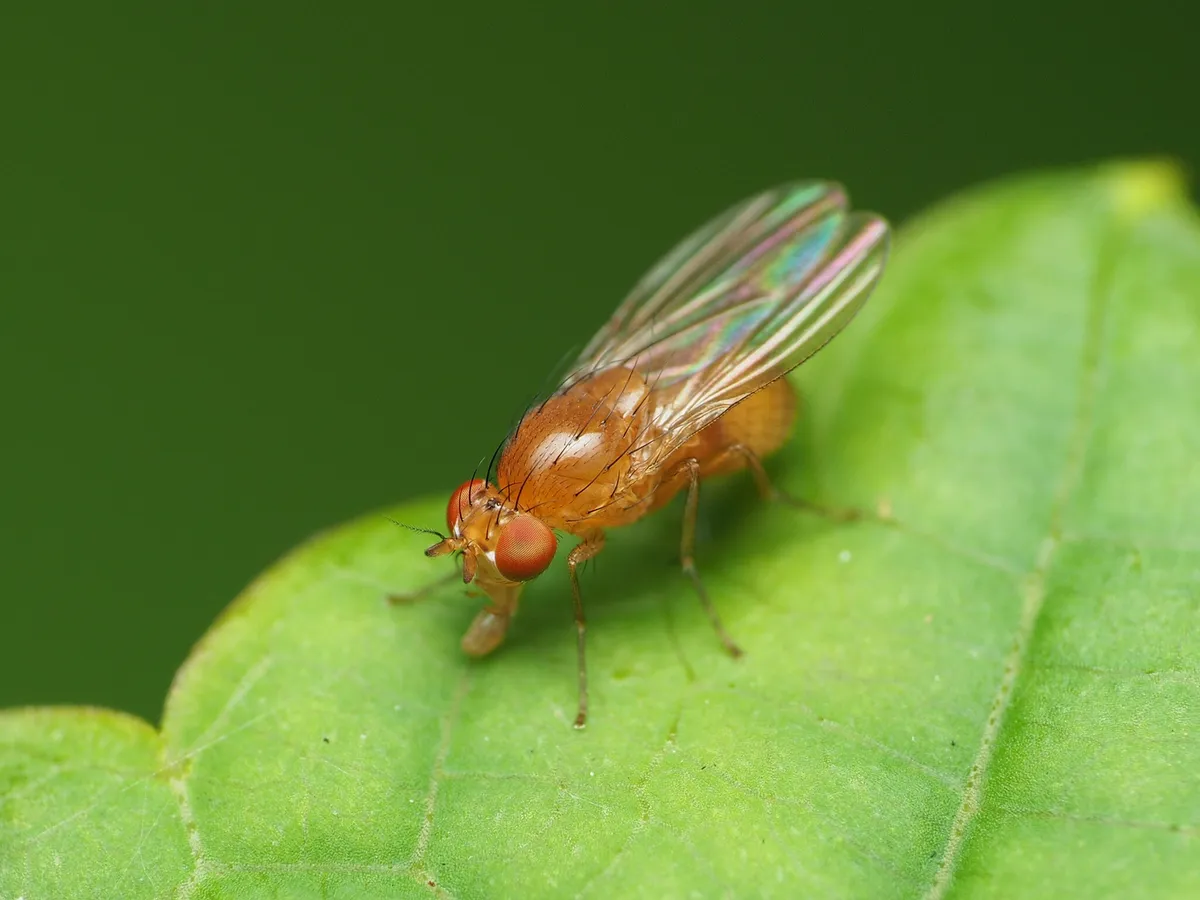
Homoneura unguiculata
Homoneura unguiculata
Identification: Six rows of small acrostichals (native species with 2-4 often larger pairs), wing unmarked, antenna yellow with brown tip (tip not dark in native species), face with conspicuous silvery spots when viewed from above, arista with longer
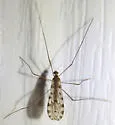
Hoplolabis armata
Hoplolabis armata
Identification: In the East, the strong spur of M3 into the discal cell distinguishes this species from other Erioptera s. lat.
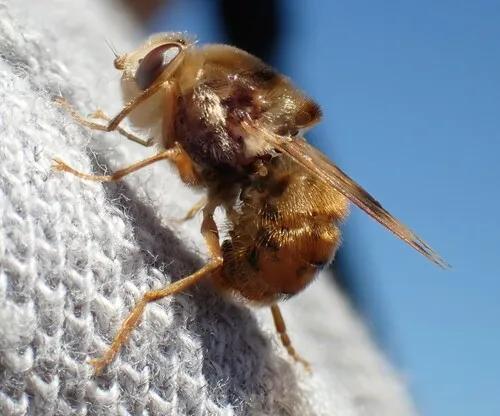
Horse Stomach Bot Fly
Gasterophilus intestinalis
can cause medical problems in humans, such as ocular myasis
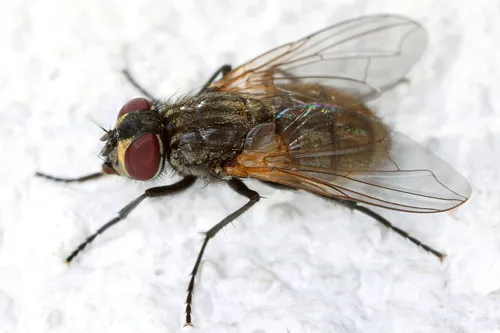
House-fly
Musca domestica
Length 6 to 7 mm. With varying amounts of orange on the basal segments of the abdomen and four black stripes on the thorax. The legs are all black and the eyes are bare. As with other Musca species, the arista has feather-like long hairs. Similar to

Huron Shore Bee Fly
Dipalta banksi
Identification: brown body, black spots on dorsal midline of abdomen, wings with black patches and spots
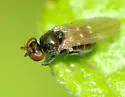
Hyadina albovenosa
Hyadina albovenosa
Named after the white crossveins. Some Nostima also have white crossveins, but have additional wing or thorax markings that H. albovenosa lacks.
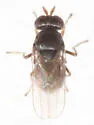
Hyadina furva
Hyadina furva
Identification: Two subspecies recognized: Hyadina furva furva - eastern USA (west to KS-TX), Canada (Ontario), Bermuda Hyadina furva flavipes - southwest USA (AZ, CA), Mexico
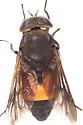
Hybomitra cincta
Hybomitra cincta
Identification: For both sexes: Subcallus denuded and shiny. Palpus black. Frontoclypeus and thoracic pleuron with black hairs. Wing distinctly pigmented. Females have first three segments of abdomen orange, rest of abdomen black (sharply delimited),
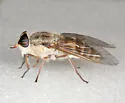
Hybomitra difficilis
Hybomitra difficilis
Identification: Eyes apparently bare; subcallus denuded & shining Drees et al. regard it as common, and a serious pest; Pechuman et al. consider it generally uncommon, but sometimes locally abundant.
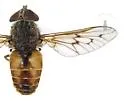
Hybomitra lasiophthalma
Hybomitra lasiophthalma
Identification: Female: subcallus denuded, shining; face below eyes not denuded or shining; wing crossveins spotted with brown; abdomen broadly orange brown laterally with median black area constricted on third segment.
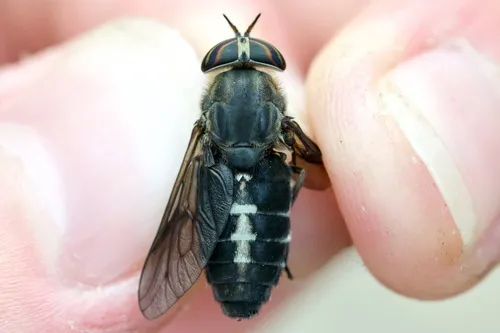
Hybomitra sodalis
Hybomitra sodalis
Identification: Black abdomen with white triangles in middle only, "distinctive and unmistakable"
Hybomitra trispila
Hybomitra trispila
With known pathogenic transmission of Vesicular stomatitis virus, a pathogen of animals that can also infect humans.
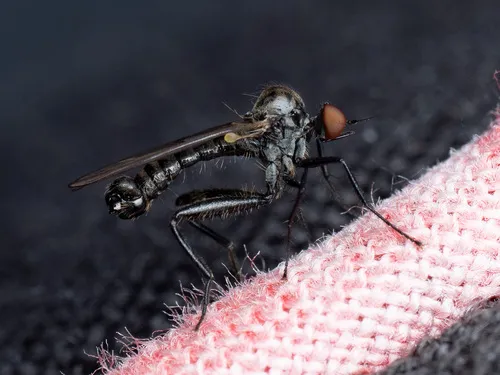
Hybos culiciformis
Hybos culiciformis
There are three British species of Hybos , all are similar though H. femoratus has red legs (except the rear pair which are black). No additional images available for this species.
Hydatostega plumbea
Hydatostega plumbea
Identification: The white and black wing markings are distinctive according to Justin Runyon, who is an expert on the family.
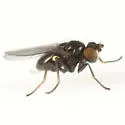
Hydrellia albilabris
Hydrellia albilabris
Larvae mine and pupate in thalli of duckweed ( Lemna minor ; also recorded from Spirodela in the Palaearctic region).
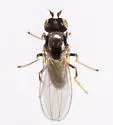
Hydrellia formosa
Hydrellia formosa
Identification: The only species that can be easily identified from photos.
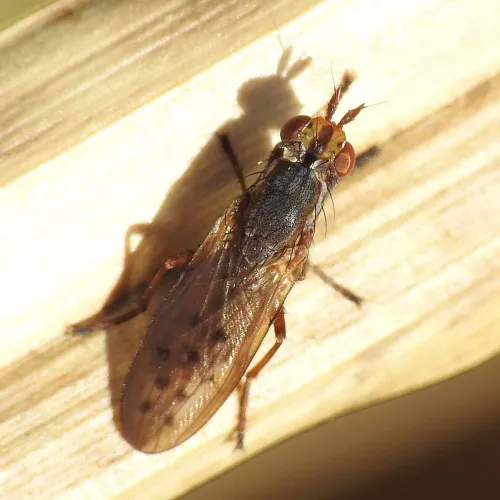
Hydromya dorsalis
Hydromya dorsalis
Length 6-7mm. A reddish-brown species with a grey thorax and five spots on each wing, four along vein M1+2 and one at the base of the s-shaped cross-vein. Unless identified by an expert, good quality photos or examination of a specimen are required.
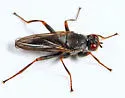
Hydromyza confluens
Hydromyza confluens
"The eggs are deposited singly at irregular intervals on the surface of the floating leaf petioles of the yellow water lily Nymphaea americana ." (Welch, 1917) Larvae form brown swellings, which Welch did not consider true galls because they were no
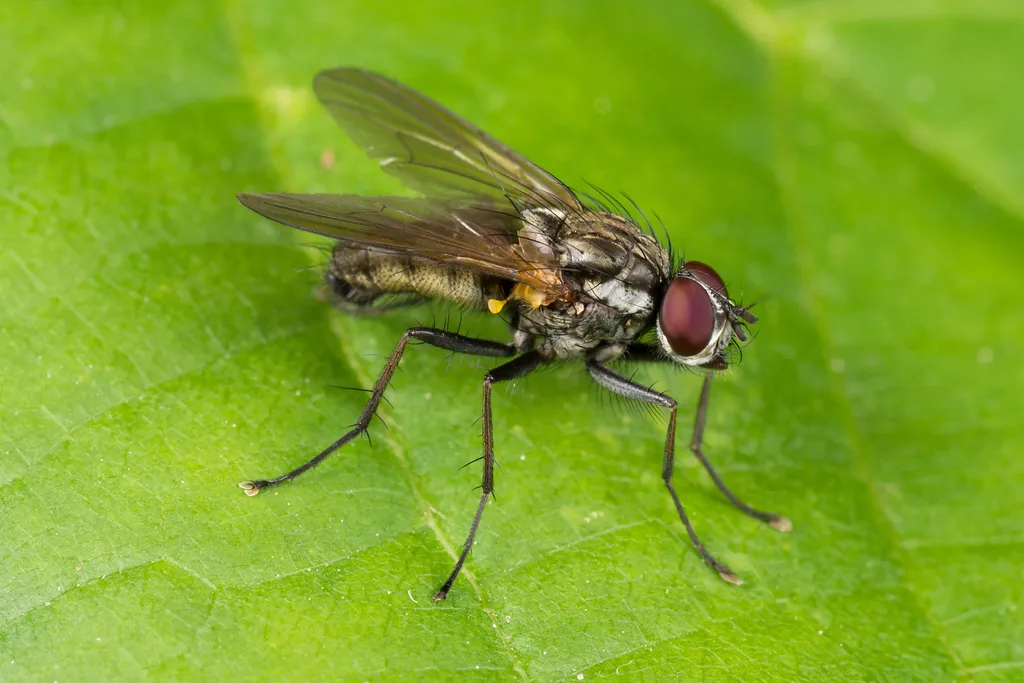
Hydrophoria lancifer
Hydrophoria lancifer
It is a member of the Anthomyiidae family, which are closely related to the Muscidae but the 6th long vein reaches to the wing margin. It is a hairy beige-brown fly, varying in length from 4 to 11 mm. This species has a red ID rating and unless ident
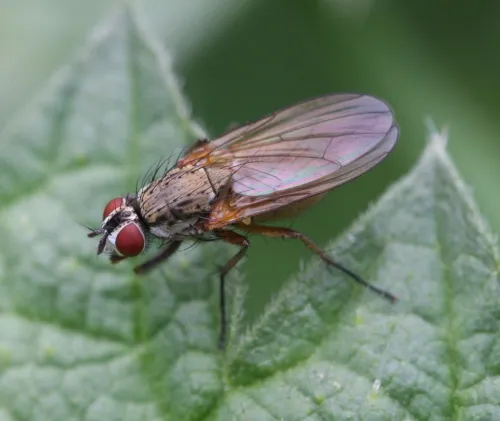
Hydrophoria linogrisea
Hydrophoria linogrisea
Similar to the more common Hydrophoria lancifer , but its legs are reddish yellow. This species has a red ID rating and unless identified by a known expert you must provide a satisfactory explanation of how it was identified for the record to be acce
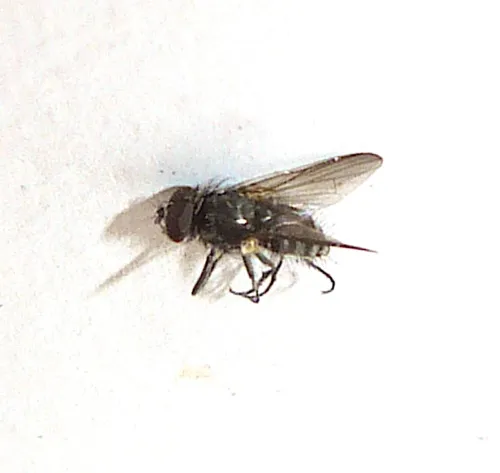
Hydrotaea armipes
Hydrotaea armipes
There are other very similar species and detailed examination is necessary. There are other very similar species and detailed examination is necessary. Mostly recorded between April and September. Widespread and fairly frequent in Britain. No additio
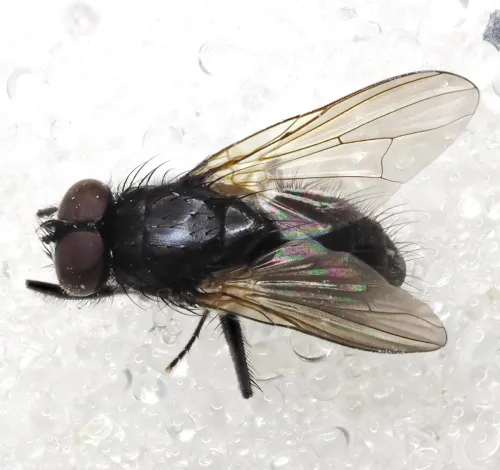
Hydrotaea cyrtoneurina
Hydrotaea cyrtoneurina
Like other Hydrotaea species, this is predominently black or dark brown. Males have an indented front femor which is typical of the genus. Uncommon but widespread in England and Wales, few records in Scotland.
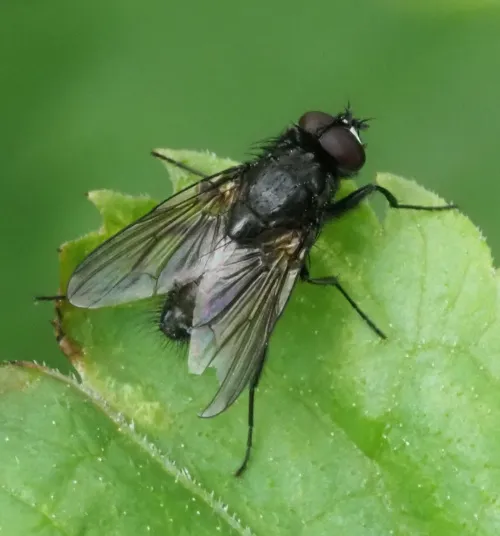
Hydrotaea dentipes
Hydrotaea dentipes
6·5 to 7·75 mm. Like most flies in the Hydrotaea genus it is dark and shiny. Males have the front femur notched and toothed. The thorax, seen from behind, has conspicuous whitish dusting, at least in front of the suture, in line with the acrostichal
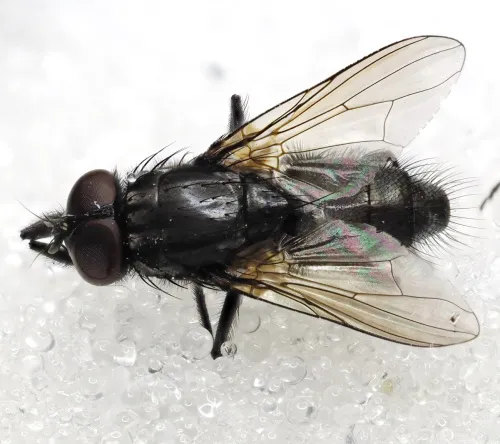
Hydrotaea similis
Hydrotaea similis
One of the larger Hydrotaea species at up to 10mm in length. Generally black with some pale grey dusting on the abdomen and pale stripes at the top of the thorax. Males have ornamentation on the underside of the front femora including a short, sharp
Hylemya alcathoe
Hylemya alcathoe
Identification: " H. alcathoe is notable in the genus due to its long pectinate aristal hairs, yellow palpi, normally yellow legs and partly reddish abdomen. The female abdomen may occasionally be wholly gray." In addition, the female may have humeri
Hylemya vagans
Hylemya vagans
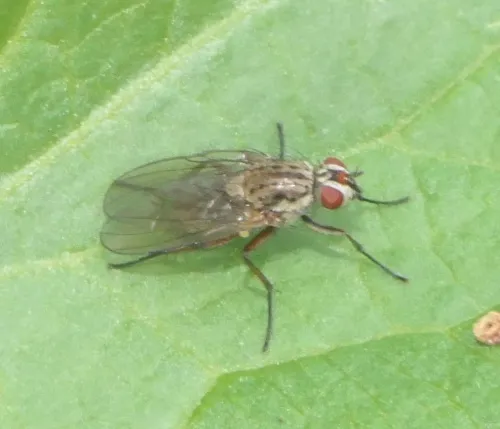
9mm - large for an anthomyiid. H. vagans has a yellow hind tibia (other leg parts may also be yellow but this is variable) and a very plumose arista, though with the hairs not very numerous. The lower squamae is small and narrow - largely hidden behi
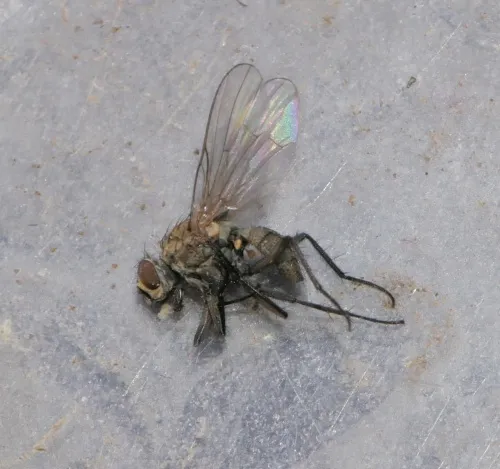
Hylemya variata
Hylemya variata
As with other flies in the Anthomyiidae family, this genus are thin bodied. Most are grey/brown and lack obvious identification features. Hylemya species have long plumose arista, with the rays not very numerous (similar to Hydrophoria), but with sma
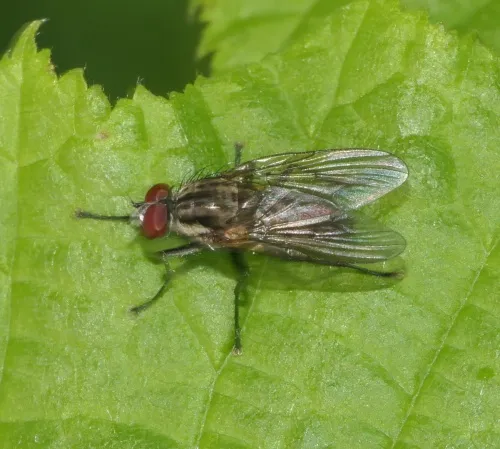
Hylemyza partita
Hylemyza partita
Hylemyza partita has a brown thorax with dark lateral stripes. It has plumose arista with hairs longer than the width of the antennae diameter. This species has a red ID rating and unless identified by a known expert you must carry out detailed exami
Hypocharassus pruinosus
Hypocharassus pruinosus
Identification: The shape of the antenna is distinctive:
Hypocritanus fascipennis
Hypocritanus fascipennis
Identification: dark medial band on wing; basal and distal portions of wing clear
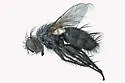
Hypovoria discalis
Hypovoria discalis
Identification: Voriini with discals, large pteroplerual, vein R1 haired, and last two sections of Cu similar in length.
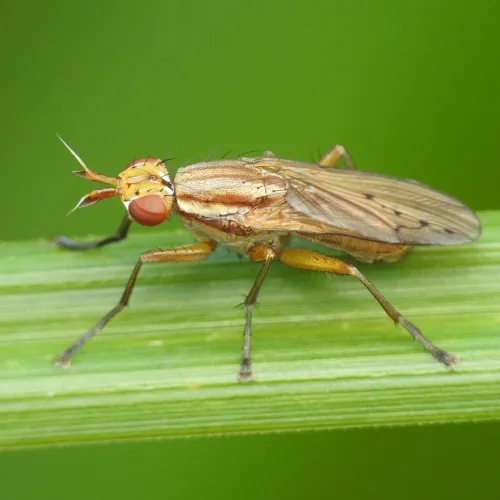
Ilione albiseta
Ilione albiseta
An orangey brown species with striped eyes and thorax. Unless identified by a recognised expert, a photo is required and the specimen should be examined with a microscope. In the comments box, state the key or ID method used and describe the size and
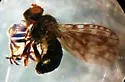
Ilythea caniceps
Ilythea caniceps
Identification: Similar to spilota with legs largely yellow.
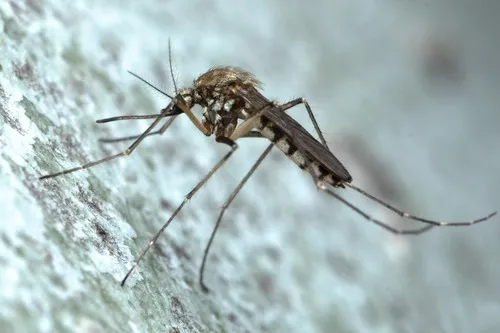
Inland Floodwater Mosquito
Aedes vexans
Identification: Larvae: - Antennae are shorter than head - Short siphon with a tuft half as long as the diameter of the base, between pecten teeth - Saddle on anal segment incomplete Adult Female: - Unbanded proboscis - Scutum with short brown scales
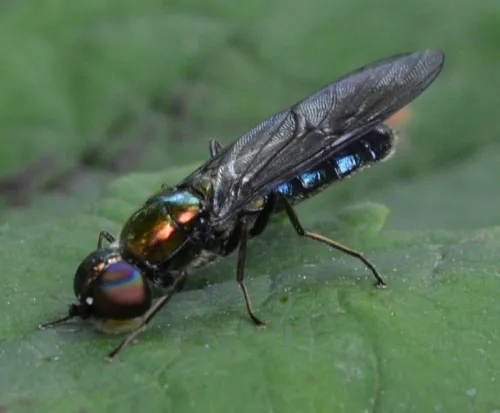
Iridescent centurion
Sargus iridatus
Length 6 to 12 mm. The sexes of this soldier fly are similar in appearance, but the female is slightly broader at the hind end. The body is an iridescent deep blue and the wings are uniformly smoky. Unless identified by a recognised expert, a photo i
Iris Bud Fly
Neorthacheta dissimilis
Identification: 3 katepisternal bristles, only 1 pair of strong scutellar bristles, and R1 with setulae dorsally. Frons black.
Jenkinshelea albaria
Jenkinshelea albaria
"This species is commonly found around lakes and streams and ranges west to Texas and Illinois, northwards to Ontario."
Johannsenomyia annulicornis
Johannsenomyia annulicornis
Identification: Distinguished from J. argentata by the entirely dark female abomen and the lack of a preapical yellow ring on the hind femur.
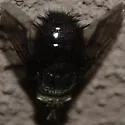
Juriniopsis aurifrons
Juriniopsis aurifrons
Identification: Distinguished from adusta by the broader frons of the male and narrow (normal) fore tarsi of the female. Distinguished from floridensis by the mostly dull whitish frons.
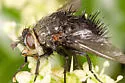
Juriniopsis floridensis
Juriniopsis floridensis
Identification: Distinguished from other North American species by the dark, slightly shining frons (parafrontals dull white or yellow in other species), dark bases of palpi (entirely reddish yellow in other species), and almost entirely dark antenna
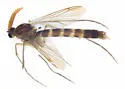
Keroplatus militaris
Keroplatus militaris
Identification: Distinguished from other North American Keroplatus by the combination of antennae without white tips and claspers of male long and pointed.
Kiefferulus dux
Kiefferulus dux
There is at least one similar, uncommon, undescribed species in Florida.
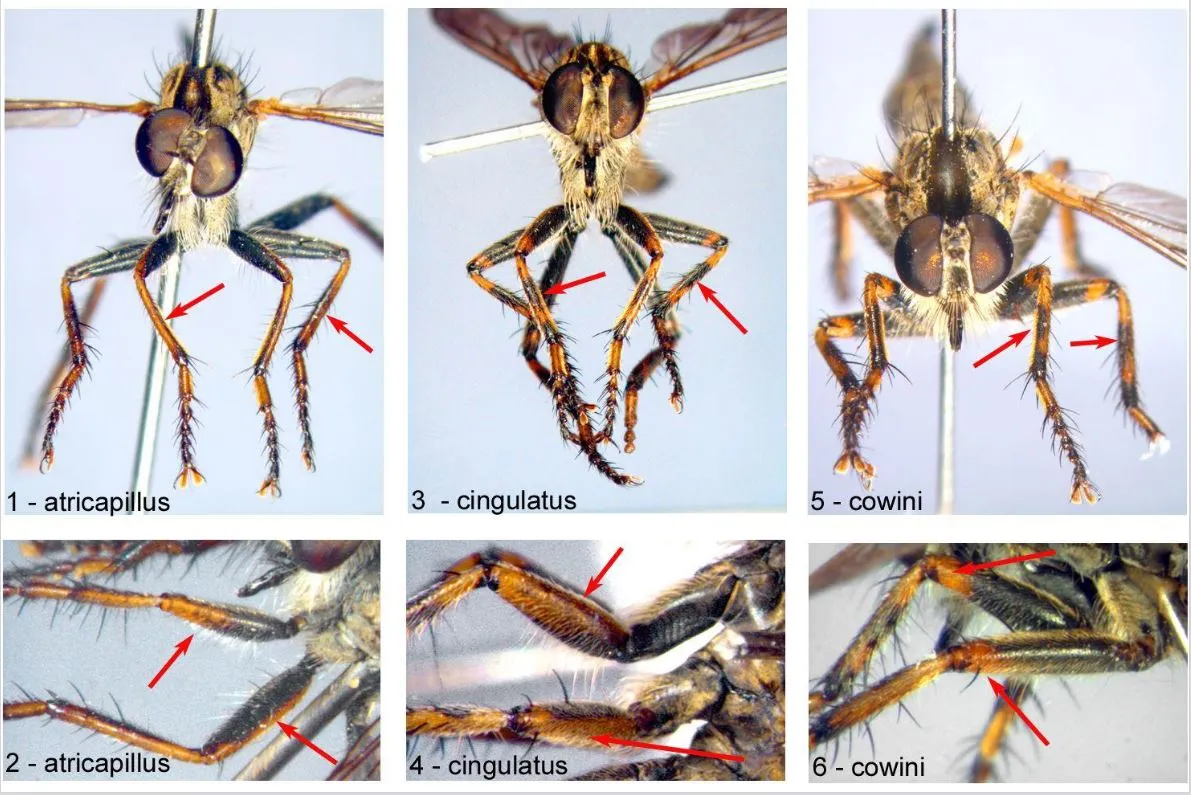
Kite-tailed Robberfly
Machimus atricapillus
Generally larger and greyer than M. cingulatus with a more strongly marked abdomen. There are also differences in details of the antennae and genitalia. The front tibia are largely red and lack the black bands seen in other Machimus species. Males of
Knapweed Gall Fly
Urophora affinis
Introduced from Europe in 1971 to control knapweed ( Centaurea spp.)
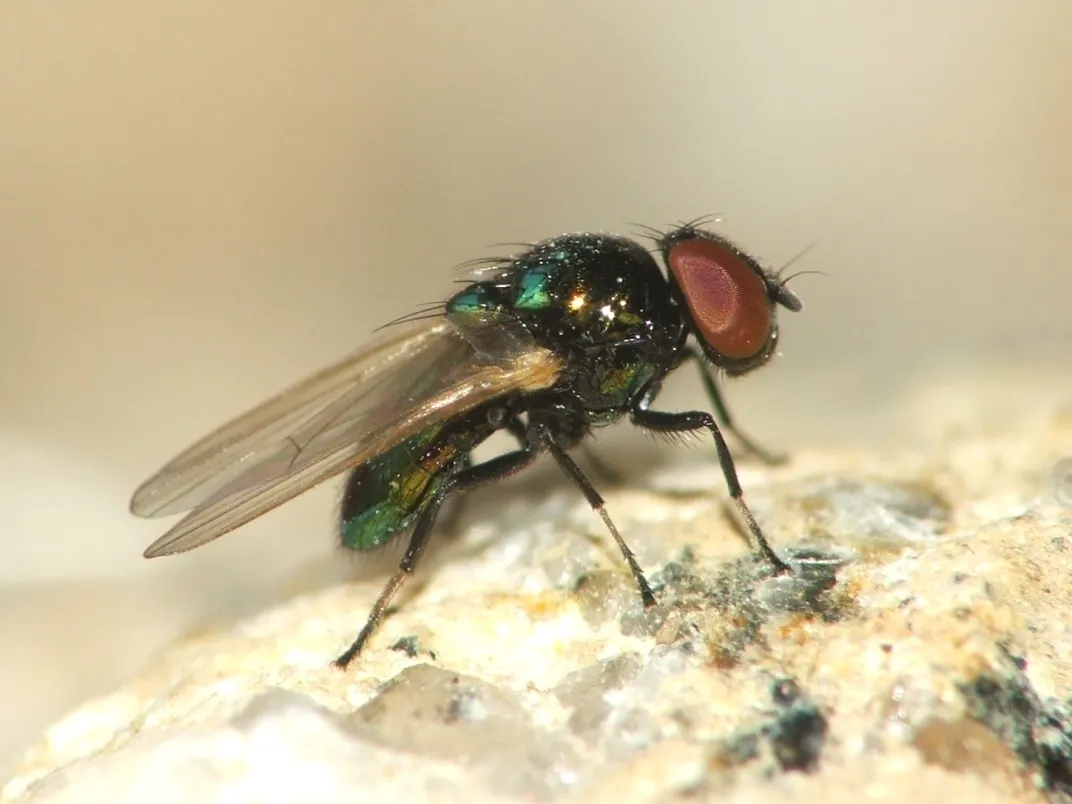
Lamprolonchaea smaragdi
Lamprolonchaea smaragdi
Identification: The only shining green Lonchaeidae known from North America. Often called "Metallic Green Tomato Fly", partly due to confusion with the tomato pest L. brouniana .
Lantana-Leafminer
Ophiomyia lantanae
Larvae in Lantana spp. "Larva feeding in seed heads, either in pulp of immature berries or lower in peduncle, where pupation takes place."
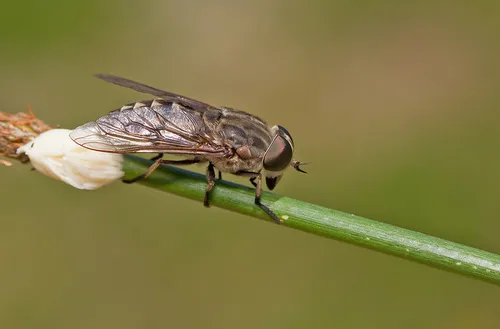
Large Marsh Horsefly
Tabanus autumnalis
Wing length is 13 to 16 mm and 16 to 22 mm in body length. A fairly large horse-fly. The dark abdomen has a central row of pale triangles and a dark and broad central stripe on the underside. The eyes lack stripes. Tabanus bromius is similar but smal
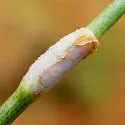
Lasioptera ephedrae
Lasioptera ephedrae
Identification: Gall -- fusiform twig gall, about 1/2" long. Develops in stem galls on Ephedra .
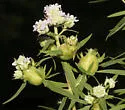
Lasioptera lorrainae
Lasioptera lorrainae
Galls are spheroid, 5–8 mm in diameter, and occur in early summer on lateral twiglets and later near branch tips. Galls collected in Iowa were found subtending flower heads, but this has not been observed elsewhere. Each gall contains 1–11 yellow lar
Lasiosina canadensis
Lasiosina canadensis
Identification: Eyes elongate oval. Not with an unusual proliferation of strong dorsocentral bristles. In winged forms, crossveins more widely separated than in L. approximatonervis , by about twice the length of the hind crossvein. "Legs dark yel
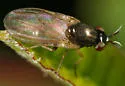
Lauxania albiseta
Lauxania albiseta
Identification: 1+3 pairs dorsocentrals, legs pale except for mid and hind femora, arista white, wing base not darkened.
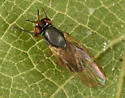
Lauxania glabrifrons
Lauxania glabrifrons
Identification: "This species can be distinguished from other Nearctic species of Lauxania externally by the shining frons, white arista, 0 + 3 dorsocentral setae, four rows of acrostichal setulae, beige halter, and pale wing base." (Pérusse and Whee
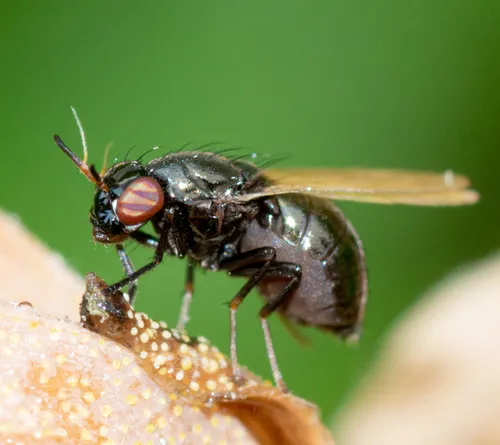
Lauxania shewelli
Lauxania shewelli
"There are five species of Lauxania in North America, but L. shewelli is the only one known east of the Rockies, and is the only one with a dark wing base (the western species have the entire wing yellowish). A lot of older publications list Lauxania
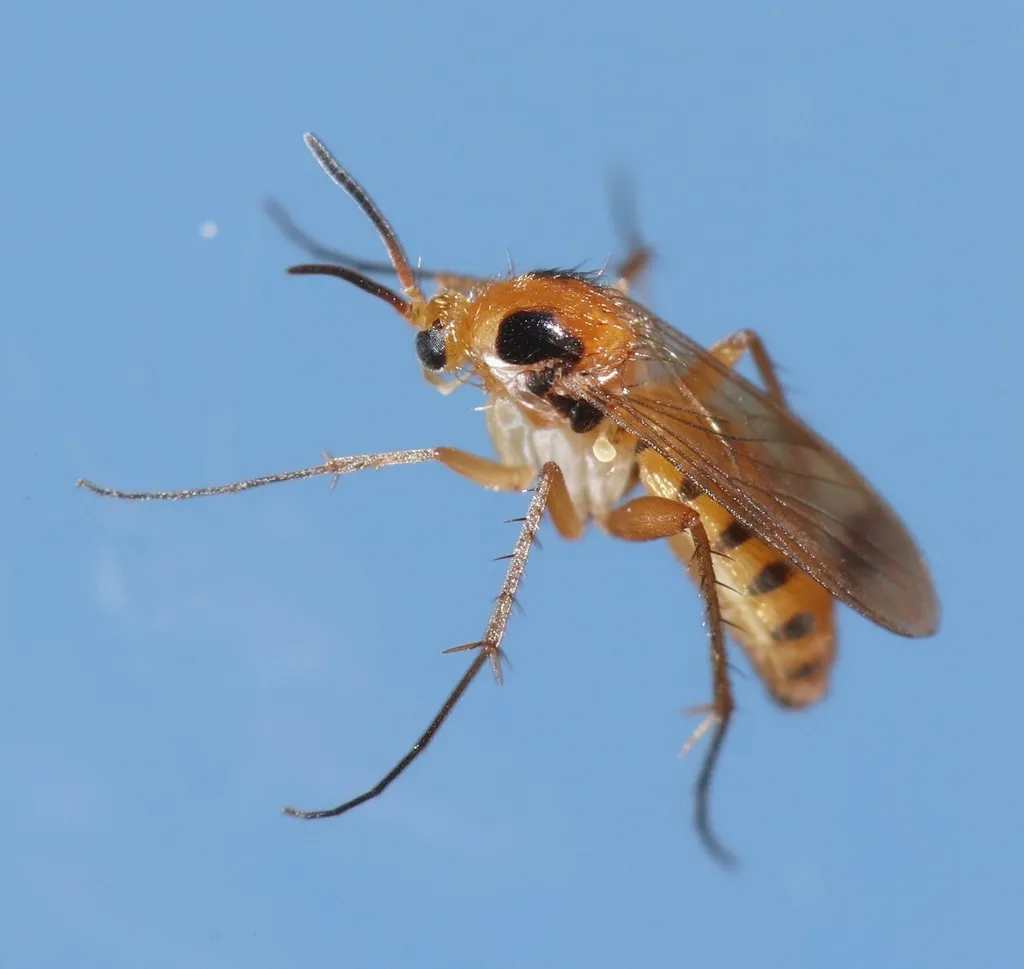
Leia bivittata
Leia bivittata
Identification: From Johannsen 1911: "Length 3.75 mm. Honey yellow; trunk bilineate, and tergum with 2 series of black punctures. Body rather pale honey-yellow; antennae black at tip; stemmatae very distinct, in a curved line; thorax a little hairy,
Leia opima
Leia opima
Identification: From Johannsen 1911: "Head yellow, vertex and upper half of occiput fuscous; antennae fuscous, scape, first flagellar joint and palpi yellow. Thorax including scutellum yellow; dorsum shining, on each side with large, black, oval spot
Leia sublunata
Leia sublunata
Identification: Similar to L. bivittata , but with smaller black spots on dorsum of thorax.
Leia varia
Leia varia
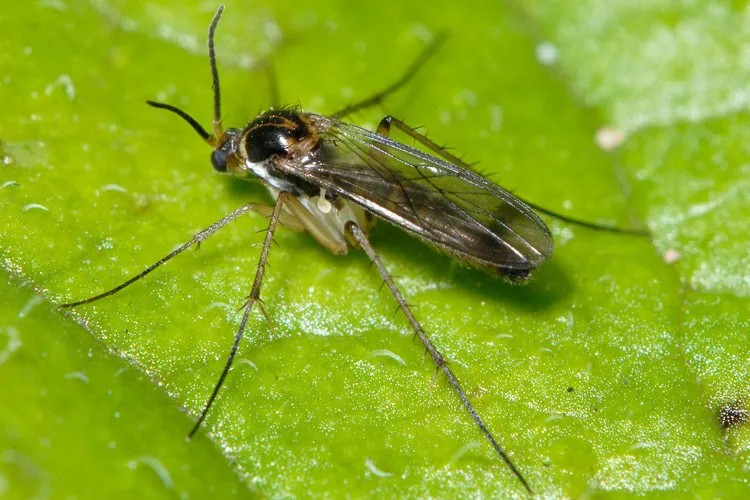
Identification: From Johannsen 1911: "Body yellow; head black between the eyes, which, and the feelers are also black; the latter are yellow at the base; chest except the fore part, black; segments of the abdomen bordered with black, which color exte
Leia ventralis
Leia ventralis
Identification: From Johannsen 1911: "Head black; antennae brown, 3 basal joints and the palpi yellow. Thorax and abdomen shining black, venter with segments 3 and 4 largely yellow; hairs pale. Coxae, femora, tibiae, and metatarsi yellow remainder of
Lejogaster metallina
Lejogaster metallina
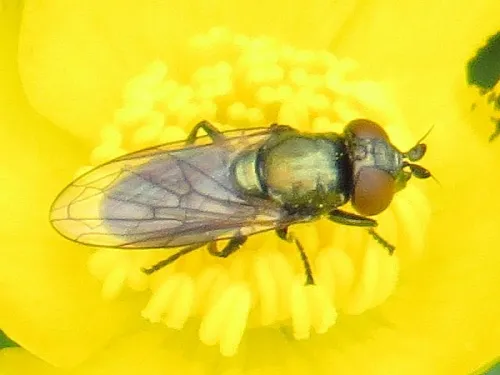
A small metallic green hoverfly with comparatively large antennae. Found in all types of open wetland habitats including wet meadows, marshes, fens and flushes (including mildly acidic conditions), especially where Juncus is abundant. Adults are freq