
Flies
Order Diptera
The Flies (Order Diptera) includes 6,350 species across 141 families and 1,800 genera in our directory.
About Flies
Diptera includes over 150,000 described species of flies, mosquitoes, and midges. Mosquitoes are the deadliest animal on Earth (CDC). Malaria alone causes ~249 million cases and over 608,000 deaths annually, mostly children under 5 (WHO). Vector-borne diseases account for over 17% of all infectious diseases, causing 700,000+ deaths per year.
Economic Impact
In the U.S., vector-borne disease cases tripled between 2004-2016, with over 640,000 cases reported in that period (CDC). Tickborne diseases doubled from 22,000 to 48,000 annual reports. Globally, mosquito-borne diseases cost billions in healthcare and lost productivity.
Ecological Role
Despite their disease impact, flies are critical decomposers and pollinators. Hoverflies alone pollinate hundreds of crop and wildflower species. Flies are also the primary food source for many birds, bats, and fish. Forensic entomology relies heavily on fly species for crime scene analysis.
Families in Diptera (141)
Species in Diptera (6,350)
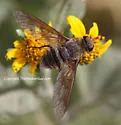
Exoprosopa pueblensis
Exoprosopa pueblensis
In AZ, it has a faint banding to the wing, whereas in central Mexico (thus the name 'pueblensis'), the bands are dark chocolate brown. It is common in Madera Canyon (Andy Calderwood).
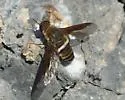
Exoprosopa rostrifera
Exoprosopa rostrifera
Identification: It has by far the longest bill of any US Exoprosopa . The white belt on a uniformly brown-patterned abdomen is characteristic, too. (Comment by Andy Calderwood) Author of the species Jaennicke, 1867
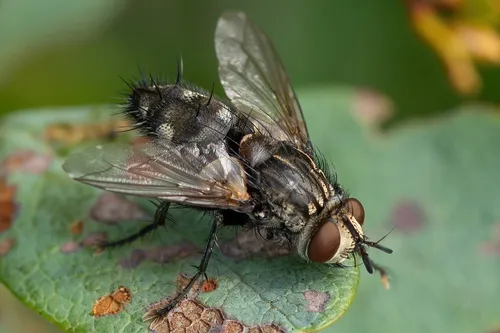
Exorista larvarum
Exorista larvarum
A European species introduced into New England and now widespread in Canada as well. The key to central European Tachinidae lists habitat, habits, and hosts: "Open countryside, thin deciduous woodland, orchards, Pine forest. Mid May to End September,
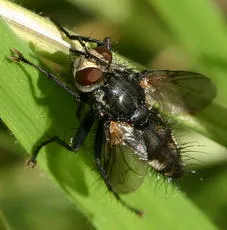
Exorista rustica
Exorista rustica
This tachinid fly has the characteristic hairy abdomen, and a wide, black, central dorsal line. They are often seen sunning themselves or scurrying around on foliage, hunting for their hosts. The adult flies from late June to late September. It is pa
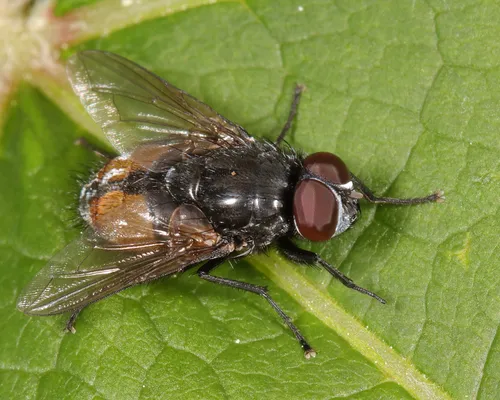
Face Fly
Musca autumnalis
Averaging about 7 - 8 mm long with 4 dark stripes on the thorax. The male has an orange and black patterned abdomen whereas in the female this is a grey pattern. This species gets its common name from its habit of landing on the faces of cattle where
False Peacock Fly
Chaetorellia succinea
Introduced from Europe in 1996 or earlier, accidentally. Its introduction to combat yellow star thistle was considered and rejected because it posed a threat to safflower. ( Balciunas et al. 2001 )
Fannia brevipalpis
Fannia brevipalpis
Identification: One of several species with reduced palps.
Fannia difficilis
Fannia difficilis
Identification: Hairs on the propleuron, relatively long and fine posteroventral hairs on the hind femur, abdomen basally orange and apically dark brown/black, legs usually completely black, no stripes on the thorax.
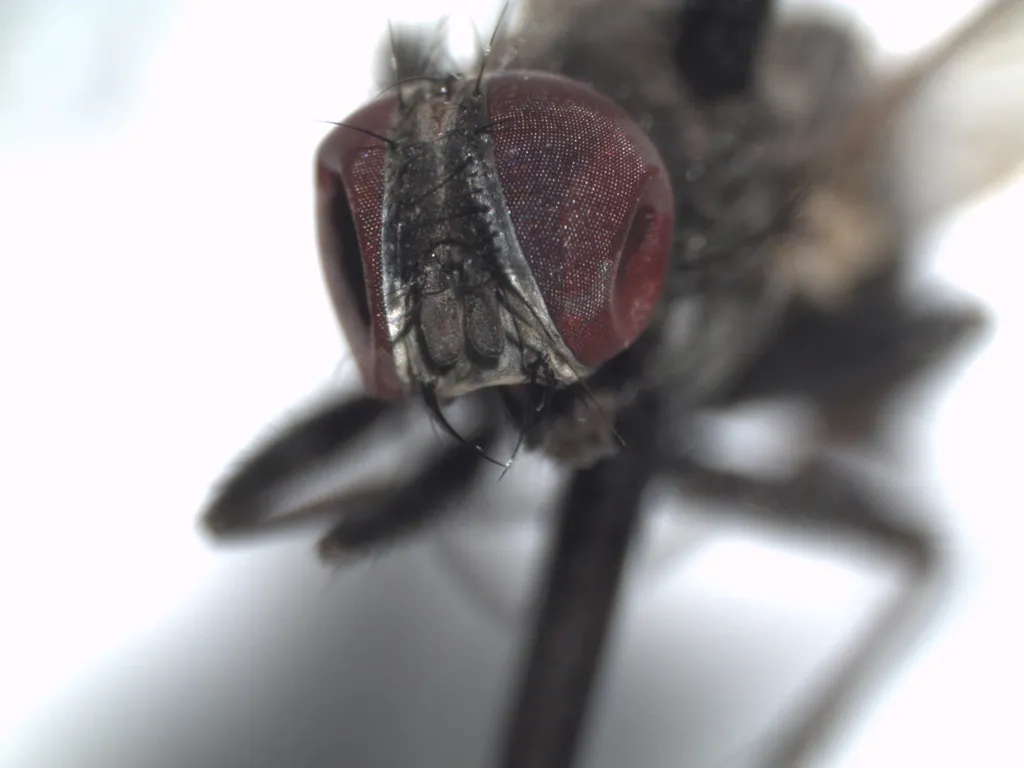
Fannia fuscula
Fannia fuscula
Identification: Dark species, with reddish/yellowish tibia and slightly orange wings. Female with 8th abdominal sternite bulging and shiny (usually requires dissection to see,) male with strong ventral spines on the sternopleura and mid coxae, frons
Fannia pellucida
Fannia pellucida
Identification: The female has a narrow frons and yellow abdomen.
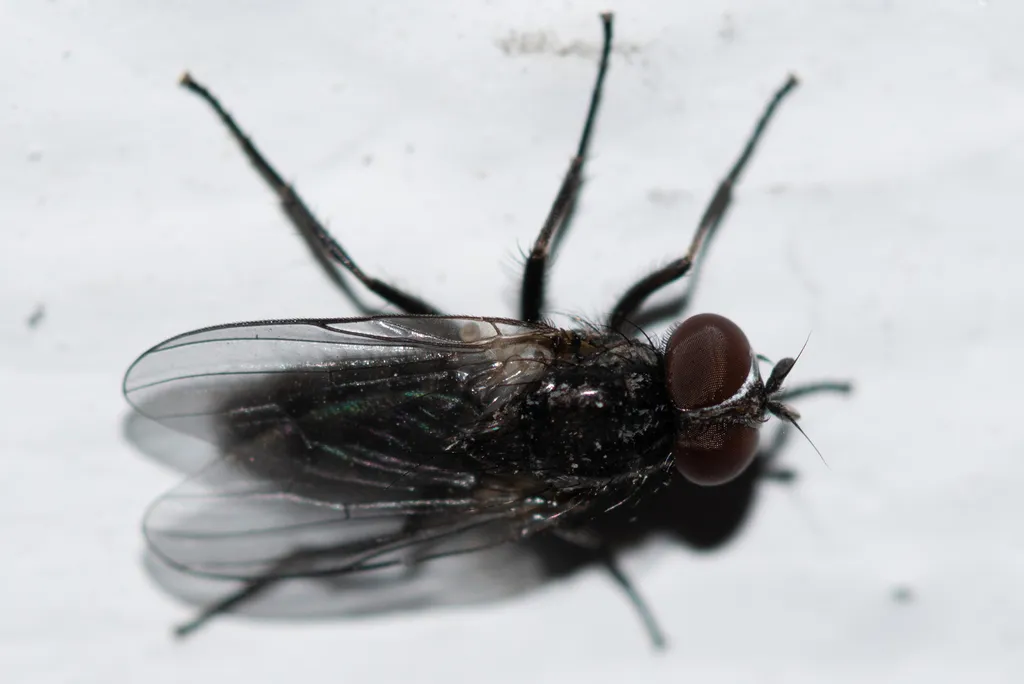
Fannia scalaris
Fannia scalaris
This species has been implicated in several kinds of myiasis.
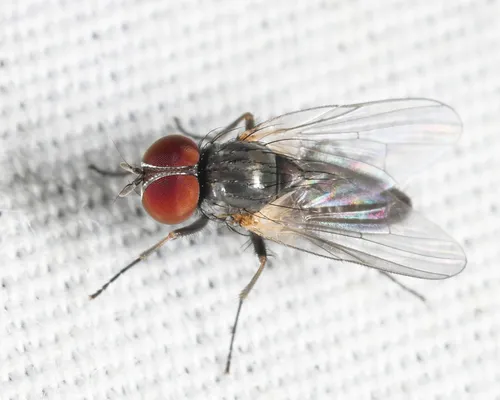
Fannia sociella
Fannia sociella
Identification: "This species is easily recognized from all related forms by the three strong, median, anteroventral mid-femoral bristles, and the dark, blue-grey-pollinose abdomen." "The adults have been found associated with aphid-infested plants."
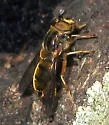
Ferdinandea buccata
Ferdinandea buccata
Identification: black terminal bands on the first few abdominal terga ( F. croesus has no black terminal borders and is supposed to have arista all black)
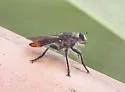
Fiery Chiselmouth
Andrenosoma igneum
Identification: Similar to A. fulvicaudum except the postpedicel (first flagellomere) is red and the male genitalia are different.
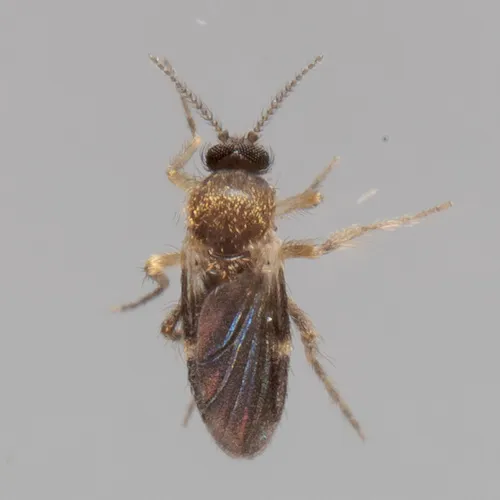
Forcipomyia bipunctata
Forcipomyia bipunctata
Identification: A brown species with rows of scales on mid and hind tibiae of female (in addition to long hairs) but not on fore tibiae. Wing with contrasting pale spots.
Forcipomyia bystraki
Forcipomyia bystraki
"Large species with pale yellow legs, distal 1/2 of hind femur and narrow band on distal portion of hind tibia brown."
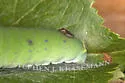
Forcipomyia fuliginosa
Forcipomyia fuliginosa
Identification: The only known North American Ceratopogonidae parasitic on caterpillars.
Forcipomyia macswaini
Forcipomyia macswaini
Identification: The only species in western North America with six pale marginal wing spots (two of them large).
Forcipomyia pictoni
Forcipomyia pictoni
Identification: Thorax black on top and white on the sides. Legs mostly pale, with narrow black bands near tips of mid and hind femora and black spots on tibiae. Not a predatory species. In the tropics this species pollinates cocoa (as do many smal
Forcipomyia pluvialis
Forcipomyia pluvialis
Identification: A small, pale species with two dark spots on the wing, occasionally with additional small spots at the ends of veins, sides of scutellum spotted, legs brown or yellow with brown apices of segments.
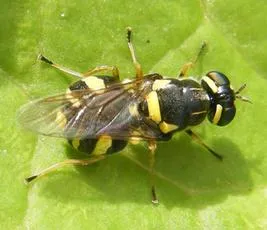
Four-barred Major
Oxycera rara
Body length 7mm. This is a beautiful little yellow and black soldier fly, and although small it is one of the largest of the eleven species in the genus. This species differs in being entirely black on the second tergite. Unless identified by a recog
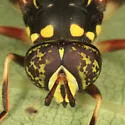
Four-lined Hornet Fly
Spilomyia sayi
Four-lined Hornet Fly (Spilomyia sayi) is a species in the family Syrphidae, commonly known as hover flies, belonging to the order Diptera (Flies). It is classified within the subfamily Eristalinae, tribe Milesiini, superfamily Platypezoidea. This sp
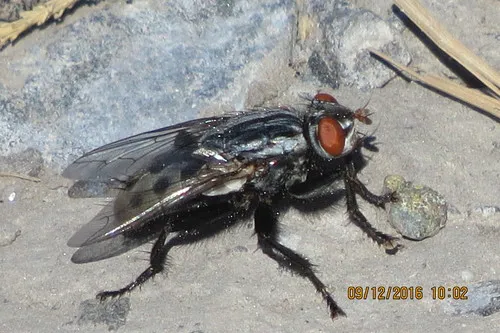
Fox Maggot
Wohlfahrtia vigil
Identification: The western form is distinctive with its tan abdomen with three rows of dark spots. In the eastern form the dark spots are much larger and blend together, leaving four rows of pale spots. Larvae cause myiasis in young mammals, develo
Freraea montana
Freraea montana
Identification: Once identified as Tachinidae, it is very distinctive with the gradually convergent R4+5 and M veins, nearly bare body, and dark, shining color with dark wings. It was previously placed in subfamily Phasiinae with other bare species,
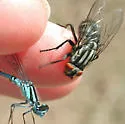
Friendly Fly
Sarcophaga aldrichi
Identification: Similar to house flies but larger. Appear in large numbers when tent caterpillars ( Malacosoma spp. and spongy moths Lymantria dispar ) are abundant. They help control tent caterpillar populations. They are called friendly flies becau
Fucellia tergina
Fucellia tergina
Identification: Separated from F. maritima by the narrower genae (allegedly 0.5-0.65 times eye height compared to 0.6-0.7 times) and the absence of setulae between the presutural two rows and pairs of acrostichal setae. In males, the ventral femoral
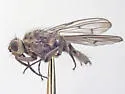
Fucellia thinobia
Fucellia thinobia
Identification: Presutural acrostichals with setulae in between, prealar absent. Scutellum dorsally largely setulose. Wings subinfuscated.
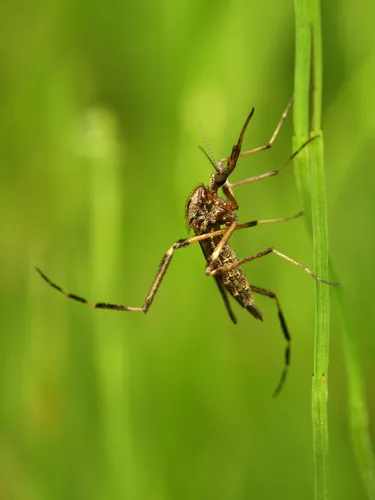
Gallinipper
Psorophora ciliata
Identification: Florida Medical Entomology Lab - FMEL Adult: Very large mosquito, integument yellowish-brown, apices of tibiae and femora and some tarsomeres with broad, erect, black scales. Scutum with median stripe of golden-yellow scales, submedia
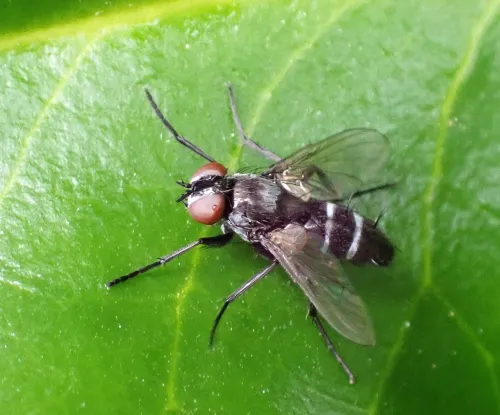
Gastrolepta anthracina
Gastrolepta anthracina
Body length 6 to 8.5 mm. Overall appearance is of a very smart, slim, black and white fly. The thorax is black with two white 'shoulder' stripes and the abdomen is black with white, or greyish-white bands at the start of each tergite. In this species
Gastrops nebulosus
Gastrops nebulosus
Identification: The only Gastrops in the USA with dark wing spots.
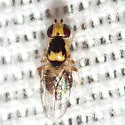
Gaurax dorsalis
Gaurax dorsalis
Identification: Halteres yellow, scutellum black, thorax with large black mark with three teeth on posterior margin.
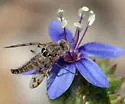
Geminaria canalis
Geminaria canalis
Identification: Wing with 9―14 more or less isolated brown spots
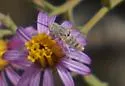
Geminaria pellucida
Geminaria pellucida
Identification: Wing hyaline or with faint coloring around r-m and posterior crossveins. (Key to Nearctic Species of Geminaria , by Hall & Evenhuis, see reference below).
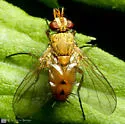
Genea texensis
Genea texensis
Identification: Palps long, proboscis not long, arista nearly bare, abdomen with small black spots. Male with broad frons, proclinate orbital bristles, and short claws on fore legs. DNA barcoding suggests Genea texensis is a species complex.
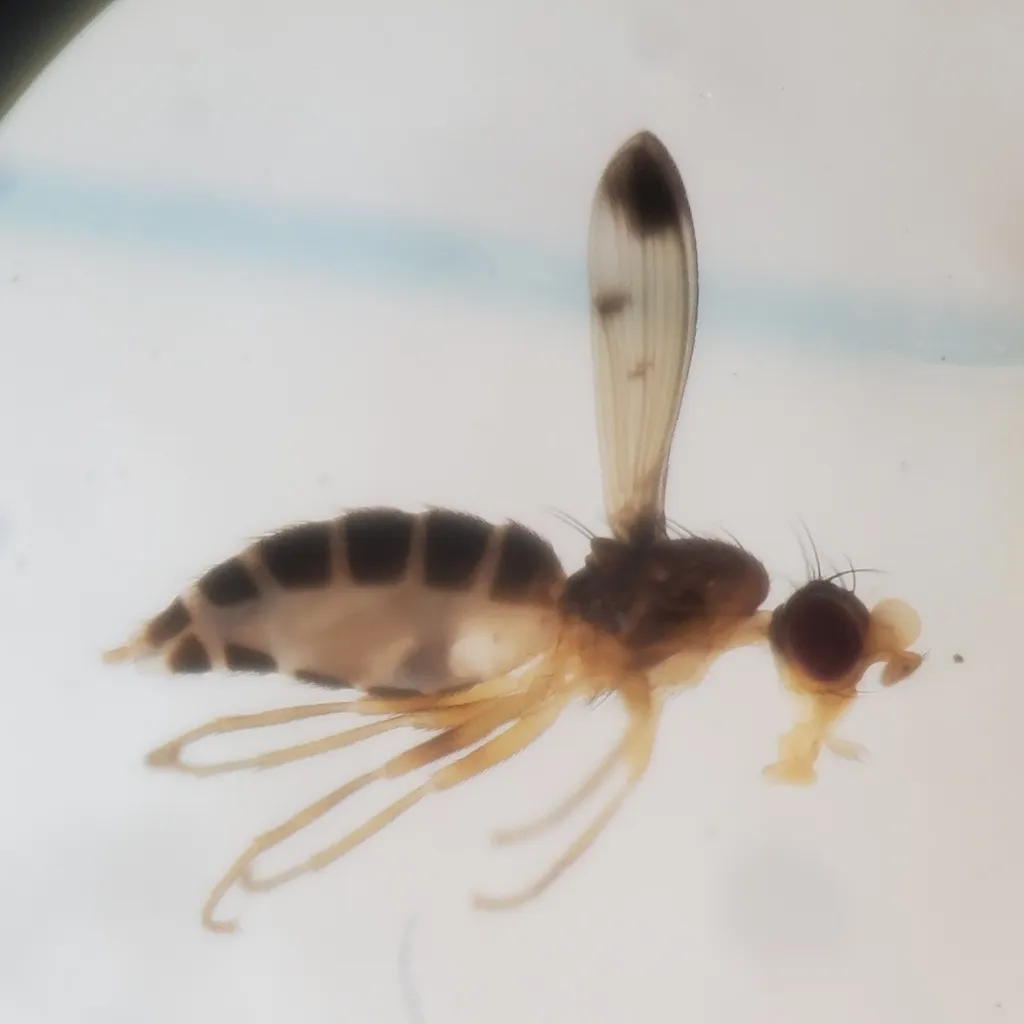
Geomyza apicalis
Geomyza apicalis
Identification: Propleuron without strong bristles, apical wing cloud covering apex of M1+2, thorax brownish (at least partly), posterior crossvein longer than anterior crossvein, wings very narrow and pointed at the tip.
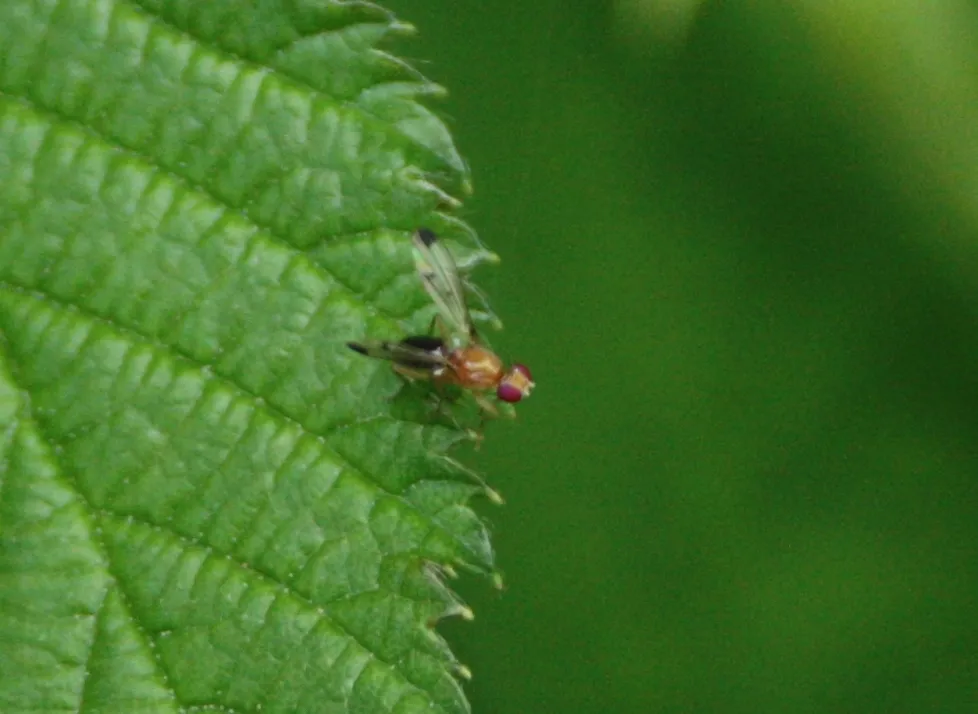
Geomyza balachowskyi
Geomyza balachowskyi
This fly is a member of a confusing species group, but the species with which it has been confused are not found in North America.
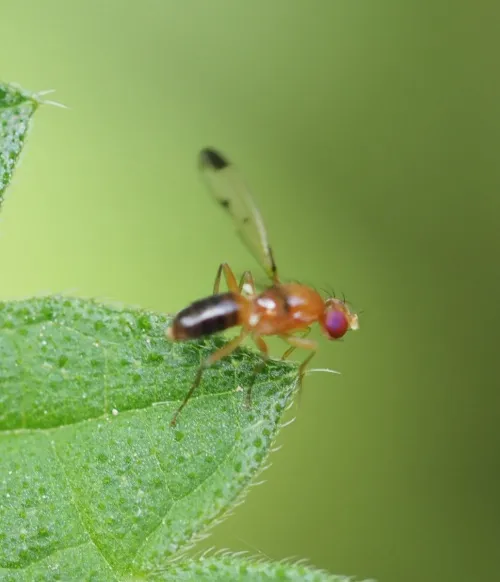
Geomyza combinata agg.
Geomyza combinata agg.
Only two species in the combinata group are currently found in Britain – they are Geomyza balachowskyi and G. hackmani . Separation of these two species on male genitalia is extremely difficult, and females cannot be separated. For this reason we hav
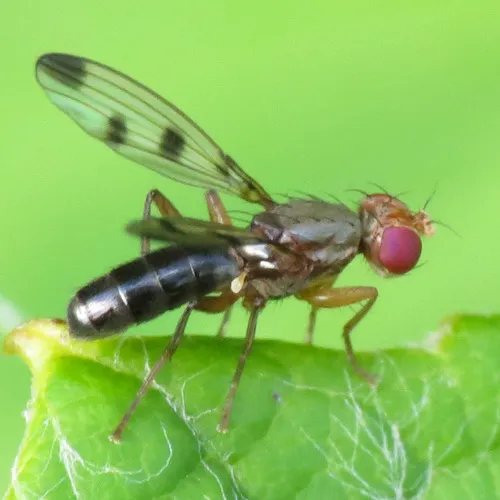
Geomyza tripunctata
Geomyza tripunctata
A small fly with very distinctive patterning on the wings, though this is similar to other Geomyza species. The abdomen colour is varied, from red-brown to black. Peaking in summer, but may be seen in most months of the year. Larvae tunnel in the ste
Geranomyia rostrata
Geranomyia rostrata
Identification: The wing pattern, with 4-5 conspicuous costal marks, tibiae with darkened tips, and fore tibiae with tips expanded or swollen, will separate this species from all Nearctic congeners and closely allied Neotropical species. These close
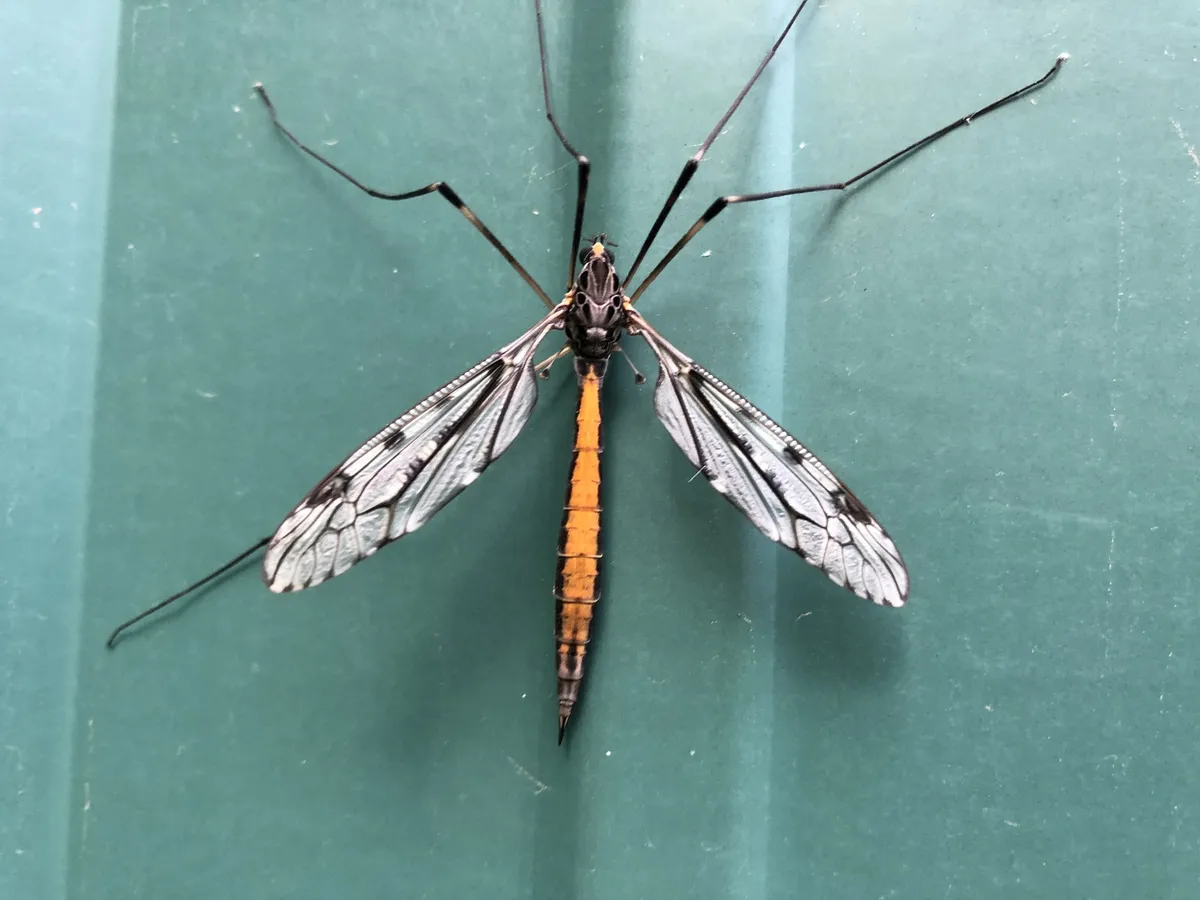
Giant Crane Fly
Tipula abdominalis
Identification: Large size coupled with black velvety patches on thorax is diagnostic feature for subgenus Nippotipula . Tipula abdominalis has a spot at the end of vein R1+2 and pale rings near tips of femora. Wing venation:
Glade Sandpirate
Lasiopogon currani
Identification: Many have reddish tarsi, tibiae and genitalia and the third antennal segment is often reddish, too. The giveaway here (if you can see it) is that the top surface of the halter is completely black. This is the only Lasiopogon in the re
Glyptotendipes barbipes
Glyptotendipes barbipes
Identification: Second segment of fore tarsus shorter than third (male) or equal (female). Fore tarsus of male with long, dense beard.
Glyptotendipes testaceus
Glyptotendipes testaceus
Identification: Fore legs much darker than other legs; scar on tergite 6 about 0.7 as long as tergite.
Gnadochaeta nigrifrons
Gnadochaeta nigrifrons
Identification: See notes on images, such as this one: Eyes usually thickly pubescent in the male, median marginal setae present on the first visible abdominal segment in males, also present in the second visible abdominal segment in both sexes. Prof
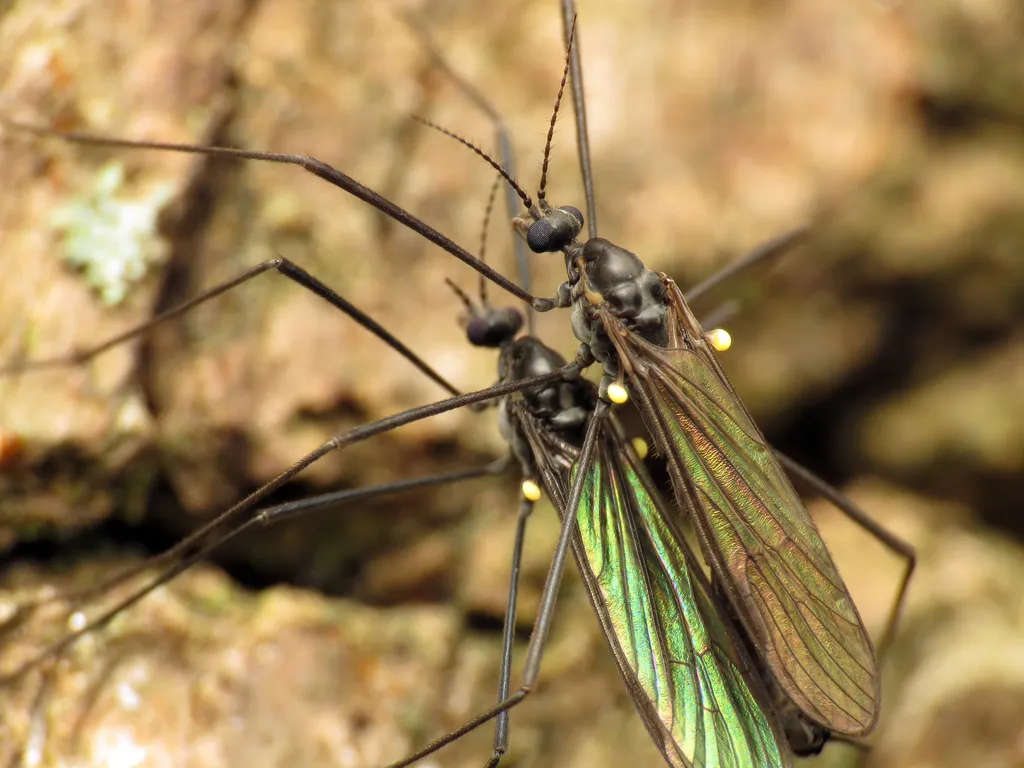
Gnophomyia tristissima
Gnophomyia tristissima
Identification: body black with bright yellow halteres Page creation based on Chen Young's identification of this image .
Goeldichironomus amazonicus
Goeldichironomus amazonicus
Identification: Males have their genitalia twisted about 180° to the right or left and have very short middle and hind tarsomeres.
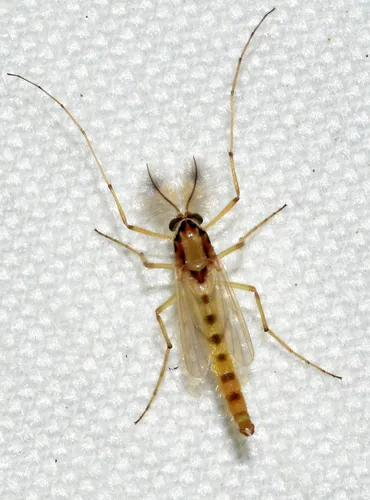
Goeldichironomus carus
Goeldichironomus carus
Identification: The three black marks on the side of the thorax are distinctive. Has been described as a nuisance species in Florida due to mass emergence.
Golden Club-legged Hammertail
Efferia armata
Identification: Modified hind tibia of male is distinctive.
Golden Tiger Fly
Ceraturgus aurulentus
Identification: distinctive species, readily recognized by its small size, rich golden pollen, bicolored femora and tibiae, and short, thin, parallel-sided proboscis Rare species: fewer than two dozen specimens collected in the past 200 years. BugGui
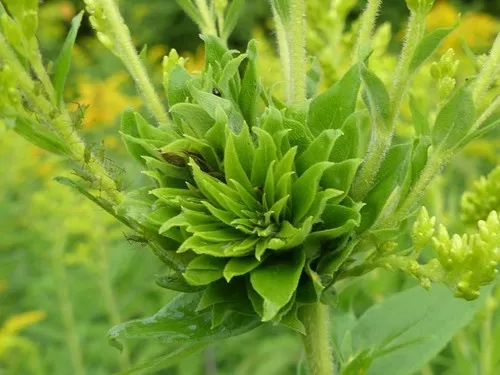
Goldenrod Bunch Gall
Rhopalomyia solidaginis
Identification: Eastman states some other flies do make similar galls. Gall is relatively distinctive--see photo. The female deposits an egg at the tip of the growing plant. Its larva secretes a chemical that prevents the goldenrod stem from growing
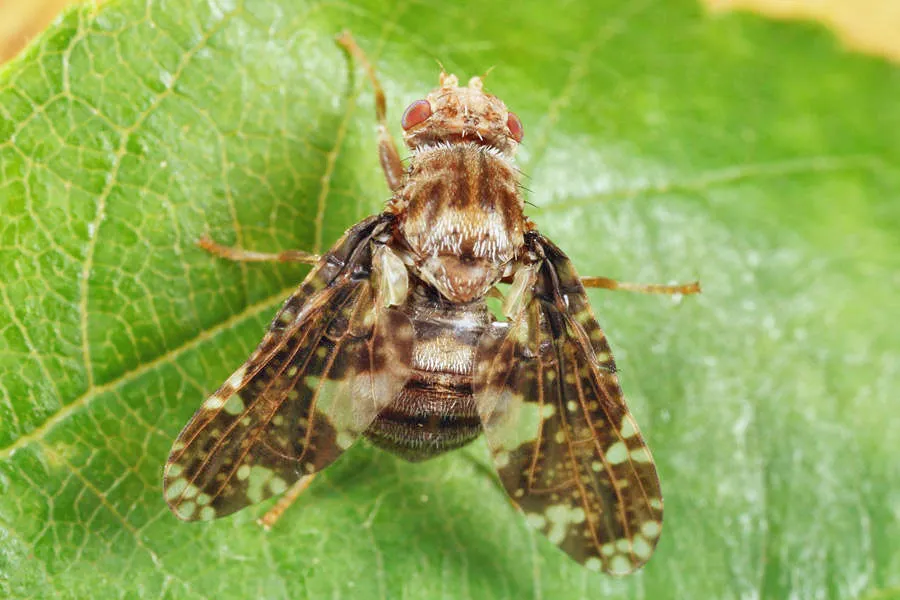
Goldenrod Gall Fly
Eurosta solidaginis
Identification: Galls distinctive Some parasitoids listed at ( 3 )
Gonia brevipulvilli
Gonia brevipulvilli
Identification: First flagellomere dark beneath the dull colored bloom
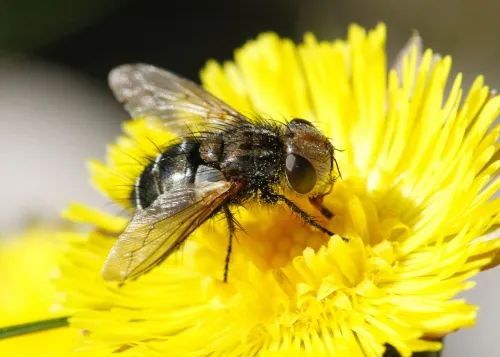
Gonia picea
Gonia picea
A large (10mm), dumpy tachinid fly and typically hairy. The dark abdomen has pale stripes across each segment. Larva parasitise lepidoptera caterpillars particularly those of the Antler Moth.
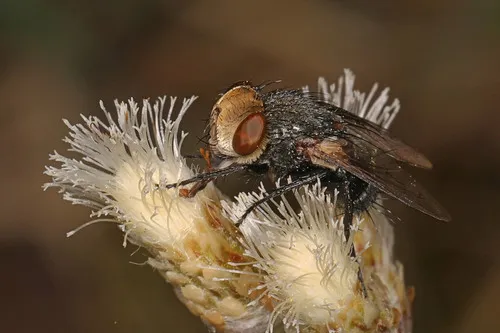
Gonia sagax
Gonia sagax
Identification: The antennae are noticeably yellowish in color. Species with dark antennae such as G. frontosa can be confused as having pale antennae due to the white brownish dusting. Sharing with G. frontosa a short proboscis and more hair-like an
Gonia senilis
Gonia senilis
Gonia senilis and sagax are very similar, both having bright yellow antennae. Senilis is a summer species and has some orange on the arista. Sagax is a spring species with a dark arista.
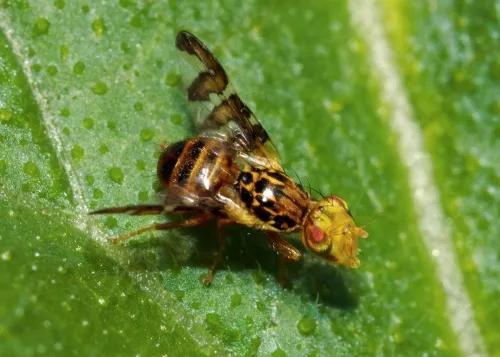
Goniglossum wiedemanni
Goniglossum wiedemanni
A distinctively marked member of the genus. Identification is made easier if the insect is recorded in the vicinity of its host plant White Bryony. This species is host specific on White Bryony and is most likely to be encountered where that plant is
Goniocera io
Goniocera io
Identification: Distinguished from other North American Siphononi by the row of anterodorsal bristles on mid tibia (one or sometimes none in other genera). Also the scutellum is nearly bare dorsally (with many setulae in most Siphonini), femora are
Gonomyia alexanderi
Gonomyia alexanderi
Identification: Only two branches of Rs reaching wing margin (R3 and R4 fused), tibiae contrasting white, costal margin of wing white (not yellow).
Gonomyia helophila
Gonomyia helophila
Identification: Distinguished from most other Gonomyia by color pattern, especially dark fore femora and white fore tibiae. There are a few other similarly colored species in or near North America:
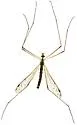
Gonomyia hoogstraali
Gonomyia hoogstraali
Identification: The basistyle continues as a thin, curved projection far beyond the attachment of the dististyles.
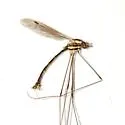
Gonomyia pleuralis
Gonomyia pleuralis
Identification: Veins R3 and R4 fused to wing margin. Legs without contrasting markings except for dark ring near tip of each femur. Stigma conspicuous.
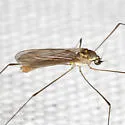
Gonomyia puer
Gonomyia puer
Identification: Veins R3 and R4 fused to wing margin. Dististyles with asymmetric long black curved hooks. Thorax with contrasting yellow stripe on side. Stigma lacking, legs without contrasting markings.
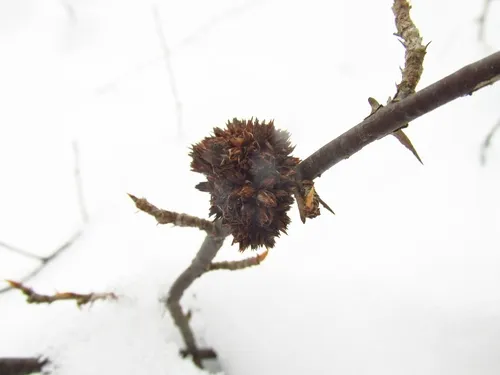
Gooseberry gall midge
Rhopalomyia grossulariae
Identification: Length of head + body of adult, 1.8-2.0mm. Head and thorax brown, abdomen with marked reddish tinge (apparently a common color pattern within this genus). Structural characters as for the genus (Rübsaamen 1892) ( 3 ) . Felt (1911)
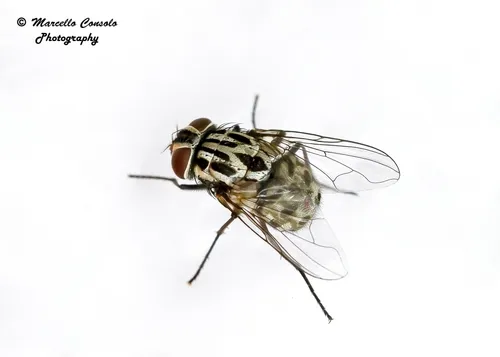
Graphomya maculata
Graphomya maculata
The males have an orangey-brown patterned abdomen but females have a grey/black pattern. Both have distinctive stripes on the thorax. Meadows, hedgerows and roadside verges nectaring on various flowers, especially umbellifers. The larvae are predator
Great Lakes Sandpirate
Lasiopogon tetragrammus
Identification: four apparent scutal stripes, half light/half dark tergite tomentum, and bluntish ovipositor shape ( comment by Tristan McKnight)
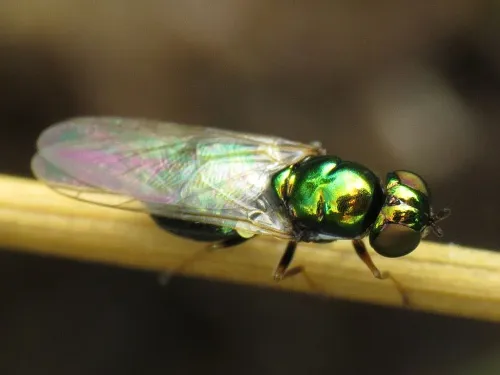
Green Gem
Microchrysa flavicornis
Length 3 to 5 mm. This is a small soldier fly usually has a brilliant green abdomen and thorax with mainly yellow antennae. M. polita - abdomen darker (blackish green) and all-black antennae. Unless identified by a recognised expert, a photo is requi
Green Jewel Fly
Ornidia obesa
Identification: Body shiny, metallic, green or purplish-blue. Wings mostly hyaline, but with two spots along anterior margin: one near middle, the other smaller and before the apex. Scutellum with a shallow transverse depression before posterior edge
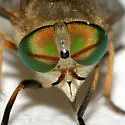
Greenhead
Tabanus nigrovittatus
Identification: "Brilliant green eyes with a single purple stripe and a restriction to Atlantic salt-marshes makes this species readily identifiable." common on East Coast salt marshes, "The bane of bathers" With known pathogenic transmission of Anap
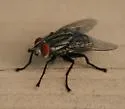
Grey Flesh fly
Sarcophaga bullata
Pupae are available to buy from biological supply houses such as Ward's Science as hosts for the parasitoid wasp Nasonia .
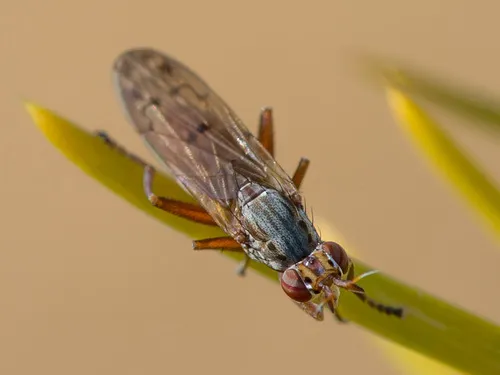
Grey S-veined Snail-killer.
Elgiva cucularia
One of two British Elgiva species, which are medium-sized, slimly-built sciomyzids with a strongly curved posterior cross vein and wings bearing several spots and smudges (notably a spot on each cross vein plus the end of vein R2+3). Elgiva cucularia
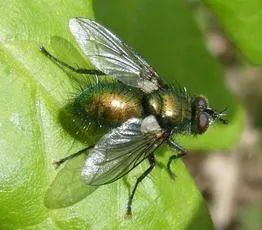
Gymnocheta viridis
Gymnocheta viridis
Length 6 to 12 mm. Gymnocheta viridis is a metallic green tachinid fly, its brassy abdomen and thorax are covered by stiff bristly hairs. Gymnocheta viridis is very similar to Chrysosomopsis aurata but this species flies in the summer so can be large
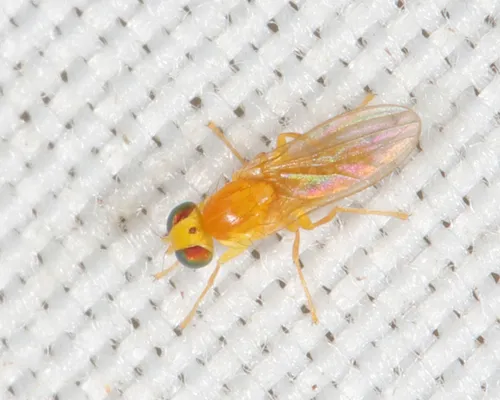
Gymnochiromyia concolor
Gymnochiromyia concolor
Identification: 2‒3 pairs of dorsocentrals; mesotarsi all yellow
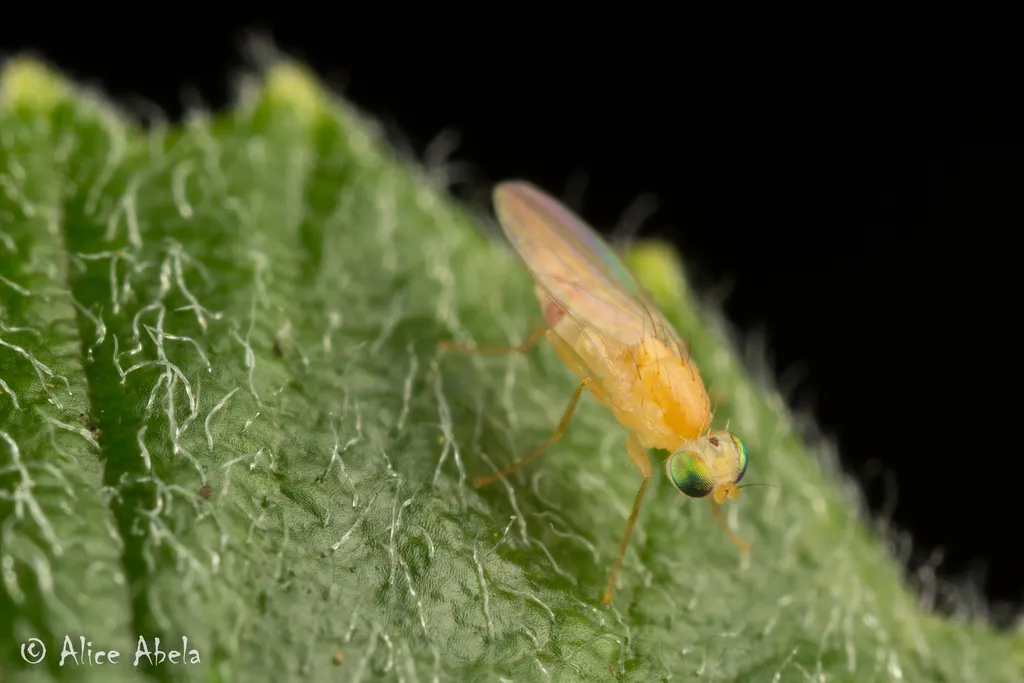
Gymnochiromyia flavella
Gymnochiromyia flavella
Identification: Distinguished from congeners by small size and four pairs of dorsocentrals.
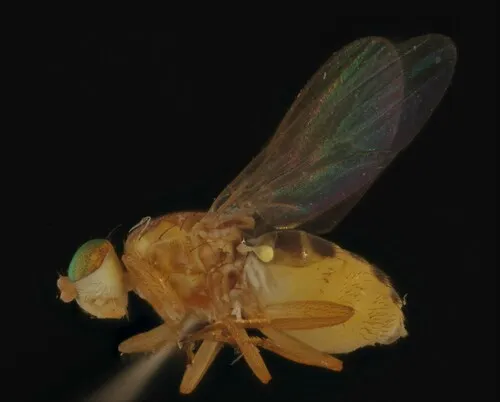
Gymnochiromyia nigrimana
Gymnochiromyia nigrimana
Identification: 2-3 pairs of dorsocentrals and mid tarsi with apical segment black (males) or brown (females).
Gymnoclytia dubia
Gymnoclytia dubia
Identification: The combination of cell r5 long petiolate and antennae long and completely black will distinguish this from the other species north of Mexico.
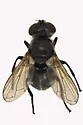
Gymnoclytia immaculata
Gymnoclytia immaculata
The female is occasionally entirely black, especially in the north, more often with some red on the abdomen. The male abdomen is orange or orange with a dark median line.
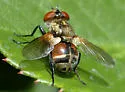
Gymnoclytia occidentalis
Gymnoclytia occidentalis
Identification: Like Gymnoclytia occidua , but yellower. Keep in mind that males are generally yellower than females in this genus, so compare like sexes.
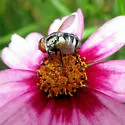
Gymnoclytia occidua
Gymnoclytia occidua
In the last revision of this group Brooks (1946) recognized two eastern species with dark females and red males and M ending near tip of R4+5, minuta and occidua . There may be additional species based on photos on boldsystems.org.
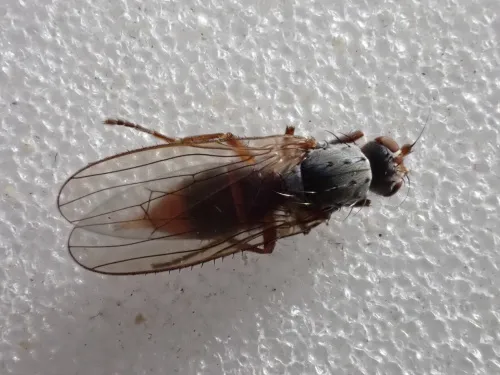
Gymnomus caesius
Gymnomus caesius
Detailed examination is necessary to identify to species level. No additional images available for this species.
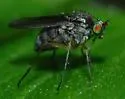
Gymnopternus exilis
Gymnopternus exilis
Identification: Antennae long, femora yellow except usually with a prominent dark spot at the tip of the hind femur. If the spot is absent, distinguishable from subulatus by the shorter antenna with more basal arista and from opacus by male genitali
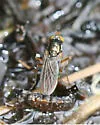
Gymnopternus nigribarbus
Gymnopternus nigribarbus
Identification: The male has a long arista with a large, swollen tip of the kind often found in Tachytrechus .
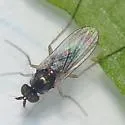
Gymnopternus opacus
Gymnopternus opacus
Identification: Legs entirely pale, except some dark on coxae; antennae large, dark with some reddish marks. See Robinson and Loew for additional details.
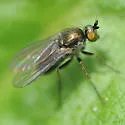
Gymnopternus scotias
Gymnopternus scotias
Identification: Dark femora; dark, shining green thorax; antennae black, male with third segment longer than wide, slightly pointed, with long hairs.
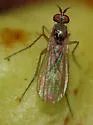
Gymnopternus subulatus
Gymnopternus subulatus
Identification: Long, pointed third segment of antenna ("subulate") with arista nearly apical. Femora yellow.
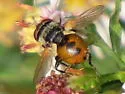
Gymnosoma par
Gymnosoma par
This is a variable species. Pale individuals can be similar to fuliginosum and dark individuals to canadense .
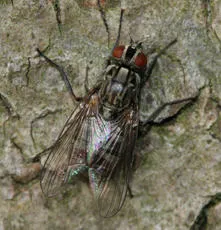
Haematobosca stimulans
Haematobosca stimulans
Around cattle on which they feed, and in farm buildings such as milking parlours etc. April to October peaking in May and August. This fly is associated with cattle where it can be a nuisance by biting the animals to feed on their blood.
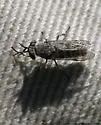
Haematopota rara
Haematopota rara
Identification: The dark halter knob, darker wing pattern, and range (northeastern USA and extreme southeastern Canada) distinguish this species from americana . The rare champlaini is also paler, but might overlap in range.
Haigia nevadana
Haigia nevadana
Identification: An unusual, but not unique, character is the approximation of the r-m and m-cu crossveins.
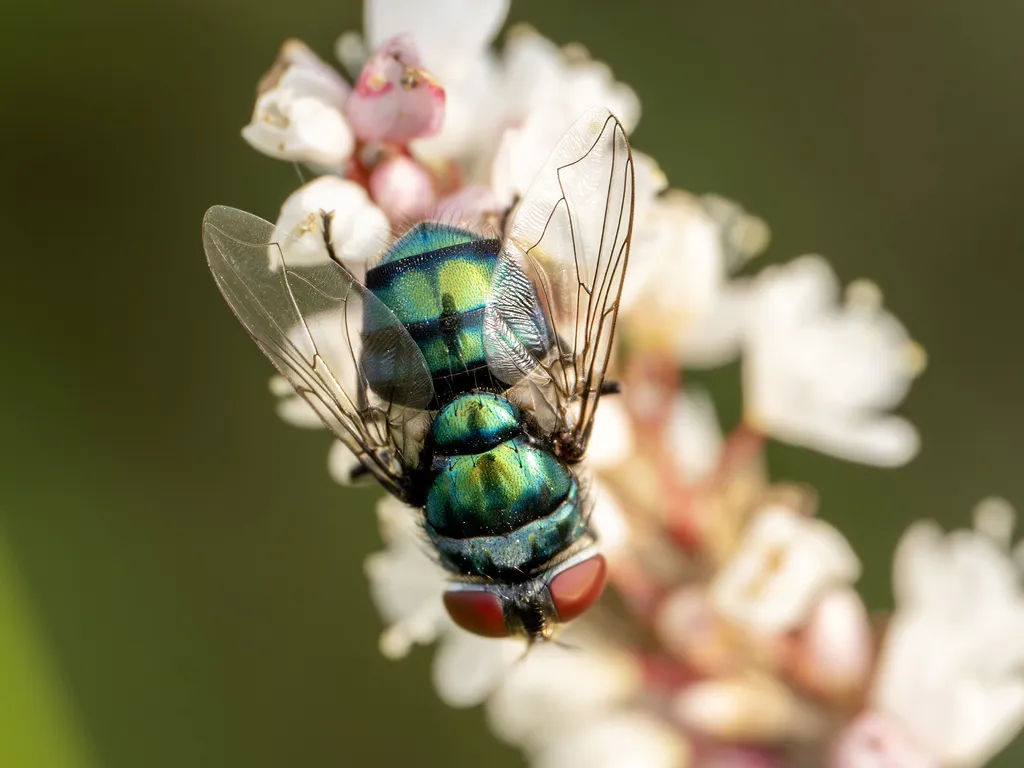
Hairy Maggot Blow Fly
Chrysomya rufifacies
Identification: The fleshy tubercles on these larvae are unique among maggots found on carrion in the US. The only species they might be confused with is Chrysomya albiceps which has not yet been recorded as far north as the US. For adults, the prese
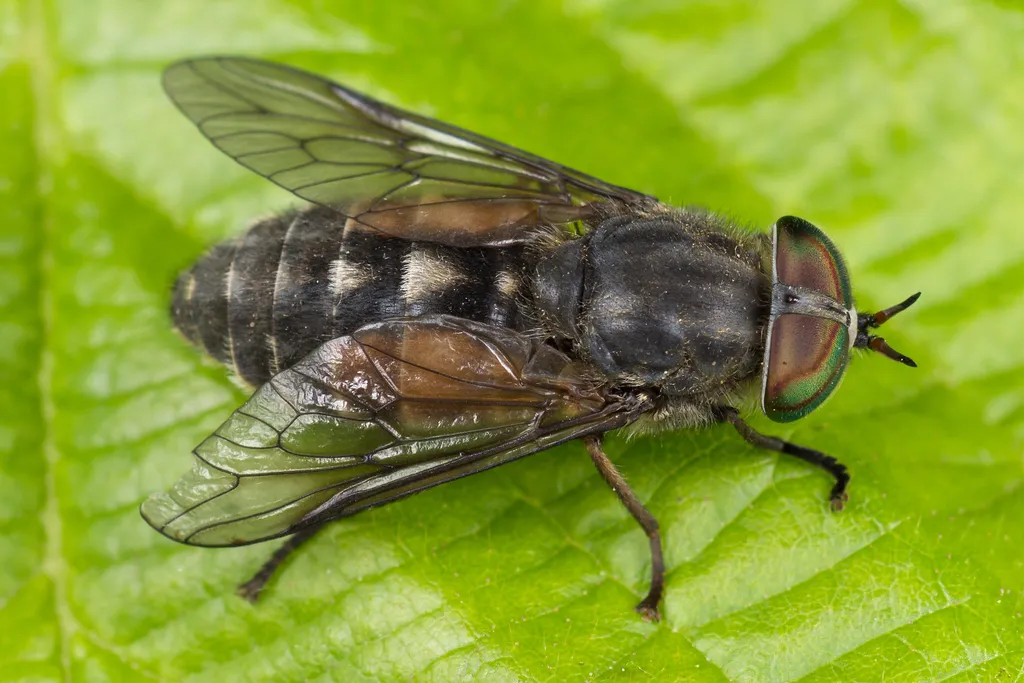
Hairy-Legged Horsefly
Hybomitra bimaculata
A medium-large, highly variable horsefly with a body length of 13 to 16.5 mm. Both males and females possess long hair fringes on the anterior and posterior surfaces of the mid tibiae with males also having a posteroventral fringe along the length of
Hairy-horned Bromeliad Fly
Copestylum caudatum
Identification: the dense silvery hairs on tergite 4 are distinctive --comment by Joel Kits and/or Jeff Skevington
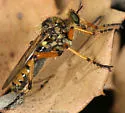
Halloween Goldenrobber
Callinicus pictitarsis
one of several spp. of this genus in Calif. Sort of a generalized vespid wasp mimic. --Eric Fisher, 16.vi.2007
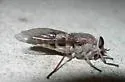
Hamatabanus carolinensis
Hamatabanus carolinensis
Identification: Basal portion of third antennal segment with a prominent, forward projecting tooth reaching nearly to base of annulate portion. Eyes pilose. Brownish species. Stump vein on R4 absent. Eyes in life green with a narrow, diagonal purple
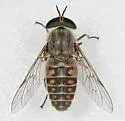
Hamatabanus exilipalpis
Hamatabanus exilipalpis
Identification: Dr. John Burger commented on this species (20 April 2007): Moved from Tabanus with some hesitation based on 1 - dorsal tooth of basal flagellomere (of antenna) is pronounced and has a slightly forward projection, although quite short.
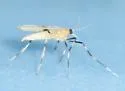
Haplusia rubra
Haplusia rubra
Identification: adult body pale; legs banded black and white
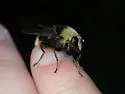
Harvey's Pond Fly
Sericomyia harveyi
Identification: Dense yellow setae on first three quarters of scutum, scutellum is black setose.
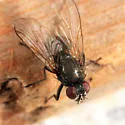
Hebecnema nigra
Hebecnema nigra
Identification: Per Pont (1984), when using Huckett's 1965 key, his H. vespertina should be H. nigra and his H. affinis should be H. vespertina
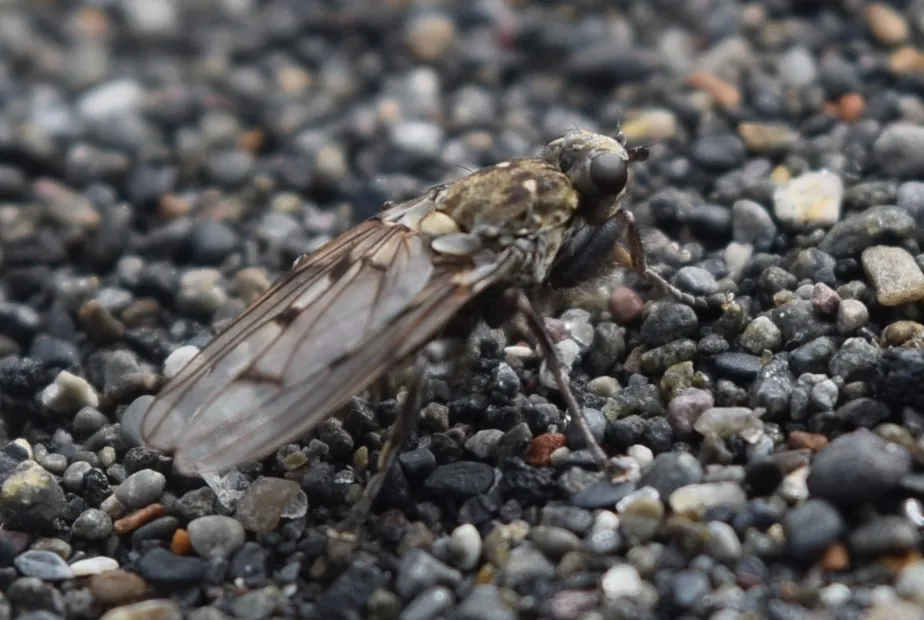
Helcomyza mirabilis
Helcomyza mirabilis
Identification: Distinguished from other nearctic Dryomyzidae (s. lat.) by combination of spotted wing and antennae separated by more than the diameter of one antenna. Also grayish compared to orange color of most species.
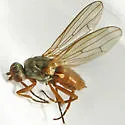
Heleomyza serrata
Heleomyza serrata
Identification: The combination of the katepisternum with only 1 or 2 strong bristles, the mesopleuron bare except for a patch of hairs near the propleuron, and unmarked wings is diagnostic for this species.
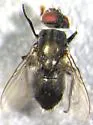
Helicobia rapax
Helicobia rapax
Larvae are usually parasitoids of land snails, but can develop in other invertebrates, living or dead.