
Hydrotaea dentipes
This record describes Hydrotaea dentipes (species). Recorded family: Muscidae. Recorded order: Diptera.
Identification and Appearance
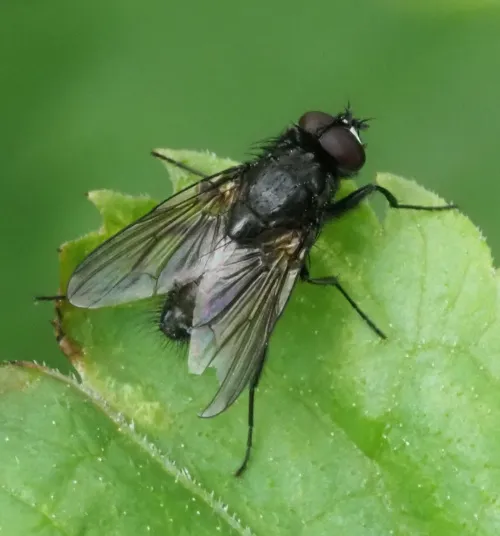
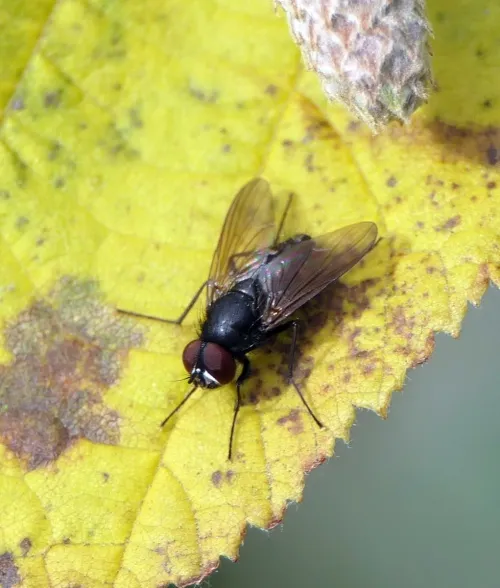
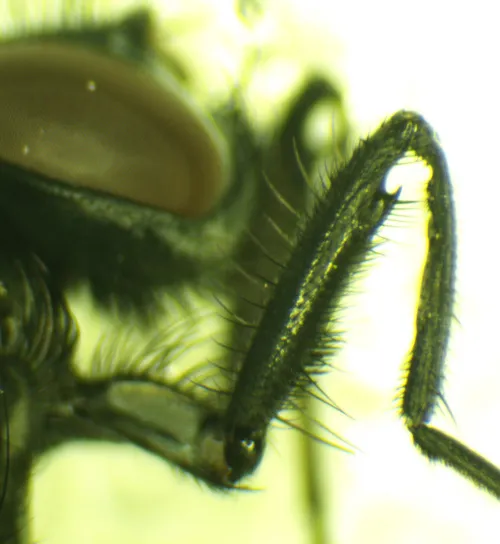
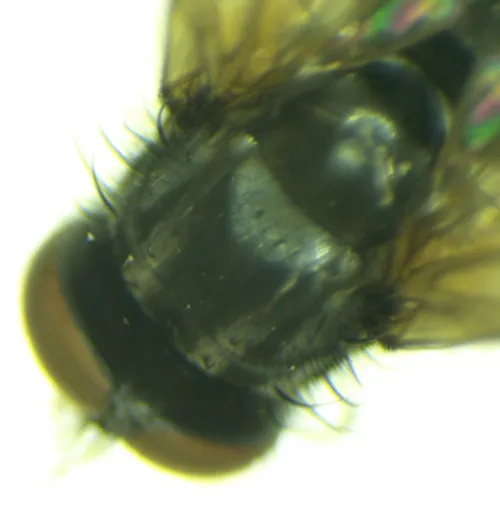
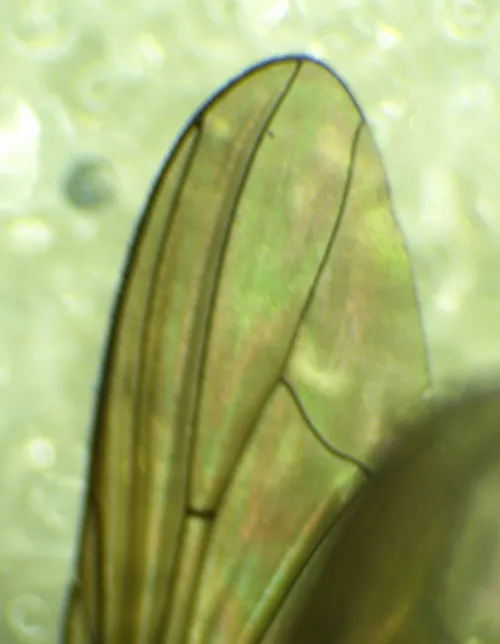
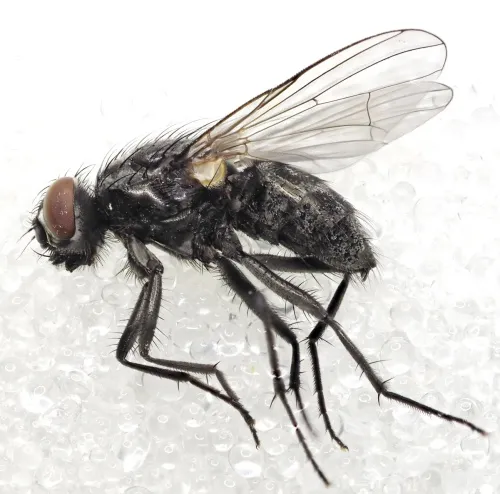
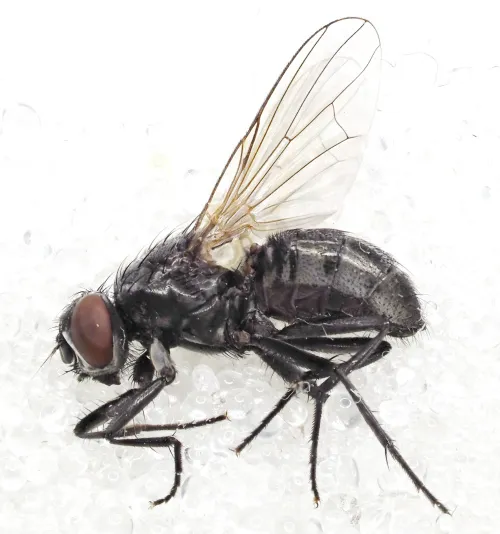
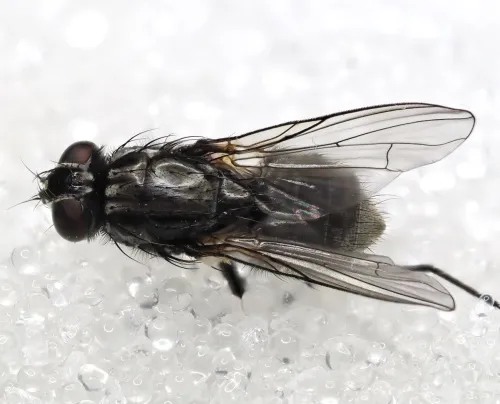
6·5 to 7·75 mm. Like most flies in the Hydrotaea genus it is dark and shiny. Males have the front femur notched and toothed. The thorax, seen from behind, has conspicuous whitish dusting, at least in front of the suture, in line with the acrostichal and dorsocentral bristle rows. The middle tibia, anteriorly along almost whole length, has a dense fine pubescence which is shorter than width of tibia. The discal vein of wing with a slight though distinct curve forward just before apex. Hind tibia with only 2-3 rather short anteroventral bristles. Middle femur, under the basal half has numerous setulose hairs, many of which are more than twice as long as depth of femur. Unless identified by a recognised expert, photos are required showing the key ID features. If the photos don't show these then in the comments box describe the identifying characters you have observed. The larvae of this species have been found in the dung of rabbits, pigs, cows, horses and chickens.
Classification
Habitat and Range
Habitat
Various habitats including gardens.
Seasonal Activity
Mainly May to September.
Diet and Behavior
Life History
The larvae of this species have been found in the dung of rabbits, pigs, cows, horses and chickens.
Additional species information
Recorded status
Quite widespread in Britain.
About Flies: the wider group
Order-level background for Diptera, the group containing Hydrotaea dentipes. Species-specific details appear above.
Group overview
Diptera includes over 150,000 described species of flies, mosquitoes, and midges. Mosquitoes are the deadliest animal on Earth (CDC). Malaria alone causes ~249 million cases and over 608,000 deaths annually, mostly children under 5 (WHO). Vector-borne diseases account for over 17% of all infectious diseases, causing 700,000+ deaths per year.
Ecological role of the group
Despite their disease impact, flies are critical decomposers and pollinators. Hoverflies alone pollinate hundreds of crop and wildflower species. Flies are also the primary food source for many birds, bats, and fish. Forensic entomology relies heavily on fly species for crime scene analysis.
Economic and practical significance of the group
In the U.S., vector-borne disease cases tripled between 2004-2016, with over 640,000 cases reported in that period (CDC). Tickborne diseases doubled from 22,000 to 48,000 annual reports. Globally, mosquito-borne diseases cost billions in healthcare and lost productivity.
Recorded sources for this group: WHO, CDC, PNAS. Imported estimates may describe particular regions or reporting periods.
Photos of Hydrotaea dentipes (8)
Frequently Asked Questions About Hydrotaea dentipes
What is Hydrotaea dentipes?
Hydrotaea dentipes is a species in the family Muscidae, within the order Diptera.
Where is Hydrotaea dentipes found?
Habitat: Various habitats including gardens.
When is Hydrotaea dentipes active?
Hydrotaea dentipes: seasonal activity - Mainly May to September..
What is the life cycle of a Hydrotaea dentipes?
The larvae of this species have been found in the dung of rabbits, pigs, cows, horses and chickens.