
Flies
Order Diptera
The Flies (Order Diptera) includes 6,350 species across 141 families and 1,800 genera in our directory.
About Flies
Diptera includes over 150,000 described species of flies, mosquitoes, and midges. Mosquitoes are the deadliest animal on Earth (CDC). Malaria alone causes ~249 million cases and over 608,000 deaths annually, mostly children under 5 (WHO). Vector-borne diseases account for over 17% of all infectious diseases, causing 700,000+ deaths per year.
Economic Impact
In the U.S., vector-borne disease cases tripled between 2004-2016, with over 640,000 cases reported in that period (CDC). Tickborne diseases doubled from 22,000 to 48,000 annual reports. Globally, mosquito-borne diseases cost billions in healthcare and lost productivity.
Ecological Role
Despite their disease impact, flies are critical decomposers and pollinators. Hoverflies alone pollinate hundreds of crop and wildflower species. Flies are also the primary food source for many birds, bats, and fish. Forensic entomology relies heavily on fly species for crime scene analysis.
Families in Diptera (141)
Species in Diptera (6,350)
Lemnaphila scotlandae
Lemnaphila scotlandae
"Adult L. scotlandae are commonly found on or flying over the surface of floating duckweed thalli. The adults utilize the Lemna for food, leaving characteristic elongate gouges on the surface of the thallus. Adults have been collected in late Novembe
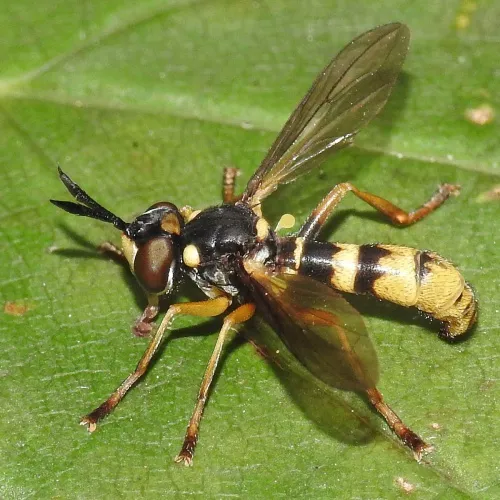
Leopoldius signatus
Leopoldius signatus
Whilst superficially resembling Conops species, Leopoldius species can be immediately recognised by their soft proboscis, nothing like the long sclerotised mouthparts found in Conops . There are only two predominantly yellow British species. Males of
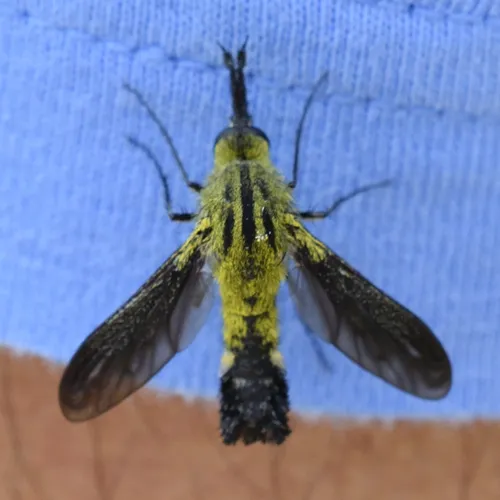
Lepidophora lutea
Lepidophora lutea
Identification: the pale scales are mostly yellow, and there are abundant yellow scales on the sides of the fourth abdominal segment
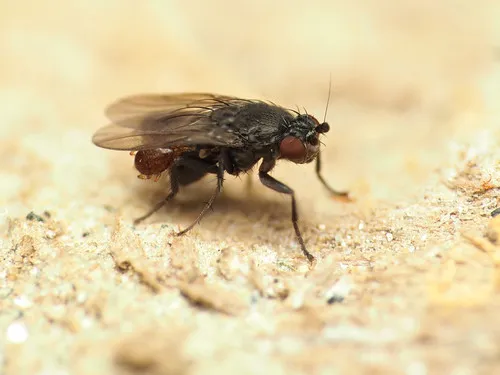
Leptocera erythrocera
Leptocera erythrocera
Identification: The most widespread and often the most common Leptocera in the Americas.
Leptometopa halteralis
Leptometopa halteralis
Identification: Shiny black. The other North American species of Leptometopa is comparatively dull.

Leptomorphus magnificus
Leptomorphus magnificus
Identification: "The only extant species of Leptomorphus with R4 that has a completely yellow/orange thorax and abdomen (though abdomen rarely darker on posterior two segments) and foretarsomere I at least 1.5X the length of foretibia."
Leptomorphus subcaeruleus
Leptomorphus subcaeruleus
Identification: "Quite distinct among other species with vein R4 present, body black, legs mostly yellow with femora dark apically and hind tibia yellow basally, antennae completely dark, abdominal tergite 4 sometimes reddish in females." - Dmitry Ga
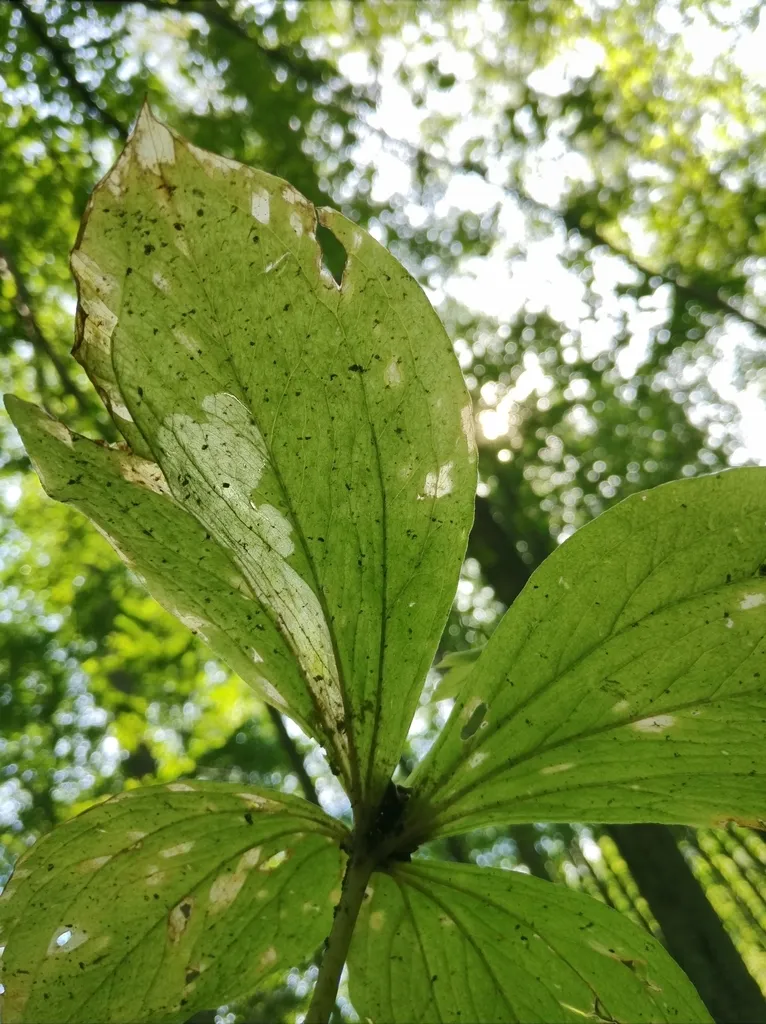
Leptopa vittata
Leptopa vittata
Identification: Wings uninfuscated. Femora without strong ventral bristles. Katepisternum with 1 bristle. Pleura with a black line below the base of the wing. Leaf miner in several genera of orchids.
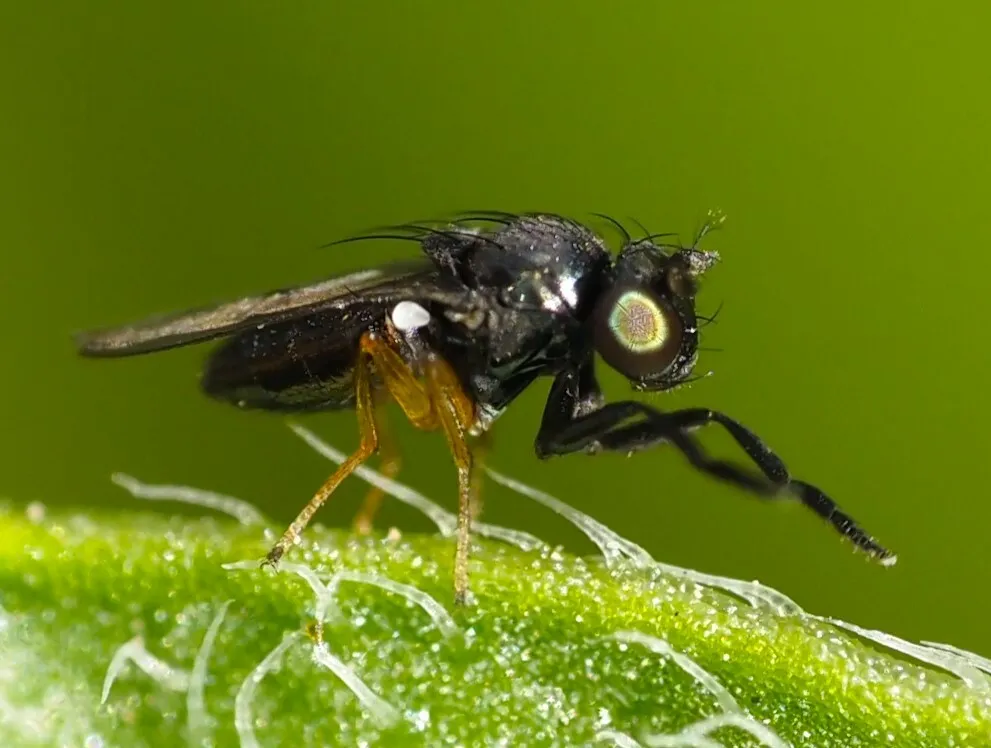
Leptopsilopa atrimana
Leptopsilopa atrimana
Identification: Small black ephydrids with black front legs that contrast with the yellowish middle and hind legs. Slight infuscation over crossvein dm-cu. Face striate.
Leptotarsus testaceus
Leptotarsus testaceus
Identification: abdomen greatly elongated in both sexes Uncommon
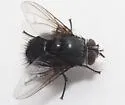
Leschenaultia bicolor
Leschenaultia bicolor
Identification: Males are distinguished from other Leschenaultia by lacking median marginal bristles on tergites 1+2 and 3. Females do have median marginals on tergite 3. Gudin and Carneiro (2020) (doi: 10.4039/tce.2020.46 ) write " Leschenaultia bi
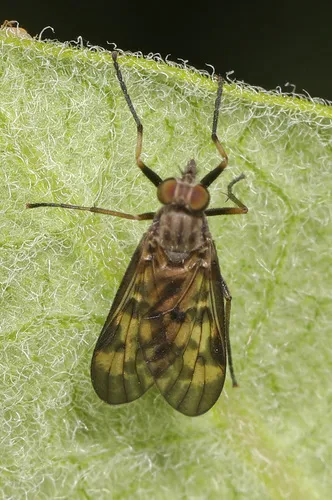
Lesser Variegated Snipe Fly
Rhagio punctipennis
Identification: Representative Images Classification Kingdom Animalia (Animals) Phylum Arthropoda (Arthropods) Subphylum Hexapoda (Hexapods) Class Insecta (Insects) Order Diptera (Flies) No Taxon (Orthorrhapha) I
Leucophenga maculosa
Leucophenga maculosa
Identification: Differs from the common varia in having a less distinct pattern on the abdomen and more extensive wing markings (crossveins darkened and dark band starting at tip of R1).
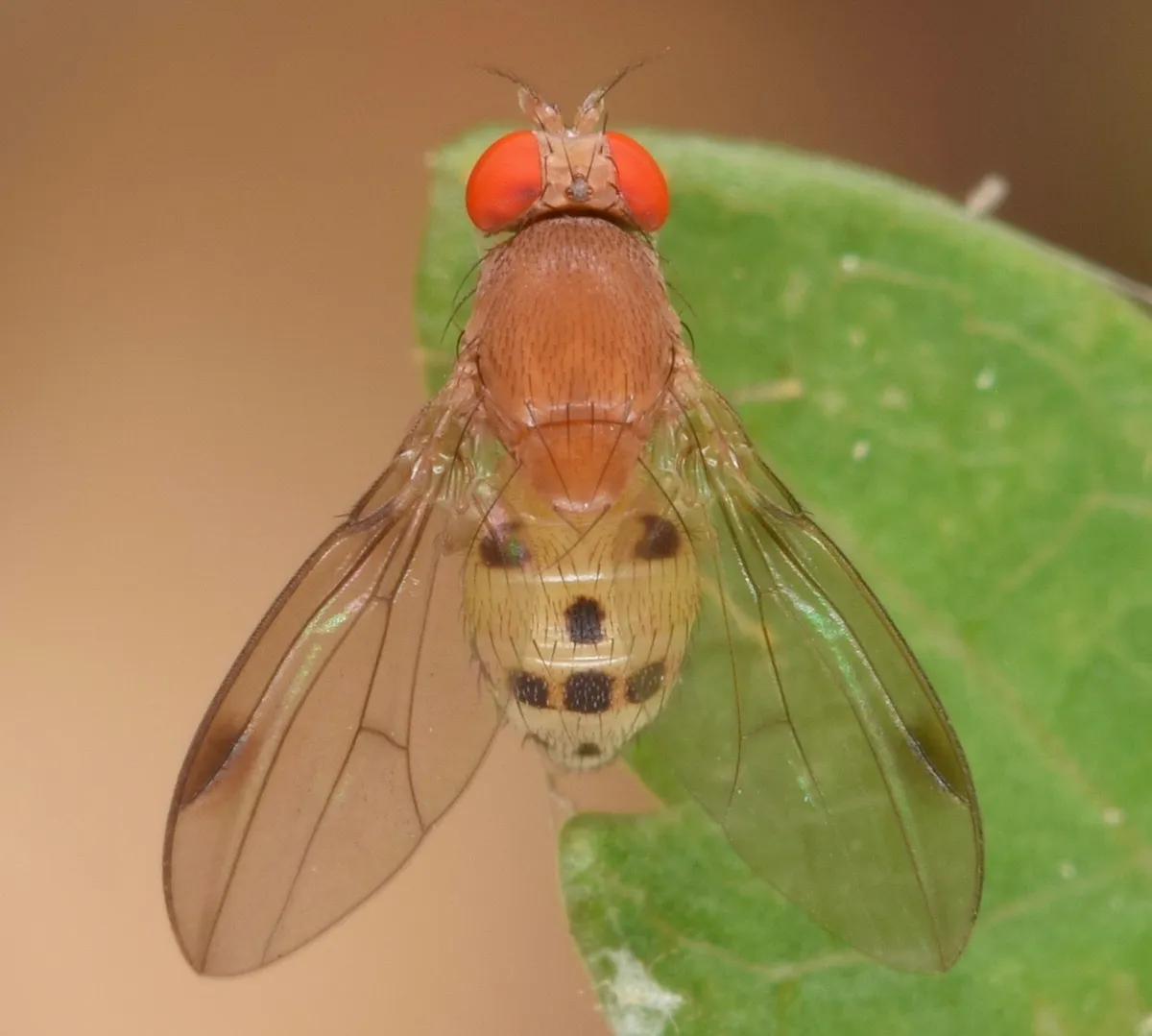
Leucophenga varia
Leucophenga varia
One of the two common, widespread species of this genus in our area, the other being Leucophenga maculosa .
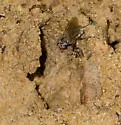
Leucophora apivora
Leucophora apivora
Identification: Distinguished from other common species of Leucophora by the combination of legs red (including femora), both female and male with widely separated eyes, and flight time in June.
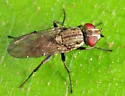
Leucophora johnsoni
Leucophora johnsoni
Identification: In the eastern United States, the combination of legs partly yellow, a ventral bristle on mid tibia, and female eyes slightly closer together than normal but still separated by about 2/3 their width) will identify this species.
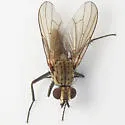
Leucophora marylandica
Leucophora marylandica
Kleptoparasites of Colletes . Related to the Palaearctic species Leucophora grisella ( http://www.diptera.info/photogallery.php?photo_id=1957 )
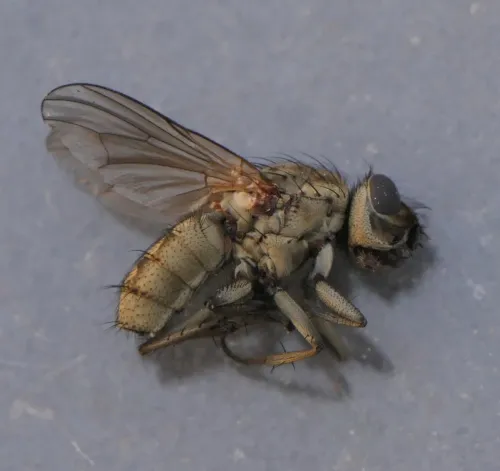
Leucophora obtusa
Leucophora obtusa
One of several almost identical species so great care is needed with identification. If detailed examination has not taken place it should be recorded as Leucophora sp. The genus has a characteristically wide parafacial and gena (the area in front of
Leucopis argentata
Leucopis argentata
Identification: Larvae: Most Leucopis larvae have posterior spiracles on a diverging pair of stalks. That is the typical Leucopis condition. But Leucopis argentata is one of very few where they are not on such stalks (S.Gaimari, pers. comm.).
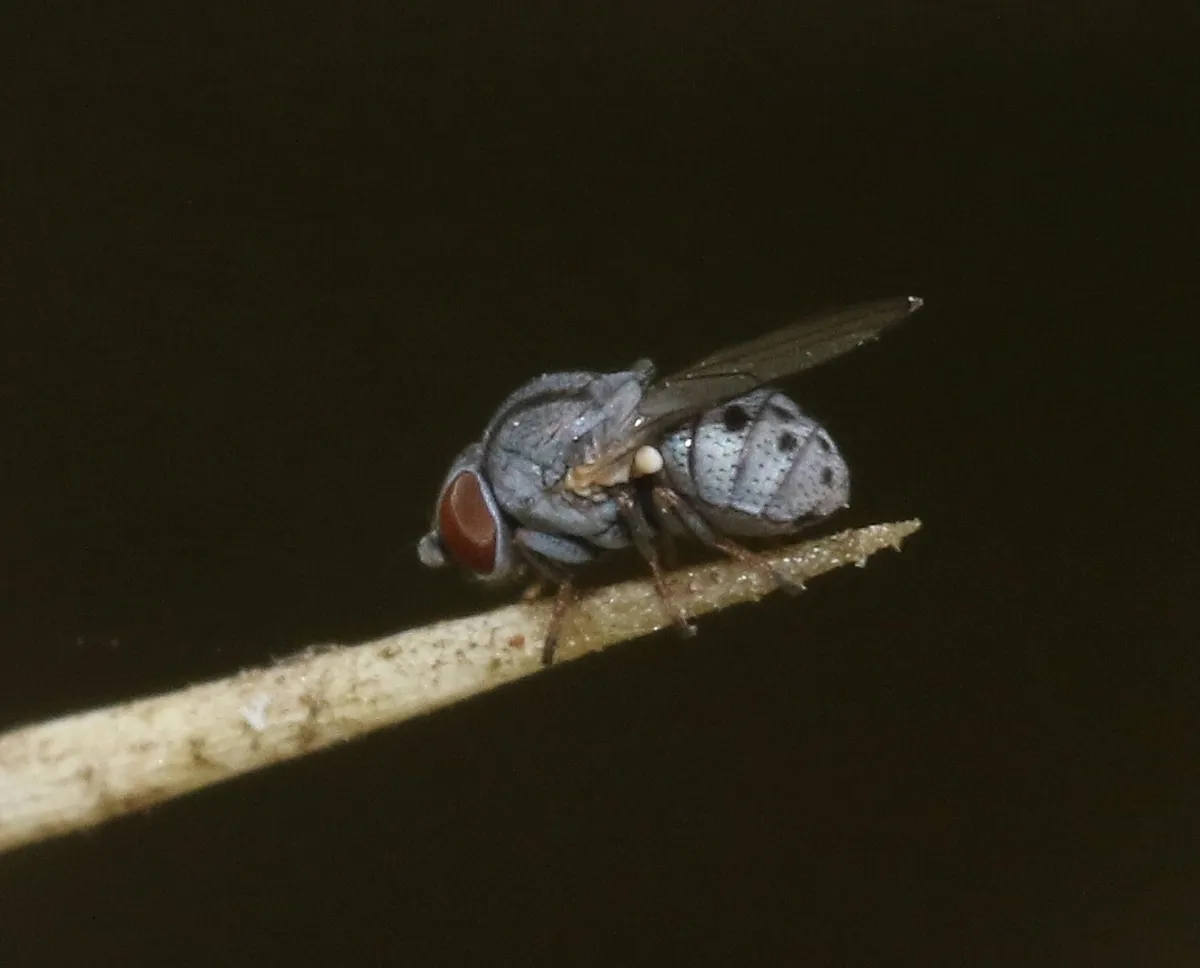
Leucopis bellula
Leucopis bellula
Identification: "The spots on tergites 3-5 are distinctive for this species." -- Steve Gaimari
Leucostoma aterrimum
Leucostoma aterrimum
Identification: Female has unusually long abdomen for genus (segments longer than wide).
Leucostoma perrarum
Leucostoma perrarum
Identification: Male with only narrow bands of pollen on last abdominal segments, last segment short and broadly truncate.
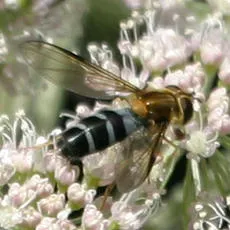
Leucozona glaucia
Leucozona glaucia
Winglength 8 to 11.25 mm. The black stigma, yellow scutellum, large quadrate spots on tergite 2 and narrow bands on tergites 3 and 4 serve to readily distinguish this species. The markings on the abdomen are normally yellow, but specimens with grey d
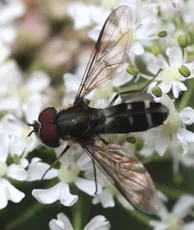
Leucozona laternaria
Leucozona laternaria
The scutellum of this species is black with just the tip yellow and the front and mid legs are extensively black on the tibiae and tarsi. Lowland habitats with lush vegetation, especially woodland edges where umbellifers are present. The larvae feed
Leucozona lucorum
Leucozona lucorum
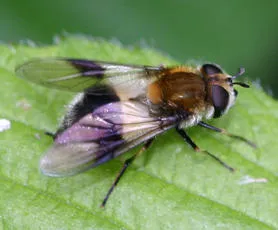
A striking hoverfly with a white band across the upper abdomen and black wing patches that align with the black abdominal band. In the male, the white band on tergite 2 can often be darker. Both sexes have an obvious yellow-orange scutellum that imme
Leucozona xylotoides
Leucozona xylotoides
Identification: Separated from Leucozona (Leucozona) by lack of dark markings on the wing and abdominal bands rather than solid segments and from L. (Ischyrosyrphus) velutina by the much larger pale spots on tergite 2 and geographic distribution.
Liancalus virens
Liancalus virens
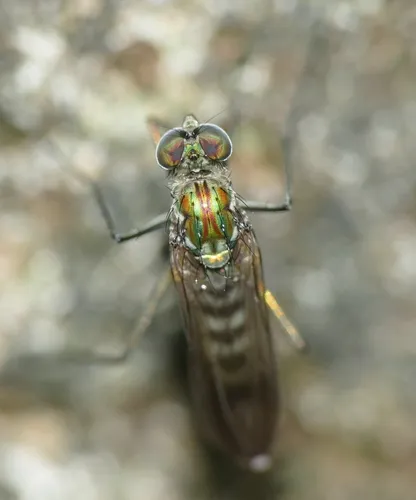
Length 7 or 8 mm. This colourful species is the largest of the dolichopodid or long legged flies in north western Europe. It lives amongst the mosses, liverworts and algae growing under bridges and beside waterfalls and fast running water. Scattered
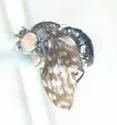
Limnellia anna
Limnellia anna
Identification: Grayish pollinose stripe on ventral margin of face, contrasting with rest of face; wing pattern different than the other eastern species.
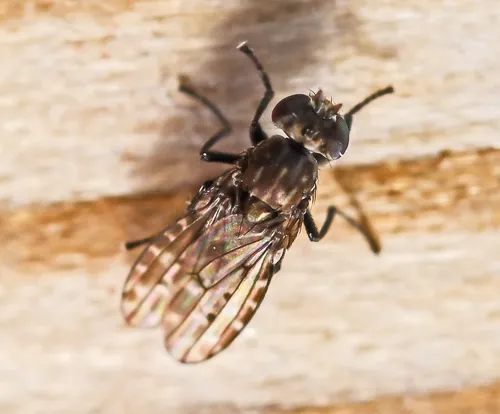
Limnellia quadrata
Limnellia quadrata
A very tiny (2 or 3 mm) fly with distinctively patterned wings. This is a member of the Ephydridae or 'shore flies' which are found around seashores and the shores of inland lakes and ponds. Widespread and probably fairly frequent in Britain, but lit
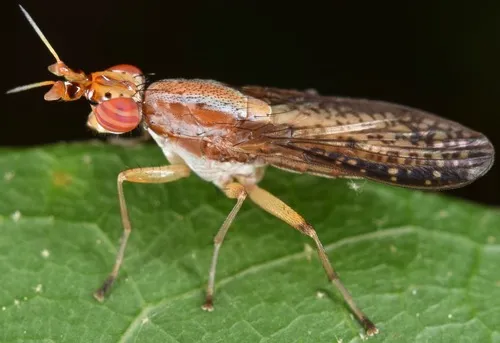
Limnia shannoni
Limnia shannoni
Identification: "One of the few Limnia that can be determined without dissection. The antennae have large brown swelling near the base." -- Bill Murphy
Limnophila munda
Limnophila munda
Identification: Shiny black body, wings with dark markings along some veins, femora with black tips.
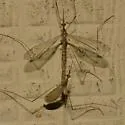
Limonia canadensis
Geranomyia canadensis
Identification: Wings unmarked except for stigma, body yellowish brown, thorax with dark marks, legs brownish yellow, femora dark tipped (Alexander, 1943)
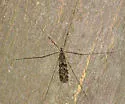
Limonia parietina
Limonia parietina
Identification: The wingtip is nearly truncated instead of evenly rounded. Page creation based on Chen Young's identification of this image .
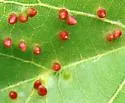
Linden Wart Gall Midge
Contarinia verrucicola
Larvae develop in warty galls on leaves, twigs, and fruit of American and European lindens ( Tilia spp.). Mature larvae exit galls (from the underside, if in leaves) and overwinter in the soil. Adults have not been reared.
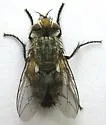
Linnaemya comta
Linnaemya comta
Western specimens tend to be redder than eastern. This supposedly holarctic species may consist of more than one species in North America Tachinidae of Gila National Forest
Linnaemya picta
Linnaemya picta
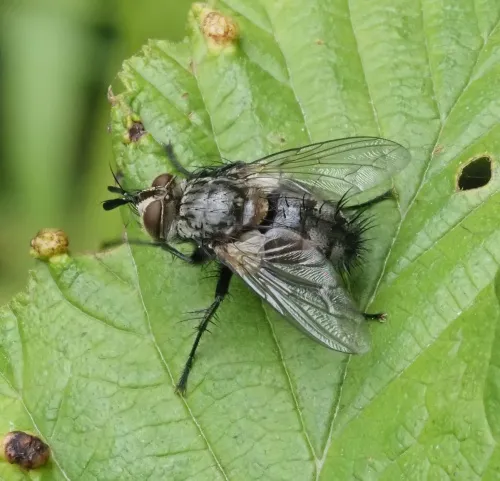
10-12mm. A large tachinid fly which is a relatively recent addition to the UK fauna. Black and grey patches on the abdomen become orange at the sides. Very similar in appearance to other family members so detailed examination is needed. https://tachi
Liohippelates pallipes
Liohippelates pallipes
Identification: Pale yellow legs. Paler specimens are distinctive with the front half of the frons contrasting yellow and the base of abdomen pale, but the frons can be mostly dark and the abdomen entirely dark.
Lipara lucens
Lipara lucens
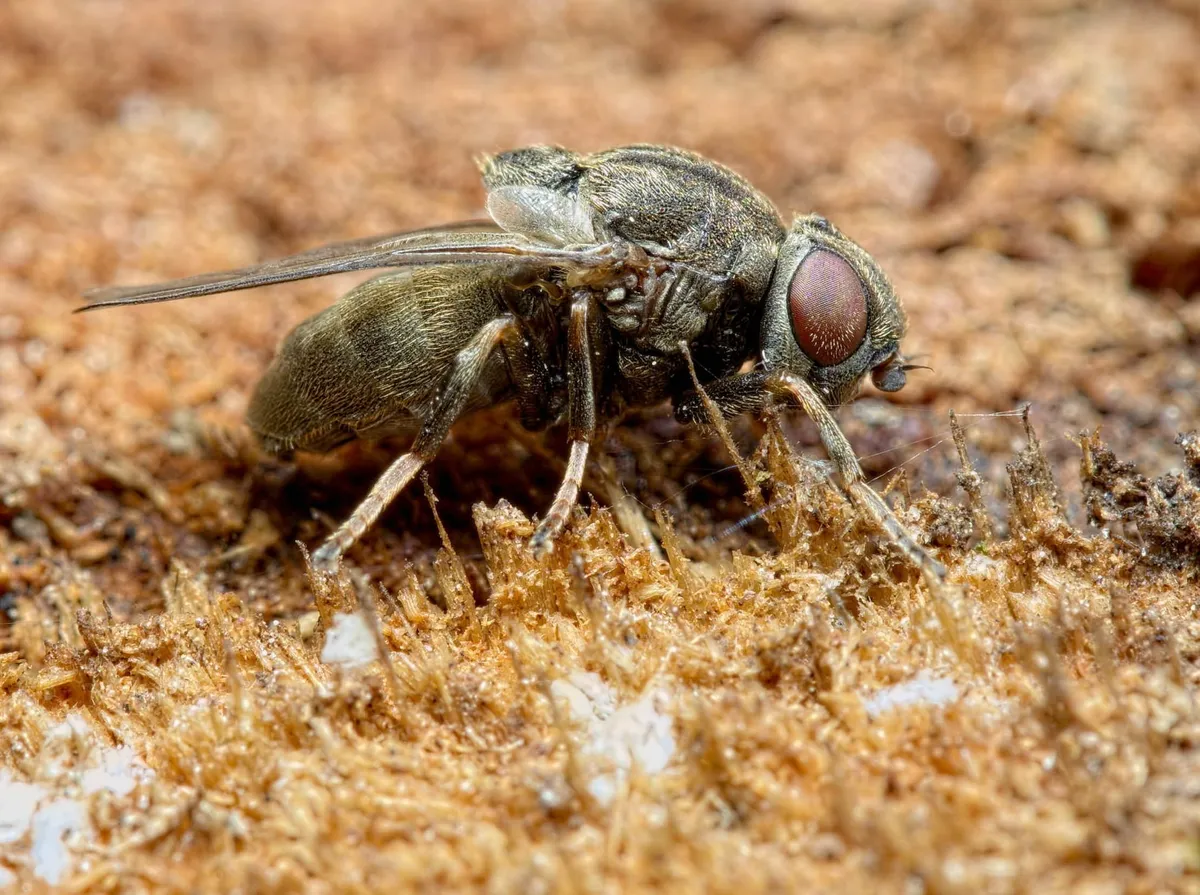
Introduced species from Europe, perhaps not established. Gall maker of the introduced Common Reed ( Phragmites australis ). Enters shoot at the tip and mines down. Causes shortening of the nodes.
Lipochaeta ranica
Lipochaeta ranica
Identification: antennae widely separated in deep pits; arista much shorter than the rest of the antenna; body bristles very weak
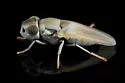
Lipochaeta slossonae
Lipochaeta slossonae
Identification: Small antennae widely separated in deep pits, with arista much shorter than rest of antenna. Body with very weak bristles.
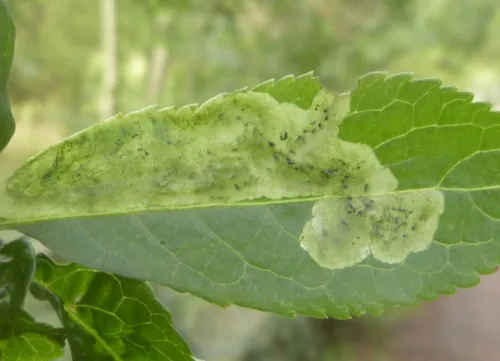
Liriomyza amoena
Liriomyza amoena
The larvae of the fly Liriomyza amoena mine the leaves of Elder, creating a large blotch mine with conspicuous frass. See the National Agromyzidae Recording Scheme webpage for this species for further details of puparium and adult insect. ref.: Warri
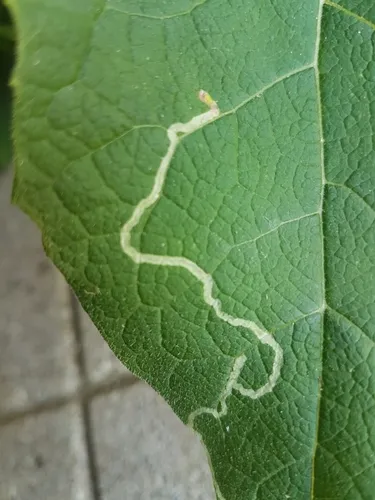
Liriomyza arctii
Liriomyza arctii
Larvae of Liriomyza arctii form narrow, white, linear mines in leaves of burdock ( Arctium minus ), exiting before pupating . Two polyphagous Liriomyza species, L. trifolii and L. huidobrensis , have also been reported from Arctium , but are unlikely
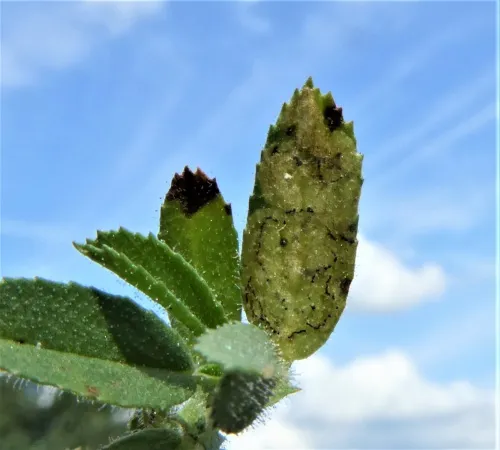
Liriomyza cicerina
Liriomyza cicerina
The fly mines the leaves of Restharrow ( Ononis ), creating a winding mine with the frass in short threads. See the National Agromyzidae Recording Scheme webpage for this species for further details of puparium and adult insect. Liriomyza bryoniae re
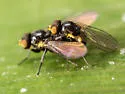
Liriomyza galiivora
Liriomyza galiivora
Larvae form linear mines in in Galium boreale and triflorum (and probably other species). The species name means "eater of Galium ." According to Spencer and Steyskal this species is externally indistinguishable from G. vockerothi . It is also found
Liriomyza pisivora
Liriomyza pisivora
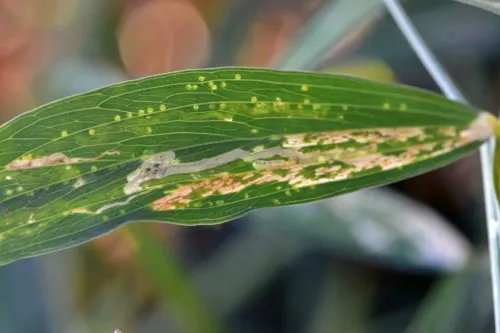
The larvae of the fly Liriomyza pisivora mine the leaves species in the pea family, including Garden Pea, Broad-leaved Everlasting-pea and Tufted Vetch. They create a long linear mine which starts on the lower surface of the leaf but then penetrates
Liriomyza puella
Liriomyza puella
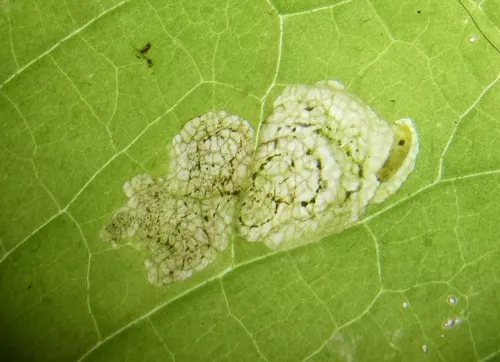
The larva of the Agromyzid fly Liriomyza puella mines the leaves of Nipplewort. The mine starts as a corridor which then expands into a blotch which is dark with white borders. The blotch mine is initially circular, or slightly elongated, but becomes
Liriomyza sonchi
Liriomyza sonchi
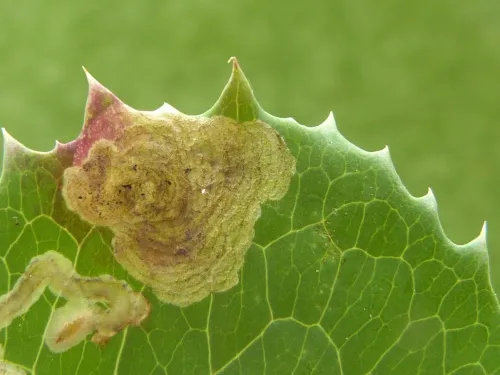
The larvae of the fly Liriomyza sonchi form large upper surface blotch mines on the leaves of sow-thistle species. Secondary feeding corridors are often present. Scattered frass can be seen in the mine. Several larvae may feed together in the mine. S
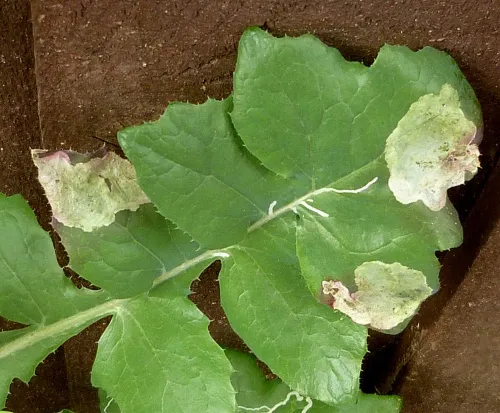
Liriomyza taraxaci
Liriomyza taraxaci
The larvae of the fly Liriomyza taraxaci mine the leaves of Dandelion, Sow-thistle species and Autumn Hawkbit. They form small, irregular, elongated blotch mines with little frass inside. See the National Agromyzidae Recording Scheme webpage for this
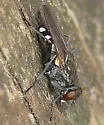
Lispe sociabilis
Lispe sociabilis
Identification: Male distinguished from other members of the tentaculata group by lack of long spine at the end of the fore basitarsus. Female distinguished by dark legs, details of bristles on hind legs, and range.
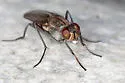
Lispe tentaculata
Lispe tentaculata
Identification: Male long spine at end of fore basitarsus longer than basitarsus and about half as long as second segment. Female often with pale legs (usually black in related species).
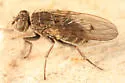
Lispocephala alma
Lispocephala alma
Identification: Distinguished from related species by combination of spots over crossveins, spots on edge of scutellum, and third segment of antennae without red on inside.
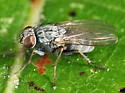
Lispocephala erythrocera
Lispocephala erythrocera
Identification: In Central Europe the keys diagnose it as (in Gregor et al., 2016): mid and hind femora predominantly black, postpedicel reddish yellow at base, crossveins not infuscated, mid tibiae without a submedian anterodorsal bristle, all tibia
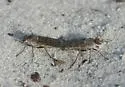
Litolinga tergisa
Litolinga tergisa
Identification: Contrary to what many keys mention, this species can have 0-2 pairs of scutellar bristles.
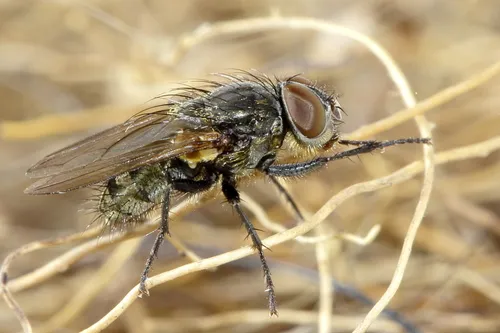
Little Clusterfly
Pollenia griseotomentosa
Pollenia griseotomentosa averages as our smallest clusterfly and has proportionately short legs, with the front tarsi only about the length of the front tibiae. The tergites are less conspicuously tessellated than most clusterflies, with a conspicuou
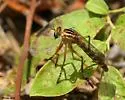
Little Hanging Thief
Diogmites misellus
Identification: Smallest Diogmites . Central stripe on top of thorax shades to red towards front
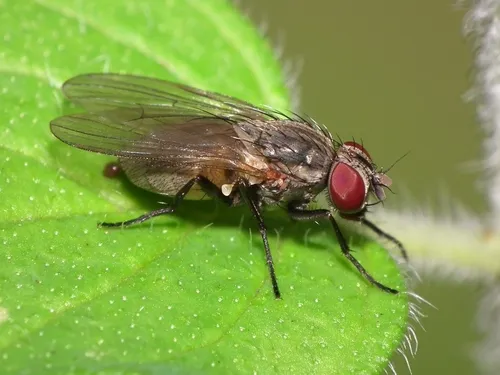
Little House Fly
Fannia canicularis
May be a nuisance up to two miles from the breeding site. Males often seek shade indoors, where they may hover in rooms for long periods.
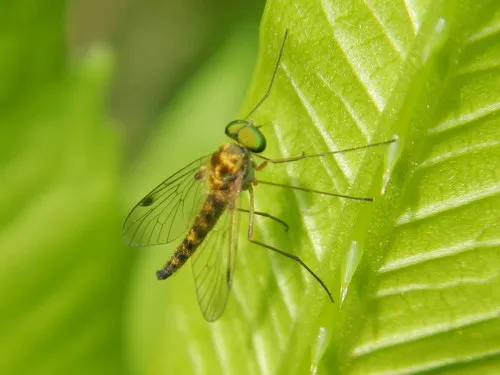
Little Snipe Fly
Chrysopilus asiliformis
A relatively small and delicate, grey-dusted snipe fly with rather striking green eyes. It can be found in a variety of habitats including scrub, woodland edge, wetlands and even gardens where it is usually encountered on foliage. The larvae are pres
Liverfluke Snail Predator Fly
Sepedomerus macropus
Identification: porrect (forward-pointing) antennae are standard features in the genera Sepedon, Parasepedon, Sepedonea, Sepedomerus . The extremely long, orange hind femora and tibia with the prominent black band is diagnostic for this unique specie
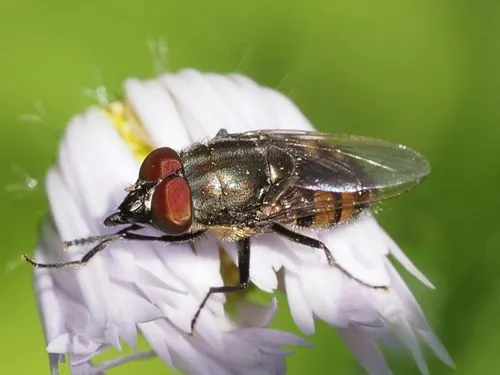
Locust Blowfly
Stomorhina lunata
A distinctive mid-sized blowfly which is sometimes mistaken for a hoverfly or Muscid. It has a three dark stripes on the thorax and a strongly protruding lower face. Tergites 3 and 4 (apparent 2 and 3) have orange patches on the side in males, or gre
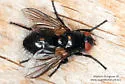
Loewia foeda
Loewia foeda
Native to Europe, first found in North America on Long Island in 1958. Parasitoid of Lithobius centipedes; one of the very few Tachinidae not to parasitize insects.
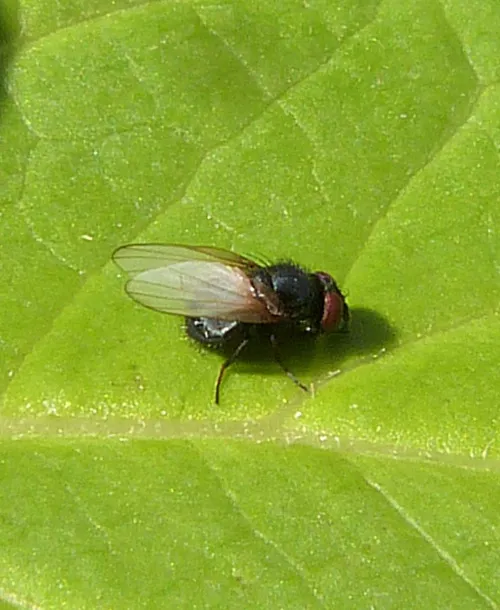
Lonchaea tarsata
Lonchaea tarsata
A small, black, hairy fly with a rather plump body and milky coloured wings. There are other similar species and detailed examination is needed for a safe id. This family is usually associated with woodland, but little seems to be known about the lif
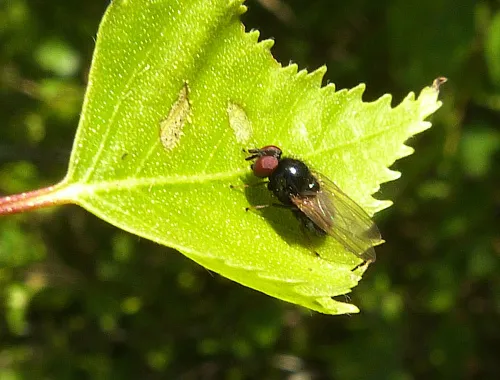
Lonchaea ultima
Lonchaea ultima
Lonchaea species are generally of rather uniform appearance, being moderately small flies, with dumpy bodies that are black in colour. Identifiecation to species level requires detailed examination and is often very difficult. Detailed examination of
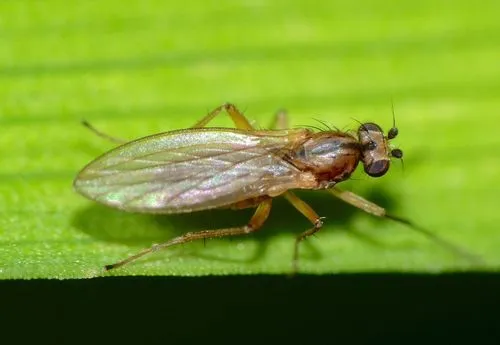
Lonchoptera bifurcata
Lonchoptera bifurcata
3-4mm. Body colour variable, from pale yellow to dark brown. Legs are pale. As with other species in the family, the wings are long and thin giving them their common name of 'Spear-winged Flies'. See ID guidance below for the specific features seen i
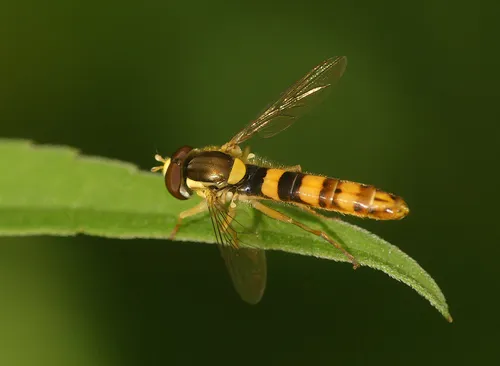
Long Hoverfly
Sphaerophoria scripta
The male is readily identifiable as its body is longer than the wings, though the pattern of black and yellow is variable with a darker form fairly frequent. Females however cannot be readily identified. Found from April to November, peaking in July
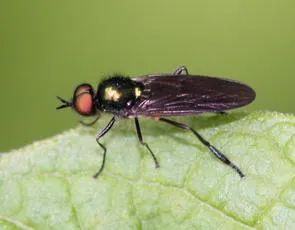
Long-horned Black Legionnaire
Beris geniculata
Like all flies in the Beris genus, this species has six spines at the base of the scutellum. B. geniculata has a black, or dark, abdomen and dark legs with yellow 'knees'. There are 6 British species in the Beris genus and these can usually be distin
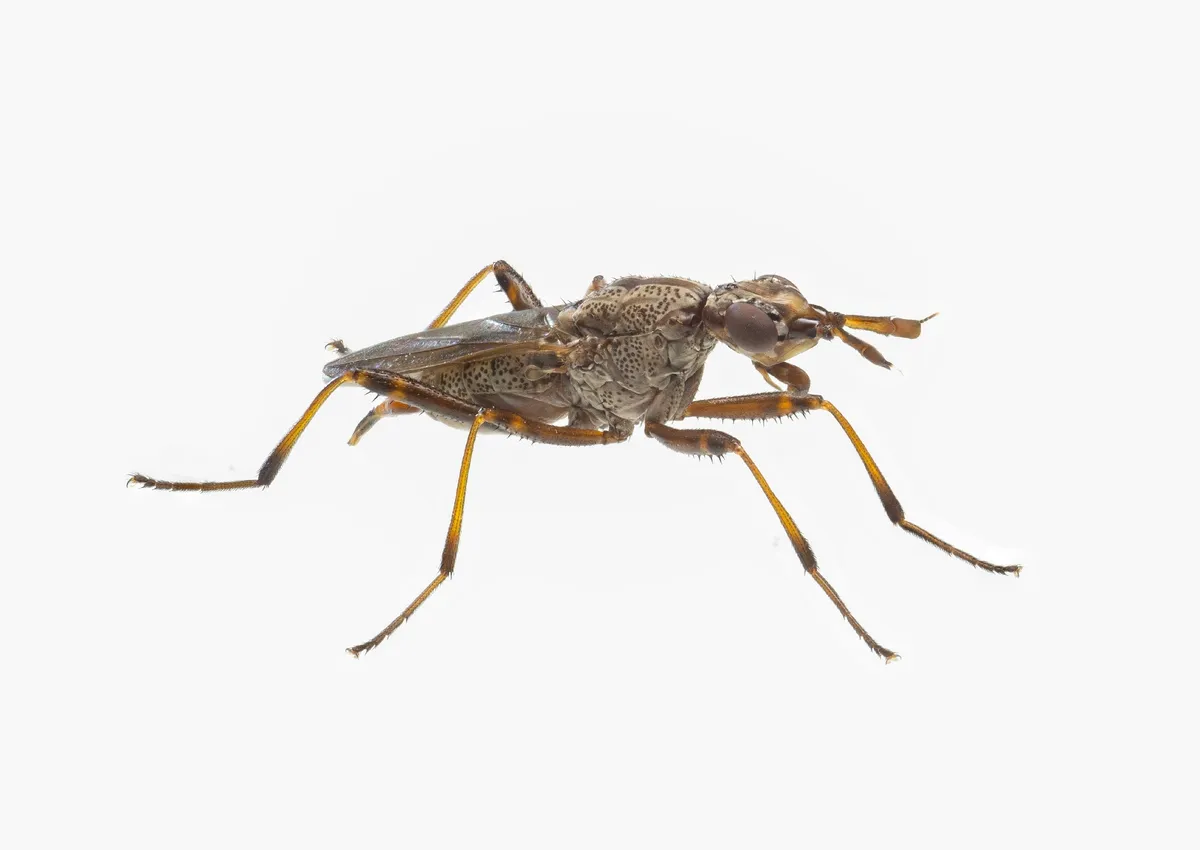
Longhorn Cactus Fly
Odontoloxozus longicornis
Identification: Brown, face and lower part of head yellow. Eye has two black spots along front, brown stripe behind. Antennae have broad third segment. Legs yellow-brown, femora with spines. Stem of halteres yellow, knobs brown.
Lordotus planus
Lordotus planus
Identification: Seven small wing spots, mostly on the cross veins.
Lordotus pulchrissimus
Lordotus pulchrissimus
Identification: Outwardly very similar to the closely related L. zona , i.e. in vestiture and antennal proportions. However, both sexes of pulchrissimus have black coxae (Hall, 1954; Hall & Evenhuis, 1982); coxae in zona are yellow. Genitalia also
Lordotus zona
Lordotus zona
Identification: Very similar to the closely related L. pulchrissimus , but coxae in both sexes are yellow, as opposed to black in pulchrissimus . Genitalia also differ (see details in Hall & Evenhuis, 1982) Sexually dimorphous, with males' vestiture
Loxocera collaris
Loxocera collaris
Identification: Wing unmarked. Pedicel (2nd antennal segment) shorter than high. Arista short pubescent. Distinguished from the similar western species L. microps by its longer antennae (first flagellomere about twice as long as the face or more), th
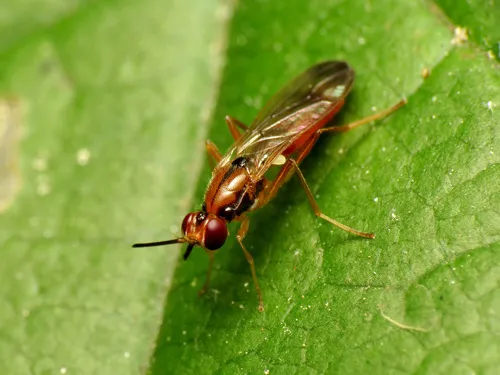
Loxocera cylindrica
Loxocera cylindrica
Identification: Wing darkened at apex and posterior crossvein. Pedicel (2nd antennal segment) longer than high. Arista with long pubescence:
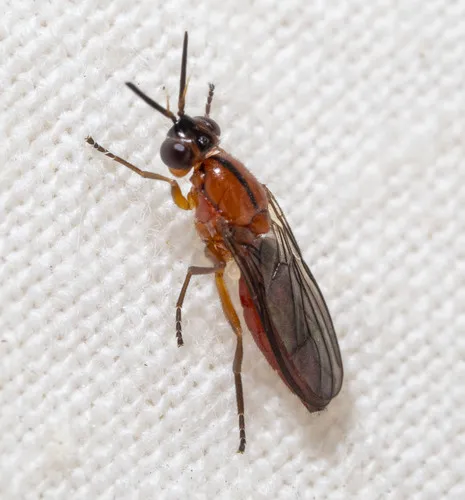
Loxocera fumipennis
Loxocera fumipennis
Identification: Wing evenly infuscated. Pedicel longer than high. Arista with short pubescence.
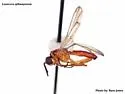
Loxocera ojibwayensis
Loxocera ojibwayensis
Identification: Description in Buck & Marshall 2006
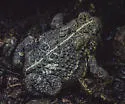
Lucilia bufonivora
Lucilia bufonivora
Identification: Very similar to L. silvarum and L. elongata . Previously unreported in North America, this species was absent from calliphorid keys, leading to reports of Anuran myiasis from the previously mentioned species. This species is included
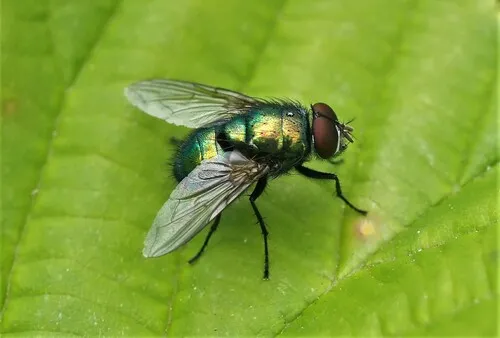
Lucilia caesar
Lucilia caesar
This blow fly is bright iridescent green though like all the 'greenbottles' is becomes more bronze with age. It is very similar to other Lucilia species but has just two pairs of acrostichal bristles behind the suture line on the thorax and a dark ba
Lucilia eximia
Lucilia eximia
Identification: Two postsutural acrostichals, male frons very narrow (broader in cluvia ), basicosta brown (paler in coeruleiviridis ). "This is one of only 2 species with yellow palps and a dark basicosta. This species has pale, weak setae below and
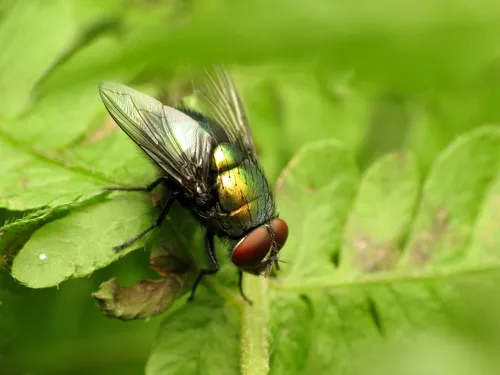
Lucilia illustris
Lucilia illustris
Identification: has black setae on the subcostal sclerite on ventral surface of wing (requires ~50x magnification); all other NA Lucilia spp. have only fine pubescence in that area
Lupine Leaf Gall Midge
Dasineura lupinorum
Identification: Causes small galls on leaflets of Lupinus species, apparently preferring perennial species (e.g. L. albifrons and L. argenteus ). The gall become reddish over time and contain several larvae.
Lutomyia spurca
Lutomyia spurca
Identification: reddish; no anterodorsal bristles on mesotibia, R2+3 touching costa over most of its length, and several ventral spines on male metafemur
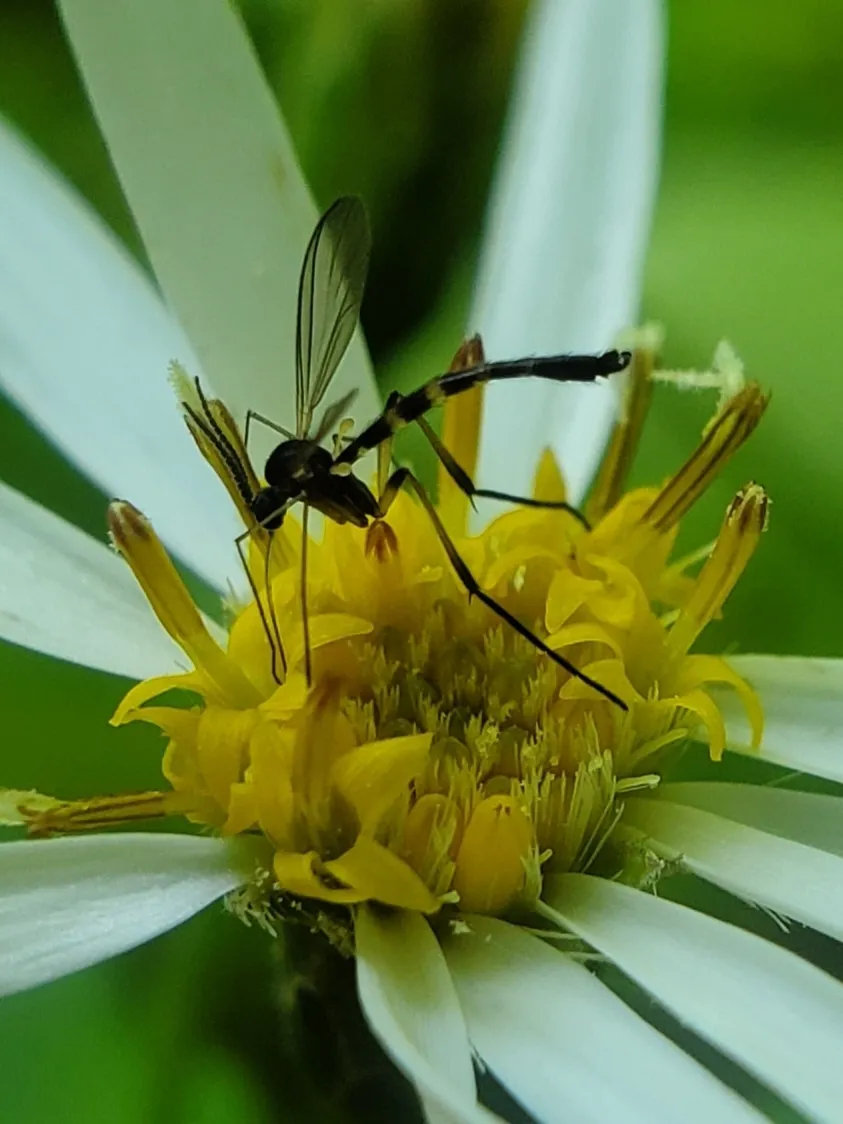
Lygistorrhina sanctaecatharinae
Lygistorrhina sanctaecatharinae
Identification: Long beak, R2+3 absent, base of vein M missing, body mostly black. Females of several other species in the genus will also match this description; the population from the United States belongs to a single species as far as is known.
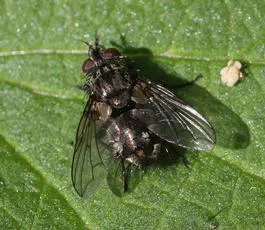
Lypha dubia
Lypha dubia
Relatively small (4-7mm), this fly has an overall brassy look with a chequered abdomen. The front of the thorax usually has short white stripes. Woodland - often seen on tree trunks and foliage. One generation per year. The larvae parasitise Winter M
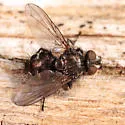
Lypha setifacies
Lypha setifacies
Identification: Male genitalia needed to place to species; usually smaller than other Nearctic Lypha species (except L. parva ); male vertex width 0.20-0.28 of head width; eye height of 0.71-0.78 head height; flagellomere 1 length of 0.36-0.47 head h
Lytogaster excavata
Lytogaster excavata
Identification: "Frontal triangle with lateral orbital margins distinctly and sharply raised" (Clausen, 1982)
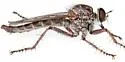
Machimus griseus
Machimus griseus
Identification: Per Eric Fisher, the only Machimus in the U. S. with spotted wings.
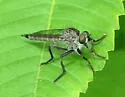
Machimus maneei
Machimus maneei
Identification: Excerpts from Robber Flies of the Southeast: " Machimus maneei occurs in sandy pinewoods throughout the eastern U.S. and Canada though populations appear to be spotty...Compared to other Machimus , this species is relatively easy to i
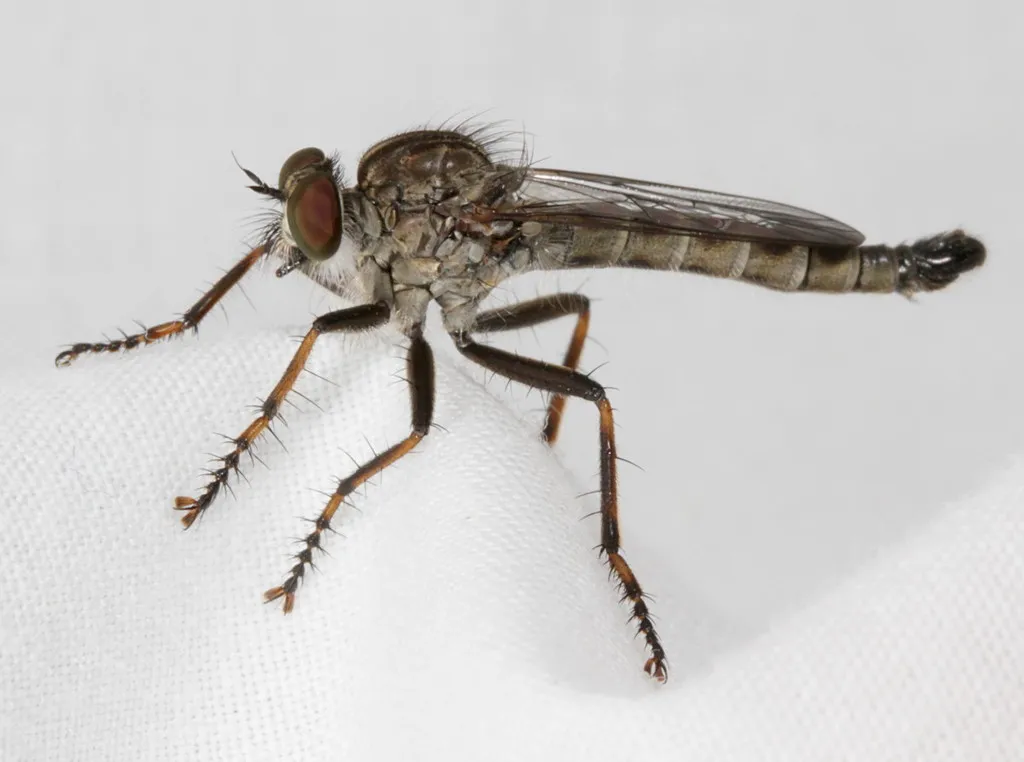
Machimus sadyates
Machimus sadyates
Identification: "Distinctive in the Northeast by having a combination of the all-black femur, tibia with black anterior but pale posterior, and shiny black last (non-ovipositor) tergite." (Comment by Tristan McKnight)
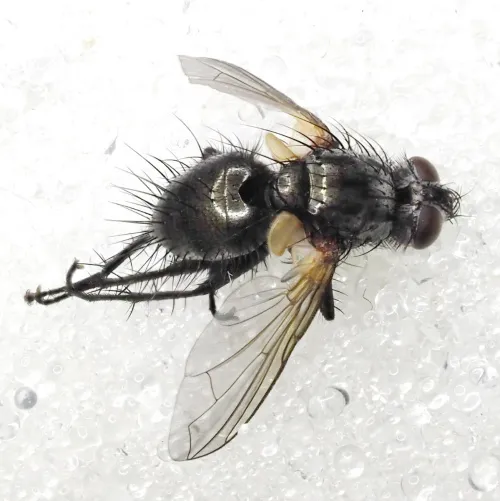
Macquartia tenebricosa
Macquartia tenebricosa
6-9mm. Dark green/bronze abdomen and thorax, with a pale collar on the thorax behind the head. Larvae of Macquartia tenebricosa are endoparasities of Chrysolina beetles. Unless identified by a recognised expert, a photo is required and the specimen s
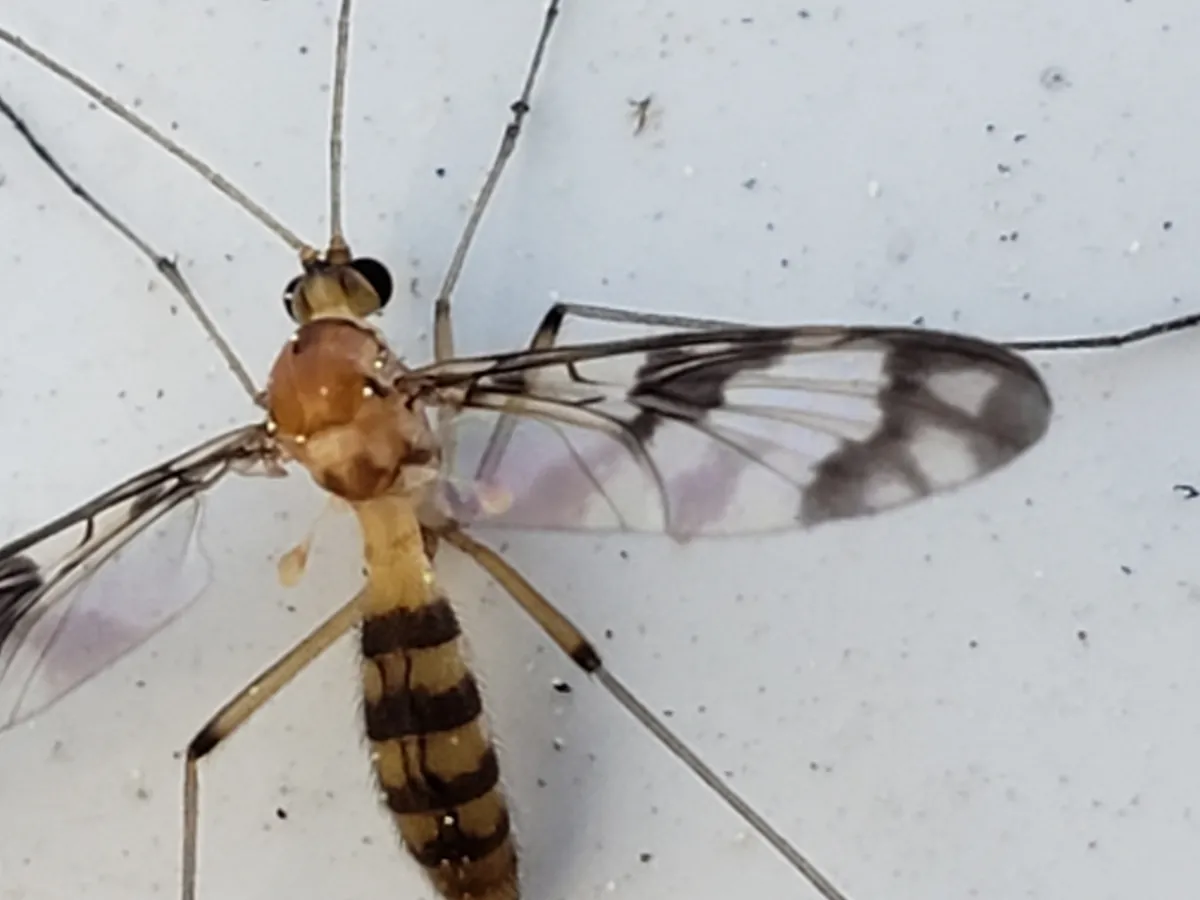
Macrocera formosa
Macrocera formosa
Identification: Wings have two apical bands, connected along veins, as well as a median band and basal spot. Abdominal segments blackish apically. Type images at MCZ: https://mczbase.mcz.harvard.edu/MediaSearch.cfm?action=search&media_id=96505,96506,
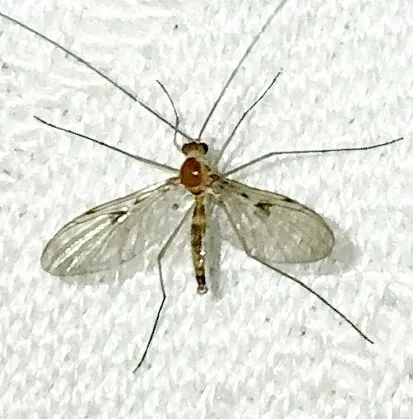
Macrocera inconcinna
Macrocera inconcinna
Identification: Abdomen without regular bands or spots (irregular dark patches may be present). Tip of R1 swollen. Scutum slightly darker than rest of body. Antennae with base yellow, remainder dark. Wing with central spot but no apical band. Th
Macrodiplosis castaneae
Macrodiplosis castaneae
Causes galls on chestnut ( Castanea ), which develop in spring. In June-July, larvae exit through an elongate opening that develops along the vein on the upper surface of the leaf. Adults have never been reared.
Macrodiplosis majalis
Macrodiplosis majalis
Literature records list Quercus palustris as a host. BugGuide photos show other species of the red oak section.
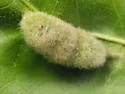
Macrodiplosis niveipila
Macrodiplosis niveipila
Forms galls on leaves of white oak ( Quercus alba ) and other oaks: "Amorphous, thin-walled, large fold with white down on inside surface, often deforming leaf." In addition to an illustration of a highly distorted white oak leaf, Gagne illustrates a
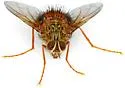
Macromya crocata
Macromya crocata
The species ranges from extreme southern USA to Brazil, where it was recorded parasitizing Mazaeras conferta (Arctiidae) and Megalopyge lanata (Megalopygidae).
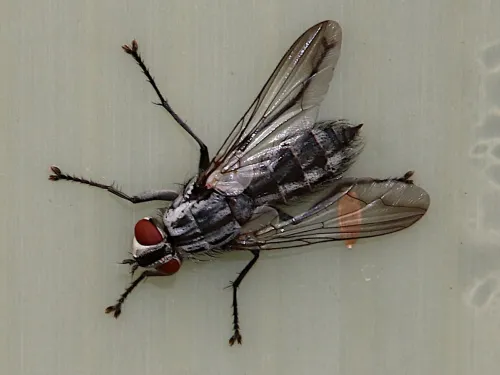
Macronychia dolini
Macronychia dolini
A relatively distinctive Sarcophagid, with a body length of 10 to 12 mm. The abdomen has three triangular marks on each tergite, and is constricted towards its base. The wings extend well beyond the abdomen and have some pale brown shading. The legs
Macrorrhyncha coxalis
Macrorrhyncha coxalis
Though a century old, the key in Johannsen 1910 covers all three species of Asindulum and Macrorrhyncha known to date from North America. His A. flavum is now called A. winnertzi .
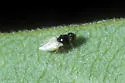
Malloewia abdominalis
Malloewia abdominalis
Identification: all-white abdomen and shiny black thorax are characteristic for this species. ‒ Terry Wheeler
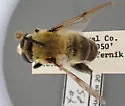
Mallota albipilis
Mallota albipilis
Identification: Eyes bare; thorax and scutellum pale yellow pilose; abdomen entirely pale pilose; wing obfuscation restricted to the area around the veins; cell c almost completely bare. Molecular data and morphological differences support splitting
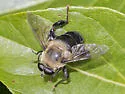
Mallota bautias
Mallota bautias
Identification: abdomen black pilose beyond first segment; eyes bare (not pilose as in M. posticata ); Western specimens (i.e. Texas, Kansas, Nebraska, Colorado) usually have T4 yellow pilose. Males show hilltopping behavior: they congregate in open
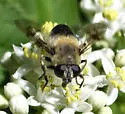
Mallota diversipennis
Mallota diversipennis
Identification: Eyes bare; thorax and scutellum pale yellow/reddish pilose; abdomen mostly pale pilose, but black pilose medially; wing obfuscation restricted to the area around the veins. Cell c almost completely bare.
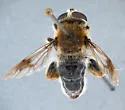
Mallota illinoensis
Mallota illinoensis
Identification: Eyes bare; thorax and scutellum pale yellow/reddish pilose; abdomen completely pale pilose; wing obfuscation extensive, not just restricted to the area around the veins. Cell c almost completely bare. Barcode and genitalia differ from