
Inland Floodwater Mosquito
Aedes vexans
This record describes Aedes vexans (species). Recorded family: Culicidae. Recorded order: Diptera.
Identification and Appearance
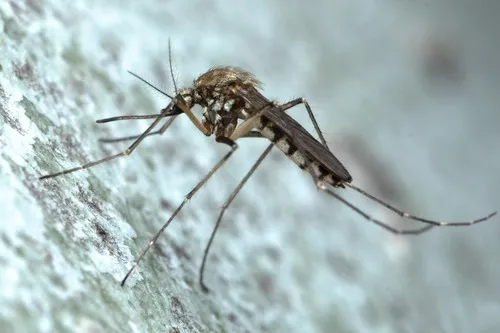
Larvae: - Antennae are shorter than head - Short siphon with a tuft half as long as the diameter of the base, between pecten teeth - Saddle on anal segment incomplete Adult Female: - Unbanded proboscis - Scutum with short brown scales and no obvious pattern - Most easily recognized by the sideways 'B' shaped markings on each abdominal tergite. < males < females Note pale 'B' shaped markings on each abdominal segment of first female image Florida Medical Entomology Laboratory These mosquitos bite mammals and are known to travel distances from their breeding sites unlike other mosquitos. They are good vectors of EEE and the Cache Valley fever virus has been isolated from them Aedes vexans is recognized as New Jersey’s most serious pest mosquito due to its abundance, widespread distribution and breeding potential in floodwater habitats. The mosquito probably does not reach the nuisance levels of Aedes sollicitans in coastal areas but causes annoyance over a much broader range of the state. The mosquito has not definitely been documented as a vector of disease but has been implicated as a secondary vector of eastern equine encephalitis and dog heartworm. - Wayne J. Crans, Rutgers University
Wikipedia reference for Aedes vexans: http://en.wikipedia.org/wiki/Aedes_vexans.
Classification
Habitat and Range
Habitat
This is a floodwater mosquito, meaning that the eggs are laid offshore and when a heavy rain comes the water rises, floods the eggs and the egg hatches. Eggs are mainly found in freshwater pools and depressions. Virtually any transient water can support Ae. vexans larvae, but rainpools in unshaded areas produce the largest broods. The species is most common in grassy pools that border wooded areas but specimens can be encountered in partially shaded woodland pools, roadside ditches, and vernal pools in open fields. - Wayne J. Crans, Rutgers University
Geographic Range
common in southern Canada and throughout most of the US, but is less abundant in the extreme south / Nearly cosmopolitan ( 3 )
Seasonal Activity
Larvae: April-September Adults: May-October
Diet and Behavior
Diet: Mammalophilic - females prefer only the blood of mammals for protein meals. Like all mosquitoes, they will also take sugary liquids like nectar, honeydew and sap.
Life History
- Overwinters as an egg - Multivoltine
Additional species information
Species notes from the sources
Etymology: vexan - Latin for 'annoying'
About Flies: the wider group
Order-level background for Diptera, the group containing Aedes vexans. Species-specific details appear above.
Group overview
Diptera includes over 150,000 described species of flies, mosquitoes, and midges. Mosquitoes are the deadliest animal on Earth (CDC). Malaria alone causes ~249 million cases and over 608,000 deaths annually, mostly children under 5 (WHO). Vector-borne diseases account for over 17% of all infectious diseases, causing 700,000+ deaths per year.
Ecological role of the group
Despite their disease impact, flies are critical decomposers and pollinators. Hoverflies alone pollinate hundreds of crop and wildflower species. Flies are also the primary food source for many birds, bats, and fish. Forensic entomology relies heavily on fly species for crime scene analysis.
Economic and practical significance of the group
In the U.S., vector-borne disease cases tripled between 2004-2016, with over 640,000 cases reported in that period (CDC). Tickborne diseases doubled from 22,000 to 48,000 annual reports. Globally, mosquito-borne diseases cost billions in healthcare and lost productivity.
Recorded sources for this group: WHO, CDC, PNAS. Imported estimates may describe particular regions or reporting periods.
Photos of Inland Floodwater Mosquito (3)
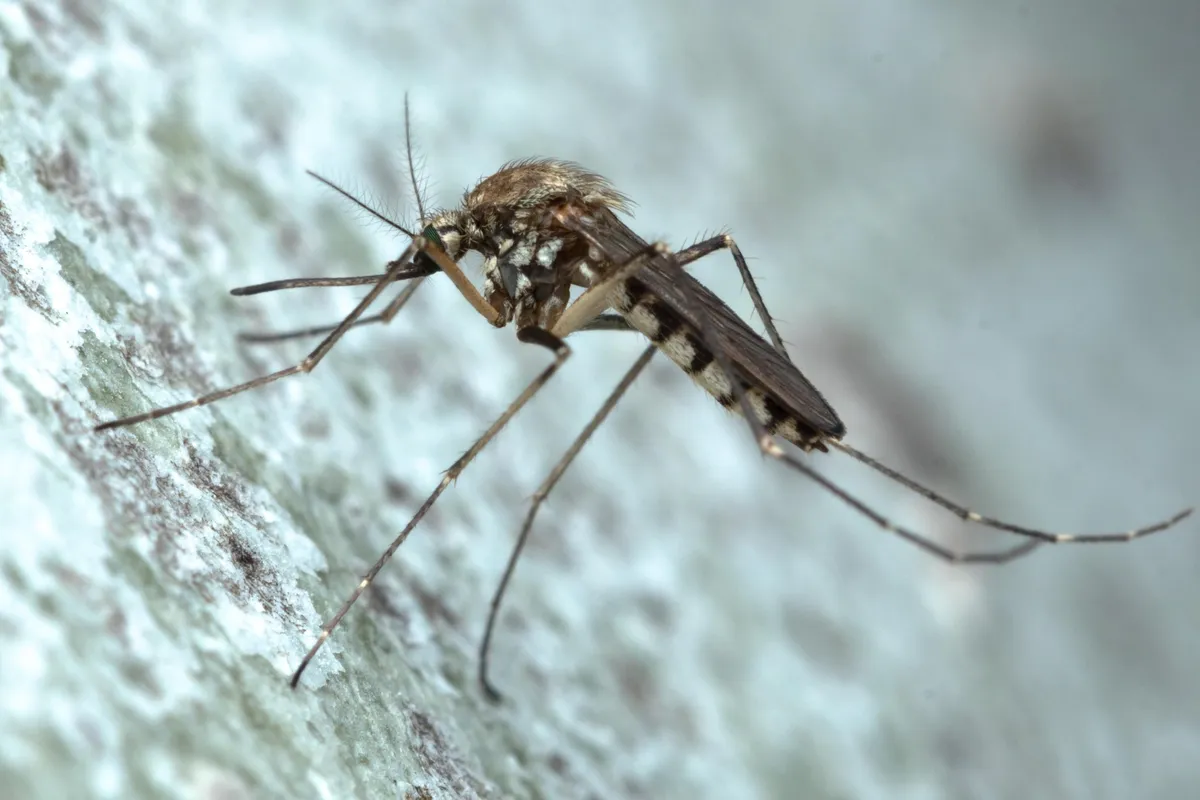
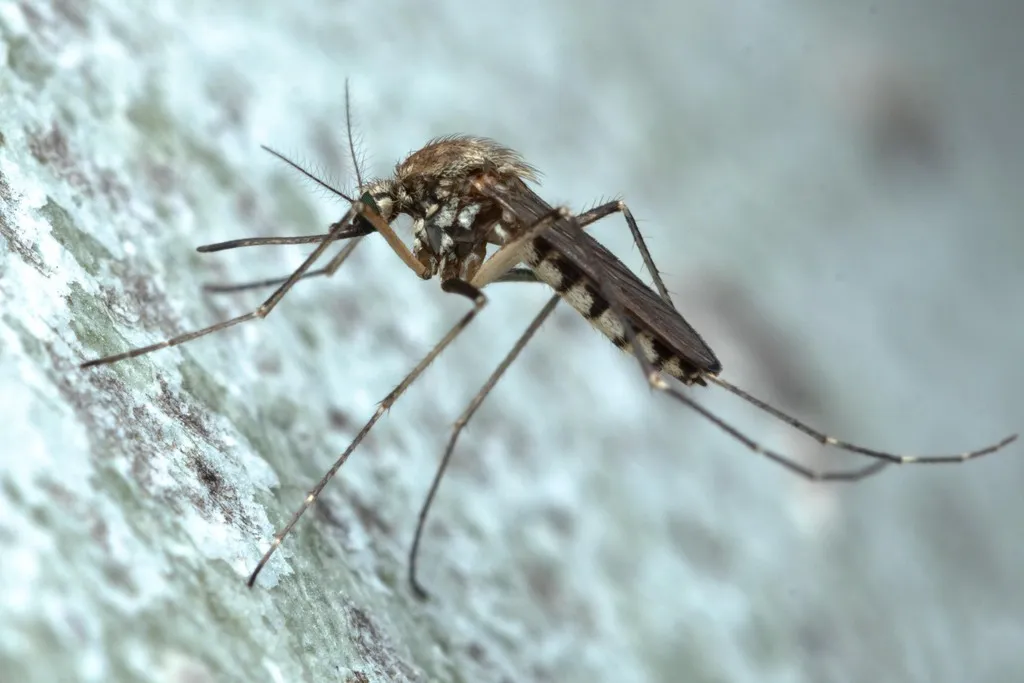
Photo credits: Contributed by tom murray; Additional contributions by Beatriz Moisset , smccann27 , Omar Fahmy , Mike Quinn
Frequently Asked Questions About Inland Floodwater Mosquito
What is Inland Floodwater Mosquito?
Inland Floodwater Mosquito (Aedes vexans) is a species in the family Culicidae, within the order Diptera.
How do you identify Inland Floodwater Mosquito?
Larvae: - Antennae are shorter than head - Short siphon with a tuft half as long as the diameter of the base, between pecten teeth - Saddle on anal segment incomplete Adult Female: - Unbanded proboscis - Scutum with short brown scales and no obvious pattern - Most easily recognized by the sideways 'B' shaped markings on each abdominal tergite. < males < females Note pale 'B' shaped markings on each abdominal segment of first female image Florida Medical Entomology Laboratory
Where is Inland Floodwater Mosquito found?
| Feature | Details |
|---|---|
| Habitat | This is a floodwater mosquito, meaning that the eggs are laid offshore and when a heavy rain comes the water rises, floods the eggs and the egg hatches. Eggs are mainly found in freshwater pools and depressions. Virtually any transient water can support Ae. vexans larvae, but rainpools in unshaded areas produce the largest broods. The species is most common in grassy pools that border wooded areas but specimens can be encountered in partially shaded woodland pools, roadside ditches, and vernal pools in open fields. - Wayne J. Crans, Rutgers University |
| Range | common in southern Canada and throughout most of the US, but is less abundant in the extreme south / Nearly cosmopolitan ( 3 ) |
What does Inland Floodwater Mosquito eat?
The diet of the Inland Floodwater Mosquito includes Mammalophilic - females prefer only the blood of mammals for protein meals. Like all mosquitoes, they will also take sugary liquids like nectar, honeydew and sap..
When is Inland Floodwater Mosquito active?
Inland Floodwater Mosquito: seasonal activity - Larvae: April-September Adults: May-October.
What is the life cycle of a Inland Floodwater Mosquito?
- Overwinters as an egg - Multivoltine