
Flies
Order Diptera
The Flies (Order Diptera) includes 6,350 species across 141 families and 1,800 genera in our directory.
About Flies
Diptera includes over 150,000 described species of flies, mosquitoes, and midges. Mosquitoes are the deadliest animal on Earth (CDC). Malaria alone causes ~249 million cases and over 608,000 deaths annually, mostly children under 5 (WHO). Vector-borne diseases account for over 17% of all infectious diseases, causing 700,000+ deaths per year.
Economic Impact
In the U.S., vector-borne disease cases tripled between 2004-2016, with over 640,000 cases reported in that period (CDC). Tickborne diseases doubled from 22,000 to 48,000 annual reports. Globally, mosquito-borne diseases cost billions in healthcare and lost productivity.
Ecological Role
Despite their disease impact, flies are critical decomposers and pollinators. Hoverflies alone pollinate hundreds of crop and wildflower species. Flies are also the primary food source for many birds, bats, and fish. Forensic entomology relies heavily on fly species for crime scene analysis.
Families in Diptera (141)
Species in Diptera (6,350)
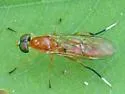
Ptecticus sackenii
Ptecticus sackenii
Identification: See comments on images here, and original description (Williston, 1885): (female) Length 11 mm. Front narrow, shining black, the lower part and the face yellowish white. Thorax yellow, the dorsum with three broad, more brownish, strip
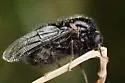
Pterodontia johnsoni
Pterodontia johnsoni
This is a western species that is virtually entirely black (with some reddish-brown undertones/tints).

Pterodontia notomaculata
Pterodontia notomaculata
This is the only known Pterodontia species with substantial yellow-orange coloration on the thorax (at anterior corners of the mesonotum, and on the anterior half of the mesopleura). All other species have almost the entire thorax black.
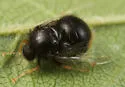
Pterodontia westwoodi
Pterodontia westwoodi
Identification: The distinguishing characters of this species in the genus are: discal cell open; 3rd and 4th vein both present, forming a fork in the apical portion of the wing; 3rd antennal segment slender, clavate (= "club-shaped"), 3 or more time
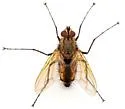
Ptilodexia maculata
Ptilodexia maculata
Identification: Most importantly, strongly contrasting dark patches under the tips of the femora. Body with a lot of red or orange.
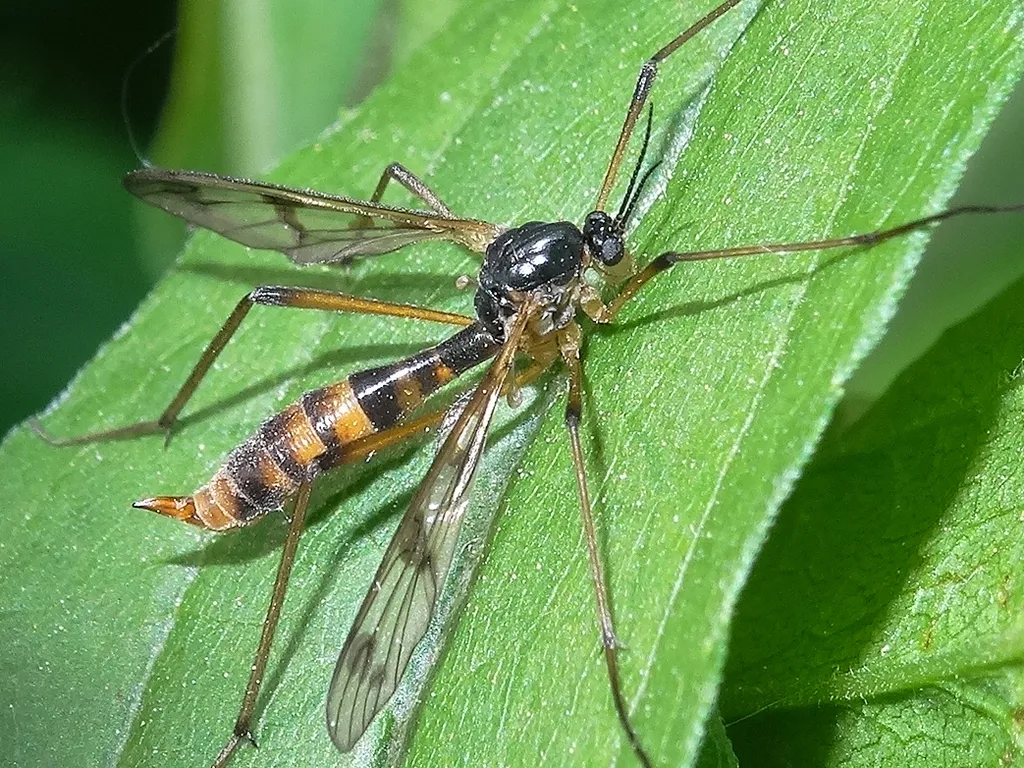
Ptychoptera quadrifasciata
Ptychoptera quadrifasciata
Western populations of "Ptychoptera quadrifasciata" are probably an undescribed species.
Puliciphora borinquenensis
Puliciphora borinquenensis
Identification: Key to Nearctic females Key to Neotropical females Photograph and wing description of male
Purple Bromeliad Fly
Copestylum violaceum
Identification: Alula at least without microtrichae on the apical 1/3. Original description .
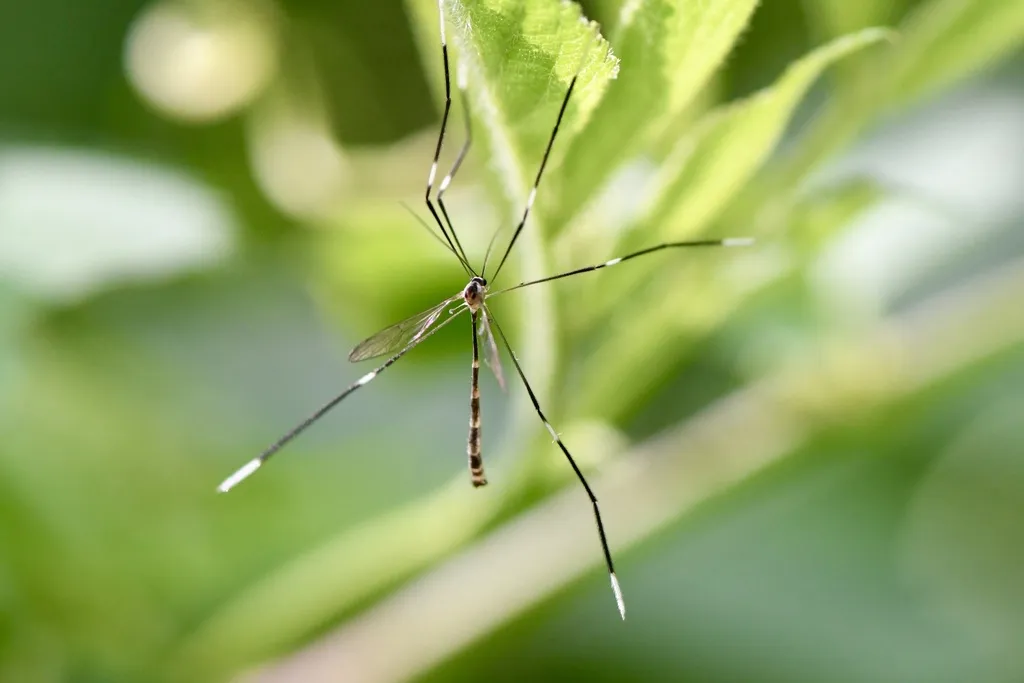
Pygmy Phantom Crane Fly
Bittacomorphella jonesi
Identification: The only Bittacomorphella in Eastern North America. Has a white band on the tibia, which the Western species lack.
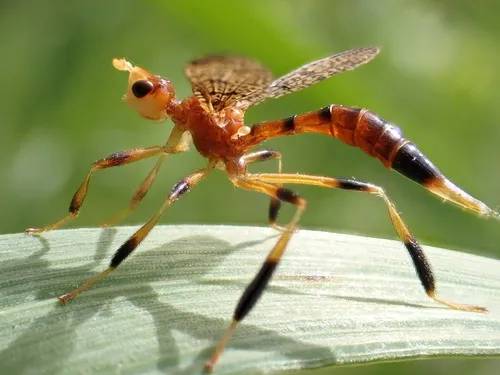
Pyrgotella chagnoni
Pyrgotella chagnoni
Identification: "Posterior apical corner of anal cell 90°, vein closing cell straight; alula rudimentary; face with single cuplike depression, without median keel; body without strong bristles, even on scutellum."
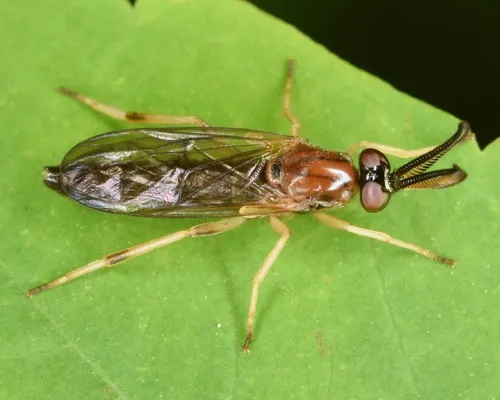
Rachicerus obscuripennis
Rachicerus obscuripennis
Identification: our only species with pectinate flagellomeres
Rachispoda spuleri
Rachispoda spuleri
Identification: Three dorsocentral bristles in addition to the incurved one (most other species with at least a weak fourth), no stong acrostichals but about 8 rows of weak hairs, third segment of antenna reddish, scutum with at least faint stripes w
Radiant Laphria
Laphria aktis
Identification: Nearly identical to Laphria sericea . Clear view of male terminal appendages necessary for identification from photographs. Females not separable from photos. Difficult to impossible to distinguish from L. sericea from photographs. Ph
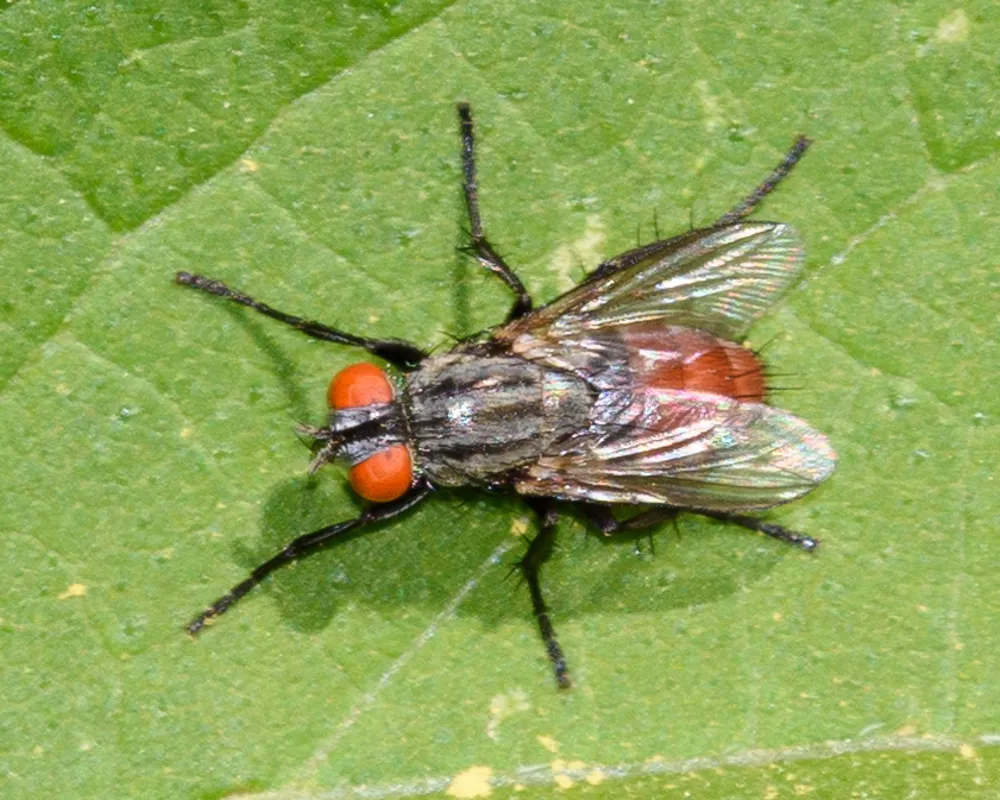
Rafaelia rufiventris
Rafaelia rufiventris
Aldrich (1916) published a description of this species misidentified as Sarcophaga rufiventris Wiedemann.
Range Crane Fly
Tipula simplex
See also the Handbook of Forage and Rangeland Insects, which presumably has much more current information: https://www.entsoc.org/Pubs/Books/Handbooks/forage .
Ravinia acerba
Ravinia acerba
Identification: Arista plumose, frontal rows not distinctly diverging, parafacial with scattered hairs, tegulae pale, 3 PS DC, 1st segment hypopygium red (sometimes dark basally)
Red-backed Tiger Fly
Ceraturgus elizabethae
Identification: Very dark, with elongate antennae, perhaps a mimic of Tachytes
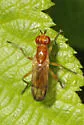
Renocera cressoni
Renocera cressoni
Identification: One fronto-orbital, densely plumose arista
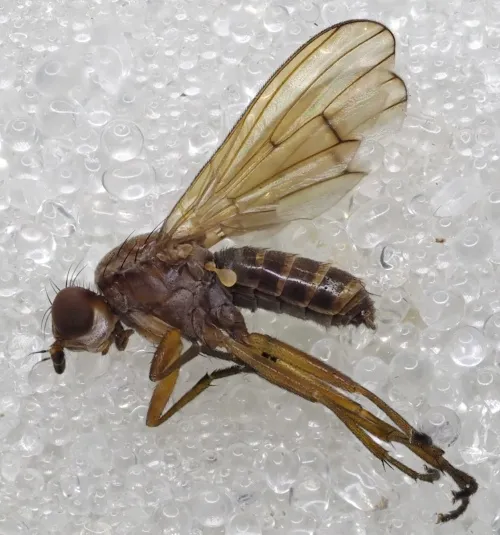
Renocera pallida
Renocera pallida
Size 4.2 to 6.2 mm. Generally orange-brown in colour. Can only be identified by detailed examination. Water margins, wet woodland and areas with waterlogged soil. Appears to be bivoltine with a flight period between May and September. The larvae are
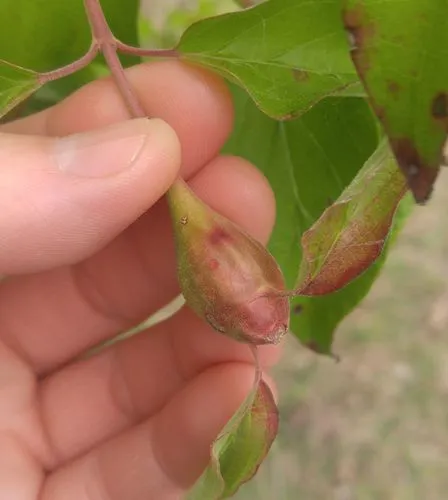
Resseliella clavula
Resseliella clavula
Causes galls in flowering dogwood ( Cornus florida ): a smooth, clublike enlargement just below the bud in apical branches. Most of the dogwood stem galls on BugGuide probably do not represent this species. When shown the images that were placed here
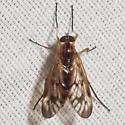
Rhagio albicornis
Rhagio albicornis
Identification: Female front mostly glossy black. Wings with dark markings mostly along veins. Abdomen yellow with black spots.
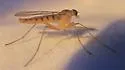
Rhagio gracilis
Rhagio gracilis
Identification: Note, the males have an eye-gap that is similar to the females. (see below) ♂ ♀
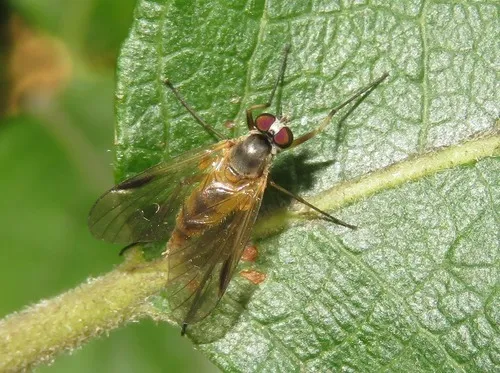
Rhagio lineola
Rhagio lineola
Like other Rhagio species R. lineola are yellowy-orange flies with long, slender legs. Length 6 to 8 mm. The thorax is uniformly grey, and the wing has a solid dark blackish stigma. Hedgerows woods and other well wooded areas with rich vegetation. Th
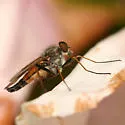
Rhagio maculifer
Rhagio maculifer
Identification: The first flagellomere is usually concave above the insertion of the arista. The palpi are slender and usually white-haired. The abdomen has yellow markings or is largely yellow except in subspecies styx from Montana.
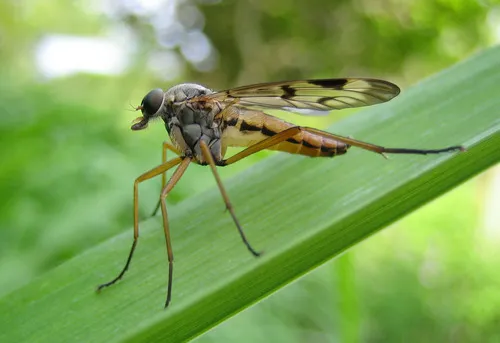
Rhagio scolopaceus
Rhagio scolopaceus
Length 8 to 16 mm. Like other Rhagio species R. scolopaceus are yellowy-orange (sometimes darkened) flies with long, slender legs. The sides of the thorax are grey as are the tops of the legs. The wing has several darkened marks. They tend to sit on
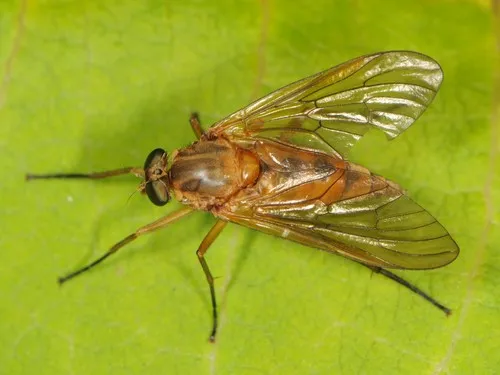
Rhagio tringarius
Rhagio tringarius
Length 8 to 14 mm. Like other Rhagio species, R. tringarius is a yellowy-orange fly with long, slender legs. This species lacks the dark wing stigma of most other Rhagio species. The black patterning on the orange abdomen is variable, sometimes showi
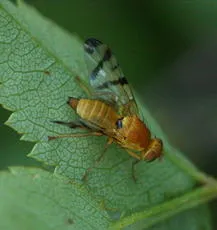
Rhagoletis alternata
Rhagoletis alternata
Rhagoletis alternata is a species of fruit fly with well marked banding on the wings. This genus contains a number of similar species and care must be taken over identification. Unless identified by a recognised expert, a photo is required. If the ph
Rhagoletis juglandis
Rhagoletis juglandis
Identification: The other two yellow-bodied Rhagoletis have more wing bands.
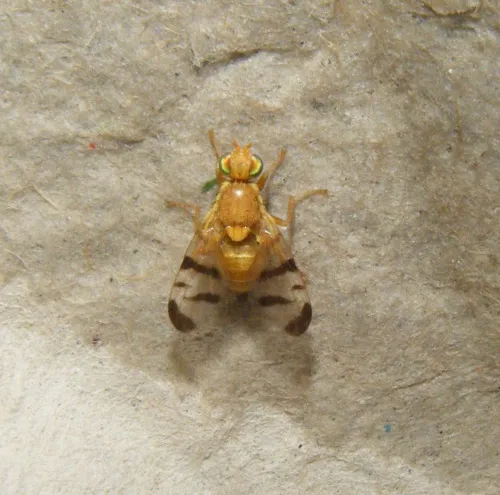
Rhagoletis meigenii
Rhagoletis meigenii
The wing is distinctively patterned, but there are similar species and detailed examination is needed for a positive identification to species level. Where no detailed examination has taken place, the image is shown in a red box to indicate that the
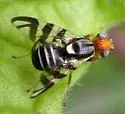
Rhagoletis striatella
Rhagoletis striatella
Identification: wing has three transverse bands, the third one resembling the letter "F" - with the top segment of the "F" touching the outer edge of the wing (see drawing of wing ). body mostly black; thorax with two pale dorsal stripes; base of scu
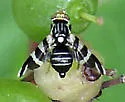
Rhagoletis tabellaria
Rhagoletis tabellaria
Identification: body mostly black; 4 white longitudinal stripes on back; scutellum white; abdomen with thin white bands; cross-banded wing pattern is distinctive
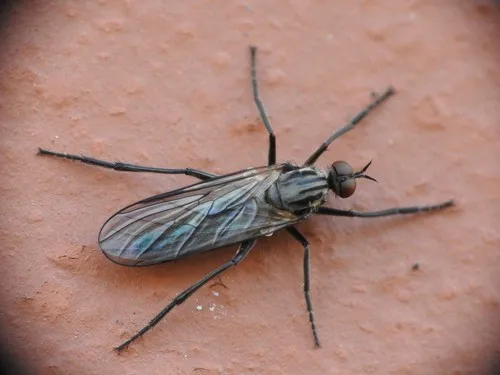
Rhamphomyia crassirostris
Rhamphomyia crassirostris
Length 5.5 to 6.5mm. This species has a fairly typical Empid form but the legs are not very strongly bristled. The female discal cell is a useful id aid, being enormously enlarged but still closed with the lower crossvein closing the cell near to and
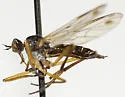
Rhamphomyia gracilis
Rhamphomyia gracilis
Identification: "A very characteristic species, skinny, yellow legs, females with a little spot near the wing apex." -- Isaac Winkler
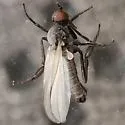
Rhamphomyia leucoptera
Rhamphomyia leucoptera
Identification: Male black with white wings and halteres and swollen hind basitarsi.
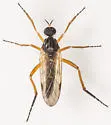
Rhamphomyia luteiventris
Rhamphomyia luteiventris
Identification: Loew's description (translated from Latin using Google translate): "Head dark gray, eyes contiguous. Antennae slender, black, with the first two short black-hairy joints, the second except the brown base, with a slightly short termina
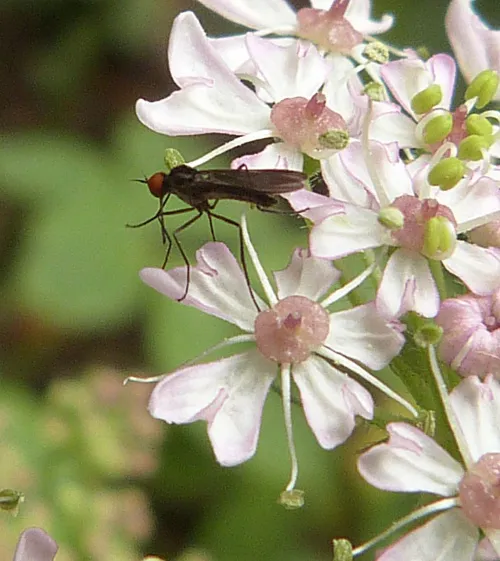
Rhamphomyia nigripennis
Rhamphomyia nigripennis
This small, dark coloured Dagger Fly (also known as Dance Flies) is very similar to other members of the genus and detailed examination is needed to identify to species level. Detailed examination is needed to identify to species level. Often seen vi
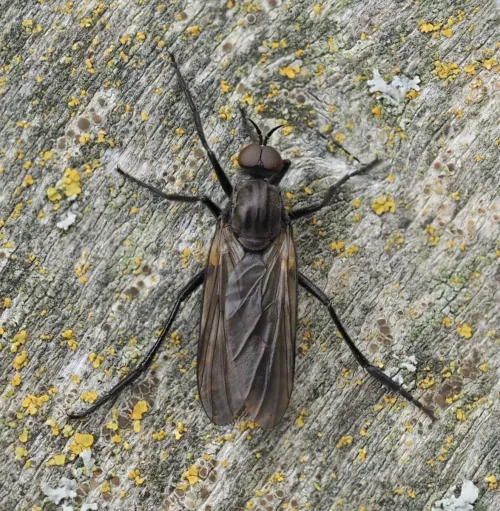
Rhamphomyia subcinerascens
Rhamphomyia subcinerascens
An early Spring species. Identification is difficult but the identifying features are a dark cloud on the anal lobe of the female wings, whilst the males have long tarsal hairs. It differs from R. sulcatella in that the front and hind tibia are disti
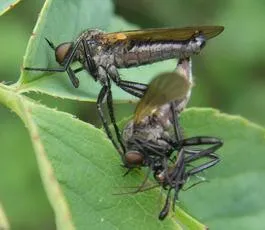
Rhamphomyia sulcata
Rhamphomyia sulcata
This is quite a large dance fly with a grey and pinkish appearance. Males provide females with a nutritious prey item as a nuptial gift No additional images available for this species.
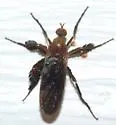
Rhamphomyia testacea
Rhamphomyia testacea
Identification: The female is red with legs almost entirely fringed with black hairs.
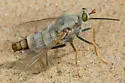
Rhaphiomidas parkeri
Rhaphiomidas parkeri
Identification: Description on pg. 206 of Cazier . Author is Mont A. Cazier (1911-1995), see: Scarab Workers Directory , Gordh and Headrick .
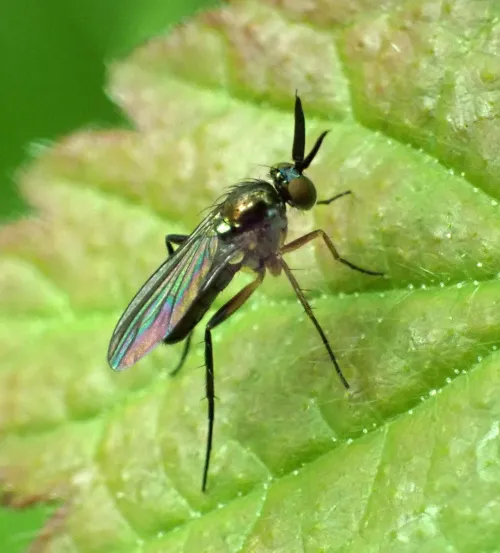
Rhaphium appendiculatum
Rhaphium appendiculatum
One of many Rhaphium species with enlarged 3rd antennal segment. In R. appendiculatum , the arista is very short - no longer than one eighth the length of the third segment. The genital lamella is long and ribbon-like. Rhaphium caliginosum has a long
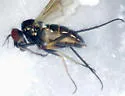
Rhaphium browni
Rhaphium browni
Identification: Fore and mid tibiae pale, hind black. Femora black except female hind femora pale basally. Antennae long in both sexes. Female arista less than half as long as first flagellomere. Male arista and fore tarsi apically expanded.
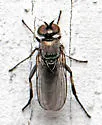
Rhaphium fascipes
Rhaphium fascipes
Identification: Mid and hind femora black, face black, tibiae yellow except tip of hind tibia thickened and black.
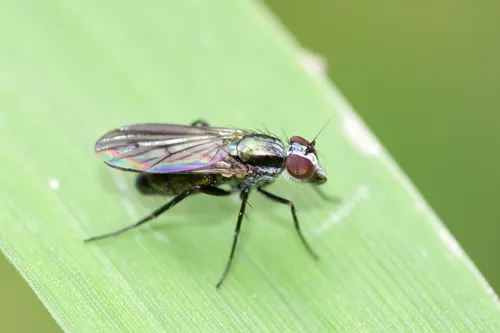
Rhaphium melampus
Rhaphium melampus
Identification: The only Eastern Rhaphium with all black legs
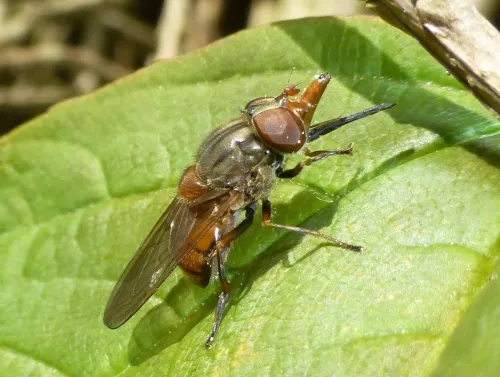
Rhingia campestris
Rhingia campestris
The genus is easily recognised by its long snout. With R. campestris the abdomen usually has a black line or stripe along the axis, but always along the lateral margins of the tergites. It has a largely orange abdomen and dark thorax. There are just
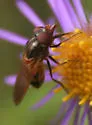
Rhingia nasica
Rhingia nasica
Identification: has a conspicuous snout which aids it in extracting nectar from flowers Larvae associated with animal dung
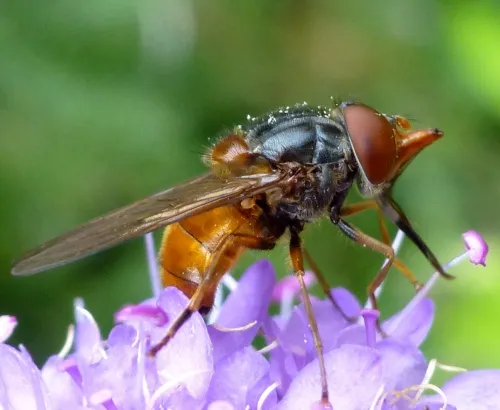
Rhingia rostrata
Rhingia rostrata
Wing length 7.5 to 9.5 mm. Similar to the much more common R. campestris, but in Rhingia rostrata the thorax is more bluish in colour, there are no dark edges to the abdomen, the legs have more orange and less black and it is generally brighter in co
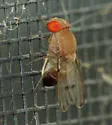
Rhinoleucophenga obesa
Rhinoleucophenga obesa
Identification: Distinguished from most other Drosophilidae by its very large, hairy frons.
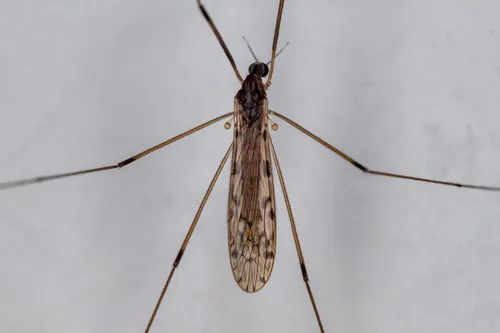
Rhipidia domestica
Rhipidia domestica
Identification: "Note the slightly expanded antennal segements and the pale color of the few antennal segments prior to the apical segment." -- Chen Young " Rhipidia domestica have antennomeres 12 & 13 light, not R. duplicata ." -- Matt Bertone Sever
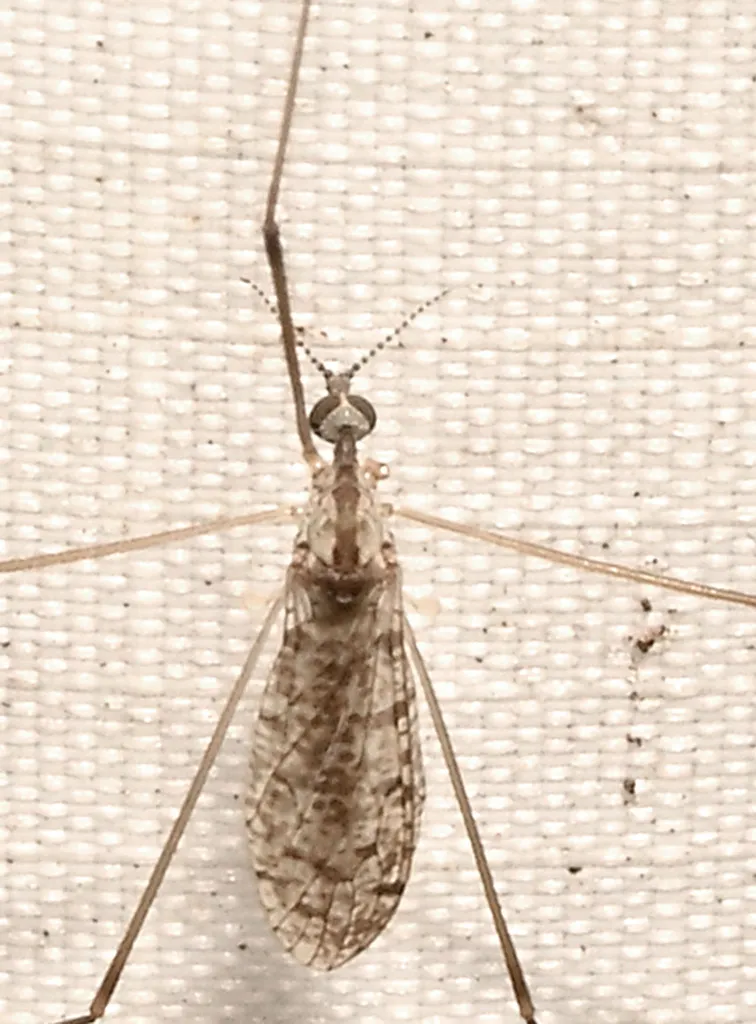
Rhipidia maculata
Rhipidia maculata
Identification: Male flagellomeres branched, wing with many small spots in cells, scutum with broad darker median stripe.
Rhipidia maculata
Rhipidia maculata-b
Identification: The bipectinate antennae of the male and the heavily spotted wing pattern are distinctive.
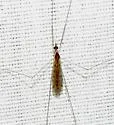
Rhipidia schawrzi
Rhipidia schawrzi
Identification: Wing spotted. Antenna with two pale flagellomeres, as in domestica . Scutum with broad pale margin.
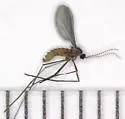
Rhopalomyia anthophila
Rhopalomyia anthophila
Larvae develop in goldenrod ( Solidago ) florets modified into fuzzy, roughly cylindrical galls that are widest at the base. Encyclopedia of Life Revision of the Goldenrod Galling Rhopalomyia species. Page 6
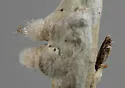
Rhopalomyia chrysothamni
Rhopalomyia chrysothamni
Gall is a conical swelling on stems of Chrysothamnus nauseosus with cottony fibers filling the exit. C. nauseosus is also known as Ericameria nauseosa . The species was originally described from C. graveolens , which is now considered a variety of na
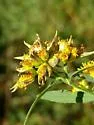
Rhopalomyia fusiformae
Rhopalomyia fusiformae
The biology is probably similar to that of R. pedicellata , which forms a similar gall but with a pedicel.
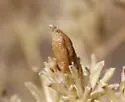
Rhopalomyia gutierreziae
Rhopalomyia gutierreziae
Identification: This midge induces capsule-shaped, yellow or green galls on the flowers of several species of western Gutierrezia (Snakeweed).
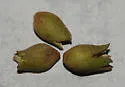
Rhopalomyia hirtipes
Rhopalomyia hirtipes
Identification: The largest of the Rhopalomyia on goldenrods. Bright orange-red abdomen and dark antennae and legs. Antennae 21 flagellomeres in males, 20-22 in females. Pupa bright orange, sclerotized parts black. Large and robust.
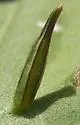
Rhopalomyia inquisitor, maybe
Rhopalomyia inquisitor-maybe
When Felt (1908) described this species, he believed it to be an inquiline in rosette galls of R. capitata on Solidago gigantea . However, R. inquisitor is closely related to R. clarkei , and Dorchin et al. (2009) hypothesize that R. inquisitor is a
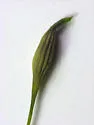
Rhopalomyia pedicellata
Rhopalomyia pedicellata
Identification: Adult yellowish-white with dark scales and hairs. Legs covered with fine scales. Pupa orange. Galls found on stems, leaves or inflorescences of the goldenrod Euthamia graminifolia . They are delicate, slender (14-21 mm long) and posse
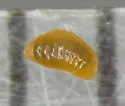
Rhopalomyia undescribed-species-on-amorpha
Rhopalomyia undescribed-species-on-amorpha
Forms galls on Amorpha canescens . "Galls are reddish and about 4 mm long. They have been attributed to either Rhopalomyia or Diarthronomyia (the second now a subgenus of the first), but the gall makers were apparently not preserved."
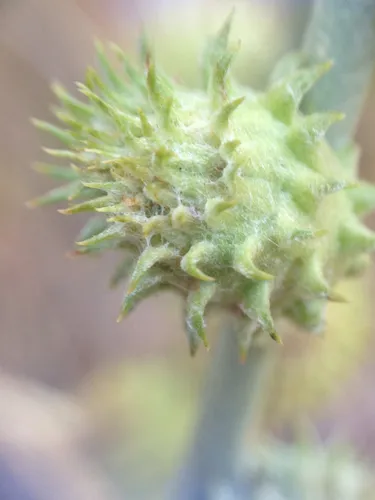
Rhopalomyia utahensis
Rhopalomyia utahensis
Identification: Induces ovoid stem galls on Ericameria nauseosa. The galls are usually green and covered with white hairs. These hairs do not obscure the gall surface. They are covered with small leafy bracts that protrude from the surface. A similar
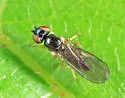
Rhopalopterum atriceps
Rhopalopterum atriceps
Identification: Distinguished from other Rhopalopterum and Stenoscinis by the shining mesonotum (without pollinose stripe) and yellow legs.
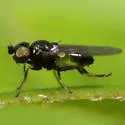
Rhopalopterum carbonarium
Rhopalopterum carbonarium
Identification: Among Oscinella -like Chloropidae, distinguished by black palpi, legs, head, and antennae; third antenna segment rounded apically, frontal triangle smaller than Oscinella frit , fronto-orbital bristles small and uniform. (Sabrosky, 1
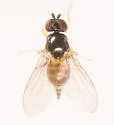
Rhopalopterum painteri
Rhopalopterum painteri
Identification: "Near O. nudiuscula (Loew), but with median black bands on both mid and hind femora, and the ocellar tubercle not pollinose." (Sabrosky, 1940)
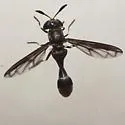
Rhopalosyrphus ramulorum
Rhopalosyrphus ramulorum
Identification: Similar to R. guentherii , but is smaller, narrower, not as robust, and has much more extensive black pile on face, scutum and anepisternum. For complete description, see cited reference.
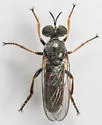
Ringed Micropanther
Atomosia glabrata
Identification: Face/mystax with white hairs; ocellar tubercle with two long white setae and several shorter ones; antennae about 0.6 times head width; antennae mostly dark; scutellum with two long thin white lateral setae; front & mid femora black d
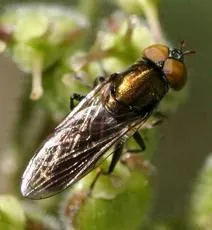
Riponnensia splendens
Riponnensia splendens
This is the only species of its genus in the UK. The thorax is a greenish copper with two grey stripes. There is a broad belt of whitish dusting across the face. It prefers marshes, fens and wet woodland, and particularly favours Meadowsweet and umbe
Rivellia coquilletti
Rivellia coquilletti
Identification: The wing pattern is unique, though at least one species is similar. Thorax dark green to black, abdomen yellow at base. Femora yellow.
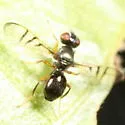
Rivellia metallica
Rivellia metallica
Identification: One of a few species with weak wing bands
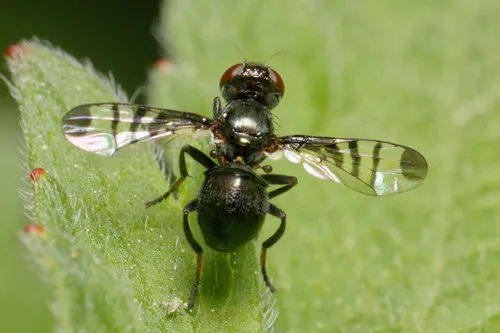
Rivellia syngenesiae
Rivellia syngenesiae
A distinctive little picture-winged fly that is most likely to be confused with the ulidiid Herina frondescentiae or some tephritids of the genus Urophora, though the wing markings are very different when compared with these. The adults wave their wi
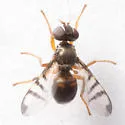
Rivellia vaga
Rivellia vaga
Identification: fourth band usually narrowly joined to third band at costal margin Both sexes with thorax and abdominal tergites sometimes brown; tarsi of front legs sometimes wholly yellow; fourth band sometimes separated from third band at costal m
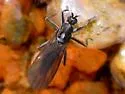
Roederiodes distinctus
Roederiodes distinctus
Identification: Unique feature: Base of M2 forming distinct crossvein at apex of cell dm, longer than r-m crossvein
Rush skeletonweed gall midge
Cystiphora schmidti
Introduced in 1975 from Greece as biocontrol of the invasive skeleton weed Chondrilla juncea (Cichoriaceae). It forms galls in the leaves and stems.
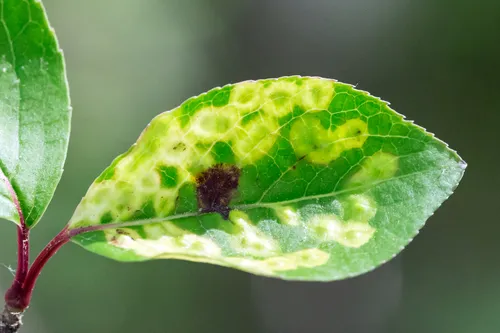
Sackenomyia commota
Sackenomyia commota
Causes blister galls on Viburnum leaves. It is not known whether similar galls on different viburnums are all caused by the same species.
Sage Leaf Gall Midge
Rhopalomyia audibertiae
Identification: This midge induces galls on the leaves of black sage ( Salvia mellifera ) and white sage ( Salvia apiana ). Galls have a tubular protrusion on either side of the leaf, with the opposite side being a shallow lump. Galls can be gray gre
Sagebrush Hammertail
Efferia benedicti
Identification: "The very short bristles on the front half of the top of the thorax, the gray body and the male's silver-white abdomen with white-parted hairs is diagnostic in the northern part of its range (BC and Washington), where no other Efferia
Saltbush Blister Gall Midge
Asphondylia atriplicicola
Identification: Induces leaf blister galls on Atriplex canescens, leucophylla, and spinifera.
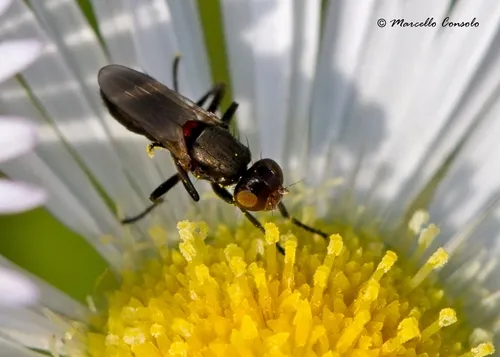
Saltella sphondylii
Saltella sphondylii
Size 2 to 3 mm. This fly has orange thighs and an orange scutellum although the degree of colouration is variable. It has a rather matt appearance compared to other Sepsidae and the scutellum is large and flat. Unless identified by a recognised exper
San Rafael Bandit
Cyrtopogon longimanus
Identification: Per Eric Fisher: "This sp. is actually a close relative of C. marginalis , of the eastern U.S. & Can. They both share a puffed-up, shiny black scutellum, which lines-up with a series of shiny-black spots along the sides of the thorax;
Sand Hammertail
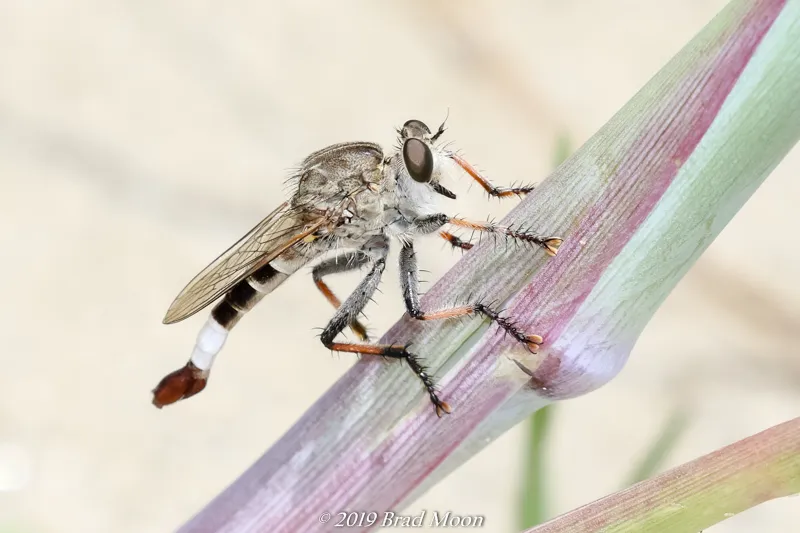
Efferia albibarbis
Identification: mystax (moustache) white; female has relatively short and conical ovipositor, compared to E. aestuans The north shore of Lake Erie is the only region where it occurs in eastern Canada. -- Rob Cannings
Sapphire-tailed Twigsitter
Holopogon sapphirus
"It perches on twig tips of leguminous plants, just like many other Holopogon ." (comment by Eric Fisher)
Sapromyza rotundicornis
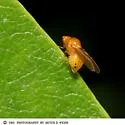
Sapromyza rotundicornis
Identification: A yellow species with round flagellomere (presumably the source of the species name) and two or three round, black spots on a shining yellow abdomen.
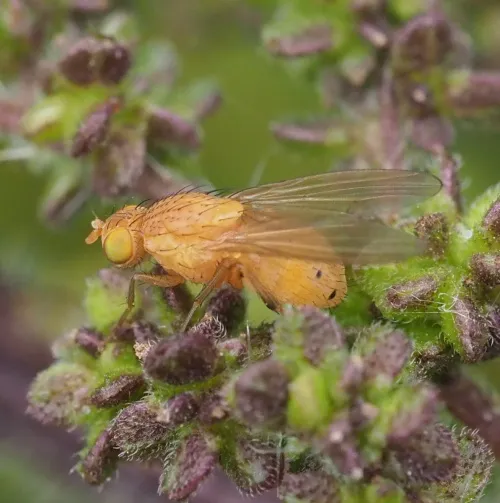
Sapromyza sexpunctata
Sapromyza sexpunctata
This small fly is all-orange with a shiny thorax. It usually has six black spots on the abdomen (note other Sapromyza species also have black spots). See ID guidance below . Sapromyza opaca has a dull, not shiny, thorax Photographs must be submitted
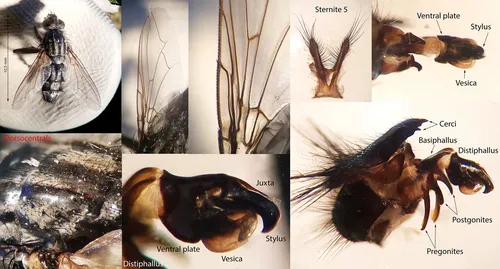
Sarcophaga carnaria
Sarcophaga carnaria
A large species but similar in appearance to other members of the family. Unless confirmed by an expert detailed examination is necessary to confirm the species. Please supply a photograph with your records. It is necessary to key out this species un
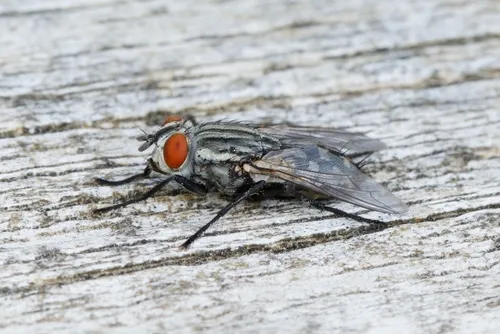
Sarcophaga crassipalpis
Sarcophaga crassipalpis
This species is frequently cultured in laboratories and used for research on insect development and behavior.
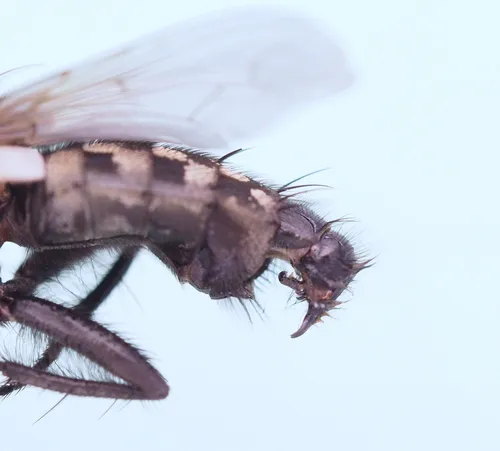
Sarcophaga melanura
Sarcophaga melanura
"Perhaps the best known and biologically most-diverse species in the subgenus Helicophagella is Sarcophaga (Helicophagella) melanura Meigen. It occurs widely in the Holarctic, extending northward to the Arctic Circle and south to the northern parts
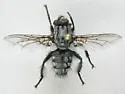
Sarcophaga nearctica
Sarcophaga nearctica
Identification: DNA barcoding of Sarcophaga nearctica or Sarcophaga caerulescens specimens often matches sequences for both species, but once narrowed down to those two species they can easily be told apart morphologically - S. nearctica has red geni
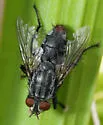
Sarcophaga sarraceniae
Sarcophaga sarraceniae
Identification: See comments on images (linking to iNaturalist ) and print reference. Definitive identification likely requires microscopic examination of genitalia.
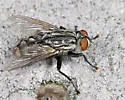
Sarcophaga sarracenioides
Sarcophaga sarracenioides
Identification: Hypopygium red, genitalia diagnostic.
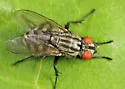
Sarcophaga sinuata
Sarcophaga sinuata
Identification: Black tip to the abdomen as in S. melanura , setae of the midfemora are orange. The subgenus Sarcotachinella is treated as a genus in Manual of Nearctic Diptera , but placed as a subgenus by Pape (Catalogue of the Sarcophagidae of the
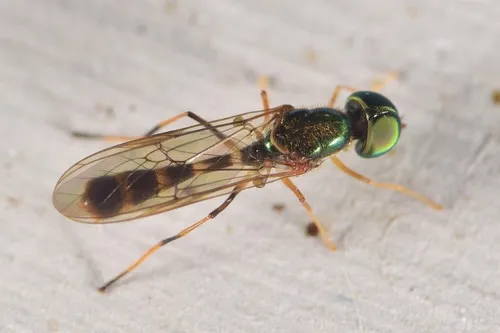
Sargus fasciatus
Sargus fasciatus
Identification: the only Sargus with a constricted waist in male (Martin Hauser, pers.comm. to =v= 26.v.2026)
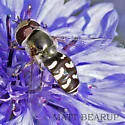
Scaeva affinis
Scaeva affinis
Identification: Eyes with dense hair; upper 2/3 of male eye "with extensive area of almost uniformly enlarged facets" ; abdomen dark, with six white, curved stripes. Larvae are light green with a white dorsal longitudinal stripe. Usually with abdomin
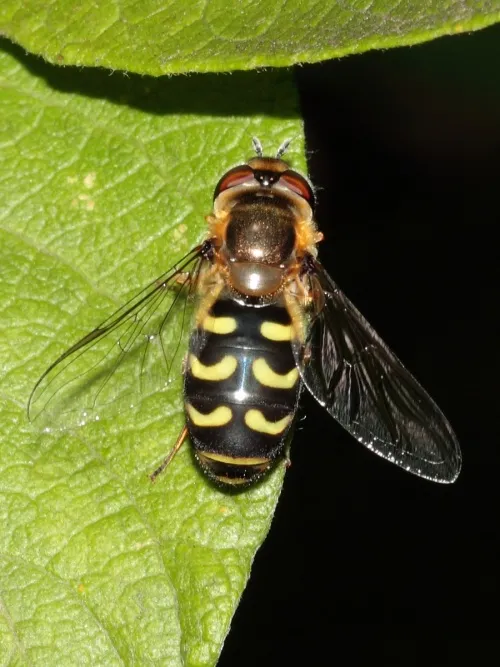
Scaeva selenitica
Scaeva selenitica
Wing length 10.5 to 12 mm. This is a large distinctive fly with three pairs of yellow comma markings (lunules) on the abdomen; these are white on Scaeva pyrastri. The commas on selenitica extend equally far forward at both the inner and outer ends. M
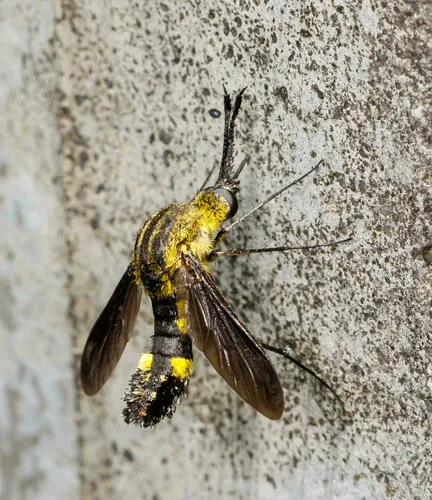
Scaly Bee Fly
Lepidophora lepidocera
Identification: Hunch-backed shape is shared with L. lutea . In L. lepidocera , the pale scales are white or pale yellow, and usually no pale scales are evident on the fourth abdominal segment. Also note fringe at end of abdomen. May be a mimic of Ro
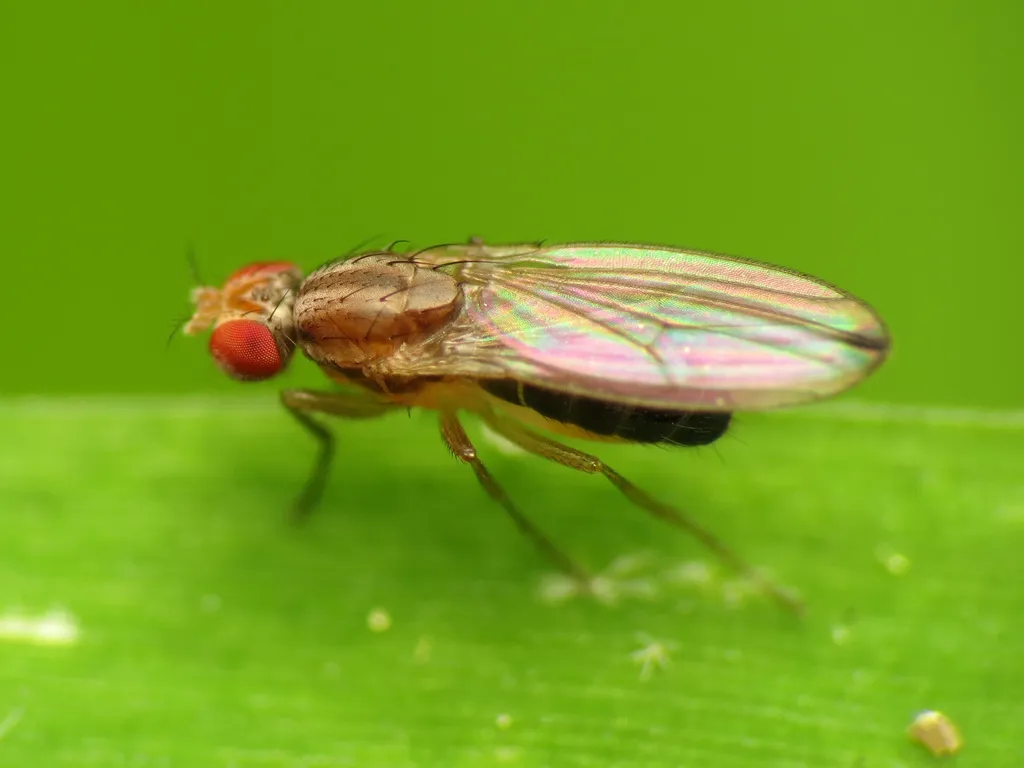
Scaptomyza adusta
Scaptomyza adusta
"This is a very common and widely distributed species over the eastern half of the continent, extending west into the foothills of the Rocky Mountains. The larvae are undoubtedly leaf miners for the most part but apparently other situations will serv
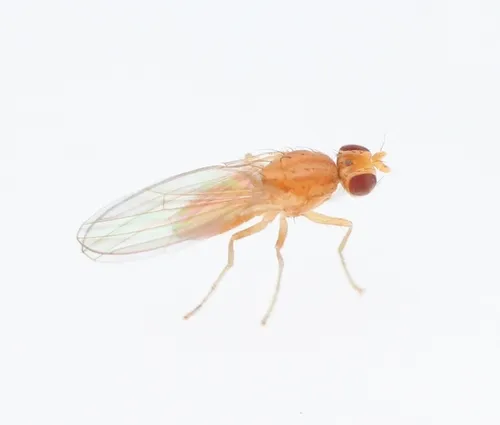
Scaptomyza flava
Scaptomyza flava
The adult is a browish fly with a body length of about 2.5 mm. Scaptomyza flava larvae cause white 'corridor-blotch' mines when feeding between the upper and lower epidermes of the leaves of cruciferous plants of the Brassicaceae family. Around the l
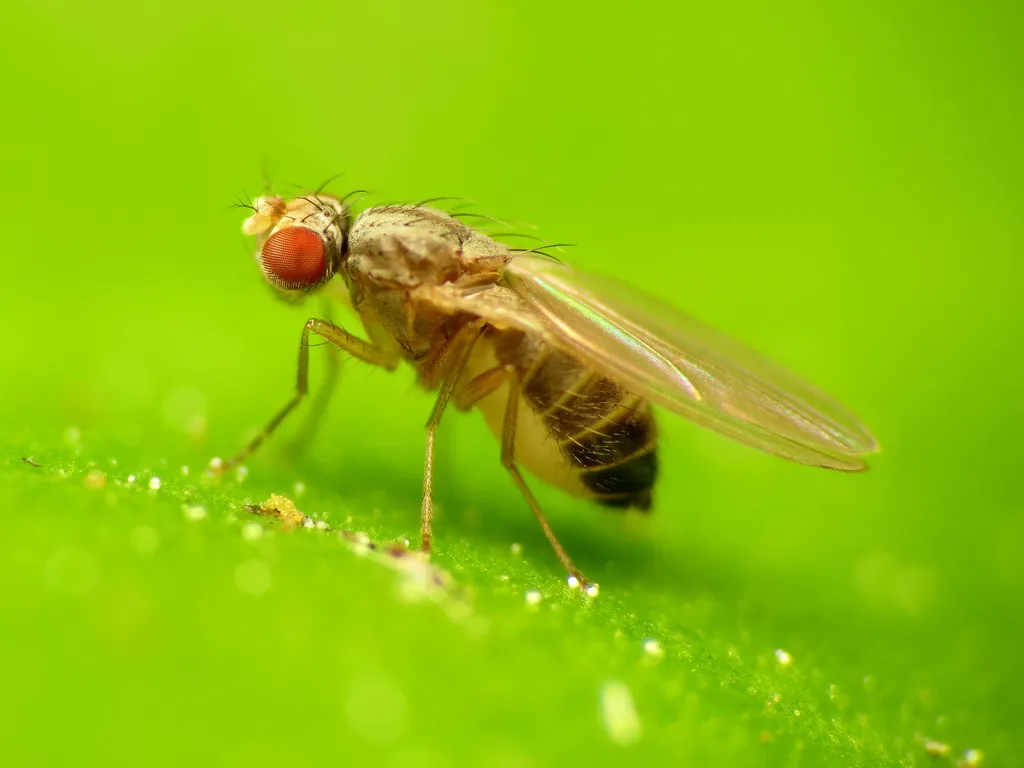
Scaptomyza pallida
Scaptomyza pallida
Identification: This species has a grey and a yellow color form. If using the key in Wheeler , this species keys to S. graminum (Fall.)
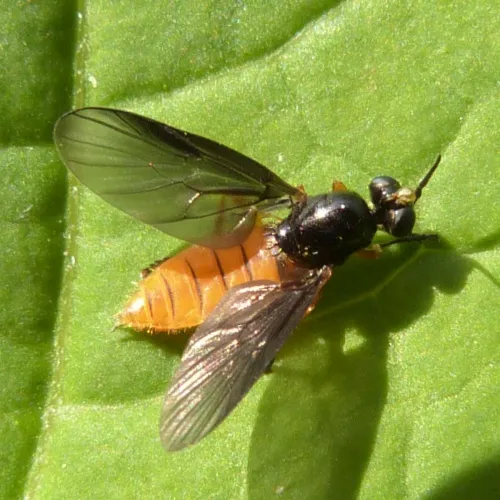
Scarce Orange Legionnaire
Beris clavipes
The scarcer of the two Beris species with a black thorax and orange abdomen. Easily separable from the other (B. vallata) by the entirely (or almost entirely) orange hind tibiae. The female also has much darker wings than vallata, and these can obscu
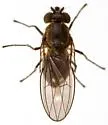
Scatella marinensis
Scatella marinensis
Identification: A member of the Scatella triseta group with upper face brown and lower face white (all brown in melanderi ) and scutellum weakly convex (flat in triseta ).
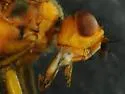
Scathophaga aldrichi
Scathophaga aldrichi
Identification: The female is rather similar to S. spurca (brownish and gray coloration, pale legs, plumose arista) but with the antennae blackish, a very strong cloud on crossvein dm-cu, and a small grey streak on the fore femur. The male is general