
Flies
Order Diptera
The Flies (Order Diptera) includes 6,350 species across 141 families and 1,800 genera in our directory.
About Flies
Diptera includes over 150,000 described species of flies, mosquitoes, and midges. Mosquitoes are the deadliest animal on Earth (CDC). Malaria alone causes ~249 million cases and over 608,000 deaths annually, mostly children under 5 (WHO). Vector-borne diseases account for over 17% of all infectious diseases, causing 700,000+ deaths per year.
Economic Impact
In the U.S., vector-borne disease cases tripled between 2004-2016, with over 640,000 cases reported in that period (CDC). Tickborne diseases doubled from 22,000 to 48,000 annual reports. Globally, mosquito-borne diseases cost billions in healthcare and lost productivity.
Ecological Role
Despite their disease impact, flies are critical decomposers and pollinators. Hoverflies alone pollinate hundreds of crop and wildflower species. Flies are also the primary food source for many birds, bats, and fish. Forensic entomology relies heavily on fly species for crime scene analysis.
Families in Diptera (141)
Species in Diptera (6,350)
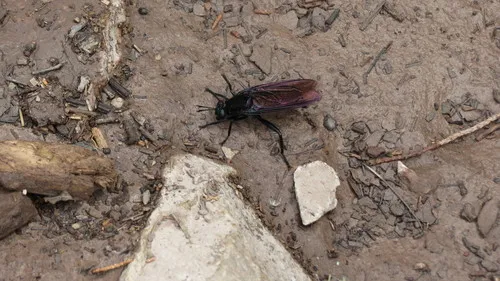
Mydas boonei
Mydas boonei
Identification: abdomen unmarked, wings often orangish

Mydas brunneus
Mydas brunneus
Identification: Can have orange legs, antennae, abdomen, thorax and head. This species is not very well defined, and may well be the same as tibialis. All Mydas species with orange legs are either M. tibialis or M. brunneus. The best current classifi
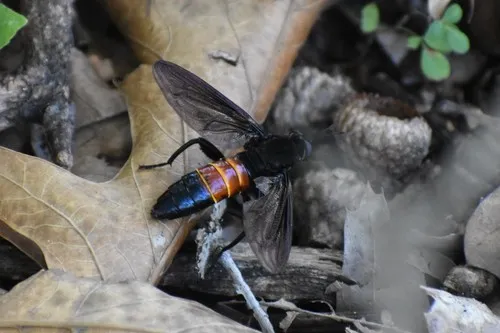
Mydas chrysostomus
Mydas chrysostomus
Identification: Body mostly black, with varying amounts of orange-red on tergites 2-4. (Note: tergites = dorsal abdominal segments) Females have most of tergites 2-4 red-orange. Males have tergites 2-4 mostly black basally, with narrower apical bands
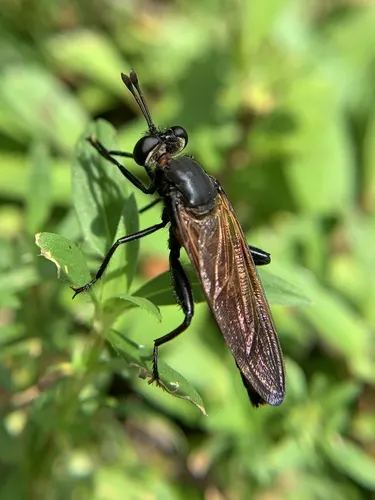
Mydas maculiventris
Mydas maculiventris
Identification: It is a very good mimic of a Polistes , looking similar to what is likely Polistes metricus , such as:
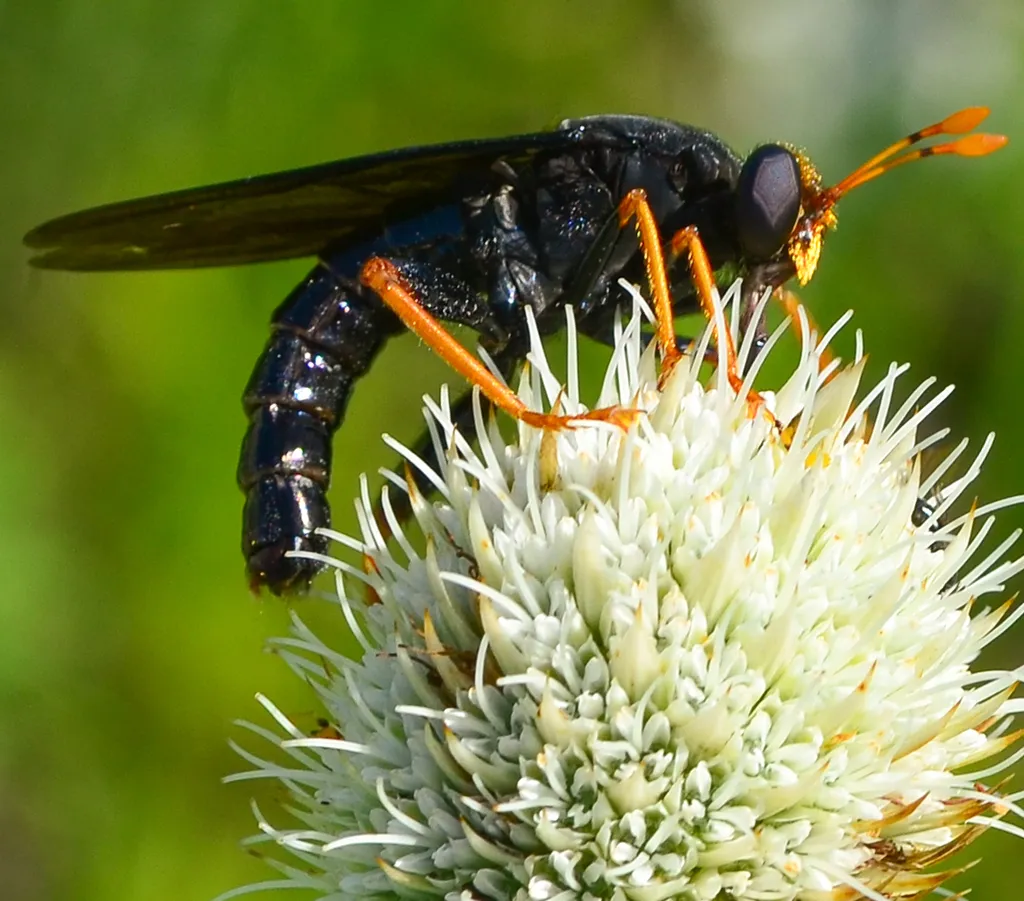
Mydas tibialis
Mydas tibialis
Identification: Black body, smoky wings, brown legs.
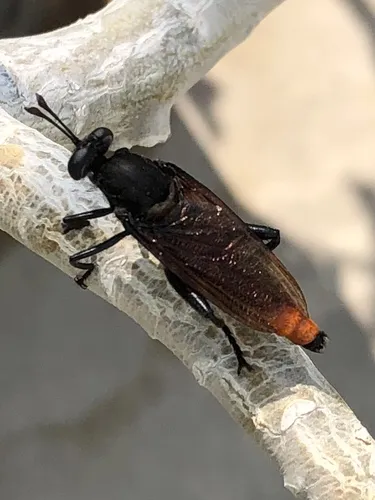
Mydas ventralis
Mydas ventralis
It seems this mydid species is a good mimic of the scoliid wasp Triscolia ardens . Apparently it even "fools itself", in that Alcock(1989) mentions the males perched on shrubs waiting for passing females to chase often take off and chase passing in
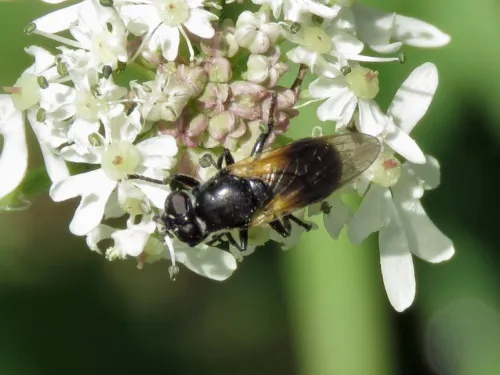
Myolepta dubia
Myolepta dubia
A medium-sized, black and orange hoverfly with yellow wing-bases. Unless identified by a recognised expert, a photo is required. If the photo doesn't show the key ID features then in the comments box describe the size and identifying characters you h
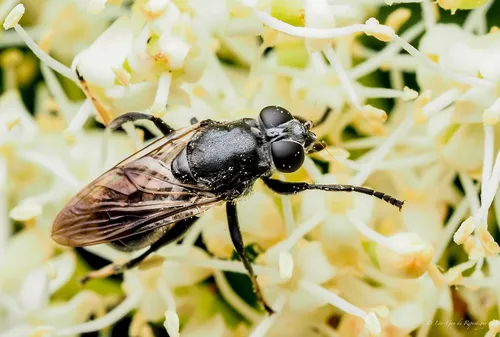
Myolepta nigra
Myolepta nigra
Identification: Thorax: Shiny black, base has some yellowish-white pile. Underside with yellowish hairs. Abdomen: Shiny black, bare. Underside has yellowish pile Types: Holotype as Myiolepta nigra female by Loew, 1872. Type Locality: Pennsylvania. In
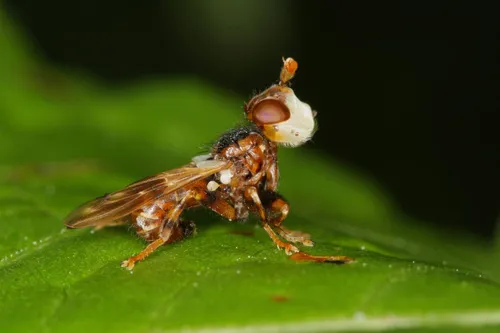
Myopa buccata
Myopa buccata
Our most striking Myopa with a number of unique characteristics. The inner cross vein r-m is whitish without the dark spot found in other spring-flying 'bearded' Myopa species; the side of the head behind the eyes (the occiput) has 1 to 4 brown spots
Myopa rubida
Myopa rubida
Identification: see Wings unmarked, 1st posterior cell almost always open at costal margin. Abdomen shiny, ground color reddish, almost no pollinose markings; hairs black, short, sparse. Antennomere 2 usually distinctly longer than the third. A membe
Myopa tessellatipennis
Myopa tessellatipennis
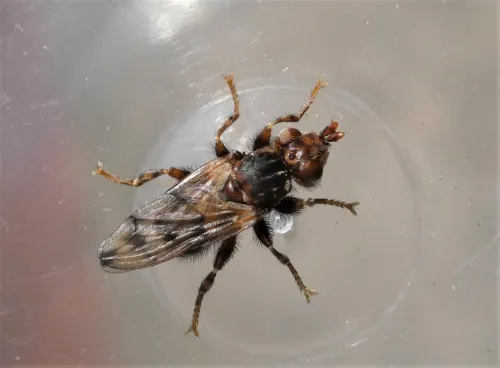
Length 7 to10 mm. Palps brown (contrasting with the pale mouth-edge). Proboscis with the third section shorter than the second section and with the last section shorter than the front tarsus. Unless identified by a recognised expert, a photo is requi
Myopa testacea
Myopa testacea
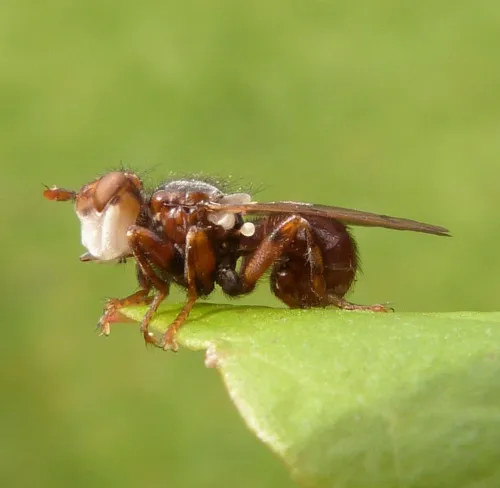
This is the most common of the Myopa species in Britain. The thorax of this species is black, not red in front of the scutellum. Often seen on the catkins and flowers that attract solitary spring breeding bees which they are thought to parasitize. My
Myopites inulaedyssentericae
Myopites inulaedyssentericae
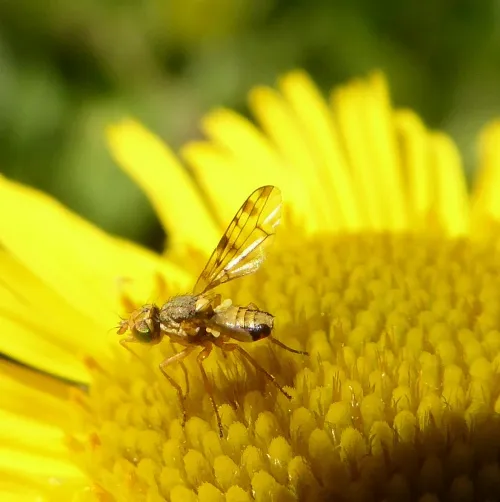
A fly with a well-marked wing pattern which can be identified with care. The larvae gall the flowers of Common Fleabane ( Pulicaria dysenterica ). Unless identified by a recognised expert, a photo is required. If the photo doesn't show the key ID fea
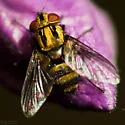
Myothyriopsis picta
Myothyriopsis picta
Identification: Named for the marked wing, unusual in Tachinidae
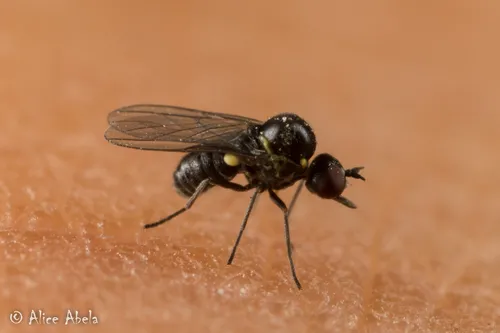
Mythenteles propleuralis
Mythenteles propleuralis
Identification: Detailed description and other info available on this page from the "Treatment Bank" of the website Plazi . This is the only species of Mythenteles in our area. It was originally described as Empidideicus propleuralis on pg. 458 of Me
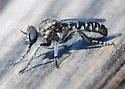
Nannocyrtopogon irvinei
Nannocyrtopogon irvinei
Identification: "The male face has large bumps and a wavy ridge along the edge, which are covered with a velvety tomentum " ‒ Eric Fisher
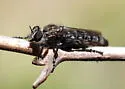
Nannocyrtopogon vanduzeei
Nannocyrtopogon vanduzeei
Identification: "Males ... are distinctive because most of the abdomen is covered with gray, which leaves only narrow black stripes & spots; most Nannocyrtopogon have much blacker abdomens." [ comment by Eric Fisher]
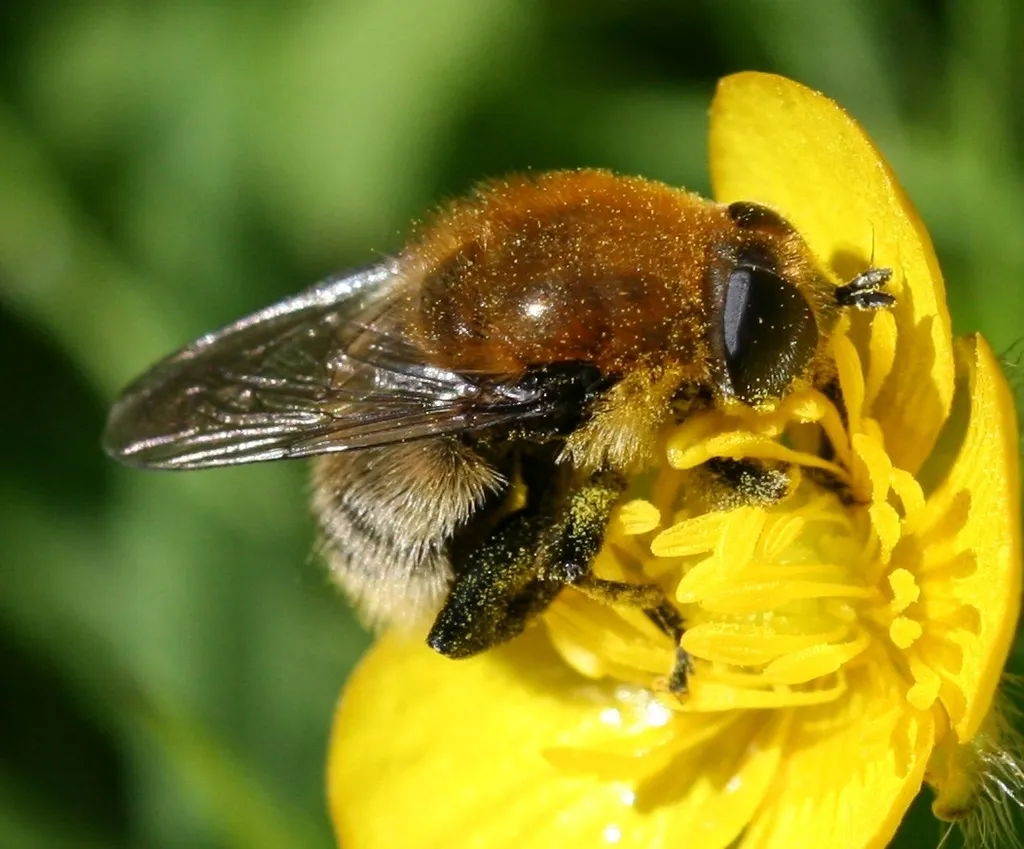
Narcissus Bulb Fly
Merodon equestris
Identification: Color variable • sock-like vein pattern locally important pest of daffodils ; accidentally introduced in the US, probably with bulbs
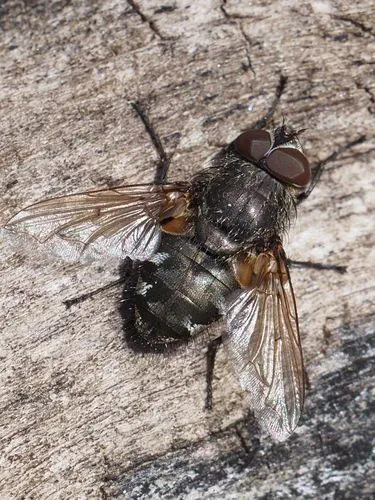
Narrow-cheeked Clusterfly
Pollenia angustigena
It has the golden thoracic hairs, typical of the Pollenia genus, and generally looks the same as the common clusterfly - Pollenia rudis. Both sexes have the jowls below the eyes slightly narrower than in P. rudis and average a little smaller and slim
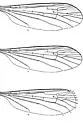
Nasiternella hyperborea
Nasiternella hyperborea
"It is an uncommon species known from high latitudes in the Northwest Territories to Labrador and in high altitudes in the mountains of New Hampshire and New York. Mabel Alexander hand collected several males (and a male copulating with a teneral fem
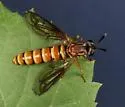
Nemomydas brachyrhynchus
Nemomydas brachyrhynchus
Identification: Female very colorful...abdominal tergites orange medially, with a posterior yellow band, and an anterior black band: The two small dark lateral spots near the posterior edge of tergite 2 are distinctive
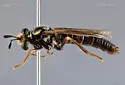
Nemomydas tenuipes
Nemomydas tenuipes
Identification: Loew's original 1872 description (in Latin) can be read at this BHL link . Hardy gave a detailed description (in English) on pg 33 of his 1950 paper . The discussion of N. tenuipes in Kondratieff & Welsh(1990) can be read here . This
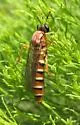
Nemomydas venosus
Nemomydas venosus
Identification: Females (according to Hardy[1950]): Chiefly yellow to rufous; only the face, labella, 4th antennal segment, and bases of some of the abdominal terga discolored with brown to blackish. Males: Tergites 1-7 of males black or brownish-bl
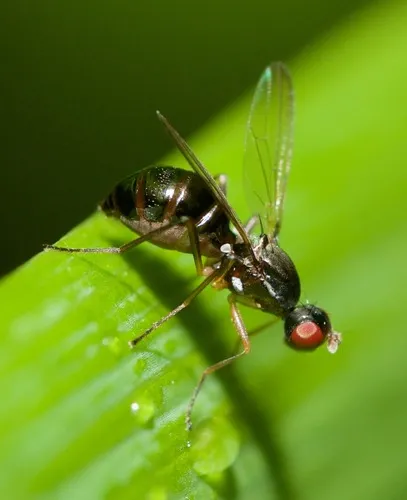
Nemopoda nitidula
Nemopoda nitidula
Sepsidae flies are sometimes called scavenger flies or ensign flies. They are small (up to 4mm) and resemble ants. They typically wave their wings whilst running around, hence their name 'ensign flies'. This species has a white dusting over most of t
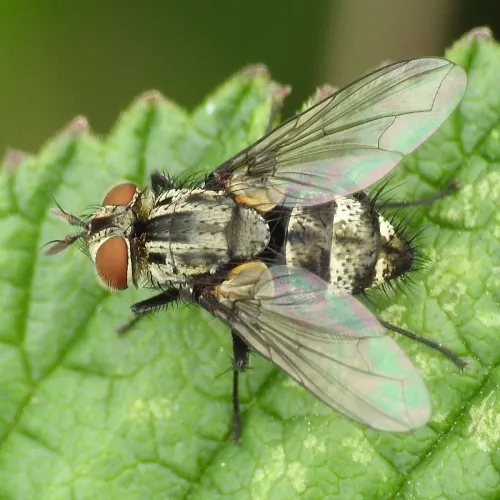
Nemorilla floralis
Nemorilla floralis
5-8mm. Boldly patterned in greys (like a small Sarcophaga). Hairy eyes and a bare arista. The thorax has a broad, dark medial stripe - widening away from the head and four pairs of post-sutural dorsocentrals. The parafacialia are more or less bare un
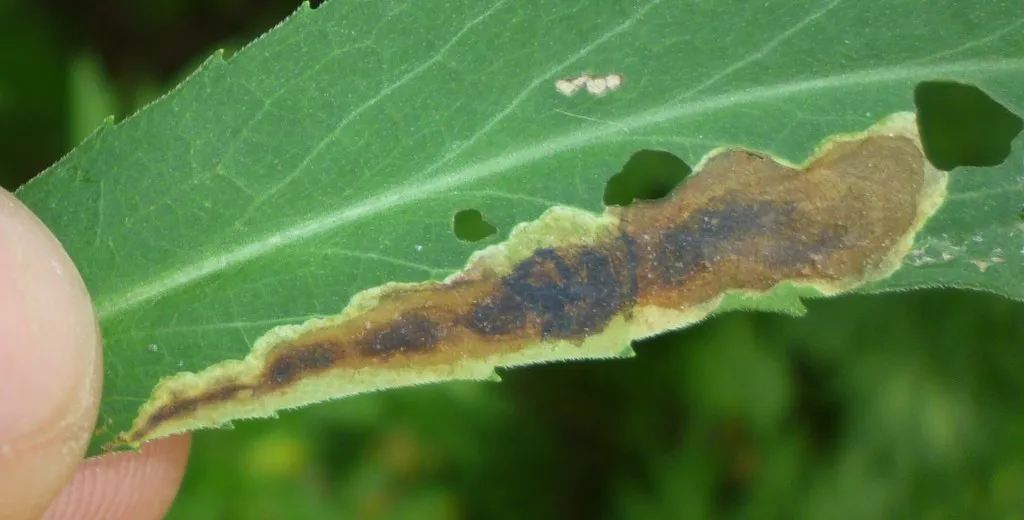
Nemorimyza posticata
Nemorimyza posticata
Larvae form "large blotch mine with conspicuous feeding lines" on several genera of Asteraceae and also feed on Teucrium canadense in family Lamiaceae.
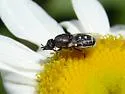
Nemotelus kansensis
Nemotelus kansensis
Identification: Det. Norm Woodley, 2010 Females have white triangular markings on the abdomen. Males have white abdomens.
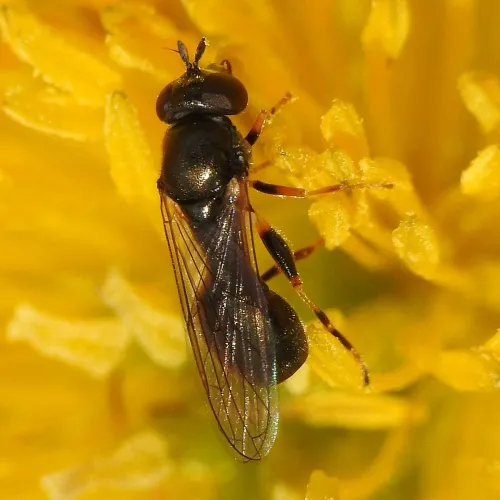
Neoascia meticulosa
Neoascia meticulosa
A small hoverfly with wing length 4 to 5.5 mm. The marginal cross-veins are not darkened and the hind femora are narrowly yellow at the apex. The front tibia are mostly yellow, the front and mid femora half yellow, and the hind tibia only narrowly ri
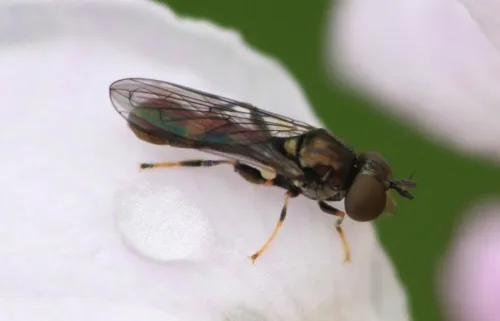
Neoascia tenur
Neoascia tenur
Wing length 3 to 5 mm. This tiny species is similar to N. geniculata but in the male the third antennal segment is relatively narrow, and about one and a half times as long as broad. The female of this species has less waisted lateral margins to terg
Neodexiopsis major
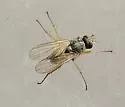
Neodexiopsis major
Identification: Male : The second antennal joint almost entirely dark brown and the apex of third joint slightly browned ● palpi brownish basally ● abdomen without distinct paired dorsal spots and lacks large glossy areas on each side of the third an
Neodiplocampta mira
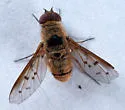
Neodiplocampta mira
Identification: N. mirella is similar, but lacks the extensive erect black hairs on frons/face
Neodiplocampta mirella
Neodiplocampta mirella
Identification: Key to species of Neodiplocampta appears on pg. 323 of Hull & Martin (1974) , with the description of N. mirella at bottom of pg. 337 . Figures for N. mirella in Hull & Martin (1974) are as follows: wing venation Fig. 2 ; head Fig. 20
Neoempheria macularis
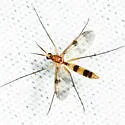
Neoempheria macularis
Identification: Apex of wing darkened; medial vein forks distal of cell R1; tergites 1, 3, 5, & most of 6 darkened.
Neohirmoneura flavipes
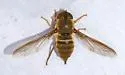
Neohirmoneura flavipes
Identification: "The most characteristic feature of the species is the conspicuous cross-band of grayish-white pollen at the base of the second tergite, followed by a wider shiny black band, the posterior half of the tergite being covered with dull,
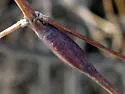
Neolasioptera clematidis
Neolasioptera clematidis
"The single specimen known of this species was found apparently laying eggs in a slit of a stem. It was presumed to be the species responsible for the swellings found on clematis."
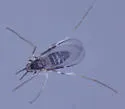
Neolasioptera cornicola
Neolasioptera cornicola
Causes woody stem swellings in dogwood ( Cornus ), 0.5 to several cm long. These galls contain several yellow larvae, which overwinter inside and emerge in the spring. Parasitoid: (Platygastridae)
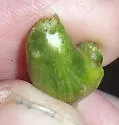
Neolasioptera eupatorii
Neolasioptera eupatorii
Causes hard, woody stem swellings near the upper part of flowering stems of white snakeroot ( Ageratina altissima ). Larvae live in tunnels and overwinter in the galls; adults emerge in spring.
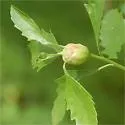
Neolasioptera lathami
Neolasioptera lathami
Larvae form 1-3 cm communal soft globular galls near the ends of branches of Baccharis halimifolia and B. neglecta .
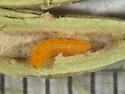
Neolasioptera perfoliata
Neolasioptera perfoliata
Causes woody, tapered swellings in stems of Eupatorium hyssopifolium and E. perfoliatum , usually near the upper part of the flowering stems.
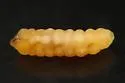
Neolasioptera rudbeckiae
Neolasioptera rudbeckiae
Larvae are internal feeders in tissues of Rudbeckia laciniata , including stem galls (of which they are evidently the inducer), blackened areas in petioles of autumn-growth basal leaves (BugGuide data), and "from the soft tissue of [the large bud] ga
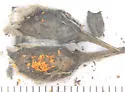
Neolasioptera species-on-lithospermum
Neolasioptera species-on-lithospermum
This species has not been reared, but Raymond J. Gagné has examined larvae collected by MJ Hatfield and confirmed the genus. It should be fairly easy to rear adults, since Neolasioptera species pupate within their galls.
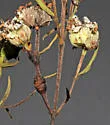
Neolasioptera truncata
Neolasioptera truncata
This species causes a woody, fusiform swelling, 5–10 mm long, on the stems and branchlets of mountain mints. A single yellow larva lives inside, where it appears to hollow out the pith. When finished feeding, it prepares an exit channel through the
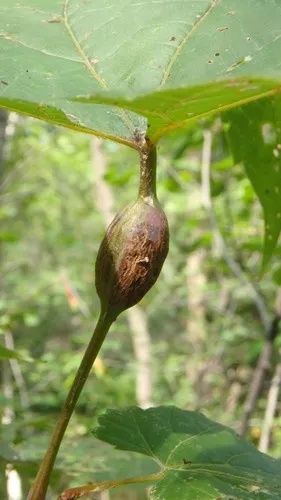
Neolasioptera vitinea
Neolasioptera vitinea
A gallmaker on grape ( Vitis >; causes "woody, elongate-tapered swelling of tendrils, petioles, or midveins. . . Swellings are 5-15 mm long, and several may occur in tandem." Schizomyia petiolicola Felt was supposedly reared from similar galls, but t
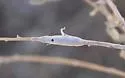
Neolasioptera willistoni
Neolasioptera willistoni
Identification: Cockerell's original description is here . Produces stem swellings on saltbush ( Atriplex canescens and A. polycarpa ). Lasioptera tibialis has been reared once from this type of gall, but is otherwise known only from galls on Keckiel
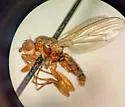
Neoleria fuscolinea
Neoleria fuscolinea
Identification: Mesonotum with two narrow vittae between the dorsocentral rows, which are strongest at the anterior margin. Proepisternum with two bristles.
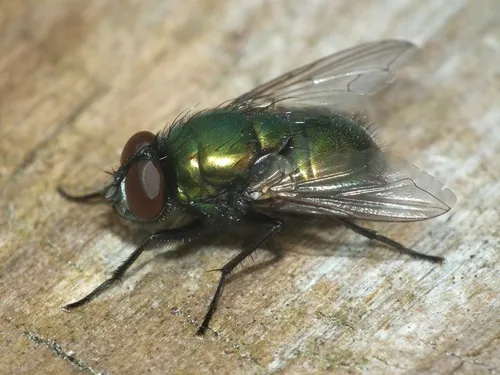
Neomyia cornicina
Neomyia cornicina
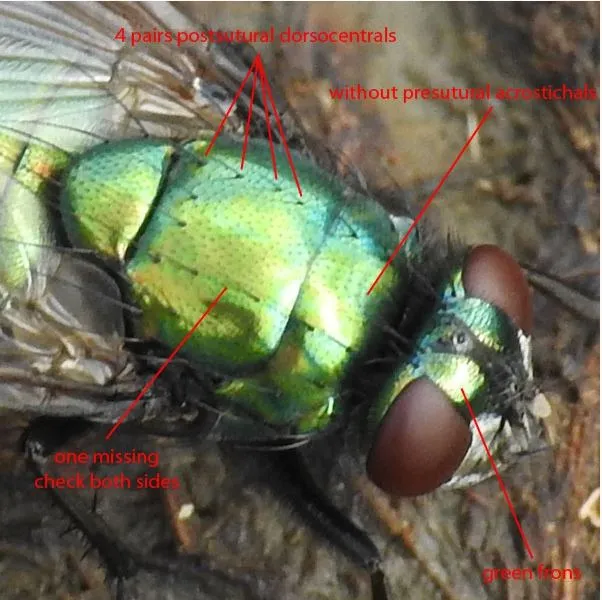
There are several lookalike Greenbottle species that occur in different fly families and to the inexpert eye can look confusingly similar. This species has metallic green jowls. The body coloration tends to bronze with age. The two Neomyia species ar
Neomyia viridescens
Neomyia viridescens
These flies usually have a metallic green tegument (skin surface) when young, but they turn bronze with age as this becomes worn. There are many green flies of several different families and microscopic examination is usually needed to identify most
Neorhynchocephalus sackenii
Neorhynchocephalus sackenii
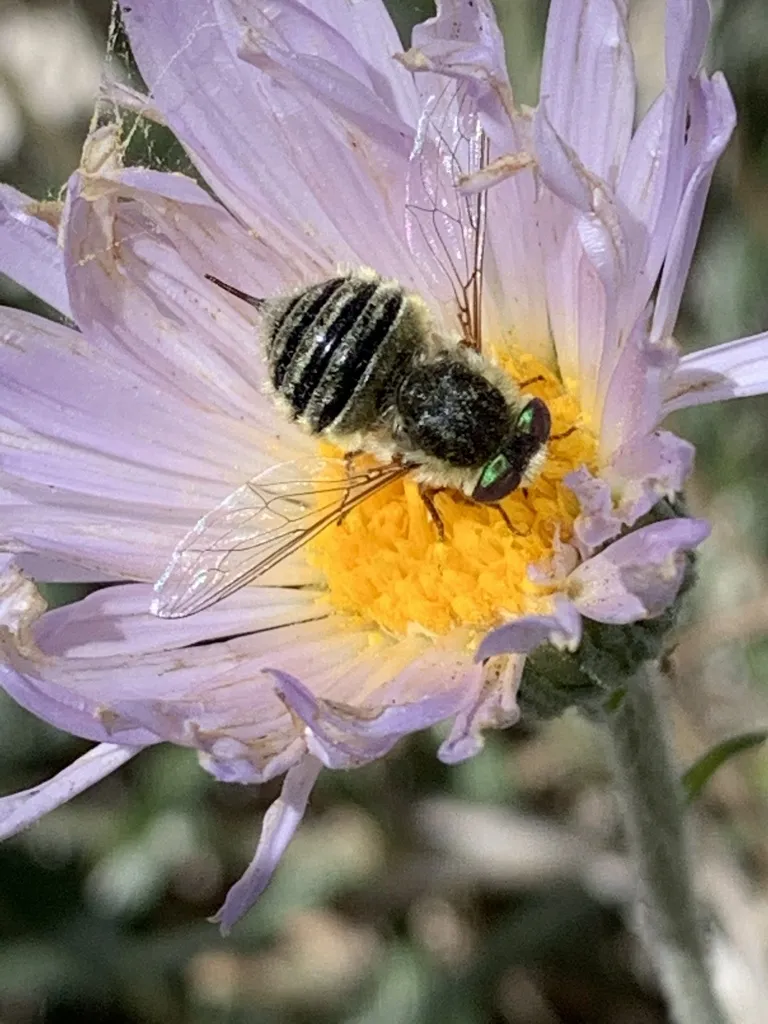
Identification: Posterior 2 veins at the apex of the wing are usually joined before the wing margin. Abdomen predominately yellow tomentose with sparse black tomentum at the bases of segments.
Neorhynchocephalus volaticus
Neorhynchocephalus volaticus
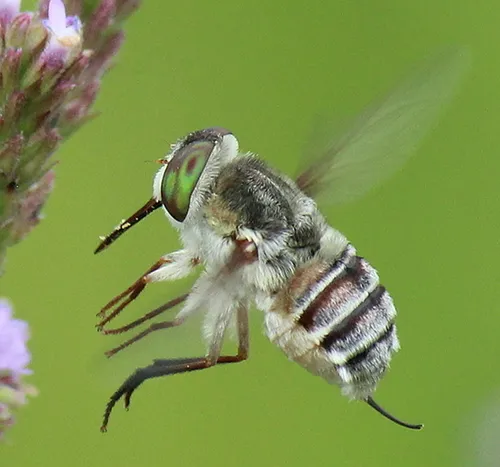
Identification: Posterior 2 veins at wing apex not joined. Abdomen with white tomentum along posterior margins of tergites.
Neottiophilum praeustum
Neottiophilum praeustum
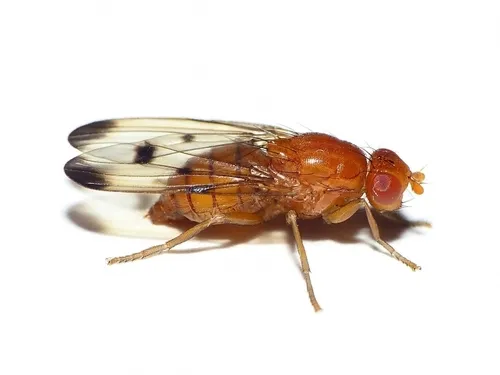
9mm. This is a shining orange fly with a spinose costa. The wings are marked with dark 'shades' particularly at the wing tip. There are several other orange flies with black wings markings: Palloptera quinquemaculata - darker wing markings with the b
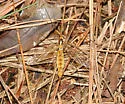
Nephrotoma alterna
Nephrotoma alterna
Identification: Darkened wing tips, anterior end of lateral praescutal stripe curved laterally. Females often observed ovipositing into wet soil in forest floor
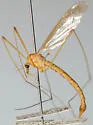
Nephrotoma breviorcornis
Nephrotoma breviorcornis
Identification: One of several eastern species with flagellomeres yellow at base and dark at tip.
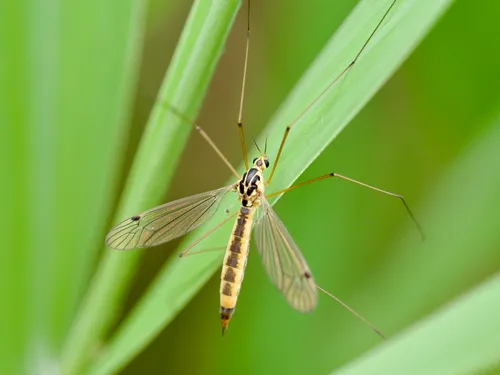
Nephrotoma cornicina
Nephrotoma cornicina
Identification: " N. cornicina can be easily recognized by the posteriorly pointed and sclerotized outer dististyle and the presence of a knob-shaped, mid-ventral appendate on the male sternite 8 and by the pointed cerci of the female." (Oosterbroek,
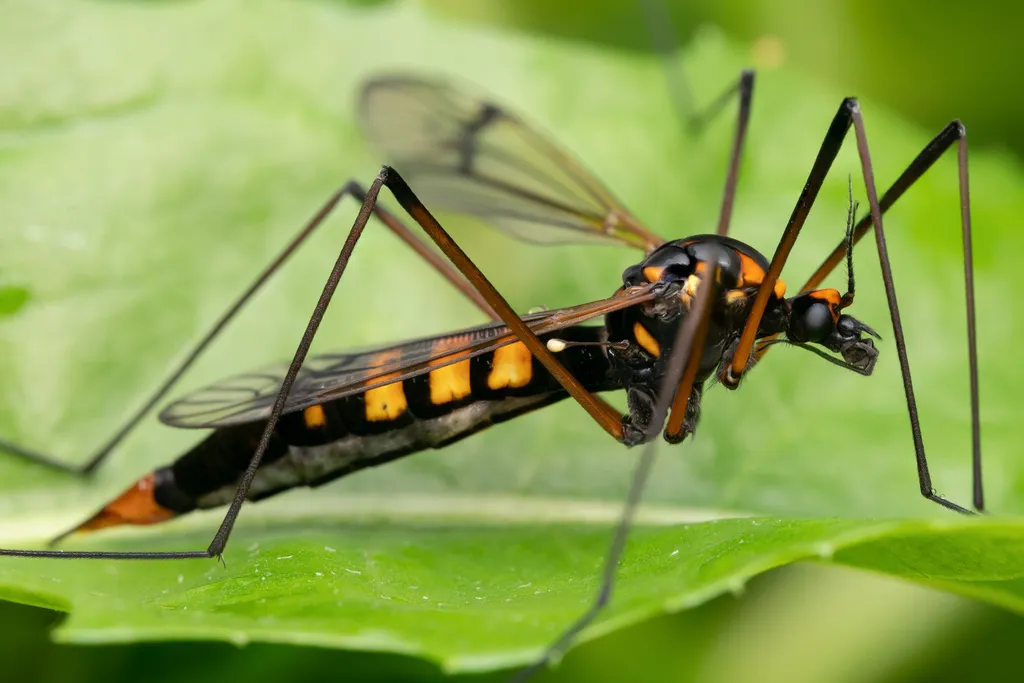
Nephrotoma crocata
Nephrotoma crocata
Identification: A dark species with three strongly contrasting yellow stripes on the abdomen, usually followed by a pair of yellow spots looking like an incomplete fourth stripe.
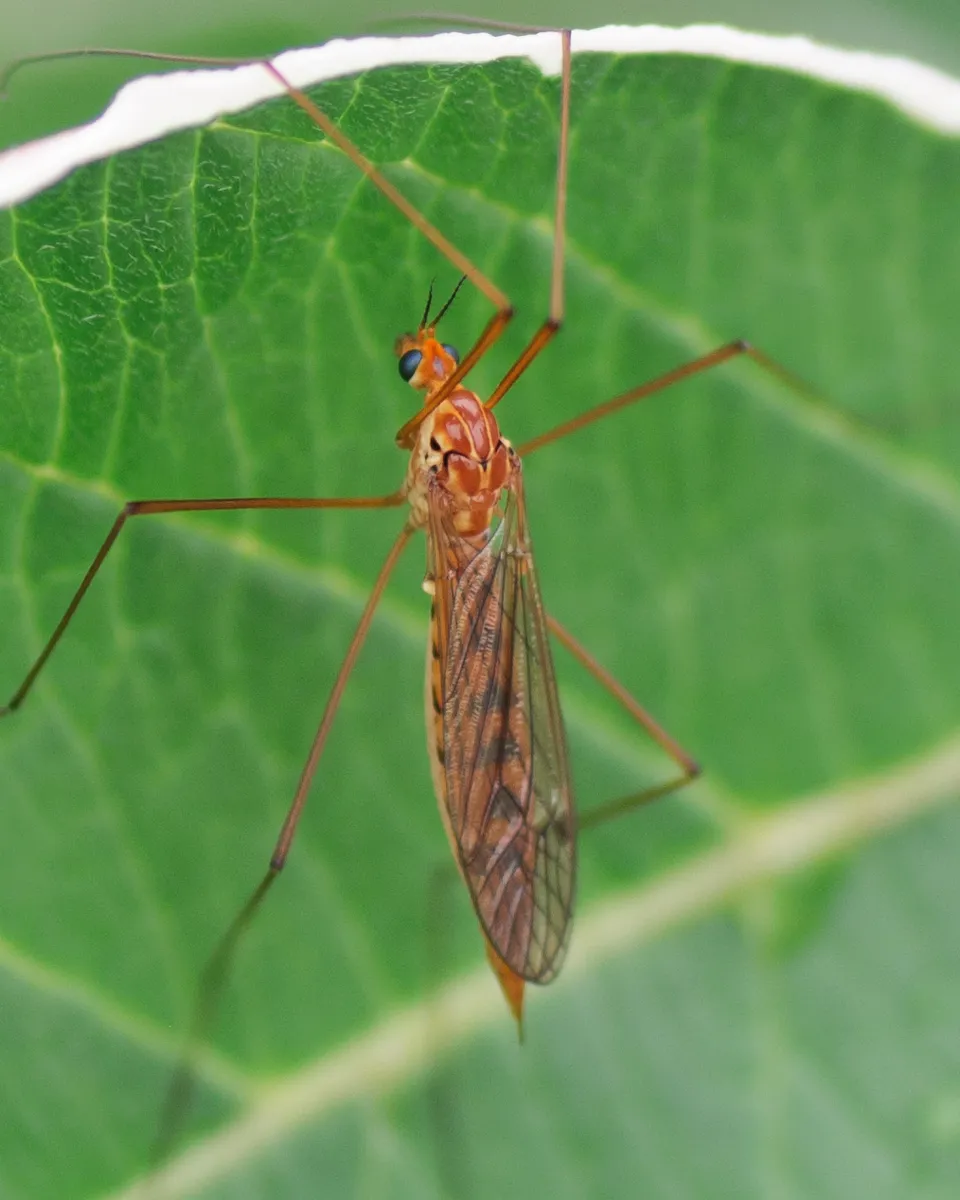
Nephrotoma ferruginea
Nephrotoma ferruginea
Identification: In the Northeast, distinguished from other Nephrotoma by the combination of Most common Nephrotoma in our area, and likely to be found in urban/suburban areas
Nephrotoma okefenoke
Nephrotoma okefenoke
Identification: The appendage of the inner dististyle of the male is distinctive. Otherwise, very similar to Nephrotoma cornifera and urocera .
Nephrotoma punctum
Nephrotoma punctum
Closely related to N. calinotum , from which it is separated by the hypopygial characters. As well, "by the colouration of the second and following flegellar segments: unicolourous in both sexes of punctum , bicolourous with darkened bases in males o
Nephrotoma rogersi
Nephrotoma rogersi
Identification: "The dark brown (sub)costal tinge of the wings in rogersi separates it easily from all other nearctic Nephrotoma species; there is also some (sub)costal darkening in cornifera , okefenoke and urocera , but to a far lesser extent." (Ta
Nephrotoma virescens
Nephrotoma virescens
Identification: yellow to green, with wingtips clear and scutum mostly covered by curved brown and black stripes " N. virescens can be very easily recognized by the four, large, velvety black markings on the lateral parts of the prescutum and scutum.
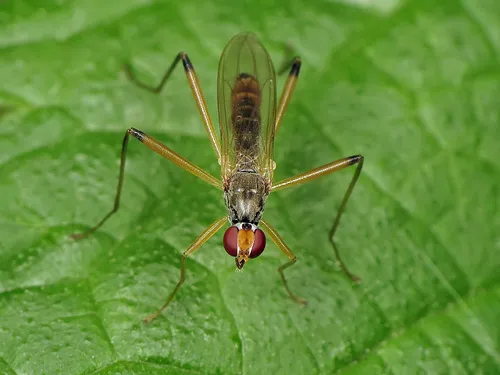
Neria cibaria
Neria cibaria
Neria are long-legged and long-bodied flies, with four UK species. N. cibaria has a dark and dusted thorax, an all-orange frons and an arista that is dark at the base. Neria commutata also has a dark and dusted thorax but the frons darkens towards th
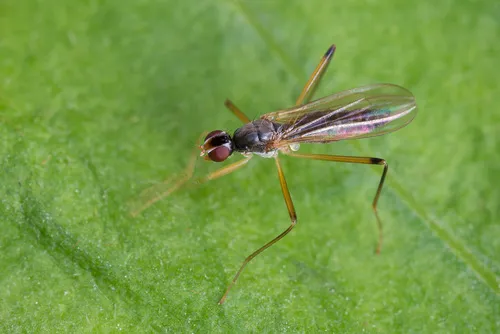
Neria commutata
Neria commutata
Identification requires close examination of a specimen. Humid wooded areas along rivers and pools. Widespread in southern and central England and northern Scotland, but records are lacking from western Wales, northern England and Southern Scotland.
Neurigona aldrichii
Neurigona aldrichii
Identification: Male with modified second fore tarsomere.
Neurigona carbonifer
Neurigona carbonifer
Identification: Male fore tarsus with enlarged black tip. See Van Duzee 1913:32 (below) for full description.
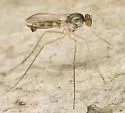
Neurigona deformis
Neurigona deformis
Identification: Males have deformed wings and tarsomeres 2-4 of the fore legs with a hairy fringe.
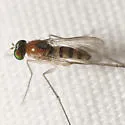
Neurigona dimidiata
Neurigona dimidiata
Identification: Flat spot on thorax black, usually with black line extending forward. Hairs and bristles on fore and mid coxae whitish yellow. Hypopygium black.
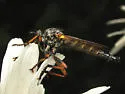
Nevadasilus auriannulatus
Nevadasilus auriannulatus
Identification: Per Eric Fisher, "The striking red and black legs and the stout, black bristles of the legs, head and thorax are characteristic for this species."
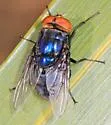
New World Screwworm
Cochliomyia hominivorax
Identification: distinguished from the more common macellaria by "parafrontal with black hair anteriorly outside the row of frontal bristles; basicosta of male normally black; female usually without proclinate fronto-orbitals." sterile male fly relea
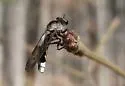
Nicocles pictus
Nicocles pictus
Original publication (Loew, 1866; in Latin!) gives size as: Long. corp. 5 1/3 lin., long. al. 5 1/4 lin. Long. corp. = length of body, long. al. = length wing. The unit is some version of the "line", see https://en.wikipedia.org/wiki/Line_(unit) , pe
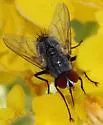
Nimioglossa planicosta
Nimioglossa planicosta
Identification: Distinguished from other Nimioglossa and Microchaetina by the missing costal spine and narrowly separated male eyes.
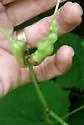
Nodular Stem Gall Midge
Neolasioptera nodulosa
Forms galls in Rubus stems. "Irregular stem gall, length 1 inch, midge, summer." "Swellings are usually on the smaller, apical branches, are sometimes strongly ridged, and contain several yellow larvae. Larvae overwinter in the galls."
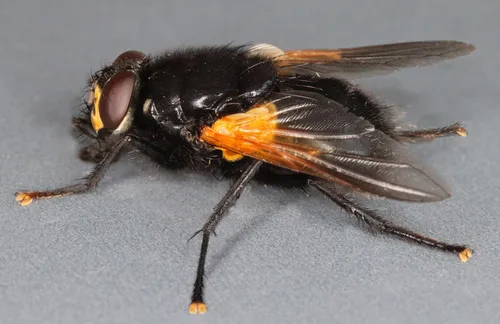
Noon Fly
Mesembrina meridiana
This large fly is easily identified by the jet black colour adorned with orange-gold on the base of its wings, on its feet and on its face. Well wooded and well vegetated areas, where it likes to sun-bathe on plant leaves, fences, trees and even on t
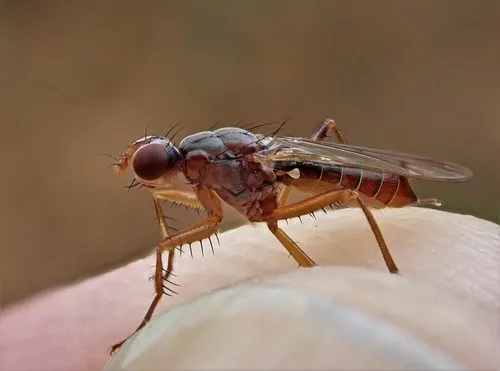
Norellia spinipes
Norellia spinipes
Norellia spinipes is a little orangey fly with long legs and at first sight looks more like a stilt-fly than a dung-fly. It is associated with daffodils, although not exclusively so. Most likely to be encountered in spring, on or around daffodils, bu
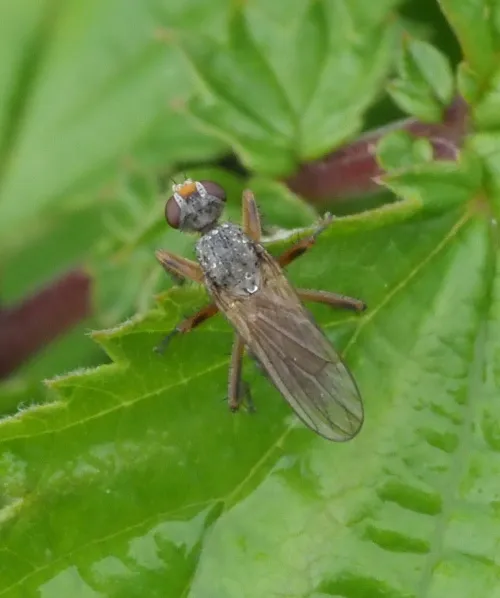
Norellisoma opacum
Norellisoma opacum
Up to 5mm with a densely dusted grey thorax and abdomen, except for the final abdominal segment (terminalia) that is glossy black. The legs, the front of the frons and the antennae are orange. The arista are pubescent. N. spinimanum is larger (~6.5mm
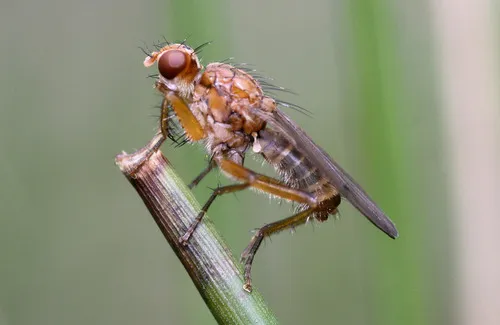
Norellisoma spinimanum
Norellisoma spinimanum
This orange plant fly is distinguished from similar species by a double row of spines on the front tibia. The thorax and legs are orange, the abdomen orangey-grey. Unless identified by a recognised expert, a photo is required and the specimen should
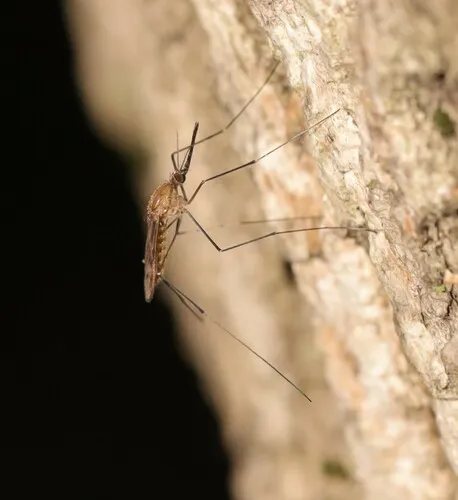
North American Malaria Mosquito
Anopheles quadrimaculatus
Identification: Larva: - Siphon absent - Head hairs 8 and 9 are usually with 8 to 10 branches - Lateral setae on the 4th, 5th, and 6th segments are not plumose - Four distinct dark spots on the wings Adult Female: - Proboscis dark scaled - Scutum is
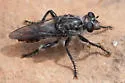
Northern Chiselmouth
Andrenosoma fulvicaudum
Identification: Head: Covered with white hair. Mustache (mystax) black, stout bristles. Some black bristles around antenna base. Antenna: Black, short with 3 joints. Thorax: Varied black and gray. Down center two wide black stripes. Thorax sides (ple
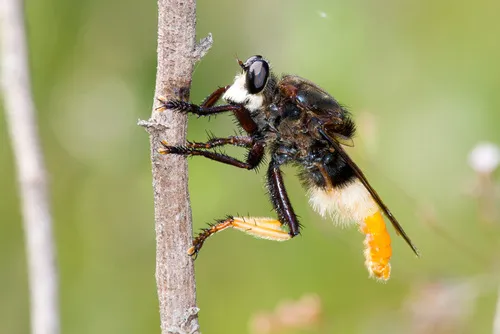
Northern Flare Fly
Eccritosia zamon
Identification: Appearance distinctive--see images. Quoting original description (Townsend, 1895): A stout species with large thorax. Head blackish, front with black hair; face more yellowish, with long pale yellow beard, extending on the cheeks. Fir
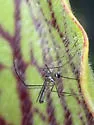
Northern Pitcher-Plant Mosquito
Wyeomyia smithii
This species overwinters as a larva, frozen in the block of ice that forms inside its pitcher after the weather turns cold enough.
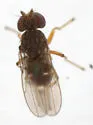
Nostima niveivenosa
Nostima niveivenosa
"One of the most widespread and commonly collected species of Nostima."
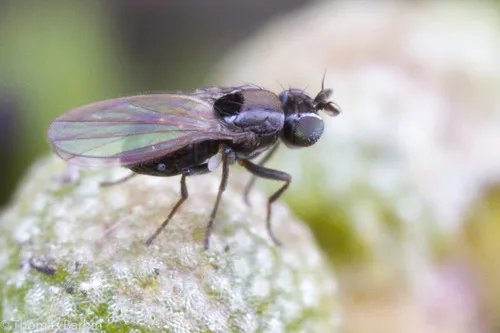
Nostima picta
Nostima picta
Identification: Wing with crossveins white, other veins and wing membrane dark. Thorax with two white stripes. Scutellum and adjacent scutum velvety black. N. velutina , only known from southern Mexico, has the black area extending farther forward.
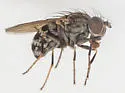
Notiphila pulchrifrons
Notiphila pulchrifrons
Identification: The very strongly contrasting markings on the top of the head combined with distinct stripes on scutum extending less distinctly onto scutellum should distinguish this species from other Notiphila .
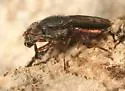
Notogramma purpuratum
Notogramma purpuratum
Identification: Pale spot on edge of wing at end of R1; mesopleura at most thinly pruinose, without pattern of dark spots. (Steyskal, 1963)
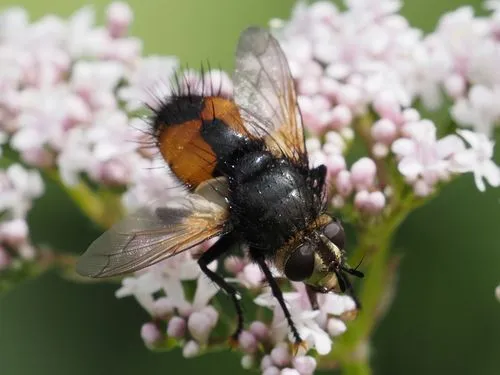
Nowickia ferox
Nowickia ferox
11-15mm, about the size of a large bluebottle. It has yellow-orange side patches to the abdomen and a black zig-zag central band. Like all Tachinids it has numerous bristly hairs on the abdomen. The maggot stage of the fly develops inside the Dark Ar
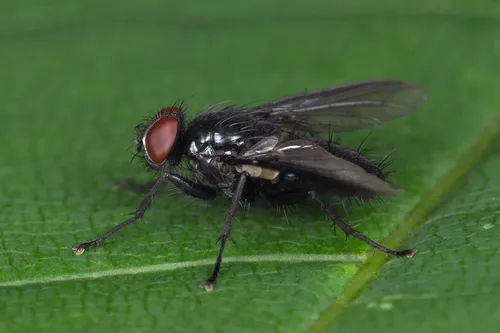
Nyctia halterata
Nyctia halterata
7-9mm (typically). A shiny black-bodied flesh fly with wings that are darkened anteriorly. Unless identified by a recognised expert, a photo is required and the specimen should be examined with a microscope. In the comments box, state the key or ID m
Oak Shothole Leafminer
Japanagromyza viridula
Larvae make linear-blotch mines in oak leaves. When females feed on opening leaves by piercing with their ovipositors and then drinking the juices, the punctures widen as the leaf expands and the full-grown leaf is riddled with holes.
Oblique-banded Pond Fly
Sericomyia chrysotoxoides
Identification: similar to the western S. chalcopyga --see discussion the most common species of Sericomyia in the East -- Jeff Skevington's comment
Ochlerotatus atropalpus
Ochlerotatus atropalpus
Identification: Larva: The antennae are half as long as the head, antennal setae 1-A double or triple and head hairs 5 and 6 are single. Siphon with only one pair of setae and siphonal setae are inserted wihin pecten teeth. Saddle incomplere and redu
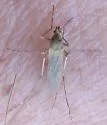
Ochlerotatus campestris
Ochlerotatus campestris
Identification: predominantly yellow and brown with indistinct pale basal and apical tarsal bands Adult Female: proboscis and palps black-scaled, pale scales intermixed basally; scutum blonde with a broad brownish median stripe and lateral stripes, n
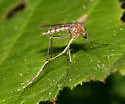
Ochlerotatus canadensis
Ochlerotatus canadensis
Identification: Larvae: - Antennae half as long as head - Antennal seta 1-A with four or more branches. - lateral setae on abdominal segments 1 and 2 are double - Siphon with one pair of setae - Incomplete saddle Adult Female: - Proboscis dark scaled
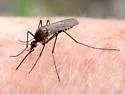
Ochlerotatus communis
Ochlerotatus communis
Identification: Larvae: - Antenna shorter than head with coarse spinules - Antennal seta 1-A with four or more branches - Mesothoracis seta 1-M much shorter than antenna - Comb scale fringed apically with 4 to 7 subequal spinules Adult Female: - Side
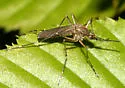
Ochlerotatus excrucians
Ochlerotatus excrucians
Identification: Adult: proboscis unbanded; each hind tarsomere with broad pale basal band; abdomen black with narrow pale basal band on each segment; wings with intermixed pale scales; northern individuals are larger and darker than southern ones ( s
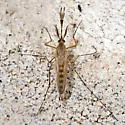
Ochlerotatus fitchii
Ochlerotatus fitchii
Identification: The proboscis is unbanded with mivxed dark brown and yellow sclaes. Scutum has a broad reddish brown strip in the middle and yellowish scales laterally. Also has pale basal bands on the hind tarsomeres. *To differenciate between Oc. e
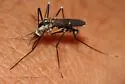
Ochlerotatus hendersoni
Ochlerotatus hendersoni
Identification: Larva: - Antennae half as long as head - Antennal seta 1-A single, 5 single, 6 with three or four branches - Comb scales in an irregular or single row - Siphon with one pair of seta, siphonal tuft with three branches - Incomplete sadd
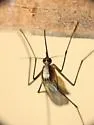
Ochlerotatus infirmatus
Ochlerotatus infirmatus
Identification: Adult female: Integument of thorax dark brown, broad antero-medial stripe of silvery-white or pale yellow scales extending to middle or a little beyond, much broader than lateral dark scaled areas. Postspiracular setae present, tarsi,
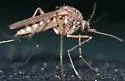
Ochlerotatus provocans
Ochlerotatus provocans
Identification: Larva: - antennae shorter than head, antennal seta 1-A multibranched - head hair 5 double or triple, head hair 6 usually single - siphon with more than four times the length of subapical spines - saddle incomplete, nearly touching ven
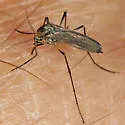
Ochlerotatus thibaulti
Ochlerotatus thibaulti
Identification: Larvae: - Antenna as long as head - Antennal seta 1-A multibranched - Mesothoracic setae 1-M single and shorter than antennae - Siphon with only one pair of setae - Incomplete saddle Adult Female: - Dark scaled proboscis - Scutum with
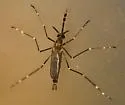
Ochlerotatus togoi
Ochlerotatus togoi
Identification: Males have the palps only 3/4 as long as proboscis. Scutum with lyre-shaped pattern of golden scales. Introduced from Japan, likely after the 2nd World War. The taxonomy is uncertain. Darsie and Ward place it in Ochlerotatus , Reinert
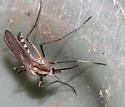
Ochlerotatus trivittatus
Ochlerotatus trivittatus
Identification: "The striping pattern on the scutum is the key -- central dark stripe, yellowish stripes on either side, then dark outermost stripes" - from Mark Fox's comments on this image: From Carpenter & LaCasse, 1955: Persistent, painful biters
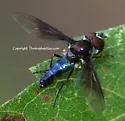
Ocyptamus dimidiatus
Ocyptamus dimidiatus
Identification: See comments under images, for example, this one:
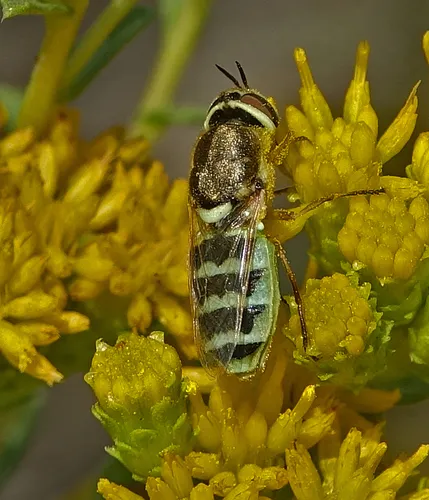
Odontomyia hirtocculata
Odontomyia hirtocculata
Identification: eyes covered with conspicuous pile (bare in other Odontomyia spp.); specimens with abraded eye hair may be misidentifined as arcuata