
Ormia lineifrons
This record describes Ormia lineifrons (species). Recorded family: Tachinidae. Recorded order: Diptera.
Identification and Appearance
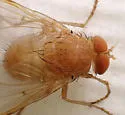
Ocelli present. Males exhibit costal callosity on the leading edge of the wing just past the middle. O. lineifrons is one of the Tachinidae species that has evolved traits including hearing to allow for parasitism of singing insects. Female O. lineifrons exploit the acoustic signals of Neoconocephalus and Orchelimum and are heavy parasitoids of Neoconocephalus triops in North America. Dipterist James E. O'Hara explains: These flies have evolved a remarkable suite of behavioral and morphological traits that allow them to parasitize... Neoconocephalus ...[Gravid females] lay eggs near their hosts and these hatch almost immediately, releasing larvae that seek out hosts on their own (Dr. James E. O'Hara, personal communication, August 2021).
Classification
- Kingdom
- Animalia
- Phylum
- Arthropoda
- Class
- Insecta
- Order
- Diptera (Flies)
- Superfamily
- Oestroidea
- Family
- Tachinidae (Parasitic Flies)
- Subfamily
- Tachininae
- Tribe
- Ormiini
- Genus
- Ormia
Imported taxonomy record. Source availability varies; see the source references and editorial policy below.
Habitat and Range
Geographic Range
In USA, Texas to Florida.
Diet and Behavior
Life History
Eggs are laid near the host, and the larvae, which hatch almost immediately, burrow into the host and develop inside. Fully developed larvae exit the host, killing the host in the process. Larvae pupate almost immediately upon exit, generally remaining in the pupal stage for around 12-13 days before emerging as adults (Dr. Oliver Beckers and Dr. James E. O'Hara, personal communications, August 2021).
Additional species information
Species notes from the sources
Etymology: The frons is reduced to a narrow line between the large eyes of the male.
About Flies: the wider group
Order-level background for Diptera, the group containing Ormia lineifrons. Species-specific details appear above.
Group overview
Diptera includes over 150,000 described species of flies, mosquitoes, and midges. Mosquitoes are the deadliest animal on Earth (CDC). Malaria alone causes ~249 million cases and over 608,000 deaths annually, mostly children under 5 (WHO). Vector-borne diseases account for over 17% of all infectious diseases, causing 700,000+ deaths per year.
Ecological role of the group
Despite their disease impact, flies are critical decomposers and pollinators. Hoverflies alone pollinate hundreds of crop and wildflower species. Flies are also the primary food source for many birds, bats, and fish. Forensic entomology relies heavily on fly species for crime scene analysis.
Economic and practical significance of the group
In the U.S., vector-borne disease cases tripled between 2004-2016, with over 640,000 cases reported in that period (CDC). Tickborne diseases doubled from 22,000 to 48,000 annual reports. Globally, mosquito-borne diseases cost billions in healthcare and lost productivity.
Recorded sources for this group: WHO, CDC, PNAS. Imported estimates may describe particular regions or reporting periods.
Photos of Ormia lineifrons (5)
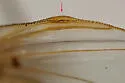
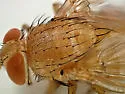
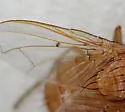
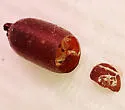
Photo credits: Contributed by John F. Carr; Additional contributions by dvoribird
Frequently Asked Questions About Ormia lineifrons
What is Ormia lineifrons?
Ormia lineifrons is a species in the family Tachinidae, within the order Diptera.
How do you identify Ormia lineifrons?
Ocelli present. Males exhibit costal callosity on the leading edge of the wing just past the middle.
Where is Ormia lineifrons found?
Range: In USA, Texas to Florida.
What is the life cycle of a Ormia lineifrons?
Eggs are laid near the host, and the larvae, which hatch almost immediately, burrow into the host and develop inside. Fully developed larvae exit the host, killing the host in the process. Larvae pupate almost immediately upon exit, generally remaining in the pupal stage for around 12-13 days before emerging as adults (Dr. Oliver Beckers and Dr. James E. O'Hara, personal communications, August 2021).