
Ogcodes incultus
This record describes Ogcodes incultus (species). Recorded family: Acroceridae. Recorded order: Diptera.
Identification and Appearance
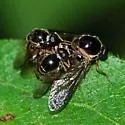
Overall habitus black (or black-brown): including head, mesonotum, scutellum, and ground color on dorsum of abdomen. The wings are distinctly darkened (especially in the area between the costa and the radial vein), vein M1 is present, cross vein m-cu is absent. The humeri and postalar callosities (rear corners) are light brown to whitish. The abdominal tergites have narrow white posterior bands (fasciae)...in females of uniform width, in males tergites 4 & 5 have wider bands. The legs are typically dark, with lighter knees (i.e. apical tip of the femur and basal tip of the tibia). Average size is ~ 6mm...larger than most O. pallidipennis . [Note below by A. S. on 8/9/14] Osten Sacken's original 1877 description of O. incultus can be read at this BHL link , starting at the very bottom of the page!! After studying long series of specimens, Sabrosky (1944) concluded that O. incultus was a relatively uncommon melanistic form at the end of the spectrum of variation within the species O. pallidipennis , and thus he synonymized O. incultus under O. pallidipennis . The synonymy was also accepted in Sabrosky (1948) and Schliger (1960), although Sabrosky had remarked in his 1944 paper that the extremely large and heavily browned forms known as incultus may possibly merit recognition and that disclaimer was not explicitly retracted in either Sabrosky (1948) nor Schlinger (1960). However, note that despite this synonymy, if one tries to key a specimen of O. incultus in either Sabrosky (1948) or Schlinger (1960) they will most likely miss ending at O. pallidipennis because the key breaks state that its general habitus is brown (rather than black). To correctly key O. incultus one must presumably pay extra careful attention to the qualifier general in that phrase!! A very careful reading of the keys and the discussions of O. pallidipennis in Sabrosky (1944, 1948) and Schlinger (1960) will indicate that specimens with black abdominal tergites and thin white posterior bands; light brown to whitish humeri and postalar callosities; and in particular brown-black infuscated wings (especiallly near the costa)...all of which agrees with Osten Sacken's incultus ...are treated as (a rarely all blackish form of) O. pallidipennis in Sabrosky (1944, 1948) and Schlinger (1960).
Classification
- Kingdom
- Animalia
- Phylum
- Arthropoda
- Class
- Insecta
- Order
- Diptera (Flies)
- Superfamily
- Empidoidea
- Family
- Acroceridae (Small-headed Flies)
- Genus
- Ogcodes
Imported taxonomy record. Source availability varies; see the source references and editorial policy below.
About Flies: the wider group
Order-level background for Diptera, the group containing Ogcodes incultus. Species-specific details appear above.
Group overview
Diptera includes over 150,000 described species of flies, mosquitoes, and midges. Mosquitoes are the deadliest animal on Earth (CDC). Malaria alone causes ~249 million cases and over 608,000 deaths annually, mostly children under 5 (WHO). Vector-borne diseases account for over 17% of all infectious diseases, causing 700,000+ deaths per year.
Ecological role of the group
Despite their disease impact, flies are critical decomposers and pollinators. Hoverflies alone pollinate hundreds of crop and wildflower species. Flies are also the primary food source for many birds, bats, and fish. Forensic entomology relies heavily on fly species for crime scene analysis.
Economic and practical significance of the group
In the U.S., vector-borne disease cases tripled between 2004-2016, with over 640,000 cases reported in that period (CDC). Tickborne diseases doubled from 22,000 to 48,000 annual reports. Globally, mosquito-borne diseases cost billions in healthcare and lost productivity.
Recorded sources for this group: WHO, CDC, PNAS. Imported estimates may describe particular regions or reporting periods.
Photos of Ogcodes incultus (5)
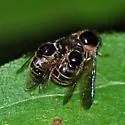
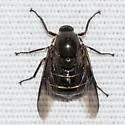
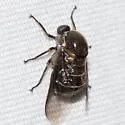
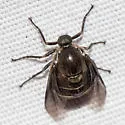
Photo credits: Contributed by Dennis Haines; Additional contributions by Mike Quinn , Aaron Schusteff