
Nasiternella hyperborea
This record describes Nasiternella hyperborea (species). Recorded family: Pediciidae. Recorded order: Diptera.
Identification and Appearance
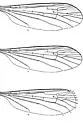
It is an uncommon species known from high latitudes in the Northwest Territories to Labrador and in high altitudes in the mountains of New Hampshire and New York. Mabel Alexander hand collected several males (and a male copulating with a teneral female) as these flies crawled over carpets of moss and rotting logs in the alpine enclave at 2,700ꞌ to 4,000ꞌ (822.96 to 1,219 m) on Mount Washington, New Hampshire (Alexander 1934). Females have reduced wings and consequently reduced flying ability, keeping both sexes close to the ground. (Brodo et al. 2023)
Classification
- Kingdom
- Animalia
- Phylum
- Arthropoda
- Class
- Insecta
- Order
- Diptera (Flies)
- Family
- Pediciidae (Hairy-eyed Crane Flies)
- Genus
- Nasiternella
Imported taxonomy record. Source availability varies; see the source references and editorial policy below.
Habitat and Range
Geographic Range
Canada, mountains of northeast USA
Additional species information
Species notes from the sources
Etymology: "of the far north"
About Flies: the wider group
Order-level background for Diptera, the group containing Nasiternella hyperborea. Species-specific details appear above.
Group overview
Diptera includes over 150,000 described species of flies, mosquitoes, and midges. Mosquitoes are the deadliest animal on Earth (CDC). Malaria alone causes ~249 million cases and over 608,000 deaths annually, mostly children under 5 (WHO). Vector-borne diseases account for over 17% of all infectious diseases, causing 700,000+ deaths per year.
Ecological role of the group
Despite their disease impact, flies are critical decomposers and pollinators. Hoverflies alone pollinate hundreds of crop and wildflower species. Flies are also the primary food source for many birds, bats, and fish. Forensic entomology relies heavily on fly species for crime scene analysis.
Economic and practical significance of the group
In the U.S., vector-borne disease cases tripled between 2004-2016, with over 640,000 cases reported in that period (CDC). Tickborne diseases doubled from 22,000 to 48,000 annual reports. Globally, mosquito-borne diseases cost billions in healthcare and lost productivity.
Recorded sources for this group: WHO, CDC, PNAS. Imported estimates may describe particular regions or reporting periods.
Photos of Nasiternella hyperborea (5)
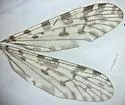

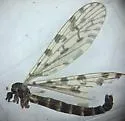
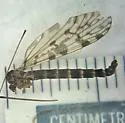
Photo credits: Contributed by John F. Carr