
Trailside Grasshopper
Lactista gibbosus
This record describes Lactista gibbosus (species). Recorded family: Acrididae. Recorded order: Orthoptera.
Identification and Appearance
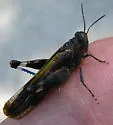
Similar to Arphia , but averages smaller and narrower of build, with wings always yellow (often orange or red in sympatric Arphia ), hind tibiae blue (sometimes not in Arphia , and forewings are usually more noticeably cross-banded than in Arphia . There are often noticeable diagonal lines near the rear of the lateral lobes of the pronotum that are usually not so obvious (or are lacking) in Arphia . This species may buzz in flight, but it is a fainter high pitched sound than in any Arphia . The fastigium (on top of head between front of eyes) is narrower and much more deeply concave than in Arphia . Lactista azteca overlaps distribution in southern Arizona and northern Sonora. It is generally smaller, stocker of build, with the the pronotum more prominently narrowed from rear to front (as seen from above). The strong narrow dark stripe that usually crosses hind femur and tegmina so prominently in L. azteca is usually not well developed, or at least not noticeably darker than other dark markings in L. gibbosa .
Classification
- Kingdom
- Animalia
- Phylum
- Arthropoda
- Class
- Insecta
- Order
- Orthoptera (Grasshoppers, Crickets, Katydids)
- Suborder
- Caelifera
- Family
- Acrididae (Short-horned Grasshoppers)
- Subfamily
- Oedipodinae
- Tribe
- Arphiini
- Genus
- Lactista
Imported taxonomy record. Source availability varies; see the source references and editorial policy below.
Habitat and Range
Habitat
Varied sunny exposed places, most often gravelly to rocky. Sometimes common in disturbed areas such as road cuts.
Geographic Range
Central California and southern & western Arizona, southward into northern Sonoran and through the length of Baja California in Mexico. Probably occurs in southern Nevada, but needs verification there.
Seasonal Activity
Year-round, apparently in multiple broods, but often most abundant in spring.
Additional species information
Species notes from the sources
Etymology: Previously listed on Bugguide as Lactista gibbosa , but the genus name is Greek masculine, not Latin feminine ( Genus Description , iNaturalist , ITIS ).
About Grasshoppers, Crickets, Katydids: the wider group
Order-level background for Orthoptera, the group containing Lactista gibbosus. Species-specific details appear above.
Group overview
Orthoptera includes ~28,000 described species of grasshoppers, crickets, and katydids. Desert locusts can form swarms covering 460 square miles containing up to 80 million individuals per square kilometer.
Ecological role of the group
Grasshoppers and crickets are a primary food source for birds, reptiles, and small mammals. Cricket farming is a growing industry - crickets require 12× less feed than cattle to produce the same amount of protein, using 2,000× less water.
Economic and practical significance of the group
A single large locust swarm can consume the same amount of food in one day as 35,000 people. The 2019-2021 East Africa locust crisis affected food security for 42 million people across multiple countries. Global crop losses from locusts can reach billions annually.
Recorded sources for this group: FAO, UN World Food Programme, research publications. Imported estimates may describe particular regions or reporting periods.
Photos of Trailside Grasshopper (5)
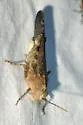
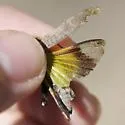
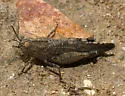
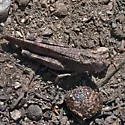
Photo credits: Contributed by Ted Kropiewnicki; Additional contributions by David Ferguson , Harsi S. Parker , James Bailey , Nathaniel Green
Frequently Asked Questions About Trailside Grasshopper
What is Trailside Grasshopper?
Trailside Grasshopper (Lactista gibbosus) is a species in the family Acrididae, within the order Orthoptera.
How do you identify Trailside Grasshopper?
Similar to Arphia , but averages smaller and narrower of build, with wings always yellow (often orange or red in sympatric Arphia ), hind tibiae blue (sometimes not in Arphia , and forewings are usually more noticeably cross-banded than in Arphia . There are often noticeable diagonal lines near the rear of the lateral lobes of the pronotum that are usually not so obvious (or are lacking) in Arphia . This species may buzz in flight, but it is a fainter high pitched sound than in any Arphia . The fastigium (on top of head between front of eyes) is narrower and much more deeply concave than in Arphia . Lactista azteca overlaps distribution in southern Arizona and northern Sonora. It is generally smaller, stocker of build, with the the pronotum more prominently narrowed from rear to front (as seen from above). The strong narrow dark stripe that usually crosses hind femur and tegmina so prominently in L. azteca is usually not well developed, or at least not noticeably darker than other dark markings in L. gibbosa .
Where is Trailside Grasshopper found?
| Feature | Details |
|---|---|
| Habitat | Varied sunny exposed places, most often gravelly to rocky. Sometimes common in disturbed areas such as road cuts. |
| Range | Central California and southern & western Arizona, southward into northern Sonoran and through the length of Baja California in Mexico. Probably occurs in southern Nevada, but needs verification there. |
When is Trailside Grasshopper active?
Trailside Grasshopper: seasonal activity - Year-round, apparently in multiple broods, but often most abundant in spring..