
Wrinkled Grasshopper
Hippiscus ocelote
This record describes Hippiscus ocelote (species). Recorded family: Acrididae. Recorded order: Orthoptera.
Identification and Appearance
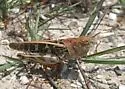
Heavy bodied, with large rounded head, nearly smooth on top between eyes. Pronotum rough on top, often with low irregular raised parallel ridges toward the rear; with median ridge cut once at middle . Usually gray and brown with a lighter X mark on dorsum of pronotum; with pale lines along upper edges of folded tegmina; and with tegmina panther-spotted. Hind wings yellow, orange, red, or pink with a dark curved band running around outer edge and with a dark spur from this band near the front margin of the wing. Tip of wing usually clear, sometimes with some dark coloring mostly along the veins. Most like Pardalophora , which species all have the median ridge of the pronotum cut well forward of the middle , and have smaller heads usually more strongly sculptured on top between eyes. These are usually found as adults in spring , and overwinter as nymphs. The hind tibiae may be bright orange or red in some species. Xanthippus is like Pardalophora , but also has the median ridge of the pronotum cut twice (both cuts are well in front of middle) . Where they occur with Hippiscus , species of Xanthippus usually have the hind tibiae and inner side of the hind femur bright orange to red. Camnula is similar, but proportioned more like Pardalophora , much smaller, and has clear little pigmented wings. Mostly found further north and/or at higher elevations . A large late season species with brightly colored wings. Males are usually active, alert, and difficult to approach or catch. Females are usually powerful fliers as well, but may rely on camouflage, taking to the air only as a last resort. Once they do fly, they can be difficult to catch up with and approach too. This species does not crepitate in flight, but it is large and produces a rustling sound as it flies simply due to air movement. A large female flying up unexpectedly can be quite startling. Commonly comes to bright lights at night.
Classification
- Kingdom
- Animalia
- Phylum
- Arthropoda
- Class
- Insecta
- Order
- Orthoptera (Grasshoppers, Crickets, Katydids)
- Suborder
- Caelifera
- Family
- Acrididae (Short-horned Grasshoppers)
- Subfamily
- Oedipodinae
- Tribe
- Hippiscini
- Genus
- Hippiscus
Imported taxonomy record. Source availability varies; see the source references and editorial policy below.
Habitat and Range
Habitat
Grasslands, pastures, meadows; areas that would be considered relatively dry with short grass in the east but would be considered moist and lush in the west.
Geographic Range
e. US to AZ - Map
Seasonal Activity
mostly: July-Oct. (BG data)
Diet and Behavior
Diet: Grasses, and probably some herbaceous dicots as well. Will scavenge dead animal material as well, and may be somewhat cannibalistic under some circumstances.
Life History
Overwinters as eggs. Adults mostly July or August into October or November in much of range, sometimes through winter in south. August-frost (North Carolina).
Additional species information
Species notes from the sources
Etymology: Hippiscus ocelote (Saussure, 1861) This is one of those with common names that seem a bit "off". The common name came from the species name that was in use at the time, but not quite interpreted right; so. the common name doesn't really fit very well. [The species name, a synonym, was " rugosus ".] That species name actually referred to the roughened, sometimes ridged upper surface of the pronotum. This is one of the smoothest and least "wrinkled" of the Band-winged Grasshoppers. The common name "Clumsy Grasshopper" is perhaps a little more appropriate, since egg-ladden females are sometimes very lubberly and clumsy in their movenments. However, when they are in their prime and the weather is warm they are usually anything but clumsy, and are very powerful fliers.
About Grasshoppers, Crickets, Katydids: the wider group
Order-level background for Orthoptera, the group containing Hippiscus ocelote. Species-specific details appear above.
Group overview
Orthoptera includes ~28,000 described species of grasshoppers, crickets, and katydids. Desert locusts can form swarms covering 460 square miles containing up to 80 million individuals per square kilometer.
Ecological role of the group
Grasshoppers and crickets are a primary food source for birds, reptiles, and small mammals. Cricket farming is a growing industry - crickets require 12× less feed than cattle to produce the same amount of protein, using 2,000× less water.
Economic and practical significance of the group
A single large locust swarm can consume the same amount of food in one day as 35,000 people. The 2019-2021 East Africa locust crisis affected food security for 42 million people across multiple countries. Global crop losses from locusts can reach billions annually.
Recorded sources for this group: FAO, UN World Food Programme, research publications. Imported estimates may describe particular regions or reporting periods.
Photos of Wrinkled Grasshopper (5)
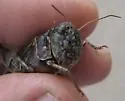
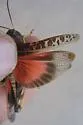
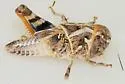
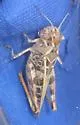
Photo credits: Contributed by Cotinis; Additional contributions by Mike Quinn , David Ferguson
Frequently Asked Questions About Wrinkled Grasshopper
What is Wrinkled Grasshopper?
Wrinkled Grasshopper (Hippiscus ocelote) is a species in the family Acrididae, within the order Orthoptera.
How big is Wrinkled Grasshopper?
| Feature | Details |
|---|---|
| Males | 28-40 mm |
| Females | 39-53 mm |
How do you identify Wrinkled Grasshopper?
Heavy bodied, with large rounded head, nearly smooth on top between eyes. Pronotum rough on top, often with low irregular raised parallel ridges toward the rear; with median ridge cut once at middle . Usually gray and brown with a lighter X mark on dorsum of pronotum; with pale lines along upper edges of folded tegmina; and with tegmina panther-spotted. Hind wings yellow, orange, red, or pink with a dark curved band running around outer edge and with a dark spur from this band near the front margin of the wing. Tip of wing usually clear, sometimes with some dark coloring mostly along the veins. Most like Pardalophora , which species all have the median ridge of the pronotum cut well forward of the middle , and have smaller heads usually more strongly sculptured on top between eyes. These are usually found as adults in spring , and overwinter as nymphs. The hind tibiae may be bright orange or red in some species. Xanthippus is like Pardalophora , but also has the median ridge of the pronotum cut twice (both cuts are well in front of middle) . Where they occur with Hippiscus , species of Xanthippus usually have the hind tibiae and inner side of the hind femur bright orange to red. Camnula is similar, but proportioned more like Pardalophora , much smaller, and has clear little pigmented wings. Mostly found further north and/or at higher elevations .
Where is Wrinkled Grasshopper found?
| Feature | Details |
|---|---|
| Habitat | Grasslands, pastures, meadows; areas that would be considered relatively dry with short grass in the east but would be considered moist and lush in the west. |
| Range | e. US to AZ - Map |
What does Wrinkled Grasshopper eat?
The diet of the Wrinkled Grasshopper includes Grasses, and probably some herbaceous dicots as well. Will scavenge dead animal material as well, and may be somewhat cannibalistic under some circumstances..
When is Wrinkled Grasshopper active?
Wrinkled Grasshopper: seasonal activity - mostly: July-Oct. (BG data).
What is the life cycle of a Wrinkled Grasshopper?
Overwinters as eggs. Adults mostly July or August into October or November in much of range, sometimes through winter in south. August-frost (North Carolina).