
Clear-winged Grasshopper
Camnula pellucida
This record describes Camnula pellucida (species). Recorded family: Acrididae. Recorded order: Orthoptera.
Identification and Appearance
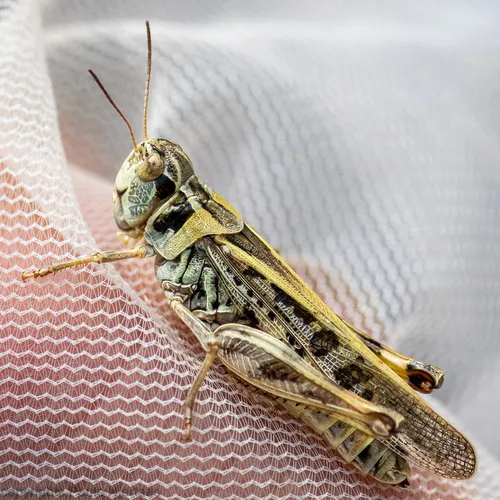
Size relatively small with adults mostly between 3/4 and 1 1/4 inch long (face to folded wing tips). Surface of body appearing rather smooth. Variable in coloration, but usually grayish, yellowish, or brownish with dark pantherine spots on tegmina (i.e. leopard-spotted), dark diagonal bands crossing outer hind femora, and two pale stripes along top lateral margins of pronotum and folded tegmina. Hind tibiae and inner hind femora usually yellow, sometimes with dark bands across inner hind femur. Hind wings clear or only slightly yellowish with only veins dark (or at most some faint dark clouding apically). Similar in appearance to other genera of tribe Hippiscini , but all other species in the tribe have the hind wings brightly pigmented, and most are much larger in size. Encoptolophus species could be confused, but hind tibiae are usually blue or blackish, and the tegminal pattern is not pantherine. Some Spur-throat Grasshoppers (mostly Melanoplus species) may appear similar, but close examination will show a different color pattern and a prominent spur between the front legs. This sometimes abundant species has been known to swarm and to migrate short distances to mass breeding grounds. It has become destructive to crops and pastureland at times, mostly where natural habitats have been converted to agricultural purposes. However, its numbers are normally too small to cause significant damage.
Classification
- Kingdom
- Animalia
- Phylum
- Arthropoda
- Class
- Insecta
- Order
- Orthoptera (Grasshoppers, Crickets, Katydids)
- Suborder
- Caelifera
- Family
- Acrididae (Short-horned Grasshoppers)
- Subfamily
- Oedipodinae
- Tribe
- Hippiscini
- Genus
- Camnula
Imported taxonomy record. Source availability varies; see the source references and editorial policy below.
Habitat and Range
Habitat
A variety of open sunny grassy areas, typically habitats are rather meadow-like with a cover of relatively short grass or sedges, and are not soggy wet nor extremely dry.
Geographic Range
Pacific to Atlantic, north of roughly 41 degrees north latitude, and mostly south of the Arctic tundra. In western North America reaching further south in higher elevations and near the coast to southern California, Arizona, and New Mexico.
About Grasshoppers, Crickets, Katydids: the wider group
Order-level background for Orthoptera, the group containing Camnula pellucida. Species-specific details appear above.
Group overview
Orthoptera includes ~28,000 described species of grasshoppers, crickets, and katydids. Desert locusts can form swarms covering 460 square miles containing up to 80 million individuals per square kilometer.
Ecological role of the group
Grasshoppers and crickets are a primary food source for birds, reptiles, and small mammals. Cricket farming is a growing industry - crickets require 12× less feed than cattle to produce the same amount of protein, using 2,000× less water.
Economic and practical significance of the group
A single large locust swarm can consume the same amount of food in one day as 35,000 people. The 2019-2021 East Africa locust crisis affected food security for 42 million people across multiple countries. Global crop losses from locusts can reach billions annually.
Recorded sources for this group: FAO, UN World Food Programme, research publications. Imported estimates may describe particular regions or reporting periods.
Photos of Clear-winged Grasshopper (2)
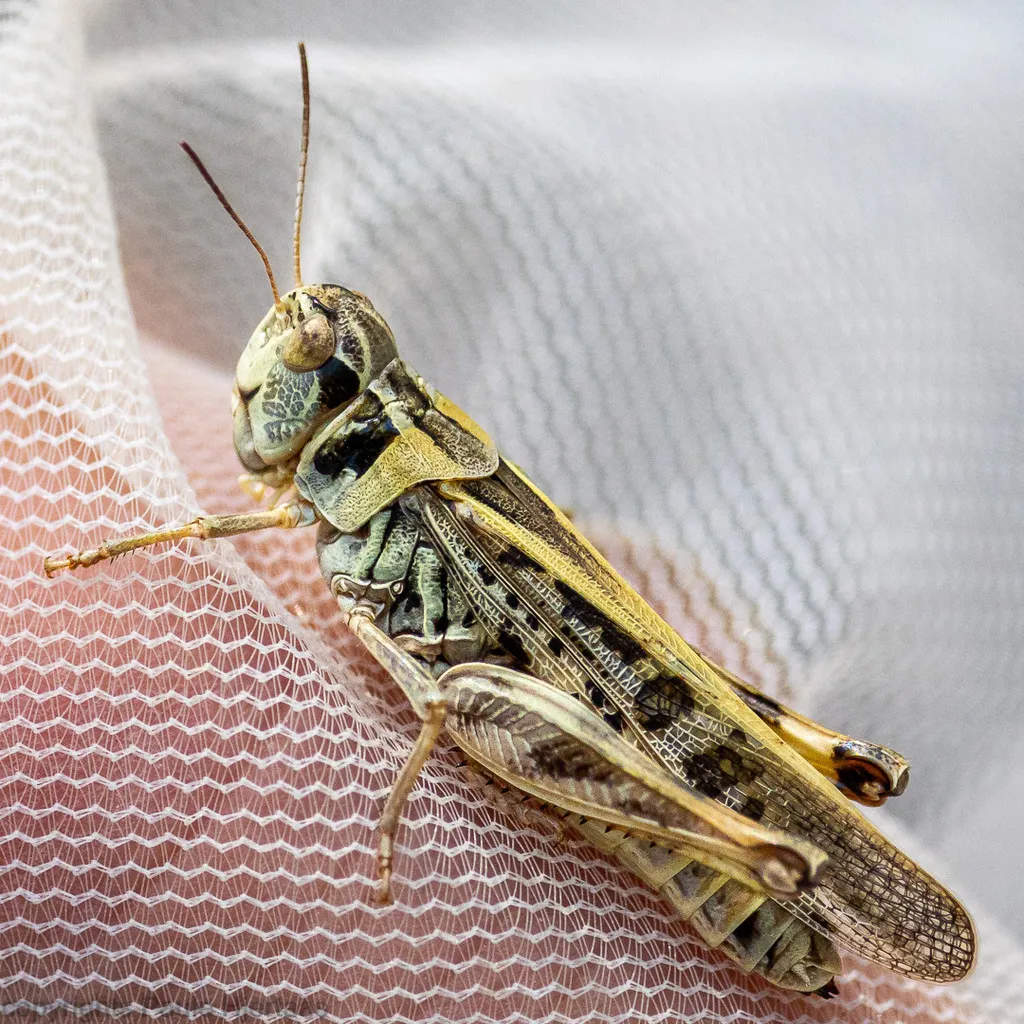
Photo credits: Contributed by Will Chatfield-Taylor; Additional contributions by Ted Kropiewnicki , David Ferguson , Denis Doucet
Frequently Asked Questions About Clear-winged Grasshopper
What is Clear-winged Grasshopper?
Clear-winged Grasshopper (Camnula pellucida) is a species in the family Acrididae, within the order Orthoptera.
How do you identify Clear-winged Grasshopper?
Size relatively small with adults mostly between 3/4 and 1 1/4 inch long (face to folded wing tips). Surface of body appearing rather smooth. Variable in coloration, but usually grayish, yellowish, or brownish with dark pantherine spots on tegmina (i.e. leopard-spotted), dark diagonal bands crossing outer hind femora, and two pale stripes along top lateral margins of pronotum and folded tegmina. Hind tibiae and inner hind femora usually yellow, sometimes with dark bands across inner hind femur. Hind wings clear or only slightly yellowish with only veins dark (or at most some faint dark clouding apically). Similar in appearance to other genera of tribe Hippiscini , but all other species in the tribe have the hind wings brightly pigmented, and most are much larger in size. Encoptolophus species could be confused, but hind tibiae are usually blue or blackish, and the tegminal pattern is not pantherine. Some Spur-throat Grasshoppers (mostly Melanoplus species) may appear similar, but close examination will show a different color pattern and a prominent spur between the front legs.
Where is Clear-winged Grasshopper found?
| Feature | Details |
|---|---|
| Habitat | A variety of open sunny grassy areas, typically habitats are rather meadow-like with a cover of relatively short grass or sedges, and are not soggy wet nor extremely dry. |
| Range | Pacific to Atlantic, north of roughly 41 degrees north latitude, and mostly south of the Arctic tundra. In western North America reaching further south in higher elevations and near the coast to southern California, Arizona, and New Mexico. |