
California Orange-winged Grasshopper
Arphia ramona
This record describes Arphia ramona (species). Recorded family: Acrididae. Recorded order: Orthoptera.
Identification and Appearance
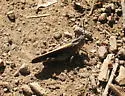
| Feature | Description |
|---|---|
| Additional details | Adults primarily in late winter / spring. |
| Wings | Wings usually orange (verging to red, or rarely yellow). Produces a harsh buzz in flight. A. behrensi is similar, but averages smaller, a bit more slender, with fastigium a bit more slender, and wings are normally yellow with band and spur wider. Found north from Bay Area and central Sierra Nevada (mostly west from the Sierra). A. behrensii is very similar to eastern A. sulphurea . A. conspersa is very closely related and is very similar. The head averages rounder at forehead with front of fastigium wider where it meets the frontal costa. |
| Wings | Wings may be yellow, orange, or pink, and apex of wing usually has more transparent area and spur of dark band wider. It replaces A. ramona and A. behrensi east from the Sierra Nevada and Peninsular Ranges, and (in California) is mostly in desert mountains and uplands. It is not entirely clear exactly where A. ramona ends and A. conspersa starts, as they seem to intergrade in southeastern California, and even in southern Arizona many specimens of A. conspersa would be hard to tell from A. Ramona , except that their wings are more often yellow there. A. behrensi, conspersa, & ramona , along with eastern A. sulphurea and a few Mexican species, are all very closely related, and at least some of them may merely be subspecies of one another. They need more study where their distributions meet. Lactista gibbosus is similar in appearance, but is more slender, generally smaller, with the fastigium narrower and more deeply grooved. It has yellow wings. |
Classification
- Kingdom
- Animalia
- Phylum
- Arthropoda
- Class
- Insecta
- Order
- Orthoptera (Grasshoppers, Crickets, Katydids)
- Suborder
- Caelifera
- Family
- Acrididae (Short-horned Grasshoppers)
- Subfamily
- Oedipodinae
- Tribe
- Arphiini
- Genus
- Arphia
Imported taxonomy record. Source availability varies; see the source references and editorial policy below.
Habitat and Range
Geographic Range
California west of the deserts and south from the Bay Area.
Seasonal Activity
Overwintering as nymphs, with adults mostly in late winter and early spring.
Diet and Behavior
Diet: Probably primarily cool season Grasses.
About Grasshoppers, Crickets, Katydids: the wider group
Order-level background for Orthoptera, the group containing Arphia ramona. Species-specific details appear above.
Group overview
Orthoptera includes ~28,000 described species of grasshoppers, crickets, and katydids. Desert locusts can form swarms covering 460 square miles containing up to 80 million individuals per square kilometer.
Ecological role of the group
Grasshoppers and crickets are a primary food source for birds, reptiles, and small mammals. Cricket farming is a growing industry - crickets require 12× less feed than cattle to produce the same amount of protein, using 2,000× less water.
Economic and practical significance of the group
A single large locust swarm can consume the same amount of food in one day as 35,000 people. The 2019-2021 East Africa locust crisis affected food security for 42 million people across multiple countries. Global crop losses from locusts can reach billions annually.
Recorded sources for this group: FAO, UN World Food Programme, research publications. Imported estimates may describe particular regions or reporting periods.
Photos of California Orange-winged Grasshopper (5)
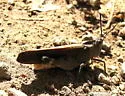
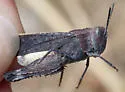
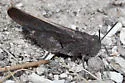
Photo credits: Contributed by Ted Kropiewnicki; Additional contributions by David Ferguson , Harsi S. Parker
Frequently Asked Questions About California Orange-winged Grasshopper
What is California Orange-winged Grasshopper?
California Orange-winged Grasshopper (Arphia ramona) is a species in the family Acrididae, within the order Orthoptera.
How big is California Orange-winged Grasshopper?
males 23-31 mm females 30-41 mm
How do you identify California Orange-winged Grasshopper?
| Feature | Description |
|---|---|
| Additional details | Adults primarily in late winter / spring. |
| Wings | Wings usually orange (verging to red, or rarely yellow). Produces a harsh buzz in flight. A. behrensi is similar, but averages smaller, a bit more slender, with fastigium a bit more slender, and wings are normally yellow with band and spur wider. Found north from Bay Area and central Sierra Nevada (mostly west from the Sierra). A. behrensii is very similar to eastern A. sulphurea . A. conspersa is very closely related and is very similar. The head averages rounder at forehead with front of fastigium wider where it meets the frontal costa. |
| Wings | Wings may be yellow, orange, or pink, and apex of wing usually has more transparent area and spur of dark band wider. It replaces A. ramona and A. behrensi east from the Sierra Nevada and Peninsular Ranges, and (in California) is mostly in desert mountains and uplands. It is not entirely clear exactly where A. ramona ends and A. conspersa starts, as they seem to intergrade in southeastern California, and even in southern Arizona many specimens of A. conspersa would be hard to tell from A. Ramona , except that their wings are more often yellow there. A. behrensi, conspersa, & ramona , along with eastern A. sulphurea and a few Mexican species, are all very closely related, and at least some of them may merely be subspecies of one another. They need more study where their distributions meet. Lactista gibbosus is similar in appearance, but is more slender, generally smaller, with the fastigium narrower and more deeply grooved. It has yellow wings. |
Where is California Orange-winged Grasshopper found?
Range: California west of the deserts and south from the Bay Area.
What does California Orange-winged Grasshopper eat?
The diet of the California Orange-winged Grasshopper includes Probably primarily cool season Grasses..
When is California Orange-winged Grasshopper active?
California Orange-winged Grasshopper: seasonal activity - Overwintering as nymphs, with adults mostly in late winter and early spring..