
California Rose-Winged Grasshopper
Dissosteira pictipennis
This record describes Dissosteira pictipennis (species). Recorded family: Acrididae. Recorded order: Orthoptera.
Identification and Appearance
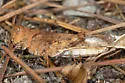
Relatively high pronotal crest cut only once (sometimes with a second shallow notch toward front). Wings rose-pink to red in color with a curved dark band across middle. Often produces an interrupted buzzing sound in flight. Something of a misfit in Dissosteira , similar in structure, but smaller in size and strikingly different in having smaller wings of totally different coloration, and different in behavior.
Classification
- Kingdom
- Animalia
- Phylum
- Arthropoda
- Class
- Insecta
- Order
- Orthoptera (Grasshoppers, Crickets, Katydids)
- Suborder
- Caelifera
- Family
- Acrididae (Short-horned Grasshoppers)
- Subfamily
- Oedipodinae
- Tribe
- Trimerotropini
- Genus
- Dissosteira
Imported taxonomy record. Source availability varies; see the source references and editorial policy below.
Habitat and Range
Habitat
Mostly elevated areas of grassland, often on gravelly or rocky soil, often in open Oak scrubland or woodland. Sometimes becomes abundant on disturbed sites. Often associated with Trimerotropis bifasciata , T. occidentalis , and Dissosteira spurcata .
Geographic Range
Southwestern Oregon to northern Baja California Norte, mostly west of Cascades, Sierra Nevada, and deserts. Reported from Nevada, Idaho, Washington, and Alberta, but these locations are all probably outside of its natural distribution.
Diet and Behavior
Diet: probably Grasses
Life History
Overwinters as eggs laid in ground. Adults late spring to frost, but most common in summer.
About Grasshoppers, Crickets, Katydids: the wider group
Order-level background for Orthoptera, the group containing Dissosteira pictipennis. Species-specific details appear above.
Group overview
Orthoptera includes ~28,000 described species of grasshoppers, crickets, and katydids. Desert locusts can form swarms covering 460 square miles containing up to 80 million individuals per square kilometer.
Ecological role of the group
Grasshoppers and crickets are a primary food source for birds, reptiles, and small mammals. Cricket farming is a growing industry - crickets require 12× less feed than cattle to produce the same amount of protein, using 2,000× less water.
Economic and practical significance of the group
A single large locust swarm can consume the same amount of food in one day as 35,000 people. The 2019-2021 East Africa locust crisis affected food security for 42 million people across multiple countries. Global crop losses from locusts can reach billions annually.
Recorded sources for this group: FAO, UN World Food Programme, research publications. Imported estimates may describe particular regions or reporting periods.
Photos of California Rose-Winged Grasshopper (5)
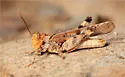
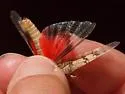
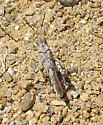
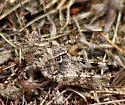
Photo credits: Contributed by Eric R. Eaton; Additional contributions by David Ferguson
Frequently Asked Questions About California Rose-Winged Grasshopper
What is California Rose-Winged Grasshopper?
California Rose-Winged Grasshopper (Dissosteira pictipennis) is a species in the family Acrididae, within the order Orthoptera.
How do you identify California Rose-Winged Grasshopper?
Relatively high pronotal crest cut only once (sometimes with a second shallow notch toward front). Wings rose-pink to red in color with a curved dark band across middle. Often produces an interrupted buzzing sound in flight.
Where is California Rose-Winged Grasshopper found?
| Feature | Details |
|---|---|
| Habitat | Mostly elevated areas of grassland, often on gravelly or rocky soil, often in open Oak scrubland or woodland. Sometimes becomes abundant on disturbed sites. Often associated with Trimerotropis bifasciata , T. occidentalis , and Dissosteira spurcata . |
| Range | Southwestern Oregon to northern Baja California Norte, mostly west of Cascades, Sierra Nevada, and deserts. Reported from Nevada, Idaho, Washington, and Alberta, but these locations are all probably outside of its natural distribution. |
What does California Rose-Winged Grasshopper eat?
The diet of the California Rose-Winged Grasshopper includes probably Grasses.
What is the life cycle of a California Rose-Winged Grasshopper?
Overwinters as eggs laid in ground. Adults late spring to frost, but most common in summer.