
Autumn Yellow-winged Grasshopper
Arphia xanthoptera
This record describes Arphia xanthoptera (species). Recorded family: Acrididae. Recorded order: Orthoptera.
Identification and Appearance
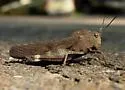
One of largest of its genus, typically dark, usually has yellow hindwings. Un-cut crested pronotum is distinctive as is size (in east), and hind tibiae are usually very dark. Of late season occurrence. A. sulphurea and A. conspersa are smaller, mostly occur as adults in spring and early summer, are usually paler in color, and have pronotal crest low, have the dark band of the hind wings narrower, and the hind tibiae are usually pale yellowish or tan to bluish. The second has hind wings pale translucent, and often orange or pink as well as yellow. A. conspersa occurs with A. xanthoptera only at the later's western limits. A. sulphurea has the forehead somewhat produced and more square than rounded profile, with the front if the fastigium very narrow. A. pseudonietana , mostly found further west, is typically even darker in color with pronotal crest low, and with wings usually bright orange red to red. The two species may hybridize where they meet, as apparent intermediates sometimes are found. A. granulata occurs mostly on the coastal plain from North Carolina southward through Florida, and west just into Texas. It has a lower (though still somewhat arched) pronotal crest, can be seen as adult from spring to frost (or year-round in the far south), and has usually paler bluish hind tibiae. A. simplex occurs mostly in spring, is often even larger in size, usually speckled and/or with pale stripes on sides, with hind tibiae pale (usually blue) with a dark subacial ring). Wings are pale yellow to orange with a very narrow dark band and long narrow spur. The head is usually somewhat produced and squared at the forehead as apposed to rounded, with the fastigium very narrow at the front. on the southern Plains and Prairies it often occurs in the same areas as A. xanthoptera , but A. simplex is usually gone by the time A. xanthoptera starts flying. Males sing (crepitate) in flight, quite noticeable as yellow wings flash. Not abundant enough to be of agricultural importance, apparently.
Classification
- Kingdom
- Animalia
- Phylum
- Arthropoda
- Class
- Insecta
- Order
- Orthoptera (Grasshoppers, Crickets, Katydids)
- Suborder
- Caelifera
- Family
- Acrididae (Short-horned Grasshoppers)
- Subfamily
- Oedipodinae
- Tribe
- Arphiini
- Genus
- Arphia
Imported taxonomy record. Source availability varies; see the source references and editorial policy below.
Habitat and Range
Habitat
dry fields, prairies, open woods
Geographic Range
Eastern and central United States
Diet and Behavior
Diet: Feeds mostly on grasses.
Life History
Overwinters as eggs laid in soil. Hatches in spring and matures in summer. Adults typically July-November in much of range. August-September (Michigan). August-frost (North Carolina).
About Grasshoppers, Crickets, Katydids: the wider group
Order-level background for Orthoptera, the group containing Arphia xanthoptera. Species-specific details appear above.
Group overview
Orthoptera includes ~28,000 described species of grasshoppers, crickets, and katydids. Desert locusts can form swarms covering 460 square miles containing up to 80 million individuals per square kilometer.
Ecological role of the group
Grasshoppers and crickets are a primary food source for birds, reptiles, and small mammals. Cricket farming is a growing industry - crickets require 12× less feed than cattle to produce the same amount of protein, using 2,000× less water.
Economic and practical significance of the group
A single large locust swarm can consume the same amount of food in one day as 35,000 people. The 2019-2021 East Africa locust crisis affected food security for 42 million people across multiple countries. Global crop losses from locusts can reach billions annually.
Recorded sources for this group: FAO, UN World Food Programme, research publications. Imported estimates may describe particular regions or reporting periods.
Photos of Autumn Yellow-winged Grasshopper (5)
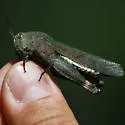
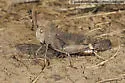
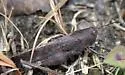
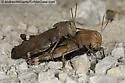
Photo credits: Contributed by Cotinis; Additional contributions by David Ferguson
Frequently Asked Questions About Autumn Yellow-winged Grasshopper
What is Autumn Yellow-winged Grasshopper?
Autumn Yellow-winged Grasshopper (Arphia xanthoptera) is a species in the family Acrididae, within the order Orthoptera.
How big is Autumn Yellow-winged Grasshopper?
| Feature | Details |
|---|---|
| Males | 31-38 mm |
| Females | 36-46 mm |
How do you identify Autumn Yellow-winged Grasshopper?
One of largest of its genus, typically dark, usually has yellow hindwings. Un-cut crested pronotum is distinctive as is size (in east), and hind tibiae are usually very dark. Of late season occurrence. A. sulphurea and A. conspersa are smaller, mostly occur as adults in spring and early summer, are usually paler in color, and have pronotal crest low, have the dark band of the hind wings narrower, and the hind tibiae are usually pale yellowish or tan to bluish. The second has hind wings pale translucent, and often orange or pink as well as yellow. A. conspersa occurs with A. xanthoptera only at the later's western limits. A. sulphurea has the forehead somewhat produced and more square than rounded profile, with the front if the fastigium very narrow. A. pseudonietana , mostly found further west, is typically even darker in color with pronotal crest low, and with wings usually bright orange red to red. The two species may hybridize where they meet, as apparent intermediates sometimes are found. A. granulata occurs mostly on the coastal plain from North Carolina southward through Florida, and west just into Texas. It has a lower (though still somewhat arched) pronotal crest, can be seen as adult from spring to frost (or year-round in the far south), and has usually paler bluish hind tibiae. A. simplex occurs mostly in spring, is often even larger in size, usually speckled and/or with pale stripes on sides, with hind tibiae pale (usually blue) with a dark subacial ring). Wings are pale yellow to orange with a very narrow dark band and long narrow spur. The head is usually somewhat produced and squared at the forehead as apposed to rounded, with the fastigium very narrow at the front. on the southern Plains and Prairies it often occurs in the same areas as A. xanthoptera , but A. simplex is usually gone by the time A. xanthoptera starts flying.
Where is Autumn Yellow-winged Grasshopper found?
| Feature | Details |
|---|---|
| Habitat | dry fields, prairies, open woods |
| Range | Eastern and central United States |
What does Autumn Yellow-winged Grasshopper eat?
The diet of the Autumn Yellow-winged Grasshopper includes Feeds mostly on grasses..
What is the life cycle of a Autumn Yellow-winged Grasshopper?
Overwinters as eggs laid in soil. Hatches in spring and matures in summer. Adults typically July-November in much of range. August-September (Michigan). August-frost (North Carolina).