
Rufous Grasshopper
Heliaula rufa
This record describes Heliaula rufa (species). Recorded family: Acrididae. Recorded order: Orthoptera.
Identification and Appearance
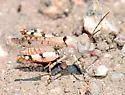
Head large, wider and higher than pronotum, rounded. Top of pronotum rounded with no distinct raised ridges and often a faint pair of bumps at front edge. Distinctive pattern of pale grayish, brownish, pinkish, etc. with dark speckling and a few dark spots, notably almost always dark at the back edge of the top of the pronotum. Hind tibiae bright orange to red. Inner hind femur nearly plain pale usually yellowish. Similar in appearance to Cibolacris parviceps but that species is usually a little longer, is more slender, with smaller less broadly rounded heads, and with hind tibiae not red (usually bluish). Aulocara elliotti is similar in proportions, and often colored in the same way (but more often with stripes), but has blue hind tibiae. Other related species found in same area usually have striped patterns, white antennae, strong dark bars across the inner hind femora, and/or blue hind tibiae. A pretty, but very inconspicuous and usually not very common species. Females often don't fly when disturbed, and males are so small and fly so low (usually only a short distance) as to often not be noticed, especially when among other species of more abundant Grasshoppers. Probably never of any economic concern.
Classification
- Kingdom
- Animalia
- Phylum
- Arthropoda
- Class
- Insecta
- Order
- Orthoptera (Grasshoppers, Crickets, Katydids)
- Suborder
- Caelifera
- Family
- Acrididae (Short-horned Grasshoppers)
- Subfamily
- Gomphocerinae
- Genus
- Heliaula
Imported taxonomy record. Source availability varies; see the source references and editorial policy below.
Habitat and Range
Habitat
Mostly short grassland in gentle or flat terrain, most often in gravelly areas with sparse grass.
Geographic Range
Mostly Great Plains east from the Southern Rockies. Southeast Wyoming and west Nebraska south into Texas and northern Mexico; south of the Rockies reaching westward into Arizona and Sonora.
Seasonal Activity
Seems to vary some with rains, but adults most often in late spring and early summer in south and in summer in north. Sometimes later after rains in south when spring is very dry.
Diet and Behavior
Diet: Poorly documented, with some short grass species being recorded.
Life History
Overwinters as eggs, hatching with warm weather in spring or early summer.
About Grasshoppers, Crickets, Katydids: the wider group
Order-level background for Orthoptera, the group containing Heliaula rufa. Species-specific details appear above.
Group overview
Orthoptera includes ~28,000 described species of grasshoppers, crickets, and katydids. Desert locusts can form swarms covering 460 square miles containing up to 80 million individuals per square kilometer.
Ecological role of the group
Grasshoppers and crickets are a primary food source for birds, reptiles, and small mammals. Cricket farming is a growing industry - crickets require 12× less feed than cattle to produce the same amount of protein, using 2,000× less water.
Economic and practical significance of the group
A single large locust swarm can consume the same amount of food in one day as 35,000 people. The 2019-2021 East Africa locust crisis affected food security for 42 million people across multiple countries. Global crop losses from locusts can reach billions annually.
Recorded sources for this group: FAO, UN World Food Programme, research publications. Imported estimates may describe particular regions or reporting periods.
Photos of Rufous Grasshopper (5)
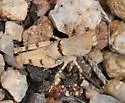
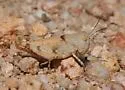
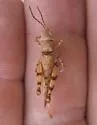
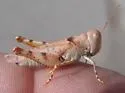
Photo credits: Contributed by David J. Ferguson
Frequently Asked Questions About Rufous Grasshopper
What is Rufous Grasshopper?
Rufous Grasshopper (Heliaula rufa) is a species in the family Acrididae, within the order Orthoptera.
How do you identify Rufous Grasshopper?
Head large, wider and higher than pronotum, rounded. Top of pronotum rounded with no distinct raised ridges and often a faint pair of bumps at front edge. Distinctive pattern of pale grayish, brownish, pinkish, etc. with dark speckling and a few dark spots, notably almost always dark at the back edge of the top of the pronotum. Hind tibiae bright orange to red. Inner hind femur nearly plain pale usually yellowish. Similar in appearance to Cibolacris parviceps but that species is usually a little longer, is more slender, with smaller less broadly rounded heads, and with hind tibiae not red (usually bluish). Aulocara elliotti is similar in proportions, and often colored in the same way (but more often with stripes), but has blue hind tibiae. Other related species found in same area usually have striped patterns, white antennae, strong dark bars across the inner hind femora, and/or blue hind tibiae.
Where is Rufous Grasshopper found?
| Feature | Details |
|---|---|
| Habitat | Mostly short grassland in gentle or flat terrain, most often in gravelly areas with sparse grass. |
| Range | Mostly Great Plains east from the Southern Rockies. Southeast Wyoming and west Nebraska south into Texas and northern Mexico; south of the Rockies reaching westward into Arizona and Sonora. |
What does Rufous Grasshopper eat?
The diet of the Rufous Grasshopper includes Poorly documented, with some short grass species being recorded..
When is Rufous Grasshopper active?
Rufous Grasshopper: seasonal activity - Seems to vary some with rains, but adults most often in late spring and early summer in south and in summer in north. Sometimes later after rains in south when spring is very dry..
What is the life cycle of a Rufous Grasshopper?
Overwinters as eggs, hatching with warm weather in spring or early summer.