
Undulant-Winged Grasshopper
Circotettix undulatus
This record describes Circotettix undulatus (species). Recorded family: Acrididae. Recorded order: Orthoptera.
Identification and Appearance
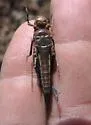
Found west from the Rocky Mountains. Hind wings usually greenish to blue (yellowest in the north, bluest in the south), and hind tibiae usually blue (sometimes greenish, or grayish). Dark wing band usually faint to absent (when present, usually closer to end of wing than in C. rabula . Differs from C. shastanus (with which it intergrades) by presence of a vein (usually designated as the anterior branch of 2Aa) free from vein 2A (2nd annal vein). In C. shastanus the wings are usually yellow (also green to blue where it meets C. undulatus in the Sierra Nevada); the anterior branch of 2Aa is usually fused with vein 2A, and the dark wing band is usually present and fairly well-deveoloped. The blue specimen here shows possible influence from C. shastanus , and the yellow one is an example of that species with the veins completely fused, with just the very base of 2Aa visible, where it crosses and joins. C. rabula is found mostly further east in the Rocky Mountains and western Great Plains, has yellow wings, usually browinish to yellow hind tibiae, and the wing band is more in the middle of the wing and usually well-developed (but it varies with elevation and location). C. stenometopus is mostly found further west in northern California, and is colored similarly to C. rabula . C. coconino and C. crotalum are more like C. rabula in coloring (except they have blue hind tibiae). However, with wings closed, C. crotalum is nearly identical to C. undulatus in appearance. Neither is found in the same regions as C. undulatus . Similar Trimerotropis species have wings shaped differently and the annal (= radial) veins never so prominently thickened. This species is one of those that is hard to ignore when you are in the same area as it on a warm summer day. It crepitates loudly when it flies (making a loud interrupted and harsh buzzing that is punctuated by even louder snapping or popping soundns). The males perform flight displays, during which they rise vertically high into the air and hover or bob up and down as they produce their crackling song. Females are similarly loud, but do not often participate in the aerial display. Often its steep rocky habitats tend to accentuate the noise by echoing it back at the listener.
Classification
- Kingdom
- Animalia
- Phylum
- Arthropoda
- Class
- Insecta
- Order
- Orthoptera (Grasshoppers, Crickets, Katydids)
- Suborder
- Caelifera
- Family
- Acrididae (Short-horned Grasshoppers)
- Subfamily
- Oedipodinae
- Tribe
- Trimerotropini
- Genus
- Circotettix
Imported taxonomy record. Source availability varies; see the source references and editorial policy below.
Habitat and Range
Habitat
Mostly steep exposed rocky slopes, especially talus slopes covered in boulders. Ranges from Great Basin Desert to Alpine.
Geographic Range
Western Montana and western Utah westward to Sierra Nevada and Cascades, and from British Columbia south to southern Nevada and southern California. reported from Wyoming, but seems unlike that it is really there (?). Reported from Colorado, but never verified from there.
Diet and Behavior
Life History
Overwinters as eggs. Adults early summer to freezing, seemingly most common in late summer.
Additional species information
Species notes from the sources
Etymology: The name Circotettix undulatus was long applied to what is now referred to as C. rabula , while the more western insect discussed here was known as Circotettix thalassinus . In the original description of C. undulatus the yellow-winged Rocky Mountain insect seems to clearly be the one being described, and localities listed would be appropriate for that species. The problem comes from the type specimen, which is apparently actually a specimen of the Great Basin insect (but it is apparently labelled as being from Colorado). This is an interesting puzzle, and one wonders if the specimen wasn't perhaps mislabeled and if the name shouldn't indeed be used for the Rocky Mountain species for which it was clearly intended. For the moment, the name is tied to the specimen, and is used for the Great Basin species.
About Grasshoppers, Crickets, Katydids: the wider group
Order-level background for Orthoptera, the group containing Circotettix undulatus. Species-specific details appear above.
Group overview
Orthoptera includes ~28,000 described species of grasshoppers, crickets, and katydids. Desert locusts can form swarms covering 460 square miles containing up to 80 million individuals per square kilometer.
Ecological role of the group
Grasshoppers and crickets are a primary food source for birds, reptiles, and small mammals. Cricket farming is a growing industry - crickets require 12× less feed than cattle to produce the same amount of protein, using 2,000× less water.
Economic and practical significance of the group
A single large locust swarm can consume the same amount of food in one day as 35,000 people. The 2019-2021 East Africa locust crisis affected food security for 42 million people across multiple countries. Global crop losses from locusts can reach billions annually.
Recorded sources for this group: FAO, UN World Food Programme, research publications. Imported estimates may describe particular regions or reporting periods.
Photos of Undulant-Winged Grasshopper (5)
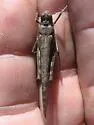
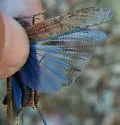
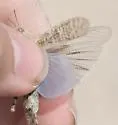
Photo credits: Contributed by Ted Kropiewnicki; Additional contributions by David Ferguson , metrioptera
Frequently Asked Questions About Undulant-Winged Grasshopper
What is Undulant-Winged Grasshopper?
Undulant-Winged Grasshopper (Circotettix undulatus) is a species in the family Acrididae, within the order Orthoptera.
How big is Undulant-Winged Grasshopper?
males about 34-40 mm females about 34-45 mm
How do you identify Undulant-Winged Grasshopper?
Found west from the Rocky Mountains. Hind wings usually greenish to blue (yellowest in the north, bluest in the south), and hind tibiae usually blue (sometimes greenish, or grayish). Dark wing band usually faint to absent (when present, usually closer to end of wing than in C. rabula . Differs from C. shastanus (with which it intergrades) by presence of a vein (usually designated as the anterior branch of 2Aa) free from vein 2A (2nd annal vein). In C. shastanus the wings are usually yellow (also green to blue where it meets C. undulatus in the Sierra Nevada); the anterior branch of 2Aa is usually fused with vein 2A, and the dark wing band is usually present and fairly well-deveoloped. The blue specimen here shows possible influence from C. shastanus , and the yellow one is an example of that species with the veins completely fused, with just the very base of 2Aa visible, where it crosses and joins. C. rabula is found mostly further east in the Rocky Mountains and western Great Plains, has yellow wings, usually browinish to yellow hind tibiae, and the wing band is more in the middle of the wing and usually well-developed (but it varies with elevation and location). C. stenometopus is mostly found further west in northern California, and is colored similarly to C. rabula . C. coconino and C. crotalum are more like C. rabula in coloring (except they have blue hind tibiae). However, with wings closed, C. crotalum is nearly identical to C. undulatus in appearance. Neither is found in the same regions as C. undulatus . Similar Trimerotropis species have wings shaped differently and the annal (= radial) veins never so prominently thickened.
Where is Undulant-Winged Grasshopper found?
| Feature | Details |
|---|---|
| Habitat | Mostly steep exposed rocky slopes, especially talus slopes covered in boulders. Ranges from Great Basin Desert to Alpine. |
| Range | Western Montana and western Utah westward to Sierra Nevada and Cascades, and from British Columbia south to southern Nevada and southern California. reported from Wyoming, but seems unlike that it is really there (?). Reported from Colorado, but never verified from there. |
What is the life cycle of a Undulant-Winged Grasshopper?
Overwinters as eggs. Adults early summer to freezing, seemingly most common in late summer.