
Butterflies and Moths
Order Lepidoptera
The Butterflies and Moths (Order Lepidoptera) includes 11,813 species across 112 families and 2,787 genera in our directory.
About Butterflies and Moths
Lepidoptera includes approximately 180,000 described species of butterflies and moths. Moths outnumber butterflies roughly 10:1. The monarch butterfly's eastern population has declined by more than 80% since the mid-1990s, and the western population by over 95% since the 1980s. The IUCN lists the migratory monarch as Vulnerable.
Economic Impact
Lepidoptera are critical pollinators. In Europe, grassland butterfly species have declined by almost 50% since the early 1990s. In the UK, three-quarters of butterflies are in decline. In the U.S., five butterfly species have gone extinct since 1950, with 29 listed as endangered.
Ecological Role
Butterflies and moths are essential indicators of ecosystem health. As caterpillars, they are a primary food source for birds - a single nest of blue tit chicks requires ~10,000 caterpillars. Adult moths pollinate many night-blooming plants.
Families in Lepidoptera (112)
Species in Lepidoptera (11,813)
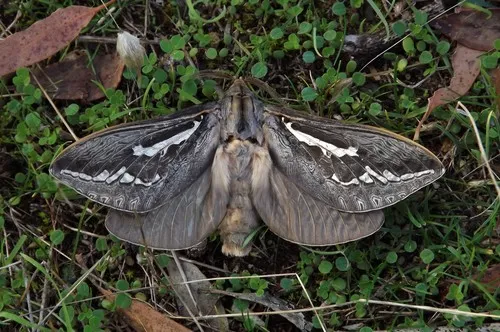
Bardi Moth
Abantiades atripalpis
Abantiades atripalpis, also known as bardee (bardy, bardi) grub, rain moth or waikerie, and previously known as Trictena atripalpis, is a moth of the family Hepialidae. It is found in the whole southern half of Australia.
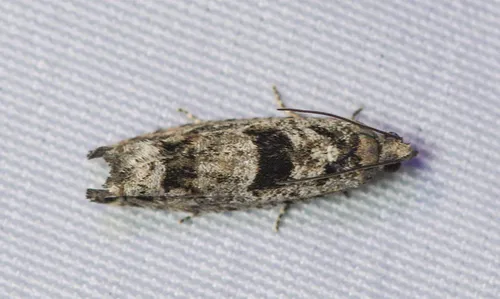
Bare-patched Oak Leafroller - Hodges#3251
Pseudexentera spoliana
All identifications in Pseudexentera based on photo should be considered tentative. Mark Dreiling's photo # 341803 , BOLD MDOK-1109 , was formerly posted at MPG as Pseudexentera spoliana following the determination at BOLD. All specimens from north
Barnes' Lichen Moth - Hodges#8074
Cisthene barnesii
Identification: Similar to several other Cisthene lichen moths, particularly Thin-banded: wings slate gray with orange on thorax, basal streak on FWs, and variable PM band. Most importantly, on Barnes' the top of head (vertex) is gray (but collar an
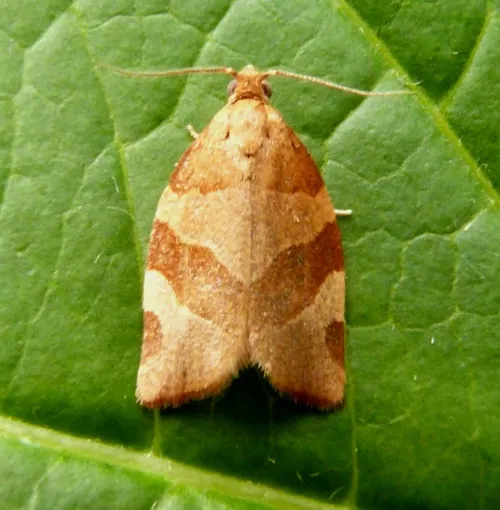
Barred Fruit-tree Tortrix
Pandemis cerasana
Wingspan 16-25 mm. This is one of several quite similar 'Tortrix' moths which hold their wings in a flattened, bell-shape posture when at rest. It is to be found in gardens, orchards and other woodland areas. Flies from June to August from dusk into
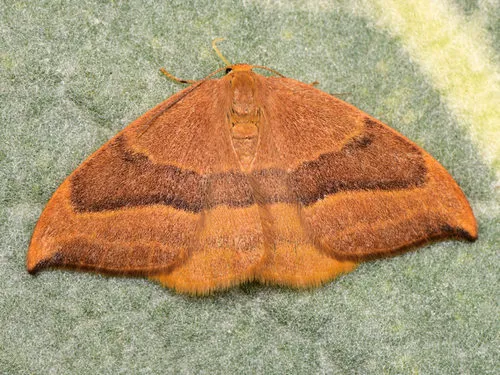
Barred Hook-tip
Watsonalla cultraria
Wingspan 20 to 28 mm. The English name describes it well. It is an orangey brown species with a darker central bar to the wings which are hook-tipped. A good photograph is generally required to support your record. Various habitats, often around Beec
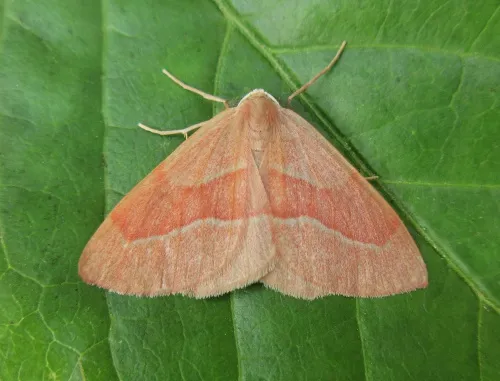
Barred Red
Hylaea fasciaria
Wingspan 27-40 mm. This species has a green form ( prasinaria ) in addition to the typical reddish form. An inhabitant of coniferous woodland, but also venturing into gardens and parks. The caterpillars feed on a variety of coniferous trees, includin
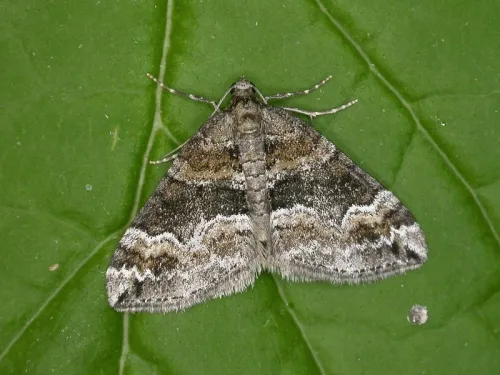
Barred Rivulet
Perizoma bifaciata
It flies in July and August, and is attracted to light. The larvae feed mainly on the seeds of Red Bartsia. It spends the winter as a pupa, and unusually for the family, may overwinter more than once in this stage before emerging. Widely distributed
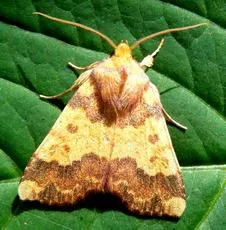
Barred Sallow
Tiliacea aurago
Wingspan 27-32 mm. An attractive moth with red-brown wings that are crossed by a thick band of golden yellow. It inhabits wooded valleys, downland and Southern heaths. The larvae feed on Beech or Field Maple - at first on the buds and subsequently on
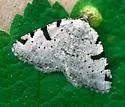
Barred Speranza - Hodges#6303
Macaria subcessaria
Identification: forewing dirty grayish-white or pale brown; four dark bars are equally spaced along the costa, and extend at right angles onto the wing; the second bar is more than twice as long as any of the other bars (this is a distinguishing feat
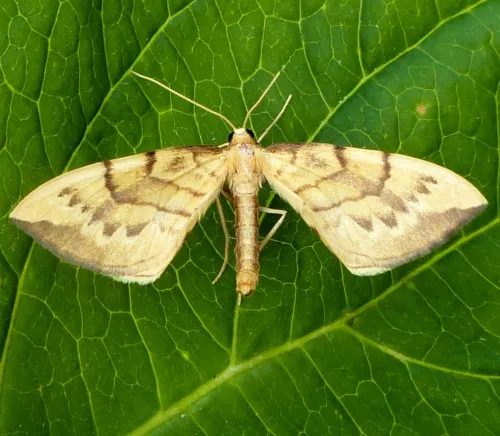
Barred Straw
Gandaritis pyraliata
Wingspan 28-33 mm. This moth is easily identified due to its unique resting posture with the forewings held extended and covering the hindwings. Hedgerows, gardens, woodland rides, scrubby grassland. The larvae feed on various Bedstraws. overwinters
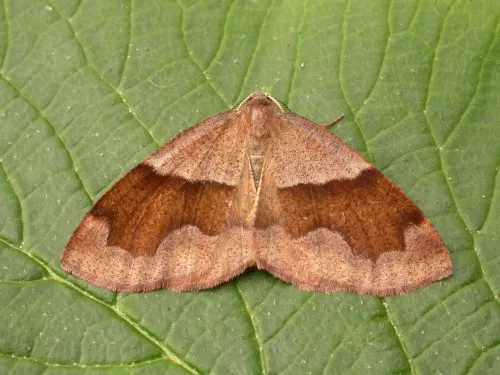
Barred Umber
Plagodis pulveraria
Wingspan 28 to 33 mm. This is a very distinctively marked species although the brown may vary in shade from red brown to a more chocolate colour. There is one generation, with the adults flying in May and June. The larvae feed on a variety of deciduo
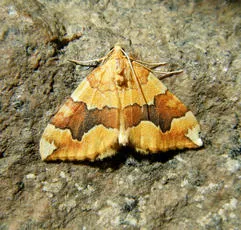
Barred Yellow
Cidaria fulvata
Wingspan 20-25 mm. A smallish, brightly-coloured species its yellow wings banded with reddish brown. It prefers woodland, chalk down land and scrubland. Widely distributed throughout Britain. In a recent survey to determine the status of all macro mo
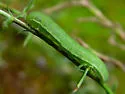
Barred Yellow - Hodges#4243
Eurema daira
Identification: Adult: small, weak-flying, yellow or white above. Female whitish to yellow; male always has a yellow forewing and usually yellow upper hindwing, but white upper hindwing in southern portion of range. Male has a black bar along the upp
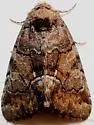
Barrens Marvel - Hodges#9557
Chytonix sensilis
Identification: Very similar to Chytonix palliatricula . See here for an explanation of the differences. Genitalia: Chytonix sensilis is reported by several states to be declining in population and a species of concern.
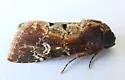
Barrens Moth - Hodges#9589
Properigea costa
Moths of North Carolina and other sources suggest that the fairly common western entity of this species may be a distinct species from the disjunct rare eastern population.
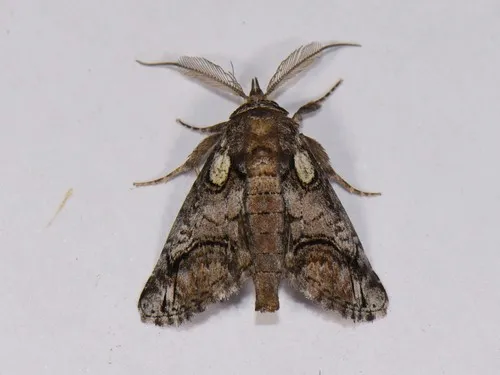
Barrens Paectes Moth
Paectes abrostolella
Paectes abrostolella is a species of owlet moths, etc. in the family Euteliidae. It is found in North America.
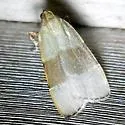
Basacallis tarachodes - Hodges#5540
Basacallis tarachodes
Basacallis tarachodes - Hodges#5540 (Basacallis tarachodes) is a species in the family Pyralidae, commonly known as pyralid moths, belonging to the order Lepidoptera (Butterflies and Moths). It is classified within the subfamily Chrysauginae, superfa
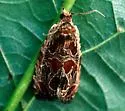
Basswood Olethreutes - Hodges#2795
Olethreutes tilianum
Identification: Miller (1987) has forewing and genitalia illustrated. ( 4 )
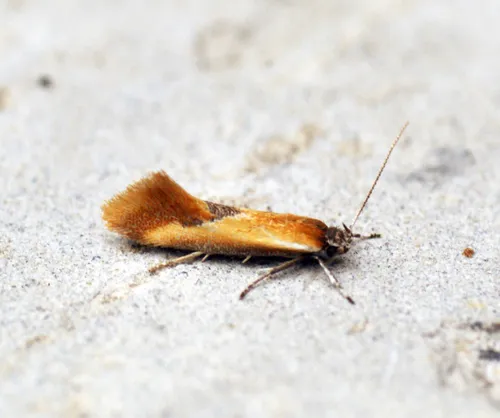
Batia lunaris
Batia lunaris
Wingspan 7-10 mm. This moth is tiny but colourful. It is very similar to B. lambdella in appearance although the latter is generally larger. Generally occurs in woodland habitats and other well wooded areas. The moth flies in July and August. It is m
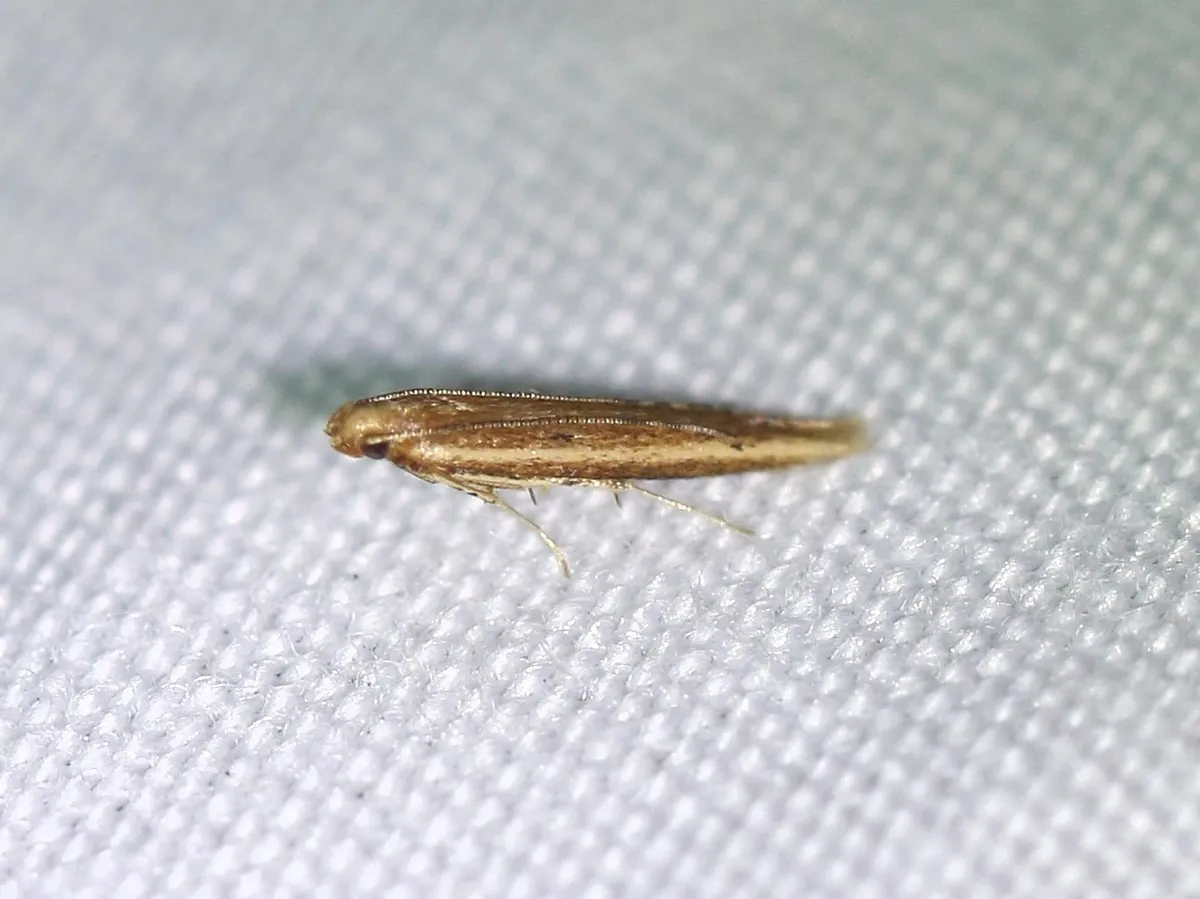
Batrachedra busiris - Hodges#1406
Batrachedra busiris
Identification: Determined by Terry Harrison. More info very soon!
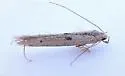
Batrachedra concitata - Hodges#1408
Batrachedra concitata
Identification: Adult : Head ochreous-whitish. Palpi white, with dark fuscous bands. FW very narrowly elongate-lanceolate, whitish-ochreous with thin speckling along costa. Antennae greyish, ringed apically with four dark gray bands. Plical and secon
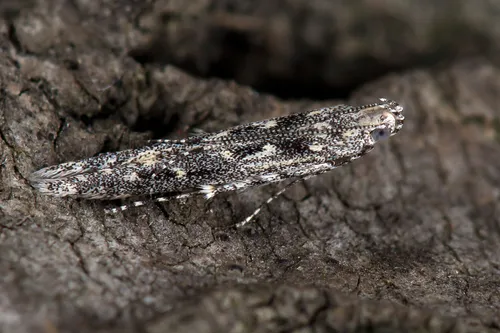
Batrachedra praeangusta
Batrachedra praeangusta
Wingspan 14 to 15 mm. This is a small, inconspicuous species. The adults have elongated narrow forewings, which are a mix of sooty black and paler colour. Most habitats where the larval foodplant is present. They fly during July and August, sometimes
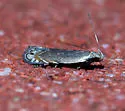
Battaristis concinnusella - Hodges#2225
Battaristis concinnusella
Identification: V shaped subterminal line with black dot at the apex. (This mark shared with Battaristis nigratomella .) Genitalia: ♂
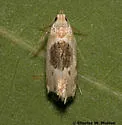
Battaristis cyclella - Hodges#2226
Battaristis cyclella
Identification: The original description is available online in PDF.
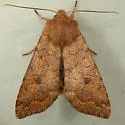
Battered Sallow - Hodges#9960
Sunira verberata
Identification: Adult: forewing similar to Bicolored Sallow (except there are no individuals whose outer half is completely purplish-gray, as in some bicolorago ); hindwing usually evenly shaded with gray except for sharply-defined pale strip along c
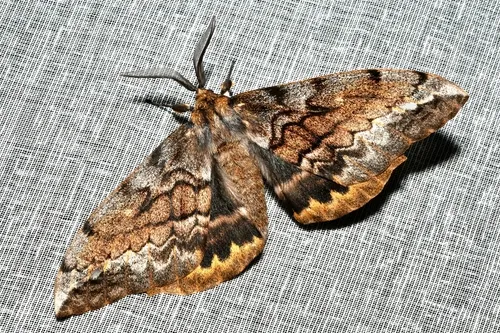
Batwing Moth
Chelepteryx collesi
The white stemmed gum moth (Chelepteryx collesi) is a species of moth of the family Anthelidae. It is found in Australasia.
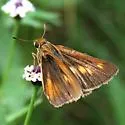
Bay Skipper - Hodges#4072.1
Euphyes bayensis
Global Ranking: G1G3 considered by Louisiana and Texas to be a "Species of Greatest Conservation Need" (SGCN)
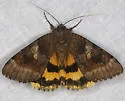
Bay Underwing - Hodges#8777
Catocala badia
Identification: Adult - forewing dark brown inside AM line and in PM area; light brown beyond nearly-straight ST line and in band outside AM line; PM line black, wavy, usually inconspicuous. Hindwing orange with two black bands of similar width. The
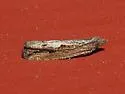
Bayberry Leaftier Moth - Hodges#2907
Strepsicrates smithiana
There has been confusion in the synonymy of this moth and it derives from an historical taxonomic quirk: Walsingham described a new Tortricid from the West Indies, Strepsicrates smithiana , in 1891 in the Trans. Ent. Soc. of London (p. 506) . Then in
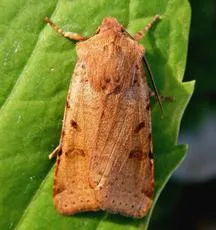
Beaded Chestnut
Agrochola lychnidis
The species is quite variable and there are a number of named forms. Lunar Underwing is often similar, but Beaded Chestnut has narrower shaped orbicular stigma and usually 3 dark spots on the front of the thorax. Common in broad-leaved woodland, scru
Bean's Tiger Moth - Hodges#8160
Chelis beanii
Bean's Tiger Moth - Hodges#8160 (Chelis beanii) is a species in the family Erebidae, belonging to the order Lepidoptera (Butterflies and Moths). It is classified within the subfamily Arctiinae, tribe Arctiini, superfamily Noctuoidea. This species bel
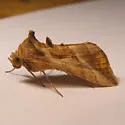
Bean-leaf Skeletonizer Moth - Hodges#8891
Autoplusia egena
Identification: Ground light brown, dark reddish-brown with coppery iridescence between AM & PM ● Coppery iridescent patch below PM, both extending to apex ● Orbicular spot, ovate and reniform oblong, faint ● ST black, bidentate ● HW dull fuscous, li
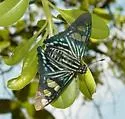
Beautiful Beamer - Hodges#3867.1
Phocides belus
First U.S. Record: Bentsen-Rio Grande Valley State Park, Mission, Hidalgo Co., TX - April 13, 2003 (David J Hanson)
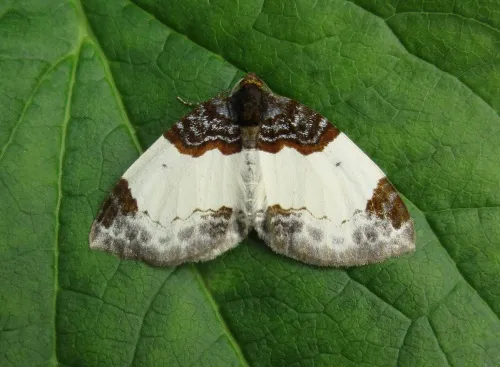
Beautiful Carpet
Mesoleuca albicillata
Wingspan 34-38 mm. It has very broad and rounded white or creamy white forewing, with a broad white central cross band. The wing has a dark basal area and blotch near the tip consisting of brown and purplish blue. The adults fly during June and July
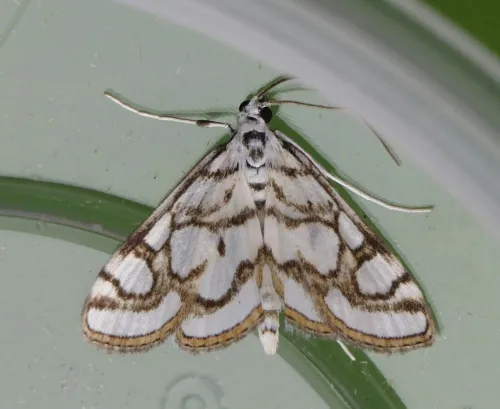
Beautiful China-mark
Nymphula nitidulata
Wingspan 18-22 mm. One of the more distinctive and beautiful members of the Pyralidae. On the wing during July and August. It flies in the evening and at night, and comes readily to light. Larvae are aquatic, feeding on Bur-reed and other water plant
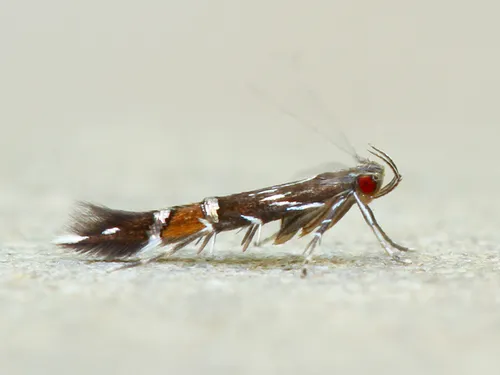
Beautiful Cosmopterix Moth
Cosmopterix pulchrimella
Cosmopterix pulchrimella, the beautiful cosmopterix moth, is a moth of the family Cosmopterigidae. It is known from the United States (from Massachusetts and southern Wyoming south to southern Florida and southern Arizona, Michigan, New Mexico) and C
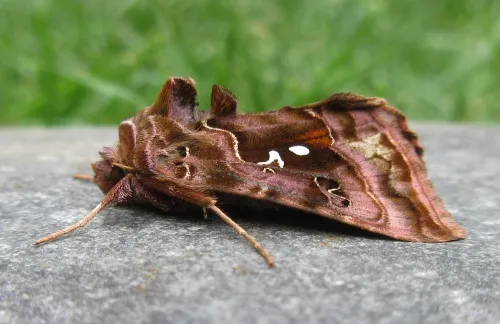
Beautiful Golden Y
Autographa pulchrina
Wingspan 35-40 mm. Similar to the plain Golden 'Y', but with richer maroon colouring in the wings. Similar to the plain Golden 'Y', but with richer colouring in the wings and a more obvious kidney-spot - usually outlined. The species inhabits gardens
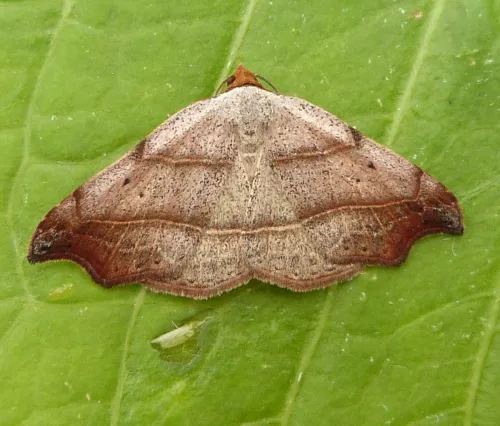
Beautiful Hook-tip
Laspeyria flexula
Occupies woodland, parks, gardens and orchards. The overwintering larvae feed on lichens which grow on the bark of a variety of deciduous and coniferous trees. It is locally distributed over the southern half of Britain. In a recent survey to determi
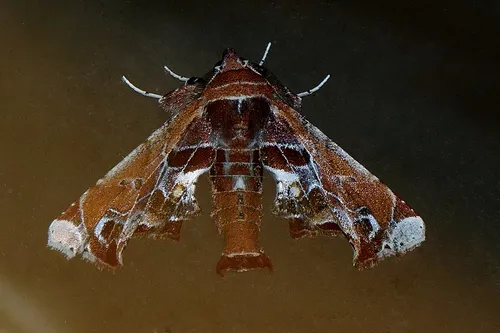
Beautiful Marathyssa Moth
Marathyssa pulcherrimus
Marathyssa pulcherrimus, the beautiful marathyssa moth, is a species of owlet moth in the family Euteliidae It is found in North, Central, and South America.
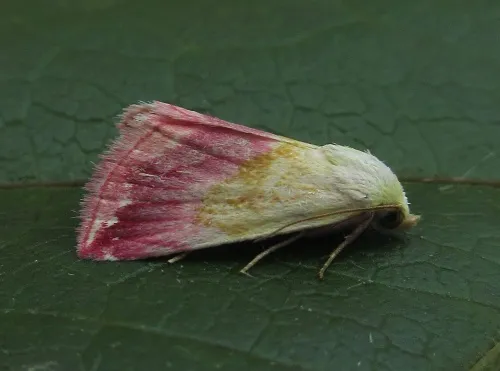
Beautiful Marbled
Eublemma purpurina
Wingspan 25 to 30 mm. A very beautiful and distinctive moth. Although distinctive in appearance, photographic evidence is requested to support records for this species due to its rarity in Britain at present. Dry grassland. It occurs in Britain as a
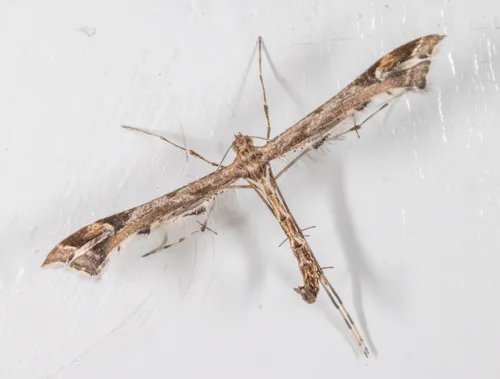
Beautiful Plume
Amblyptilia acanthadactyla
A "Plume" moth. Like its relative, A. punctidactyla , the hindwing has two patches of black scales on its dorsum which protrude when the rest of the hindwing is covered by the forewing. Amblyptilia acanthadactyla may be distinguished by its warm redd
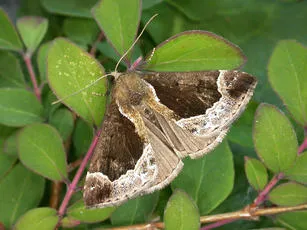
Beautiful Snout
Hypena crassalis
The adults fly from dusk onwards in June and July, and are attracted to light. The main foodplant of the larvae is bilberry. This species is locally distributed in the south and west of England, and in Wales and southern Ireland. In a recent survey t
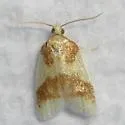
Beautiful Sparganothis - Hodges#3701
Sparganothis pulcherrimana
Identification: Adult - forewing brown with yellow shading beyond PM line, large yellow semicircular patch along costa, and small yellow rectangular patch along inner margin; brown shading extends to base of wing; hindwing white.
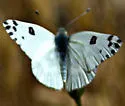
Becker's White - Hodges#4191
Pontia beckerii
Identification: White with black markings above and mostly green on white below. Upper front wings with subapical dark markings normally broken into two distinctly offset rectangles, forming something of a "Z" shape (same markings forming a continuo
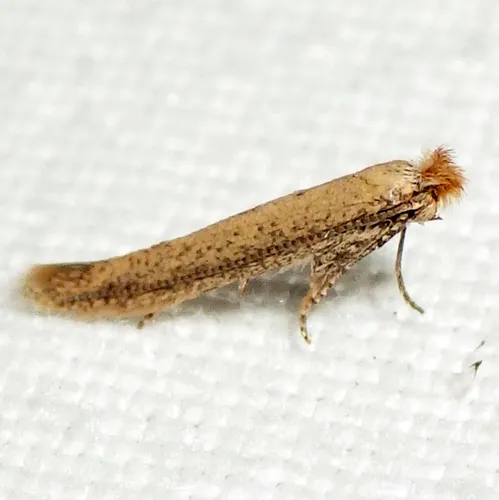
Bedellia somnulentella
Bedellia somnulentella
Wingspan 8 mm to 10 mm. A plain looking micromoth with a pale mottled brown appearance. The larva feed on Bindweed and related species, initially in an inconspicuous narrow and very contorted gallery. The egg is oval, not round as with Stigmella spec
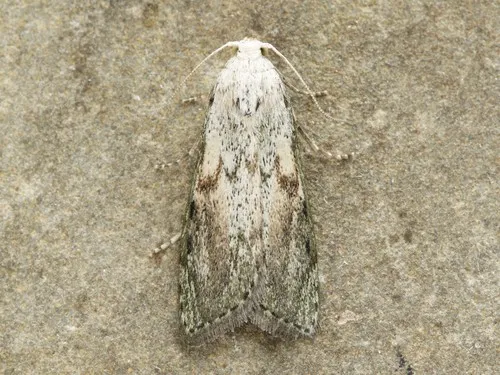
Bee Moth
Aphomia sociella
Wingspan 18 to 44 mm. This species is sexually dimorphic but both sexes are somewhat variable. Males have a creamy white head, thorax and forewing proximal to the antemedian line. Females have two black discal spots between the antemedian (first) and
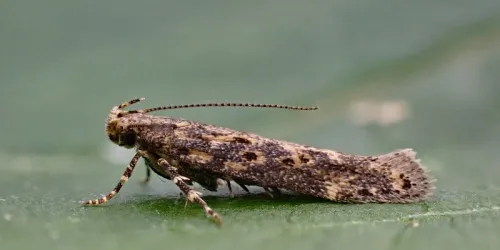
Beet Moth
Scrobipalpa ocellatella
There are similar Scrobipalpa spp. that may occur in VC55, therefore confirmation by dissection will be necessary for worn individuals and isolated records. Should there be evidence of either colonisation or a repeat dispersal event, then records may
Beet Webworm Moth - Hodges#5004
Loxostege munroealis
Identification: Adult: forewing fringe scales black, contrasting with thin yellowish band along outer margin; ground color yellowish-brown with patchwork pattern of light and dark blotches; PM line very wavy, with a pale area distal to the line where
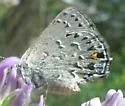
Behr's Hairstreak - Hodges#4276
Satyrium behrii
Identification: A tailless gray hairstreak, with black submarginal and postmedian spots edged in white. Only a touch of orange above the large black spot on lower trailing edge of HW.
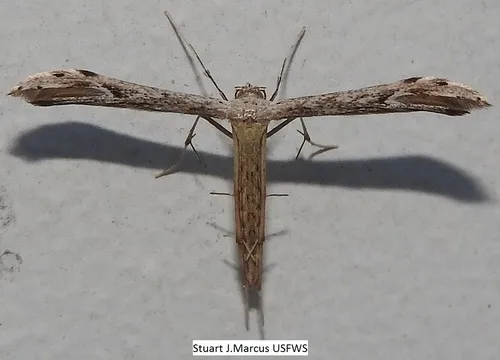
Belfrage's Plume Moth
Pselnophorus belfragei
Pselnophorus belfragei (Belfrage's plume moth) is a moth of the Pterophoridae family. It is found in the south-eastern United States, from South Carolina to Florida, west to Texas and Oklahoma.
Beloved Emarginea Moth - Hodges#9718
Emarginea percara
Identification: Adult: forewing whitish with distinct green tint in live specimens; large dark gray irregular U-shaped patch in median area, with the ends of the "U" touching the costa; smaller dark gray patch along inner margin near anal angle; blac
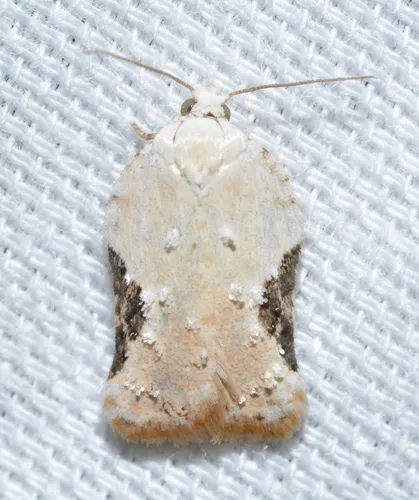
Bent-wing Acleris - Hodges#3517
Acleris subnivana
Identification: Obraztsov (1963) stated "Variation. - McDunnough (1934) noted in subnivana variation of the ground color of forewings, their reticulation in some specimens, and the triangular costal spot solid or interrupted by a pale patch. The pres
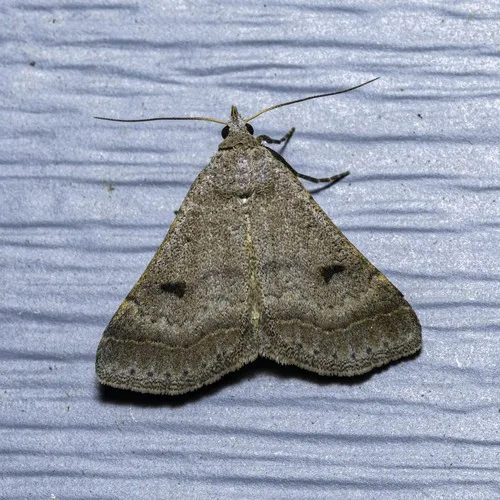
Bent-winged Owlet - Hodges#8370
Bleptina caradrinalis
Identification: Adult - forewing dark grey-brown or purple-brown; male has rather narrow, pointed forewings, with costa decidedly concave in center (not as much so in female); antemedian and postmedian lines jagged and indistinct; median line diffuse
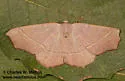
Besma rubritincta - Hodges#6886
Besma rubritincta
Identification: Specimens identified by DNA analysis:
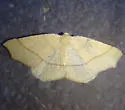
Besma sesquilinearia - Hodges#6887
Besma sesquilinearia
Identification: Capps (1943) reported the early season (May) specimens are more densely sprinkled with fuscous and have a larger wingspan (43-45 mm.) than those taken from June to September (32-38 mm.)
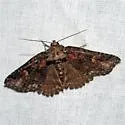
Bethune's Zale - Hodges#8705
Zale bethunei
Identification: Solid black median band; warm brown blotch beyond reniform spot.
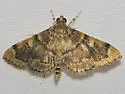
Bicilia iarchasalis - Hodges#5271
Bicilia iarchasalis
Identification: Determined by James Hayden and Brian Scholtens.
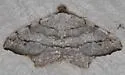
Bicolored Angle Moth - Hodges#6341
Macaria bicolorata
Identification: Covell states : "wings powdery, yellowish tan to postmedian line, evenly darker beyond pm. line on all wings."
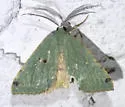
Bicolored Chloraspilates - Hodges#6700
Chloraspilates bicoloraria
Identification: Adult: forewing apple green, sometimes tan, with pale brown strip along costa and dark brown marks near apex; hindwing contrasting light brown with dark brown median line.
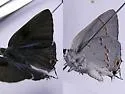
Big Bend Scrub-Hairstreak - Hodges#4292.2
Strymon solitario
Type Locality: TEXAS: Brewster Co., Big Bend National Park, ca. 2 miles west of Boquillas Canyon. Per Grishin & Durden (2012), the holotype locality is "a limestone hill immediately to the north of the paved park road leading to Boquillas Canyon, ca.
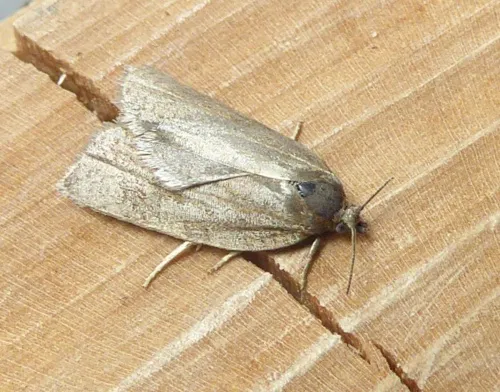
Bilberry Tortrix
Aphelia viburnana
Length about16 mm. A rather plain looking Tortrix moth varying from brown or grey to pale yellowish in colour and with faint and rather variable markings (if any). Please retain the specimen as gen det may be required. Moorland, heathland and bogs, e
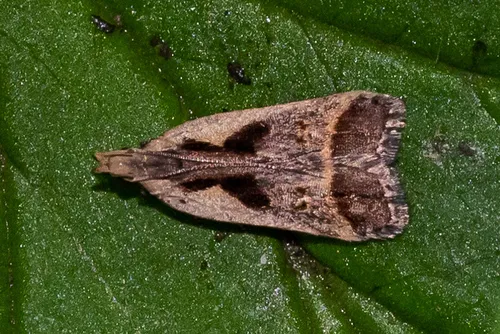
Bilobed Dichomeris - Hodges#2291
Dichomeris bilobella
Identification: Adult - forewing dark gray to blackish with large pale brownish-yellow patch extending from base along costa, then crossing wing to inner margin in PM area; dark basal coloring along inner margin is constricted in AM area, then expand
Birch Angle - Hodges#6330
Macaria ulsterata
Identification: Adult: forewing bright white with three usually distinct transverse lines crossing wing; heavy brown or blackish patch mid-way along PM line, and another dark patch where PM line meets costa; outer margin falcate (having sickle-shaped
Birch Dagger Moth - Hodges#9208
Acronicta betulae
Identification: Adult: our only dagger moth with a pale tan forewing and a sharp right angle in lower part of postmedian line; much of forewing tinged with gray; hindwing tan Larva: Last instar smoky green-brown to rusty brown with long whitish hairs
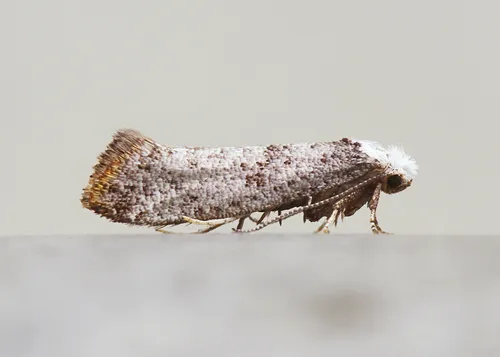
Birch Ermel
Swammerdamia caesiella
Swammerdamia caesiella is a moth of the family Yponomeutidae. It is found from most of Europe to Japan. It is also present in North America, where it is possibly an introduced species.
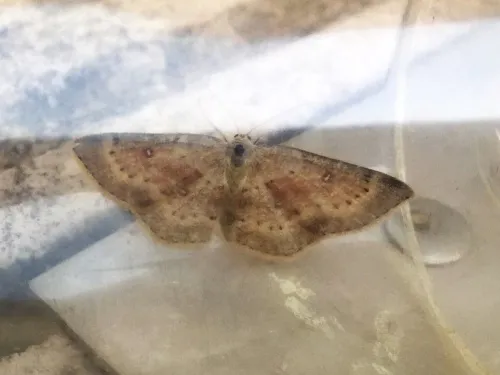
Birch Mocha
Cyclophora albipunctata
Wingspan 20 to 25 mm. A delicately mottled and speckled species, this moth sometimes shows a rosy flush, but other specimens may be fairly grey in appearance. Good photographs and/or the specimen required. It occurs in woodland areas especially where
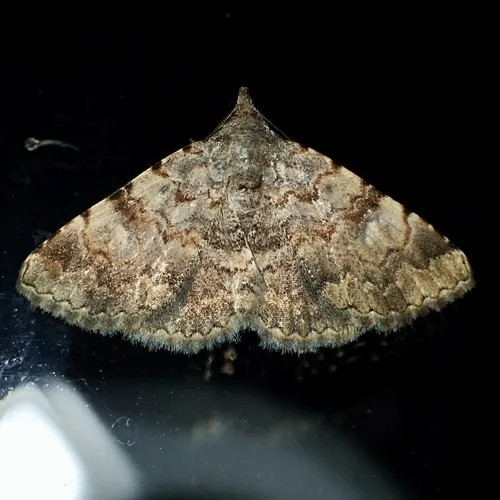
Bird Toxonprucha - Hodges#8672
Toxonprucha volucris
Identification: Larva - light to dark gray with distinctive black markings; head white and black. Adult - forewing light greenish-gray, sometimes with reddish tint; AM, median, PM, and subterminal lines usually discernible, black or dark reddish, hea
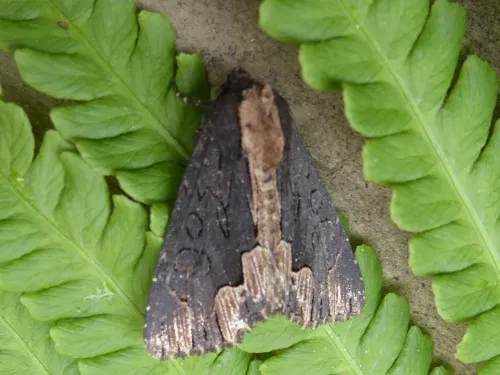
Bird's Wing
Dypterygia scabriuscula
It frequents deciduous woodland and parkland. Flies in June and July, occasionally again in autumn in the south. The larvae feed on low plants such as dock and knotgrass. Distributed mainly in the south-east of England and north Midlands, this distin
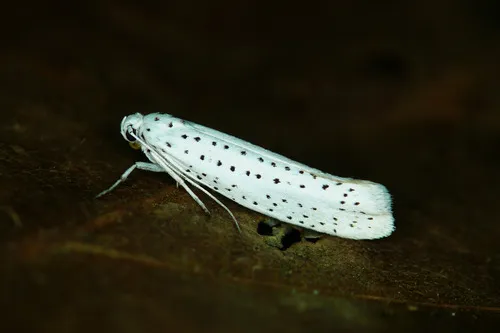
Bird-cherry Ermine
Yponomeuta evonymella
Wingspan 16-25 mm. Some members of the small 'Ermines' are difficult to separate visually but this species is one of the easiest by having five rows of black dots on the forewing. Woodland and scrub favouring Bird Cherry (Prunus padus). Nocturnal, it
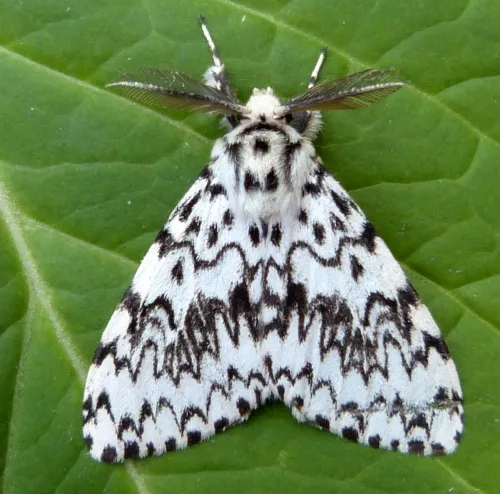
Black Arches
Lymantria monacha
Wingspan 30 to 50 mm. This attractive black and white species often shows traces of bright pink on the body, especially the abdomen, which however is normally concealed when at rest. The males, which can be attracted to light, are smaller than the fe
Black Arches - Hodges#10295
Melanchra assimilis
Identification: Adult: forewing dark blackish-brown with black lines and spots faint or inconspicuous; subterminal line a series of whitish dots, broadening to form a wavy white mark at anal angle; hindwing shiny yellowish-white with blackish veins,
Black Army Cutworm - Hodges#10924
Actebia fennica
Identification: A medium-size (3.9-4.2 cm wingspan) dark brown moth with relatively narrow forewings with doubled black basal, antemedian and postmedian lines. The subterminal line is a marked by a row of lighter scales. The orbicular and reniform sp
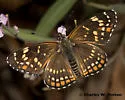
Black Checkerspot - Hodges#4507
Chlosyne cyneas
Identification: Adult: upperside dark brown with brownish-red marginal spots and two neat rows of white spots; underside white, cream, or yellow with black veins and margin; postmedian black band contains a row of light spots; marghinal fringe checke
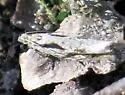
Black Dash Epinotia Moth - Hodges#3291.1
Epinotia sotipena
Identification: Adult - forewing light brown with darker speckling and diffuse whitish patch along costa near base; dark brown basal streak extends half-way along wing; another dark brown streak begins midway along costa and curves toward outer margi
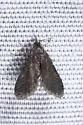
Black Duckweed Moth - Hodges#4754
Elophila tinealis
Identification: forewing and hindwing dark brown or blackish with silvery-white patch in medial area, and sparse white dots; abdomen dark with white ring around each segment, and stout triangular or cone-shaped terminal segment Genitalia:
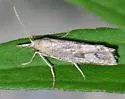
Black Grass-veneer - Hodges#5381
Neodactria caliginosellus
Identification: Adult: forewing dark brown to blackish with inconspicuous black PM and subterminal lines; ST line is irregularly jagged with small teeth - a distinctive feature; hindwing dark grayish-brown with pale yellowish fringe Larva: body pale
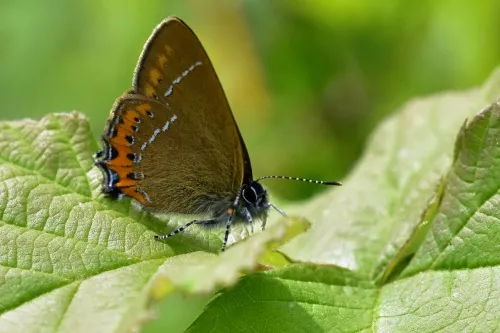
Black Hairstreak
Satyrium pruni
The underwings are brown with a tinge of gold and the borders are orange, with a row of black spots, a white streak down each wing and small tails. The upperwings are only ever visible in flight (the butterfly always settles with its wings closed) an
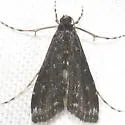
Black Langessa Moth - Hodges#4758
Langessa nomophilalis
Identification: The original description as Nymphula nomophilalis Dyar, is available online at the link in the print references below. - Determined by Bob Patterson.
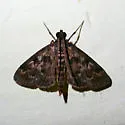
Black Penestola Moth - Hodges#5179
Penestola bufalis
Identification: Adult: forewing dark brown to brownish-gray with indistinct lines showing little contrast against ground color; dense speckling may give a smudged appearance; PM line jagged, irregular, with deep notch in middle, and large tooth near
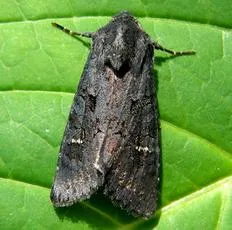
Black Rustic
Aporophyla nigra
Wingspan 40-46 mm. A rather long-winged species, with little variation from the blackish ground colour and whitish stigmata. The males have white hindwings, the females more dusky. The adults fly in September and October. The larvae feed on low plant
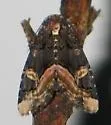
Black Wedge-Spot - Hodges#9057
Homophoberia apicosa
Identification: Adult: forewing dark gray or blackish except for broad pale terminal band and pale oblique reniform spot; terminal band may be pinkish, whitish, or cream-colored; hindwing whitish with grayish-brown shading and black dot at outer marg
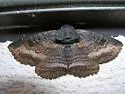
Black Zale - Hodges#8695
Zale undularis
Identification: Adult: wings blackish-brown to coal black with inconspicuous wavy black lines ; yellowish blotch outside upper ST line is usually the only pale mark, although some individuals show whitish shading in median area, extending to inner ma
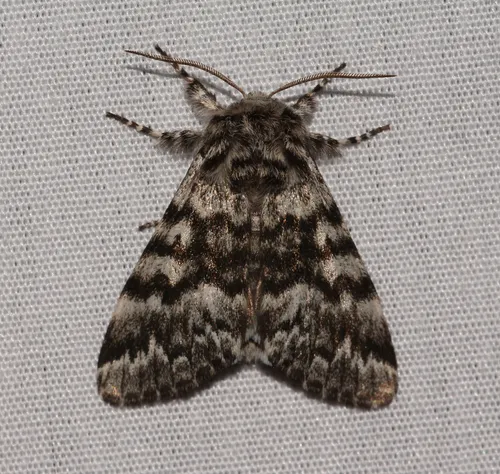
Black Zigzag - Hodges#9177
Panthea acronyctoides
Identification: Adult : forewing white with bold black zigzag lines; pattern usually visible on either white, black (melanic), or gray-shaded specimens; fringe checkered black-and-white; orbicular spot a large white disk bordered by black and with a
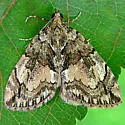
Black-Dashed Hydriomena - Hodges#7235
Hydriomena divisaria
Identification: Beadle & Leckie states "grayish-brown FW has variable pattern of scalloped blackish lines. Basal line is usually thick and strongly kinked. Grayish band in AM area usually reaches costa. Terminal line is usually blurred pair dots."
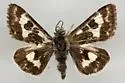
Black-Spotted Gem - Hodges#11102
Schinia honesta
Identification: Grote (1881) original description as Melicleptria honesta is available online in the print references. White with wide black basal streak. Large black reniform and orbicular spots. Black waved subterminal band Thin black terminal line
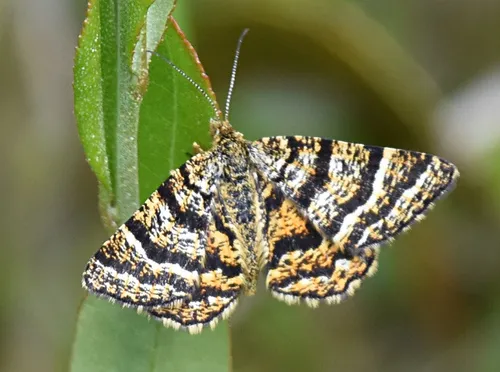
Black-banded Orange - Hodges#6321
Macaria truncataria
Identification: The bold black and orange bands across the forewing and hindwing are unique. The original description as Fidonia truncataria Walker, is available online in the print references below. Dark form: Adults fly during the day and are not k
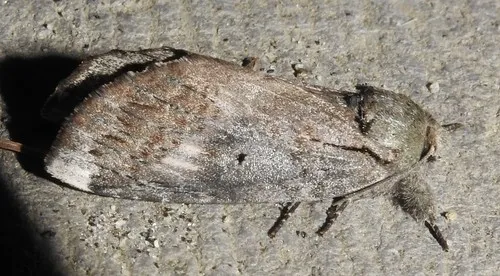
Black-blotched Prominent - Hodges#8011
Oedemasia leptinoides
Identification: Adult: forewing medium to dark gray with a sharply defined dark basal streak , diffuse blackish blotch near center of wing and usually paler brownish shading toward inner margin; AM and PM lines double, indistinct; pale gray or whitis
Black-crescent Proteoteras - Hodges#3233
Proteoteras crescentana
Identification: Adult: forewing light to medium brown with conspicuous blackish crescent-shaped marking that begins midway along costa and terminates at apex; marking is very heavy from costa inward to middle of wing, then bends smoothly toward outer
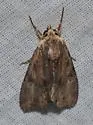
Black-dashed Apamea - Hodges#9328
Apamea nigrior
Identification: Adult: forewing brown with black streak running parallel to inner margin from base to PM line, and a second shorter streak along inner margin near base; prominent black veins in outer half of wing; lighter strip along costa near base;
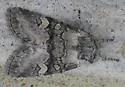
Black-disk Sallow Moth - Hodges#9999
Brachylomia discinigra
Identification: Peppery gray FW has darker median area and mottled white basal patch. Double AM & PM are filled with pale gray. Kinked blackish median band is conspicuous. Faint gray spots are outlined whitish.
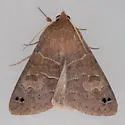
Black-dotted Brown Moth - Hodges#8592
Cissusa spadix
Identification: Adult - overall forewing color varies from light to very dark. Larva - see Coyle et. al, 2013 (fig.1c, p.83) in Print References or consult Wagner et al., 2011.
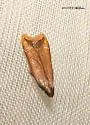
Black-edged Dichomeris - Hodges#2309
Dichomeris heriguronis
Identification: Adult - forewing narrow, light orangish-brown with 4 or 5 black spots or short streaks in median area, and outer margin bordered by broad black band; fringe orange or yellowish; labial palps dark gray or black, long and sickle-shaped,
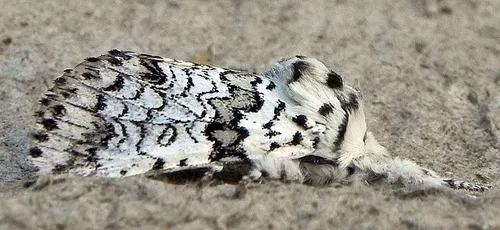
Black-etched Prominent - Hodges#7942
Americerura scitiscripta
Identification: Adult: forewing white with sharp double black lines and small black reniform spot; black streaks also extend along veins; hindwing gray; Florida specimens have reduced black markings and white hindwing Larva: body lime green with whit
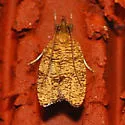
Black-fringed Psilocorsis - Hodges#0956
Psilocorsis cryptolechiella
Identification: Adult : FW is usually paler orange or yellow than Psilocorsis quercicella , but with several thin, dark gray to brown transverse lines (not blotches). Adterminal line runs only halfway from costa to anal angle. Fringe darker gray or
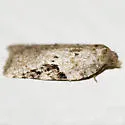
Black-headed Birch Leaffolder - Hodges#3540
Acleris placidana
Identification: Whitish or pale gray FW is dotted with tufts of raised dusky scales. Darker costal triangle is often reduced to a bar in central median area. ( 5 )
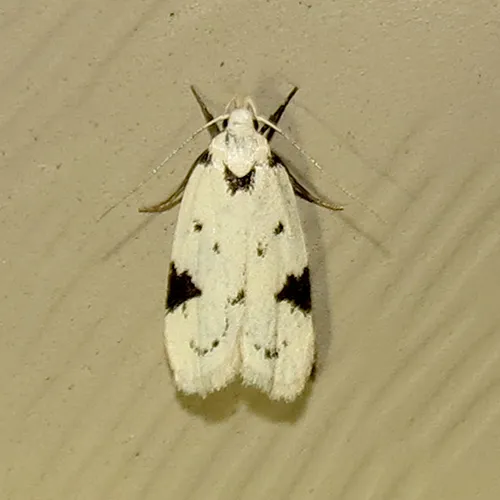
Black-marked Inga Moth
Inga sparsiciliella
The black-marked inga moth (Inga sparsiciliella) is a species of moth of the Oecophoridae family. It has been recorded from Costa Rica, Mexico, Arkansas, Oklahoma, Missouri, Texas, South Carolina, Alabama, Florida, Georgia, North Carolina and Virgini
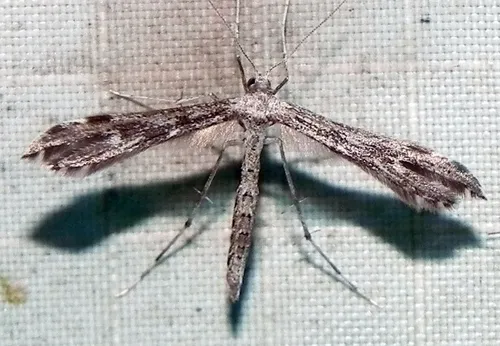
Black-marked Plume Moth
Hellinsia inquinatus
Hellinsia inquinatus is a moth of the family Pterophoridae. It is found in North America, including Florida, Mississippi, Oklahoma, Tennessee, Maryland, Alabama, Texas, Missouri, Colorado and Arizona. It has also been recorded from Hispaniola, Mexico
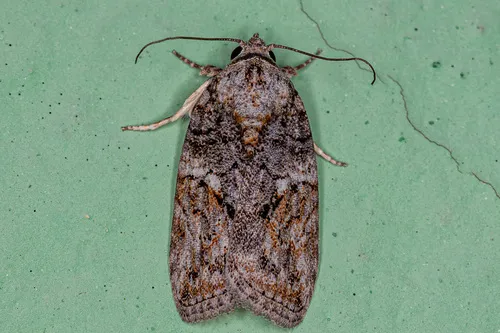
Black-olive Caterpillar Moth
Garella nilotica
The Black-olive Caterpillar or Bungee Caterpillar (Garella nilotica) is a moth of the Nolidae family. It has a pantropical distribution, including the eastern North America (from Ontario, Quebec, Nova Scotia and New York south to Florida and Texas),
Black-patched Clepsis Moth - Hodges#3686
Clepsis melaleucanus
Identification: Larva - body pale green, head yellow-brown.
Black-patched Glaphyria Moth - Hodges#4873
Glaphyria fulminalis
Identification: See here for how to separate G. fulminalis from G. cappsi : Types: Holotype & Allotype as Homophysa fulminalis by Lederer, 1863. Type Localities: Unknown. In the Natural History Museum of Austria, Vienna, Austria.