
Birch Angle - Hodges#6330
Macaria ulsterata
This record describes Macaria ulsterata (species). Recorded family: Geometridae. Recorded order: Lepidoptera.
Identification and Appearance
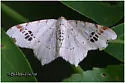
Adult: forewing bright white with three usually distinct transverse lines crossing wing; heavy brown or blackish patch mid-way along PM line, and another dark patch where PM line meets costa; outer margin falcate (having sickle-shaped indentation) near apex, and accented by dark fringe; hindwing similarly colored except for lack of dark patches on PM line; distinct point mid-way along outer margin, giving an almost tailed appearance Taxonomic issues! Moth Photographers Group says: Macaria ulsterata (Pearsall, 1913), rev. stat. (Schmidt & McGuinness in Pohl & Nanz (eds.) 2023), was formerly treated as a synonym of Macaria notata (Linnaeus, 1758), a European species extralimital to North America. Moths of North Carolina notes: This is one of 73 species in this genus that occur in North America, with 17 species occurring in North Carolina. In the latest checklist of North American Lepidoptera (Pohl and Nanz, 2023), North American members of the genus Speranza and Epelis were treated as junior synonyms of Macaria . Macaria ulsterata is included in the hardwood-feeding Ulsterata Group (= the Notata Group of Ferguson, 2008), of which M. aemulataria and M. promiscuata are the other members that occur in North Carolina. Ferguson (2008) described the form that occurs in the Southern Appalachians as subspecies appalachiata . NatureServe states: Ferguson (2008) determined that the North American species, Macaria ulsterata is the same as the Eurasian M. notata . He designated the type male of M. ulsterata as the lectotype. Reference: Ferguson, D.C. 2008. Moths of America North of Mexico. Fascicle 17.2. Geometroidea, Geometridae, Ennominae (part: Abaxini, Cassymini, Macariini). The Wedge Entomological Research Foundation. 430 pp.
Classification
- Kingdom
- Animalia
- Phylum
- Arthropoda
- Class
- Insecta
- Order
- Lepidoptera (Butterflies and Moths)
- Superfamily
- Geometroidea
- Family
- Geometridae (Geometrid Moths)
- Subfamily
- Ennominae
- Tribe
- Macariini
- Genus
- Macaria
Imported taxonomy record. Source availability varies; see the source references and editorial policy below.
Habitat and Range
Habitat
mixedwood and deciduous forests and woodlands; adults are nocturnal and come to light
Geographic Range
Nova Scotia to British Columbia and Northwest Territories, south in the east to North Carolina, south in the west to Colorado and Oregon
Seasonal Activity
flight period peaks in June
Diet and Behavior
Diet: larvae feed on leaves of primarily birch ( Betula ) and alder ( Alnus )
Life History
one generation per year; overwinters as a pupa
Additional species information
Species notes from the sources
Etymology: Clearly specific epithet ulsterata refers to Ulster County, New York , where the type specimen was collected: "Big Indian Valley, Catskill Mts., N. Y.". Specific epithet notata is Latin meaning "marked."
About Butterflies and Moths: the wider group
Order-level background for Lepidoptera, the group containing Macaria ulsterata. Species-specific details appear above.
Group overview
Lepidoptera includes approximately 180,000 described species of butterflies and moths. Moths outnumber butterflies roughly 10:1. The monarch butterfly's eastern population has declined by more than 80% since the mid-1990s, and the western population by over 95% since the 1980s. The IUCN lists the migratory monarch as Vulnerable.
Ecological role of the group
Butterflies and moths are essential indicators of ecosystem health. As caterpillars, they are a primary food source for birds - a single nest of blue tit chicks requires ~10,000 caterpillars. Adult moths pollinate many night-blooming plants.
Economic and practical significance of the group
Lepidoptera are critical pollinators. In Europe, grassland butterfly species have declined by almost 50% since the early 1990s. In the UK, three-quarters of butterflies are in decline. In the U.S., five butterfly species have gone extinct since 1950, with 29 listed as endangered.
Recorded sources for this group: IUCN Red List, Xerces Society, USFWS, PNAS, WWF. Imported estimates may describe particular regions or reporting periods.
Photos of Birch Angle - Hodges#6330 (5)
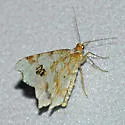
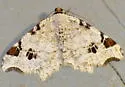
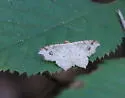
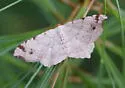
Photo credits: Contributed by Robin McLeod; Additional contributions by cotinis , Steve Nanz , ceiseman , Randy Hardy
Frequently Asked Questions About Birch Angle - Hodges#6330
What is Birch Angle - Hodges#6330?
Birch Angle - Hodges#6330 (Macaria ulsterata) is a species in the family Geometridae, within the order Lepidoptera.
How big is Birch Angle - Hodges#6330?
wingspan about 25-29 mm, based on several Internet photos
How do you identify Birch Angle - Hodges#6330?
Adult: forewing bright white with three usually distinct transverse lines crossing wing; heavy brown or blackish patch mid-way along PM line, and another dark patch where PM line meets costa; outer margin falcate (having sickle-shaped indentation) near apex, and accented by dark fringe; hindwing similarly colored except for lack of dark patches on PM line; distinct point mid-way along outer margin, giving an almost tailed appearance
Where is Birch Angle - Hodges#6330 found?
| Feature | Details |
|---|---|
| Habitat | mixedwood and deciduous forests and woodlands; adults are nocturnal and come to light |
| Range | Nova Scotia to British Columbia and Northwest Territories, south in the east to North Carolina, south in the west to Colorado and Oregon |
What does Birch Angle - Hodges#6330 eat?
The diet of the Birch Angle - Hodges#6330 includes larvae feed on leaves of primarily birch ( Betula ) and alder ( Alnus ).
When is Birch Angle - Hodges#6330 active?
Birch Angle - Hodges#6330: seasonal activity - flight period peaks in June.
What is the life cycle of a Birch Angle - Hodges#6330?
one generation per year; overwinters as a pupa