
Butterflies and Moths
Order Lepidoptera
The Butterflies and Moths (Order Lepidoptera) includes 11,813 species across 112 families and 2,787 genera in our directory.
About Butterflies and Moths
Lepidoptera includes approximately 180,000 described species of butterflies and moths. Moths outnumber butterflies roughly 10:1. The monarch butterfly's eastern population has declined by more than 80% since the mid-1990s, and the western population by over 95% since the 1980s. The IUCN lists the migratory monarch as Vulnerable.
Economic Impact
Lepidoptera are critical pollinators. In Europe, grassland butterfly species have declined by almost 50% since the early 1990s. In the UK, three-quarters of butterflies are in decline. In the U.S., five butterfly species have gone extinct since 1950, with 29 listed as endangered.
Ecological Role
Butterflies and moths are essential indicators of ecosystem health. As caterpillars, they are a primary food source for birds - a single nest of blue tit chicks requires ~10,000 caterpillars. Adult moths pollinate many night-blooming plants.
Families in Lepidoptera (112)
Species in Lepidoptera (11,813)
Aristotelia elegantella - Hodges#1736
Aristotelia elegantella
Adults come to lights, but typically only one at a time. ( 4 )
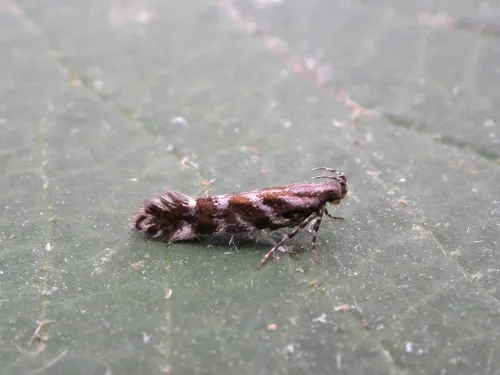
Aristotelia ericinella
Aristotelia ericinella
Flying in July and August, the adults are on the wing from the afternoon onwards but can be quite elusive. The larva feeds in June and July on heather (Calluna) forming a silken tube among the leaves. Occurring throughout much of England and Wales in
Aristotelia eumeris - Hodges#1737
Aristotelia eumeris
Identification: See illustration of type specimen in Clarke (1969).
Aristotelia fungivorella - Hodges#1738
Aristotelia fungivorella
Identification: Adult: forewing light to medium brown with dark patches in basal, AM, and PM areas along the costa, and a fourth dark patch at the apex; the bottom of the AM patch has an S-shaped edge that continues across to the bottom of the PM pat
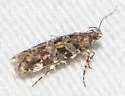
Aristotelia pudibundella - Hodges#1756
Aristotelia pudibundella
Identification: Specimen identified by DNA analysis (BOLD). ( 4 )
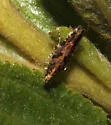
Aristotelia rubidella - Hodges#1762
Aristotelia rubidella
Identification: "The interstices between the black markings in the costal half of the FW need to be contrastingly white (or whitish) for it to be roseosuffusella ." Terry Harrison
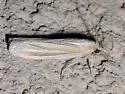
Arivaca Moth - Hodges#6062
Arivaca ostreella
Identification: Adult: forewing dull yellowish in lower half, and white in upper half; white area bisected longitudinally by brownish-yellow strip that begins near base and gradually widens until terminating at apex; fringe white; hindwing pale grayi
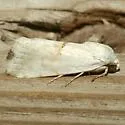
Arizona Bird Dropping Moth - Hodges#9109
Ponometia elegantula
Identification: Harvey (1876) original description as Thalpochares elegantula is online in the print references. ( 3 )
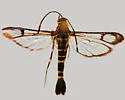
Arizona Clearwing Moth - Hodges#2595
Carmenta auritincta
Identification: Adult - see Engelhardt in Print References.
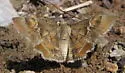
Arizona Powdered-Skipper - Hodges#3938
Systasea zampa
Described by Edwards in 1876 (hence one of other common names) from "South Apache, Arizona". Bell re-described it in 1941 from the Baboquivari Mountains, Arizona.
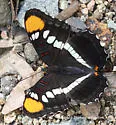
Arizona Sister - Hodges#4527.1
Adelpha eulalia
Identification: The Weidemeyer's Admiral - Limenitis weidemeyerii is most likely to be confused with the Arizona Sister within the United States, where the two are often found together. Weidemeyer's Admirals average smaller, have no orange near the
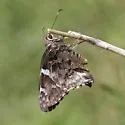
Arizona Skipper - Hodges#3885
Codatractus arizonensis
Identification: Hind wing somewhat pointed, with large white patch. Forewing with broad white spot bands.
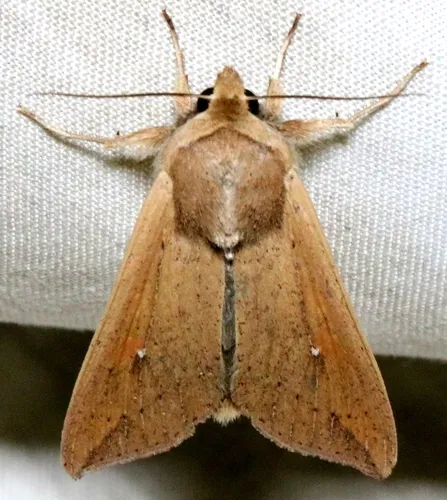
Armyworm Moth
Pseudaletia unipuncta
Mythimna unipuncta, the true armyworm moth, white-speck moth, common armyworm, or rice armyworm, is a species of moth in the family Noctuidae. The species was first described by Adrian Hardy Haworth in 1809. Mythimna unipuncta occurs in most of North
Aroga camptogramma - Hodges#2185
Aroga camptogramma
Identification: Mostly blackish with a longitudinal dorsal white stripe from head to 3/4 length of forewings, turning sharply and crossing obliquely to the costal margin. Similar to Aroga unifasciella of the western U.S. but barely half the size. (
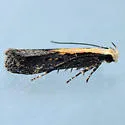
Aroga paraplutella - Hodges#2193
Aroga paraplutella
Identification: The original description as Gelechia paraplutella Busck, is available online at the link in the print references below.
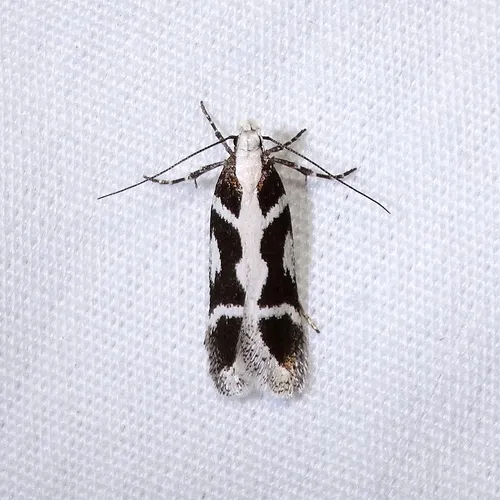
Aroga paulella - Hodges#2194
Aroga paulella
Identification: Adult : FW are shining dark blackish brown with white markings. The entire dorsal edge is white, reaching up the fold except right at the base and slightly crossing the fold with an upward projection at the apical third of the wing. B
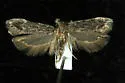
Aroga websteri - Hodges#2201
Aroga websteri
Identification: Specimen determined by DNA analysis (BOLD). The larvae are a major defoliator of Great Basin Sagebrush ( Artemisia tridentata ), which covers vast areas of the intermountain west between the Rocky Mountains and the Cascade/Sierra Neva
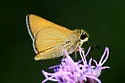
Arogos Skipper - Hodges#4050
Atrytone arogos
Oklahoma considers Atrytone arogos iowa to be a "Species of Greatest Conservation Need" (SGCN)
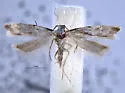
Arotrura balli - Hodges#1676.1
Arotrura balli
Identification: Specimen determined by DNA analysis (BOLD).
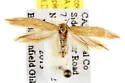
Arotrura formidabilis - Hodges#1667.1
Arotrura formidabilis
Identification: Specimen determined by DNA analysis (BOLD).
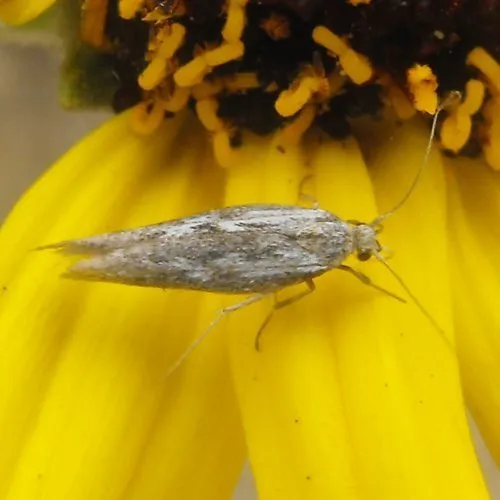
Arotrura longissima - Hodges#1667.2
Arotrura longissima
Identification: Specimen determined by DNA analysis (BOLD).
Arotrura sponsella - Hodges#1676
Arotrura sponsella
Identification: Specimen determined by DNA analysis (BOLD).
Arta brevivalvalis - Hodges#5568.1
Arta brevivalvalis
Identification: Arta brevivalvalis is difficult to distinguish from Arta statalis and A. epicoenalis .
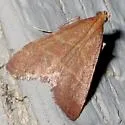
Arta epicoenalis - Hodges#5567
Arta epicoenalis
Identification: Adult: forewing light reddish with pale AM and PM lines that diverge slightly as they run from costa to inner margin; hindwing light gray; tibiae and tarsi lack conspicuous scale tufts.
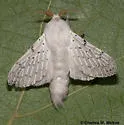
Artace colaria - Hodges#7684
Artace colaria
Identification: Larva - red-brown, closely matching the color of manzanita stems.
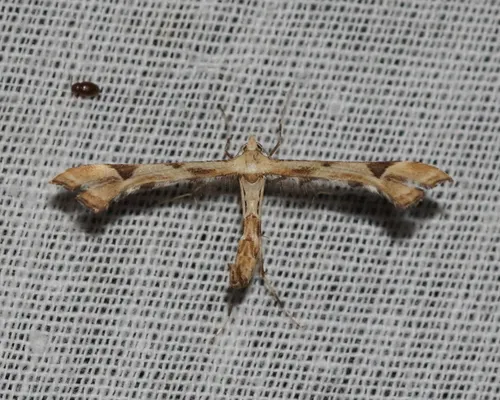
Artichoke Plume Moth
Platyptilia carduidactylus
Platyptilia carduidactyla (artichoke plume moth) is a moth of the family Pterophoridae. It is found in North America, from Mexico north into the United States.
Asaphocrita aphidiella-complex - Hodges#1171
Asaphocrita aphidiella-complex
DNA analysis indicates that this is a complex of at least several species. I (ASH) designated this a species complex page based on DNA barcode data as part of my effort to sort through images of Blastobasidae on BugGuide. This is not a described spec
Asaphocrita busckiella-complex - Hodges#1174
Asaphocrita busckiella-complex
Specimens identified as A. busckiella are placed by BOLD in a single BIN ( BOLD:AAA8938 ), but the very large divergence in sequences suggests this is a complex of at least a few species. This is not a described species complex and should be consider
Asaphocrita nr-aphidiella-southeastern-species
Asaphocrita nr-aphidiella-southeastern-species
Page corresponding to BOLD:AAG8582 , though the range overlaps at least somewhat with that of BOLD:AAE0464 This page will be nested within the page for the Asaphocrita aphidiella complex once the latter has been converted to a no taxon page.
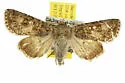
Aseptis catalina - Hodges#9528
Aseptis catalina
Identification: Smith, 1899) original description as Hadena catalina , and the Hampson (1908) description as Traecha catalina are online in the print references. Specimen determined by DNA analysis (BOLD). ( 3 )

Aseptis ferruginea - Hodges#9531.2
Aseptis ferruginea
Identification: Mustelin et al. original description in PDF. Specimen determined by DNA analysis (BOLD).
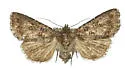
Aseptis fumeola - Hodges#9530
Aseptis fumeola
Identification: Hampson original description of the adult is online in the print references. Crumb description of the larvae is also available online. Specimen determined by DNA analysis (BOLD).
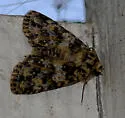
Aseptis lichena - Hodges#9574
Aseptis lichena
Identification: See diagnosis in Mustelin & Crabo as well as the original description . Genitalia:
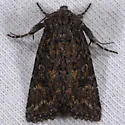
Aseptis perfumosa - Hodges#9529
Aseptis perfumosa
Identification: Specimen identified by DNA analysis (BOLD). ( 5 )
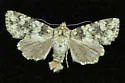
Aseptis pseudolichena - Hodges#9529.1
Aseptis pseudolichena
Identification: Mustelin & Leuschner original description in PDF. Specimen determined by DNA analysis (BOLD).
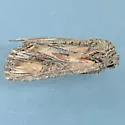
Aseptis susquesa - Hodges#9539
Aseptis susquesa
Identification: See Mustelin & Crabo for both adult and larva. Smith original description as Hadena susquesa is available online in the print references.
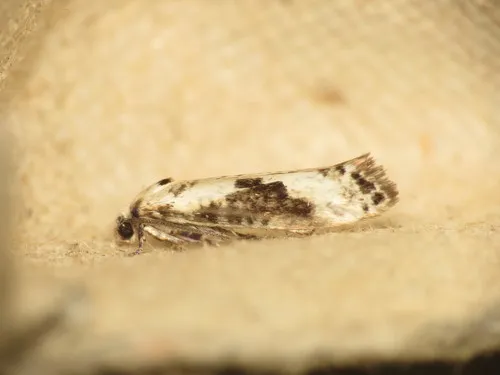
Ash Bud Moth
Prays fraxinella
Wingspan 14-17 mm. The typical form is distinctive and easy to recognise, less so the dark form which closely resemble Prays ruficeps. In the dark form of Prays fraxinella the markings of the standard form remain faintly visible against the dark wing
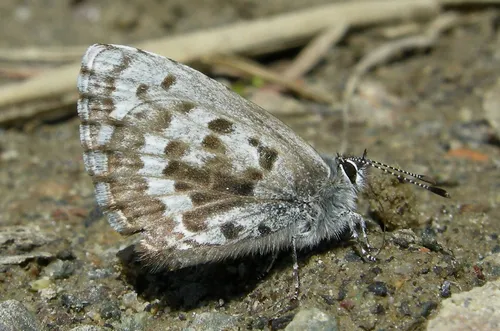
Asher's Blue - Hodges#4363.8
Celastrina asheri
"A new western azure species, Celastrina asheri, is described from the northwestern United States and southwestern Canada. A lectotype is designated for Lycaena pseudargiolus var. nigrescens Fletcher, 1903 to secure the identity of that name. C. ashe
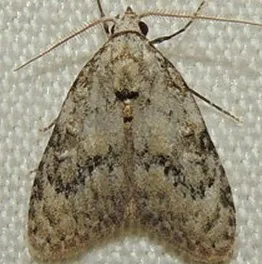
Ashy Meganola - Hodges#8983.2
Meganola spodia
Identification: Adult: forewing light gray with mottled dark gray or blackish blotch halfway along costa, the blotch sometimes extending inward but becoming more diffuse toward inner margin; antemedial line thin, dark, usually complete; postmedial li
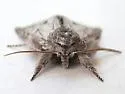
Ashy Pleromelloida - Hodges#10031
Pleromelloida cinerea
Identification: Adult: forewing pale gray with contrasting black lines and conspicuous black streaks in subterminal area, especially near apex; paler spot near middle of wing at end of main vein; hindwing dirty whitish basally, shading to gray distal
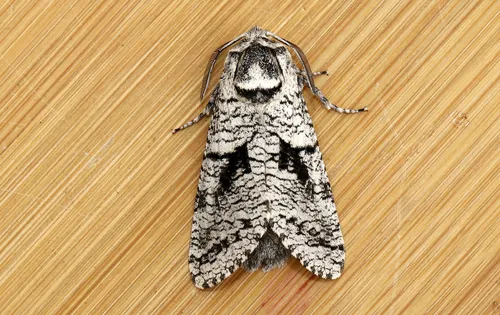
Aspen Carpenterworm
Acossus populi
Acossus populi, the aspen carpenterworm, is a moth of the Cossidae family. It is found in the United States in Nevada, Colorado, California and in the northern Rocky Mountains. In Canada it is found in Ontario and British Columbia.
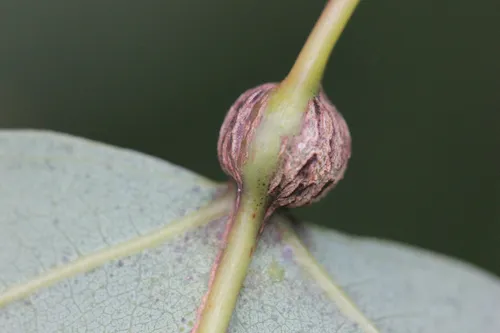
Aspen Petiole Gall Moth
Ectoedemia populella
The poplar petiole gall moth (Ectoedemia populella) is a moth of the family Nepticulidae. It is found in North America, including Massachusetts, New Hampshire and Ohio.
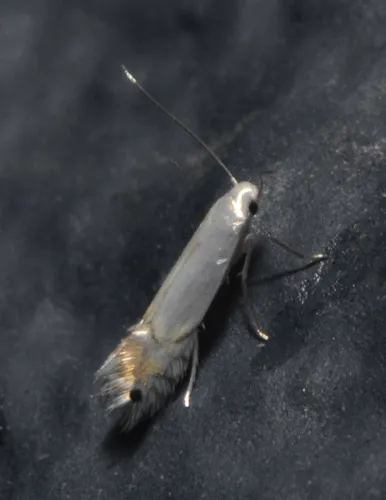
Aspen Serpentine Leafminer Moth
Phyllocnistis populiella
The common aspen leaf miner or aspen serpentine leafminer (Phyllocnistis populiella) is a moth of the Gracillariidae family. It is found in northern North America, including Alberta, Massachusetts, Ontario and Alaska.
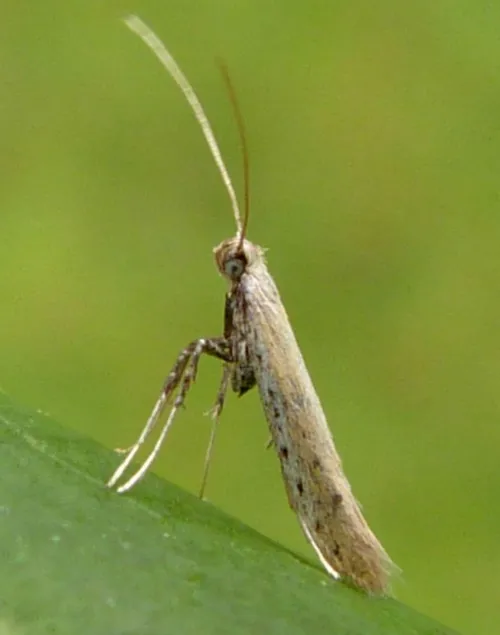
Aspilapteryx tringipennella
Aspilapteryx tringipennella
Wingspan 10-13 mm. A close relative of the genus Caloptilia , this species rests in a similar manner, with the forepart of the body raised on the front legs. The overall appearance is that the moth looks brown above fading to white below and there ar
Aspitates forbesi - Hodges#6716
Aspitates forbesi
Identification: Specimen determined by DNA analysis (BOLD).
Aspitates orciferaria - Hodges#6717
Aspitates orciferaria
Identification: Specimen determined by DNA analysis (BOLD).
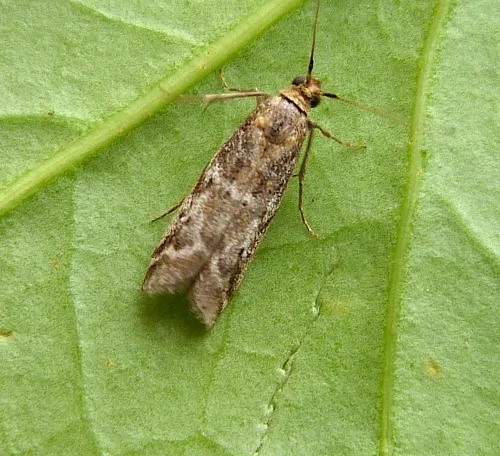
Assara terebrella
Assara terebrella
Wingspan 21 to 24 mm. Showing conspicuous whitish markings and cross-lines on a reddish-brown ground colour, this moth is not too difficult to identify although both light coloured and darker coloured specimens do occur. This moth can be found in spr
Aster Cutworm - Hodges#10307
Trichordestra lilacina
Identification: Adult: forewing light brown with dark brown or gray patches; claviform spot conspicuous, cone-shaped, brown with black outline; orbicular spot oblique, pale; reniform spot blackish in lower half; some specimens have mostly grayish for
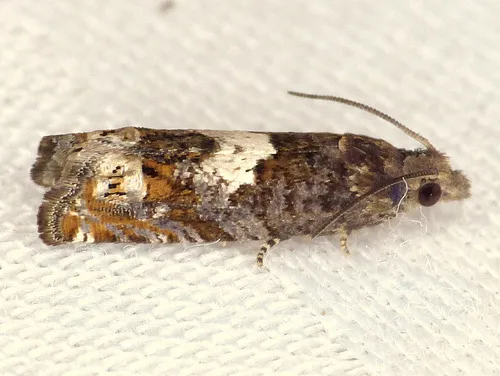
Aster Eucosma Moth
Eucosma parmatana
Eucosma parmatana is a species of olethreutine leafroller moth in the family Tortricidae, found in North America.
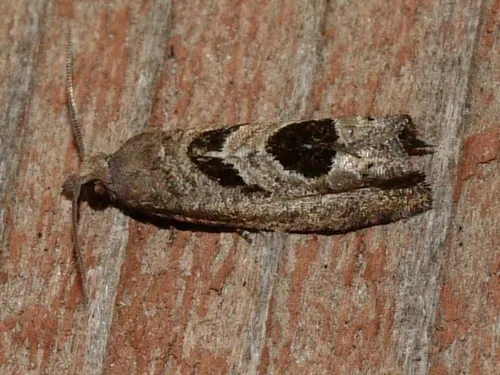
Aster-head Eucosma Moth - Hodges#2936
Eucosma tomonana
Identification: "forewings of pale gray, somewhat brownish in tone, with fine striations of slightly darker gray, most evident towards the costa. The most eye-catching features are the two large blackish spots at the inner margin. The innermost spo
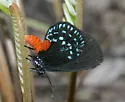
Atala - Hodges#4268
Eumaeus atala
Identification: Distinctive color and pattern, likely aposematic . considered by FL to be a "Species of Greatest Conservation Need" (SGCN)
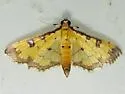
Ategumia ebulealis - Hodges#5158
Ategumia ebulealis
Identification: The original description is available online in the print references below. (French) Introduced to Hawaii in 1970 to control Cledemia hirta . ( 7 )
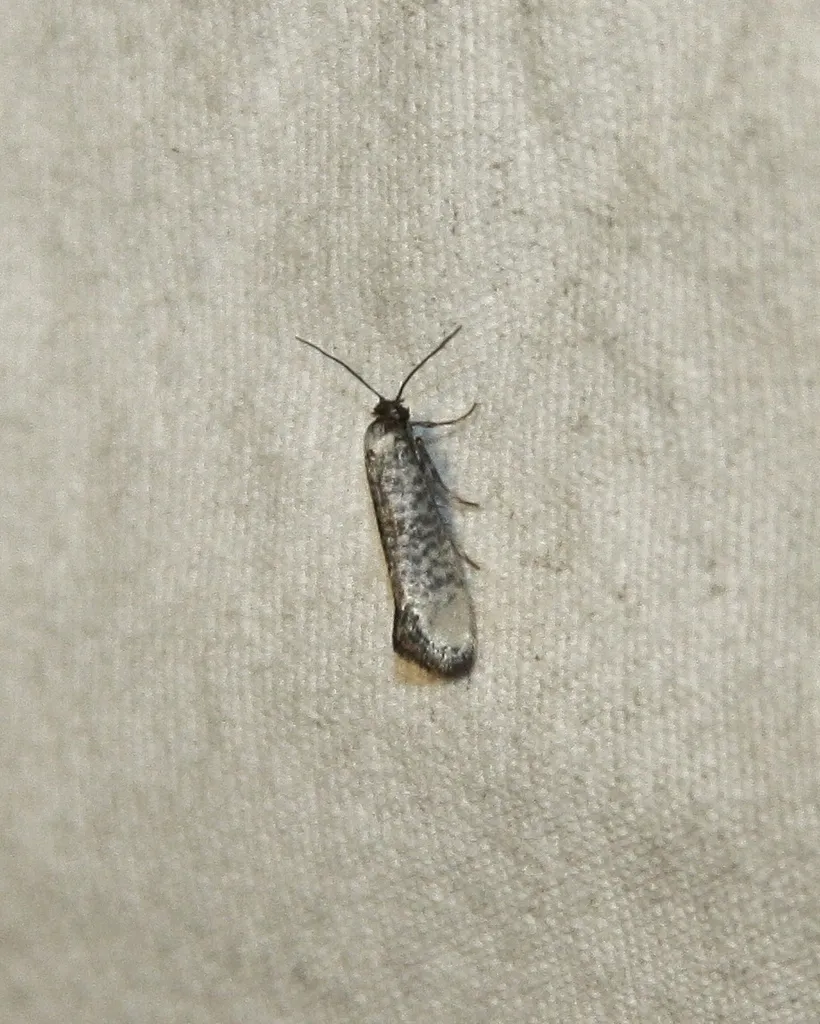
Atemelia aetherias - Hodges#2411
Atemelia aetherias
Identification: Meyrick original description as Orinympha aetherias is available online.
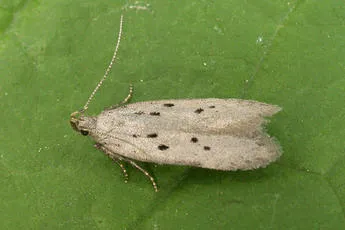
Athrips mouffetella
Athrips mouffetella
Wingspan about 15mm. A small, but distinctively marked moth. The adult flies at night during July to September, and is attracted to light. The larvae feed mainly on honeysuckle during May and June, spinning together terminal shoots. Found throughout
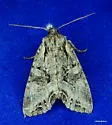
Atlantic Arches Moth - Hodges#10297
Lacanobia atlantica
Identification: forewing pale brown with dark brown markings; subterminal line punctuated by large sharp W shape, pale in the middle, and dark brown on either side; claviform spot and basal dash dark brown and conspicuous
Atlantic Canada Plume Moth - Hodges#6125.1
Paraplatyptilia atlantica
Identification: See the identification key for Platyptiliini . See the species accounts in Landry & Gielis and Landry as Stenoptilodes sp. A .
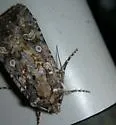
Attentive Dart - Hodges#11009
Eueretagrotis attentus
Identification: Adult: forewing reddish-brown with variable amounts of white scaling along costa from base to reniform spot; prominent black basal dash is diagnostic; orbicular and reniform spots variable from ground color with a few white spots to m
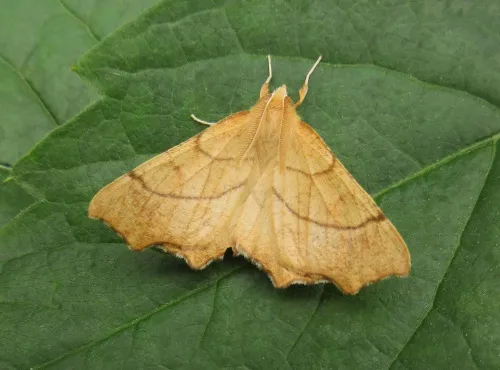
August Thorn
Ennomos quercinaria
Wingspan 42 to 50 mm. One of several similar 'Thorns', the adults of this species can be distinguished by the shape of the cross-lines on the forewing. The inner line is distinctly curved, and the outer line has a 'kink' where it meets the leading ed
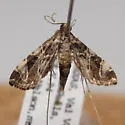
Aulacodes cf. aechmialis - Hodges#4766.1
Aulacodes cf-aechmialis
Aulacodes cf. aechmialis Guenée, 1854 has male genitalia matching the illustration by Lange (1956) of " Aulacodes aechmialis ". The original descriptions of aechmialis and it's synonym Hydrophysa plumipedalis Hampson, 1895 seem to somewhat match. The
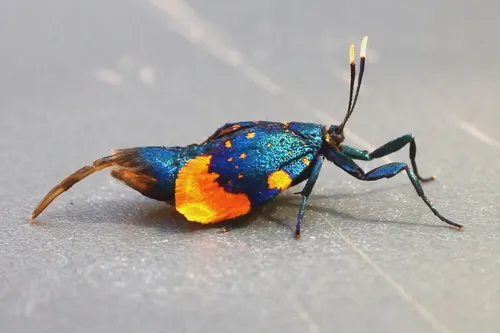
Australian bag moth
Cebysa leucotelus
The Australian bagmoth (Cebysa leucotelus) or lichen bag moth is a moth of the Psychidae family. It is found in New Zealand and the southern half of Australia (Tasmania, Victoria and Western Australia).
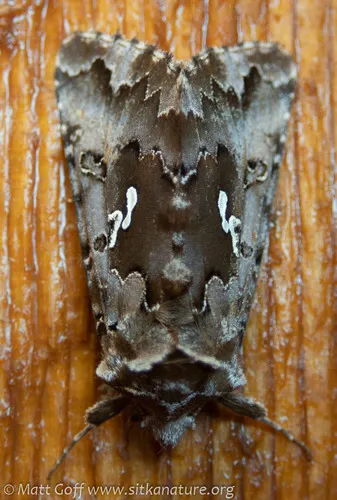
Autographa corusca - Hodges#8918
Autographa corusca
Autographa corusca - Hodges#8918 (Autographa corusca) is a species in the family Noctuidae, commonly known as owlet moths, belonging to the order Lepidoptera (Butterflies and Moths). It is classified within the subfamily Plusiinae, tribe Plusiini, su
Autographa labrosa - Hodges#8920
Autographa labrosa
Identification: Similar to Autographa corusca. The species overlap only in Mendocino county, California, where they can be difficult to distinguish. A. corusca generally has a more mottled appearance. The two species can normally be separated by r
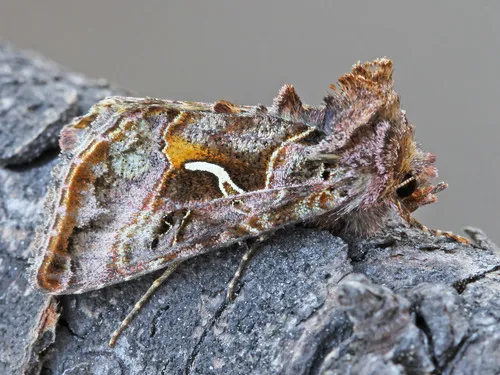
Autographa sansoni - Hodges#8910
Autographa sansoni
Autographa sansoni - Hodges#8910 (Autographa sansoni) is a species in the family Noctuidae, commonly known as owlet moths, belonging to the order Lepidoptera (Butterflies and Moths). It is classified within the subfamily Plusiinae, tribe Plusiini, su
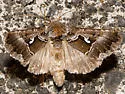
Autographa speciosa - Hodges#8919
Autographa speciosa
Autographa speciosa - Hodges#8919 (Autographa speciosa) is a species in the family Noctuidae, commonly known as owlet moths, belonging to the order Lepidoptera (Butterflies and Moths). It is classified within the subfamily Plusiinae, tribe Plusiini,
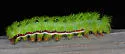
Automeris louisiana - Hodges#7749.1
Automeris louisiana
Identification: Male and females are browner with less maculation than Automeris io , MPG images considered by Louisiana to be a "Species of Greatest Conservation Need" (SGCN) ( 4 )
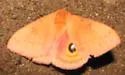
Automeris patagoniensis - Hodges#7749.2
Automeris patagoniensis
Automeris patagoniensis - Hodges#7749.2 (Automeris patagoniensis) is a species in the family Saturniidae, commonly known as giant silkworm and royal moths, belonging to the order Lepidoptera (Butterflies and Moths). It is classified within the subfam
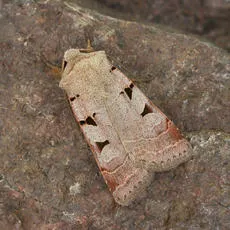
Autumnal Rustic
Eugnorisma glareosa
Wingspan 32 to 38 mm. An attractive species, typically with a smooth, velvety grey appearance with strong black markings. In the south there are examples with a more buff or pinkish ground colour, and an extreme dark subspecies edda occurs in Shetlan
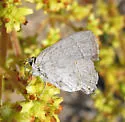
Avalon Hairstreak - Hodges#4337
Strymon avalona
Closely similar to the Gray Hairstreak ( Strymon melinus ), but usually with the ground color of the wings below lighter beyond the median dark line than is the rest of the wings (giving a two-tone effect); usually with the black and orange eye spot
Aweme Borer Moth - Hodges#9504
Papaipema aweme
Identification: Lyman (1908) original description as Gortyna aweme , and the Hampson (1910) revised description as Papaipema aweme are both online in the print references. COSEWIC Assessment and Status Report on the Aweme Borer Papaipema aweme in Can
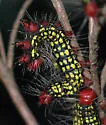
Azalea Caterpillar Moth - Hodges#7905
Datana major
Identification: Adult: forewing orangish-brown, darker brown toward costa (not tawny to reddish-brown, as in Drexel's Datana); hindwing solid orangish-brown [adapted from description by Charles Covell] D. major is not safely separable from D. drexeli
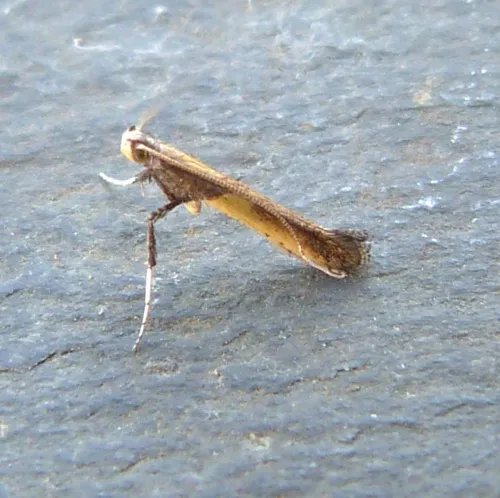
Azalea Leaf Miner
Caloptilia azaleella
Wingspan 10 to11 mm. Another distinctive member of this family with largely dark brown forewings broken only by a yellow band along the costal margin. Leafmine occurs on Rhododendron species http://www.leafmines.co.uk/html/Lepidoptera/C.azaleella2.ht
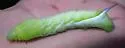
Azalea Sphinx - Hodges#7886
Darapsa choerilus
Identification: Adult: forewing variably reddish-brown to orange with purplish shading; postmedian line straight or almost so; small discal spot and pale shading in median area; pale wavy-margined semicircular patch along outer margin; hindwing unifo
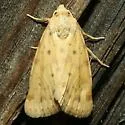
Azenia implora - Hodges#9729
Azenia implora
Identification: Forewing is pale lemon-yellow and hindwings are white. Two prominent dots parallel and just inside of inner margin of forewing.
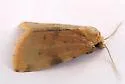
Azenia procida - Hodges#9726.1
Azenia procida
Identification: Adult : Azenia procida occurs in two color forms, one yellow and the other a dull yellowish brown. It differs from Azenia edentata in that the FW has larger, more diffuse dark spots, the outer margin of the frontal process is evenly c
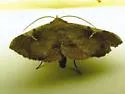
Azeta repugnalis - Hodges#8575
Azeta repugnalis
Azeta repugnalis - Hodges#8575 (Azeta repugnalis) is a species in the family Erebidae, belonging to the order Lepidoptera (Butterflies and Moths). It is classified within the subfamily Eulepidotinae, superfamily Noctuoidea. This species belongs to th
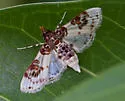
Azochis rufidiscalis - Hodges#5232
Azochis rufidiscalis
Identification: The original Hampson (1904) description is available online in the print references below.
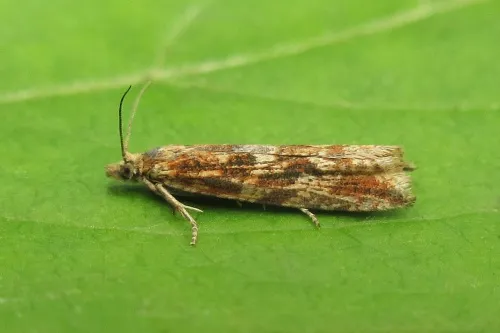
Bactra furfurana
Bactra furfurana
Wingspan 13 to 19 mm. When well-marked this species is fairly distinctive, poorly-marked specimens are difficult to separate from other Bactra species. This species occupies damp marshy habitats. The larvae feed in the stems of rushes such as Common
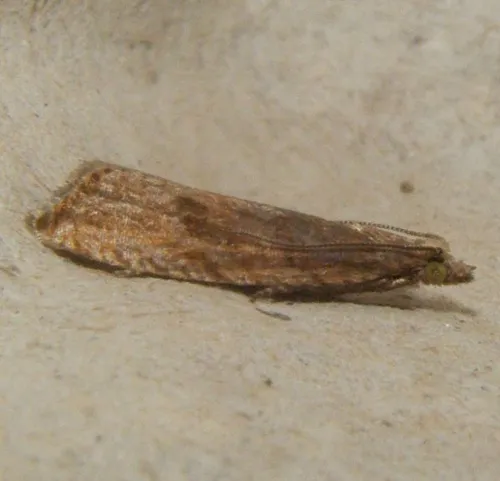
Bactra lancealana
Bactra lancealana
Wingspan 11 to 20 mm. Quite a variable species, with some individuals being almost unicolorous, others with a pale streak along the fore edge of the darker brown wing, and some with obvious darker patches on a mottled forewing. It is also very variab
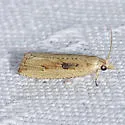
Bactra priapeia - Hodges#2709
Bactra priapeia
Identification: The original description is available in PDF or view online in the print references below.
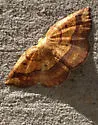
Baggett's Spanworm Moth - Hodges#7010.1
Nematocampa baggettaria
Identification: Nematocampa baggettaria does not have the swollen, clavate, hindtibial spur present in the two other species. The females have purplish-brown shading in most of the outer third of the forewing. Wagner describes the larva and provides
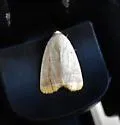
Bagisara albicosta - Hodges#9174
Bagisara albicosta
Identification: Apparently the only member of the genus with am. line angled outwardly from the coastal margin.
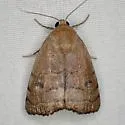
Bagisara brouana - Hodges#9176.1
Bagisara brouana
Identification: Images at MPG considered by Louisiana to be a "Species of Greatest Conservation Need" (SGCN)
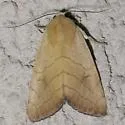
Bagisara buxea - Hodges#9172
Bagisara buxea
Identification: Genitalia: Larva: mottled green and white. ( 3 )
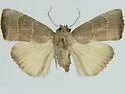
Bagisara pacifica - Hodges#9170
Bagisara pacifica
Identification: Schaus (1911) original description is online in print references. 48 *The subterminal line curved at costa and straight to tornus.
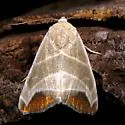
Bagisara praecelsa - Hodges#9175.1
Bagisara praecelsa
Identification: Distinctive FW pattern; long, shaggy vestiture on the femora and tibiae.
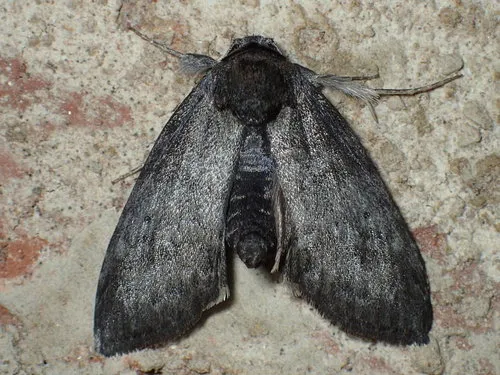
Baileya ellessyoo - Hodges#8972.1
Baileya ellessyoo
Identification: Original description in PDF. Determined by Vernon Antoine Brou Jr.
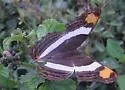
Band-celled Sister - Hodges#4526
Adelpha fessonia
Identification: Unlike the other US species of Adelpha, and two similar species of Doxocopa that occur in the US, the white wing band on this species extends, unbroken and unfaded, all the way to the leading edge of the forewing.
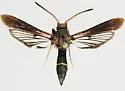
Banded Ash Clearwing Moth - Hodges#2588
Podosesia aureocincta
Identification: Drooz stated Podosesia aureocincta can be distinguished from Podosesia syringae by the narrow, orange-yellow, partial band on the fourth abdominal segment. Albu mentioned wide year to year fluctuations in population for many species i
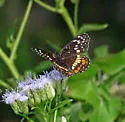
Banded Checkerspot - Hodges#4501
Chlosyne pardelina
Type Locality: Texas, Duval Co., SH16 ca. 15 mi south of Freer at Parrilla Creek. TAMUIC. Higgins' Type : La Gloria, S. of Montclova, Coahuila, Mexico, 3300 ft. HT in AMNH. (BOA) First Texas record, a much worn female collected by Howard George Lacey
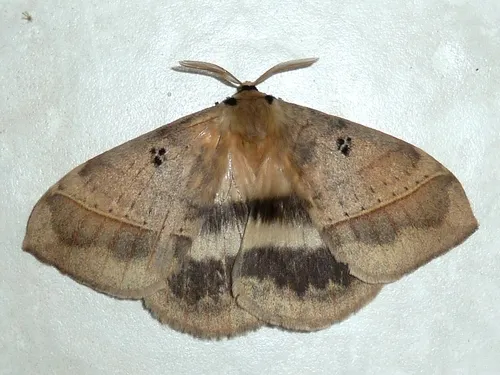
Banded Monkey
Jana eurymas
Jana eurymas, the banded monkey, is a moth in the family Eupterotidae. It was described by Herrich-Schäffer in 1854. It is found in Cameroon, the Republic of Congo, the Democratic Republic of Congo, Ghana, Guinea, Kenya, Namibia, Sierra Leone, South
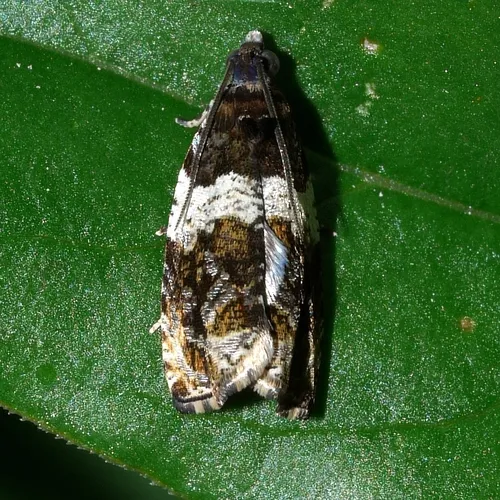
Banded Olethreutes Moth
Olethreutes fasciatana
Olethreutes fasciatana is a moth of the family Tortricidae. It is known from North America, including Alabama, Illinois, Maryland, Massachusetts, New Jersey, New York, North Carolina, Ohio, Oklahoma, Pennsylvania and Wisconsin.
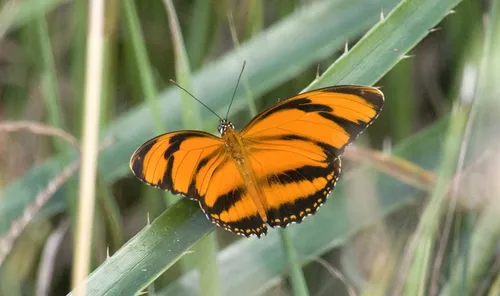
Banded Orange Heliconian - Hodges#4415
Dryadula phaetusa
Identification: Adults: Upperside of male bright orange with black stripes. Female has smeared stripes and is duller. Caterpillar is dull purple, four rows of long spines, and has two spiny horns on head. First U.S. Record: Sarita, Kenedy Co., Texas
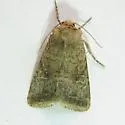
Banded Quaker - Hodges#10552
Trichopolia incincta
Identification: Adult - forewing grayish-brown with slightly darker median and sometimes terminal areas; AM and PM lines black, scalloped; subterminal line black, slightly wavy or irregular; reniform spot partially filled with dark gray or black; hin
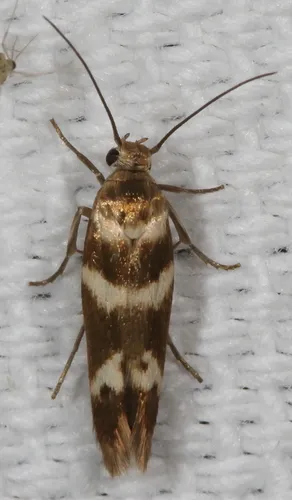
Banded Scythris Moth
Scythris trivinctella
Scythris trivinctella, the banded scythris moth, is a moth of the Scythrididae family. It is found in North America, where it has been recorded from New England to Florida, the Great Plains states, Texas to Arizona and south into Mexico, Utah, easter
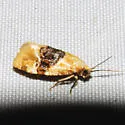
Banded Sunflower Moth - Hodges#3777
Cochylichroa hospes
Identification: Adults - golden ochreous with broad, dark brown to rust brown medial fascia and subapical blotch containing irridescent gray patches. ( 3 ) Also see Razowski (1997). ( 4 ) Genitalia: ♀ ♂
Bandera cupidinella - Hodges#6025
Bandera cupidinella
Identification: The pale-yellow patch of scales at the base of the forewing near costa will separate cupidinella from other Bandera .
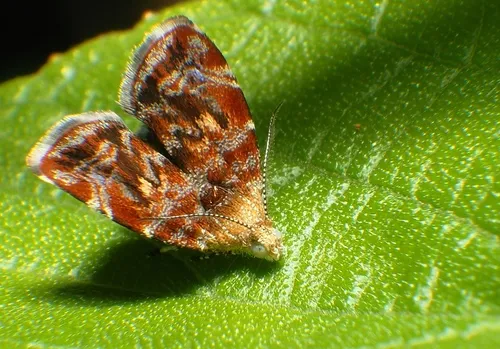
Banyan leaf skeletonizer - Hodges#2652.01
Choreutis sexfasciella
Choreutis sexfasciella is a moth in the Choreutidae family. It was described by Sauber in 1902. It is found in Sri Lanka, Japan (Ogasawara), Taiwan, the Philippines and on Java.
Baptarma felicita - Hodges#11061
Baptarma felicita
Identification: Head, thorax and abdomen black, the vestiture with an admixture of yellow and scarlet hair that gives the effect of a wash or film of these tints. Primaries blackish with a wash of carmine, terminal space a little grayish powdered. Th
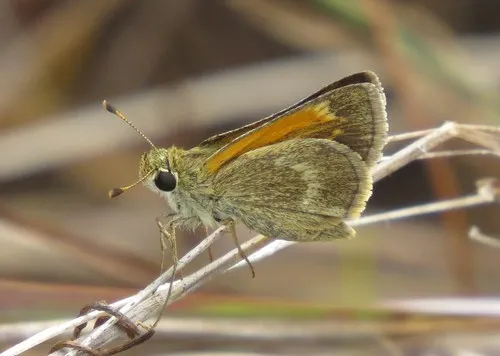
Baracoa Skipper - Hodges#4040
Polites baracoa
Identification: The smallest Polites skipper in the US. Underwing is olive/brown with a rounded HW spot band that is more defined in females. Baracoa Skippers have an elaborate mating dance, facing each other, with antenna touching.
Barberry Geometer - Hodges#7290
Rheumaptera meadii
Identification: Adult has two forms: typical form is all dark brown like Tissue Moth ( Triphosa haesitata ); form "badiaria" has orangish-brown AM and ST bands; both forms have a sharper forewing apex than Tissue Moth, and a more jagged PM line with