
Butterflies and Moths
Order Lepidoptera
The Butterflies and Moths (Order Lepidoptera) includes 11,813 species across 112 families and 2,787 genera in our directory.
About Butterflies and Moths
Lepidoptera includes approximately 180,000 described species of butterflies and moths. Moths outnumber butterflies roughly 10:1. The monarch butterfly's eastern population has declined by more than 80% since the mid-1990s, and the western population by over 95% since the 1980s. The IUCN lists the migratory monarch as Vulnerable.
Economic Impact
Lepidoptera are critical pollinators. In Europe, grassland butterfly species have declined by almost 50% since the early 1990s. In the UK, three-quarters of butterflies are in decline. In the U.S., five butterfly species have gone extinct since 1950, with 29 listed as endangered.
Ecological Role
Butterflies and moths are essential indicators of ecosystem health. As caterpillars, they are a primary food source for birds - a single nest of blue tit chicks requires ~10,000 caterpillars. Adult moths pollinate many night-blooming plants.
Families in Lepidoptera (112)
Species in Lepidoptera (11,813)
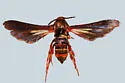
Sophona snellingi - Hodges#2513.2
Sophona snellingi
Identification: Adult - see Eichlin (p.135, f.3) in Print References.
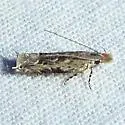
Sophronia roseicrinella - Hodges#2214
Sophronia roseicrinella
Identification: The white face, second joint of palpi rosy white, well developed dusky brush of the labial palpi, forewings with the rosy-white ground color strongly overlaid with brown and fuscous scales, especially on dorsal half and towards apex,
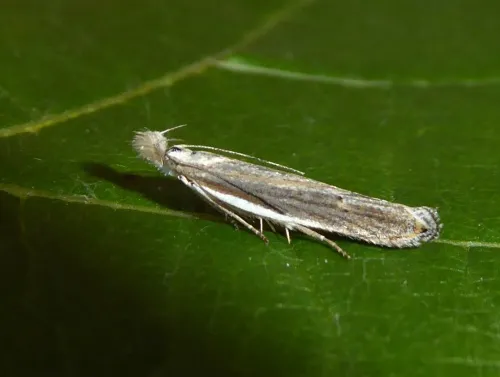
Sophronia semicostella
Sophronia semicostella
Wingspan about 18 mm. A rather attractive and distinctive-looking Gelechiid, having a strong white costal streak, tufted labial palps and noticeably banded cilia in fresh specimens. The adult moths fly in June and July in the afternoon, but are also
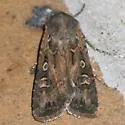
Sordid Dart - Hodges#10730
Euxoa adumbrata
Identification: The sexes are dimorphic; females are dark blackish-brown and males red-brown. Females are essentially unmarked except for pale scales outlining the reniform and orbicular spots. Males are almost identical to red specimens of Euxoa och
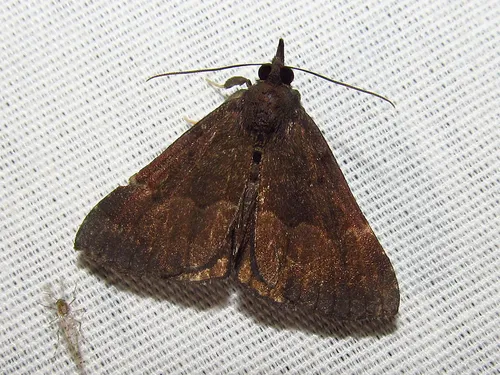
Sordid Hypena - Hodges#8448
Hypena sordidula
Identification: Adult: male forewing dark grayish-brown; AM, PM, and ST lines wavy, indistinct, contrasting little against ground color; median area uniformly colored (not darker toward PM line, as in Gray-edged Bomolocha); small pale spot where PM l
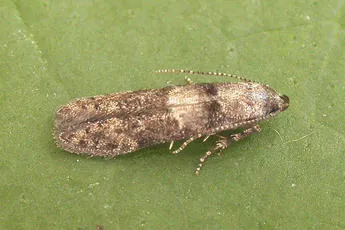
Sorhagenia lophyrella
Sorhagenia lophyrella
Wingspan about10 mm. The three British species of Sorhagenia cannot be distinguished on external characters alone, and genitalia dissection is required to be certain of identification. The adults have noticeable scale-tufts on the forewing. Areas whe
Sosipatra nonparilella - Hodges#6018
Sosipatra nonparilella
Identification: Description can be found in MONA Fascicle 15-3 at link in citations below.
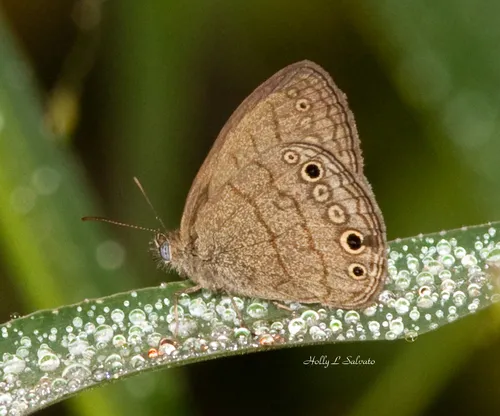
South Texas Satyr - Hodges#4574
Hermeuptychia hermybius
Identification: Distinction from H. sosybius is difficult, and as recognized here is based primarily upon geography. However, H. sosybius usually has the dark eye spots of the lower side larger, and the dark lines to either side of them less irregul
Southern Lappet Moth - Hodges#7686
Phyllodesma occidentis
Identification: Forewing has more sharply lined white reniform spot and non scalloped outer margin.
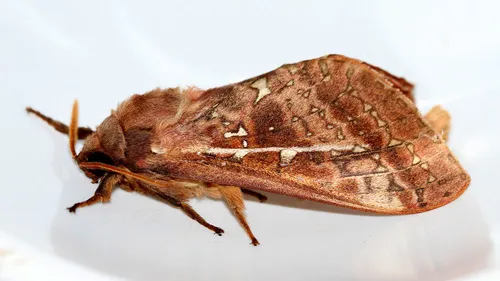
Southern Oxycanus
Oxycanus australis
Oxycanus australis is a moth of the family Hepialidae. It is found in South Australia, Tasmania and Victoria.
Southern Pearly-eye - Hodges#4568
Lethe portlandia
Identification: Note orange antennal clubs. Eye-spots surronded by white band.
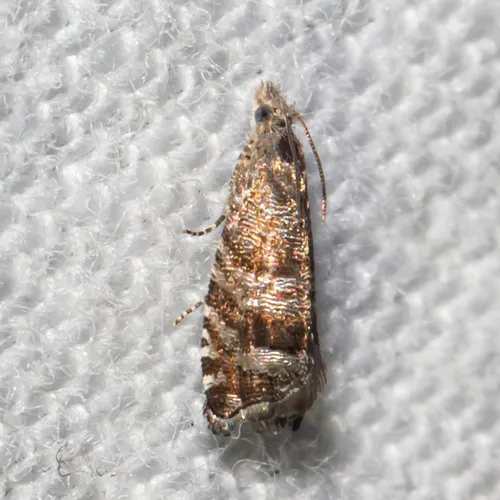
Southern Pine Catkinworm Moth - Hodges#3415
Satronia tantilla
Identification: Adult : Palps, face and head dirty white ● FW grayish fuscous ground ● Pair of moderately broad, outwardly curved, leaden metallic bands with faint dusting of white between, from costa before middle to mid-dorsum ● Four short, faint w
Southern Pine Coneworm - Hodges#5853
Dioryctria amatella
Identification: Adult : FW dark gray to brown to nearly black and are boldly patterned with multiple contrasting white patches and zig-zag crossbands. The hindwings are light gray to tan.
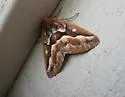
Southern Pine Looper - Hodges#6869
Caripeta aretaria
A rare or threatened species in many parts of its range.
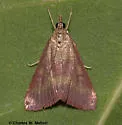
Southern Purple Mint Moth - Hodges#5070
Pyrausta laticlavia
Identification: Specimen identified by DNA analysis: Often attracted to lights.
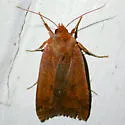
Southern Sallow Moth - Hodges#9945.1
Metaxaglaea australis
Identification: Original description of Metaxaglaea australis Schweitzer, 1979. (PDF)
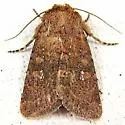
Southern Scurfy Quaker Moth - Hodges#10532.1
Homorthodes lindseyi
Identification: shape of distal end of valvae differs from H. furfurata Formerly considered to be a subspecies of H. furfurata (Northern Scurfy Quaker). The two species are sympatric from at least Massachusetts south to Maryland. However, they may be
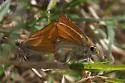
Southern Skipperling - Hodges#4010
Copaeodes minima
Identification: Very small. Orange above and below, white stripe along underside of wing. Female wing may be narrowly edged with black. Wings are very angular compared to the Least Skipper , and have less black.
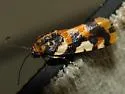
Southern Spragueia Moth - Hodges#9122
Spragueia dama
Identification: Adult - sexually dimorphic and have variable markings (see Nearctica.com). Larva - see Wagner, 2011.
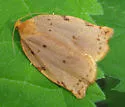
Southern Ugly-nest Caterpillar Moth - Hodges#3662
Archips rileyana
Identification: Adult - spots variable, see MPG . - fairly typical form
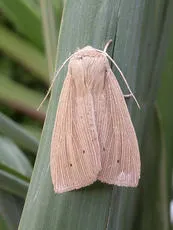
Southern Wainscot
Mythimna straminea
Wingspan 32 to 40 mm. The forewing has a brown streak along the pale central vein. The outer cross row of dark dots is usually well developed. This species can be hard to seperate from the Common Wainscot. Look out for the more angular wings, a diffe
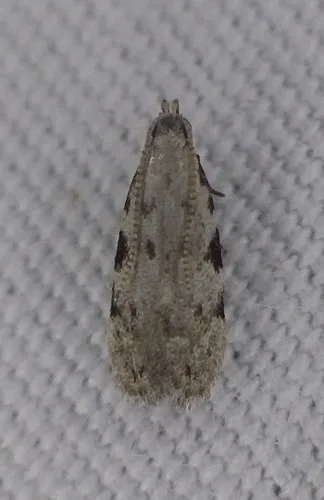
Southern taygete
Taygete gallaegenitella
Taygete gallaegenitella is a moth in the family Autostichidae. It was described by James Brackenridge Clemens in 1864. It is found in the United States, where it has been recorded from New York to Florida and to Texas.
Southwestern Pine Tip Moth - Hodges#2873
Rhyacionia neomexicana
Identification: The original description as Evetria neomexicana Dyar, is available online in the print references below. There are many online references with information on the pest status of Rhyacionia neomexicana .
Southwestern Tent Caterpillar Moth - Hodges#7703
Malacosoma incurva
The gender of Malacosoma is neuter, so adjectivic species names ending -a are considered wrong spellings.
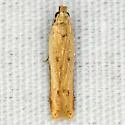
Soybean Webworm Moth - Hodges#2272
Mesophleps adustipennis
Identification: From Wikipedia: "The forewings are greyish white to yellowish brown, the distal three-fifths of the costa lined with a dark brown stripe, interrupted by an oblique pale line running from the distal fifth towards the termen."
SpaceX White-Skipper
Heliopetes elonmuski
Identification: Butterflies of America - BOA Type locality. Texas, Cameron Co., Boca Chica.
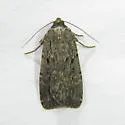
Spaelotis unicava - Hodges#10926.2
Spaelotis unicava
Spaelotis unicava - Hodges#10926.2 (Spaelotis unicava) is a species in the family Noctuidae, commonly known as owlet moths, belonging to the order Lepidoptera (Butterflies and Moths). It is classified within the subfamily Noctuinae, tribe Noctuini, s
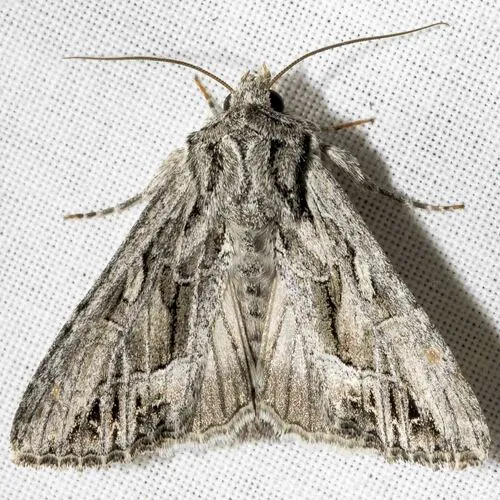
Spalding's Quaker - Hodges#9356
Apamea spaldingi
Identification: The original description as Hyppa spaldingi Smith is online at the link in the print references below. - Strong black basal dash and thick longitudinal median bar on the grey forewing. Specimen identified by DNA analysis (BOLD) ( 3 )
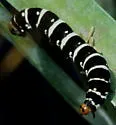
Spanish Moth - Hodges#10640
Xanthopastis regnatrix
Identification: Adult: hairy black body and pink forewing with black markings (forewing may be mostly white or mostly yellowish - see images under Internet References below); subterminal line composed of several yellow spots; reniform spot outlined i
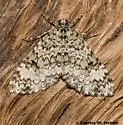
Spargania viredescens - Hodges#7309
Spargania viridescens
Identification: The original description as Hydriomena viridescens Grossbeck is available online in the print references below. Determined by Noel McFarland.
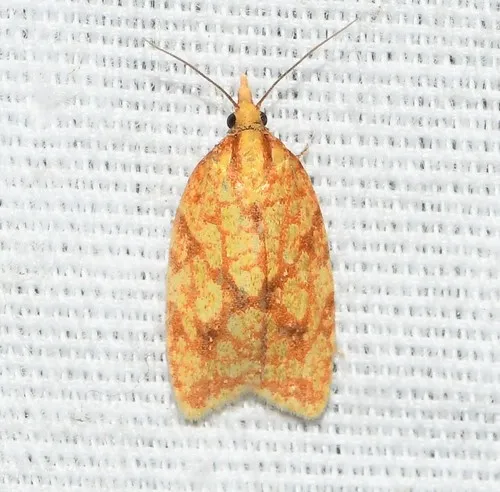
Sparganothis Fruitworm Moth
Sparganothis sulfureana
The sparganothis fruitworm moth or blueberry leafroller (Sparganothis sulfureana) is a species of moth of the Tortricidae family. It is found in most of eastern North America and on Cuba.
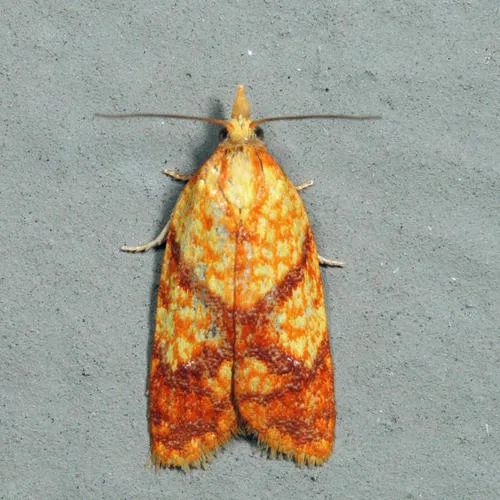
Sparganothis lycopodiana - Hodges#3697
Sparganothis lycopodiana
Identification: Adult - see original description in Print References. It would appear that dissection is needed to separate this species from similar species. S. lycopodiana , tristriata , sulfureana , bistriata and robinsonana are all in the same BI
Sparganothis senecionana - Hodges#3714
Sparganothis senecionana
Identification: Adult - see original description in Print References. Powell & Opler describe the following variations, noting that most populations have a pale gray hindwing with some specimens of both sexes having an entirely rust colored forewing:
Sparganothis taracana - Hodges#3702
Sparganothis taracana
Identification: Adult - see original description in Print References.
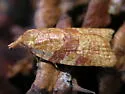
Sparganothis tunicana - Hodges#3713
Sparganothis tunicana
Identification: Adult - see original description in Print References.
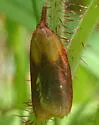
Sparganothis violaceana - Hodges#3710
Sparganothis violaceana
Identification: Adult - A unique Sparganothis with the outer 3/4 of the forewings smooth immaculate violet and the thorax and inner 1/4 of the forewings dark yellow. Labial palps are long.
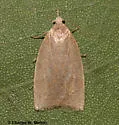
Sparganothoides machimiana - Hodges#3729
Sparganothoides machimiana
Identification: The dark discal spot is not always present. ( 3 ) Tentative ID suggested by Michael Sabourin.
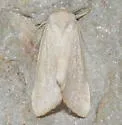
Sparkia immacula - Hodges#10218
Sparkia immacula
Identification: Adults are pale greenish-yellow without transverse markings or spots.
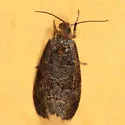
Sparkling Aterpia - Hodges#2748
Aterpia approximana
Identification: Heinrich original description as Olethreutes approximana , and Heinrich revised description as Esia approximana are online and linked in the print references. Forewing black, liberally sprinkled with bright blue spots and blotches. Ge
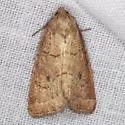
Spartina Borer - Hodges#9435
Photedes inops
Spartina Borer - Hodges#9435 (Photedes inops) is a species in the family Noctuidae, commonly known as owlet moths, belonging to the order Lepidoptera (Butterflies and Moths). It is classified within the subfamily Noctuinae, tribe Apameini, superfamil
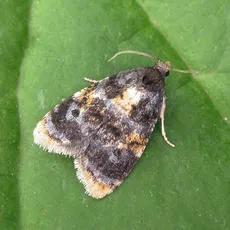
Spatalistis bifasciana
Spatalistis bifasciana
Wingspan 12 to 14 mm. The adults are quite distinctively marked, dark brown with yellowish in the terminal area and metallic blue-grey streaking. Much of the available literature suggests that the larvae feed internally in the berries or fruits of Bu
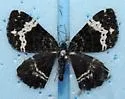
Spear-marked Black Moth - Hodges#7293
Rheumaptera hastata
Identification: The variation in pattern among individuals of R. hastata and R. subhastata is much greater than the variation between the two species. Genitalia: ♂ ♀
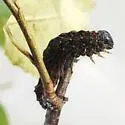
Speared Dagger Moth - Hodges#9229
Acronicta hasta
Identification: Adult: forewing dark gray with 4 heavy black streaks - basal, anal, between orbicular and reniform spot, and at outer wing edge below reniform spot (basal steak is especially long and broad, sometimes extending more than half length o
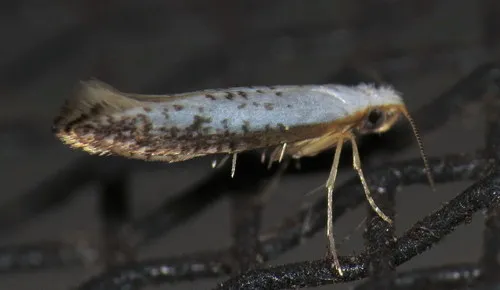
Speckled Argyresthia Moth
Argyresthia subreticulata
Argyresthia subreticulata, the speckled argyresthia moth, is a moth of the family Yponomeutidae. It is found in the United States including Florida, Maryland, Pennsylvania, Ohio, Oklahoma, Tennessee and Texas.
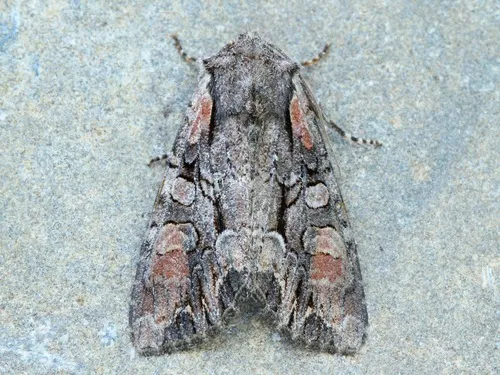
Speckled Cutworm - Hodges#10299
Lacanobia subjuncta
Identification: Adult: forewing purplish-gray with reddish-brown shading; AM and PM lines double, scalloped; black bar runs from outer end of claviform spot to PM line; basal dash black, curving toward orbicular spot at outer end; ST line with W shap
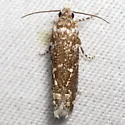
Speckled Pelochrista moth - Hodges#3009.2
Pelochrista guttulana
Identification: Blanchard (1979) original description in PDF .
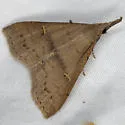
Speckled Renia Moth - Hodges#8386
Renia adspergillus
Identification: Refer to the guide on the info page for the genus.
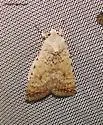
Speckled Rustic - Hodges#9657
Caradrina multifera
Identification: Adult: forewing pale gray with black zigzag lines, sometimes broken into dots; reniform spot black with white dots around perimeter; orbicular spot a black dot; subterminal line sometimes edged with reddish; darker shading beyond ST l
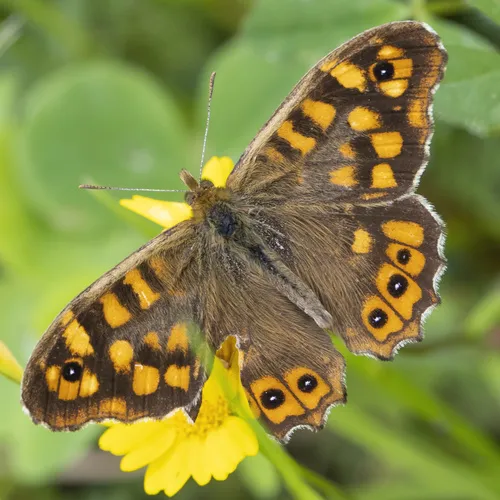
Speckled Wood
Pararge aegeria
The appearance of this butterfly changes from the north to the south, forming a "cline", where individuals in the north are dark brown with white spots, whilst those in more southerly locations are dark brown with orange spots. As its names suggests,
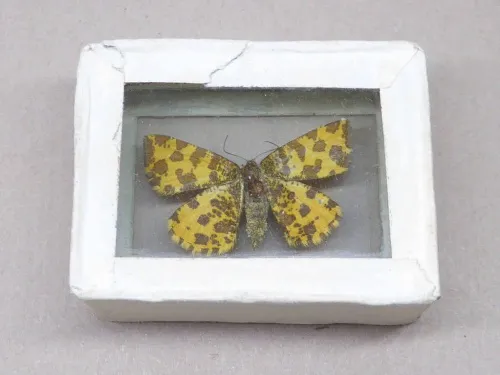
Speckled Yellow
Pseudopanthera macularia
Wingspan 23 to 28 mm. A highly distinctive, day-flying species. but must be supported by photographic evidence Please provide good photographs to support your record as this species is rare (thought extinct) in our area. Records cannot at present be
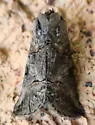
Spectacled Nettle Moth - Hodges#8881
Abrostola urentis
Identification: Adult - forewing dark gray in median area, light gray in basal and subterminal areas (some individuals are brown rather than gray); thin black AM and PM lines preceded and followed respectively by reddish-brown scales; large reniform
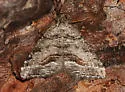
Speranza colata - Hodges#6308
Macaria colata
Identification: Grote (1881) description as Phasiane colata is online in the print references.
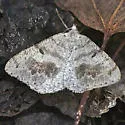
Speranza loricaria - Hodges#6290
Macaria loricaria
Identification: A pale grey geometrid with indistinct markings. AM, PM and median dark lines usually present, the PM widest and slighltly darker. Patchy brown band distal to the PM band variably developed. Discal spot usually well-defined. Hindwings
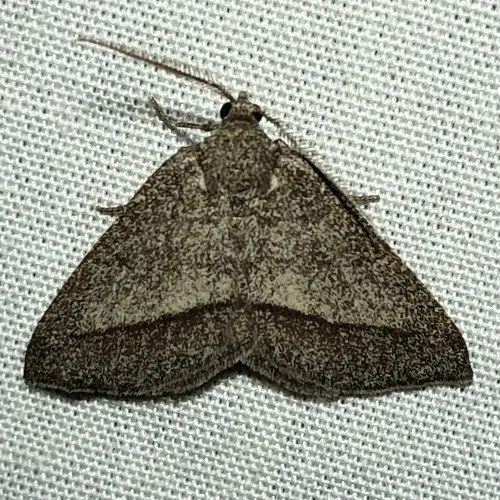
Speranza varadaria - Hodges#6314
Macaria varadaria
Identification: forewing with the apex being slightly pointed and are yellow-brown to gray-brown; the bold postmedial band is nearly straight or slightly concave and has strong dark shading below that fades away to a lighter reddish-brown color towar
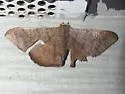
Sphacelodes vulneraria - Hodges#6800
Sphacelodes vulneraria
Identification: Dusky brown upperwings with a small obtuse yellow or orange triangle along the leading edge. Antenna are the same color as those triangles, contrasting strongly with the dark head and body. A single tiny white fleck near the leading e
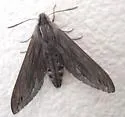
Sphinx sequoiae - Hodges#7814
Sphinx sequoiae
Identification: Description at Pacific Northwest Moths
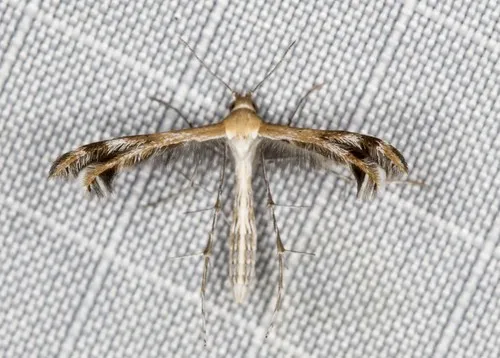
Spiderling Plume Moth
Megalorhipida leucodactylus
Megalorhipida leucodactyla is a species of moth of the Pterophoridae family that has a pantropical distribution.
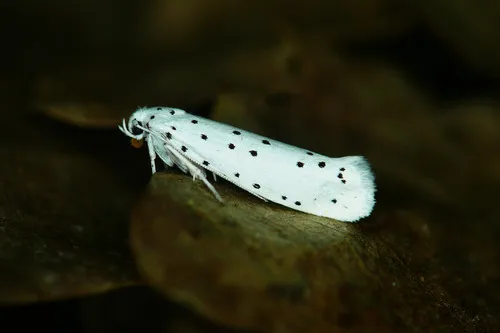
Spindle Ermine
Yponomeuta cagnagella
This is one of four Ermine moth species, namely Orchard Ermine (Yponomeuta padella), Apple Ermine (Yponomeuta malinellus), Spindle Ermine (Yponomeuta cagnagella) and Willow Ermine ( Yponomeuta rorrella ) which should now be recorded as Yponomeuta agg
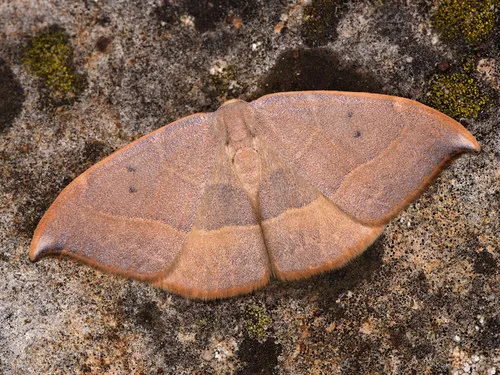
Spiny Hook-Tip
Watsonalla uncinula
Watsonalla uncinula, the Spiny Hook-tip, is a moth in the Drepanidae family. It is found in France, Spain, Portugal, Italy and the western and southern part of the Balkan Peninsula.
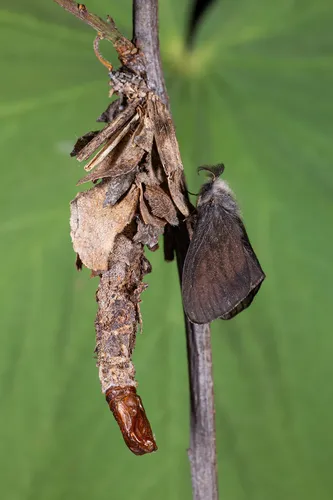
Spirit Moth
Canephora hirsuta
The hairy sweep (Canephora hirsuta) is a moth of the family Psychidae. It is found in Europe. The female has no wings.
Split-Lined Speranza - Hodges#6304
Macaria bitactata
Identification: Adult : Gray with bold, black transverse lines on FW. The four dark costal wedges typical of the genus, continue as AM, PM and median lines. The median line broadest and incorporating the discal spot. AM and PM line sometimes broken.
Spodolepis substriataria - Hodges#6799
Spodolepis substriataria
Identification: Adult: forewing light gray with black speckling, often with shades of brown along costa and apex; jagged AM and PM lines resemble a dog's head in profile, with the dark discal spot forming the eye; extent of dark markings, including t
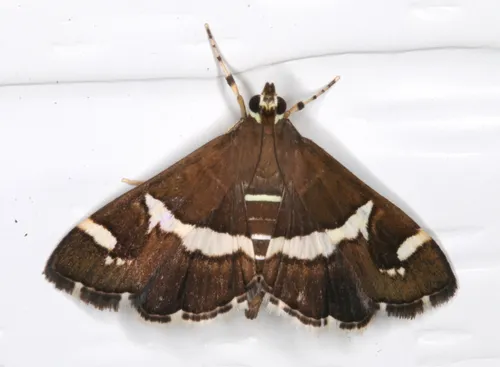
Spoladea recurvalis
Spoladea recurvalis
Wingspan approximately 23mm. An unmistakably marked brown and white moth. Because of the rarity of this species in our area a photograph is required to support your record. First recorded in the UK in 1951. It is associated with Maize, Beet and other
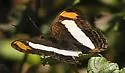
Spot-celled Sister - Hodges#4527.3
Adelpha basiloides
Identification: The white wing band on this species fades out just short of the leading edge of the forewing. There is usually one faded white "cell" just beyond the end of the continuous band; the second-to-last cell of the band tends to bulge outwa
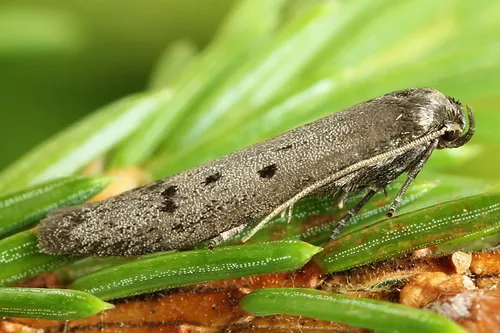
Spotted Dowd
Hypatopa binotella
Hypatopa binotella, the spotted dowd moth, is a moth in the family Blastobasidae. It is found in most of mainland Europe, except the Iberian Peninsula and most of the Balkan Peninsula. It was first recorded from Great Britain in 2006 where it is prob
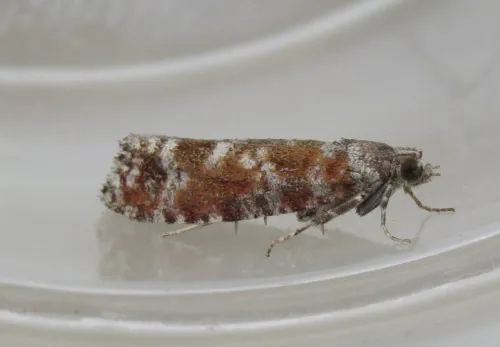
Spotted Shoot Moth
Rhyacionia pinivorana
The adults fly from May to July and are normally found at night when they are attracted to light. However, they do sometimes fly during the day. Like other members of the genus Rhyacionia, the foodplant of this species is Scots pine Pinus sylvestris,
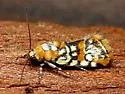
Spotted Spragueia - Hodges#9125
Spragueia guttata
Identification: Adult: forewing white to pale yellowish, crossed by thick curving lines as though drawn with a black felt marker, and giving the effect of having large hollow spots; dark orange patches in basal, median, and subterminal areas; fringe
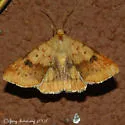
Spotted Straw Moth - Hodges#11073.1
Heliocheilus lupatus
This moth is expanding its range northward. In 1954 the moth was not known to occur north of the Carolinas. It's now common and widespread in southern New Jersey.
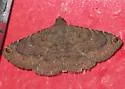
Spotted Toxonprucha - Hodges#8670
Toxonprucha pardalis
Identification: Adult - forewing dark brownish-gray with several darker wavy lines crossing wing; PM line heaviest, black, with small pale patch at costa; subterminal area with orangish shading; conspicuous dark oval spot at apex also contains some o
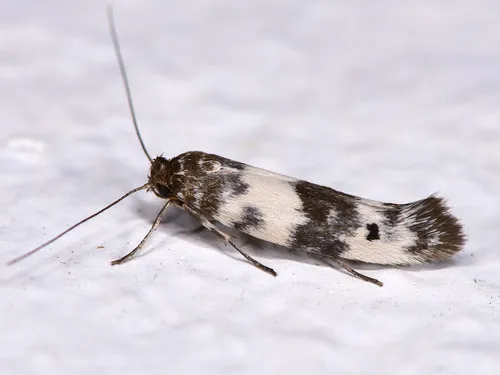
Spotted-seal enolmis moth
Enolmis acanthella
Enolmis acanthella is a moth of the family Scythrididae. It was described by Jean-Baptiste Godart in 1824. It is found in north-western Africa, Portugal, Spain, Italy and Switzerland. The species is spreading its distribution area. It was first sight
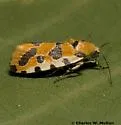
Spragueia cleta - Hodges#9123
Spragueia cleta
Identification: Description can be found at nearctica.com . The original description as Agrophila cleta Druce, is available online in the print references below. Abdomen is ringed with yellow-white bands. ( 4 )
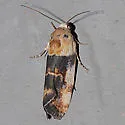
Spragueia obatra - Hodges#9130
Spragueia obatra
Identification: The original description as Tarache obatra Morrison, and other descriptions are available online in the print references below.
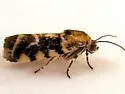
Spragueia perstructana - Hodges#9124
Spragueia perstructana
Spragueia perstructana - Hodges#9124 (Spragueia perstructana) is a species in the family Noctuidae, commonly known as owlet moths, belonging to the order Lepidoptera (Butterflies and Moths). It is classified within the subfamily Acontiinae, tribe Aco
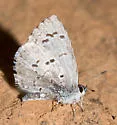
Spring Azure - Hodges#4363
Celastrina ladon
See updates by Schmidt & Layberry 2016 and Pavulaan 2014 .
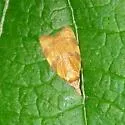
Spring Dead-leaf Roller - Hodges#3716
Cenopis diluticostana
Identification: Adult - see original description in Print References. Genitalia:
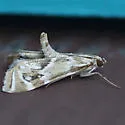
Spring Petrophila - Hodges#4781
Petrophila avernalis
Identification: Identified by the relatively uniform yellow-brown color of the FWs compared to most other Petrophila 's. Postbasal, median, preapical, and subterminal white lines are usually crisp and prominent but not straight; the median white lin
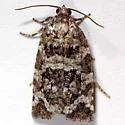
Spring Spruce Needle Moth - Hodges#3667
Archips packardiana
Identification: Adult - forewing with blotchy pattern of black and white (or pale gray) patches; pale areas have diffuse dark lines running through them; hindwing dark gray with white fringe.
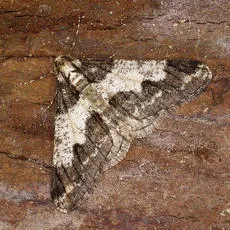
Spring Usher
Agriopis leucophaearia
Wingspan 23-28 mm. A very variable species, with males varying from almost black-and-white to a drab greyish and rather plain appearance. The females are wingless. Various habitats, particularly Oak woodland. The adults emerge in February and March s
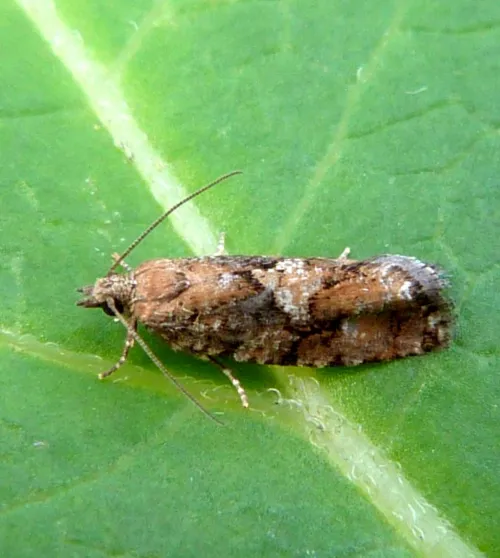
Spruce Bud Moth
Zeiraphera ratzeburgiana
Wingspan 12 to 15 mm. An attractive tawny and black marbled moth, named after J.T.C Ratzeburg, a German entomologist. The adults fly in July and August from sunset into the night. The larvae feed on the young shoots of various coniferous trees. It is
Spruce Bud Moth - Hodges#3240
Zeiraphera canadensis
Identification: Mutuura & Freeman description in PDF.
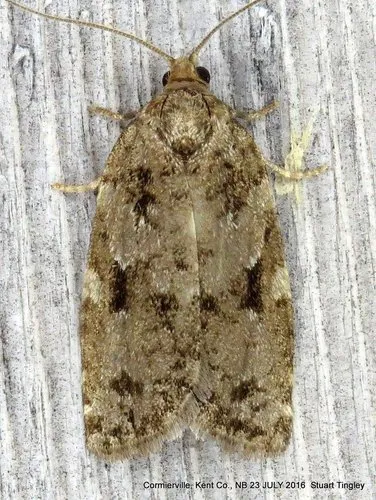
Spruce Budworm Moth
Choristoneura fumiferana
Choristoneura fumiferana, the eastern spruce budworm, is a species of moth of the Tortricidae family. It is also commonly referred to as the spruce budworm. It is one of the most destructive native insects in the northern spruce and fir forests of th
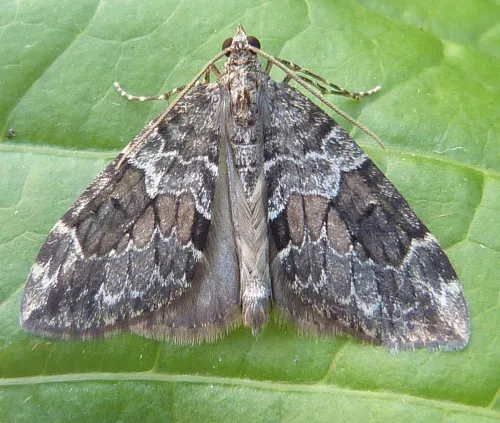
Spruce Carpet
Thera britannica
Wingspan 18-25 mm. Triangular in shape, though sometimes seen with wings raised together 'butterfly like'. Colouring is a mixture of greys, browns and buffs. Spruce Carpet is similar to the Pine Carpet and Grey Pine Carpet. Grey Pine Carpet and Spruc
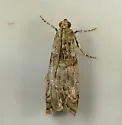
Spruce Coneworm - Hodges#5843
Dioryctria reniculelloides
Identification: Adult: forewing brownish-gray with black zigzag AM and PM lines, bordered by white; dull yellowish shading inside AM line at inner margin, and sometimes beyond PM line; irregular white discal spot in median area; lacks black blotch in
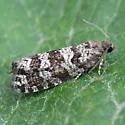
Spruce Needleminer Moth - Hodges#2745
Taniva albolineana
Identification: See Kearfott, 1907, in "Works Cited" below for original description Genitalia:
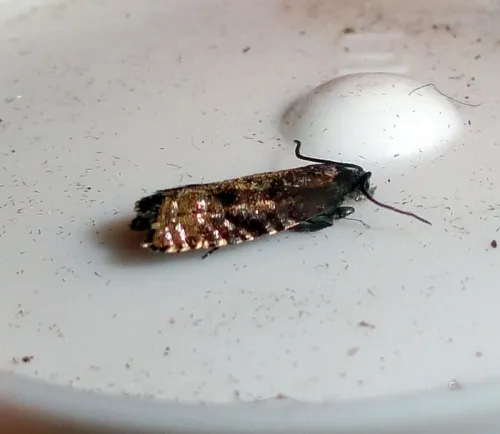
Spruce Seed Moth
Cydia strobilella
Wingspan 10 to15 mm. This is a quite well-marked species. The adults are found during May, flying in the afternoon in their chosen habitat (around Spruce), but they also come to light. The larvae feed in the cones of Norway Spruce (Picea abies), feed
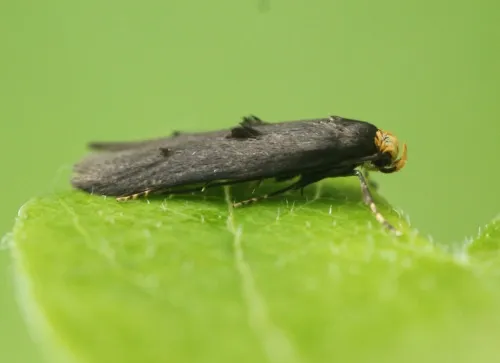
Spuleria flavicaput
Spuleria flavicaput
Wingspan around 13 mm. This charcoal-grey species has a distinct yellow head, giving rise to its scientific name flavicaput . There are two sets of raised scale-tufts on the forewings, which can sometimes be hard to see. Around hedges containing the
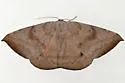
Spurge Spanworm Moth - Hodges#6967
Oxydia vesulia
Identification: forewing shape and markings reminiscent of Eutrapela species (e.g. Curve-toothed Geometer); sharply defined black spot near leading edge of hindwing is distinctive (in North America) This species can be distinguished from the other me
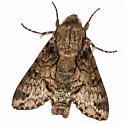
Spurious Sphinx Moth - Hodges#7868
Cautethia spuria
Identification: Hindwing is dark yellow-orange in the basal half and black on the outer half. Cautethia spuria is commonly parasitized by Belvosia sp. (Tachinidae).
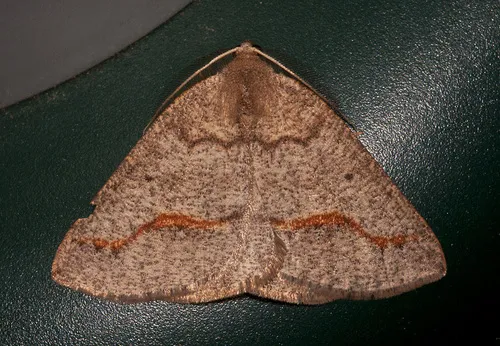
Spurred Wave - Hodges#6682
Drepanulatrix unicalcararia
Identification: Adult: forewing variably pale yellowish, brown, or gray with fine speckling and pointed apex; PM line yellow or orangish, slightly wavy, often broken in middle, sometimes bordered distally by black spots near upper and lower ends; AM
Square-patched Carpet - Hodges#7316
Perizoma basaliata
Identification: Adult: forewing variably boldly patterned (with large orangish bands bordering gray median band) to more uniformly colored grayish-brown with less distinct markings; subterminal area often has centrally-located pale whitish patch bord
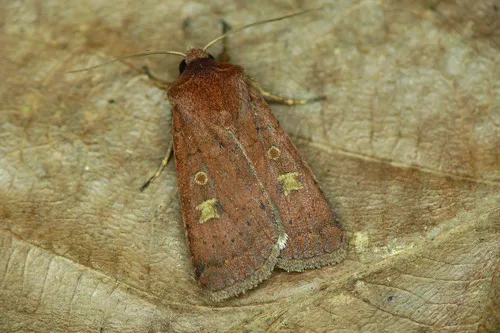
Square-spot Rustic
Xestia xanthographa
Wingspan 32-35 mm. A drab brown moth that gets its name from the square spot on each wing. Found in woodland edges, waste ground and suburban habitats. A frequent visitor to the light-trap, it flies in August and September. The nocturnal caterpillars

Square-spotted Brocade - Hodges#9410
Neoligia crytora
Identification: Apparently, this is the only species in this genus that has the two small dark boxes, just inside of the PM line. Common name "Square-spotted Brocade" is from iNaturalist , seems to be accepted widely.
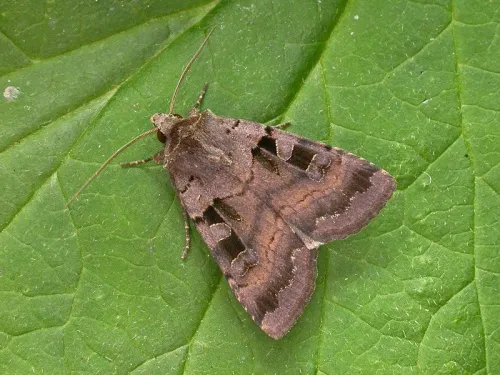
Square-spotted Clay
Xestia stigmatica
Inhabiting deciduous woodland with scattered undergrowth. The caterpillar has only recently been found in Britain for the first time in the wild. The actual foodplants are not yet fully understood, but are probably a variety of plants such as bramble
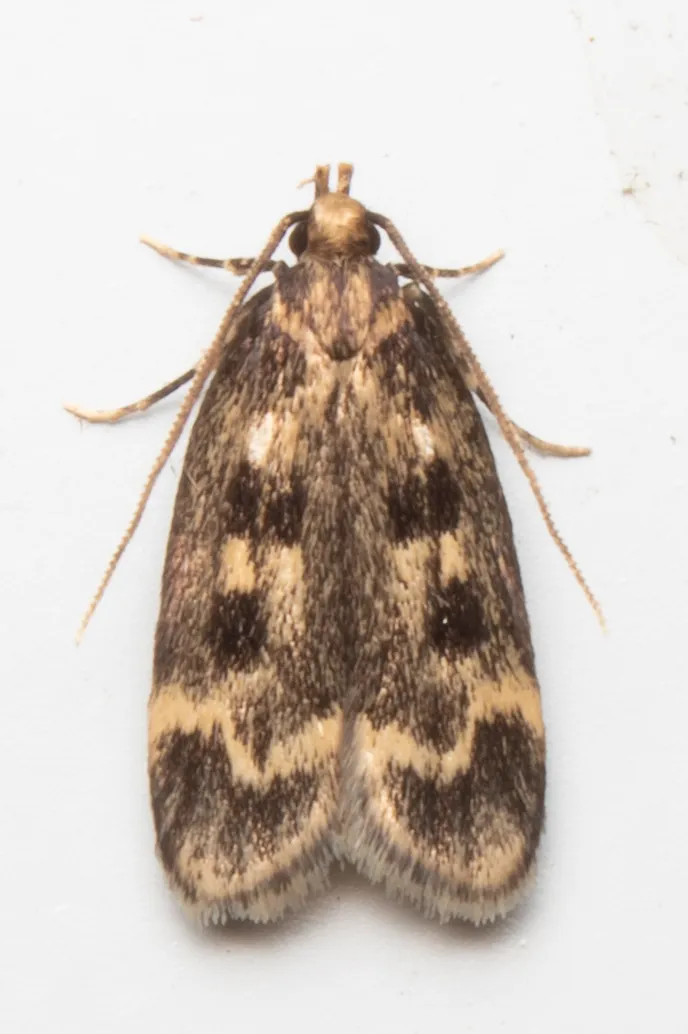
Square-spotted Martyringa Moth
Martyringa latipennis
Martyringa latipennis is a moth of the Lecithoceridae family. It is found in North America, where it has been recorded from Alabama, Arkansas, Georgia, Illinois, Indiana, Kentucky, Maine, Maryland, Massachusetts, New Hampshire, North Carolina, Ohio,
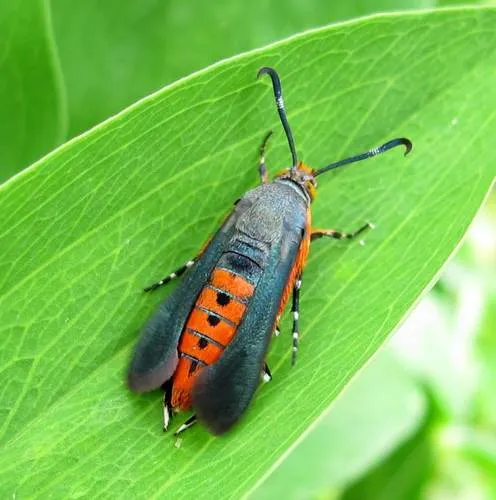
Squash Vine Borer
Eichlinia cucurbitae
The squash vine borer (Melittia cucurbitae) is a diurnal species of sesiid moth. The moth is often mistaken for a bee or wasp because of its movements, and the bright orange hind leg scales. The females typically lay their eggs at the base of leaf st
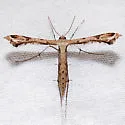
Sri Lanka Plume Moth - Hodges#6121.1
Stenoptilodes taprobanes
Identification: See the identification key for Platyptiliini . See the species accounts in Matthews et al. (2019b) , Gielis , and Lange .
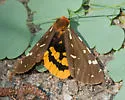
St. Lawrence Tiger Moth - Hodges#8162
Arctia parthenos
Identification: Adult: forewing brown with white or pale yellowish spots and bars (but not continuous lines); hindwing bright yellow with black PM band joined at one or more places to large black basal patch
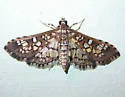
Stained-glass Moth - Hodges#5150
Samea castellalis
Identification: Adult: forewing grayish-brown with three groups of several white spots in AM, median, and PM areas; male has larger spots than female, and/or less extensive brown areas between spots, due to smaller wing; middle of fringe has dark gra
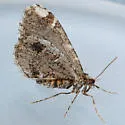
Stamnodes albiapicata - Hodges#7335
Stamnodes albiapicata
Identification: Specimen determined by DNA analysis (BOLD).
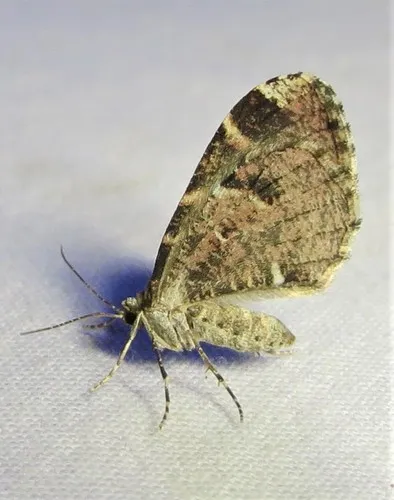
Stamnodes blackmorei - Hodges#7334
Stamnodes blackmorei
Identification: Swett original description is online.