
Sordid Dart - Hodges#10730
Euxoa adumbrata
This record describes Euxoa adumbrata (species). Recorded family: Noctuidae. Recorded order: Lepidoptera.
Identification and Appearance
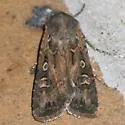
The sexes are dimorphic; females are dark blackish-brown and males red-brown. Females are essentially unmarked except for pale scales outlining the reniform and orbicular spots. Males are almost identical to red specimens of Euxoa ochrogaster , and to a lesser degree to Euxoa mimallonis . The male genital characters mentioned below will separate adumbrata from the others. Males of mimallonis also have shining white hindwings, not dirty white or sooty as in adumbrata . The male genital characters can be observed in most specimens without dissection. The Sordid Dart belongs to the Euxoa subgenus Chorizagrotis , characterized by long, apically spatulate saccular extension and short harpes in the male. The only other member of the subgenus in Alberta is E. auxiliaris , which can be separated by its shorter harpes (3 times as long as wide in auxiliaries versus 5 times as long as wide in adumbrata ). Females of Chorizagrotis may be separated from females of other Euxoa subgenera by their dorsoventrally flattened abdomen. Keys to the adults of the genus, subgenera and species are provided in Lafontaine, 1987. [text copied from U. of Alberta site]
Classification
- Kingdom
- Animalia
- Phylum
- Arthropoda
- Class
- Insecta
- Order
- Lepidoptera (Butterflies and Moths)
- Superfamily
- Noctuoidea
- Family
- Noctuidae (Owlet Moths)
- Subfamily
- Noctuinae
- Tribe
- Noctuini
- Genus
- Euxoa
Imported taxonomy record. Source availability varies; see the source references and editorial policy below.
Habitat and Range
Habitat
Grasslands, meadows, cultivated areas and other open areas. [text copied from U. of Alberta site]
Geographic Range
Holarctic. In North America adumbrata occurs across northern Canada from Quebec to western Alaska, south to the northern tier of states, and in the mountains to Colorado. [text copied from U. of Alberta site]
Seasonal Activity
adults fly from June to August in Alberta
Diet and Behavior
Life History
Adults are nocturnal and come to light. There is a single brood annually. [text copied from U. of Alberta site]
About Butterflies and Moths: the wider group
Order-level background for Lepidoptera, the group containing Euxoa adumbrata. Species-specific details appear above.
Group overview
Lepidoptera includes approximately 180,000 described species of butterflies and moths. Moths outnumber butterflies roughly 10:1. The monarch butterfly's eastern population has declined by more than 80% since the mid-1990s, and the western population by over 95% since the 1980s. The IUCN lists the migratory monarch as Vulnerable.
Ecological role of the group
Butterflies and moths are essential indicators of ecosystem health. As caterpillars, they are a primary food source for birds - a single nest of blue tit chicks requires ~10,000 caterpillars. Adult moths pollinate many night-blooming plants.
Economic and practical significance of the group
Lepidoptera are critical pollinators. In Europe, grassland butterfly species have declined by almost 50% since the early 1990s. In the UK, three-quarters of butterflies are in decline. In the U.S., five butterfly species have gone extinct since 1950, with 29 listed as endangered.
Recorded sources for this group: IUCN Red List, Xerces Society, USFWS, PNAS, WWF. Imported estimates may describe particular regions or reporting periods.
Photos of Sordid Dart - Hodges#10730 (3)
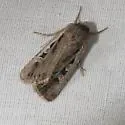
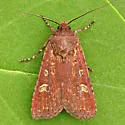
Photo credits: Contributed by Jason D. Roberts; Additional contributions by Robin McLeod , Steve Morris
Frequently Asked Questions About Sordid Dart - Hodges#10730
What is Sordid Dart - Hodges#10730?
Sordid Dart - Hodges#10730 (Euxoa adumbrata) is a species in the family Noctuidae, within the order Lepidoptera.
How big is Sordid Dart - Hodges#10730?
wingspan 34-40 mm
How do you identify Sordid Dart - Hodges#10730?
The sexes are dimorphic; females are dark blackish-brown and males red-brown. Females are essentially unmarked except for pale scales outlining the reniform and orbicular spots. Males are almost identical to red specimens of Euxoa ochrogaster , and to a lesser degree to Euxoa mimallonis . The male genital characters mentioned below will separate adumbrata from the others. Males of mimallonis also have shining white hindwings, not dirty white or sooty as in adumbrata . The male genital characters can be observed in most specimens without dissection. The Sordid Dart belongs to the Euxoa subgenus Chorizagrotis , characterized by long, apically spatulate saccular extension and short harpes in the male. The only other member of the subgenus in Alberta is E. auxiliaris , which can be separated by its shorter harpes (3 times as long as wide in auxiliaries versus 5 times as long as wide in adumbrata ). Females of Chorizagrotis may be separated from females of other Euxoa subgenera by their dorsoventrally flattened abdomen. Keys to the adults of the genus, subgenera and species are provided in Lafontaine, 1987. [text copied from U. of Alberta site]
Where is Sordid Dart - Hodges#10730 found?
| Feature | Details |
|---|---|
| Habitat | Grasslands, meadows, cultivated areas and other open areas. [text copied from U. of Alberta site] |
| Range | Holarctic. In North America adumbrata occurs across northern Canada from Quebec to western Alaska, south to the northern tier of states, and in the mountains to Colorado. [text copied from U. of Alberta site] |
When is Sordid Dart - Hodges#10730 active?
Sordid Dart - Hodges#10730: seasonal activity - adults fly from June to August in Alberta.
What is the life cycle of a Sordid Dart - Hodges#10730?
Adults are nocturnal and come to light. There is a single brood annually. [text copied from U. of Alberta site]