
Butterflies and Moths
Order Lepidoptera
The Butterflies and Moths (Order Lepidoptera) includes 11,813 species across 112 families and 2,787 genera in our directory.
About Butterflies and Moths
Lepidoptera includes approximately 180,000 described species of butterflies and moths. Moths outnumber butterflies roughly 10:1. The monarch butterfly's eastern population has declined by more than 80% since the mid-1990s, and the western population by over 95% since the 1980s. The IUCN lists the migratory monarch as Vulnerable.
Economic Impact
Lepidoptera are critical pollinators. In Europe, grassland butterfly species have declined by almost 50% since the early 1990s. In the UK, three-quarters of butterflies are in decline. In the U.S., five butterfly species have gone extinct since 1950, with 29 listed as endangered.
Ecological Role
Butterflies and moths are essential indicators of ecosystem health. As caterpillars, they are a primary food source for birds - a single nest of blue tit chicks requires ~10,000 caterpillars. Adult moths pollinate many night-blooming plants.
Families in Lepidoptera (112)
Species in Lepidoptera (11,813)
Sitochroa aureolalis - Hodges#4985
Sitochroa aureolalis
Identification: Hulst (1886) provided a brief original description. "The size and markings of E. chortalis Grote, but with the fore wings bright, smooth, deep golden yellow, and the hind wings yellow fuscous; beneath, with orbicular and reniform evid
Sitochroa dasconalis - Hodges#4986
Sitochroa dasconalis
Identification: Wings above with markings obsolescent; base of forewing costa orange-tinted . Not very common .
Sitochroa verticalis
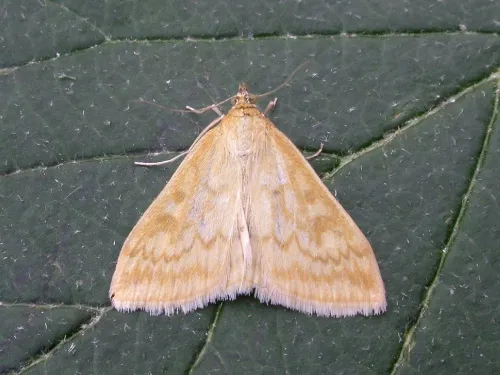
Sitochroa verticalis
Wingspan about 32 mm. It has a resemblance to Ostrinia nubilalis but has subtle differences in the forewing and a more strongly-marked underside. The adults fly in June and July. They are attracted to light, but are also readily disturbed by day. The
Six-belted Clearwing
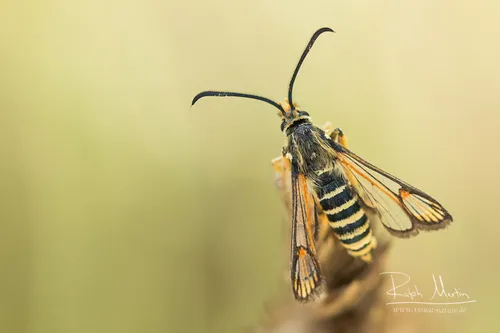
Bembecia ichneumoniformis
Wingspan 15 to 21 mm. It gets its name from the six yellowish bands on the abdomen and has mostly transparent wings, only edged in scales. When adding a record please state whether a pheromone lure was used. Inhabits various locations where the food
Six-spot Burnet
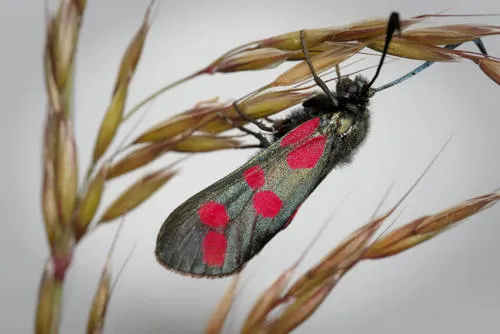
Zygaena filipendulae
Wingspan 30-38 mm. The only British Burnet with six red spots on forewing (red patch at base is divided by a vein and counts as two spots). Occupying meadows, woodland clearings and sea-cliffs. The larvae feed mainly on Bird's-foot Trefoil. This is t
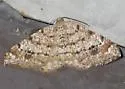
Six-spotted Angle - Hodges#6343
Macaria sexmaculata
Identification: Adult: amount of spotting varies: well-marked individuals have 3 lines running completely across the forewing, and the beginning of a 4th (subterminal) line at the costa; large dark blotch present in subterminal area halfway across wi
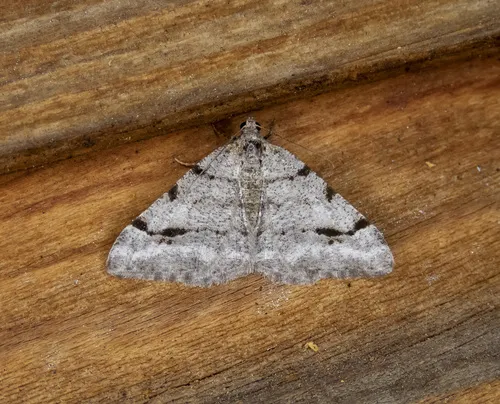
Six-spotted Digrammia - Hodges#6387.1
Digrammia sexpunctata
Identification: Forewings mostly plain gray with black marks on the costa at the locations of the AM, median, and PM lines. The PM line is often bold, black, and continuous about half-way down the FW , typically with at least an additional black smud
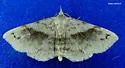
Six-spotted Gray - Hodges#8479
Spargaloma sexpunctata
Identification: forewing violet-gray with tiny black orbicular spot and three small black dots in a narrow triangle near apex; dark gray median band has sharp border proximally, diffuse border distally hindwing brownish-gray with two wavy bands media
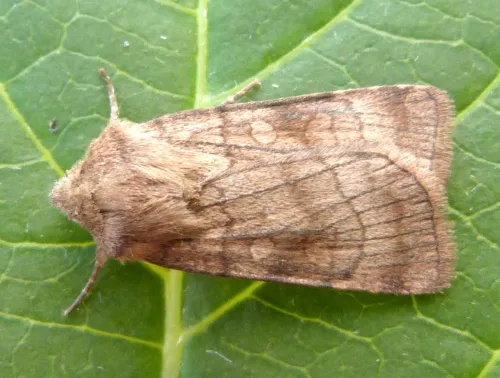
Six-striped Rustic
Xestia sexstrigata
Wingspan 36-38 mm. Characterised by the dark veins, fine, dark cross lines and the pale dark lined oval. Mainly damp woodlands and marshy habitats. The single generation flies in July and August, when the adults are attracted to both sugar and light.
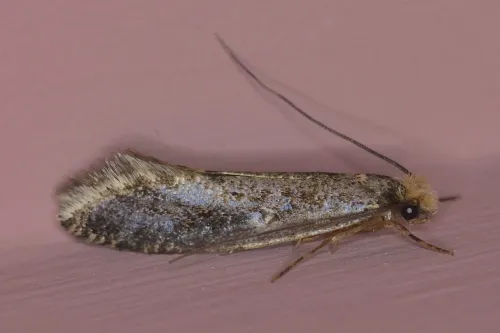
Skin Moth
Monopis laevigella
Wingspan 13 to 20 mm. A rather drab looking brown or blackish moth with mottled patterning on the wings. Various habitats and sometimes found near bird's nests. The adults can be found on the wing from dusk onwards from May through to September, and
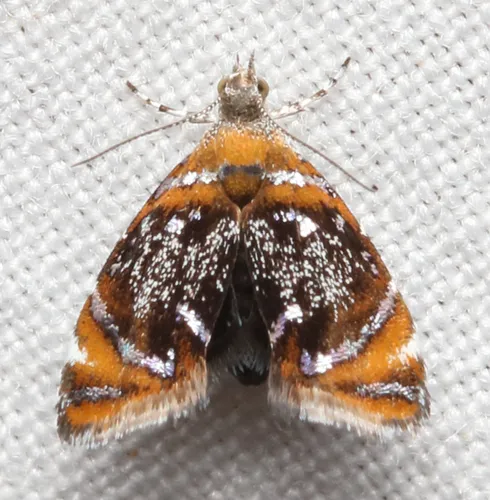
Skullcap Skeletonizer Moth
Prochoreutis inflatella
Prochoreutis inflatella, the skullcap skeletonizer moth, is a moth of the Choreutidae family. It is found in eastern North America.
Skunkback Monopis - Hodges#0416
Monopis dorsistrigella
Identification: Head: White to very pale yellow, long haired (scaled). Palpi yellowish, folded, underside dark brown. Brown around eyes. Antenna: Brown, smooth, thick; 2/3 as long as wing. Thorax: Sides (patagia) dark brown, center white to very pale
Slant-lined Owlet - Hodges#8357
Macrochilo absorptalis
Identification: ♂ ♀ Common. In eastern US, may be confused with Macrochilo hypocritalis (which doesn't occur in Canada)
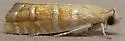
Slash Pine Seedworm Moth - Hodges#3488
Cydia anaranjada
Identification: The orange color distinguishes Cydia anaranjada from the others in the genus. The original description as Laspeyresia anaranjada Miller is available in the PDF.
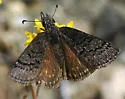
Sleepy Duskywing - Hodges#3946
Erynnis brizo
Identification: Forewings lack translucent spots. Compare Dreamy Duskywing, E. icelus. See Internet, print references.
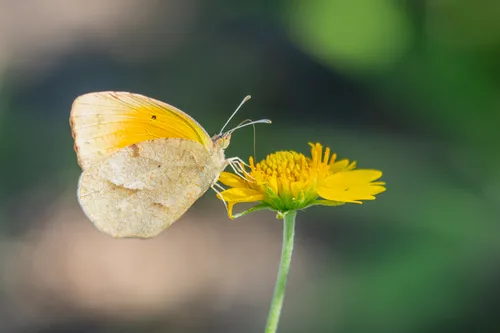
Sleepy Orange
Eurema nicippe
Eurema nicippe, the sleepy orange, is a North American butterfly in the family Pieridae. It is also found in the West Indies, Costa Rica and Belize.
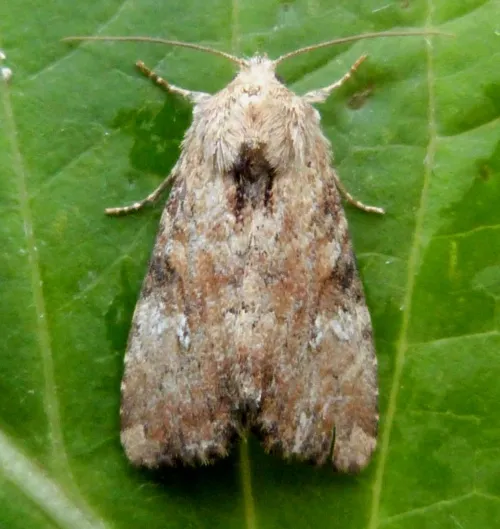
Slender Brindle
Apamea scolopacina
Wingspan 32 to 36 mm. A rather attractive species which does not tend to vary as much as its congeners. The larval foodplants are a range of woodland grasses, including Wood Millet and Wood-rushes. Locally distributed in the southern half of Britain,
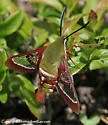
Slender Clearwing - Hodges#7854
Hemaris gracilis
diurnal, does not come to lights. Only found in small numbers even in the proper habitat
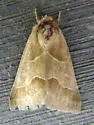
Slender Flower Moth - Hodges#11147
Schinia gracilenta
page creation based on Chuck Harp's identification of this image
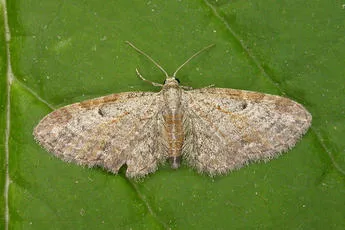
Slender Pug
Eupithecia tenuiata
Quite a small 'Pug'. with a wingspan of around 15mm. It occurs in woodland edges, meadows and marshes. Flies in as single generation in June and July. The larvae feed in early spring in the (usually male) catkins of willow. This species is widespread
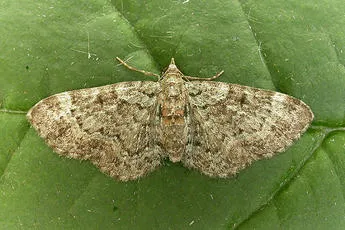
Sloe Pug
Pasiphila chloerata
Wingspan 17 to 19 mm. Very similar to the Green Pug but only faintly green and with a salmon pink belt near the base of the abdomen. Various habitats especially around hedges and copses containing Blackthorn. The distinctive caterpillar is pale green
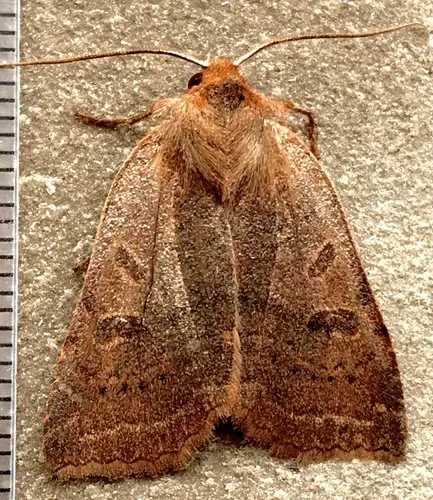
Sloping Sallow - Hodges#9946
Epiglaea decliva
Identification: Adult: forewing variably orangish to reddish-brown or purplish-brown; reniform and orbicular spots oblong, filled with slightly darker color, and with pale outline; orbicular spot on oblique angle; PM line either faint and evenly roun
Slosson's Metalmark Moth - Hodges#2653
Tortyra slossonia
Identification: Fernald original description is online in the print references. Heppner has detailed description in PDF.
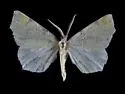
Slossonia rubrotincta - Hodges#6816
Slossonia rubrotincta
Identification: Hulst original description is online in the print references. Powell & Opler reported the adults always rest butterfly-style, with wings held high.
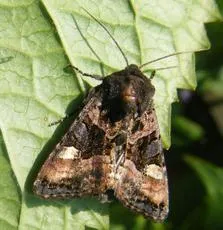
Small Angle Shades
Euplexia lucipara
Wingspan 27-32 mm. Has an attractive patterning of pinks, oranges and browns. Occupying woodland, parkland and suburban habitats. The adults fly in June and July, sometimes with a later generation in August and September. The species is readily attra
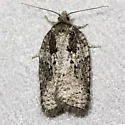
Small Aspen Leaftier - Hodges#3520
Acleris fuscana
Identification: Original description is online as Peronea fuscana Barnes & Busck.
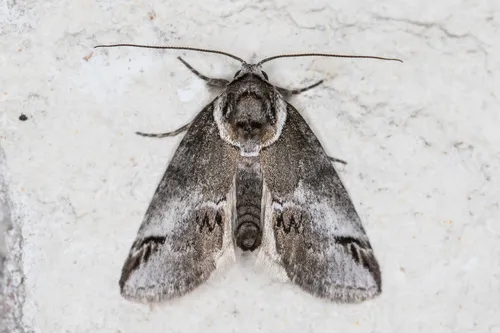
Small Baileya Moth
Baileya australis
Baileya australis, the small baileya moth, is a species of moth of the Nolidae family. It is found in North America, where it has been recorded from Quebec and New York to Florida, west to Texas, north to North Dakota and Ontario.
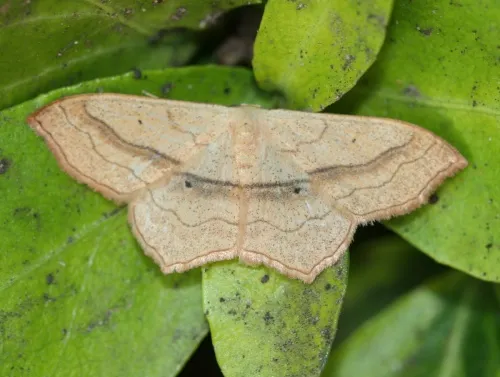
Small Blood-vein
Scopula imitaria
Wingspan 26-29 mm. Like the rather similar Blood-vein ( Timandra griseata ), this species has a cross-line which extends across all four wings when at rest, though the colour is generally less pink. Waste ground, hedgerows and coastal sand-dunes. The
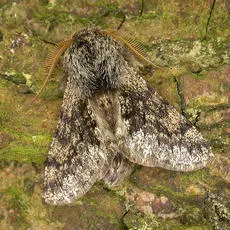
Small Brindled Beauty
Apocheima hispidaria
Wingspan 28 to 35 mm. The males of this species are quite variable, with some individuals having a darker central band, others more uniformly coloured. The females are wingless and generally brownish in colour. In the males, the small size and yellow
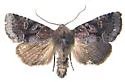
Small Brocade - Hodges#9416
Oligia minuscula
Identification: Adult: forewing grayish-brown with pale gray terminal band and another pale band outside AM line; typical form has black bar from claviform spot to PM line (absent in form "grahami"); reniform and orbicular spots dark with pale outlin
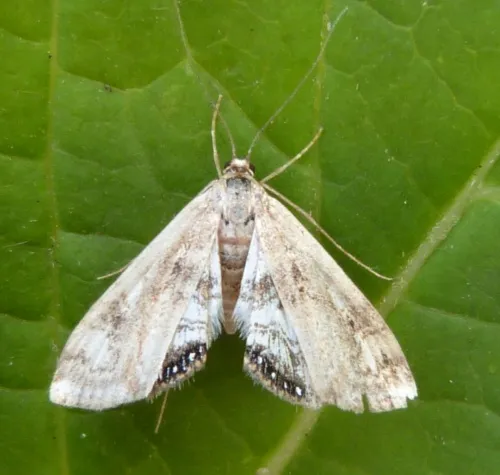
Small China-mark
Cataclysta lemnata
Wingspan 18-24 mm. The males of this species are slightly smaller and whiter than the females but both sexes have a distinctive row of blue-centred black dots on the hindwing. The adults are on the wing between June and August, when the females in pa
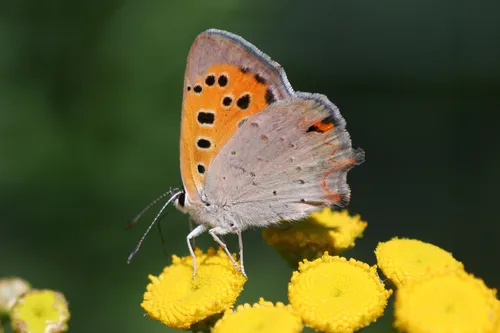
Small Copper
Lycaena phlaeas
The Small Copper is a small, fast flying butterfly that, once settled, is unmistakable with its bright copper-coloured forewings. This butterfly favours open land where nectar sources and food plant are found. Such habitats include grassland, wastela
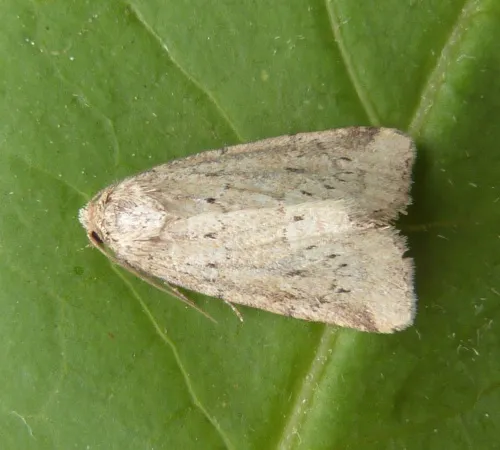
Small Dotted Buff
Photedes minima
Wingspan 20-23 mm. The females are smaller than the males and are more well-marked; the males are plain buffish with darker dots along the veins and often show a slight glossy sheen. Occupying marshy localities, damp woodland and similar habitats. Th
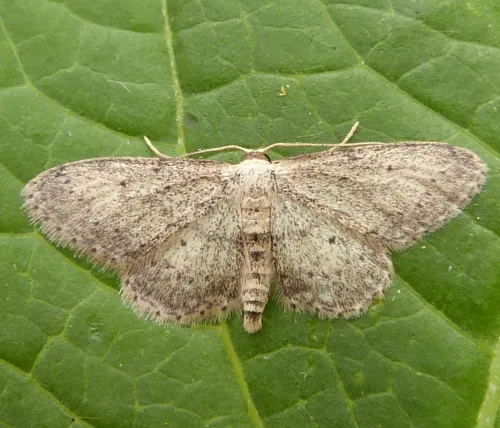
Small Dusty Wave
Idaea seriata
Wingspan 19-21 mm. A rather dull looking nondescript moth Found in woodland, gardens and wasteland. Commonly attracted to lit walls, windows, etc. In the south there are two generations: flying in June and July and again in August and September. Furt
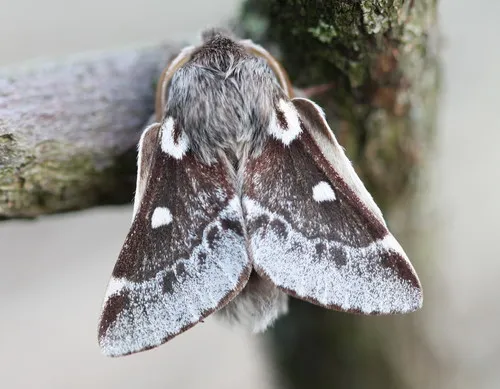
Small Eggar
Eriogaster lanestris
Eriogaster lanestris, commonly known as the small eggar, is a moth of the Lasiocampidae family that is found across the Palearctic. Unlike many other members of the Lasiocampidae family, the small eggar is a social insect. Historically, only eusocial
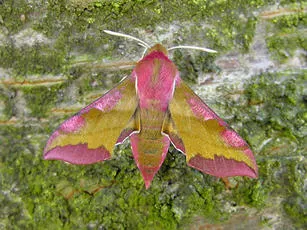
Small Elephant Hawk-moth
Deilephila porcellus
Wingspan 40 to 45 mm. Slightly smaller but even more brightly-coloured than its cousin the Elephant Hawk-moth ( D. elpenor ). It prefers chalky districts and dry grassy localities but is found in a range of habitats. The larvae, which are similar to
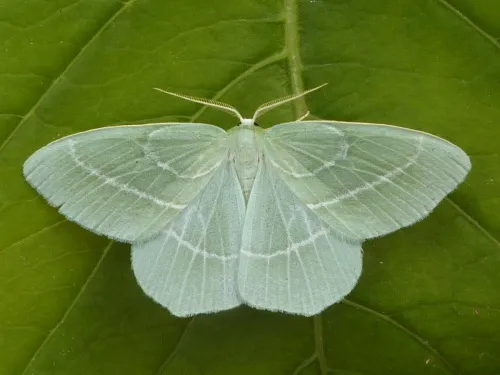
Small Emerald
Hemistola chrysoprasaria
Wingspan 28-32 mm. A distinctive moth. It has emerald green wings that are crossed with white lines. The green wing colour often fades in more mature specimens. Inhabits woodland edges and hedgerows mainly on chalk downs and limestone where the foodp
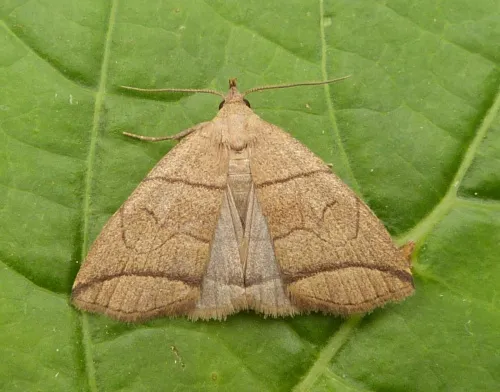
Small Fan-foot
Herminia grisealis
Wingspan 24-28 mm. This, the smallest of the Fan-foot group, is similar in pattern to the Fan-foot ( Herminia tarsipennalis ) but the dark subterminal line curves toward the wingtip, whereas in the latter species it is straighter. Flies from June to
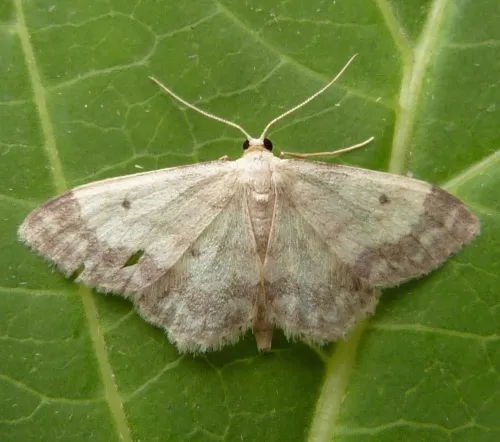
Small Fan-footed Wave
Idaea biselata
Wingspan 15-20 mm. The intensity of the markings varies and one regular dark form has been named fimbriolata . Woodland, plantations, heaths and gardens. Flies from evening onwards between June and August. The larvae feed from August through the wint
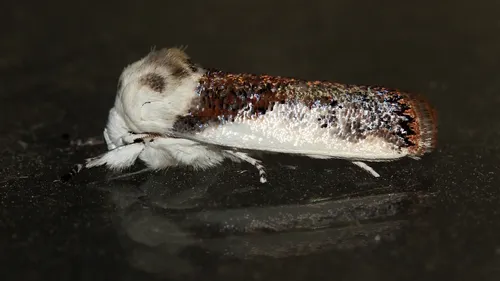
Small Fruit Tree Borer
Cryptophasa albacosta
Cryptophasa albacosta, the small fruit tree borer, is a moth in the Xyloryctidae family. It was described by Lewin in 1805. It is found in Australia, where it has been recorded from New South Wales, Queensland, South Australia, Tasmania and Victoria.
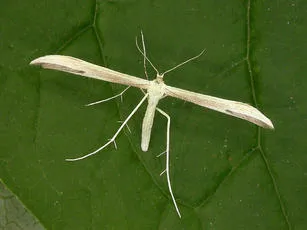
Small Goldenrod Plume
Hellinsia osteodactylus
Wingspan 16 to 23 mm. A very pale species with a slight brown costal dash and a dark spot at the base of the wing. It inhabits open woodland areas, and some coastal habitats. The adults fly from dusk in July, and come to light. The larvae feed on the
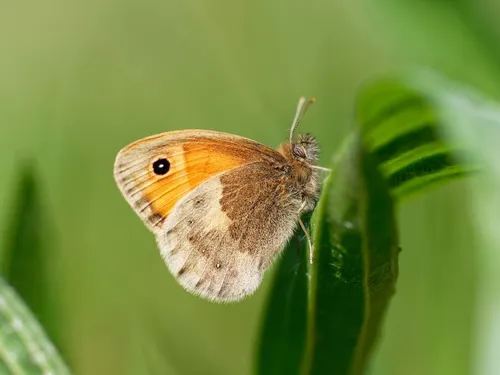
Small Heath
Coenonympha pamphilus
This is the smallest of our 'browns' and is closer in size to a skipper, or Common Blue than its relatives, such as the Meadow Brown. However, its fluttering flight is quite different from that of the skippers and blues and is relatively easy to iden
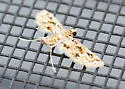
Small Leafcutter Moth - Hodges#4765
Parapoynx diminutalis
Introduced species endemic to southeast Asia, Australia. "Looks like it arrived on it's own at least by 1976, not a planned introduction. Note the larva has 7 instars (as opposed to a more normal 5)." Bob P.
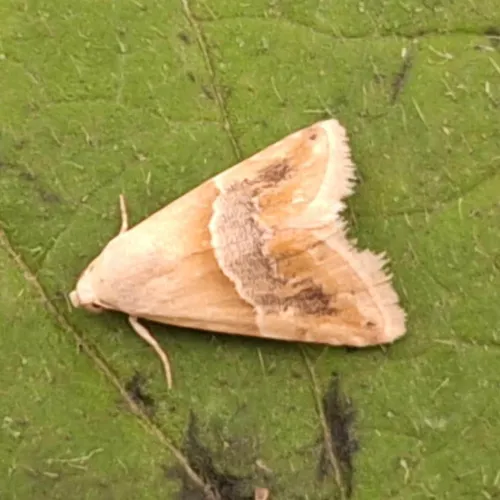
Small Marbled
Eublemma parva
Another migrant species which occasionally arrives along with the Purple Marbled in June and July, mostly in the south of England. Larvae are sometimes found in immigration years, these feeding on Common Fleabane and Ploughman's-spikenard. Occasional
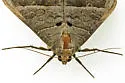
Small Mocis - Hodges#8743
Mocis latipes
Identification: Adult: forewing yellowish-brown variably shaded with darker brown; female usually more yellowish to reddish than male; AM and PM lines nearly straight; look for round subreniform spot, outlined in black, just below reniform spot; some
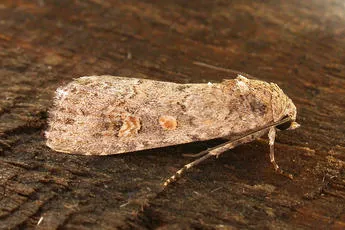
Small Mottled Willow
Spodoptera exigua
Wingspan 26 to 32 mm. It can resemble some other species, but holds its wings rolled around the body when at rest. Arrivals have been noted in most months from February to November, but the peak arrival period is from August to October. The caterpill
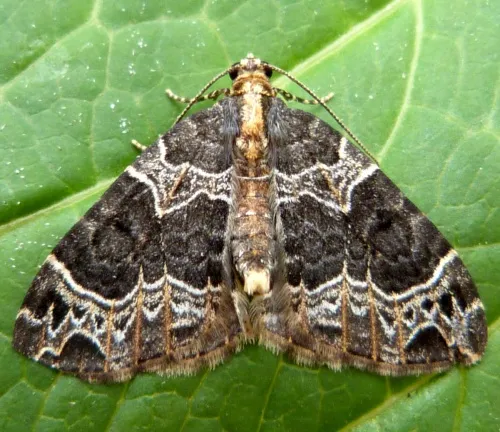
Small Phoenix
Ecliptopera silaceata
Wingspan 23-27 mm. There are two main forms - one where the dark central band across the forewing is broken by two brown and white lines on wing veins and then a typical form in which the band is unbroken. Both have a distinctive series of dark wedge
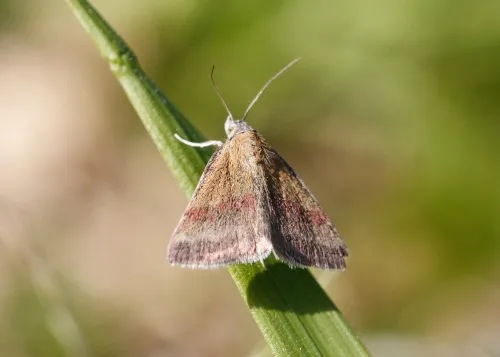
Small Purple-barred
Phytometra viridaria
Wingspan 19 to 20 mm. An attractive species with broad pinky-purple bars on the wings It frequents acid heathland, chalky downland and open woodland. A mainly diurnal species, flying in May to July, it also flies after dark, when it is attracted to l
Small Purplish Gray - Hodges#6584
Iridopsis humaria
Identification: Adult : Resembles Large Purplish Gray except smaller, with a more rounded FW. Indistinct median line merges with PM near inner margin.
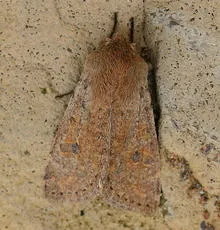
Small Quaker
Orthosia cruda
Wingspan 25-30 mm. Distinguished from other early Noctuids by its small size, usually light colour and plain appearance of forewing which has a rough appearance caused by a dusting of black scales. Deciduous woodland and areas with scattered trees. T
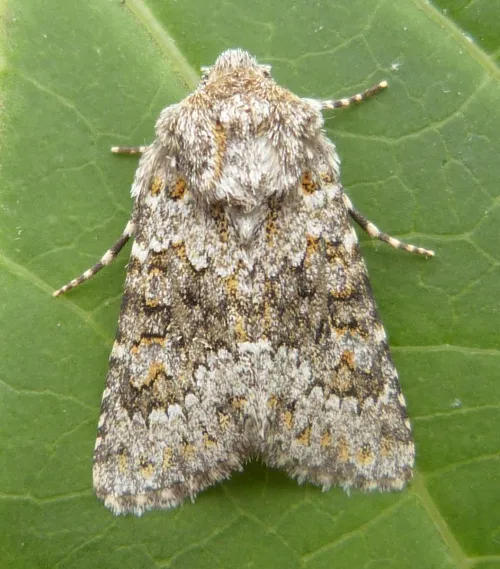
Small Ranunculus
Hecatera dysodea
Wingspan 32-34 mm. Forewing greenish-grey with occasional orange and gold spots, including a row near the outer edge. Rough open ground and gardens and roadside verges. The adults fly mainly in June and July and are occasionally attracted to light. T
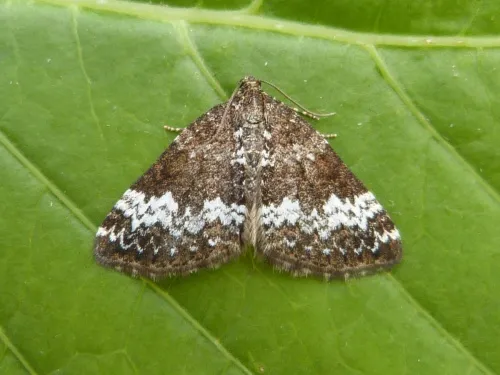
Small Rivulet
Perizoma alchemillata
Wingspan 14-18 mm. Rather similar in appearance to The Rivulet ( P. affiniata ), it can usually be distinguished by the double indentation on the white band of the forewing which is normally single in affiniata . It is also generally slightly smaller
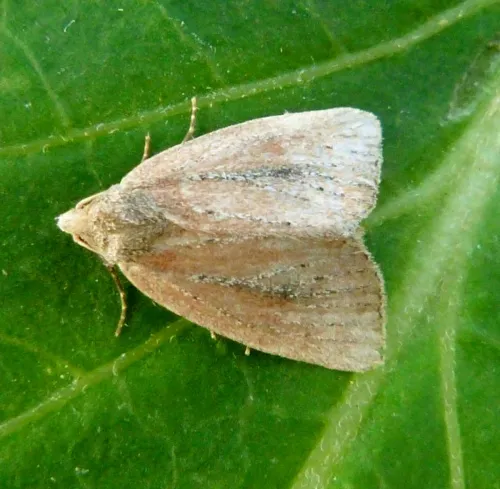
Small Rufous
Coenobia rufa
Wingspan 22 to 25 mm. A small plain looking rufous coloured moth with quite a pointed shaped head which seems to be rather tucked downwards. The species occupies fens, marshes and bogs. Only occasionally attracted to light, the flight period is July
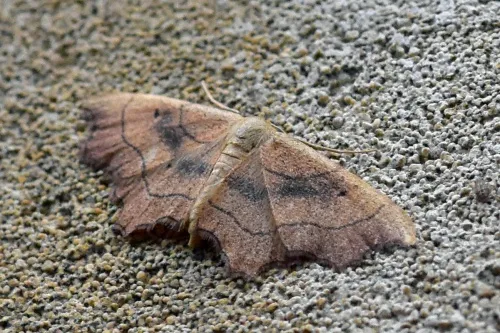
Small Scallop
Idaea emarginata
Wingspan 22 to 25 mm. This is a fairly distinctive moth. A good photograph is generally required to support your record. Occupying damp deciduous woodland, meadows and marshes. It flies between June and August after dark, when it can be attracted to
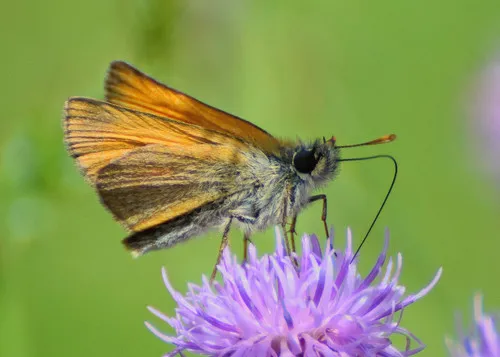
Small Skipper
Thymelicus sylvestris
This 'golden' Skipper is often found basking on vegetation, or making short buzzing flights among tall grass stems. Despite its name, the are four skipper species found in the British Isles that are either the same size or smaller than the Small Skip
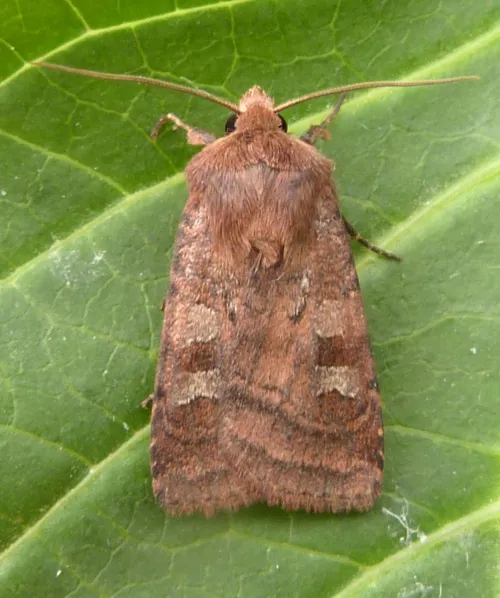
Small Square-spot
Diarsia rubi
Wingspan 28-33 mm. Usually a rich red shade of brown with the small back dot usually very noticeable Occurring in any suitable habitat but perhaps preferring damp and marshy places. South of Scotland, it is double-brooded, flying in May and June and
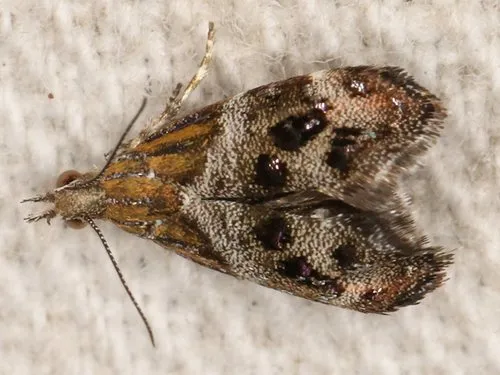
Small Thistle Moth
Tebenna micalis
Tebenna micalis, the small thistle moth, is a species of moth of the Choreutidae family. It is found nearly worldwide although in Europe it is found south of the line Ireland, Great Britain, France and Slovakia. In Britain it is an immigrant that occ
Small Tolype - Hodges#7674
Tolype notialis
Identification: Adult: wide dark band on hindwing is wavy, almost interrupted, compared to uniform band of Large Tolype. Forewing subterminal band also wavy, with alternating pinched and expanded sections. Small Tolype coloration is variable, but oft
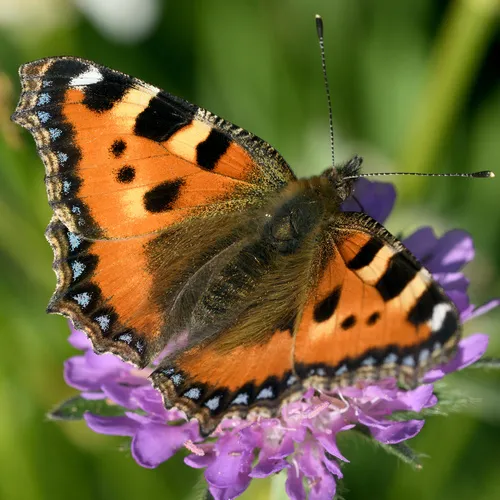
Small Tortoiseshell
Aglais urticae
A familiar butterfly with orange-brown wings that are marked with blues and darker browns. The orange upper sides of the wings provide a contrast with the drab undersides. This butterfly can turn up almost anywhere, from city centres to mountaintops.
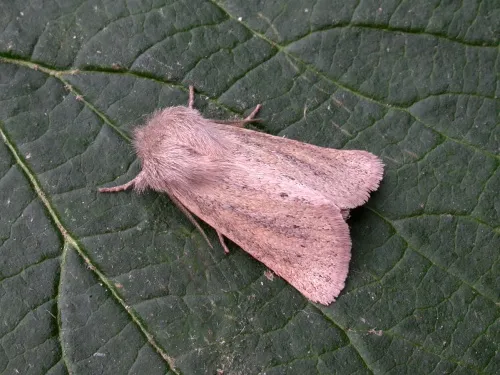
Small Wainscot
Denticucullus pygmina
Wingspan 23 to 29 mm. This species varies somewhat in ground colour, with specimens ranging from pale buff to deep reddish-brown. Found in marshy areas, wet heathland and other damp localities. The larvae feed internally in the stems of sedges. Fairl
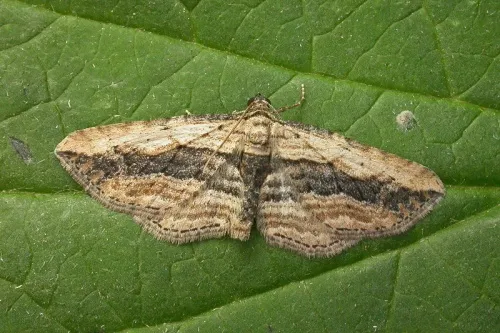
Small Waved Umber
Horisme vitalbata
Inhabiting woodland margins, hedgerows and chalk downs where Travellers-joy is present. There are two generations of this moth during the year, flying in May and June and again in August. The larval foodplant is Traveller's-joy. It is distributed ma
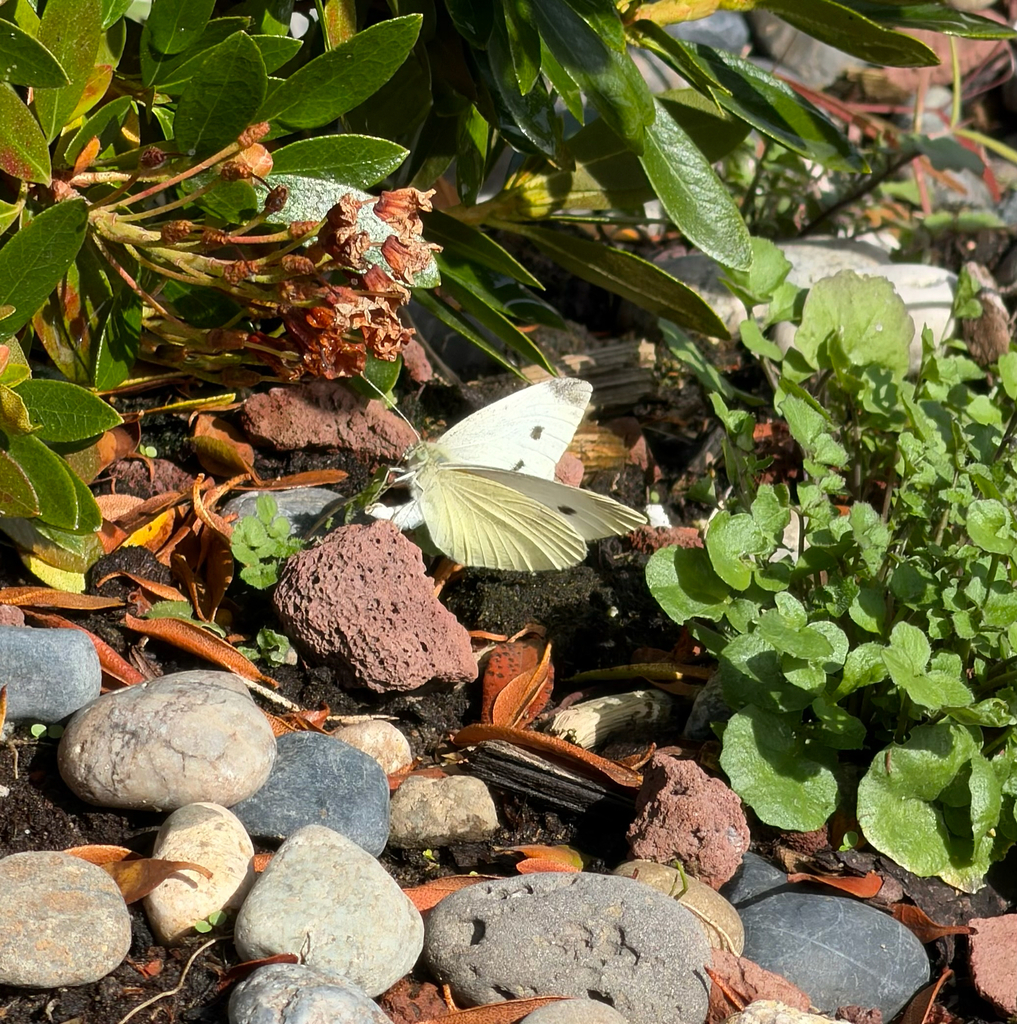
Small White
Pieris rapae
no rights reservedThis species and its larger cousin, the Large White, are often referred to as Cabbage Whites, though the Small White causes less damage to crops. There is a black tip to each wing plus one or two black dots. The underside is often more creamy white.
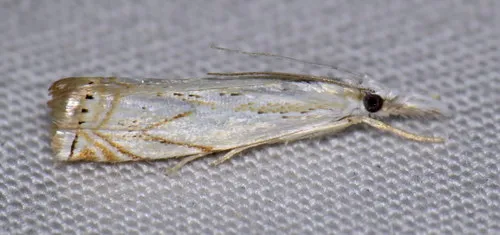
Small White Grass-veneer - Hodges#5361
Crambus albellus
Identification: Adult: forewing white with sharply-pointed V-shaped PM line in strongly-marked specimens (otherwise faint or undetectable); ST line double, brownish-yellow, parallel to outer margin in lower two-thirds of wing, then bending basally an
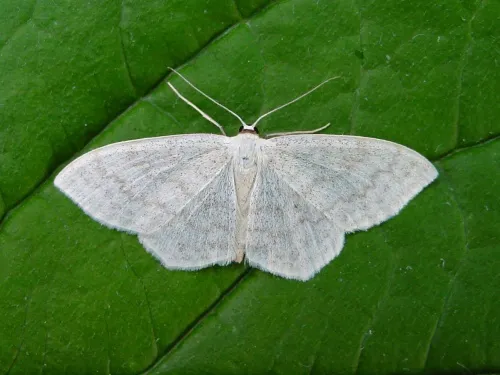
Small White Wave
Asthena albulata
Wingspan 14 to18 mm. A delicate little moth which has a silky sheen to the wings, and is more contrastingly marked than other white 'waves'. The adults fly from mid-May to July, sometimes with a partial second brood in August/September. The caterpill
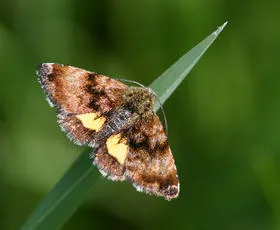
Small Yellow Underwing
Panemeria tenebrata
Wingspan 19-22 mm. It has a dark chestnut brown forewing dusted with grey and the typical yellow and dark banded hindwing Frequents meadows, grassy downland and other open areas. A day-flying species which prefers sunny weather. On the wing in May an
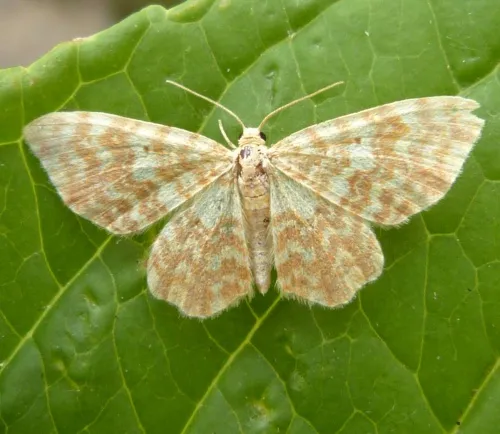
Small Yellow Wave
Hydrelia flammeolaria
Wingspan 14-20 mm. A diminutive but rather attractive moth with an orangey-yellow patterned wings The single brood flies in June and July and is often attracted to light. The larvae feed on Field Maple but in the north more commonly on Alder. This sp
Smartweed Borer - Hodges#4947
Ostrinia obumbratalis
Identification: Specimen identified by DNA analysis: Genitalia:
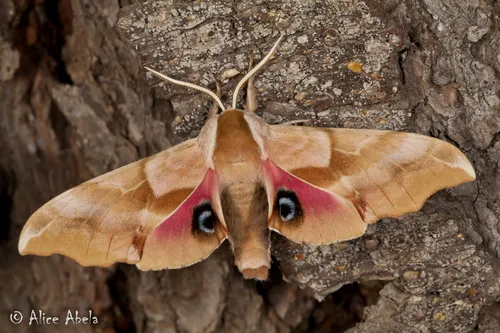
Smerinthus ophthalmica - Hodges#7822.1
Smerinthus ophthalmica
Identification: Adult : Very similar to Smerinthus cerisyi , except males of S. ophthalmica have narrower antennal pectinations, smoother FW outer margin, more sharply angled AM, smoother PM, less contrasting paler veins, and a less conspicuous ST.
Smith's Darkwing Moth - Hodges#8726
Gondysia smithii
Identification: Genitalia: ♀ ♂ Unless you have evidence of rearing, dissection or a DNA test, the images of moths in these two species should be placed ----> here Larvae:
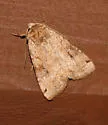
Smith's Dart - Hodges#10944
Xestia smithii
Identification: forewing varies from pinkish to reddish or grayish-brown, with slightly darker shading in median area and beyond PM line; small black blotch on costa near apex is sharpest dark marking; lines double, grayish, faint hindwing grayish-br
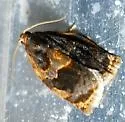
Smoked Leafroller - Hodges#3659
Archips infumatana
Identification: Adult - forewing brown with large blackish patch in median area, and smaller patches in basal and subterminal areas; hindwing grayish-brown, paler toward base.
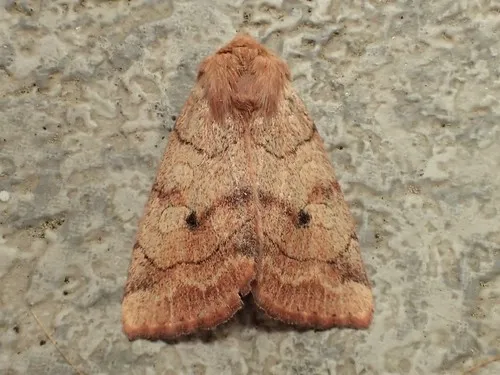
Smoked Sallow - Hodges#9550
Enargia infumata
Identification: Adult: forewing yellowish with light reddish-brown speckling; AM and PM lines brown, distinct; AM line with sharp angle in middle; orbicular and reniform spots solid yellowish; dark brown or black spot at lower end of reniform spot; b
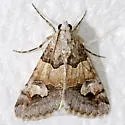
Smoky Arches - Hodges#8629
Drasteria fumosa
Identification: Adult: forewing basal and PM areas dark gray to blackish; PM line highly convoluted, merging with outer edge of large reniform spot, as in other Drasteria species; subterminal area lighter gray; median area variably light grayish-brow
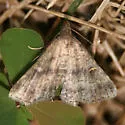
Smoky Tetanolita - Hodges#8366
Tetanolita mynesalis
Identification: Large yellow reniform spot contrasts with the dark forewing. Hindwing is grayish brown with dark lines. Genitalia: ♂
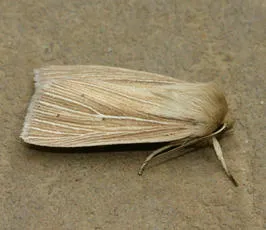
Smoky Wainscot
Mythimna impura
Wingspan 31-38 mm. Named after the dusky or smoky suffusion on the hindwing. Downland, sand dunes and rough grassy areas. It flies from June to August, sometimes later in the south as a partial second brood. The larval foodplants are mainly grasses.
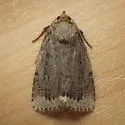
Smooth Amphipyra - Hodges#9640
Amphipyra glabella
Identification: Adult: forewing varies from medium to dark gray (and shiny under certain light) with orbicular and reniform spots reduced to dark dots; PM line curved, with large convex sinus below reniform spot; ST line straight, composed of dark gr
Smudged Hairstreak - Hodges#4617.1
Rekoa stagira
Melinaea lilis (Doubleday, 1847), reported from Hidalgo County, TX 12/20/2008, 2008 Season Summary, News Lepid. Soc., 51(S1):78, is not recognized universally as part of the North American fauna north of Mexico. The Hildalgo Co. record may be part of
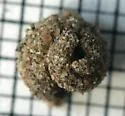
Snailcase bagworm - Hodges#0438.1
Apterona helicoidella
Introduced from Europe in the 1940s. Apterona helix (Siebold, 1850), referred to as Apterona crenulella (Bruand, 1853) by some authors, has been the name applied to North American specimens of this species. This is treated as a parthenogenetic form o
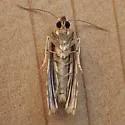
Snakeweed Borer - Hodges#3014
Pelochrista ridingsana
Identification: Robinson (1869) original description as Conchylis ridingsana is online and linked in the print references.
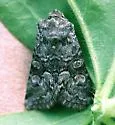
Snaky Arches - Hodges#10372
Lacinipolia anguina
Identification: Adult: forewing pale gray with darker gray median shading; lines and spots black; black dash near anal angle usually broken by pale gray or white ST line; inner half of reniform spot filled with reddish-brown; PM line with large arc n
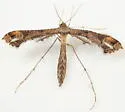
Snapdragon Plume Moth - Hodges#6123
Stenoptilodes antirrhina
Identification: See identification key for Platyptiliini .
Snout-bean Plume Moth - Hodges#6099.2
Exelastis rhynchosiae
Identification: See Exelastis for identification information.
Snow's Owlet - Hodges#8497
Isogona snowi
Identification: Adult: forewing light brown with sparse dark speckling and V-shaped AM, median, and PM lines; lower portion of PM line irregular or zigzagged; two pale spots in center of median area; slightly darker wedge-shaped area extends from med
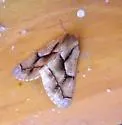
Snowia montanaria - Hodges#6875
Snowia montanaria
Identification: Distinctive bold dark AM and PM lines.
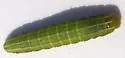
Snowy Dart - Hodges#10903
Anicla illapsa
Identification: Adult: forewing light gray to reddish-brown with black speckling; dark shading beyond PM line, especially near costa; reniform spot blackish, often broken into 2 or 3 parts; lines darkest at costa; hindwing white with some gray at ape
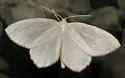
Snowy Geometer - Hodges#6965
Eugonobapta nivosaria
Identification: forewing and hindwing completely white (black discal dot sometimes present on underside of all wings, may show through faintly to upperside); hindwing somewhat diamond-shaped, the distal edge curving outward to a shallow point
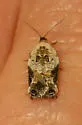
Snowy-shouldered Acleris - Hodges#3510
Acleris nivisellana
Identification: Adult: forewing white with large blackish semicircular patch mid-way along costa; diffuse irregular patches of light gray mixed with brown in median area and along inner margin; dark spot near inner margin in AM area; subterminal area
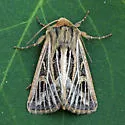
Snowy-veined Apamea - Hodges#9374
Apamea niveivenosa
Identification: Adult: forewing dark gray with conspicuous white veins and some pale shading along costa, along inner margin, and in subterminal area; hindwing brownish-gray, shading to dirty white basally, with pale veins, dark discal dot, and pale
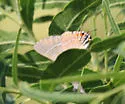
Soapberry Hairstreak - Hodges#4274
Phaeostrymon alcestis
Identification: Predominantly gray in color (females are brownish above), with tails. Very similar (in appearance and behavior) to some Satyrium species, but on underside white bar at end of discal cell is distinct on all four wings (often dark edge
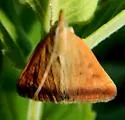
Sociable Pyrausta Moth - Hodges#5075
Pyrausta socialis
Identification: Forewings are reddish to pinkish brown with a purplish tinge. prominent dark subterminal band
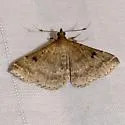
Sociable Renia - Hodges#8379
Renia factiosalis
Identification: Refer to the guide on the info page for the genus.
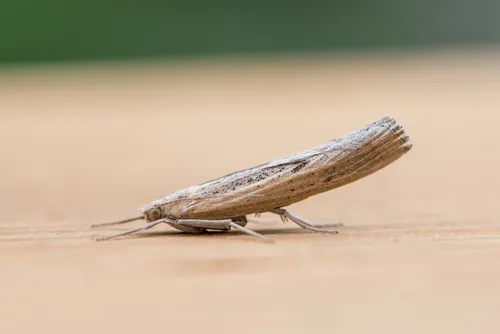
Sod Webworm - Hodges#5413
Pediasia trisecta
Identification: Adult: forewing variably brown to pale yellowish-orange, lighter grayish in lower half (along inner margin); surface sprinkled with dark brown scales; dark gray line from base to middle of wing, plus small dark patch closer to outer m
Soft-lined Wave - Hodges#7169
Scopula inductata
Identification: wings light yellowish-gray, crossed by several gray wavy lines; outer edges of wings rounded; a black dot is present near the middle of each wing
Soldier - Hodges#4616
Danaus eresimus
Identification: Dorsal, very similar to the Queen , with slightly darker veins. Male has a black dot on each HW. Ventral, black veins on both FW and HW, Queen only has black veins on HW. Soldiers are the only one in the genus that has pale squarish s
Solidago Pelochrista - Hodges#3142
Pelochrista cataclystiana
Identification: Adult: forewing mostly orangish-brown with short pale oblique streaks along costa, and pale whitish T or Y shape projecting from outer margin into subterminal area near anal angle; hindwing pale gray.
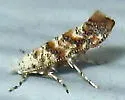
Solitary Oak Leafminer - Hodges#0823
Cameraria hamadryadella
Identification: Larva - early instars are flat and tapered to the rear. Later instars are cylindrical and orange-brown. See photo at Moth Photographers Group. ,
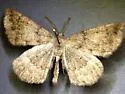
Somatolophia haydenata - Hodges#6947
Somatolophia haydenata
Identification: "Head, thorax, and abdomen similar to those of pallescens ; antennae with from 49 to 51 segments, terminal 12 to 14 simple, longest pectinations 1.5 to 1.6mm. in length" . Genitalia:
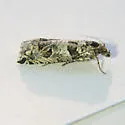
Sonia vovana - Hodges#3220
Sonia vovana
Identification: Kearfott original description is available in Print References. Busck description as Hendecaneura fraternana is available online in the Print References. ID confirmed by Chuck Harp.
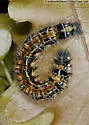
Sonoran Tent Caterpillar - Hodges#7700
Malacosoma tigris
Identification: M. texana Beut. [syn. of M. tigris ](80 a) was described as a form of disstria , but does not have its habitus. Maybe clay-yellowish, dark sprinkled; Lines brown, clear means without bright borders. I only have ♂♂; I think it is a goo
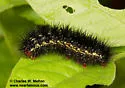
Sonorarctia fervida - Hodges#8158.1
Sonorarctia fervida
Identification: ID confirmed by Ray Nagle who has reared the larva.