
South Texas Satyr - Hodges#4574
Hermeuptychia hermybius
This record describes Hermeuptychia hermybius (species). Recorded family: Nymphalidae. Recorded order: Lepidoptera.
Identification and Appearance
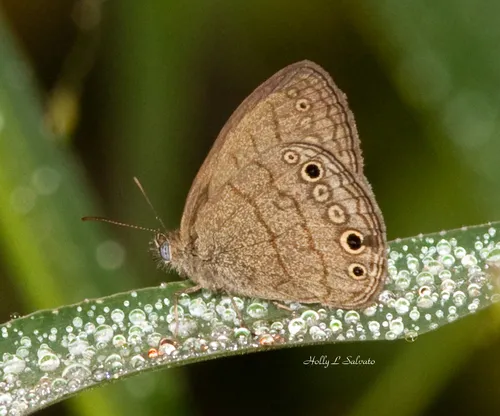
Distinction from H. sosybius is difficult, and as recognized here is based primarily upon geography. However, H. sosybius usually has the dark eye spots of the lower side larger, and the dark lines to either side of them less irregular. In H. hermybius the line to the outside of the eyespots tends to be more zig-zag and the one to the inside on the hind wing distinctly irregularly curved; the eye spot themselves tend to be more even in size, with the dark ones often not much, if any larger than the lighter ones. Genitalia are very similar, with the main distinction being a proportionately longer aedeagus (= penis, including phallobase) in male H. hermybius . More information is needed from the region in which the two taxa H. hermybius and H. sosybius may meet in Texas. If the two occur together without blending, it would be good evidence that they are indeed distinct biological species. However, if they blend / intergrade, one into the other, that would imply that they are geographic subspecies of a single biological species.
Classification
- Kingdom
- Animalia
- Phylum
- Arthropoda
- Class
- Insecta
- Order
- Lepidoptera (Butterflies and Moths)
- Superfamily
- Papilionoidea
- Family
- Nymphalidae (Brush-footed Butterflies)
- Subfamily
- Satyrinae
- Tribe
- Satyrini
- Genus
- Hermeuptychia (Hermeuptychia Satyrs)
Imported taxonomy record. Source availability varies; see the source references and editorial policy below.
Habitat and Range
Geographic Range
s. TX / NE Mex. - Map
Additional species information
Species notes from the sources
Etymology: Previously included in H. hermes , a South American species not found in the United States. North American members of the Hermeuptychia sosybius - hermes complex have been treated differently through time and by different authors. Some have treated all of them as a single species - either H. hermes or H. sosybius , while others have considered two species to occur together in the same areas in North America. Some treatments have " H. hermes " (now hermybius ) entering only southernmost Texas and replaced northeastward by H. sosybius (including the treatment at the Butterflies of America web site that is followed here). Further study may result in still different treatments in the future. According to the code for botanical nomenclature, and the requirement for gender agreement, it might appear that the name should be emmended to " Hermeuptychia hermybia ". Upon initial reading, the name " hermybius " would appear to be an adjective, which would not exempt it from this requirement. However, the name is stated to be a "noun in opposition" by the authors, which would indeed exempt it.
About Butterflies and Moths: the wider group
Order-level background for Lepidoptera, the group containing Hermeuptychia hermybius. Species-specific details appear above.
Group overview
Lepidoptera includes approximately 180,000 described species of butterflies and moths. Moths outnumber butterflies roughly 10:1. The monarch butterfly's eastern population has declined by more than 80% since the mid-1990s, and the western population by over 95% since the 1980s. The IUCN lists the migratory monarch as Vulnerable.
Ecological role of the group
Butterflies and moths are essential indicators of ecosystem health. As caterpillars, they are a primary food source for birds - a single nest of blue tit chicks requires ~10,000 caterpillars. Adult moths pollinate many night-blooming plants.
Economic and practical significance of the group
Lepidoptera are critical pollinators. In Europe, grassland butterfly species have declined by almost 50% since the early 1990s. In the UK, three-quarters of butterflies are in decline. In the U.S., five butterfly species have gone extinct since 1950, with 29 listed as endangered.
Recorded sources for this group: IUCN Red List, Xerces Society, USFWS, PNAS, WWF. Imported estimates may describe particular regions or reporting periods.
Photos of South Texas Satyr - Hodges#4574 (2)
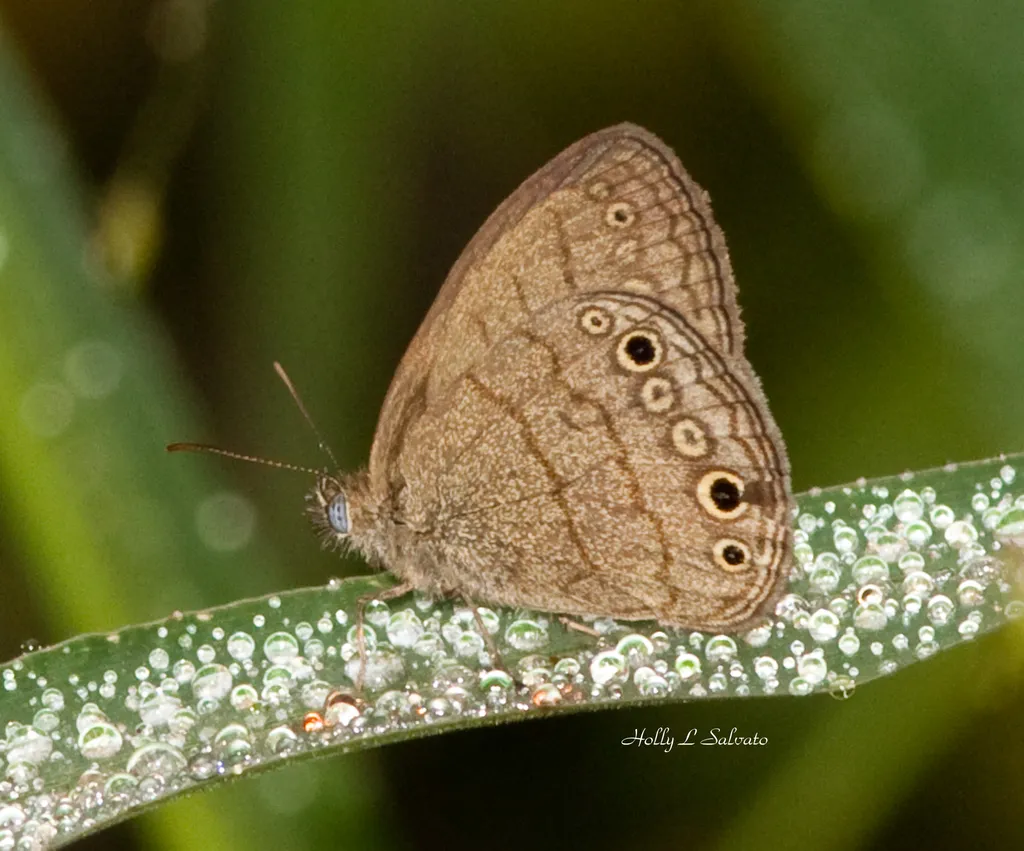
Photo credits: Contributed by Tom Bentley; Additional contributions by Mike Quinn , Nick Block , David Ferguson
Frequently Asked Questions About South Texas Satyr - Hodges#4574
What is South Texas Satyr - Hodges#4574?
South Texas Satyr - Hodges#4574 (Hermeuptychia hermybius) is a species in the family Nymphalidae, within the order Lepidoptera.
How do you identify South Texas Satyr - Hodges#4574?
Distinction from H. sosybius is difficult, and as recognized here is based primarily upon geography. However, H. sosybius usually has the dark eye spots of the lower side larger, and the dark lines to either side of them less irregular. In H. hermybius the line to the outside of the eyespots tends to be more zig-zag and the one to the inside on the hind wing distinctly irregularly curved; the eye spot themselves tend to be more even in size, with the dark ones often not much, if any larger than the lighter ones. Genitalia are very similar, with the main distinction being a proportionately longer aedeagus (= penis, including phallobase) in male H. hermybius .
Where is South Texas Satyr - Hodges#4574 found?
Range: s. TX / NE Mex. - Map