
Scopula ordinata - Hodges#7161
Scopula ordinata
This record describes Scopula ordinata (species). Recorded family: Geometridae. Recorded order: Lepidoptera.
Identification and Appearance
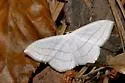
wings pure white with three brownish or greenish-yellow lines: AM line slightly wavy and curved, PM and ST lines straight except for sharp bend near costa; lines continue onto hindwing; small black discal dot on all wings; outer margins angular with whitish fringe ...quote by J. Sullivan, North Carolina : Scopula ordinata: in the l970 revision of Scopula (Covell, l970), only 8 specimens of the species could be located. I know of several other captures of the species in North Carolina but no captures elsewhere. Its foodplant is thought to be Catesby's trilium (sic) and this moth species has always been considered extremely rare. Very little information could be found on Scopula ordinata . Troy Bartlett's live BugGuide photos from Georgia, and James Adams' pinned specimen (also from Georgia?) are the only images of this species on the Internet, as of January 2006. For Scopula ordinata to be assigned a global ranking of G5, it presumably must be common to abundant somewhere [perhaps Central or South America?] but no Internet information could be found on its non-North American distribution.
Classification
- Kingdom
- Animalia
- Phylum
- Arthropoda
- Class
- Insecta
- Order
- Lepidoptera (Butterflies and Moths)
- Superfamily
- Geometroidea
- Family
- Geometridae (Geometrid Moths)
- Subfamily
- Sterrhinae
- Tribe
- Scopulini
- Genus
- Scopula
Imported taxonomy record. Source availability varies; see the source references and editorial policy below.
Habitat and Range
Habitat
deciduous woods, usually at high elevation
Geographic Range
North Carolina to Florida, west to Louisiana
Diet and Behavior
Diet: larvae feed on on trilliums ( Trillium catesbaei and possibly other species)
Additional species information
Species notes from the sources
Etymology: ORDINATA: from the Latin "ordinatus" (well-ordered); in entomology, ordinate means arranged in rows [as in, ordinate spots on the wing of an insect] probably refers to the straight, "well-ordered" lines on the wings
About Butterflies and Moths: the wider group
Order-level background for Lepidoptera, the group containing Scopula ordinata. Species-specific details appear above.
Group overview
Lepidoptera includes approximately 180,000 described species of butterflies and moths. Moths outnumber butterflies roughly 10:1. The monarch butterfly's eastern population has declined by more than 80% since the mid-1990s, and the western population by over 95% since the 1980s. The IUCN lists the migratory monarch as Vulnerable.
Ecological role of the group
Butterflies and moths are essential indicators of ecosystem health. As caterpillars, they are a primary food source for birds - a single nest of blue tit chicks requires ~10,000 caterpillars. Adult moths pollinate many night-blooming plants.
Economic and practical significance of the group
Lepidoptera are critical pollinators. In Europe, grassland butterfly species have declined by almost 50% since the early 1990s. In the UK, three-quarters of butterflies are in decline. In the U.S., five butterfly species have gone extinct since 1950, with 29 listed as endangered.
Recorded sources for this group: IUCN Red List, Xerces Society, USFWS, PNAS, WWF. Imported estimates may describe particular regions or reporting periods.
Photos of Scopula ordinata - Hodges#7161 (5)
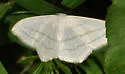
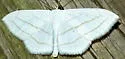
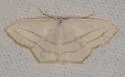
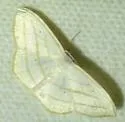
Photo credits: Contributed by Robin McLeod; Additional contributions by Steve Nanz
Frequently Asked Questions About Scopula ordinata - Hodges#7161
What is Scopula ordinata - Hodges#7161?
Scopula ordinata - Hodges#7161 (Scopula ordinata) is a species in the family Geometridae, within the order Lepidoptera.
How do you identify Scopula ordinata - Hodges#7161?
wings pure white with three brownish or greenish-yellow lines: AM line slightly wavy and curved, PM and ST lines straight except for sharp bend near costa; lines continue onto hindwing; small black discal dot on all wings; outer margins angular with whitish fringe
Where is Scopula ordinata - Hodges#7161 found?
| Feature | Details |
|---|---|
| Habitat | deciduous woods, usually at high elevation |
| Range | North Carolina to Florida, west to Louisiana |
What does Scopula ordinata - Hodges#7161 eat?
The diet of the Scopula ordinata - Hodges#7161 includes larvae feed on on trilliums ( Trillium catesbaei and possibly other species).